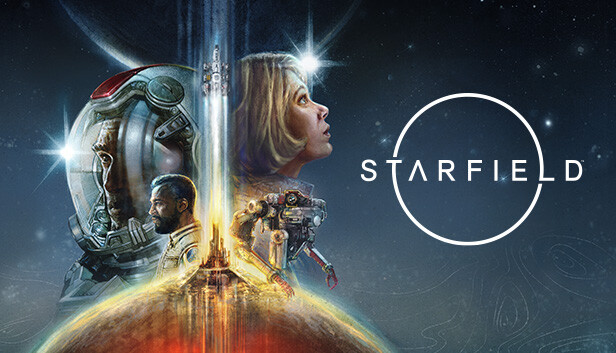
 StarfieldFetching price~ $49.99
Sélections populairesTout voir
123456789101112
12 Best Mystery Games on PC (2026)
12 Best Space Sim Games on Steam (2026)
12 Best Story-Rich Games to Play (2026)
12 Best Turn-Based Tactics Games on Steam (2026)
12 Best Puzzle Games on Steam (2026)
12 Best Games to Play with Friends on PC (2026)
12 Best JRPGs on Steam (2026)
12 Best City Builder Games on Steam (2026)
12 Best Zombie Games on Steam (2026)
12 Best Free Indie Games on Steam (2026)
12 Best Short Indie Games to Try (2026) — Done in One Evening
12 Best Cozy Games on Steam (2026)
Jeux similaires populairesTout voir
Games Like PowerWash Simulator - 12 Best Relaxing Cleaning and Restoration PicksGames Like ARC Raiders - 12 Best Extraction and Co-op Survival ShootersGames Like PEAK - 12 Best Co-op Climbing and Survival PicksGames Like R.E.P.O. - 12 Best Co-op Horror PicksGames Like Clair Obscur: Expedition 33 - 12 Best Turn-Based RPG PicksGames Like Path of Exile 2 - 12 Best Action RPG and Loot PicksGames Like Road to Vostok - 12 Best Hardcore Survival Shooter PicksGames Like Mina the Hollower - 12 Best Top-Down Action and Zelda-Like PicksGames Like Slay the Spire 2 - 12 Best Roguelike Deckbuilders to Play NextGames Like Resident Evil Requiem - 12 Best Survival Horror PicksGames Like Baldur's Gate 3 - 12 Best CRPGs and Turn-Based RPGsGames Like Monster Hunter Wilds - 12 Best Co-op Hunting and Action RPG PicksGames Like Hollow Knight: Silksong - 12 Best Metroidvania Picks (2026)Games Like Dead by Daylight - 12 Best Asymmetric & Co-op Horror PicksGames Like Final Fantasy VII Rebirth - 12 Best Action RPG & JRPG PicksGames Like Forza Horizon 6 - 12 Best Open-World Racing & Driving Picks (2026)Games Like Solarpunk - 12 Best Cozy Survival and Crafting GamesGames Like 007 First Light - 12 Best Stealth and Spy GamesGames Like Subnautica 2 - 12 Best Underwater and Alien-World Survival GamesGames Like Hell Let Loose - 12 Best Tactical Milsim Shooters
Tests populairesTout voir

Hades II — Test

Clair Obscur: Expedition 33 — Test

Katana ZERO — Test

The Long Dark — Test

Shift At Midnight — Test

Middle-earth™: Shadow of Mordor™ — Test

The Mermaid Mask — Test

Killing Floor 2 — Test

The Outlast Trials — Test

American Truck Simulator — Test

Voidling Bound — Test

Go-Go Town! — Test

Desktop Explorer — Test

Dead as Disco — Test

Crushed In Time — Test

Beastro — Test
“Starfield” is finally on PS5! Like watching an ultra-long indie sci-fi movie
To get straight to the point, the first thing that really got to me was DualSense’s whole detailed feedback setup: different weapons have different resistance and vibration on the triggers. For someone who clings to pixel-sized indie titles every day, this kind of “tactile design” actually moves me a bit more than 4K textures. When it comes to space themes, what first pops into my head are those simple yet flavorful interfaces like in FTL or Out There. Starfield this time takes the opposite extreme: the entire screen is drenched in cinematic spectacle.

Let’s quickly sort out the info: Bethesda’s sci‑fi space RPG Starfield launched first on PC and Xbox in 2023, and is finally coming to PS5 and PS5 Pro on April 7. What’s more, it’s not just a platform switch; it’s bundled with the big “Free Flight” update plus the story DLC “The Earth Fleet”, which means PS players are getting a more content‑rich version right out of the box. Interestingly, this release comes with an official trailer that doesn’t focus on story at all, but keeps hammering on graphics mode, performance mode, and controller features. The goal is very clear: to firmly establish itself in the PS5 ecosystem.

On the graphics side, if you’re used to playing pixel indie games, you might react like I did when you see terms like “4K output, PSSR, target 30FPS”: ah, that’s the elitist lingo of the AAA world. But being able to switch between quality and performance modes on PS5 Pro still gives players a very clear choice: either go for big 4K spectacle, or pick 60FPS for smoother gameplay. Both modes are powered by PSSR upscaling. It’s like taking No Man’s Sky, cranking up the budget, and then giving you an extra set of “graphics presets”. It sounds like a big stack of features, but in practice it all comes down to what you care about more.

For someone like me who’s been trained by pixel platformers, DualSense support is actually the most interesting part of this PS5 version. The difference in trigger resistance between ground weapons and ship weapons is a bit like the rhythm difference between climbing and dashing in Celeste, except this time it’s distinguished through the strength of your fingers. The triggers provide physical resistance, and together with light bar effects, the touchpad, and even the controller speaker, the whole experience sounds very “console‑exclusive” in flavor—almost like moving the audio‑visual finesse of Return of the Obra Dinn onto the controller itself. On that note, I’m especially curious about the vibration details during space combat: if they’re restrained enough instead of just constantly shaking, that alone could make me willing to fly a few more missions.

On the system side, both the PS5 and PS5 Pro versions support trophies and SSD acceleration, which is basically standard for the platform now—just like how modern indie games will casually include accessibility options; it’d be strange not to. Trophy hunters can safely grind achievements here, and faster loading is actually the biggest quality‑of‑life upgrade for a game where you’re constantly jumping star systems and going in and out of ships. Compared with those multi‑digit differences in graphical specs, cutting down that dozen‑second black screen is far more important for someone like me whose patience keeps shrinking.

So here’s the question: if you’re a PS5 player who hasn’t touched Starfield before, is it worth getting into now? Speaking from the perspective of an indie‑game fan, I’d split my advice into three types of players. First, if you already love open‑world games like The Elder Scrolls and Fallout, and you enjoy maps packed with markers to clear, then the PS5 version is pretty much a must‑buy, as long as you can accept the old tradition of choosing between graphics and framerate. Second, if you’ve only played more distilled, pure experiences like Celeste or Undertale, then you’ll need to be mentally prepared: Starfield feels more like an ultra‑long TV series; the pacing drags, and those flashes of brilliance aren’t nearly as dense. Third, if you simply want a game on PS5 that feels “big, modern, and very space”, then right now is actually a better entry point: the version is mature, the content is more complete, and the controller support has been filled in. The pity is that it’s still not the kind of game that makes you exclaim “that’s genius” based on a single brilliant core mechanic.
Overall, the PS5 version of Starfield is more like moving a big‑budget space RPG onto a platform that’s more sensitive to feel and detail. For someone like me who prefers small, tightly made games, it’s not suddenly going to become my absolute favorite, but there is a bit of appeal in the image of sitting on the couch, holding a DualSense, and hearing the ship noise coming from the little speaker in the controller. If you’re tired of tiny pixel gems and want to experience something like “Celeste meets No Man’s Sky but wrapped in a blockbuster shell”, then this space journey might be worth taking off for again on PS5 after April 7.






Commentaires 0
Votre avis nous intéresse
Participez à la discussion et partagez votre avis sur ce jeu.
Aucun commentaire pour l’instant. Partagez votre avis.