






















Opening
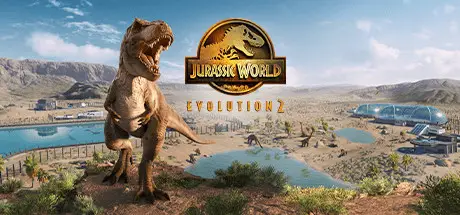
The best moment in Jurassic World Evolution 2 is never the one where the balance sheet finally turns green. It's the one where a Tyrannosaurus ambles up to the fence, stops, lifts its head, and bares its teeth at the patrol helicopter circling overhead. That two-second standoff tells you exactly what this game is actually selling. It isn't management. It's the gnawing, glorious anxiety of raising a yard full of animals that might turn on you the instant you look away.
Frontier Developments shipped this sequel to its 2018 management sim on November 9, 2021, and it pushes that original foundation a meaningful step forward. The aggregate numbers read as solid rather than spectacular: a 76 on Metacritic, a 78.8 across eighty-one OpenCritic reviews, a "Strong" tier. Yet the Steam picture is warmer than any of that suggests, with a 90% Very Positive rating drawn from more than 38,000 reviews.
That gap is the whole story. Critics dock points for shallow systems; players hand over a ticket built on something else entirely — whether the dinosaurs feel alive, whether the park looks the part, whether disaster, when it comes, is thrilling.
This review exists to answer one question on your behalf: whether that ticket is worth the price of admission, and which particular kind of player ultimately walks away glad they bought it. Over the sections below — story, audio, visuals, gameplay, content, and the final verdict — I'll take the park apart piece by piece, the good laid out next to the bad, so you can decide before you spend rather than after.
Story | 5.5/10
Story: 5.5/10The campaign hands you the mess the films left behind
The Campaign does not tell a new story so much as pick up the wreckage of the old ones. The dinosaurs have scattered from their island across North America in the aftermath the movies never showed, and the United States government drops the whole feathered, scaled headache squarely in your lap. Round them up. Settle them. Keep them contained.

As a framing device it is shrewd, because it asks nothing of your memory and everything of your competence. You don't need a relationship chart; you need a fence and a plan. Each mission swaps the map and the roster of escapees, and the tutorial is stitched invisibly into the rhythm of "what's gone wrong this time." The trouble is pace. The main thread burns through in something close to twenty hours, the writing stays thin, and by the back half what keeps your hand on the mouse is no longer "what happens next" but "what dinosaur does this mission unlock." More than one outlet called the campaign lacklustre, and the charge sticks.
Chaos Theory is the nostalgia payload — and the real reason to play
If the Campaign is the game's passing grade, Chaos Theory is where it stops being a park-builder and starts being pure fan service. It lifts the doomed parks straight out of Jurassic Park, The Lost World, and Jurassic World, and drops you back at the exact moment everything went sideways — this time with the tools to fix it.

The 1993 scenario is the one that raises the hair on your arms. You stand more or less where Hammond stood, restringing that famous perimeter fence, steadying the Rex, walking every guest off the island in one piece. Anyone who grew up on these films understands the weight of it instantly: you are no longer watching the disaster unfold on a screen, you are the person called in to clean it up, with a genuine shot at not letting it spiral. That sense of personally shouldering InGen's mistakes is something no rival park-builder can hand you, because it is wired straight into the bones of the licence rather than bolted onto a generic management loop.
The Dominion Biosyn expansion pulls the film cast back in — Claire Dearing, Alan Grant, and Ellie Sattler take turns at your side through a storyline modelled on the third movie — and the familiar faces, paired with returning voice talent, lift the proceedings a notch. Set it beside Frontier's own Planet Zoo, though, and the limit shows: this game has almost no original narrative ambition. It doesn't move you with a story; it leans on the affection you already carry for the property. I can only land the story dimension at 5.5, not because it fails but because telling a great story was never the goal. The goal was to hand you a reason to raise those familiar giants one more time — and for the people buying it, that is honestly enough.
The real storytelling lives in the park you build
In fairness, there's a different lens worth trying. Read "narrative" as "the story a player lives through rather than the one a writer types out," and Jurassic World Evolution 2 suddenly has far more going on than its score implies.
Every park you raise by hand grows its own private legend. There's the night the storm knocked out the whole power grid, the Rex shouldered through its fence in the dark, and you frantically vectored the ACU to drop it on the visitor centre steps. There's the long, fiddly campaign of shuffling a herd around until they finally settled into grazing in the sun, content at last. These emergent micro-stories are things no script could write, because they bubble up out of the chemistry between systems. So the game's storytelling is split down the middle: the authored plot is genuinely thin, but the toolbox it hands you turns you into the one telling the tale. Grasp that, and half your disappointment with the 5.5 quietly dissolves.
Audio | 8.5/10
Audio: 8.5/10One swell of the John Williams theme, and the nostalgia wins
Sound is the most uncontested part of Jurassic World Evolution 2, the corner critics simply don't argue with, and its biggest asset is the score. The game folds in that John Williams Jurassic Park theme — the one practically every human alive can hum — and layers it over original cues written for this entry. The masterstroke is timing. Your first park finally takes shape, the sun spreads across the lake, a herd of Brachiosaurus drifts past the water's edge, and right on that beat the melody lifts. Plenty of veterans will admit it outright: that single moment redeems every frantic hour of keeping the place from collapsing. It isn't technical wizardry. It's thirty years of emotional savings, cashed out in one cue.

What makes it land is that the music isn't filler. It is doing narrative work — swelling when a park comes good, holding back when one is on the brink — so the soundtrack reads less as a playlist and more as a quiet director, nudging your sense of triumph and dread in the right places.
Goldblum makes you grin; the missing Pratt makes you wince
The voice cast is the other nostalgia card, and it's played well, because Frontier brought back a slice of the original film talent.

Jeff Goldblum returns as Dr. Ian Malcolm, and that trademark cadence — the pauses, the half-swallowed clauses, the drawl that turns a status update into a bit — earns a grin the moment he opens his mouth. Bryce Dallas Howard comes back as Claire, steady and grounded, carrying the straighter narrative beats. Together their voices mean your ears are never bored even while you're idling to bank cash. The one repeatedly flagged disappointment is Owen Grady, voiced by a stand-in rather than Chris Pratt; longtime fans clock the mismatch in a single line, and that "almost there" detail is the main reason the audio doesn't take a perfect mark.
Effects that you act on, not just listen to
Beyond the celebrity casting, the effects work earns its keep by serving the core tension. Roars carry heft, feeding is all wet tearing, and when a storm rolls in the wind, the alarms, and the occasional crackle of a shorting fence stack into a sound that genuinely tightens your chest — you usually hear trouble before you see it, which quietly turns the audio into part of your early-warning system. Veterans learn to play half by ear, glancing at the camera only after a particular pitch of roar tells them which enclosure just lost its temper. That's a rare thing in a builder: a soundscape you actually act on rather than simply listen to, where the audio mix isn't garnish on the experience but a live instrument panel you read in real time. Once that clicks, you stop treating sound as atmosphere and start treating it as information — and the park feels markedly more alive for it.
Visuals | 8.5/10
Graphics: 8.5/10Dinosaurs lifted straight off the screen
Visuals are the most consistently praised part of the package, and the whole case rests on the creature models. The dinosaurs here are detailed to the point of looking pried out of the films: the texture and folds of the skin, the roll of muscle mid-stride, the full motion of a head dipping to tear into a kill — all of it survives the camera shoved right up against the face.

For this licence that isn't a flourish, it's the pressure point. People come to Jurassic for one thing first — believable, living dinosaurs — and Frontier nails it so squarely that even if management leaves you cold, dropping into free-look and trailing a Brontosaurus around the grounds becomes its own reward. The models hold up under scrutiny that would expose a lesser game in seconds, and that confidence to let you stare changes how you play. You stop treating the camera as a management tool and start treating it as a viewfinder, framing a Triceratops at the watering hole the way you'd line up a wildlife photograph. Few park sims earn that kind of idle attention, and it buys the game enormous goodwill before a single dinosaur has even threatened to escape. It also does quiet legwork for immersion: when an animal this convincing turns and charges a fence, the threat registers in your gut rather than as a red icon on a meter, and the whole crisis loop lands harder because the thing causing it looks real.
Skies, lagoons, and an island that earns its movie sheen
The biggest visual expansion over the original is vertical and aquatic: the camera finally lifts off the ground and sinks below the waterline. Pterosaurs move into purpose-built aviaries, wheeling and diving and chasing each other under the dome; marine reptiles like the Mosasaurus take up residence in lagoons, rolling, hunting, breaching in a burst of spray.

Crucially, the fliers and swimmers get bespoke animation, so they're every bit as watchable as the apex predators on the ground — plenty of players park an aviary or a lagoon front-and-centre purely because the motion is a pleasure to watch, and a Mosasaurus breach pulls a crowd in your park the same way it pulls one in the films. Those two new canvases give your park a real sense of layering for the first time: apexes patrolling below, wings cutting across the dome, something dark turning over beneath the surface.
The island itself, built on Frontier's own engine, carries a thoroughly cinematic texture — the layering of foliage, the swell of the terrain, the squall that blows in on a moment's notice all add up to an atmosphere that honours the brand. On PlayStation 5 and Xbox Series X|S the lighting and environmental work step up a tier, with cleaner air and sturdier draw distance, and the weather in particular reads better the more horsepower you throw at it. Held against Frontier's Planet Coaster, you can see the same mature building toolkit underneath, just with the customisation reined in a touch — the aim isn't to let you build anything, it's to make sure whatever you build reads, at a glance, as a place dinosaurs belong. For players who care about a cohesive look over total freedom, that restraint is quietly a gift rather than a limitation.
One less-flattering note that sits next to the visuals
Having praised the look, honesty demands a less comfortable line: a build-centric interface like this is awkward on a controller.
On PC, dragging paths, laying fences, and tuning facilities with a mouse is all direct and quick. Move to a console pad and the cursor-driven scheme turns fiddly — precise placement and menu-diving both take an efficiency hit, a near-universal affliction of building sims ported to consoles that Jurassic World Evolution 2 doesn't fully dodge. Stack that on top of the front-loaded information I flagged earlier, with the HUD juggling dinosaur status, facilities, finances, and alarms all at once, and the console on-ramp runs a notch steeper than the PC one for a newcomer. None of that dents the high bar the visuals clear, but if you're torn over which platform to buy and you're sensitive to how the controls feel under your hands, the PC version is the more comfortable seat.
Combat | 7.5/10
Gameplay: 7.5/10Dinosaurs that forage, pack-hunt, and size you up
If I had to compress the sequel's biggest gain over the original into one line: the dinosaurs finally read as animals rather than ambulatory exhibits. They socialise and jockey for rank within a herd. They strike out for water and prey on their own initiative, no longer standing dumbly by until you drop a feeder. When they hunt, they'll coordinate in numbers, splitting off to flank.

The subtlest touch is the wariness — nudge a helicopter too close and the animals by the fence will lift their heads, tense, grow agitated. That whole layer of dynamic behaviour turns each park from a row of caged models into an ecosystem that runs itself and, just as readily, goes wrong by itself. You stop micromanaging individuals and start reading the herd as a system with a mood, which is a genuinely different headspace from the first game's exhibit-tending. It is the single most valuable thing in a 7.5 gameplay package, and the root reason you'll tear a park down and start over again and again. Crucially, that behaviour also gives every other system something worth managing — a herd with moods and appetites is a far more interesting thing to keep happy than a static exhibit, and it's what stops the management busywork from feeling like pure bookkeeping.
Crisis management is the loop; the on-ramp is steep
Keeping the animals alive is only the opening. The genuine loop is the endless triage of "about to go wrong" and "already gone wrong." Aviaries for pterosaurs and lagoons for the Mosasaurus add fresh containment dimensions overhead and underwater, each with its own holding rules to puzzle out. Disease spreads through a population, so you lean on the vet systems to diagnose, dose, and quarantine. Foul weather lands without much warning, storms chew through structural integrity, and you're forced to reinforce ahead of time or scramble to repair.

Bolt that raise-defend-rescue cycle onto the signature breakout event — a dinosaur smashes through its fence and bolts, and you scramble the ACU to chopper out, tranquilise, transport, and re-contain — and you've got the real skeleton of the fun. What it sells is never spreadsheet optimisation; it's a fire-chief flavour of crisis management, the rush of putting out the blaze you half-knew was coming. The best runs are the ones where three small problems converge at once — a sick herd, a brewing storm, a guest gate jammed with foot traffic — and you triage on instinct, deciding what burns and what gets saved.
Honesty demands the flip side, though, because the systems satisfy neither extreme cleanly. The first few hours dump comfort, power, guest amenities, disease, and weather warnings on you at once, all interlocked, and most newcomers will flail hard enough to lose a park before it stabilises. Clear that hump, internalise the grid-storm-quarantine rhythm, and the problem inverts: the Challenge scenarios start to feel like the same dish reheated, and repetition creeps in fast. For players chasing genuinely deep economic numbers or wide-open creative freedom, the management depth and customisation room both fall short of what Planet Zoo offers. Put plainly — this is built for the dino fan who wants to play park warden, not the management gourmand who wants to play a spreadsheet, and you should know which one you are before you buy.
Four modes are really four difficulty dials — pick the right door first
Plenty of newcomers stall at the opening, and the culprit is rarely clumsy hands. It's walking through the wrong door.
The four modes are, at heart, the same systems cranked to four different pitches of pressure. Challenge clamps a budget and a clock on you — effectively the hard setting, and a fast way to bounce off the game cold. The Campaign teaches as it goes, but its narrative pace keeps nudging you onward, leaving little room to digest the systems at your own speed. The mode that's genuinely best for learning the rules is Sandbox: strip away the money and the objectives and you can fail freely, working out how much room each species needs, how to fence economically, how to scramble the ACU fastest, then carry that muscle memory back into Challenge and Chaos Theory. The community's evergreen "what order do I play this in" question is really a sign the game never made that on-ramp clear. My advice is simple — raise one park to confidence in Sandbox, then go hunting for thrills elsewhere, and the whole experience smooths out considerably.
Content | 8.0/10
Content: 8/10A twenty-hour campaign, with the real tail hidden elsewhere
Before talking volume, clear up one misconception: fix your eyes on the Campaign alone and the game can feel a little short. The main thread wraps in something close to twenty hours, which isn't a long haul for a management game.

But the Campaign is only one doorway in. The real long tail lives in Chaos Theory, Challenge mode, and Sandbox — unlock the full roster of dinosaurs, grind out every park objective, and finally build the dream resort in your head, and you can sink dozens or even hundreds of hours into it without trying. So "is there enough here" hinges entirely on why you bought it: turn up to clear a story and you'll find it brief, settle in to run a park for the long haul and you'll find it bottomless. The completionist figure runs well north of the campaign number, and the gap between the two is the single biggest source of disagreement in player reviews.
Four modes, four moods: teaching, nostalgia, rigour, release
The content is packaged across four modes, and each one shoulders a wholly different experience. The Campaign handles teaching plus plot, drip-feeding the core systems through one disaster at a time. Chaos Theory handles nostalgia, sending you back to the film sets to rewrite their endings. Challenge handles rigour, squeezing you with capped budgets and time limits until you have to make trade-offs and chase efficiency. Sandbox handles release: once unlocked, there's no money and no objective to fence you in, just room to dream.

That teaching-nostalgia-rigour-freedom spread is why players of different tastes settle into different modes for the long haul — and it means no single type of player walks away feeling there's nothing here for them. Someone who only wants to build pretty parks lives in Sandbox; someone who wants their efficiency tested lives in Challenge; the lapsed film fan dips into Chaos Theory and never touches the rest. The breadth is real even when the depth of any one mode is debatable.
Pull the lens back and the volume is genuinely propped up by a long tail of post-launch support. The heaviest paid slab is the Dominion Biosyn expansion, out June 14, 2022; tied to the third film, it delivered the long-requested feathered dinosaurs, a fresh two-part campaign, and matching new mechanics, and the press called it feathery and ferocious — the one DLC most worth folding in. Around it sit the Dominion Malta expansion, a Feathered Species Pack, a Camp Cretaceous Dinosaur Pack, and more, all funnelling new animals into the roster. On the free side, patches like 1.4.0 handle balance and stability, sanding down the launch-era irritations. That paid-content, free-fixes split keeps fresh animals arriving years after release — and it's a big part of why the Steam rating holds at 90% positive. For a management game, whether the tail keeps bleeding in new content often matters more to its lifespan than the launch payload, and on that score the answer here is reassuringly sturdy.
Which DLC to grab: two buying paths for two kinds of player
A long DLC list brings its own practical headache, though: which to fold in, and which to skip.
If you're the heavy player here for sheer dinosaur count, the Dominion Biosyn expansion barely needs a second thought — feathered species were a long-standing wish for series players, and the bundled new campaign and mechanics genuinely widen the experience, making it the best value of the lot. The species packs you can cherry-pick by taste: favour a particular era or body type of dinosaur, grab the matching pack, and treat the rest as essentially cosmetic content that doesn't touch the core loop. And if you only want to build pleasant parks without filling out the encyclopedia, the base game plus a pack or two you actually fancy is plenty — there's no need to buy the whole shelf just to "complete the set." Settle that buying logic up front and you sidestep the common paralysis of a mile-long DLC list with no obvious entry point. The long tail hands you real choice; the catch is that choice asks you to know what you actually want first. Buy to your appetite, not to the storefront, and the value holds up well.





Comments 0
Share your game review
Join the discussion and share your review of this game.
No comments yet. Share your thoughts on this review.