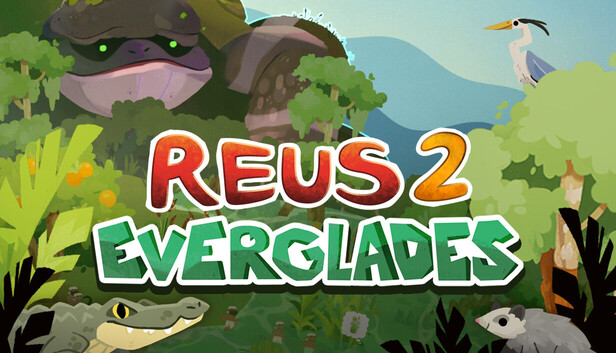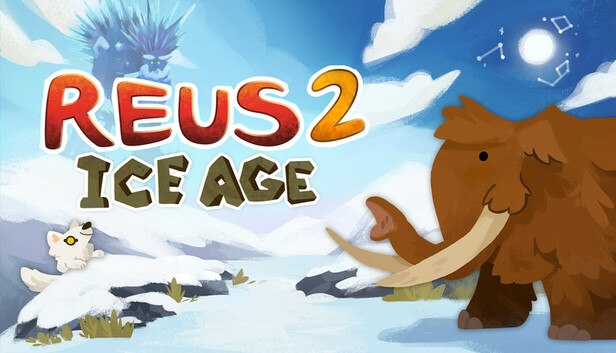

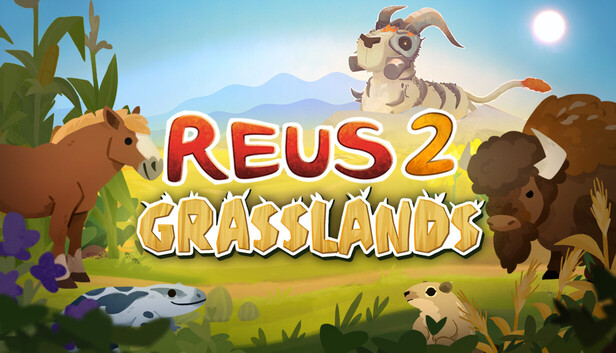

Reus 2
Price History
Past 36 months · Updated dailyPrices cover Steam and 39 authorized stores; only legitimate offers are counted. The chart shows weekly market-wide lows and Steam's official price across the past 36 months.


01About Reus 2
In Reus 2, command six mighty giants and use their elemental powers to shape worlds, biomes, and resource ecosystems. Combine plants, animals, and minerals so human settlements can grow and pursue their own goals. Your decisions guide humanity from early societies to modern civilizations. Every playthrough creates a new planet, giving each act of creation another possible path. The Steam PC edition supports single-player play and full controller support. Available interface languages are shown as Simplified Chinese, English, French, German, Spanish, Portuguese-Brazil, Russian, Ukrainian, and Polish. The game released on May 28, 2024. 94% of 2,179 Steam player reviews are positive.
Credits
Lowest recorded in 36 months
$7.002026-07-19 · Fortuna DigitalBase game · same records as the chart above; USD history, not a regional Steam low.Language support
| Language | Interface | Subtitles | Audio |
|---|---|---|---|
| Simplified Chinese | Yes | Yes | — |
| English | Yes | Yes | — |
| French | Yes | Yes | — |
Show 6 more languages
| Language | Interface | Subtitles | Audio |
|---|---|---|---|
| German | Yes | Yes | — |
| Spanish | Yes | Yes | — |
| Portuguese-Brazil | Yes | Yes | — |
| Russian | Yes | Yes | — |
| Ukrainian | Yes | Yes | — |
| Polish | Yes | Yes | — |
Steam PC edition data · 2026-11-28
02Before you buy
Play mode and controller
The Steam PC edition is single-player and supports full controller support.
Language support
Supported Steam PC interface languages appear dynamically as {supportedLanguages}. Subtitles are listed for the supported languages.
Steam features
Steam Cloud is supported; system requirement details are not provided in the available facts.
03Frequently asked questions
What do you do in Reus 2?
You control six powerful giants whose abilities over plants, animals, and minerals let you create biomes and resource ecosystems.
How does humanity develop?
Your choices guide humanity from early societies to modern civilizations, while each playthrough creates a new planet.
Can I play Reus 2 with a controller?
The Steam PC edition supports single-player play and full controller support.
Popular Steam reviews
Native-language selection · 10 reviewsSelected helpful reviews in this language show both recommendations and criticisms. This selection does not represent the overall positive rating; opinions reflect the version reviewed.
You might notice that I returned this game, but I'm still recommending it. Why? Well the reason for that is simple. This game is great at what is does, but what is does is not what I wanted out of it. You use 3 gods to interact with a world. You create biomes, have people settle into villages, and progress through the ages. This sounds like a God game + colony sim, right? Wrong! This game is a puzzle game first and foremost. This is a city builder the same way Dorfromantik is a city builder. You are placing minerals, plants, and animals that each have adjacency bonuses based on what is placed next to them and you are trying to optimize each village to complete objectives for them based on their ideals that you chose when you placed the village. You have a limited number of moves until the current era ends and if you have not optimized your villages(s) enough, then the game ends. Just like running out of tiles in Dorfromantik. I want to reiterate that this game is great, if you are looking for a game that is like if a 2D Civ game was Dorfromantik-ified. I wanted a game that was a Colony sim God Game like Black and White 2. This is not thatShow moreShow less
I must be missing something given the reviews because I do not enjoy this game. It looks like a god game - it even says "shape worlds with your godly titans" but what that actually means is you click "create biome" on the relevant titan to get some of that type of land. Same with placement of the animals/resources for the given biome. The titans are otherwise meaningless. It is really just a tile placement game where you min-max the placement of things to get multipliers in the score, to achieve objectives and unlock more. It's all a bit grandiose for such a simple premise, and I found it clunky, for example it is unclear knowing what is contributing to your score and what you can safely replace without going backwards (you have to keep replacing things as you upgrade the land to higher tiers to get more advanced things to place). If it was one third, or even half, the price I wouldn't submit a negative review but it's not a cheap game and I didn't get my money's worth so had to balance out the reviews with my opinion.Show moreShow less
Reus 2 is a better sequel to Reus than most sequels are to anything. Lots of games, especially nostalgic properties, just get sequels for the sake of making sequels. Reus 2, however, exists to be the Reus that the original Reus was not. I considered the original Reus to be an excellent puzzle game. Upon hearing about Reus 2, I was a little afraid that the changes the developers would make to the core gameplay would be too fundamental and detract from the original vision of Reus 1. I couldn't be any more wrong. The original game was balanced, but Reus 2 FEELS balanced. I accepted Reus 1's time limit and greed system as "just how Reus works," but Reus 2 shows us that neither of those things were necessary to make a beautiful, stimulating puzzle game. I think I know how the first blacksmiths felt when finding out they could extract iron from rocks. They were definitely fans of the rocks, but the SEQUEL to rocks is so much better for... well, everything. Reus 2 is so good that it almost makes Reus 1 obsolete. Almost.Show moreShow less
Reus 1 was definitely primitive, both in graphics and gameplay. I'd say Reus 2 has a massive improvement in both. If you enjoyed the first game, then I don't see why you wouldn't love this. Me on the other hand, did not. I was itching to give it a try, but the puzzle-like gameplay does not keep my interest. I am certain that as more options unlock, you get more freedom, sadly I don't have that luxury and have to decide within 2 hours, and this game requires methodical experimentation and slow reading, to understand what you are meant to be doing. Simply put, it is not my type of game. (Though whoever decided on the re-design of the forest titan, has my vote.)Show moreShow less
Quick explanation of the "Product received for free" tag: As a playtester I had temporary access to free keys during the closed alpha playtest and the closed release sprint playtest periods. I will also be receiving a free key to the Supporter's Pack when it comes out. Upon release, I paid for the base game, however. With that out of the way, this is probably my favorite puzzle game ever. It's very simple to start out, and honestly plays quite like a Eurogame - you have "game pieces" (biotica) that you place in certain "regions" (cities) on the "board" (planet) and when you place them, you score "victory points" (prosperity) and after you've placed a certain number, the game ends and you score those points. Where Reus 2 really shines is in the interactions between these biotica, known as symbioses. In the original Reus, one of the most complex, "reserved for the final unlocks" symbiosis type was "for each different adjacent type (animal/plant/mineral)". In Reus 2, there's an animal with this symbiosis unlocked from the beginning of the game, and the symbioses only get more creative from there. A couple of favorite symbioses: "+X for each grass in this biome; +Y% for each unique grass in this biome", "+X/+Y/+Z if there are A/B/C trees in this biome", "+2 wealth per adjacent science", "+X for each unique adjacent gem". Another part of Reus 2 that really improves the replayability is the meta-progression. Like in the original Reus, you will unlock new biotica to play with as you keep playing the game, but you'll also unlock new giants, new biomes, longer games, new starting leader types (leader types influence what kinds of biotica your cities want in their borders, and your starting city's leader type provides a unique planet-wide bonus), and even new mechanics that slightly tweak the way the game is played, such as micros, emblems, and terrain features. One final note, which isn't related to the gameplay at all, is that Abbey Games and Firesquid have both been an absolute joy to work with through the entire playtest process. The communication all around has been fantastic, and the monks at Abbey Games have been pushing out nearly daily patches these past few weeks for us to test. There's been a lot of negativity surrounding game developers and publishers these past few years, but all of these folks are top notch.Show moreShow less
Apparently I'm the only person who doesn't like this game. I played for almost 3 hours, created 3 planets, and tried to figure out how to have fun and failed. I just don't get it... place an animal, place a mineral or place a plant. Cool now what?Show moreShow less
Where to start. Generally, I don't well with complex games, with complex systems. I'm old, and my brain is essentially turning in to oatmeal. But..there are some gameplay mechanics that I REALLY like. I would like to provide some insights on why you should strongly consider purchasing this game. First is the presentation. Brightly colored, with good graphics. It is a very cheerful looking game, and tends to soften the complexity somewhat. Don't let that fool you. Second..as you play, you start with a limited number of options, for flora, fauna, and minerals. As you complete each game, you will unlock higher levels of each, to be used in the next gameplay session. This can be considered a "roguelite" in that sense. Even a failed game, where you don't do as well as you would like provides a benefit in the next game. A very real sense of progression. Next is the gameplay itself. It is turn based, and I find myself looking at all options to place my next piece. Do I go with a rabbit, to generate some additional food? Do I upgrade the land, to place more advanced (and more lucrative!!) creatures. There are only about ten options per turn, with a countdown timer. As you go through each age, you have a finite number of actions, before you progress. Actions need to be carefully considered, to gain the greatest benefit from that era. You will be graded, and the better you do in each era DIRECTLY affects the quality of the unlocks from that session, to be used downstream. The level three creatures or minerals are quite powerful...even game changing. If you can bring one of these bad boys into your world, you may see MASSIVE benefits, with huge increases in science, food, or money. Each of your mini cities has a ruler, and if you satisfy their requirements, you are given a more difficult task to complete for them. You, as the God-Ruler, start as one of several archetypes, with five mini-Gods (or Titans, if you prefer), giving you the ability to terraform the planet to your liking. You will have the ability to increase the physical size of each city, as well as upgrading the land to accept a higher tier of creatures. A particularly elegant move, or a finesse play, or a well-thought plan is a fun thing to see, as a HUGE pile of science, food, or money is deposited into a cities' accounts. Not sure why you're still reading me ramble on...go buy the game. It has VERY high reviews, for a REASON..and if an old dude like me (born in the Eisenhower administration, the FIRST one) can figure this one out, so can you!Show moreShow less
I hate that they removed 'greed' mechanic from Reus 1. It used to be an amazing RTS with pause, but now the game feels more like a solitaire, a turn-based puzzle game. There's no more danger, no more time-management, no more balancing on the knife's edge between growth and collapse. You just place things until you run out of things to place and see what you unlocked. Maybe the game is less stressful this way and for some it's a good thing? But I didn't get a chill vibe first hour playing. Playing felt kind of stressful, I was lost making decisions without understanding the implications and the interface wasn't intuitive.Show moreShow less
I don't remember exactly what I disliked about Reus 1 since it was so long ago and I haven't re-played it, but I think it was because the game felt like it should be turn-based but was real-time instead. Whatever the case, Reus 2 seems to fix it. I'm rather enjoying this. It's a very good puzzle-strategy game. Feels like something that could be a single player boardgame, but still feels more at a home as a digital game. I would love for some QoL and UI improvements, but still - it's already an interesting game that I find easy to recommend.Show moreShow less
Reus 2 is a noticeable upgrade from its predecessor in terms of both graphics and gameplay. The visual improvements are immediately apparent, with more detailed environments and smoother animations. The gameplay mechanics have also been refined, offering a richer and more complex experience. However, despite these enhancements, Reus 2 didn't quite hit the mark for me. The core gameplay revolves around puzzle-like mechanics that require a lot of patience and strategic thinking. While this can be engaging for some, I found it difficult to stay interested. The game demands a significant amount of time to understand and master its intricacies, which can be a barrier for players looking for a more immediate sense of gratification. As you progress through creating and managing multiple planets, the gameplay can start to feel repetitive. The initial excitement fades as you realize that new content and mechanics are sparse, making the experience somewhat monotonous. Additionally, the pacing of the game is quite slow, which, combined with frequent backtracking, can become tedious. The user interface is another area that could use improvement. It feels clunky and unintuitive, which can be frustrating when trying to navigate the game’s various menus and options. The AI behaviors also lack consistency, leading to unpredictable and sometimes aggravating outcomes. On the audio front, while the music and sound effects are pleasant at first, they quickly become repetitive and can grate on the nerves after extended play sessions. Overall, Reus 2 has its strengths and will likely appeal to fans of the original game and those who enjoy deep, strategic puzzle games. However, for players like me who prefer a more dynamic and fast-paced experience, it falls short.Show moreShow less
Source: original Steam user reviews. Helpful votes are an archived snapshot, not live data. Last collected: 08/15/2026.