



















Opening
Judge Ultimate Ninja Storm 4 as a fighting game and you will leave disappointed, scoring it somewhere lukewarm and missing the point entirely. It was never built so you could grind frame data against strangers online. It was built so that anyone who sat through all of Shippuden could throw the final punch of the war themselves.

CyberConnect2 took the manga's loudest moments — Madara tearing through the Allied Shinobi Forces, Kaguya descending, Naruto and Sasuke trading the last blow at the Final Valley — and rebuilt them frame for frame inside a playable engine. Nobody staged that density of fan-service in 2016, and nobody has truly copied it since. Press the ultimate-jutsu button and the screen does not erupt into generic VFX; it erupts into the exact shot you once cried at. So this review is not really about whether the game earns the label "good fighter." It is about how completely it works as fan service for people who grew up on this anime. Score it against Street Fighter and it loses; score it against the question it actually asks — can you make a fan feel the ending again — and it sits near the top of its genre. The rest of this review walks each dimension with that distinction firmly in mind, because using the wrong yardstick is the single fastest way to misjudge what this game is.
Story | 7.0/10
Story: 7/10The campaign that drags the war's ending into your hands
Story Mode is the real main course here, and it is the line that separates this from any ordinary fighter. It picks up straight from Storm 3, opening the moment Naruto sees through Tobi's "Madara" mask, and marches the entire Fourth Great Shinobi World War to its conclusion. This is not a cut-and-paste recap. CyberConnect2 turned every pivotal beat of the war's endgame into a playable fight plus a real-time rendered cutscene, so you are spectator and participant at once. Each victory nudges the plot forward; you are not watching someone else finish the story, you are turning its final chapter page by page yourself.

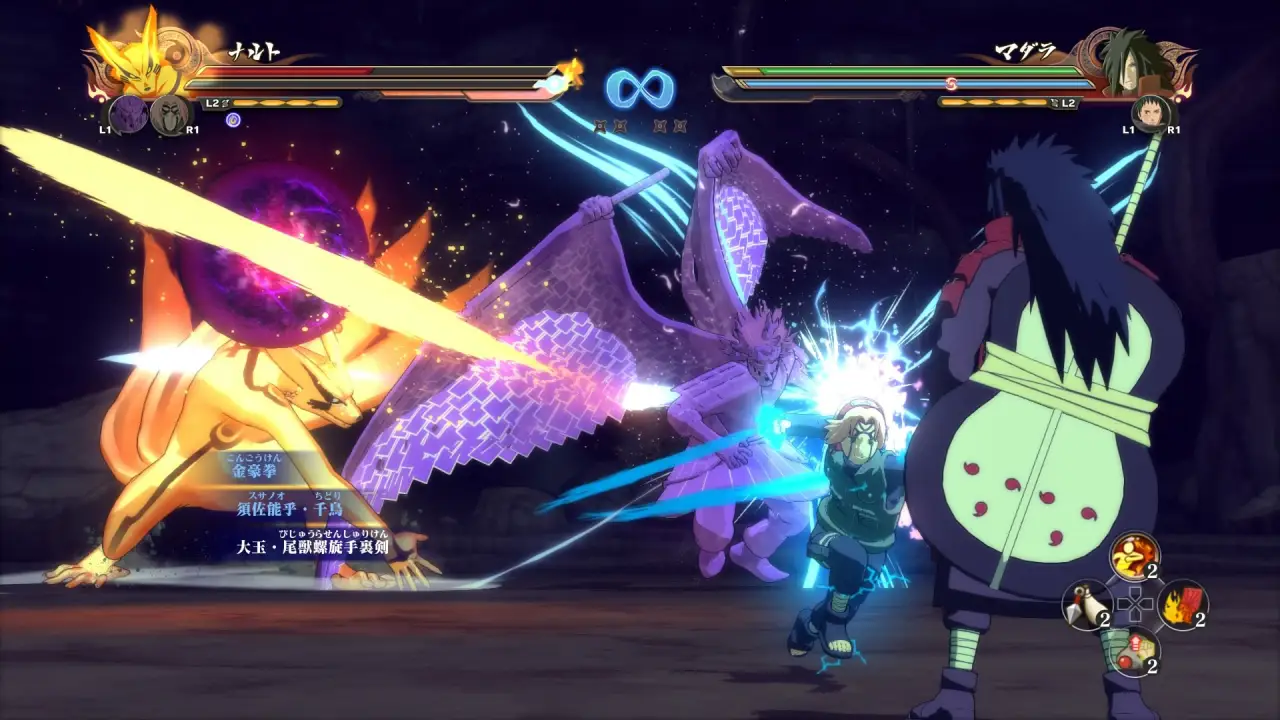
The emotional centre of the whole run is, without question, that Final Valley duel between Naruto and Sasuke. It is the release valve for hundreds of episodes of accumulated feeling, and CyberConnect2 spent its richest resources right here: the severed arm, the clashing fists, the chakra-summoned colossi, all rendered in real time, the shot composition lifted almost cell for cell from the source. By this point you forget you are holding a fighting game, because what it wants is for you to live through that ending again rather than simply win a match. Plenty of players stop here — not because it is hard, but because the weight of "I actually finished this" lands. The fight is paced like a finale rather than a level: long stretches of cinematic build broken by bursts of input, so that the act of playing it feels less like clearing a boss and more like being trusted to deliver the last page of a story you have followed for years.
A cheap opening that climbs into a soaring finish
The experience is not even, though, and this is where a lot of outlets docked points. The first few chapters visibly cut corners: many cutscenes are slideshow-style stills, one image and a line of narration flipping past, missing the lavish dynamic CG the series is known for. IGN's 5.5 was dragged down largely by this cheap-opening feeling — the first hours genuinely do not look like top-tier production, and that bites hardest for newcomers.

It gets better the deeper you go. By the time you reach the late bosses — Madara, Obito, Kaguya — the staging visibly upgrades to full real-time rendering and the quality is uncapped. That "withhold then reward" structure is tolerable for veterans, who know the payoff is coming and will sit through the opening for it; for a first-timer with no anime behind them, the early drop-off is a real wall. The game hides its best material in the back half, and that asks for patience and a little trust — it assumes you arrived with feelings already loaded. It is a structural gamble, and whether it pays off depends entirely on who is holding the controller.
Faithful character beats and a generation handover
Set the pacing aside and the character work is recognised as faithful. Obito's turn from villain to redemption, Kakashi's quiet loss after his Mangekyo burns out, Madara's overwhelming composure — every key figure gets its own cutscenes and lines, and CyberConnect2 cashes in the source's most affecting moments one by one. For a Naruto fan, those "it matches" details are the emotional landing, worth far more than a balanced move list, because you know these people and you care which fight they are in.
The ending is handed off to the Road to Boruto DLC and its Boruto's Tale. It pulls the camera off the war and onto the next generation — Boruto, Sarada, Mitsuki — picking up the everyday life of the Leaf after the original story and letting you watch Naruto actually become the Seventh Hokage. For anyone who walked the whole of Shippuden alongside this series, it is a gentle close: the story is told, the next generation takes over. Set against a same-era fan piece like Dragon Ball Xenoverse, which also leans on replaying famous scenes, Storm 4 wins by not merely curating highlights but by carrying one complete emotional arc from the war all the way to the succession — and that narrative completeness is its hardest-to-replace charm, the reason fans still point newcomers here rather than to any tidier fighter.
Audio | 7.5/10
Audio: 7.5/10Music written to peak the moment you press the button
If the visuals drag the manga's climax onto the screen, the audio's job is to spike your pulse the instant you trigger an ultimate. When a secret jutsu fires, the score leans into themes from the source material, those few familiar bars hit, and the adrenaline floods in. This is not functional hit-feedback scoring; it is music designed to serve the performance. It does not want you to read move startup — it wants to raise the hairs on your arm. You find yourself firing supers not just for the damage but to hear that cue land against that shot one more time.

Nowhere is that intent clearer than the Final Valley fight. The music tracks the dramatic beat, dropping low or even falling silent during the build, then surging hard on the fist-clash and the severed arm. That use of dynamics and silence pushes the fight's audio far past an ordinary match — it is scoring the ending of a story that has been told across hundreds of episodes. When the theme swells in exactly the right place, a lot of veterans get pinned to their chairs, and that is the power of audio in service of narrative.
Original-cast voices that carry the immersion
On voice work, the game uses the full Japanese original cast, with Naruto, Sasuke and Obito's lines reproduced beat for beat from the anime's climaxes. For anyone raised on the show, that vocal match carries half the immersion — what you hear is the voice from memory saying the line from memory, the inflection and the pauses landing where they should, something no dub easily replaces. It is a small thing on paper and an enormous thing in practice, because the moment a familiar voice lands a familiar line, the gap between game and anime quietly closes. The grunts, the jutsu call-outs, the mid-fight taunts are all there in their original delivery, so even a throwaway exchange between two side characters carries the texture of the show. That consistency matters more than any single set-piece line, because it means there is never a jarring moment where the audio reminds you this is a separate product rather than a continuation of the thing you watched. By the time you reach the marquee duels, your ear has already accepted the cast as canon, and the big emotional lines land without any friction at all.

A battlefield that comes apart in sound
The environmental design has to carry the game's signature large-scale chaos. The roar of a chakra burst, the splintering of terrain getting torn up, the crackle of fire ninjutsu and the hiss of water snuffing it out — all of it serves that exaggerated destruction, giving every landed super real weight. Stand this audio next to a hardcore fighter and the difference is obvious: a game like Guilty Gear Xrd keeps its sound strictly functional, every cue there to let you read the move; this one tilts hard toward spectacle and narrative. It does not care whether you can extract frame data from the noise, only whether it feels loud and feels earned. Two different philosophies, neither wrong — but it decides which expectation you should bring to your ears: you are here to watch a show, not to listen to a precision machine run. The trade-off does cost it something on the competitive side, since audio cues that prioritise drama over clarity make it harder to read an opponent by sound alone. But that was never the point. The mix is built to make a crowded room of friends gasp at the same moment, and on that count it lands every time, which is exactly the room this game was made for.
Visuals | 9.0/10
Graphics: 9/10Cel-shading that nails the source on sight
The art rests on mature cel-shading. It does not chase photorealism; it ports the manga and anime's line and palette into 3D so that every character reads as itself the moment they stand up. The shading is flat where the source is flat and bold where the source is bold, with thick ink outlines that keep silhouettes legible even in the busiest chakra storms. That fidelity is the Storm series' core identity — one glance tells you this is Naruto, not some generic 3D model wearing a Naruto skin. Expressions, signature poses, the colour of the chakra VFX are all tuned to visual memory, and that restraint is the smartest thing about it.

The art's true trump card is the handful of real-time-rendered late bosses. By the Madara, Kaguya and Final Valley fights the visual punch hits the series ceiling: the manga's iconic panels are rebuilt frame by frame, with camera work, effects and facial acting all firing — even the way the camera whips and which face the close-up holds on follows the source's rhythm. That is the real reason it earns a 9 on visuals; it does not pile detail into every corner, it spends everything on the few moments you most want to see, and spends without flinching. Watch the Tailed Beast Bomb clash or the Susanoo's first swing and you can feel the budget land in one place rather than smeared thin across a hundred forgettable rooms.
Destruction as a visual language
More impressively, the game turns "destruction" into a visible language. Fire ninjutsu scorches clothing, water douses flames, a single chakra burst caves the terrain in, and the battlefield genuinely deforms as you fight. Binding system and visuals like this is the source of its large-scale chaos, and it is something a lot of same-era anime fighters never managed — their stages are static backdrops, while these stages are things you tear apart.

That destruction is not only pretty; it reinforces the feeling that you are fighting a world-shaking battle. When one super flips an entire stretch of ground and dust smears across the lens, you readily believe these two people could level a mountain. For a game about the Shinobi World War, that visual force is part of the storytelling — it finally gives the anime's "earth-shattering" rhetoric a picture to stand on. The anime could only ever show you the aftermath in a single cut; here you watch the ground go up in real time, under your own input, and the difference in conviction is enormous. It is one of the few systems-meets-spectacle ideas of its era that still reads as generous rather than gimmicky, and it is the kind of touch that makes a replay years later feel less like nostalgia and more like the game holding up on its own terms.
Platform versions and the trade you are making
There are platform differences worth spelling out. The PC build early on locked some modes to 30 FPS, and it was the Road to Boruto update that brought broader 60 FPS support — a key point for anyone who cares about smoothness, so confirm you are on the patched build before buying. The Switch version (2020) trades some resolution and frame rate in handheld form but ships complete, Road to Boruto included, and was praised as an immersive anime experience, ideal for replaying the story on the couch. On modern hardware the base PS4 and Xbox One builds hold up better than their age suggests, precisely because the cel-shaded look does not lean on the high-frequency detail that dates realistic engines fastest; clean lines and bold colour age gracefully, and a 2016 release still looks current on a 2026 screen.

Compared with Dragon Ball Xenoverse's habit of spreading its budget across open character-creation hubs, this game's choice is explicit: no big map to roam, every pixel of budget pressed into the boss set-pieces instead. It is a trade, and it is the game's personality — you do not get a world to wander, but you get a handful of god-tier battles you once watched in the anime and can now stage again with your own hands. For its target audience, that trade pencils out every way you run it.
Combat | 8.5/10
Gameplay: 8.5/10Leader Swap and wall battles add a third dimension
Set the spectacle aside and the combat itself is still the most fluid the series has shipped. The core is three-fighter team battle, but this entry folds in Leader Swap: you can rotate your active fighter mid-match, and every swap reshapes your combo routes and support options. A fight stops being one character grinding from start to finish and becomes a rhythm you can recompose on the fly, which hands advanced players real room. When to swap, who to bring on, who closes the round — those choices are a layer of strategy in themselves, and they reward planning a team rather than mashing a single favourite.

Wall battles return too, letting one character cling to a wall while the other fights on the ground, stretching the arena from a plane into a space. Pair that with ultimate jutsu and awakening transformations — the swapped-in fighter shares one meter — and you are constantly weighing "fire the super now or bank toward awakening." The mind game is not hardcore-fighter deep, but for a fan-service title it nails "flashy yet with something to chew on": a newcomer can immediately pull off a gorgeous string, and a veteran still has detail to mine. The substitution-jutsu counter sits on top of all of it as a constant bluff layer, so even casual exchanges carry a little tension about who blinks first.
Bosses that stitch the show into the inputs
Critics rate the combat highly almost unanimously — many reviews call it the high-water mark of the Storm line. The boss fights are clever too: not the same 1v1 over and over, but stretches laced with QTEs and hack-and-slash, with cutscenes triggered by enemy health thresholds so the big set-piece bosses are both watchable and participatory. Drop to a certain HP and the screen cuts into a beat of performance, then a QTE yanks you back to the sticks, a cadence that keeps you both audience and actor.
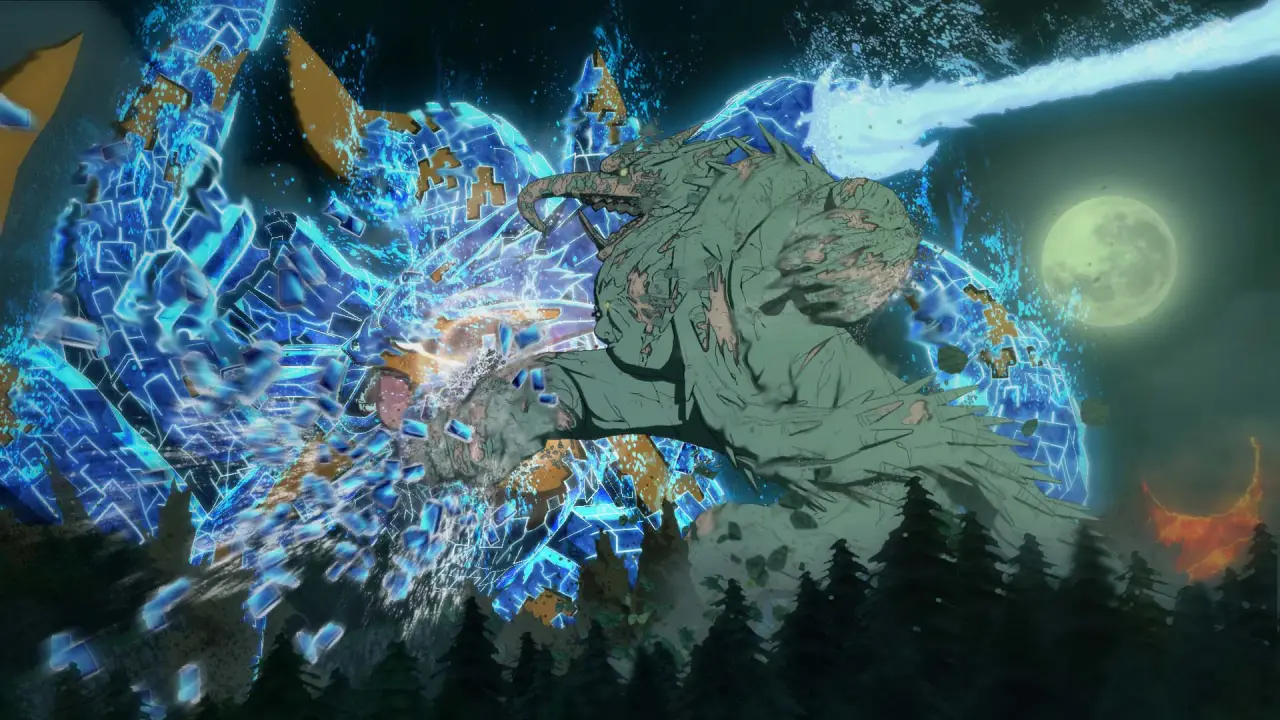
Stitching performance into the inputs like this is the smartest thing the gameplay does. It knows its selling point is "re-stage the source's climaxes," so it simply lets the fighting serve that goal — you are not just winning a match, you are pushing a story you know forward with your own hands. Against a pure competitive fighter this is a wholly different road; it sacrifices some of the duel's purity for irreplaceable immersion. The boss encounters against Madara and Kaguya are the clearest proof: they would be unremarkable as straight duels, but framed as escalating, scripted spectacles they become the moments people remember the game by.
A series-best feel with a hardcore shortfall
That said, the moment you treat it as a serious competitive game the cracks show. Match AI is buggy, and launch-window online dropped connections frequently — both genuinely drag the hardcore-versus experience down. Players looking for a real sparring partner get pushed away again and again by shaky netcode and unreliable AI, and that is a big part of why the scores cap out where they do. The single-player AI in particular rarely punishes a sloppy player, so the difficulty never really teaches you to fight well, and the online that should pick up that slack was unreliable exactly when it mattered most at launch.
Held up against a later benchmark like Dragon Ball FighterZ, which maxes out both competitive balance and spectacle, this game's feel clearly leans toward "spectacle thrill" over "competitive depth" — its moves care more about looking and feeling electric than about being balanced or sustaining a long-term scene. Grasp that and you stop holding it to the wrong standard: it serves up one exhilarating performance brawl after another, not a competitive stage to study for life. Recognising which one it is matters far more than fixating on which one it isn't. The happiest way to play it, in fact, is local versus with friends on one couch, or a slow solo run through the campaign firing off every character's ultimate at least once. In both of those settings its quick-to-learn, easy-to-show-off design is maximised while the netcode and AI weaknesses simply stop mattering, and the brawl is at its loudest and most generous.
Content | 6.0/10
Content: 6/10A short main line and Adventure Mode filler
To talk about volume, get one number straight: clearing the story plus DLC runs roughly 35 hours, which sounds generous, but there is water in it. The main campaign itself is on the short side, and a big slice of those 35 hours is padded out by side modes and extra battles. For anyone here for the story, the actual core may be a notch shorter than that figure implies — set your expectation accordingly and do not read those 35 hours as pure narrative. A focused run through the critical-path story beats lands a good deal lower, with the rest of the clock spent in optional skirmishes, unlockable boards and the roster grind rather than fresh plot, which is fine if you know it going in and frustrating if you bought it expecting a sprawling single-player epic.
The most criticised piece is Adventure Mode. At heart it is just free battles slotted in as you advance the main line, winning you "memory fragments" to revisit pre-war episodes. It sounds mildly interesting and lands shallow and near-invisible — 3DM bluntly called it filler, and few players would argue. It is not bad enough to anger anyone, but it gives you almost no reason to take it seriously, reading more like padding to inflate the runtime. Treat it as a breather between two proper fights and do not linger. The idea — wander, bump into old comrades, relive a memory through a quick bout — could have been charming with real writing behind it, but the execution is thin enough that most players will tab through it on the way to the next set-piece they actually came for.
The roster is the real volume
The game does have one genuine volume highlight: the base game alone packs in over a hundred — around 106 — playable fighters, one of the largest rosters any anime fighter offered at the time. For collection-minded players who like unlocking and testing one character after another, just working through that list eats real hours, and this is the part where its "content" claim is genuinely solid, the part fans buy into most.
The value of that roster is not just the count but the coverage. From the main cast to the villains, from the old Kage to ninja from every village, basically everyone you can name from the source is in there, each with their own moves and ultimate presentation. For someone who finished the whole series, hands-on control of your single favourite character firing their signature blow from the source is a satisfaction no number of modes replaces — it makes the words "fan-service" land for real. Even the deep-cut picks — a one-arc supporting ninja you half-forgot, a specific awakened form — are rendered with the same care as the leads, and that even-handedness is what turns a big number into a roster worth working through.
Fragmented DLC and a one-and-done content view
The DLC, by contrast, is a little awkward. The clear must-buy is Road to Boruto, adding next-generation fighters like Boruto, Sarada and Mitsuki plus the original Boruto's Tale arc — a genuine extension and the only expansion outside the main line worth calling essential. Beyond it, though, characters are split across the Sound Four, the Momoshiki/Kinshiki pack and more, so completing the roster means buying them piecemeal, which is unkind to completionists.
Set against Dragon Ball Xenoverse's long-tail design of endless gear and stat grinding, this game's content tilts toward one-and-done narrative and collection — you pay for its story and roster, and once you have finished and watched, you are square. It never meant to chain you in long-term, with no daily quests or seasonal updates dragging you back. That content view is neither good nor bad; it simply tells you honestly that this is a completion keepsake for Naruto fans, that walking this road once is enough, and the rest is left to memory. Measured by an open-world yardstick of map size, collectible count and hundred-hour retention, it looks thin; measured by what it set out to do — make the entire war finale playable and put nearly every beloved character in your hands — it is a generous, focused package that knows exactly who it is for and refuses to pad past that point.





Comments 0
Share your game review
Join the discussion and share your review of this game.
No comments yet. Share your thoughts on this review.