

























Opening
Abiotic Factor is a first-person survival crafting game about trapped scientists turning office junk into life support, and it absolutely nails the mix of nerdy panic, dark comedy, and real survival pressure — so yeah, if you’ve got the patience for it, it’s worth it.
Here’s the pitch: you’re not a Viking, you’re not a space marine, you’re a PhD-level disaster goblin in a 1993 underground Australian research facility, trying to survive with couch-cushion armor, microwave parts, a fire axe, and whatever else hasn’t been eaten by something from another realm. It’s goofy in exactly the right way. And then the lights go out, the facility shifts into nightmare mode, and suddenly the joke has teeth.
The catch is, Abiotic Factor does not hold your hand. A lot of systems are barely explained, combat is clunky, weapons break fast, and if you try to solo-speedrun it cold, you’re probably going to bounce off hard. But with friends? That’s where it clicks. One person cooks, one person builds, one person gets lost and screams over comms, and somehow that becomes the story — and yes, Valheim is still the cleaner, more polished game, no argument there. What Abiotic Factor has instead is a weirder identity: portals, audio logs, security robots, science gone deeply sideways, and a sense of humor most survival games don’t even attempt. There’s a reason it’s sitting at 95% positive on Steam from 39,935 reviews. This thing found its people.
Story | 8.5/10
Story: 8.5/10A 1993 facility where the story leaks out of the walls

My biggest takeaway is simple: Abiotic Factor doesn’t hand you a neat sci-fi story, it drops you into a disaster and lets you crawl out of it by piecing the whole thing together. You start as one of the scientists trapped inside the GATE Cascade research facility in the Australian outback, after containment fails and the place goes to hell. That setup works because the game trusts you to be curious. It doesn’t stop every five minutes to explain the plot with a giant marker on the floor. Instead, the truth is scattered through audio logs, broken terminals, and NPCs tucked into the ruins.
That approach is the right call here, because the facility itself is the story. The corporate training videos, the radio chatter, all that stiff “everything is under control” nonsense, it screams cold-war-era science hub pretending it isn’t rotting from the inside. And that’s exactly why the horror lands. You’ve got this weird mix of office-drone bureaucracy and cosmic disaster, and the game never lets those tones drift apart. One minute you’re hearing sanitized company language, the next you’re looking at the aftermath of a portal event nobody should’ve survived.
What I like is that the narrative doesn’t feel like a guided tour. It feels like archaeology. You’re not following quest markers so much as assembling a catastrophe from whatever scraps the place left behind.
The Order, the portals, and the kind of choice this game actually gives you

The factions are where Abiotic Factor gets its personality. The Order starts out sounding like some dusty academic sect, but it mutates into a full-blown paramilitary force once the perforation tech enters the picture. That shift matters, because it turns the conflict from “mysterious cult stuff” into a real power struggle over who gets to control the science. Then you’ve got the Anteverses, the cross-dimensional portals, and the Exor thread hanging over everything through the wider Wayseeker colonization story. It’s all very pulpy sci-fi, but in a good way. Not clean. Not polished. Just big, weird, and slightly unhinged.
The other thing that sells the story is how much of it lives in side content. The game is packed with little fragments: NPCs with opinions, logs with context, and world-building that shows up when you’re already busy surviving. That density gives the place texture, even when the game is being stingy about answers. Some systems are weirdly unexplained, and if you’re playing solo, the opening can feel like it’s dumping a whole lab manual on your head. But if you like exploring and actually paying attention, that mess becomes part of the appeal.
And the “choices” here aren’t really branch points in the cinematic sense. They’re more structural. Your specialization changes how a playthrough feels, and who you bring along in co-op changes how the whole run unfolds. That’s a smarter kind of variation than fake story forks. It won’t give Valheim a run for its money on polish, but it absolutely beats a lot of survival games on identity. This thing knows exactly what it is: a nasty, funny, sci-fi wreck that keeps revealing more of itself the longer you survive.
Characters and crossovers that make the facility feel alive

Where the story really sticks is in the characters and the world hanging around them. Abiotic Factor understands that a broken facility only feels memorable if the people in it sound like they actually belong there. The scientists, the broadcasts, the way everyone talks around disaster instead of directly at it — that’s what gives the whole thing its bite. It’s not just “smart people in danger.” It’s smart people stuck in a system that trained them to worship procedure right up until procedure failed them completely.
Even the crossover material fits that logic. The Voices of the Void tie-in, with Dunkeltaler forest and the observation station folded into the lore, doesn’t feel like random fanservice. It broadens the same universe of lonely research, bad signals, and things that should’ve stayed unknown. That’s the strength of the writing here: it keeps turning one strange facility into a bigger map of the same kind of problem. Human arrogance, corporate control, and scientific curiosity all crash into each other, and the game actually commits to that idea.
So yeah, if you want a survival game that just tells you where to go and what to build, this isn’t it. But if you like digging through ruins, reading context out of scraps, and letting a setting do some of the storytelling for once, Abiotic Factor is sharp. It’s funny, it’s bleak, and it never loses the thread.
Audio | 7.5/10
Audio: 7.5/10CRT Hiss, Fluorescent Buzz, and a Broadcast That Never Cares

Abiotic Factor’s audio does a lot of heavy lifting, and honestly, it’s what sells the whole weird mood. The game sounds like a 90s B-movie sci-fi facility that’s been left on too long. You get the CRT hum, the fluorescent buzz, the tape-warped radio chatter, and all those ugly little machine noises that make the place feel lived-in and broken at the same time. It’s not just ambience for ambience’s sake. It’s part of the identity. The game wants you to feel like you’re scavenging through a research site that’s one bad decision away from becoming a disaster movie.
The best part is how the audio treats the ridiculous and the scary like they belong in the same room. The facility broadcast has that dead, corporate-training-video flatness to it, and that’s exactly why it works. The voice sounds like it’s reading safety rules to people who are already doomed. That contrast is doing a ton of work. You’re hearing something that should be reassuring, but it just makes everything feel more off. That kind of dry, bureaucratic tone turns the whole setting funnier and creepier at the same time, which is a big reason the game sticks.
And when the lights go out at night, the sound design gets mean. The Exor Monk’s teleporting crackle has this sharp electric sting that hits before you even see the thing, and that matters because this game loves making you listen for danger. It’s not just trying to scare you with monsters. It’s using sound to tell you the facility is falling apart around you.
Every Footstep Matters When the Game Won’t Mark Your Next Move

The environmental audio is doing the job that a bunch of modern UI usually does for you. Since Abiotic Factor doesn’t hand you neat quest markers and obvious arrows, you end up listening your way through it. Distant machinery, a weird scrape behind a wall, a power hum changing pitch, a security machine clanking somewhere down the corridor — that stuff becomes navigation. It tells you where to go, what’s active, and what’s about to ruin your day. I like that a lot more than the game spelling everything out, even if it also means the early hours can feel like you’re stumbling around in the dark.
That said, the silence matters just as much as the noise. When the facility shifts into night mode and the power drops, the whole place feels colder and more hostile. The game knows exactly when to pull sound back so the threats can land harder. It turns survival into something you hear before you fully understand it. That’s a smart move, because combat itself isn’t especially smooth. The hit detection can feel stiff, and improvised gear is fragile, so the sound has to carry some of the tension the mechanics don’t always give you cleanly.
In co-op, the audio gets even better because voice chat turns into part of the survival loop. You’re calling out patrols, warning someone that the lights are cutting out, telling the group to fall back or split up. That division of labor matters in a way that feels real, and the game’s soundscape supports it instead of fighting it. Alone, the audio makes you uneasy. With friends, it becomes a shared warning system, and that’s where Abiotic Factor really clicks.
Visuals | 6.5/10
Graphics: 6.5/10The facility looks cheap on purpose, and that’s the whole trick

Abiotic Factor does not look “pretty” in the usual sense, and honestly, that’s exactly why it works. Deep Field Games leans hard into a deliberately low-fi retro look, and Unreal is being used to sell 1990s underground lab grime, not shiny eye candy. You get lab partitions, busted office furniture, mining tunnels, and weird maintenance corridors that all feel like they were built by bored scientists and then slowly eaten by disaster. The game’s identity comes from that mess. It’s the kind of place where a cubicle, a break room, and a sealed test chamber can all feel dangerous in different ways.
What really sells it is how readable everything is. The environment isn’t just background dressing. It’s telling you where you are and what kind of trouble you’re in. The office junk, the lab clutter, the industrial pipes, the underground rock walls — they all give the facility a strong silhouette. Then the game doubles down with enemy design that actually helps you play: the biological threats, the robots, and the human enemies each look like they belong to a different problem set. You can usually tell what kind of fight you’re walking into before it kicks off. That matters, because the game is already asking you to scavenge, improvise, and survive with garbage. The art direction keeps that loop grounded in something you can instantly read.
And that’s the part some players will bounce off. If you’re chasing graphical flex, this will feel sparse. But that’s a conscious trade. Abiotic Factor wants mood and clarity first, not showroom fidelity. It’s weird, a little ugly, and completely committed to its own tone.
PC polish helps, but this is still a mood piece, not a graphics demo

On the technical side, Abiotic Factor is doing enough to stay stable across PC, PS5, and Xbox Series, but it never pretends the visuals are the main event. The game runs in a way that supports the experience instead of demanding attention for itself. On PC, Unreal gives it room to use the usual modern bells and whistles, but this isn’t the kind of game that exists to make your rig sweat. It’s built to keep the underground facility readable, functional, and atmospheric. That’s the point. The tech is there to hold the structure together, not to distract from it.
That said, the visual style is still a hard filter. If you want crisp, high-end realism, this is not your lane. The game’s low-detail retro look is intentional, and that choice means some players are going to see “dated” where the developers see “character.” I get why that lands differently on PC versus console too. On PS5 and Xbox Series, the big story is stability and consistency. On PC, you’re mainly getting the comfort of options and tuning, not a whole different visual identity. There isn’t a dramatic platform gap here, because the game isn’t built around spectacle in the first place.
So yeah, if your priority is raw graphical wow-factor, Abiotic Factor is going to disappoint you. But if you care more about whether the world feels distinct, the answer is yes, absolutely. It looks weird on purpose, and that gives it a stronger face than a lot of cleaner-looking survival games.
The UI is busy, because the game is busy

The UI in Abiotic Factor matches the rest of the design: functional, dense, and not always eager to hold your hand. That fits the game’s whole “science nerds trapped in disaster” vibe, but it also means the interface can feel like a wall of information when you’re fresh in. There’s a lot happening at once — crafting, inventory management, survival needs, progression, and all the weird facility systems layered on top — and the game doesn’t always package that neatly. It wants you to learn by poking at it. Sometimes that’s cool. Sometimes it’s just exhausting.
That roughness matters because the game already asks a lot from you visually. You’re reading the environment for danger, reading enemy types for behavior, and reading your own kit to figure out whether your couch-cushion armor and junk weapon are actually going to save you. The UI has to support that loop, and most of the time it does the job. But it’s not elegant, and it’s definitely not the thing that makes the game approachable. A solo player starting cold is the one who feels this most. Without friends to split the mental load, the screen can feel overloaded fast.
So, no, this isn’t a slick minimalist interface that disappears into the background. It’s a busy survival UI for a busy survival game. It gets the job done, but it also reinforces the bigger issue here: Abiotic Factor is much happier being strange and demanding than it is being polished and gentle.
Combat | 9.5/10
Gameplay: 9.5/10The best weapon here is a bad idea made out of office trash

Abiotic Factor works because it understands the joke, but it doesn’t let the joke ruin the tension. You’re not some chosen warrior. You’re a terrified scientist in an underground research facility, duct-taping survival together out of garbage. Couch-cushion armor. A fire axe. Microwave parts. That’s the whole flavor of the game, and honestly, it’s brilliant. The gear feels goofy in the right way, but the situation around it is nasty enough that you still take it seriously.
This is where the game separates itself from a lot of survival crafting stuff. In something like Valheim, the loop is cleaner and more polished. You gather, build, fight, upgrade, repeat. Abiotic Factor absolutely understands that structure, and you can feel bits of Valheim and Project Zomboid in the way it cares about preparation, storage, risk, and bad decisions piling up. But the setting gives it a sharper identity. A 1993 underground Australian research facility full of paranormal containment failure, military chaos, and portals to the Anteverses is just more memorable than another forest, beach, or fantasy biome.
The first-person survival loop is messy in a way I mostly like. You’re scavenging offices, labs, break rooms, and security spaces, then turning all of that into tools, armor, weapons, and base infrastructure. And because the game supports 1 to 6 players in co-op, the fantasy gets much better when everyone starts becoming “the person who handles a thing.” One player is building. One is cooking. One is hauling junk. One is poking the horrible science hole they definitely shouldn’t poke. That division of labor is where Abiotic Factor really sings.
And the class side matters more than I expected. The PhD specialization setup isn’t just cute flavor on top of a generic survival character. Paired with the RPG skill tree, it gives your scientist a real shape. Restart with a different specialization, and the early game doesn’t feel like the same route with a different hat. It changes what you value, what you’re good at, and what feels risky. That’s a huge reason the gameplay earns that 9.5 for me, even with some rough edges.
Daytime is for looting, nighttime is when the building bites back

Here’s the thing: the day-night cycle in Abiotic Factor isn’t just a skybox timer, because you’re underground anyway. It controls facility power, and that one choice does a ton of work. During the day, you push out, explore, loot, and take bigger swings. At night, the facility changes rhythm. Security robots become a real problem, and suddenly survival isn’t just “do I have food and health?” It’s “did I budget enough time, power, gear durability, and safe routes to make this trip worth it?”
That turns the game into resource scheduling, not just resource hoarding. You’re thinking about your base’s power network. You’re thinking about what counts as a safe zone. You’re thinking about whether a forward outpost is worth the materials, because the run back through the facility might be worse than the fight itself. I love that. Base building isn’t detached decoration here. It’s tied directly into survival strategy. A good base is not just a pretty room with boxes. It’s a powered, defensible, organized little pocket of sanity inside a place that wants to turn your PhD into a smear.
The catch is, the game does not explain everything cleanly. A lot of systems just sit there and dare you to figure them out. If you like poking at mechanics, that’s exciting. If you need clear objectives and smooth onboarding, this can feel like walking into a server room during a fire drill. Solo, especially from a cold start, Abiotic Factor can drown you in information while somehow still leaving important stuff vague. The ramp-up is slow, and not everyone is going to have the patience for it.
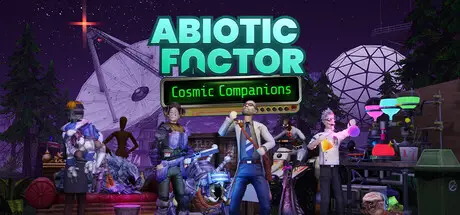
But once it clicks, it really clicks. The later systems give the survival loop more teeth, especially the chemistry and distillation side. Processing strange materials into 15 types of Distillation gives the back half more depth than “make bigger number, hit harder.” And with free post-launch updates like Cosmic Companions adding Pets 2.0, that chemistry and distillation system, and over 100 new items, the game already feels like it’s expanding in the right direction: more weird tools, more weird problems, more reasons to come back.
Combat is clunky, but the encounters still make you think

Combat is the weakest-feeling part of Abiotic Factor, and I don’t want to sugarcoat that. The improvised weapons fit the fantasy, sure, but they also feel stiff. Durability runs low fast. Hit detection can feel awkward. If you come in expecting crisp action-game combat, you’re going to bounce off some fights hard. This is not a game where your hands always feel amazing on the controls.
But the encounter design is smarter than the animation feel. Fights are less about raw stats and more about positioning, terrain, timing, and knowing what you’re actually fighting. Take the Exor Monk. It can discharge electricity, but you can interrupt it with headshots, and the safer answer is often to strafe, close distance, and stop treating the fight like a simple damage race. That’s the kind of enemy design Abiotic Factor leans on: specific threats, specific weaknesses, and a lot of “oh, that’s what killed me” learning.
So yeah, the combat is chunky. Sometimes too chunky. But it fits the survival pressure because you’re not supposed to feel like a superhero. You’re a scientist swinging junk at things that absolutely should not exist. When a weapon breaks or a fight goes sideways because you picked a bad hallway, that frustration is part of the texture. Not always fun, but usually understandable.
This is also why co-op helps so much. One player can kite. One can shoot. One can drag enemies through better terrain. One can panic and shut a door at the worst possible time, which is also valuable content, spiritually. In single player, the clunkiness is more exposed. In a group, the rough combat becomes part of the disaster comedy. And that’s the Abiotic Factor sweet spot: ridiculous, stressful, and weirdly tactical.
If you want hand-holding, this facility will eat you alive

Abiotic Factor is not for everyone, even with that 95% Steam user rating across 39,935 reviews. That score makes sense to me, because the people who click with this thing are going to love it hard. But if you want a guided survival campaign with clean signposting, this is going to annoy you. It expects curiosity. It expects patience. It expects you to get lost, waste materials, misread danger, and slowly build a mental map of how the facility works.
That’s also why the comparison to Valheim is useful but limited. Valheim is more polished. Its survival arc is easier to read. Abiotic Factor is rougher, stranger, and more willing to let you sit in confusion. But it also has a sci-fi facility narrative and dark humor that Valheim just doesn’t have. The story is buried in ruins, audio logs, NPCs, broken spaces, and strange little details. You’re not just moving through biomes. You’re piecing together a workplace apocalypse.
The lo-fi retro visual style will also split people. I like it, because it makes the facility feel grimy, old, and slightly cursed. But if you’re chasing graphical fidelity, no, this is not that game. It’s deliberately ugly in places. Boxy. Harsh. Weird. The trick is that the style supports the tone. The office carpets, the labs, the industrial guts of the place — it all feels mundane until it doesn’t.
So the target audience is pretty specific: survival players who love exploration, can tolerate a blind early game, and ideally have friends to bring along. If that’s you, Abiotic Factor is one of the most distinctive survival crafting games around. It takes a familiar framework, stuffs it inside a doomed research facility, hands you microwave scraps, and says, “Good luck, doctor.” And honestly? That rules.
Content | 8.5/10
Content: 8.5/10Fifty-Five Hours Is the Point Where the Facility Finally Starts Owning Your Brain

Here’s the thing with Abiotic Factor: this is not a survival game you “clear” over a weekend unless you’re trying to turn it into homework. The main run sits around 55 hours, and if you’re the kind of player who has to poke every weird corner, chase optional stuff, and squeeze the place dry, you’re looking closer to 90. And honestly, that length works because the game isn’t just stretching a checklist. It’s letting this cursed underground research facility slowly become a place you understand.
The early hours can be rough, though. I’m not gonna pretend they’re frictionless. You wake up as a science nerd in a 1993 underground Australian facility, everything’s falling apart, portals to the Anteverses are making reality worse, and the game does not hold your hand like a nervous tour guide. A lot of systems are barely explained. Solo, that cold start can feel like getting buried under keycards, crafting junk, skill trees, power schedules, and monsters before you’ve even figured out where the safe room is.
But once it clicks, that slow ramp becomes the hook. The day-night cycle isn’t just flavor; facility power changes what you can safely do. By day, you’re pushing deeper, looting, mapping routes, grabbing microwave parts, office junk, couch cushions, whatever garbage can become survival gear. At night, you’re dealing with security robots and turning your base into a tiny panic bunker. That rhythm gives the campaign teeth. It’s not just “go gather more rocks.” It’s “can we make this run before the building gets mean again?”
And the replay value is real, because your PhD specialization actually changes how you approach the same mess. A fresh run with a different build can feel meaningfully different, not just “same guy, slightly bigger number.” The RPG skill tree backs that up, and the best moments come from committing to a role instead of trying to be everything. That’s why the 55-hour mainline doesn’t feel like dead weight. It feels like one full disaster story, with enough weird side routes and optional discoveries that completionists can keep chewing long after the credits would’ve rolled in a cleaner, safer game.
Bring Friends, Because This Place Was Not Built for One Overworked Nerd

Abiotic Factor technically supports single player, and yes, you can do it alone. But let’s be honest: the sweet spot is co-op. The game supports 1-6 players online or over LAN, and the whole thing feels like it was designed around a group of overqualified disasters with doctorates making bad decisions in the same hallway. One person’s building defenses, one person’s cooking, one person’s hauling junk, one person’s yelling because a portal monster followed them home. That’s the good stuff.
The division of labor is what separates it from a lot of survival crafting games. In something like Valheim, the polish is stronger, no question. Valheim is smoother, cleaner, and easier to recommend to someone who wants the survival loop without a bunch of weird edges. But Abiotic Factor has a flavor Valheim just doesn’t. This isn’t another forest-and-forge fantasy sandbox. It’s science-fiction workplace horror comedy, where your armor might be made out of couch cushions and your best weapon might be a fire axe that feels like it was never meant to be swung at anything alive.
That said, combat is the weak link. It’s clunky. Weapons break fast, hit detection can feel stiff, and fights often come down to positioning, doorways, stairs, and abusing the room better than the enemy abuses you. If you want slick first-person combat, this is not that game. But in co-op, even the jank becomes part of the story. The panic, the bad tools, the half-working plan, the friend who forgot to bring the thing you needed — that’s where Abiotic Factor turns its roughness into personality.
It also helps that Deep Field Games had multiplayer in from Early Access, and the official Simplified and Traditional Chinese support makes it way easier for domestic players to jump in without fighting the interface first. That matters for a game this systems-heavy. If you’re exploring with friends, the confusion becomes discovery. If you’re alone and trying to speedrun clarity, it can just feel like the facility is picking on you.
The Free Updates Are Why This Thing Still Has Legs After Launch

The long tail here is one of the strongest arguments for the game. After the full release on July 22, 2025, Deep Field Games didn’t just drop the game and vanish into a vent. The free Cosmic Companions update adds Pets 2.0, a chemistry and distillation system, and more than 100 new items. That’s not a tiny balance pass. That’s the kind of update that gives returning players an actual reason to rebuild, rethink, and mess around with the facility again.
And then there’s the Voices of the Void crossover, which adds the Dunkeltaler forest and observatory area. That’s exactly the kind of collaboration that makes sense for Abiotic Factor: strange, eerie, a little funny, and still grounded in that “something is very wrong with this research site” mood. The game’s best content is always riding that line between absurd and creepy. One minute you’re laughing at some office-trash invention, the next you’re realizing the audio logs and NPC scraps are telling you this place was broken long before you arrived.
This is also where the game’s reputation starts to make sense. On Steam, it’s sitting at 95% positive from 39,935 reviews, with the Overwhelmingly Positive label. OpenCritic has it at 83.5 from Top Critics, with an 83.3% recommendation rate across 6 reviews, and IGDB lists a 92.0 media aggregate from 1 source. Add the 1.5 million copies sold and the NZ Game Awards Grand Prize, and you’ve got a game that clearly found its people.
But I think the reason it keeps working isn’t just the numbers. It’s that the post-launch support feeds the exact fantasy the base game already nails: smart people trapped in an absurdly dangerous place, improvising survival out of office junk while reality leaks through the walls. Free content makes that ecosystem feel alive. The visuals are still deliberately lo-fi, and if you need glossy fidelity, you’re gonna bounce. But if you like exploration, if you can tolerate being lost early, and if you’ve got friends willing to suffer through the first messy hours with you, Abiotic Factor earns that 8.5. Not because it’s perfect. Because nobody else is doing survival quite like this.





Comments 0
Share your game review
Join the discussion and share your review of this game.
No comments yet. Share your thoughts on this review.