





















Opening
I paused on the turn I finished a Story Realm in the world of an Ice Queen, the frozen sea stretching like shattered glass to the edge of the screen. My ragtag empire, stitched together from three different peoples, huddled on a single patch of uncursed grass beside a city I had just twisted with magic until both its culture and its racial traits bent into something new. That was the moment it clicked: I wasn't playing chess. I was rewriting the physics of a world, one grimoire page at a time.
Age of Wonders 4 is the rare high-fantasy 4X that takes a genre often drowning in lore and makes the fantasy itself systematic without collapsing under its own weight. Triumph Studios and Paradox Interactive have built a game where the setting isn't decoration draped over a strategy skeleton — it is the rulebook you negotiate with every single turn.
This review starts where the game is most intoxicating: not the battles, not the spreadsheets, but the loop that lets you sculpt almost any monstrous empire you can imagine. From there it works outward through the systems, the worlds, and the long tail of replayability that makes the "one more turn" button genuinely dangerous. If you have ever lost a weekend to a strategy game, consider this your warning.
Story | 8/10
Story: 8/10"High fantasy" is a phrase that gets worn out, but Age of Wonders 4 actually earns it. The overall premise — Wizard Kings awakening from the Astral Sea and journeying across multiple worlds to contend for dominance — sounds like genre boilerplate. What rescues it is that the setting isn't told to you so much as handed to you as a set of rules you operate.
A World You Author, Not a Plot You Follow
This is, structurally, a 4X game with no fixed main storyline. There is no scripted hero's journey you're shepherded down. Instead, the multi-world "Realms" and the grimoire system fuse the lore into the mechanics until the worldbuilding stops being decoration hanging on the outside and becomes the rule-background you negotiate with on every turn.
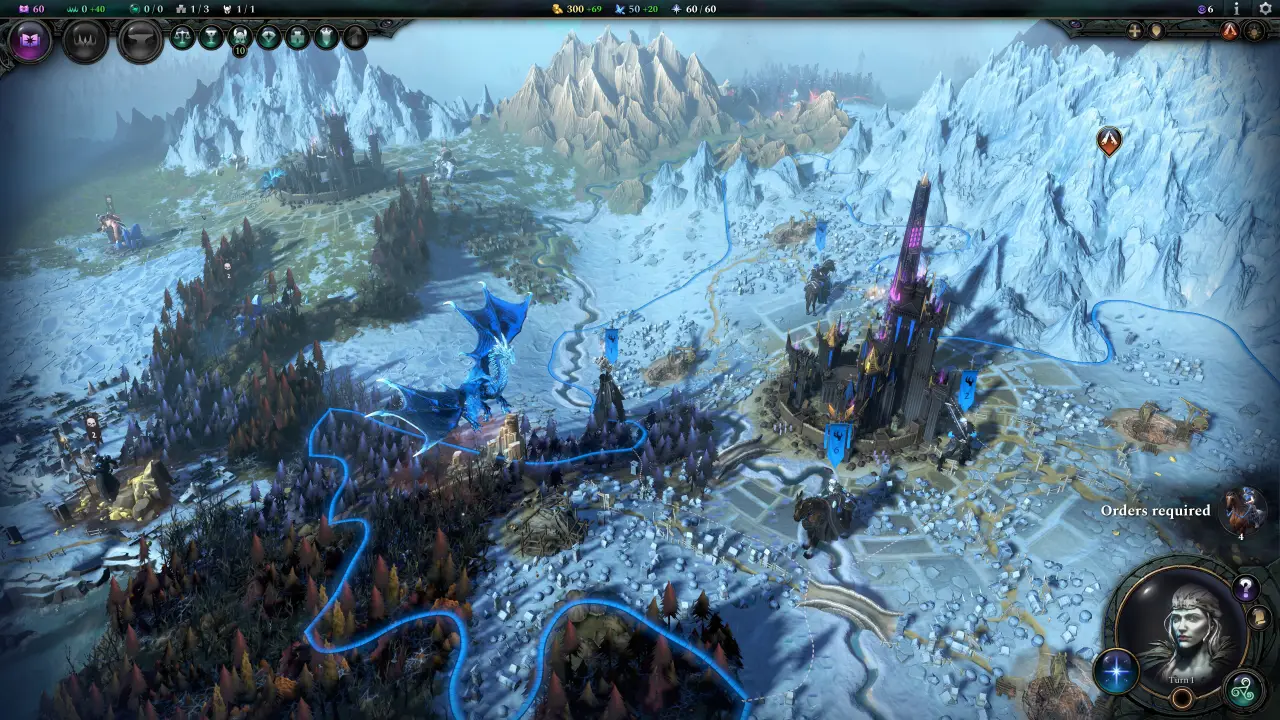
Within a single game, the narrative comes mostly through so-called Story Realms and quest chains. Anchored on a concrete antagonist — the Ice Queen is the obvious example — you get a relatively clear silhouette of an opponent, rather than just sparring with an abstract "AI faction." The game doesn't chase long cutscene sequences; it scatters story-bearing landmarks across the board like markers, and you pick up a fragment each time you walk into one.
That approach suits the genre beautifully. A 4X campaign is, at heart, a story you tell yourself about the rise of your own civilization, and Age of Wonders 4 leans into that instead of fighting it. The "plot" of any given match is the conquest record you accumulate — the alliances you turned against, the cities you transformed, the strange empire you willed into existence across realms.
It's a different contract than a linear RPG offers. You aren't being told a tale; you're being given a world and a set of levers and trusted to generate the tale yourself. The Story Realms are best understood as scaffolding for that — a loose objective and a recognizable foe to give your improvisation a spine, without ever railroading you down a corridor. The result is narrative that feels owned rather than received, which is precisely the kind of storytelling a strategy game is uniquely positioned to deliver.
Emergent Lore Versus a Weak Main Line
The genuinely fun part is how different race and culture combinations spin off so much incidental background. The cannibal dwarves, cursed frog folk, and gold-hungry necromancers the media keeps citing all feel like little snippets of lore you scribbled while making your faction — and then the system took seriously and slotted into the world. You can't help but headcanon an entire drama for your empire, and this "player riffs, system plays along" mode of storytelling sometimes leaves a deeper impression than a traditional main line ever could.

The problem is just as clear: the main-line layer isn't especially memorable. The narrative is largely in service of the systems and mechanics, and it lacks the kind of signature character or set-piece moment you'd recall the instant someone mentions the game. Put bluntly, it's far better at explaining "how this world works" than at explaining "why this person is lovable."
If what you want is an RPG-style emotional rollercoaster, there will be a gap here. The drama is structural, not personal; it lives in systems and consequences, not in a cast you grow attached to. There's no companion whose arc you'll remember, no villain monologue that lands like a gut punch. The Ice Queen and her kin are functional foils more than fully realized characters — useful pegs to hang a campaign on, not figures who'll haunt you after the credits. For some players that absence will register as hollowness; for others it's simply the genre being honest about what it is.
But if you're the kind of player who's used to writing your own story inside a 4X, the raw material this setting provides is more than enough to fill a personal epic. The Wizard King framing, the realm-hopping, the modular peoples — they're prompts, not scripts, and the game trusts you to do the authoring. For the audience that treats every campaign as a fresh chapter of a history only they will ever read, that trust is exactly the point, and it's why the world lingers long after the specifics of any one quest have faded.
Audio | 7/10
Audio: 7/10This is the kind of soundtrack you might play for dozens of hours before one day suddenly realizing, "oh — that background music has been there the whole time." Age of Wonders 4's audio is a study in restraint, and whether that's a virtue or a shortcoming depends entirely on what you want from a score.
Atmosphere Over Anthems
The broad consensus is that the music and ambient sound mesh well with the high-fantasy theme. Different worlds and different battle scenarios carry their own subtle tonal shifts: large-scale wars get a little heavier and thicker, while exploration and management phases recede into the background, holding a presence that is exactly enough without ever stealing the scene.
That's a deliberate design philosophy, and it's closer to film scoring than to typical game music. The goal isn't a hook you hum; it's an atmosphere that supports the moment-to-moment strategizing without competing for your attention. When you're deep in a tactical puzzle, the last thing you want is a melody fighting your concentration, and the score understands that.
There's a real payoff to this approach over long sessions. Many strategy games suffer from loops that are too short and melodies too prominent; after a few dozen hours you reach for the mute button. This one leans the other way — it plays as background mood, and it doesn't clog the ears. For a genre built on marathon play, that endurance is worth more than a flashy theme.
Clear Combat Feedback, Few Signature Tunes
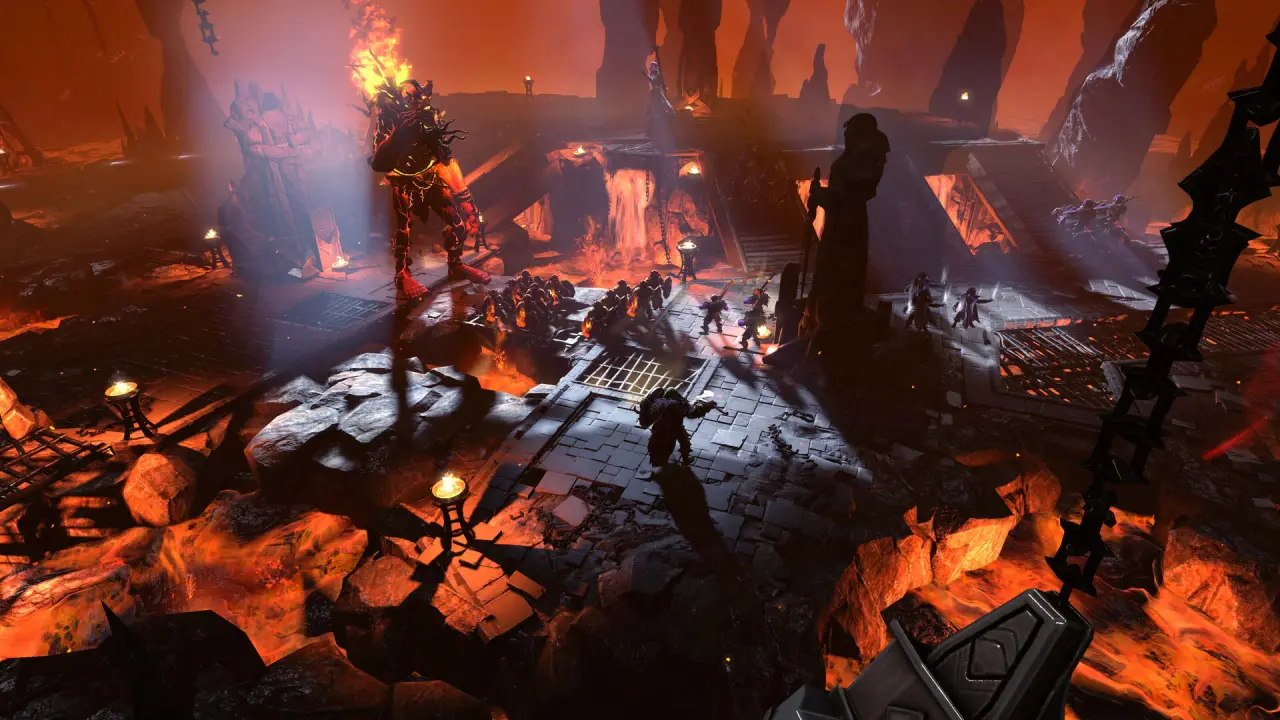
In battle, the separation between spells, unit actions, and environmental effects is rendered cleanly. You could close your eyes during a fight and roughly guess whether magic is dominating or physical troops are grinding it out. For a 4X that asks you to fight frequently, that clarity doubles as both feedback and fatigue reduction — your ears are doing real informational work, not just providing decoration.
The flip side of all that tasteful restraint is that the game lacks a few instantly hummable signature tracks. You're unlikely to add the capital theme to your daily playlist the way you might with certain RPGs. The music is built to exist alongside the game itself rather than to be remembered apart from the screen, and that's a genuine trade-off rather than a flaw.
It's a sensible bargain for a strategy game, even if it leaves the soundtrack a little anonymous out of context. Taken together, the audio is steady with a little to spare — no weak links, but no real surprises either. It does its job with quiet competence: it sets the mood, it communicates the state of a battle, and it never tires you out. If you came hoping for a soundtrack that stands on its own as an album, you'll find it modest. If you came hoping for a score that simply makes a hundred-hour campaign feel cohesive and unobtrusive, this delivers exactly that, and it does so without ever asking for the spotlight.
Visuals | 8/10
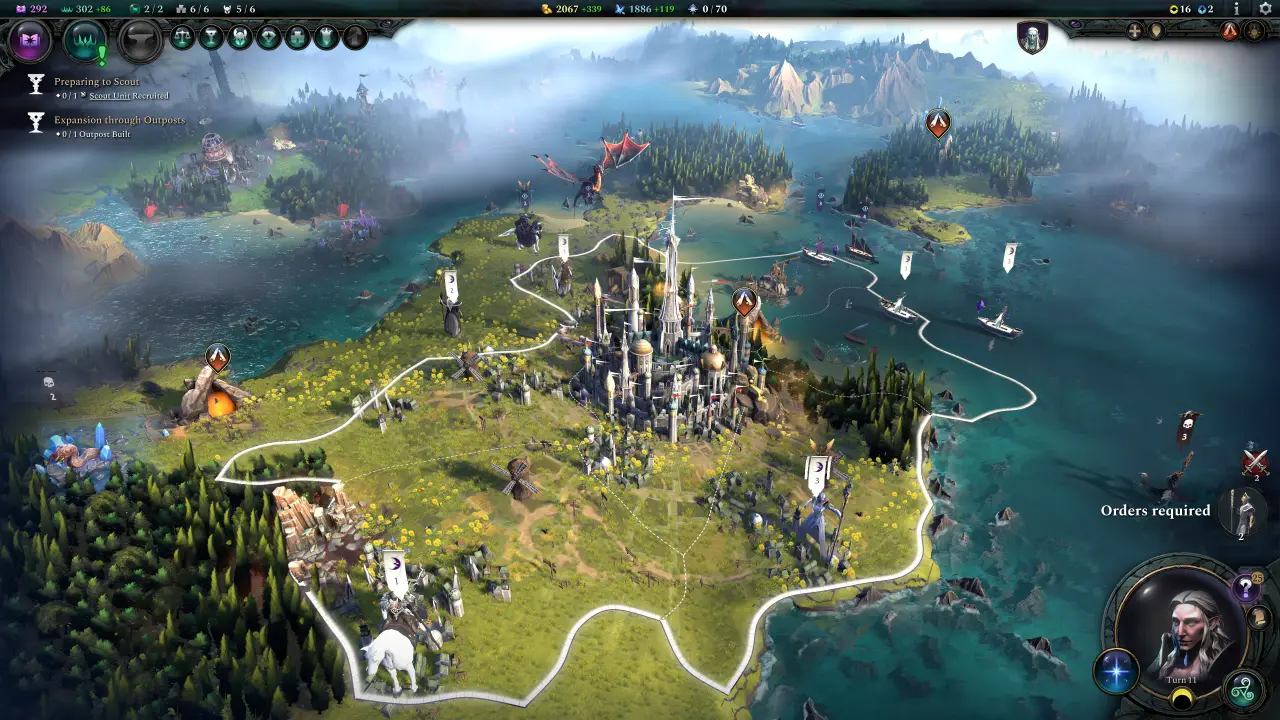
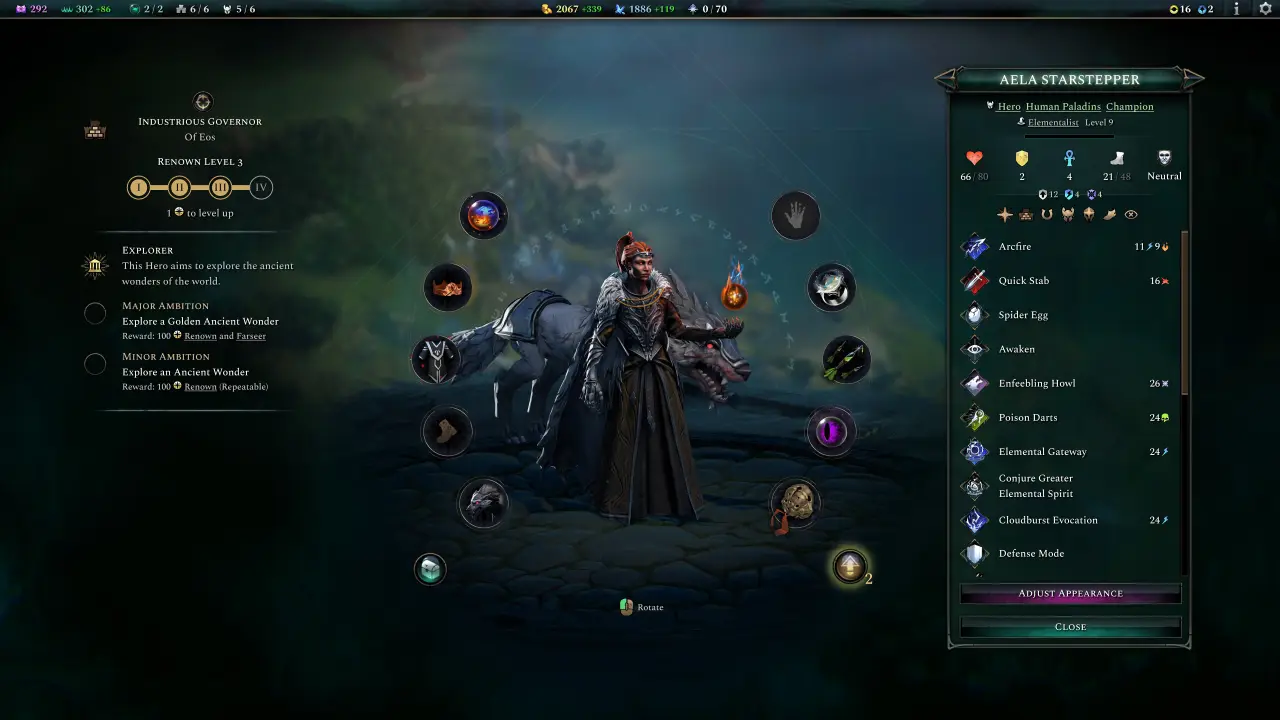
Graphics: 8/10The first time I pulled the camera back to its furthest zoom and saw multiple city-states and fleets squaring off across the world map, I had the odd sensation of reading the full score of a medieval opera — every shipping lane and city border a note on the staff.
Board-Game Art, Digitized
The art direction earns near-universal praise, and it's easy to see why. The fantasy scenes and racial designs each have their own identity; this isn't the "reskinned high-resolution" look so common in the genre, but something closer to a mature tabletop art style lifted faithfully onto the screen. Different races, different cultures, and the magically reshaped terrain are all legible at a distance and detailed up close.
For a strategy game packing this much information, that legibility is not a luxury — it is load-bearing. You need to parse the board at a glance, and the visual language is disciplined enough that you can. Colors and silhouettes do real work, telling you whose territory you're looking at and what kind of land it is before you've read a single tooltip.
It's the kind of craft that rewards attention without demanding it. A casual glance tells you the strategic state of the map; a closer look rewards you with texture and character that make the world feel hand-built rather than procedurally stamped out. And that balance is harder to pull off than it looks — most strategy games either bury you in noise or pare everything down to abstract tokens. Age of Wonders 4 finds the rare middle path where the board is both readable and characterful at once.
Magic That Reshapes the Map
What genuinely impresses is the magic. World-transforming, terrain-mutating spells aren't just a number flipping over on a card — they physically upend the screen. Cast one and an entire region's color palette, texture, even building outlines shift to follow. That feedback — the sense that you aren't clicking an ability so much as performing cosmetic surgery on the map — massively deepens the presence of the grimoire system.

This is the visual payoff of the game's core loop. Because grimoires let you rewrite the world, the engine has to show that rewrite happening, and it delivers. There's a real thrill in watching a frozen wasteland thaw into living forest, or a green valley curdle into something cursed and dark, all because of a choice you made three turns ago.
It also reinforces the strategy. Visible transformation means you can read the consequences of your magic on the board, and so can your opponents. The screen becomes a record of everyone's ambitions written directly into the terrain.
Clean UI and Solid Performance
On the interface, the consensus verdict is "high information density, but clear layout." You're simultaneously tracking resources, units, terrain, and spell queues across both the battle and world-map screens — a situation that could easily devolve into a software-engineering textbook of clutter. Good hierarchy and contrast keep it reined in. It isn't effortless to read, but you never get that "where's the button" frustration.
Performance and optimization also get singled out for praise: stable on mainstream PC hardware and playable on Steam Deck. You don't need to build a small reactor to run it, and that makes it well suited to the couch-and-second-screen rhythm of long sessions.
The one shortfall is that the visual surprise comes more from a whole world built up over a match than from any single arresting shot. This isn't a game you screenshot for a wallpaper — it's a carefully designed work surface, painted in a fantasy skin, and it's at its most beautiful in motion across an entire campaign rather than frozen in a frame.
That's worth understanding rather than holding against it. The visual identity here is functional first: the art exists to communicate state, and it does that with rare clarity. The beauty is cumulative, emerging from the texture of a world you've personally reshaped over forty turns, the borders you've drawn, the terrain you've cursed or healed. Judged as a single image it's pleasant; judged as a living map that records your decisions, it's quietly remarkable, and that's the lens the game asks you to use.
Combat | 9/10
Gameplay: 9/10If most 4X games read like a civics textbook, Age of Wonders 4 reads like a dangerous manual of magical experiments. The familiar loop is all here — city building, resource management, diplomacy, and conflict — and it is unusually complete. But what pulls the flavor wide open is the grimoire system and a faction-building toolkit so free it borders on reckless.

Grimoires Instead of a Tech Tree
There is no traditional technology tree here. You flip through grimoires the way you flip through a menu, and each page is permission to tamper with the world itself: reshape terrain, rework a city, rewrite a people's racial traits. You are not unlocking a tidy "+10% food production." You are turning barren wasteland into fertile farmland, or warping ordinary folk into cursed frog-people, and the sense of intervention is on a completely different level.
That distinction matters more than it sounds. In most strategy games, progression is abstract arithmetic — a percentage you barely feel. Here, every research choice has a visible, physical consequence on the board. When you commit to a grimoire, you are choosing what kind of magical civilization you want to become, and the world bends to match. The result is that your "tech path" reads less like a checklist and more like an authored identity, which is exactly why no two campaigns ever feel procedurally identical.
It also means decisions carry weight. Picking one grimoire line over another isn't a min-maxer's afterthought; it reroutes your whole strategy, from how you expand to how you fight, so the early choices echo for the rest of the match.
Faction Building Gone Gloriously Mad
Race, culture, and society traits combine with grimoires until the whole thing starts to feel unhinged in the best way. The media-favorite examples — cannibal dwarves, cursed frog folk, gold-hungry necromancers — are only the tip of the iceberg. You can take a civilization that looks perfectly reasonable on paper and twist it into a grotesque empire, and the crucial part is that these combinations don't stop at flavor text.
They reach deep into how the game actually plays: your city layout, your expansion rhythm, your approach to conflict all shift with the build you assembled at the start. A terrain-warping economic empire plays nothing like a militarist horde of cursed legions. Because the pieces are modular, the design space is enormous, and the temptation to "order off the menu" — to try one more weird hybrid — is relentless.
This is where Age of Wonders 4 separates itself from its peers. Where Civilization hands you fixed bonuses, this game hands you the dials to the world's rules and dares you to break them in interesting ways. The combinatorial blow-up isn't just marketing math, either — it genuinely changes how each campaign feels to pilot, from the opening expansion to the late-game power plays, so the replay value is baked into the build screen rather than bolted on afterward.
Campaign, Realms, and Tactical Battles

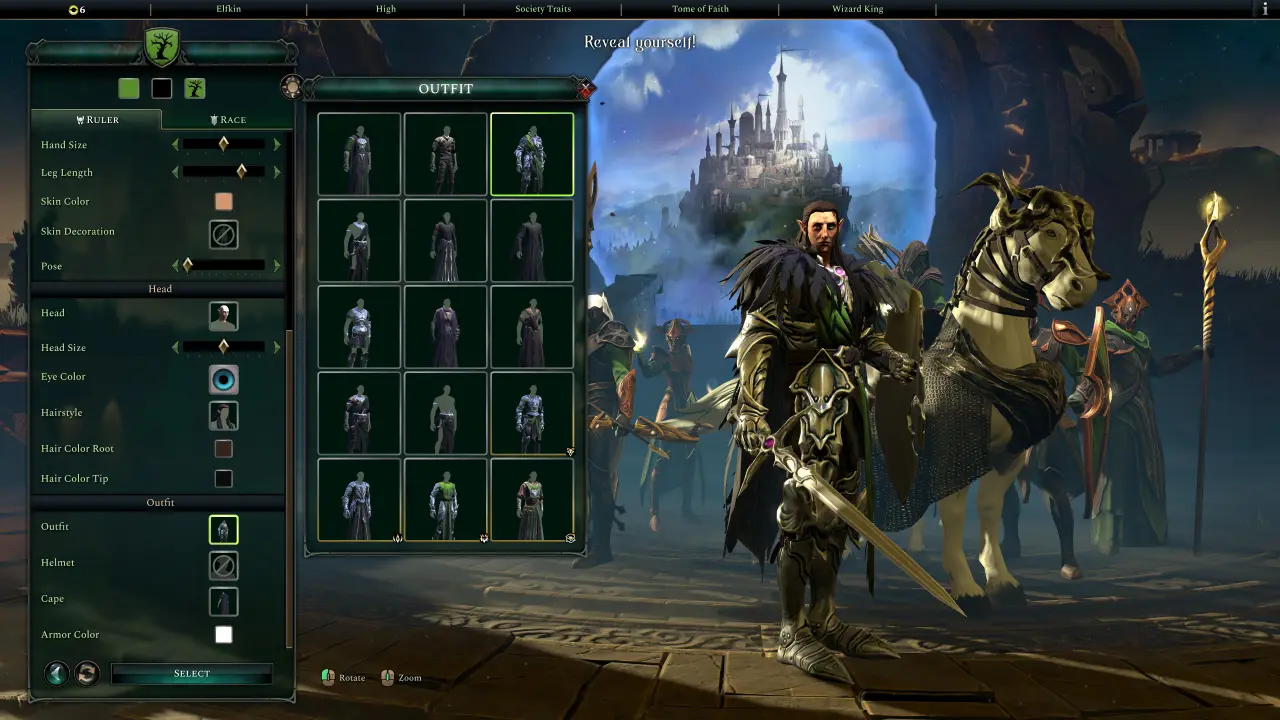
At the campaign level, the multi-world "Realms" are a key pivot. You are not grinding a single giant map into the ground; you travel between different worlds, and an account-level pantheon and ruler progression slowly accrues a conquest record that is uniquely yours. Every new game isn't a clean start so much as the next volume in a serialized epic — the sense of continuity is held firmly.
Then there is the tactical layer. Different magic schools and unit compositions can produce a huge variety of fighting styles, and every move in a turn-based battle meshes with the grand-strategy build you assembled. That interlock — small tactical decisions feeding back into large strategic ones — is the depth that makes the game stand out so sharply in its category.
Mechanics like assimilating independent city-states, using race-transform magic to take them over, or simply having a random event change your whole expansion direction keep the optimization loop pleasantly dirty. These are the moments that stop a 4X from feeling like a spreadsheet on rails — the unplanned pivots, the opportunistic land grabs, the times a single event reroutes a strategy you'd been nursing for twenty turns. Age of Wonders 4 has a lot of them, and they're what give each campaign its texture. The downside is real, though: the sheer stack of systems means a steep barrier to entry, and newcomers can drown in the option-tsunami of the first ten hours. The structure underneath is solid, so once you push past that strange opening stretch, complexity turns elastic — and "one more turn" becomes a genuine hazard.
Content | 7/10
Content: 7/10The "start another game" button in Age of Wonders 4 is genuinely dangerous. This is a game built to be lived in rather than finished, and almost every structural decision serves that long, slow burn.

Maps as a Spice Rack
The preset maps are already rich, and the game supports deeply customizable world parameters on top of them. You can treat the map like a rack of seasoning bottles, twist a few dials, and end up with a completely different situation — scarce resources, monster-dense wilds, aggressively carved-up realms. Each parameter combination hints at a new playground for experimentation.
That tunability is what keeps the foundation fresh. Two players can sit down to the "same" game and have wildly divergent experiences depending on how they set the table. And because the parameters interact, the space of distinct match types is far larger than the menu suggests, which is exactly what you want from a title designed to be replayed indefinitely.
It also lowers the stakes of any single setup. If a world feels stale, you don't grind through it — you reshape the next one, and the act of authoring the conditions becomes part of the fun. There's a quiet design wisdom in handing the player this much control over the starting state: it turns setup itself into a creative decision rather than a loading screen you click through on the way to the "real" game. Every slider you nudge is a small wager about the kind of story you want this run to tell.
Replayability Through Faction Builds
What really carries the longevity is build freedom. The number of grimoire, race, culture, and society-trait combinations is vast, and nearly every game lets you attempt a completely different faction build. One match you run extreme economy plus terrain reshaping; the next you go full militarist with a horde of cursed legions. It's like the same melody arranged as jazz, then metal, then classical — and the longer you play, the more you start actively "ordering off the menu," asking what strange thing you want to try today.
Mode variety reinforces this. Story Realms and the standard sandbox coexist, which is a smart split. The former offers a quest-driven campaign structure and a clear sense of objective; the latter returns to traditional long-form 4X for players who just want to watch the numbers roll and the empire swell. Bouncing between them means you're neither led around by the nose by quests nor adrift in an endless sandbox.
Account-level unlocks then play the role of long-term motivation. Ruler cosmetics, items, and new realms open up gradually, lending every game a faint sense of "working toward the next one." Even if a particular match falls apart partway through, you never feel you played for nothing — and post-launch DLC keeps widening the pool of races, cultures, and realms to draw from.
Thickness Over Sharpness
If you want to nitpick, this content architecture leans more toward thickness than sharpness. It offers an enormous amount of long-form playtime, but it won't necessarily hand you a strong, memorable climax in every single match. It's more the kind of game you keep parked on your hard drive, returning to soak in now and then, than the sort you binge for a sleepless three-day finish.
That's a feature for the right audience and a frustration for the wrong one. If you measure value in headline moments, the lab can feel diffuse. If you measure it in hours of pliable, self-directed experimentation, almost nothing in the genre offers a deeper well — and that well only gets richer as expansions stack up around the core.
It helps, too, that the content scales gracefully with your own ambition. A first-timer can stick to a couple of preset worlds and one comfortable faction archetype for dozens of hours. A veteran can chase exotic hybrid builds, crank the world parameters into hostile territory, and treat each campaign as a fresh design problem. The same game serves both, which is rare, and it's a large part of why the install tends to survive purges of the hard drive that claim flashier, shorter titles. The thickness, in the end, is the point: this is content meant to be returned to, not consumed once and shelved.





Comments 0
Share your game review
Join the discussion and share your review of this game.
No comments yet. Share your thoughts on this review.