





















Opening
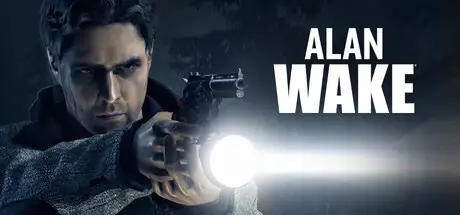
Some games you remember not for a boss or a number, but for a mood. It's past midnight, you've been pushed into a fog-choked forest, and the cone of your flashlight shakes against the dark while a man with an axe peels out from behind a tree. And underneath all of it runs a voice — the protagonist's own — reading the whole night back to you as if it were a chapter of his novel. That is the first thing Alan Wake does to you, and it is why people still talk about it more than a decade later.
Remedy built it, Xbox 360 got it first in 2010, and Steam got it in 2012 with two extra episodes folded in. It sold modestly, was praised loudly, and has since been canonized as an Xbox 360-era cult classic — Time magazine named it 2010's game of the year.
It isn't a jump-scare horror game. It's the soul of a psychological thriller poured into the body of an episodic action game, and the rest of this review takes it apart one dimension at a time.
Story | 9.0/10
Story: 9/10A novelist who can't write a word drives straight into his own nightmare
Alan Wake is a bestselling horror author with a two-year case of writer's block, and the game opens by handing him the one thing he doesn't want: a vacation. He brings his wife Alice to Bright Falls, a mountain town in the Pacific Northwest, hoping the quiet will shake something loose. It does the opposite. Alice vanishes the first night out at a cabin on Cauldron Lake, and Alan wakes a week later with no memory and a manuscript he doesn't remember writing — a manuscript describing, page by page, the exact horror now closing in around him.

The emotional core underneath all the supernatural machinery is small and human: a blocked writer forced to walk back into the fears he put on the page, because the woman he loves is somewhere inside them. The town fills with the Taken — locals swallowed by a Dark Presence and turned into axe-swinging, chainsaw-dragging shadows that boil out of the night. Bright Falls never trades on a sprawling mythology to earn its grip. It takes one clean line — lost, searching, trying to make it right — and steeps it in a dread that never quite lifts, so that you spend the whole game unsure which parts are real and which Alan only wrote.
You play it while the hero reads you the novel you're living
If Alan Wake gets one paragraph to justify why it stands alone, it spends that paragraph on the narration. Alan talks over the entire game in first person, autobiographical and a half-step ahead of you, narrating the night you're walking through as though it were a chapter he already finished. He leans constantly on the past tense — "I didn't know it yet, but…" — and that single grammatical choice drips a sense of fate over everything you do.

The manuscript pages push it further than any framing device has a right to go. Scattered across the world are pages Alan wrote but hasn't lived yet, and the ones you pick up routinely spell out what's about to happen to you. You read "the lights went out, and that was when they came," and then you have to walk into that exact dark anyway, knowing.
Being spoiled on your own story and made to live it regardless is a trick almost nobody has matched, before or since, and it's the whole reason this dimension lands a 9. The suspense doesn't come from not knowing. It comes from knowing and going in.
Six chapters cut like a television season
Remedy understood early that it didn't want the freedom of an open map; it wanted the controlled, deliberate pacing of a TV show. So the game is split into six episodes, and it commits to the bit completely. Every chapter opens with a "Previously on Alan Wake" recap, and every chapter closes on a licensed song that sends you out on a held note. Finishing an episode genuinely feels like finishing an installment and waiting on the next.

The rhythm runs on a day-night swing. Daylight is for Bright Falls — investigating, talking to residents, gathering threads. Night is for the forests and mines, where the light-versus-dark combat lives. That alternation keeps the tension from flatlining and keeps a hook in you across the seam of every chapter. Instead of dumping a single enormous world in your lap and hoping you find the good parts, the episodic structure lets Remedy compress each stretch and aim it, so almost nothing feels like filler between the beats that matter.
Bright Falls is full of vivid, slightly broken people
A good story lives or dies on its supporting cast, and Bright Falls is stocked with people you remember. There's Dr. Hartman, the unctuous psychiatrist who keeps treating Alan as a specimen; the Anderson brothers, a pair of aging rockers who write poetry, played old metal, and happen to hold a key piece of the truth; and the loop of unsettling episodes playing on every television set — Night Springs, an open love letter to The Twilight Zone.

Those characters and stray details weave the thing the whole game runs on: an everyday surface stretched tight over a nightmare underneath. On paper Bright Falls is the most ordinary logging town in America. Underneath it sits something that eats the light. That stitch — wholesome small-town daylight sewn onto supernatural rot — is where Alan Wake reads most like David Lynch's Twin Peaks and most like a Stephen King novel, and it's what keeps the trip from collapsing into "shoot monsters, rescue wife."
What you write comes true: the Dark Place and the seed of the Remedy universe
Dig past the surface and the worldbuilding centers on what's under Cauldron Lake — the Dark Place, a presence that can turn anything written down into something real. Alan is a writer, so the horror he writes gets made flesh and then turns to devour the world that made him. Creation becomes a curse, and prose becomes a weapon. That premise is what gives the narrative far more authorial bite than any straight horror plot would, because the monster and the medium are the same thing.

That same Dark Place later became the foundation stone of Remedy's connected universe, threading directly into Control and into the higher-rated proper sequel, Alan Wake 2, in 2023. Looking back, the breadcrumbs this 2010 game buried weren't fully harvested for over a decade. For players who like to mine a narrative and do their homework, that long game across multiple titles is a pleasure in its own right — the kind of payoff you can only set up by trusting an audience to wait this long.
Set against Silent Hill 2, it took the other road
Drop Alan Wake into the lineage of small-town psychological horror and the comparison you can't dodge is Silent Hill 2. Both treat an ordinary town as a projection of the protagonist's interior, and both use the supernatural to force a man to face himself. But they aim in opposite directions. Silent Hill 2 is the bleaker, more suffocating one — it pins you in the mud of guilt and grinds, refusing you any relief.

Alan Wake takes the other road. It keeps the unease, but it spends the dread on momentum: a brisk episodic cadence and boss fights staged like rock concerts give you air and a reason to push forward. It tortures you less and gives you more of the action-adventure rush. Both are good answers; they simply taste nothing alike. If you can't sit inside Silent Hill's wall-to-wall suffocation but still want the small-town dread, Alan Wake is close to tailored for you.
Audio | 8.5/10
Audio: 8.5/10Alanko's strings and synths are the unease humming under Bright Falls
The original score comes from the Finnish composer Petri Alanko, and his instinct is the right one for this game: he doesn't try to scare you with dense stingers. He builds a continuous low hum of wrongness out of strings and electronic texture. In town during the day it's barely there, a faint suggestion that something is off. Step into the forest at night and it tightens, slowly, until a wave of Taken comes out of the dark and the music finally shoves upward to meet them.

That "hold it down, then let it break" approach keeps the music rising and falling in lockstep with your own nerves instead of sitting behind the action like wallpaper. Plenty of people still recall the sound of Bright Falls years later, and the reason is Alanko: he scored the feeling of not-quite-right into every quiet transition, so the calm stretches are doing as much work as the loud ones.
An 8.5 in this dimension leans first and hardest on his score.
A song to close every chapter, like the credits rolling on an episode
The cleverest piece of audio design in Alan Wake is the way it turns songs into a storytelling tool — genuinely ahead of the curve for 2010. Every chapter ends on a licensed track placed deliberately, maybe Roy Orbison's "In Dreams," maybe a Nick Cave cut, and the choice always answers back to that chapter's mood and events. You finish an episode, a song swells, and you feel exactly the way you do when the credits crawl up after a good hour of television.
That habit of closing a chapter on music works hand in glove with the episodic structure: the "previously on" recap pulls you back into the plot at the top, and the licensed song lets the chapter's aftertaste linger on the way out. It completes the binge-watching sensation the whole design is chasing, and it promotes music from optional garnish to a load-bearing part of the pacing. Cut the songs and the seams between episodes would feel a lot more like seams.
Solving the case by ear: clues buried in the lyrics
The game also hands you a fictional band, Old Gods of Asgard — really the Finnish group Poets of the Fall under a stage name. Their tracks, like "The Poet and the Muse," aren't just hype anthems for a fight. The lyrics themselves carry plot clues and hints at the answer, so a player who actually listens can reconstruct a corner of the truth from the words alone.
Better still, those rock cuts tend to detonate during boss fights or heavy waves, paired with stage lights and pyro, turning a routine clear-out into a concert-grade audiovisual peak. The standout is the Anderson farm setpiece, where a Taken-infested barrage plays out under a giant glowing stage rig while "The Poet and the Muse" blasts — combat and concert become literally the same scene. Staging a fight as a performance is a Remedy signature, and it produces some of the most-remembered moments in the game.
Holding all of it together is Alan's wall-to-wall first-person voiceover, performed with enough conviction to sell the conceit. The narration is the soul that keeps the music, the mood, and the plot from drifting apart — strip the voice out and the songs would just be songs, the score just ambience. Threaded through Alan's reading, they become the connective tissue of the whole episodic experience.
Visuals | 8.0/10
Graphics: 8/10Light is the motif, in the art as much as the mechanics
Alan Wake's strongest visual signature is what it does with light. Deep in the black, fog-packed forest, the cone of a flashlight, a car's headlights, a mine's searchlight, the warm flare of a signal round — each one carves a slash through the cold dark, and the contrast is severe enough to print as a poster. Light here isn't illumination. It's safety, it's hope, it's the one weapon you have against the dark, and so every beam carries emotional weight before it carries a single lumen of utility.
The volumetric light, the fog work, the way tree shadows sway under a backlit sky — it was striking in 2010 and it still holds a strong stylized identity today. You'd struggle to mistake a single screenshot of Alan Wake for any other game; that "warm light against cold dark" motif is a signature nobody else owns.
Which is exactly why the art ages so gracefully even though the raw rendering tech was overtaken years ago. Style outlives resolution, and Remedy bet on style.
Pacific Northwest small-town geography, soaked in highway-horror
Beyond the light, the environment design carries a real share of the load. Bright Falls and the country around it are a tightly stylized slice of Americana: fog-wrapped conifer stands, an abandoned mine, a lonely farmstead, a gas station and a motel where only the sign is still lit after dark. Stitched together, those places give off a very particular scent — American road movie crossed with small-town horror.
You drive through the night with your headlights raking the pines and the mist, half-expecting something to step out of it, and the geography itself is doing narrative work, telling you this is a place that something has its eye on. The set dressing reinforces it everywhere — a logging crew's abandoned equipment, a diner with the coffee still warm, a campsite gone silent — small props that imply a town frozen mid-routine the moment the dark arrived.
Rather than chase photoreal density and detail, Remedy chose to push mood and recognizability to the limit, so every location earns its keep by feeding the dread that never lets go. It's a deliberate, art-directed look, not a tech showcase, and that restraint is exactly why it survived a decade of hardware leaving it behind.
PC original versus the Remaster: which version to buy
When it comes to actually putting money down, the platform question has to be settled plainly. The subject of this review is the 2012 PC original on Steam (appid 108710): compared with the first Xbox 360 release, it's freer on resolution and frame rate, the image is cleaner, and it bundles in both The Signal and The Writer special episodes, so the content is complete out of the box.
In 2021 Remedy put out the Remaster, which brings 4K, reworked cutscenes, and rebuilt character models for a more modern face — but note that the levels, the mechanics, and the story are identical to the original. The Remaster swaps the skin, not the bones. If image quality matters a great deal to you, it's worth a look; but if you only want the story as it was, or you're on a budget, the 2012 PC original is entirely enough, and an 89% positive rating on Steam across 43,793 reviews says the foundation still holds up after all this time.
Combat | 6.0/10
Gameplay: 6/10Burn the shield off with light, then finish it with bullets
The core of Alan Wake combat is a two-stage light-and-trigger dance you rarely see anywhere else. The Taken are wrapped in a shield of darkness, and bullets bounce off it almost harmlessly. First you have to hold your flashlight's beam on a target, scorching that darkness away piece by piece; only once the shield breaks and the enemy is exposed in the light do your shots actually land and kill. Light is built into a real weapon here, not a passive torch you carry for visibility.
The design felt fresh in 2010 because it splits "aiming" into two separate jobs — point the light and pull the trigger — and forces you to juggle both while a knot of lumberjacks closes in. The fumbling is the point; the panic of managing the beam and the trigger at once is where the tension comes from. The first time you smoothly burn a Taken open, put a round through it, and pivot to the next without missing a beat, the satisfaction of having mastered that rhythm is the real thing.
Batteries, bullets, flares: fear squeezed out of scarcity
What truly tightens the screws is the scarcity. Flashlight batteries, the rounds for your revolver and scattergun, the flares that shove back a whole ring of enemies at once — all of it is finite, and the supply caches in the woods are placed with real restraint. The flashlight can also hold a focused boost beam that burns shields faster, but the cost is your battery draining quicker: the shield breaks sooner, the light dies sooner, and that trade-off is live in every single fight.
The most harrowing piece of design is the instant a battery runs dry: the flashlight stutters in warning, the cone flickers in and out, and the Taken in the dark step closer with every flicker. Those few half-blind seconds are the sweatiest moments in the whole game.
Flares and flash-bangs are the panic buttons — pop one to blow a circle of light open, drive back the swarm, and buy yourself a window to reload and breathe. Resource management here isn't a menu of numbers; it converts straight into a physical, hands-clammy kind of fear.
Stand inside a pool of light and the dark can't touch you
Beyond the light in your hand, the fixed "safe havens" of light in the world are your other lifeline. Inside the bright zones thrown off by streetlamps, headlights, and generators, the darkness can't reach you, and standing in one lets you heal and save — they're effectively the game's safe rooms. So a lot of fights turn into a sprint between two pools of light while a pack of chainsaw lumberjacks chases you across the gap, and the rhythm stays tight and electric.
That haven mechanic carries the "light equals safety" logic all the way through and gives the level design a distinct cadence: you're always calculating where the next pool of light is and whether you'll make it. Together with the shield-breaking and the resource squeeze, it forms a survival-action loop that's entirely Alan Wake's own — and in 2010, that combination really was a fresh, complete idea, even if it would later wear out its welcome.
One trick, all the way down: repetition and a sticky flashlight aim
Having praised it, I have to be honest about why this dimension only earns a 6. The problem is "one trick, all the way down": from start to finish the loop is light, break shield, shoot, retreat into a pool of light, and the enemy roster is limited too — lumberjacks, possessed townsfolk, flocks of black birds, the odd controlled object, and that's most of it on rotation. By the back half, the clear-out, cutscene, clear-out cadence starts to feel noticeably repetitive and tiring.
The other hard knock is the feel. The flashlight stands in for a reticle, but the aim runs sticky and the lock-on isn't responsive enough; anyone used to a crisp third-person shooter will find it awkward. Held up against Resident Evil 4, a game it constantly gets compared to, the gap is plain: RE4's over-the-shoulder shooting and resource economy are sturdier and the impact is crisper, while Alan Wake's gunplay is lighter and bent entirely toward mood and narrative. On pure handling, it loses that bout. Put plainly, this is a game whose atmosphere and staging run far ahead of its shooting — you come for the story and the dread, and the combat is the vehicle carrying the experience, not the destination.
Content | 7.0/10
Content: 7/10A dozen-hour main story, plus two special episodes that pick up at the end
If you head straight for the main story, Alan Wake isn't a large game — somewhere around a dozen hours sees you through. But the PC version on Steam has a quiet bonus baked in: it folds in both special episodes that originally cost extra on Xbox 360 — The Signal and The Writer — at no additional charge, right inside the base game.
Those two episodes pick up in the immediate aftermath of the main story, carrying Alan's situation inside the Dark Place forward, and for anyone who wants the complete arc they're close to essential. In other words, the copy you buy on Steam is the full package — base game plus two official follow-up chapters — done in one purchase, with no DLC math to agonize over afterward. Against the console version that sold those episodes separately, that's a genuine, concrete perk of the PC release.
Manuscript pages, radio, and TV shorts: collectibles that double the run
Beyond the main path, Remedy buried a generous spread of collectibles to flesh out the world. The most important are the manuscript pages scattered throughout — as mentioned, fragments Alan wrote but hasn't lived yet — and the more of them you find, the fuller your grasp of the plot's truth and its hidden setups becomes. On top of that there are the thermoses (a running development-era in-joke), local radio broadcasts you can tune in to, the eerie Night Springs shorts looping on the town's TV sets, and signposts dotted along the way.
Clearing all of those out stretches the run from a dozen hours toward the twenty-to-thirty mark. And the higher Nightmare difficulty unlocks additional manuscript pages that further complete the story, handing the hardcore a real reason for a second playthrough.
For anyone who likes to mine narrative detail, those fragments are a source of replay value in themselves, not a checklist chore.
Density over volume: the trade-off after the open world got cut
It's worth saying that Alan Wake looks small today because of a clear-eyed trade-off Remedy made at the time. During development, the game spent roughly six months as a fog-wrapped open-world sandbox — a huge expanse of forest, lakes, a power plant, and a Twin Peaks-style town free to explore. They realized fast that the open world stopped them from controlling the narrative pacing and couldn't deliver the tension and atmosphere they were after, so they cut the sandbox and committed to the tightly linear, episodic structure instead.
That decision defined the game's whole content shape: its "density" doesn't come from a vast map piled with busywork, it comes from carefully placed narrative fragments and atmospheric detail. Every stretch of road you walk and every page you pick up sits at a deliberately tuned point in the pacing. For players chasing open-world freedom, that may read as a mark against it; but for players who care about narrative density and pacing control, this density-over-volume trade is exactly why it still holds up. Less map, more intent.




Comments 0
Share your game review
Join the discussion and share your review of this game.
No comments yet. Share your thoughts on this review.