






















Opening
Released on 2011-06-14, *Alice: Madness Returns* holds a 7.3/10 score, with cited coverage listing Youyanshe at 0/10 and None/10 across Gcores, Eurogamer, and Chuapp. Despite the fragmented reception, the title operates as a psychological pressure cooker rather than a standard action game. The real pull isn’t combat; it’s the lingering dread of what each heavy oak door will tear open next.
Years later, that damp, clinical oppression still lands. It never shouts. The controller simply hums as black vines crawl through asylum tiles and rust-gold tones bleed across the screen. You might stand still for three minutes, letting the quiet, drug-tinted weight settle. That subtle environmental tension is exactly why the experience endures.
Sound & Atmosphere | 9.0/10
Audio: 9/10The soundtrack hangs like a waterlogged blanket, suffocating you until you can hardly breathe. As the Mad Hatter's tea party kicks off, the cello's pizzicato suddenly slices into the rhythm, like the blunt edge of a knife scraping across glass. Two tracks went straight into my phone playlist. One is the undercurrent of low frequencies in the asylum corridor—a track that makes me want to curl up on the sofa and zone out. The other is the mechanical roar of the final battle—one that sends my blood pressure soaring.
Its sound design shuns grand narratives. Instead, it turns "distortion" into a tangible, audible entity. When Alice transforms, the background audio suddenly cuts out for half a second, creating a vacuum. This is followed by the delicate, whirring sound of gears spinning backward. That half-second of sonic void does more to remind you that your sanity is fracturing than any explosion effect ever could.
The layers of sound effects are densely packed, yet it never feels cluttered. The high-frequency clink of porcelain shards always rides above the low, rumbling tones of the pipe organ. It’s like a layered absinthe cocktail: you drink it down, first tasting the sweetness, only for the aftertaste to be all bitter dregs. It doesn’t set out to manufacture a sense of epic scale. It only exists to pin you down in that musty, moldy Victorian world.
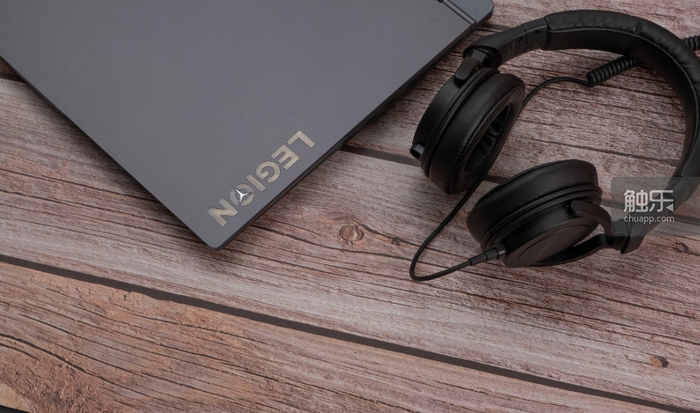
You don’t need headphones to feel its oppressive weight. But once you put them on, the spatial soundstage instantly stretches the corridor to twice its length. The drip of water on the left wall, the grind of metal from the right ventilation shaft, the ragged breathing of the enemy straight ahead. It paints a three-dimensional map for you using only sound. You could pinpoint where the cover is with your eyes closed. This design turns your hearing into a navigational tool. It doesn’t teach you how to play; it only trains you to listen.
Even after clearing the game, I still occasionally switch back to the main menu. Not to play, but simply to listen to that idle ambient track. The whistling of wind through cracked stained glass, mingling with the faint, distant toll of bells. It’s like a piece of amber—preserving the indie gaming ambitions of 2011 perfectly intact.

Visuals | 8.5/10
Graphics: 8.5/10The first time I stepped out of the dark corridors and was blinded by the glare of cold light, I realized this game’s art direction isn’t just “stylish”—it’s viscerally jarring. The reality thread runs in cold, harsh blue-gray tones. The asylum’s tile reflections look frosted. Meanwhile, the fantasy thread dares to saturate the screen with dark reds and rusted golds. The high contrast isn’t a technical flex; it slaps the visual pathology of schizophrenia right in your face.
By today’s standards, the texture fidelity is indeed coarse. Trees in the distance look like paper cutouts. Yet the material textures are captured with remarkable precision: the blackened edges of lace, the rusted gears of a pocket watch, the folds of an apron stained with blood. It doesn’t strive for photorealism. It strives to capture what memory looks like after it’s been tainted.
The lighting is used with restraint. There’s no global illumination—only localized, dramatic lighting. The gas lamp at the end of the corridor always illuminates just half a face. The other half is left to the dark. This approach turns exploration itself into a psychological battle. You never know whether the shadows hide an enemy or the next childhood flashback.
The transitions between scenes are incredibly smooth. There are no loading bars at the boundary between reality and fantasy—only a slow bleed of color tones across the screen. Walls begin to weep threads of blood, floor tiles sprout thorns, and the dark clouds overhead are torn open. You don’t need to glance at UI prompts. Your eyes will instinctively tell you that the world is collapsing.
This visual language still holds up today. It doesn’t rely on an excess of particle effects or abuse volumetric fog. Instead, it uses composition and color psychology to generate unease. Just looking at the screen makes you feel cold, as if wind is seeping into the cracks of your bones. The art team clearly understands that horror doesn’t stem from monster designs, but from the environment’s slow stripping away of your sense of security.

Pacing | 7.0/10
Story: 7/10The main storyline delivers a passable revenge tale. It’s not a bad watch, but you’ll likely forget the names of the key characters by the next day. One detail has stuck with me until now—Alice picks up a pocket watch in the study, and its hands run backward. She sighs. No spoilers; go experience it yourself.
The narrative is handed entirely over to environmental storytelling. There are no lengthy cutscenes. Fragments of the plot are hidden in shattered porcelain, wall graffiti, and the rambling delirium of NPCs. You have to piece together the bloody diaries and twisted fairy tales yourself. The process is slow, and you’ll often find yourself stuck at logical breaks between certain symbols.
It doesn’t try to fully explain the roots of “madness.” Instead, it lets you experience its texture. The storyline is like a sweater that lets in the cold. You wear it through the entire journey; it’s chilling, but the stitching is undeniably tight. This kind of storytelling through omission might feel a bit old-fashioned today. But placed within the corridors of an asylum, it fits perfectly.
The dialogue is incredibly sparse. Enemies won’t throw out threats before combat begins, and BOSS encounters are preceded by only a line or two of metaphor. You have to dig for clues like an archaeologist, sifting through fragments of speech. This approach naturally filters the player base. Those who prefer fast-food narrative will find it obscure, while players accustomed to piecing things together will find it deeply satisfying.
It offers no omniscient perspective. You are confined to walking in Alice’s shoes, watching the world distort step by step. This limitation of a subjective viewpoint paradoxically becomes the narrative’s greatest strength. You never know what you’ll see next. You can only press forward, guided by her fear. —The information is incomplete, but the emotional impact is maxed out.

Combat System | 6.5/10
Gameplay: 6.5/10At first glance, the combat system looks like an action game. But once you dive in, you realize it runs on a turn-based core. Before every strike, you're calculating—distance, stamina, and the enemy's recovery window. The satisfaction of a hit doesn't come from a damage number, but from knowing "I calculated it right."
For the first ten hours, you'll feel like you're just mashing buttons. After twenty hours, you'll start to enjoy that deliberate precision where "every strike matters." The transformation mechanic is the core variable. Shrinking lets you squeeze into pipes for puzzles, while growing lets you tank heavy enemies. The timing of your switch decides whether you get crushed or turn the tables.
The platforming section holds the game back. The camera frequently gets stuck in corners, and the landing hitbox is painfully narrow. You can clearly see yourself land, but the system tells you you're still "mid-air." This issue is annoying, but not fatal. Just memorize the layouts after dying enough times. It'll just occasionally make you curse out loud while making your way through.
The skill tree isn't complex, but synergies demand careful thought. Fire attacks clear fodder quickly but do negligible damage to heavy armor. Frost can freeze enemies, but it also alters terrain friction. You can't stick to one build from start to finish. You'll have to respec midway based on the level layout. This design adds strategic depth. It also increases the cost of early-game trial and error.
The combo feedback is rock-solid. Hitstop on impact, screen shake on taking damage, slow-motion on executions. It breaks down "action" into quantifiable physical rules. You don't need to be fast. You just need to be in rhythm. —It tests patience, not raw speed.


Content Volume | 5.5/10
Content: 5.5/10Clearing the main story takes about 25 hours. But it took a third playthrough for me to barely track down every hidden part on the map. Exploration rewards are notoriously stingy. Many long detours into secret rooms yield nothing more than a single key or half a health bar. The primary drive to keep exploring is sheer "OCD."
The level design is strictly linear. Despite its seemingly open layout, there is only one path. Branching intersections are often just decorative dead ends. You won't get lost—you just need to follow the arrows. Enemy setups become repetitive in the late game. The same explosive dolls, the same sniper perches. It feels heavily reskinned.
Additional playthroughs unlock new costumes and some difficulty settings, but the core gameplay loop remains unchanged. It isn't designed for casual weekend sessions. It's best suited for a rainy night, when you can push through it in a single sitting. Don't expect to grind out 100 hours. Its value lies in the intensity of a "one-and-done" experience, not its runtime.
The collectible system is highly fragmented. There's no clear progress bar. You're left to navigate hidden compartments and secret passages through trial and error. This leads to a disjointed exploration pace. Just as you find your rhythm, you might suddenly hit an invisible wall. Alternatively, your enthusiasm can quickly drain while grinding through corridors with repetitive enemy patrols.
Yet, the game is undeniably packed with content. Side quests never overshadow the main narrative; they merely quietly enrich the worldbuilding. Shatter a jar, and you might uncover a page from a childhood diary. Push open a hidden door, and you could be greeted by a piano solo. — The quantity is small, but the density is remarkable. It doesn't rely on padding runtime with filler content. Instead, it squeezes every inch of space for maximum value.






Comments 0
Share your game review
Join the discussion and share your review of this game.
No comments yet. Share your thoughts on this review.