























Opening
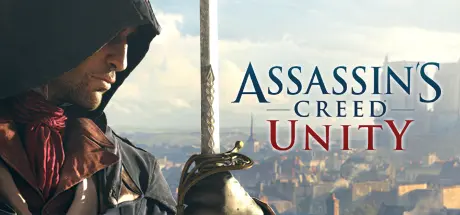
Some games are remembered for their hero. This one is remembered for its city. Twelve years on, almost nobody can recite what Arno Dorian was avenging, yet anyone who played Assassin's Creed Unity can still picture the Paris it built — a near one-to-one revolutionary capital, stacked rooftops to riverbank, that no game since has dared to rebuild.
It arrived at the worst possible moment. On launch day in late 2014, that exquisitely detailed city was crawling with bugs: pedestrians clipping through walls, citizens strolling on thin air, frame rates that buckled the instant a crowd gathered. Ubisoft halted season-pass sales and gave away an entire expansion as an apology. Review scores stalled in the sevens, OpenCritic logged a brutal 36% recommended, and Unity became the most mocked name in the franchise.
Pull the clock forward a few years, though, and the story flips. Patch after patch sealed the launch wounds. On the night Notre-Dame burned in 2019, players reopened this game by the thousand just to climb an intact cathedral one more time. The Unity you can buy today and the one critics savaged are practically two different products — the technical debt is paid off, and what remains is a city no one has replicated and a stealth design the industry badly underrated. That is what this review is about: why this Paris is worth walking through despite its reputation.
Story | 6.0/10
Story: 6/10Arno's revenge is the weakest thread in the whole game

Let me be blunt up front: if you come to Unity for its plot, you will probably leave disappointed. Arno Dorian is an adopted noble boy who loses his guardian to an assassination and sets off on a revenge that drags him into the thousand-year shadow war between Assassins and Templars. Every ingredient is here — secret parentage, burning vengeance, a forbidden romance across enemy lines, a turncoat within the order — and every one of them is delivered flat, walked through rather than dramatised, the franchise template run one more time without the spark.
The problem is not the premise but the people. Arno spends the entire campaign as a smooth, edgeless instrument; his anger, his hesitation, his growth all float on the surface where you can never quite reach them. The villains are thinner still — you dispatch most of the Templar grand masters before their names or motives have stuck. The storming of the Bastille should be a thunderous opening, and the spectacle of a mob surging at those walls is genuinely there, but the moment the camera narrows back to Arno's private grudge, that "I am living through the French Revolution" feeling starts leaking away. This, more than anything, is why the story dimension lands at a 6.0. It is not that Unity tells its tale badly; it is that it could so obviously have told it so much better.
A revolution this big deserved a hero this small to grow into it — and he never does

The strange thing is that Unity is sitting on the richest slice of history the series has ever touched. The Revolution itself, the fall of the Bastille, Robespierre's Terror, the heaving crowds at the foot of the guillotine — these real events are the best drama imaginable, and they need no embellishment. The game does drag them in as backdrop: riots that can erupt on any street, public executions in the squares, the tinderbox tension between aristocrat and commoner. The atmosphere genuinely lands; you can smell the gunpowder in the air of the period.
What never bonds is Arno's personal revenge and that towering historical canvas. You can feel the writers reaching for the moment where one man's fate braids into the flood of an era, but the execution is too loose, and most of the time history is just scenery for Arno to sprint and climb and stab across rather than a force that pushes him forward. Set it beside the series' narrative peak, Assassin's Creed II: Ezio is hammered from a carefree young noble into a cold, deliberate master assassin across years of loss, and that arc remains the franchise benchmark. What Arno lacks is exactly that inner engine — the reason a player gladly follows him all the way to the end.
Yet Unity does not put all of its storytelling eggs in the main basket, and two side strands deserve their own paragraph. The first is the Helix Rift: without warning the game yanks you out of eighteenth-century Paris and drops you briefly into occupied wartime Paris, or the glittering World's Fair of the Belle Époque. It is a bold, genuinely surprising device that lets you cross centuries under the same skyline. The second is the Murder Mystery sideline — proper detective work where you sweep the scene, gather clues and reason your way to the culprit, and whose writing often outclasses the campaign. Together with the scattered Paris Stories, these quietly drag the narrative density back up. The honest summary: the spine is the weak link, but the city hides plenty of stories worth digging for, if you are willing to set the revenge plot down and play the loiterer and the sleuth instead.
There is a quiet irony in all this. A game that wrote a forgettable hero somehow built one of the most memorable stages in the medium, and the longer you play, the more you stop listening to Arno and start reading the city itself — a wall of graffiti, a body in an alley, a crowd turning ugly outside a bakery. Unity tells its best stories in the margins, almost in spite of its own script, and that is a strange, faintly tragic thing to say about a narrative-driven series. It is also, oddly, part of why the game endures.
Audio | 8.0/10
Audio: 8/10Orchestra and choir carry the weight of a city about to fall

Unity's score is the work of several composers — Chris Tilton, Ryan Amon and Sarah Schachner among them — and it commits, wholesale, to sweeping orchestra and choir. There is no showing off here. The music has one job and does it cleanly: to press the tragic, solemn, perpetually-about-to-erupt weight of the French Revolution down onto your shoulders. Stand on the spire of Notre-Dame, look out across the rooftops, and as the strings swell and the voices rise you genuinely feel yourself perched on the hinge of an era, an old world cracking apart beneath your feet.
It is scoring in service of place rather than spectacle. There is no single hummable anthem the way some games trade on; instead the mood is spread evenly across every street, every square, every cathedral in the city. Solemnity is the keynote, grandeur the scale, and that is precisely the register this heavy city needs. Schachner would later grow into a signature composer for Ubisoft, and the knack you hear in embryo here — weaving the gravity of history straight into a melody — is already on display. Music in Unity is not decoration; it is how the city is given a voice.
Thousands of voices are the real ambient track

If the score is Unity's skeleton, the ambient design is its flesh, and the achievement everyone undersells lives inside that crowd system of thousands of simultaneous NPCs. Revolutionary Paris is never quiet: hawkers crying their wares, the low murmur of a gathering, a riot or a quarrel flaring up out of nowhere, the surge of cheers and screams from a distant square as the guillotine drops. The layers stack on top of one another into the soundscape of a city that is genuinely alive. You do not need to see the riot — your ears alone tell you which street has just gone up.
That design pays off most clearly the moment you slip into a crowd to stalk a target. Footsteps, the rustle of cloth, the metal hiss of a blade leaving its sheath, the small scrape of fingers locking onto stone as you climb, and then the dull boom of the Guillotine weapon in the Dead Kings expansion — every sound is feeding you information about the situation and sharpening the feel of stealth and execution. Sound here is real gameplay data, not ambient dressing. Set it against the earlier Assassin's Creed IV: Black Flag, whose breakout charm was the sailors belting out sea shanties — that breezy romance was its signature, and many players still hum those deck choruses. Unity runs in the opposite direction entirely, toward solemn epic. Both are right; they simply serve opposite moods — one a free song on the open sea, the other a heavy symphony for the eve of a collapsing world.
It is worth dwelling on how much of the immersion rides on these layers rather than on the visuals everyone praises. Mute the game and Paris shrinks to a beautiful diorama; turn the sound back up and it breathes again. The crowd does not just look alive, it sounds restless, frightened, hungry, on the edge of something — and that audible tension is doing as much narrative work as any scripted cutscene. For a game whose written plot underwhelms, it is telling that its sound design quietly carries some of the era's real drama on its own.
Visuals | 9.0/10
Graphics: 9/10A near one-to-one Paris is the visual ceiling of the entire series

This is where Unity is untouchable, and it is the core reason the graphics dimension earns a 9.0. Ubisoft used the new AnvilNext 2.0 engine to rebuild the whole of late-eighteenth-century Paris at something close to a one-to-one scale. That is not marketing fluff — Chinese outlet GamerSky once ran a side-by-side comparison of in-game locations against the real landmarks, the Hôtel de Ville, the Louvre, Les Invalides, the Place de la Concorde, and the façades, the street layouts, the very proportions of the squares are lifted brick by brick from the real city. In 2014's open-world landscape this was the outright benchmark; even today, few games reach this level of researched precision.
What matters more is that this city is a climbable, living body rather than a pretty texture in the distance. You can scale any wall by hand to the rooftops, cross a whole district along a ridgeline of chimneys and garrets and cornices, then plunge back down into the churning crowd below. Paris here has thickness, vertical layers, a surface you can stand on and grip at every point. Perch atop a church, watch the red rooftops sprawl unbroken to the horizon, and the sheer density and mass of the place will make you hold your breath. The craft of turning an entire historic capital into playable space is something almost no game has managed to replicate since.
Notre-Dame is a cathedral modelled into a game that ended up touching the real world

If Paris is Unity's body, Notre-Dame is its soul. Ubisoft's French studio spent over a year modelling this single cathedral, reconstructing the masonry, the statuary and the great rose windows from a mountain of photographic reference — right down to the central spire added in the nineteenth century by the architect Viollet-le-Duc and lost entirely in the 2019 fire, all of it faithfully and proudly rebuilt in the game. The artist who led the cathedral poured close to two years into it, and that obsession became, in the end, every climbable step of stone under the player's feet.
So on the night Notre-Dame burned in 2019, this virtual cathedral took on a meaning far beyond a video game. Players the world over reopened Unity, without coordinating, just to climb that intact spire once more and see it as it had been before the flames. Ubisoft answered by donating €500,000 toward the restoration and giving the PC version away free for a week, drawing roughly three million downloads. It is worth clarifying that the game model, full of gameplay-driven compromises, was never precise enough for actual heritage restoration — but that did nothing to lessen its role as an emotional anchor for a generation. A 2014 game becoming, five years later, the way people said a solemn goodbye to a real landmark is the strongest possible proof of its visual weight.
The launch optimisation disaster, and a next-gen redemption that arrived late
Of course, a city this beautiful has to own its other face at launch. The 2014 build of Unity was a notorious optimisation disaster: pedestrians clipping through geometry, citizens walking through mid-air, frame rates that collapsed on a moment's notice in busy scenes. GameSpot called these out by name in its review, and PC Gamer flatly mocked the screen full of "floating pedestrians." The crowd system of thousands of on-screen NPCs was the visual ceiling of its day, and it was also exactly what dragged the frame rate down — the gap between the ambition and the hardware of the era laid bare, a gorgeous city undone by stutter and clipping on first impression.
The turn, fittingly, also came in the visuals. Wave after wave of patches sealed most of the technical wounds and made the city stable and playable again; by March 2026 Ubisoft even pushed a free 60 fps patch for PS5 and Xbox Series X|S, letting this already-detailed Paris run smoothly on current-gen hardware — late, but it came. Against the earlier Assassin's Creed IV: Black Flag, whose ocean was wide and free but consequently empty and low in information density, Unity poured every stroke into one vertical, dense, climbable Paris. On the precision and information density of a single city, it still sits, unchallenged, at the top of the franchise.
A decade of hindsight only sharpens the point. The series moved on to bigger maps — whole countries, oceans, ancient empires — but never again to a place this densely authored, where every façade was researched and every rooftop was built to be walked. Scale went up and craftsmanship per square metre went down. That is the quiet tragedy and the quiet triumph of Unity's Paris at once: it may be the last time Ubisoft chose depth over breadth this completely, which is exactly why it has aged into something the later, larger games cannot match.
Combat | 8.0/10
Gameplay: 8/10Black Box assassinations pull the series toward a Hitman-style sandbox
If the visuals are Unity's face, the Black Box assassinations are its soul as a game. They demolish the franchise's long habit of following an arrow to a marker and tapping a single execution button. Every major target sits inside an open Black Box zone, and your job is to infiltrate, scout, and find your own route in: disguise yourself as a guard and walk into a heavily defended inner chamber, manufacture a distraction to pull the watch away, drop on the target from a high window, or simply close the distance under the cover of the crowd.
One target, wildly different solutions. You can spend a patient half-hour searching out the cleanest single strike, or you can barge in, start a riot, and fish in troubled waters — each kill plays more like a puzzle with several correct answers than a fixed cutscene. This drags Assassin's Creed up from line-of-march assassination to something near the Hitman sandbox, handing the player real planning space and freedom of action. It is the most durably praised piece of Unity's design, and the hard reason its reputation could crawl back even after the launch collapse: the pleasure of a well-built box of this kind does not depreciate, and it still holds up today.
Climbing and customisation are two underrated structural overhauls
Unity's rework of the series' movement deserves its own note. It added two distinct commands — Free-run up and Free-run down — so you can choose at will whether to climb or to descend, finally curing the franchise's chronic ailment of lunging up a wall when you plainly wanted to drop down it. In a city as vertical and dense as Paris, that two-way climbing lets you flow like water between rooftop and street; movement itself becomes a pleasure rather than a chore.
Customisation, too, was given real weight for the first time. Each of the roughly 200 pieces of gear genuinely shifts your stats rather than just reskinning Arno: a hood lowers a guard's reaction time and widens your Eagle Sense radius; a chestpiece adds armour but pays for it by widening your disguise-detection radius and weakening your ability to blend into a crowd. It turns the stealth build and the brawler build into a set of trade-offs you tune yourself, and paired with the skill tree it marks the first time the series systematically folded in RPG-style progression.
Sluggish direct combat, and a double-edged four-player co-op
But Unity's gameplay is not without its weak spots, and direct combat is the most contested of them. It strips out the earlier games' fluid, one-button kill-streak rhythm and replaces it with something slower, weightier, far more reliant on defence and timing, deliberately punishing the player who wades in and pushing you back toward the stealth assassin's proper trade. Some love that it finally makes the assassin behave like an assassin; others find it clumsy and joyless — and whichever camp you join, "strong stealth, weak brawling" is a trade-off you cannot dodge when judging this game.
Four-player story co-op is the other double-edged sword. Up to four players can run the same mission together, each playing the Arno they have customised in their own save, appearing on the others' screens in their own outfit and carrying their own gear. When it runs clean, four assassins converging on a target from four directions is a genuinely thrilling sight; sadly, launch-day disconnects and desync were severe, and this is exactly what OpenCritic's "broken co-op" was pointing at. Against Assassin's Creed IV: Black Flag, which propped up its scale with a vast ocean and ship combat but scattered the assassin's focus in the process, Unity does the reverse — it compresses every system back into one city's stealth and killing, and is far more focused for it.
Play it now and the Black Box still feels ahead of much of what followed. Later entries chased role-playing sprawl, loot tiers and map-clearing checklists, and somewhere in that drift the pure, surgical pleasure of casing a single target got thinner. Unity, for all its launch sins, kept that pleasure at the centre, and it is the reason a patched-up 2014 game can out-stealth several of its glossier successors. The systems around it wobble; the core act of the kill does not.
Content | 8.0/10
Content: 8/10A solid campaign, plus a Paris you can keep digging into
On sheer volume, Unity delivers. The main campaign runs to roughly 17 hours by HowLongToBeat's count, and if you want to scrub the city clean of collectibles, side quests and puzzles, a completionist run stretches to about 48 hours. That is a genuinely substantial figure for a single-city open world, and the density of Paris itself means you can burn hours just loitering on the rooftops, climbing for the view, never short of somewhere to go. The thickness of the city converts directly into the thickness of the content.
The variety of side content holds up, too — none of it is copy-pasted checklist errand work. The Paris Stories scattered across the map are a set of short, sharply themed vignettes that let you glimpse the joys and sorrows of ordinary Parisians in a revolutionary age; the Murder Mysteries are hard-edged detective quests where you sweep the scene, gather clues, rule out suspects and reason out the killer, and they outclass several main-story beats — for many players, the real hidden treasure of the game. Add the environmental puzzles, the tucked-away collectibles, the locked chambers and the random street incidents, and Unity's content density wins not by blind quantity but by weaving it evenly into every corner and back alley of the city. Wherever you walk, whatever rooftop you scale, whatever underground passage you slip into, exploration keeps paying you back. That "the city is the content" philosophy means no stroll through Paris is ever truly wasted.
A free Dead Kings, and a long tail still alive today
Unity's content has to count one unexpected gift, too: the Dead Kings DLC. Originally paid season-pass material, it was opened up free to every owner after the launch storm, as a form of compensation. This roughly four-hour chapter pulls Arno out of the bright, bustling capital and into the dark, decaying commune of Saint-Denis — the final resting place of France's royal line, where the gloom of the catacombs and the royal tombs stands in sharp contrast to the noisy daylight city, the mood dropping the moment you descend. It also introduces the Guillotine weapon, a heavy device that mixes melee chops with area blasts and feels markedly different from the nimble assassin's toolkit, lending the closing chapter a welcome dose of novelty. As a free, compensatory addition it is well worth its weight; on its own it would not justify the purchase, but as an extension of the main story and an emotional coda it lands at exactly the right moment — and makes that launch debacle feel, at least a little, atoned for.
Rarer still is how alive this game's long tail remains. The PC scene still hosts an active spread of mod collections, and the player community never truly dispersed; someone is always mining the city for new ways to play. That sustained warmth shows up in the hard numbers: Unity has long since passed 10 million copies sold worldwide, and on Steam it holds a steady ~77% positive rating across nearly 77,000 reviews, tagged Mostly Positive. Given the catastrophic first impression it left, that slowly-recovered long-term reputation is itself the strongest endorsement of the content's underlying strength — a game once mocked across the internet that, in the end, kept its players through one solid city and one durable kind of assassination, and still earns fresh positive reviews more than a decade on.
What ties the whole package together is value that compounds rather than evaporates. The campaign gives you a firm spine of hours, the side content rewards the wanderer, the free expansion supplies a darker coda, and the mod scene quietly extends the runway for anyone on PC who refuses to put the city down. None of it is bloat for a trophy list; almost all of it points back at the same dense Paris. For a game so often discussed only through the lens of its launch, that is the detail most reviews skip — Unity is, by the numbers and by the hours, simply a lot of game, and a surprisingly durable one that quietly outlasts the games meant to bury it.




Comments 0
Share your game review
Join the discussion and share your review of this game.
No comments yet. Share your thoughts on this review.