























Opening
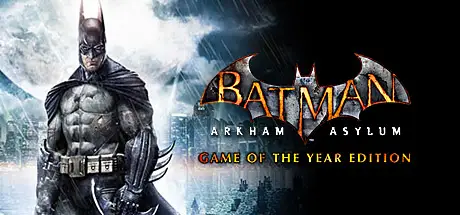
A licensed superhero game has no business being this good — and in 2009 that sentence still felt like a punchline rather than a verdict. Then Rocksteady marched the Joker through Arkham's intake corridor, let him grin at the restraints, and the whole genre quietly changed shape.
That opening escort is the hook. You walk a clown to his cell down cold stone halls, security lights flickering, Kevin Conroy's growl clipped and watchful, and you already know the leash is about to snap. When it does, you stop watching the Dark Knight and start being him — for one long night, on one cursed island.
Combat, stealth, exploration, story: Arkham Asylum stitches them into a single net and never lets a seam show. It wins not by piling on systems but by nailing the pacing. Short. Sharp. Clean. Here is what holds up, and what doesn't.
Story | 8.7/10
Story: 8.7/10One island, one night, and a fuse lit at the front door
The premise is lean enough to fit on a matchbook: the Joker lets himself be caught, gets walked into Arkham Asylum, then seizes the whole island and locks Batman inside with Gotham's worst for the night. That escort sequence is the lit fuse. You sense the trap before it springs, and the dread does all the work a cutscene usually has to beg for. This is not a slow-burn prologue that makes you wait thirty minutes for the plot — it drops you straight into a situation that is one wrong step from collapse, and the tension never asks permission.

What keeps the middle from sagging is the steady drip of new trouble. Harley Quinn turns up grinning. Commissioner Gordon goes missing. Scarecrow ambushes you when you least expect it. Each beat ratchets the pressure rather than bleeding it off, so the moment you finish dealing with one crisis the next is already crackling over the asylum's PA. The game's center of gravity is never "how many twists can we hide" — it is "keep solving problems the way Batman would," and on that score it holds firm from the first cell to the last.
It's a structure that respects your time, too. There's no busywork stitched between the set pieces to pad the runtime, no detour that exists only to delay the next confrontation. Every corridor you cross is moving the night forward, which is precisely why so many players finish it in one or two sittings and never feel the urge to put the controller down.
Paul Dini's script treats the rogues' gallery as cast, not cameo
Paul Dini, who wrote some of the best episodes of Batman: The Animated Series, understood the assignment. He refuses to use the Batman universe as a shelf of Easter eggs. Bane, Killer Croc, Poison Ivy, Scarecrow — each one arrives as both a boss encounter and a load-bearing beat in the plot. Nobody is shoved in for a "hey, that guy's here too" wink. You fight Poison Ivy because she has genuinely become part of tonight's chaos; you flee Killer Croc because the story needs you down in the bowels of the island.

The Joker is the engine that drives the whole thing. He spends almost the entire game hiding behind the security broadcast, jeering, lobbing fresh hazards your way, stretching the cat-and-mouse from open to close. You can feel that the writers both love this material and know how to convert that love into a chain of playable events rather than a pile of references you'd need a wiki to parse. That fluency keeps the asylum feeling alive — every villain reads like a resident of the place, not a fighter summoned for a quick scrap.
Steady, not explosive — the surprises live in mood, not plot twists
Let's be fair about the trade-off. If you came for a script of constant reversals and last-second gotchas, Arkham Asylum will feel solid but tame. It advances confidently, yet it doesn't lean on buried payoffs to manufacture shock, so anyone chasing narrative pyrotechnics may walk away a little hungry. Its biggest surprises come from atmosphere and character — and the wildest swing of all is the Scarecrow.

Those fear-toxin sequences fake a hard console crash, garble the dialogue, scramble the picture, and send you reaching for the power button before you realize the game is messing with you on purpose. That fourth-wall break still gets cited as one of the medium's great tricks, and it sticks in the memory longer than any plot reversal could. Set it beside the sequel: Arkham City widens the stage into a half-open city district and lets its story branch and sprawl. This first night wins on focus instead — one island, one evening, one taut line pulled tight throughout. It doesn't out-clever you; it convinces you, and it pins the memory of being Batman firmly in place.
If there's a complaint to register, it's that a player who measures a story by the number of times it pulls the rug will find this one comparatively flat. There is no grand double-cross waiting in act three, no hidden mastermind reveal beyond what you'd expect. What you get instead is consistency — a night that never loses its grip — and for a game this committed to keeping you in the cowl, that's the trade worth making.
Audio | 8.9/10
Audio: 8.9/10The cast comes home — Conroy and Hamill define the room the moment they speak
The single biggest asset in the sound design is a casting decision: Rocksteady brought back the voices from Batman: The Animated Series. Kevin Conroy plays Batman restrained, low, almost expressionless, and yet the menace leaks through whenever he squares off against the Joker or Scarecrow. Mark Hamill's Joker, by contrast, is theatrical derangement from first laugh to last — that signature cackle and those half-improvised taunts are the emotional engine of the entire asylum. Listening to him sneer over the broadcast tells you more about how dangerous he is than any cutscene ever could.

These two have been playing the rivalry since 1992, and a decade-plus of chemistry makes the sparring utterly convincing. You don't need a single line of on-screen text to tell who holds the room, who's needling, who's losing the plot — the voices carry all of it. Hamill won a D.I.C.E. award for character performance off the back of this Joker, which is serious recognition in a category usually dominated by prestige drama games. Arleen Sorkin returns as the near-definitive Harley Quinn, and that clingy, unhinged adoration in her delivery lands the character in a single breath. The voice work here isn't a flourish on top of the experience; it's the foundation the whole story's credibility rests on. It's also a large part of why the game has aged so gracefully — performances don't lose resolution the way textures do, and Conroy and Hamill trading barbs sounds exactly as good now as it did in 2009.
The invisible hand — music and ambience that hold the mood without grabbing the mic
Ron Fish and Nick Arundel score the game to serve the room rather than to show off. Quiet exploration stretches lean down to a low-frequency bed and ambient hum, letting the dead stillness of the island become something you can actually hear. The instant a fight erupts, strings and percussion surge up and shove your heart rate north. You won't catch yourself looping a standout theme, but the soundtrack never elbows its way in at the wrong moment — it sits exactly on the right emotional cue and stays there.
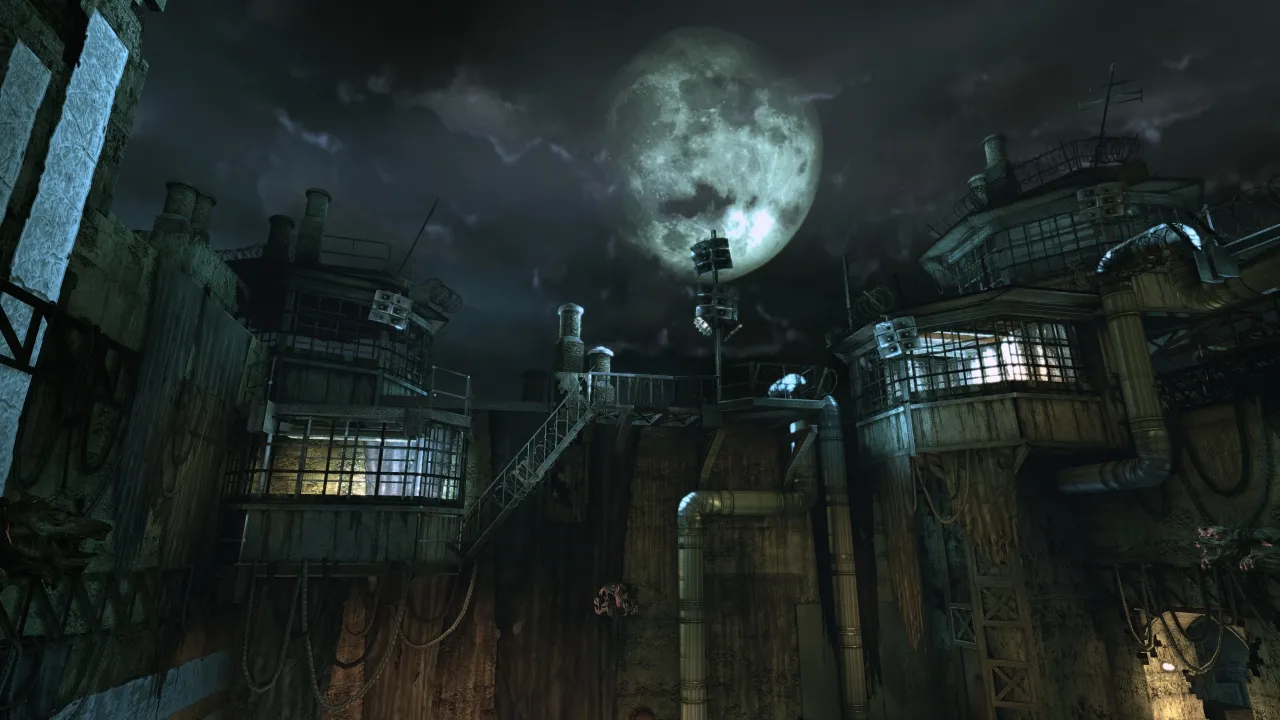
The Scarecrow stretches show off the craft best: faked crash tones, warped dialogue, footsteps that swim near and far, all locked to the visuals to sell the illusion that something has broken. The ambient layer is just as deliberate everywhere else — footfalls echoing through empty cellblocks, armed thugs muttering as their nerve frays, the thin metallic scrape of a vent — together they coat the whole hunt in dread. None of this is flawless: the score lacks a hummable hook you could lift out and play on its own. But for horror-tinged material, "always right for the moment" beats "occasionally spectacular," and that's the bargain Arkham strikes.
You may forget the melody, yet you'll remember the held breath — that low, constant pressure of sound keeping you from breathing too loudly as you stalk the island. That, in the end, is exactly the effect the team was reaching for, and the soundtrack hits it with quiet precision.
Visuals | 8.8/10
Graphics: 8.8/10An island that swallows you — gothic art direction that lets the set design talk
The visuals here are strong, but not because anyone counted polygons. They're strong because everything points the same direction. The gothic bones, the heavy comic-book shadows, the suffocating geometry of the island — all of it serves one feeling: you have walked into an asylum that eats people. The architecture isn't wallpaper, it's narration. The cold, old, hard surfaces of the cellblocks are bound to the conflict around you, and you instinctively slow your stride moving through them. It doesn't try to dazzle every frame; it leans on every frame, like a crime film lit with real intent.
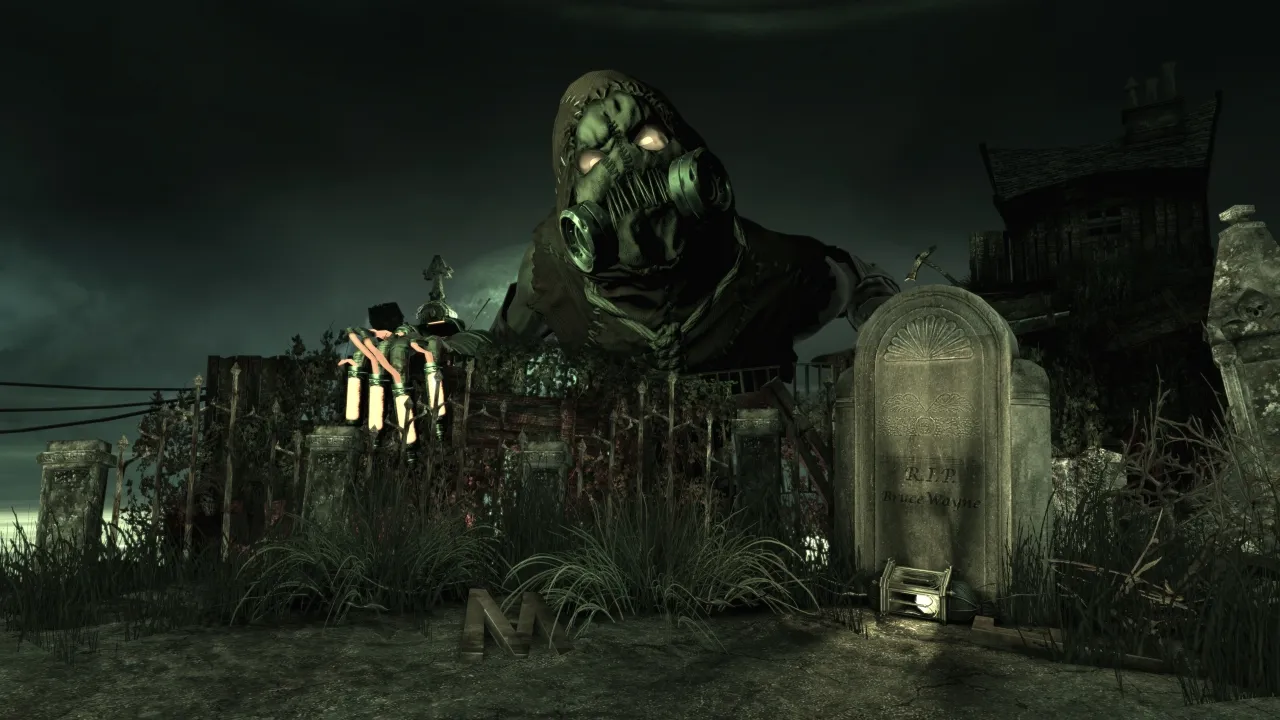
Better still, the place rewrites itself as the story turns. A clean corridor gets stained yellow by toxin, split open by Poison Ivy's vines, or torn apart by a riot — walk the same stretch twice and you'll meet two different rooms. That sense of space breathing with the plot keeps a fairly compact island feeling fresh. Spires, gargoyle statues, the long bars of shadow cast by iron grilles, the occasional shaft of cold moonlight — they press the word "asylum" into your subconscious until even a routine walk down a hall keeps a wire pulled taut inside you.
The character models carry their own weight in this. Batman's cape and cowl pick up grime and damage as the night drags on, the Joker's grin reads from across a room, and the inmates look genuinely unwell rather than generically thuggish. None of it is photoreal by today's measure, but it's all stylized in the same confident hand, and that coherence is what sells the place.
Unreal 3 underneath, and a PC build that cashed in on PhysX
Technically this runs on Unreal Engine 3, a perfectly sturdy footing for 2009. Its strength was never resolution or geometry budgets; it was wringing the hardware dry to push the gothic mood as far as it could go. The PC build threw in NVIDIA PhysX effects of the era on top — billowing cloth, drifting smoke, paper kicked into the air — touches that were a PC-only flourish at the time and lent the asylum a little extra of that living, breathing texture.

There is a nit to pick. Detective Mode's translucent blue overlay is genuinely useful — it flags clues, enemy states, breakable walls — but spend too long with it on and that carefully crafted art disappears under a single sheet of blue. Plenty of players grow reluctant to switch it off and end up missing the actual look of the game for stretches at a time, a complaint that comes up again and again. It boils down to a design trade-off: the game put the convenience of detective play ahead of raw visual fidelity, and it's on you to learn when to toggle it on and when to let it go.
Seen today — the GOTY build keeps the age out of the way
The Game of the Year edition folds in TriOviz 3D support, but the bigger deal is that it runs at high, locked frame rates on modern hardware with smooth loads and a stable image — the years are pushed about as far into the background as they can go. Boot it up today and you won't be chased off by stutter or muddy textures; you're freed up to feel the art direction on its own terms instead.

Set against the sprawling cityscape of the larger Arkham City, this first island's density and finish still hold their ground. The benchmarks may have been passed by newer games, but that "every frame leans on you" art direction hasn't dated — resolution ages, mood doesn't. More than a decade on, the cold, damp, anything-could-crawl-out-of-the-dark oppression of Arkham Island is still one of the most recognizable calling cards it has. Whether you're here for Batman or simply for a horror space built with real care, what it delivers visually rarely lets you down.
It's worth saying plainly: a lot of games from this generation are genuinely hard to look at today, all muddy normal maps and washed-out color. Arkham Asylum sidesteps that trap almost entirely, because its strongest visual decisions were artistic rather than technical, and good art direction simply doesn't expire.
Combat | 9.5/10
Gameplay: 9.5/10FreeFlow combat — three buttons that somehow play like choreography
The thing posterity remembers most is FreeFlow combat. On paper it's three buttons: strike, stun, counter. The depth all lives in the rhythm. Every blow glides Batman to the next thug, slow-motion and sound design punch up each hit, and as long as you don't get interrupted or miss the counter prompt flashing over a head, the combo multiplier keeps climbing and the moves get flashier — multi-takedowns, slides, cape stuns, aerial finishes into a throw. When it's flowing, a fifteen-man brawl reads like choreography, fluid from one hit to the next.
Take a single hit, or mistime a counter, and the combo zeroes out and the rhythm resets. That "flawless or nothing" design is exactly what turns a low-barrier control scheme into a feel-driven game you keep getting better at — a newcomer mashes through, while a veteran chases a full-multiplier, no-damage run across a whole room. Early on you might feel like you're just following prompts; a few hours later you're hooked on landing every counter on the beat, and that shift is genuinely addictive. How deep did the framework run? Shadow of Mordor and Marvel's Spider-Man lifted it almost wholesale, and it became the template for third-person melee for the better part of a decade. Not bad for a system that started life as three buttons and a counter prompt.
Predator stealth — turning "fight with fear" into something you actually play
Walk up to a room of armed thugs and try to slug it out, and you'll be shredded. That's the cue to switch into Predator mode. You grapple between Arkham's signature gargoyle perches, string men up from the ceiling, slip through vents to flank, blow open a weak wall with explosive gel to spread noise and panic, and pick them off one silent body at a time. The whole loop is clean and controlled, and the role clicks instantly: this isn't a generic action hero clearing a room, this is Batman hunting.
The best part is how the enemies fray as their friends vanish — flip on Detective Mode and you can watch their heart rates spike, hear them babble reassurances at each other, then start firing wildly at shadows. In that moment, "I am the thing waiting in the dark" stops being a slogan and becomes mechanical fact. It isn't simply "crouch behind cover and backstab"; it makes Batman's habit of dismantling enemies through fear into a system you can plan and improvise inside. Each predator room is a small puzzle: who to string up first, which route to flank, when to detonate the panic — all of it yours to decide.
And crucially, the game trusts you to find your own answer. There's no single "correct" takedown order being graded behind the scenes; the systems simply react, the thugs simply panic, and a clean clear feels earned because you authored it.
Detective Mode and the soft spot — the sleuth lands, the bosses don't
Batman is the world's greatest detective, and the game doesn't forget it. Detective Mode highlights clues, enemy armament, breakable walls and vents; the stretch where you track Commissioner Gordon by scent and trace is built entirely on it, lacing the puzzles and exploration with a sleuthing flavor. Because it alternates with combat and stealth, the whole campaign keeps swapping between hands-on and brains-on, leaving almost no room for fatigue to set in.
But the gameplay does have one obvious soft spot, and it sits right where the climaxes should be — the boss fights. The Titan brutes that keep recurring are, from the Bane fight onward, basically the same "sidestep the charge, stun, punish" loop, and it wears thin by the back half. Killer Croc is more dodge-and-flee in a sewer than a real duel. Worst of all is the Titan Joker finale, slammed by plenty of players as the dullest fight in the game and arguably the series — a giant Joker lets his goons swarm you in waves while you simply yank him down with the Batclaw and wail on him when his claws are stuck in the floor. As brilliant as the core combat and stealth are, the mediocrity of these bosses stands out just as sharply, and it's the most concrete mark against the gameplay.
Content | 6.5/10
Content: 6.5/10Not long, but every hour earns its keep
This isn't the "giant map, icons everywhere" school of content. The main campaign runs about eleven to twelve hours and braids combat, stealth, puzzles and cross-island progression so tightly that there's barely a dead moment to stand around in. The pacing feels like binging a single tight season of television: new objectives keep nudging you forward, the pressure never lifts, and your attention stays locked. There's almost none of the now-familiar checklist padding bolted on to inflate a playtime — every stretch is either pushing the plot or unlocking a new ability.
Dig in and full completion — including the Riddler's 240 challenges — stretches it past twenty hours. That length isn't long by today's standards, but it earns its keep because nothing in it is filler. The game picked the "enclosed setting, high-concentration experience" lane from the start and nailed the execution. What you walk away remembering is a run of highlight beats, not "I cleared another field of question marks." That choice was clear-eyed in 2009, and it looks rarer and smarter now, in an era where so many games confuse length with value.
It helps that the difficulty stays honest throughout, too. The ramp from your first easy brawl to a late-game predator room thick with armed guards is gradual and fair, so the campaign keeps challenging you without ever stalling out into a wall you have to grind against.
The Riddler's 240 challenges — collectibles done the right way
Scattered across the island are the 240 challenges set by Edward Nigma: green question-mark trophies, interview tapes, riddles scrawled on walls, patient and inmate records. Unlike the many games of the era that simply pin collectibles to the map, most of these puzzles make you think. A wall riddle only cracks once you connect it to Arkham's cast of characters; a trophy hides in a corner you can only spot with the right gadget or the right angle, sometimes only after you step back and read an entire wall at once.
Clear a region's puzzles and the Riddler sputters an insult over the broadcast, finally giving up his own hiding spot so you can "collect" him too. That design — rewarding exploration with deduction, wrapping the collectibles in a villain's personality — sits a tier above any plain icon list, and it quietly reinforces that Batman is the world's greatest detective. It turns collection from rote map-sweeping into an island-wide puzzle game, which is exactly why this is one of the most praised parts of the whole package.
Metroidvania backtracking and edition value — one island, used and reused
Arkham Island is one interconnected map, not a string of severed levels. New gadgets arrive with the story — explosive gel to breach weak walls, the Line Launcher to cross long gaps, the Batclaw to rip open grates — and many rooms you passed early but couldn't enter only open once you double back with the right tool, often hiding a trophy or an upgrade point. That "ability gating plus backtracking" is textbook Metroidvania, and it's what lets a modest island get used and reused while still turning up new finds — the key thing that sets it apart from the open-world action games of its day.
On editions, go straight for the PC Game of the Year version: it bundles all six challenge maps (the North American disc cut two at launch) and the "play as the Joker" extras. Those challenge maps lift the combat and stealth that thread through the campaign and distill them into pure skill arenas — combat challenges chase longer combos and higher scores, predator challenges ask you to clear a room cleanly under set conditions — and they're the main draw for grinding combos and testing your reflexes after the credits. The one knock is that its emphasis on density and forward push means the aimless-wandering freedom of a huge open world isn't really here. But set against enclosed, pressure-cooker exploration like Resident Evil 4, that tightness becomes a strength rather than a shortfall — different goals, no need to compete head-on, and a campaign that respects your evening and your attention either way, start to finish.




Comments 0
Share your game review
Join the discussion and share your review of this game.
No comments yet. Share your thoughts on this review.