
























Opening
The first total wipe was on day 18. I took 12 people to raid a bandit camp, only to find 20 archers hidden on the other side. As the arrow rain fell, I watched those little character icons turn gray one by one, and suddenly understood—this game isn't about being a hero, it's about being a commander. A commander's job is to figure out how to keep more people alive before the next battle begins.
Tactical Gameplay | 9.2/10
Gameplay: 9.2/10Turn-based combat at this level can no longer be simply described as "fun."
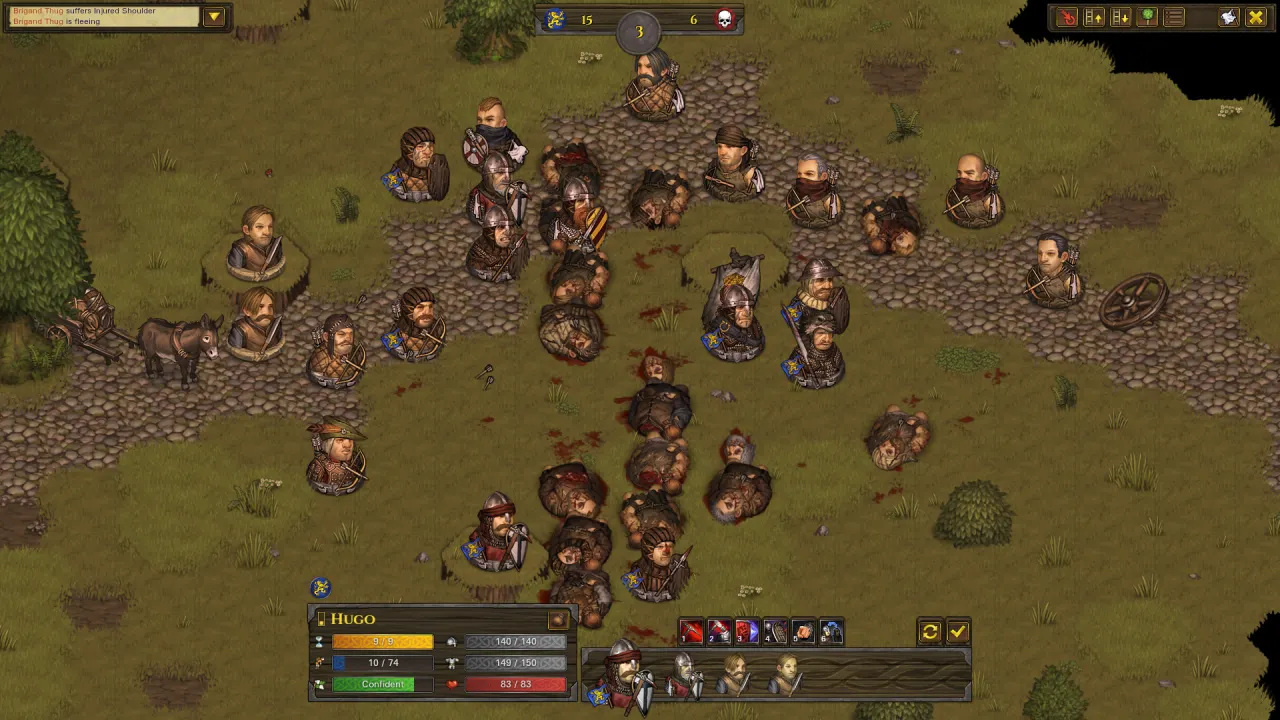
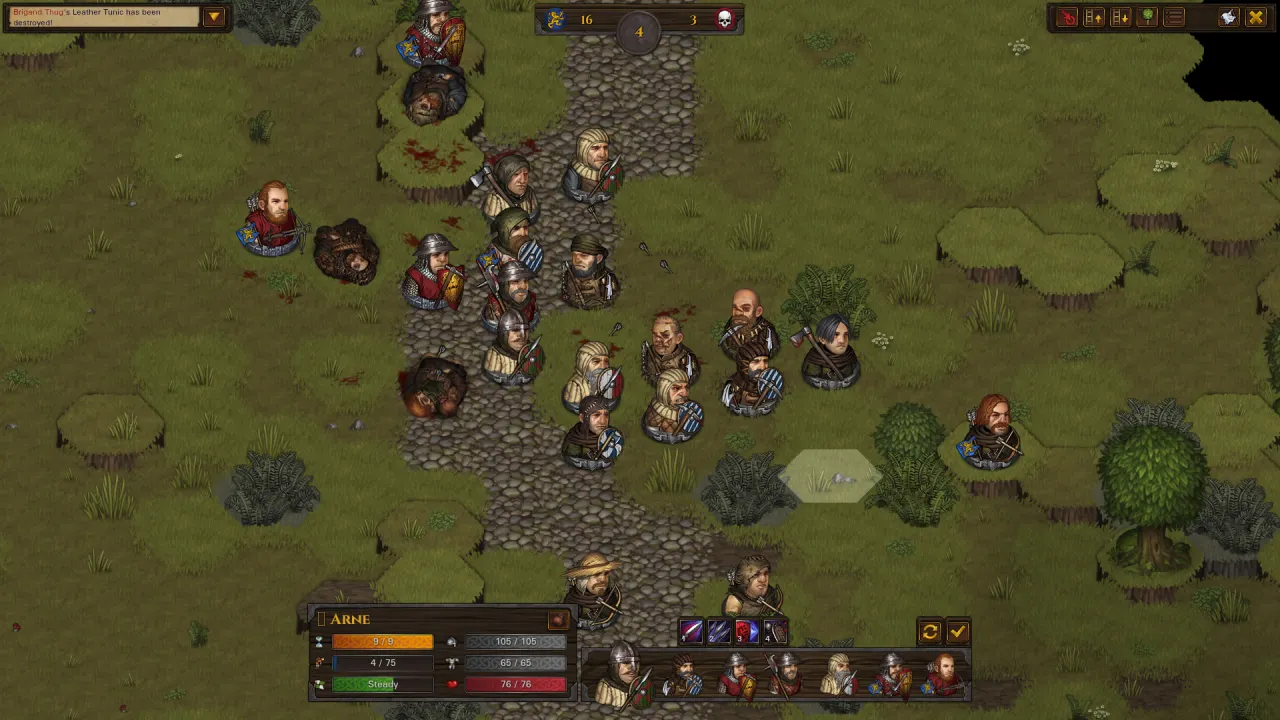
Each unit type has its own positioning logic. Shield-bearing infantry need to block the front line and absorb damage, spearmen hide in the second row to poke enemies, and archers must find high ground. It sounds basic, but when you face a horde of orc berserkers charging at you, you'll discover there are three turns between "theory" and "staying alive." Terrain affects battles in realistic ways. Swamps reduce movement, snow reduces visibility, and forests block arrows but also block your line of sight. Once I ambushed a caravan on a hillside with every terrain advantage—only to find they'd hired a squad of heavy shield infantry, and my archers couldn't penetrate their defense after five volleys. After that battle, I realized the game's "counter relationships" aren't numerical formulas—they actually require you to think.
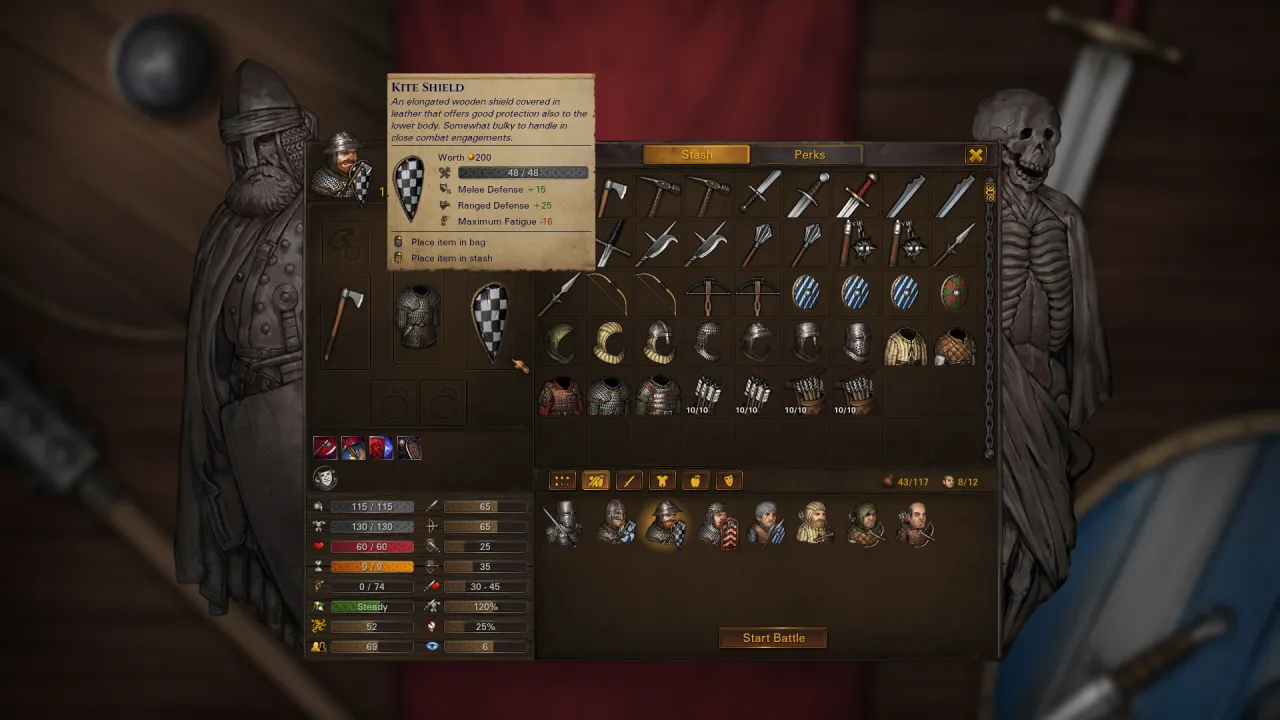
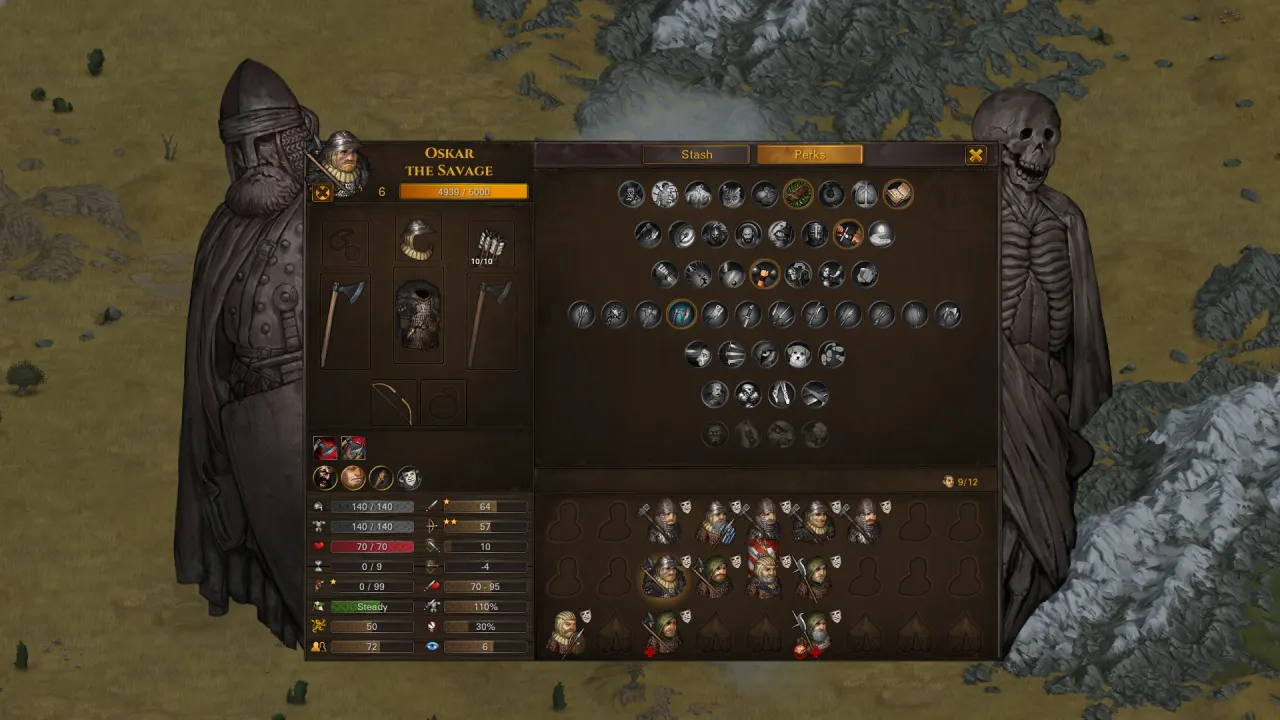
Equipment management is another deep rabbit hole. Each person's armor, weapons, and accessories need individual configuration, and equipment degrades. Early on you'll treasure every chainmail, mid-game you'll agonize over whether to equip newcomers with good gear, and late-game your warehouse will be stuffed with all kinds of "might be useful" junk. This tedious aspect is annoying but also addictive—because you know that in the next tough battle, one extra plate armor might mean one extra life.

Business System | 8.8/10
The daily routine of a mercenary company is bookkeeping.
Every day you have to pay wages, repair equipment, buy supplies, and after battles you still have to pay medical expenses for the wounded. Mission rewards look substantial, but after deducting expenses it's often a losing proposition. I once took a "bandit suppression" mission, won the fight, but ended up spending 200 gold coins more on equipment repairs than the reward. In that moment I understood why medieval mercenary companies often engaged in plunder—not because they wanted to be villains, but because they were genuinely broke.
Recruiting is also an art. The mercenaries in taverns have various backgrounds: retired soldiers, fugitive peasants, bankrupt nobles. The attribute gaps are huge, and prices differ tenfold. Early on you can only hire cheap labor, train them until they're combat-ready, then gradually upgrade your roster. But people die, and they die suddenly. My main archer that I'd trained for 30 days got killed by a bandit leader's axe in one blow, without even leaving last words.
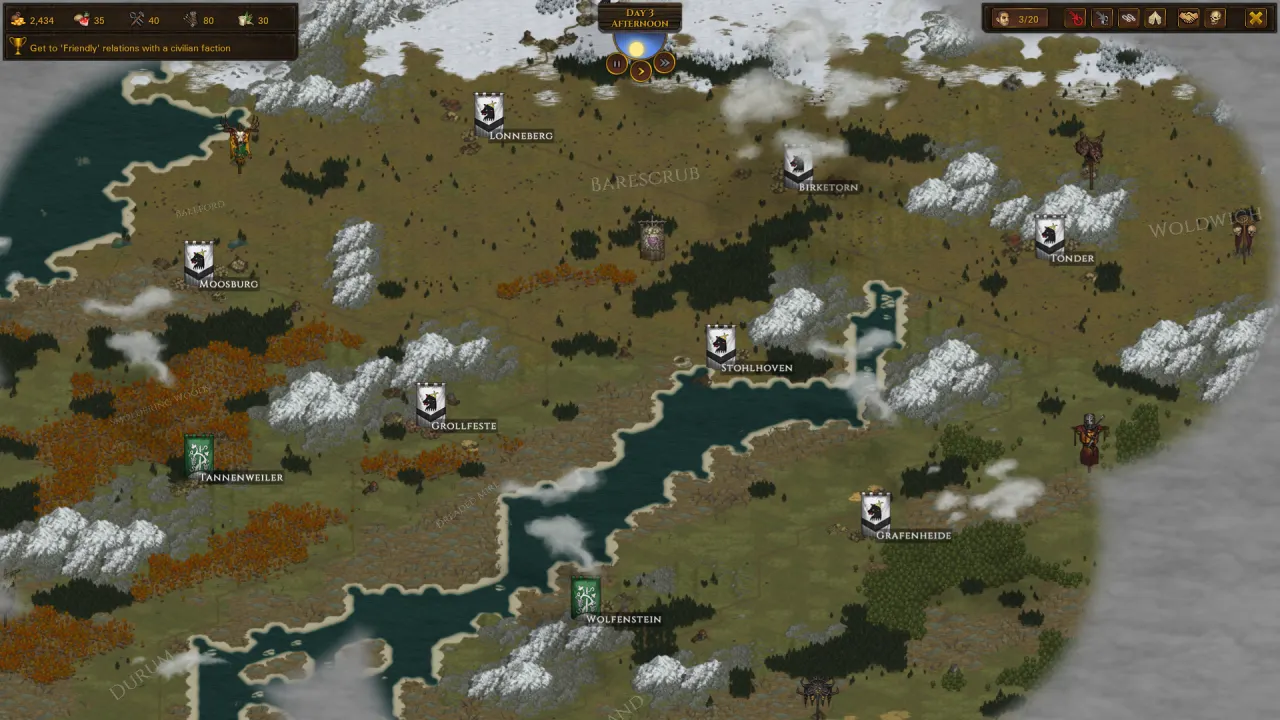
The open world map gives you complete freedom. You can take regular army missions to earn reputation, escort caravans for steady income, or venture deep into the wilderness to gamble on ruins. The map is filled with villages, castles, and patrols everywhere, each place with its own economic cycle. My favorite playstyle is following caravans, going wherever they go, helping fight off bandits along the way. Safe, stable, like a real bodyguard.
Narrative Atmosphere | 7.3/10
Story: 7.3/10This game has no main storyline, only a broad backdrop: you're a mercenary company leader making a living in a world full of war and monsters.
The narrative style is very much like Firefly—take jobs, earn money, protect your team, keep moving forward. No epic world-saving, no destined hero's mission, just a group of ordinary people struggling to survive in chaotic times. I really like this low-key narrative approach, but it also means you won't get many emotional peaks.
Random events are the main source of story. While marching you'll encounter merchants selling maps, soldiers demanding tolls, villagers asking for help. Most of these events are brief with just two or three choices, but they make up for it in quantity and frequent triggers. Late game you'll notice many events start repeating, and the sense of novelty diminishes.
The worldbuilding is actually quite solid. Villages become ruins due to war, caravans decrease because of bandits, wars between nobles affect quest prices. You can feel this is a "living" world, except your role in it is more observer than protagonist.

Visual Presentation | 7.5/10
Graphics: 7.5/10The visual style is the "not stunning but very comfortable" type.
Combat scenes use a top-down 2D character view, looking like tabletop game pieces. This simplified art style is actually quite clever—it both reduces development costs and makes battlefield information clear at a glance. You can clearly see each unit's position, facing, and status without being distracted by flashy effects.
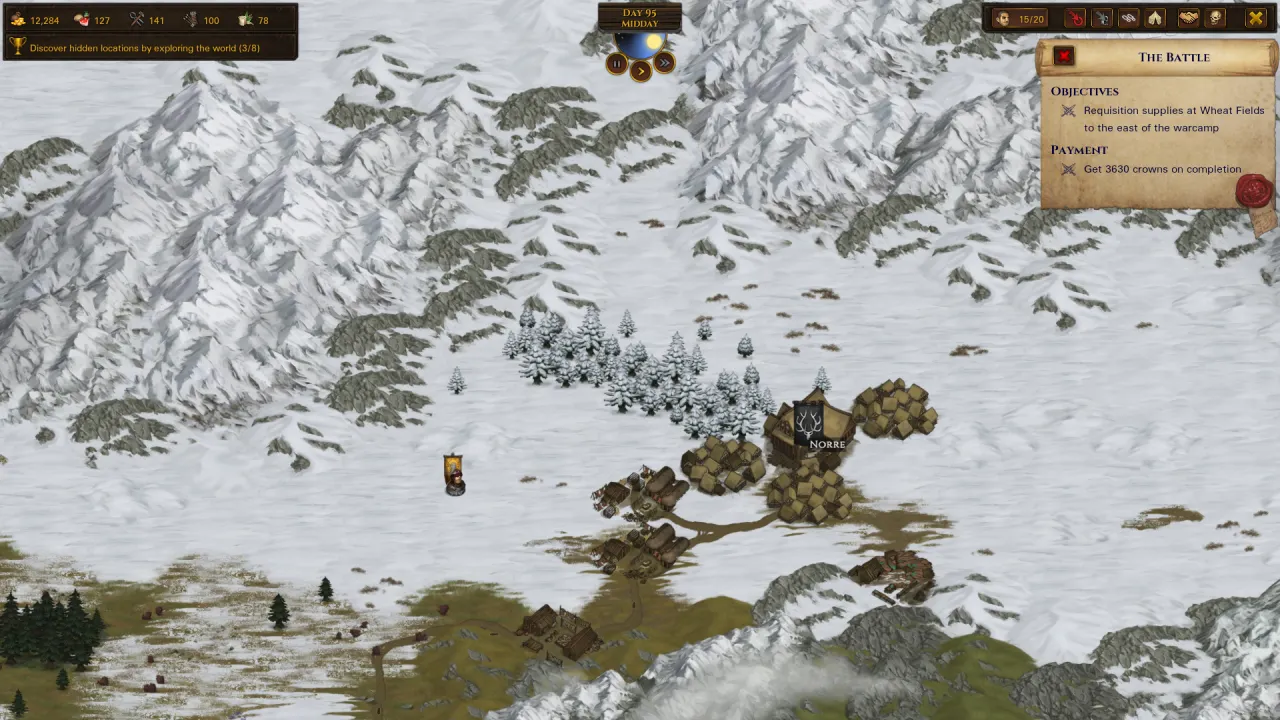
The world map has a tranquil German countryside feel. Snow-capped mountains, forests, villages, castles, with a color palette leaning toward cool tones, very fitting for the medieval low-magic world setting. The character icons on the map change with your party size—12 people form a small squad, 30 people become a large group. This kind of detail adds some immersion to the marching process.
The equipment interface is very practical. Each piece of equipment has detailed stats and descriptions, armor damage levels are color-coded, and you can tell at a glance who needs repairs. Functionality over aesthetics, but for this kind of hardcore strategy game, good enough is good.
Content Depth | 8.5/10
Content: 8.5/10The main campaign takes about 40 hours to complete, but I'm at 70 hours with only 58% completion.
The map has very high content density. Each region has multiple villages, castles, and quest points, and they change dynamically over time. A village you passed today might be raided by bandits tomorrow, and the caravan you escorted last week might go bankrupt this week. This dynamic system makes the world feel very real and keeps you wanting to "explore just a bit more."
Although there are only a few quest types—escort, elimination, retrieval, siege—each execution feels different. Clearing out bandits in the plains versus in the forest are completely different experiences. Escorting a caravan and encountering a small group of raiders versus an orc warband are two different difficulty levels. Equipment and skill combinations are extremely diverse. Each unit type has its own skill tree, and the equipment system supports multiple slots including helmet, armor, weapon, and accessories. You can build a full-defense tank or cultivate a high-burst two-handed weapon warrior. Early on you'll feel like you're configuring randomly, but after 20 hours you'll start enjoying that precise feeling of "everyone has a clear role."
The only issue is late-game repetition. After you've fought 50 similar battles and cleared 30 identical bandit camps, the novelty wears off quickly. The core fun of this game is in the first 30 hours; after that it's more about "grinding" than "playing."



Comments 0
Share your game review
Join the discussion and share your review of this game.
No comments yet. Share your thoughts on this review.