























Opening
Some games are remembered as much for how they were made as for how they play, and Black Mesa is one of them. Nobody greenlit it in a boardroom. It started as a grudge — a handful of players who looked at Valve's rushed official port of the original Half-Life and decided, flatly, that they could do better. They were scattered across the planet, they had no studio and no budget, and they spent well over a decade on a volunteer remote effort to rebuild the 1998 classic brick by brick. The crew that pulled it off eventually took the name Crowbar Collective.
The clearest proof of what they achieved is what they did with Xen, the alien finale that everyone agreed was the weakest stretch of the 1998 game — floaty platforming, abrupt alien vistas, a sour note to end on. Crowbar Collective bet the whole project on fixing exactly that. They tore the roughly one-hour sequence down and rebuilt it into something closer to four hours: new levels, new traversal, new art, a completely reworked final encounter. The verdict was almost unanimous. Out in Xen, this stops being a remake and becomes a reimagining that overtakes the source.
That ambition shows up in the numbers, too. The critical aggregates land at 84 and 85, the latter slotting the game into a recommended tier alongside the top sliver of everything on the platform. More than 132,000 Steam reviews hold it near 94 percent positive. A veteran Valve designer who shipped every Half-Life game has said, on the record, that he abandoned a replay of the original to play this instead.
What follows is a portrait of contradictions. This is a game with character faces that wouldn't pass muster in 2004, sitting right next to lighting and level work that genuinely impress. It is a faithful re-creation that also dares to throw out the parts that didn't work. It is a free-mod hobby project that somehow earned a commercial license from the studio it was imitating. The question this review sets out to answer is simple: after a decade of obsession, just how far did a fan team push a science-fiction landmark — and where, exactly, did it run into its own ceiling?
Story | 9.0/10
Story: 9/10A lab accident does all the heavy lifting
The plot is faithful to the 1998 game, but it lands harder here. You are Gordon Freeman, a theoretical physicist who has barely settled into the Black Mesa Research Facility before everything goes wrong. The famous opening is a long, unbroken tram ride through the underground complex: announcements crackle overhead, colleagues drift past, lab sectors roll by one after another, and not a single line of narration is shoved in your face. You learn the place by looking at it. That trick was ahead of its time decades ago, and the remake's sharper environments only deepen the spell.

Then comes the resonance cascade. A routine test runs off the rails when a sample misbehaves, and the experiment tears open a rift to an alien world. Creatures pour through, systems fail, and Freeman has exactly one job left: get out alive. The cleverness here is restraint. There are almost no cutscenes telling you what happened. The disaster is simply pressed onto your shoulders, piece by piece, and you reconstruct the catastrophe while running for your life. You are not watching a hero save the world — you are the ordinary man fumbling through a collapsing building on instinct.
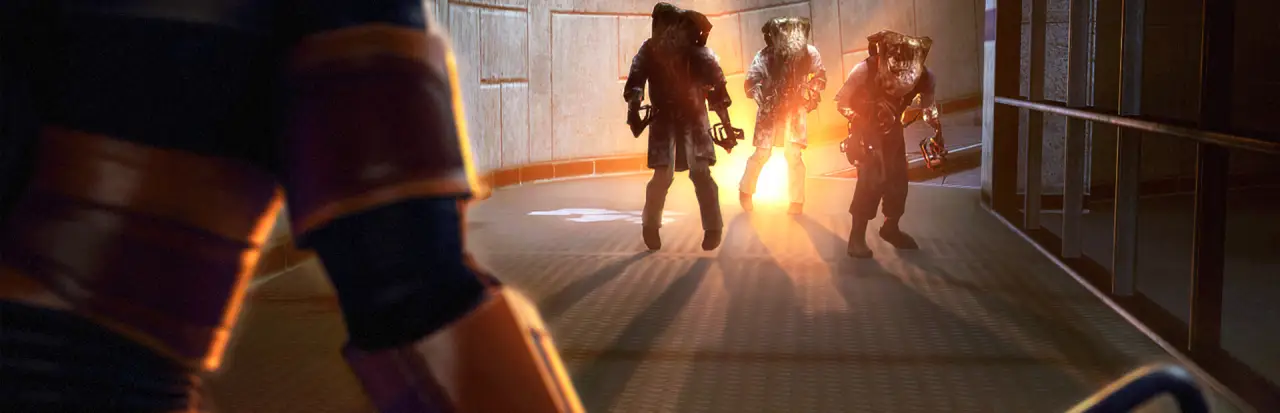
The second-act twist is the cruel part. The soldiers who should be your rescue arrive with orders to sterilize every witness and bury the story. Suddenly you are squeezed between the things crawling out of the rift and a trained human strike force, and a clear escape route becomes the scarcest resource in the game. The tension never slackens. It is exactly why one outlet argued the game plays less like a shooter and more like survival horror — it is chasing dread, not power fantasy. The genius of the staging is that you are never told this twist is coming; you simply notice, somewhere in the middle of a firefight, that the soldiers aren't aiming at the aliens. They're aiming at you. The realization reframes everything you've done so far, and it does it without a single line of expository dialogue.
Environmental storytelling is where it beats the original
If the main thread is the skeleton, the flesh is the absurdly dense environmental storytelling. Crowbar Collective stuffed the pre-disaster facility with small human evidence: sticky notes on a physicist's desk, idle chatter in a guard break room, a half-finished equation on a whiteboard, an unwashed coffee mug at the end of a corridor. None of it carries a quest marker or ticks a progress bar. What it does is make Black Mesa a place where people clearly worked, clocked in, and griped about overtime — so when the roof caves in, you lose a living world, not a level backdrop.
That single decision is what separates this game from Valve's own Half-Life: Source, the port that simply re-ran the old assets on a newer engine without a shred of reinvention. Black Mesa adds real interactions and triggers that make you care about the people about to be obliterated. Same story from the late nineties, but one version reskins old stock and calls it a day while the other retells the whole thing and tells it better. That gap is the entire point of the grudge that started the project, and the foundation of its near-official reputation.
There is a cost to the loyalty, though, and it would be dishonest to skip it. The game inherits the original's level structure and pacing scaffold, so anyone who finished the 1998 version will hit chapters that feel familiar to the point of repetition — the surprise simply isn't there the way it is for a newcomer. Even so, between the density of the environmental detail and the squeeze of that two-front escape, it gives a story closing in on thirty years old the weight to make you want to walk it again. The remake also resists the modern temptation to over-explain its own lore; the mysterious figure who flickers at the edges of the disaster stays mysterious, and the game trusts you to sit with the questions it raises rather than answering them in a codex entry. That trust in the player, more than any single plot beat, is what makes the narrative feel mature rather than merely nostalgic. On story, the high mark is earned.
Audio | 8.0/10
Audio: 8/10A score that argues with itself, then clicks out in Xen
Joel Nielsen's original soundtrack leans electronic, and its most-debated quirk is the one IGN's review nailed in a sentence: early on, the music doesn't quite fit the mood. The taut, claustrophobic panic of a facility tearing itself apart sits oddly against a slightly detached synth line, and when you're sprinting down a corridor with something on your heels, the backing track occasionally fails to push the dread where it needs to go. This is the easiest target for anyone looking to ding the audio.

Stay with it, though, and the score keeps improving. The moment you actually step into the alien world, the music and the visuals snap into the same key — spacious, hazy, faintly uneasy synth work that nails the loneliness of standing in a wholly foreign dimension. The soundtrack rewards patience. Its best material isn't the intro; it's the alien trek you reach when you assume the game is nearly over. That back-loaded payoff rhymes neatly with the game's whole instinct of saving its strongest content for the finale: the good stuff is always further in.
Weapon feedback and ambient design carry the immersion
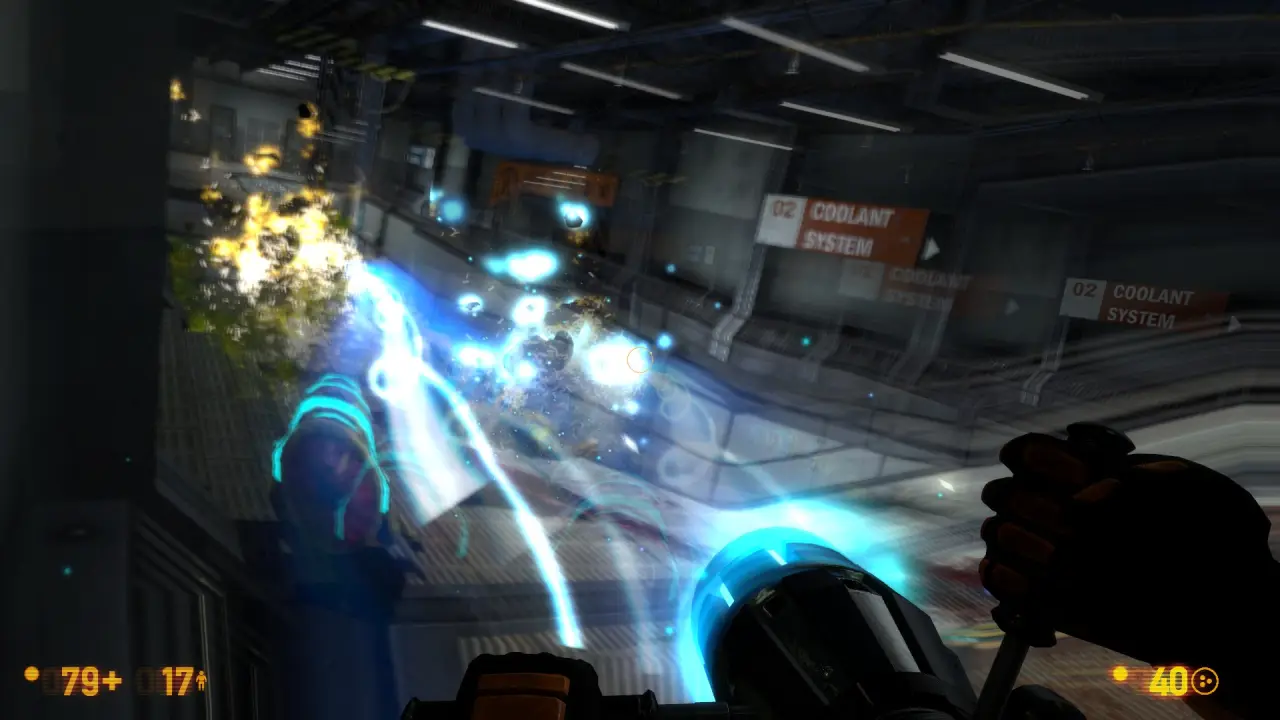
Steadier than the music is the sound design itself. The signature tools each have a clean sonic fingerprint: the muffled clang of a crowbar against a metal pipe, the heavy, decisive bark of the heavy revolver, the wet organic chatter of the hive device that launches a living alien parasite as its projectile. Close your eyes and you can name what's in your hands from sound alone — a level of distinctness plenty of big-budget productions never reach.
The ambient layer pulls just as much weight, and it carries a lot of narrative. Before the accident, the facility hums with equipment, intercom chatter, and footsteps; after it, that gives way to shrieking alarms, the dull crunch of collapsing structure, and the faint crackle of distant gunfire, so you can feel danger closing in by ear alone. In the alien world, the whole palette swaps out for something stranger — dripping slime, the low growl of a massive creature, wind keening through floating terrain. Music, weapons, and ambience stack into three layers that quietly rebuild presence even where the character models can't.
Restraint is the real achievement
Crucially, none of it shows off for its own sake. Every sound serves the moment, quiet when it should be quiet and loud when it should detonate. There's no wall-to-wall bombast trying to convince you the action matters; the mix knows when to drop out entirely and let a single dripping pipe do the work of a whole horror cue. That kind of confidence is hard to fake, and it's the sort of thing a team only learns after living inside an engine for years. The early-game tonal mismatch keeps this out of top-tier territory, but the discipline on display everywhere else is exactly why the audio lands comfortably above average rather than merely competent. Listen closely and you'll notice the mix doing narrative work the script never has to: the way the facility's hum thins out as systems fail, the way distant gunfire tells you reinforcements have arrived long before you see them, the way the alien soundscape never quite resolves into anything you can name. It's sound design as worldbuilding, and it's the part of the audio package that holds up best on a second playthrough, when the novelty of the weapons has worn off but the dread baked into the ambience hasn't.
Visuals | 6.5/10
Graphics: 6.5/10Modernizing an old engine cuts both ways
Black Mesa runs on a heavily customized branch of an aging engine, and that's a double-edged sword. The upside is intimacy: the team knows this toolset cold, so the lighting and physics are tuned with real care. The Definitive Edition update later folded in real-time dynamic lighting, lens flares, and volumetric light, and when a beam cuts through facility smoke or spills across alien ground, the whole picture noticeably lifts. For a game whose tech foundation was never new, coaxing a fresh look out of an old pot is no small feat.

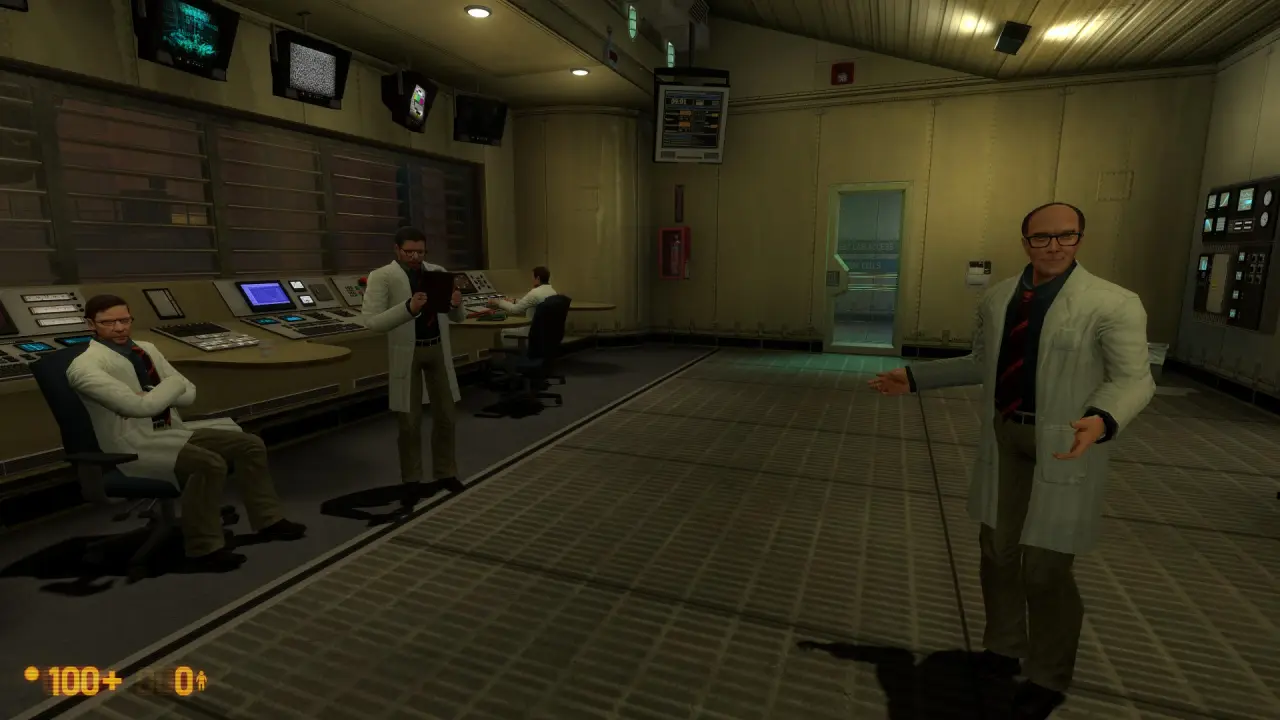
The weakness, though, hides in the most visible place imaginable — the people. That eight-out-of-ten review put it bluntly: the character models and animation don't even reach the bar set by 2004's Half-Life 2, and rough textures turn up all over. When an NPC leans in to talk, it's hard not to clock the stiff face, the hard-edged silhouette, the lip-sync that drifts out of register. For a fan team with no triple-A pipeline and nothing but remote collaboration, human modeling is the most resource-hungry, least catchable gap of all, and it's the core reason graphics lands mid-pack. Honestly, this is the most dated thing about the whole package.
The alien world is the visual peak, and level design carries the rest
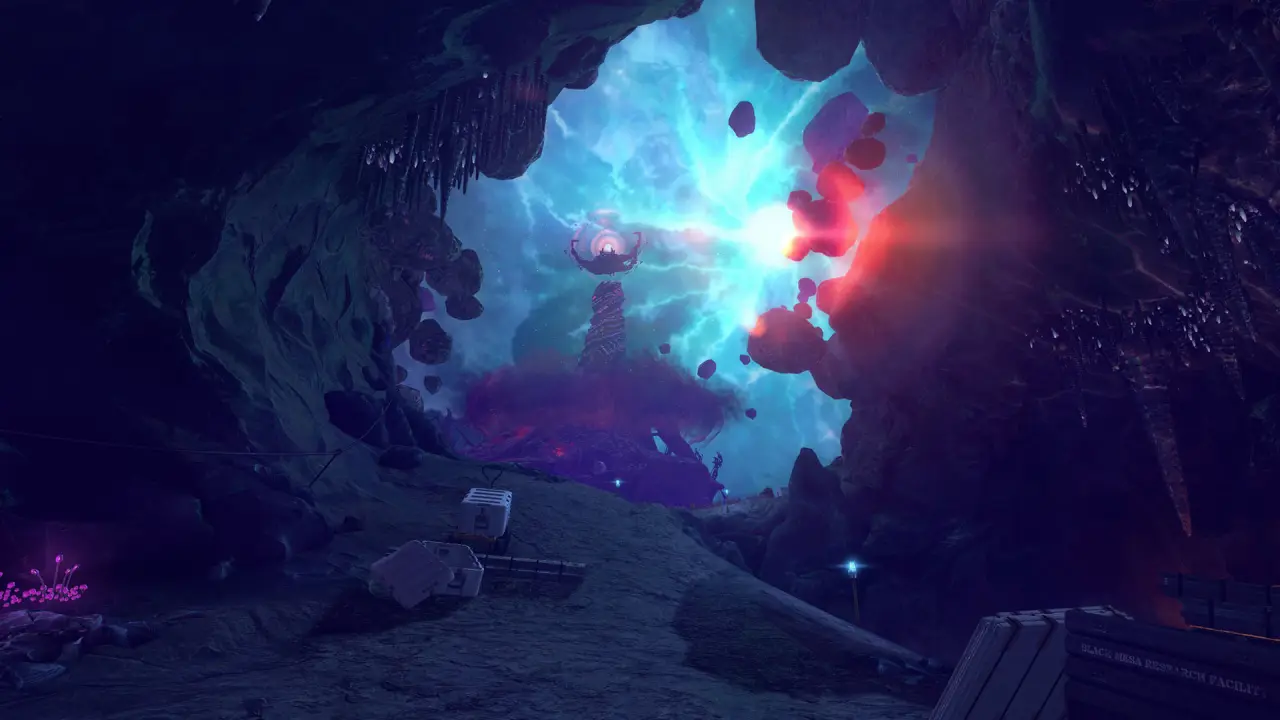
The funny part is that the prettiest stretch of the entire game is the very alien finale the original was mocked for. Crowbar Collective repainted it from scratch — glowing spores, drifting rock islands, the nests of enormous creatures, layered vertical space funneling toward the final boss. It has an aesthetic the original could never produce, and it's the most screenshot-worthy, most clearly talented part of the run. Where the human models stumble, the team is plainly stronger at conjuring scale and strangeness, turning an abstract idea of "alien" into something concrete and convincing.
Earth's half has its share of unforgettable beats too. That slow opening tram dumps the sheer size and order of the complex on you in one shot, and a chapter built around mounting surface tension fills its open killing grounds with genuine pressure. None of this leans on raw polygon counts; it leans on level design and the handling of light and shadow — exactly the team's strong suit, and exactly why the graphical shortfall never sinks the overall impression. Even the smaller spaces benefit: a flooded storage room lit by a single swinging lamp, a server hall strobing red under alarm light, a cliffside in Xen washed in bioluminescent blue. These are compositions, not tech demos, and they age far more gracefully than any character close-up. The art direction understands that a memorable space beats a high-resolution one every single time.
The trade-off reveals a team that knows where its effort belongs
Pull the visuals apart and the highs and lows point at one clear logic: a fan team with finite resources had to decide where its effort belonged. They gave up trying to out-model the big studios, because that's a money pit they could never win, and poured their energy into what they do best and what pays off most — lighting, composition, and the overall aesthetic of the alien spaces. The result is a deliberate, characterful imbalance. Faces don't survive a close-up, but pull the camera back to take in the depth of the facility or the silhouette of a floating island in the mist, and the image stands up immediately.
It's also worth flagging the platform and stability side. The game covers both major desktop systems, and 2025's tenth-anniversary Resonance Decade update further minimized crashes, improved stability, and specifically enhanced the handheld experience. Even on a portable, a project that began over a decade ago runs smooth and complete. That clean trade-off — concede the spec war, win the composition war — is what keeps graphics the lowest of the six scores and, at the same time, the least costly weakness here. It's a reminder that visual quality was never purely a contest of hardware numbers; it's a contest of taste and design, and on that front the game punches well above its technical weight. You'll notice the rough edges; you'll rarely let them spoil the trip.
Combat | 9.5/10
Gameplay: 9.5/10Explore, solve, fight — three things braided into one smooth loop
The core loop is the old recipe: first-person exploration, puzzle-solving, and combat trading off in sequence. Black Mesa just paces it better than the original ever did. You move through the facility in that signature protective suit, topping up armor and health from scavenged cells and wall-mounted stations, so resource management always carries a low hum of tension. Do you bull through the firefight in front of you, or burn time finding a safer way around? That question runs the whole length of the game and puts a layer of strategy under even basic movement, instead of letting you sprint mindlessly forward.
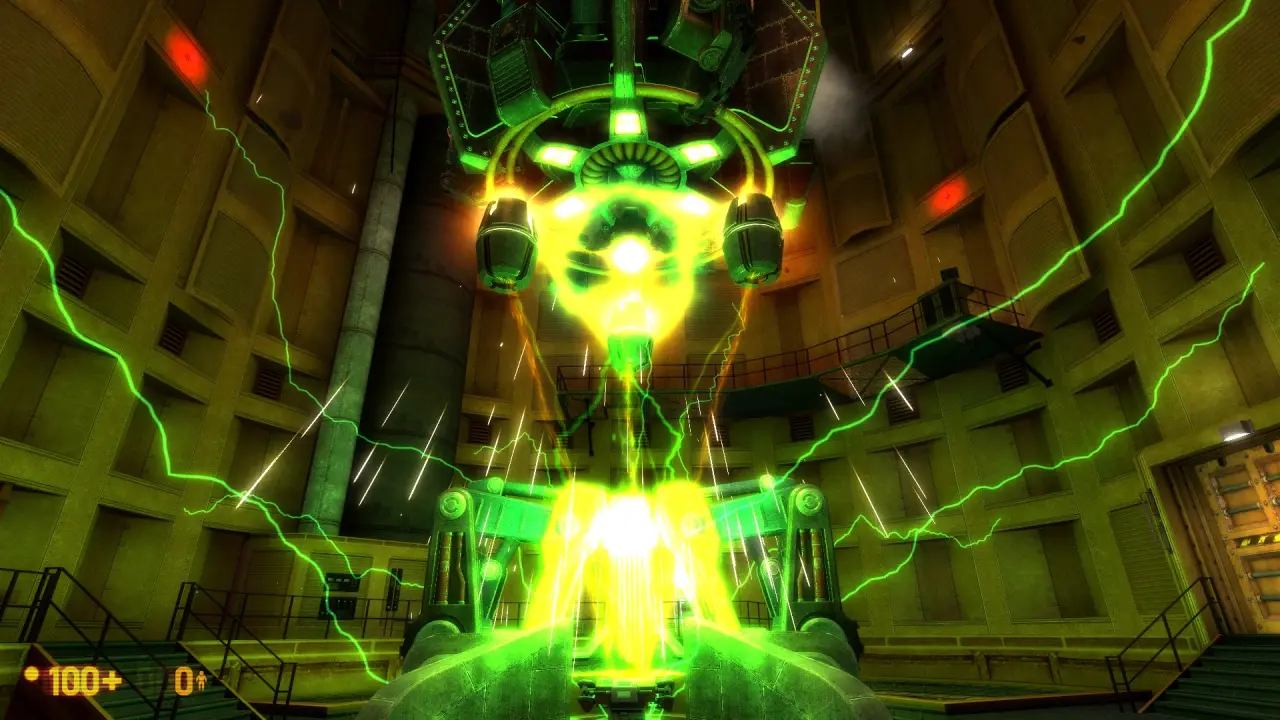
What makes the fighting sing is the toolkit. The crowbar is the series' soul — crisp, immediate feedback on every swing, pure muscle memory by the end. The heavy revolver hits hard per shot with a meaty kick. The standout is the hive device, which launches a living alien parasite that homes in on targets, a gimmick that's equal parts weird and unforgettable. That review flatly called the weapon set exceptional, and this blend of solid feel and genuine personality is why gameplay walks away with the highest score in the game. Even the protective suit itself plays into the feel — once it's fully charged you become something close to a walking tank, which the design wisely uses to dial pressure up and down rather than to trivialize every fight. The result is a power curve you feel rather than read off a stat screen, and it keeps the late game from collapsing into a trivial victory lap.
Reworked AI and physics puzzles add real depth
Feel alone isn't enough, and the place Black Mesa truly outgrows the original is in enemy intelligence and the redesigned combat spaces. Alien creatures lunge, circle, and pop out from angles you didn't check; human soldiers flank, take cover, and use thrown ordnance to flush you out of hiding. Standing your ground usually gets you punished, so you learn to read terrain, bait groups apart, and manage engagement distance and rhythm. The reworked arenas hand you more tactical options, turning each encounter into a small puzzle with several valid solutions rather than a flat shooting gallery.

The puzzles lean on that famous physics system. Stack crates to climb, drop weight onto a switch, splice a circuit to restore power — the feedback is solid, and now and then it asks for a bit of timing or a jump on top. The one rough edge is faint signposting. Some puzzles won't tell you where to go next, leaving you to prod the scene for the mechanism and the path. For players who like being led by the hand, that's a small barrier; for anyone who enjoys exploration, the satisfaction of working it out yourself is a feature, not a bug. It's a deliberately old-fashioned design philosophy — the game assumes you're paying attention, and rewards you for it rather than holding up a glowing arrow every few seconds.
Multiplayer and replay leave a little aftertaste
A side-by-side comparison sharpens the picture. The high-speed Doom of the same era chases adrenaline and constant motion; Black Mesa is the more deliberate, immersive cousin, less interested in peak intensity than in finding the most comfortable balance of exploring, solving, and fighting.
Beyond the celebrated single-player campaign, the game ships team deathmatch modes with remade maps. It's no lasting competitive platform — the counts and heat trail dedicated shooters — but as dessert beside the main course, it gives veterans a nostalgic corner to swing a familiar crowbar through reworked arenas with friends. The deeper replay value lives in the campaign itself: fifty achievements set clear goals, higher difficulties reshuffle enemy intelligence and firepower into a different kind of pressure, and the enormous mod ecosystem keeps feeding in fresh content. Finished it once? There's always a reason to boot it up again — a harder run, or a community project that takes you somewhere the official game never did. That "still playable after the credits" stretch only reinforces a top-tier gameplay score, and it's a big part of why the game keeps resurfacing on recommendation lists years after release rather than settling into the back catalogue.
Content | 8.5/10
Content: 8.5/10Runtime and the alien expansion are the two pillars
By sheer volume, Black Mesa delivers. The main campaign runs roughly sixteen hours, and chasing down the exploration nooks and side detail pushes a full clear close to twenty. For a remake, that length stays faithful to the original's footprint while filling it out further through redesigned levels, with almost no padding stretched in to game the runtime. Every hour is backed by rebuilt combat, puzzles, and spaces, so the price holds up and you never feel the urge to fast-forward.
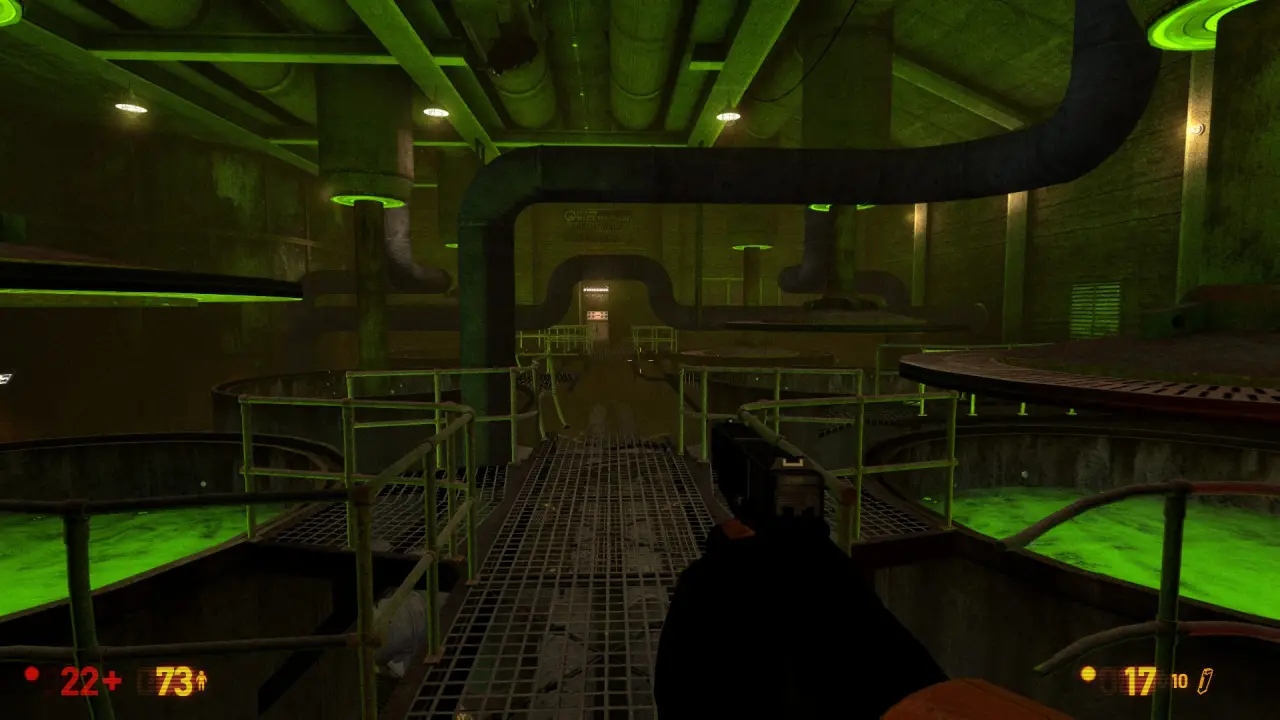
The single biggest content gain, without question, is the alien world. In the original it ran about an hour and was widely judged rushed; Crowbar Collective expanded it to roughly four. That's effectively an entire new stretch grafted on — new levels, new platforming, new environment art, and a wholly rebuilt final confrontation. You aren't just buying an old campaign with a fresh coat of paint; you're getting a large block of experience that simply didn't exist in the source. That mass alone is enough to anchor the content score and to set the game apart from the reskin remakes it could so easily have been.
Free official updates and a modding scene stretch it long
What's rarer is that the team didn't walk away after launch. They kept piling on with a run of free official updates. The Definitive Edition pass strengthened the visuals and balance. The 2021 Xen Museum update is the oddly delightful one — a walk-in museum that lets you watch the alien levels evolve across more than a decade of development, including never-shown scrapped maps, a genuine treat for anyone curious about how the sausage got made. The same patch quietly added multiplayer character model options, fresh language support, and a translator credits page — small touches, but the kind that signal a team treating its players as a community rather than a one-time transaction. Years after a "finished" launch, the updates kept coming, free of charge, with no season pass anywhere in sight.
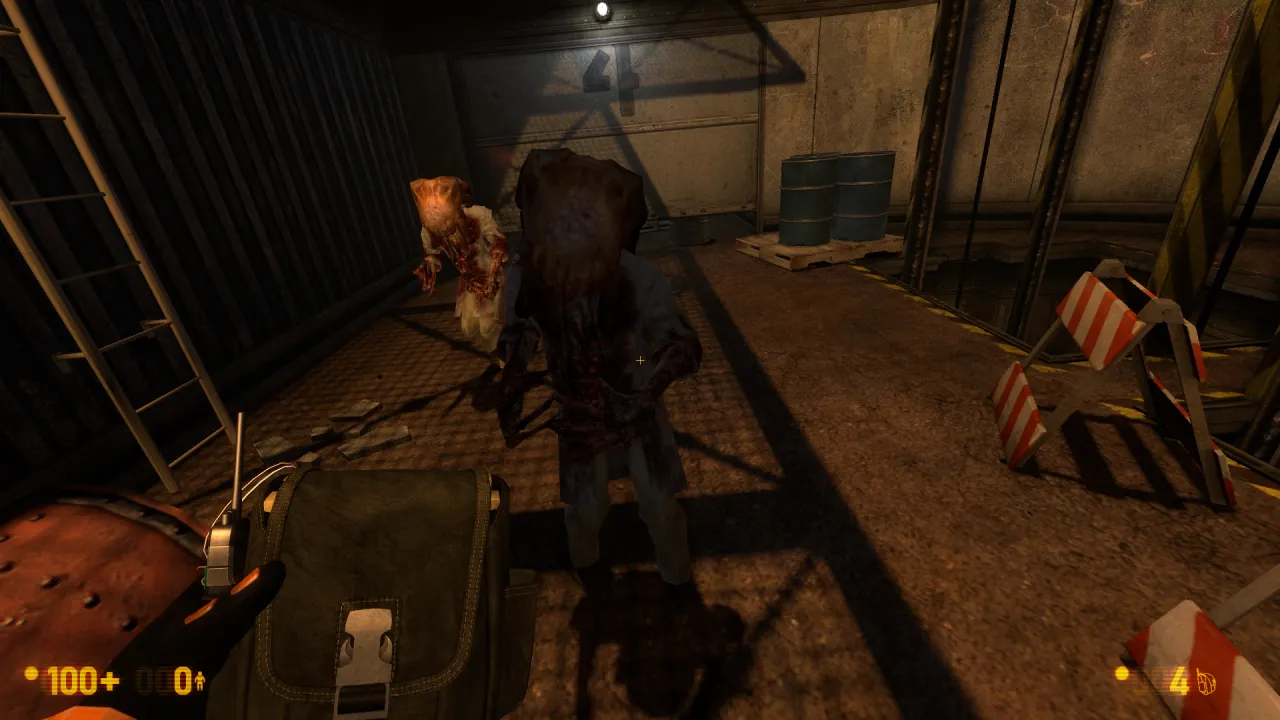
The thing that pushes the content toward effectively limitless, though, is the open moddability. A whole ecosystem grew up around the game: projects that restore cut level content, and teams remaking other chapters of the Half-Life universe piece by piece. Add fifty achievements and the replay pull of team deathmatch maps, and an already-generous main course gets extended into a buffet you can graze on for a very long time. There's essentially no "beat it and delete it" logic at work. For a certain kind of player, the campaign is just the entry fee; the real game is the decade of community work spiraling outward from it, and there's always one more project worth installing.
Where it sits against the competition
Hold it up against its peers and the quality of all this content comes into focus. Plenty of so-called remakes are old content under a high-definition skin, the campaign untouched, the price tag a nostalgia tax. Black Mesa not only preserves the full classic campaign intact, it rebuilt and expanded the very weakest stretch — effectively bundling a small expansion on top of the remaster. That double helping of "faithful and then some" is uncommon generosity in the remake category, where the more typical move is to trim the original down and charge full price for the privilege of replaying it in higher resolution. Black Mesa went the opposite direction and gave you more game, not less.
And behind it all sits that years-long line of free updates and a sprawling community. You aren't buying a static product; you're buying a world that's still growing, still spitting out new things to do. For a game priced modestly and a regular fixture on discount charts, the content depth is close to unimpeachable. With a solid campaign, a generous expansion, and an open ecosystem, it spells out the words "value for your time" without ambiguity. Its tenth anniversary in 2025 even pushed it back onto the top-sellers chart, ahead of far newer releases — proof that a game this content-rich doesn't fade the way disposable titles do. You finish it feeling like you got more than you paid for, which is not a sentence you write about many remakes, and almost never about one that started life as a free mod.




Comments 0
We'd love to hear from you
Welcome! Share your take on this game — being first might come with a surprise.
No comments yet — share your thoughts on this review!