

























Opening
Most strategy games hand you a country. Crusader Kings III hands you a person — one who ages, miscalculates, and eventually dies on you.

You are not steering a faceless banner across a map. You are worrying about a single count, duke, or king: his heir, his rivals, the old wound that slows him, the temper he can no longer quite control. When that man reaches the end of his life, you inherit the next name in the bloodline, and whether the realm holds together or splinters comes down to a few lines of succession law.
This is a game that landed with a perfect ten from China's GamerSky and a description from Polygon as "an epic that breaks free of the strategy game genre entirely." Metacritic settled it at 91. OpenCritic filed it under Mighty — the top one percent of all games, recommended by 98.9 percent of critics — and nine in ten of its ninety-thousand-plus Steam reviews are positive.
Behind those numbers sits something genuinely hard to pull off: it took the notoriously forbidding depth of its predecessor and made it something an ordinary person could sit down and actually play. That alone would be an achievement. That it did so without thinning the depth by a single degree is the part that turned a niche curiosity into a million-selling mainstay.
Over the next six dimensions, the thing worth watching is not the visuals. It is the engine quietly brewing medieval European politics into a family drama you help write.
Story | 9.5/10
Story: 9.5/10The story score of 9.5 rewards an absence. Crusader Kings III has no plot — no pre-written script waiting for you to trigger it. What it has instead is an engine that brews family drama in real time, and that is the one thing a cutscene-driven RPG can never reproduce.
The script writes itself, generation after generation
Picture the friction the simulation manufactures on its own. An ageing king with no heir adopts a base-born son and is promptly dragged into a fight over succession law. A queen left alone too long while her husband campaigns abroad quietly aligns herself with a vassal. A brother you lawfully confined falls ill in captivity and dies, and his old retainers rise in revolt. None of these beats is scripted. Each one is decided on the fly by a character's traits, their web of relationships, their current stress, and the political weather of the moment — which is precisely why no two of your reigns ever rhyme.
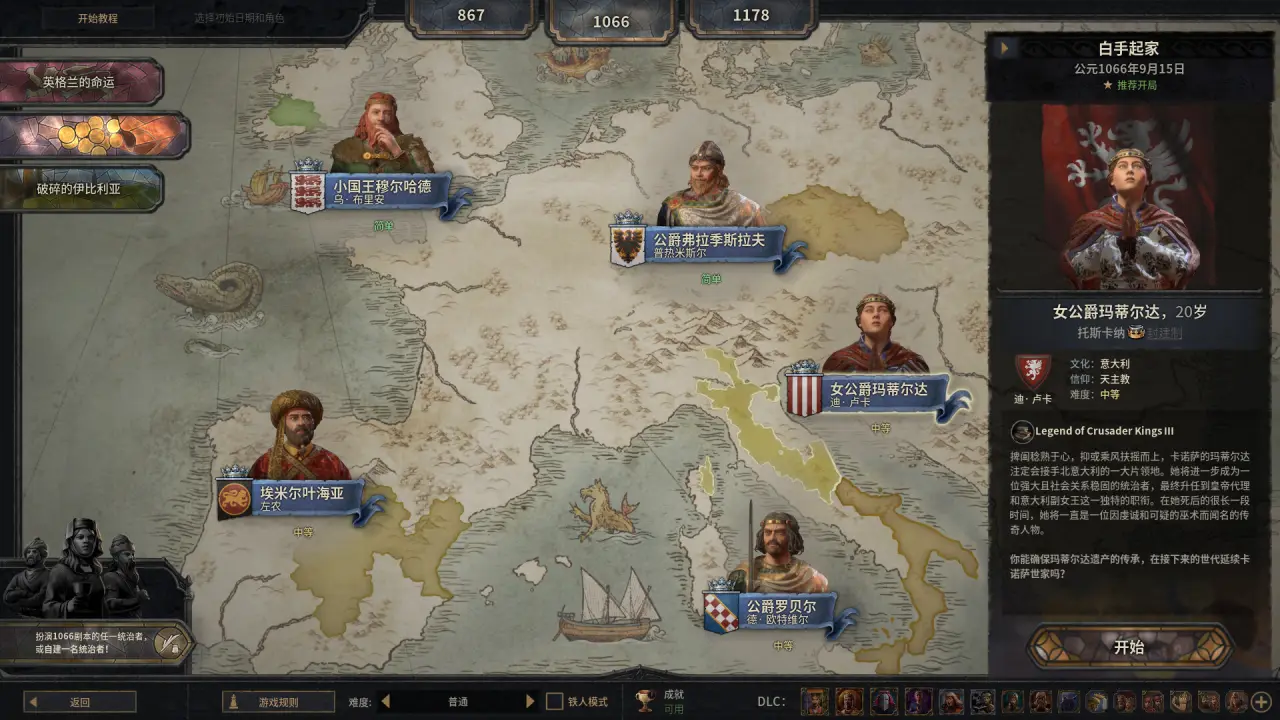
That is the source of the game's near-bottomless replay value. Start two campaigns from the small Irish county the tutorial recommends and you may end up in completely different stories: one where you weave a lattice of in-laws across the British Isles, another where a single failed scheme leaves you friendless and surrounded. The system never writes your ending. It hands you materials and rules, and the rest assembles itself out of every choice you make. This is the "elastic storytelling engine" Polygon praised — it brings the private conflicts that make real history so absorbing into sharp, personal focus.
Stress gives every ruler an interior life
What gives these stories their weight is the Stress system. Every character carries a cluster of personality traits — Just, Diligent, Wrathful, Craven, Sadistic — and those traits decide what the person is good at and what they can stomach. Force a character to act against that nature and stress accumulates. A Just ruler who confines or punishes people without proper cause inches toward a breaking point. A Sadist who deliberately passes up a chance to inflict pain feels the friction from the other direction.
Cross a threshold and a coping event fires: the character drinks, indulges, flogs himself, and picks up a fresh negative trait for his trouble. Let it climb and he can break entirely, the breakdown rippling outward into every relationship he holds. The elegance is that acting out of character now carries a real, ledgered cost — you are not coolly clicking the optimal answer, you are absorbing the inner conflict of a specific human being on his behalf. A pure war game cannot manufacture that kind of texture, and this is the exact seam where Crusader Kings III stitches grand strategy to role-play.
Two bookmarks, two histories — and a saga you can commission
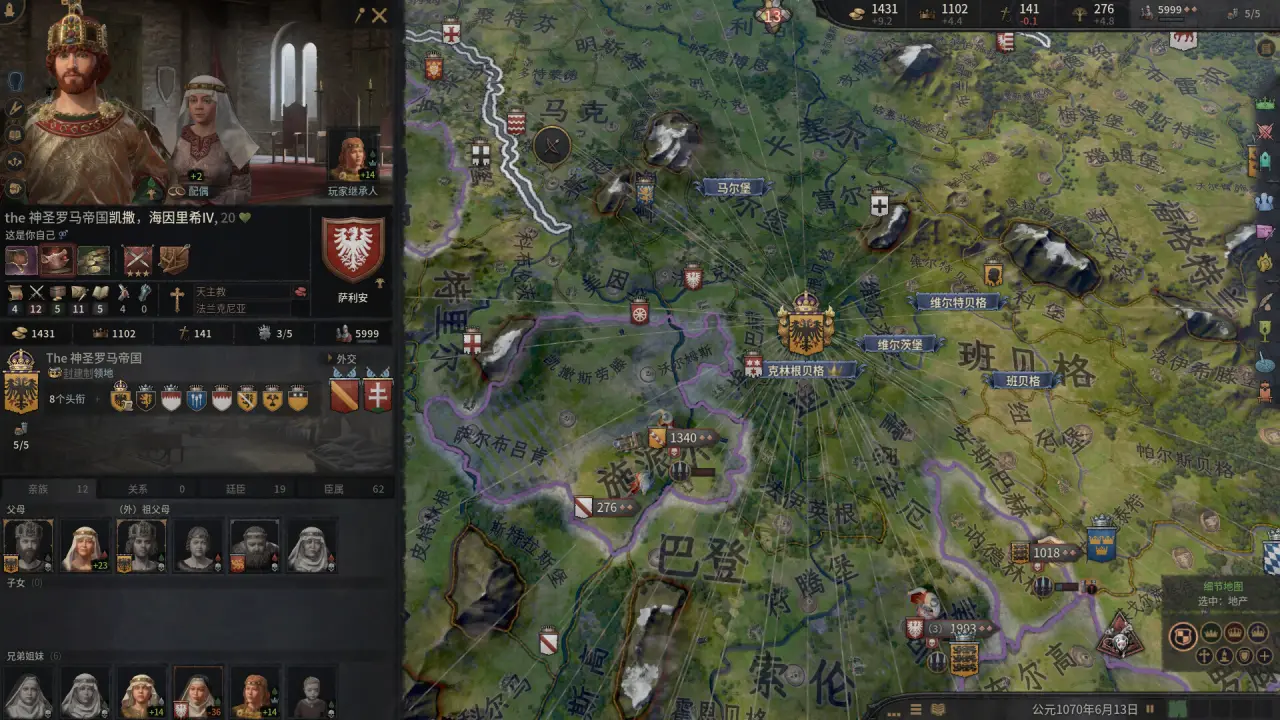
Even your beginning is yours to choose. The two classic bookmarks, 867 and 1066, frame two entirely different historical worlds. The 867 start drops you into the churn of the early medieval period, old faiths still alive at Europe's edges, the map young and volatile. The 1066 start is the eve of Hastings — feudal order already set, the stage crowded with real historical figures and their tangled claims.
On top of that, the Legends of the Dead expansion threads a further layer through the dynasty. A ruler can commission an epic retelling of his family's history and heroic feats — a legend that outlasts him by generations and hands his descendants a tangible prestige bonus for an ancestor's renown. Set beside the comparison every reviewer reaches for — this against the abstract nation you steer in Paradox's own Europa Universalis IV — the contrast is immediate. There, a general's death is a number changing. Here, the heir you spent twenty years grooming dies young and the loss is personal, because you watched him grow, chose his spouse, and planned his future. Polygon ranked it among the best role-playing games of 2020 for exactly that reason: it turns history back from a spreadsheet into people who love, scheme, and bleed. The story is yours, written by hand, and no one can retell it the same way twice — not even you, on a second attempt from the very same starting county.
Audio | 7.5/10
Audio: 7.5/10Audio is the restrained corner of Crusader Kings III, and 7.5 is both a compliment and an honest admission. The music does its real job — carrying mood and pacing narrative — but the voice strategy and the overall soundscape are no benchmark for their generation.
The score follows the map's faith, so your ears always know where you stand
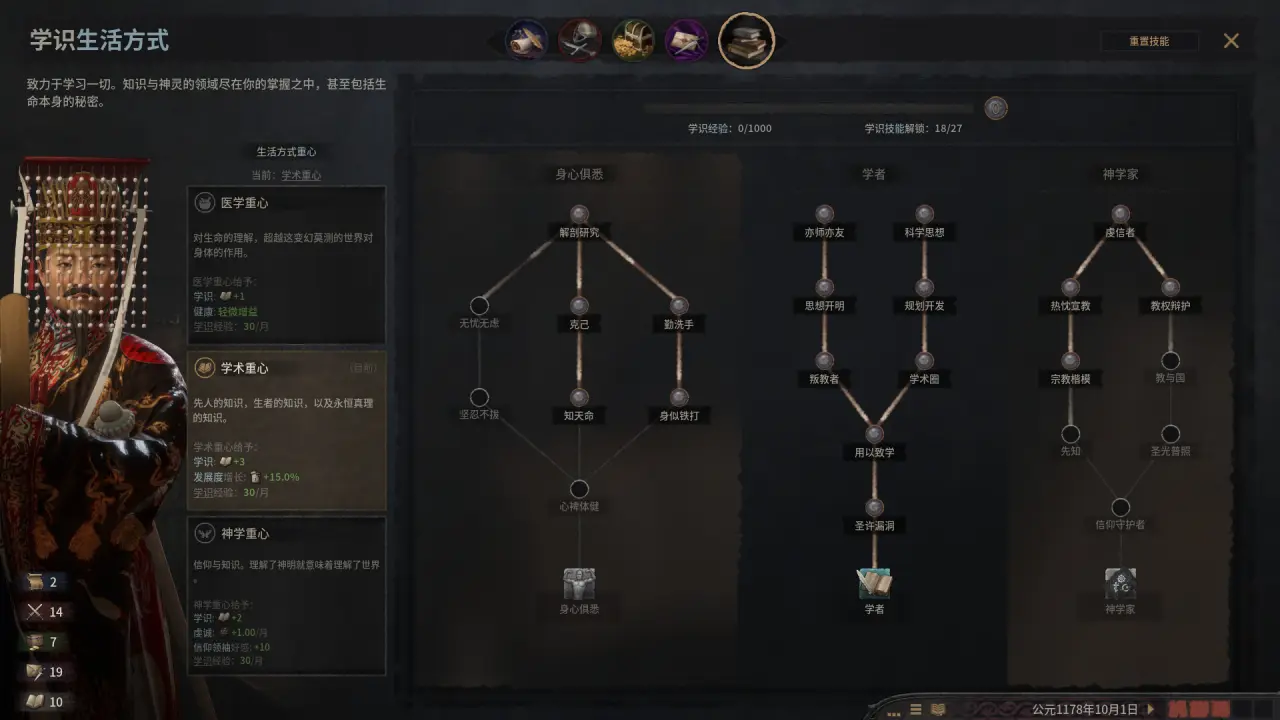
The smartest thing the soundtrack does is bind itself to the cultural region under your banner. Hold land in the Christian world and the score swells into grand, solemn choir and strings, the weight of medieval clerical power pressing down on you. Push the camera into the Islamic world and an entirely different set of motifs takes over. Sit among peoples who still keep older faiths and the colour shifts again. The practical effect is that you rarely need to glance at the map: the music alone tells you which civilisation you are standing inside. For a game staged across the whole of medieval Eurasia, that kind of audible geography is a meticulous touch — and an easy one to overlook until you notice the room change tone as your borders move.
Better still, the music here is no looping wallpaper. It is part of the narrative pulse. The brightness of a marriage feast, the grief of a funeral, the unease before a great campaign — the score rises and falls with the emotion of the event.
It knows when to fall silent and when to lift the feeling at the hinge of a dynasty's fate. Few grand strategy games are this disciplined about when not to play, and fewer still treat silence as a deliberate instrument rather than a gap to be filled.
Voice work stops at the ceremony, and the immersion holds anyway
Here is the honest caveat. Crusader Kings III does not voice its mountain of text line by line — with event scripts running into hundreds of thousands of words, full narration would be neither feasible nor sane. The game's answer is to season the key moments with short sung phrases and ceremonial chant in the appropriate cultural language: at a coronation, a great rite, the eruption of a major event, you hear human voices that fit the local culture rather than a flat narrator droning over everything. That "just enough" approach keeps production cost in check while lifting immersion exactly where it matters most.
The cost is real, though. If you want a game that speaks every character's lines aloud the way a linear blockbuster would, this one will leave you wanting. Its sound experience is closer to a chronicle you narrate inside your own head, the ambient cues and interface feedback built to serve dense operation rather than to stage cinematic spectacle. Hold it next to the science-fiction score of Paradox's own Stellaris and you hear two opposite errands: Stellaris reaches for vastness and solitude, Crusader Kings III for medieval gravity and human joy and sorrow. Each does its own thing well. But on raw sonic impact, parking the number at "competent rather than dazzling" is the fair call — and the game is better served by honesty than by inflation.
Visuals | 6.5/10
Graphics: 6.5/10Graphics is the most misread line on the scorecard. A 6.5 does not mean the game looks bad — it means being honest about a game that puts legibility ahead of spectacle, and whose real visual triumph hides in the last place you would think to look: a procession of faces that change with their genes.
Every character is 3D now, and the bloodline is written on the face
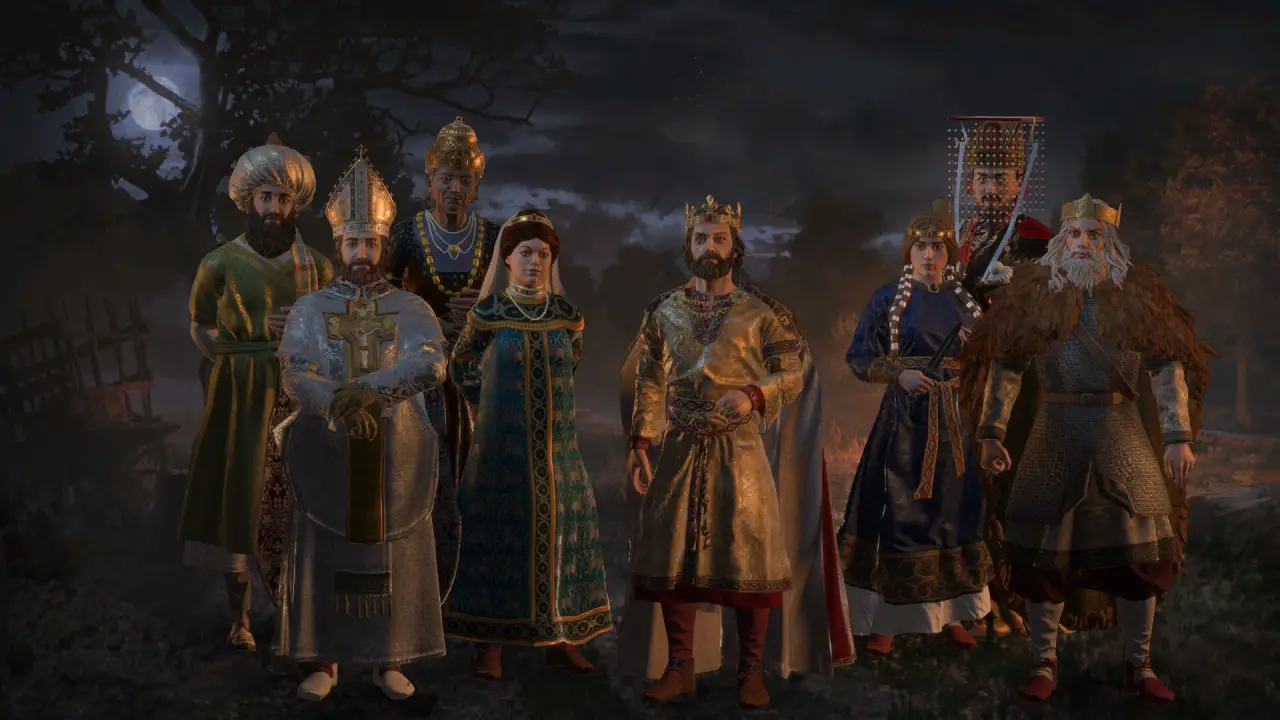
The most immediate leap over the portrait-driven predecessor is that every character is now a fully animated 3D model, and those models honestly reflect inherited traits. Children carry their parents' features; trace a family across three generations and you can see the blood persist. Illness, ageing, and congenital defects show up on the face directly — a king fallen sick visibly wastes; an heir who inherited certain features gives away his parentage at a glance. The abstract genetics system becomes something you read without opening a panel. You don't audit a stat sheet; you look at a face and know what this person inherited.
It is a quietly crucial piece of design that plenty of players walk straight past. When you are shepherding a dynasty across generations, watching one face slowly age and then pass its features down is, in itself, a kind of storytelling.
The heir you cultivated for years grows from a callow youth into a middle-aged sovereign and finally into a white-haired elder; his children's faces carry the marriage choices you made decades earlier. There is a strange tenderness in spotting your long-dead first ruler's nose three generations down the tree, or in watching a hereditary ailment surface again on a grandchild you had hoped would escape it. Rendering abstract numbers as faces that visibly change turns genetics from a cold attribute table into a lineage you can see and remember. The models aren't there to show off. They are there to make you care about virtual people — and caring is the whole foundation this game stands on.
The map is information first, and that is the point
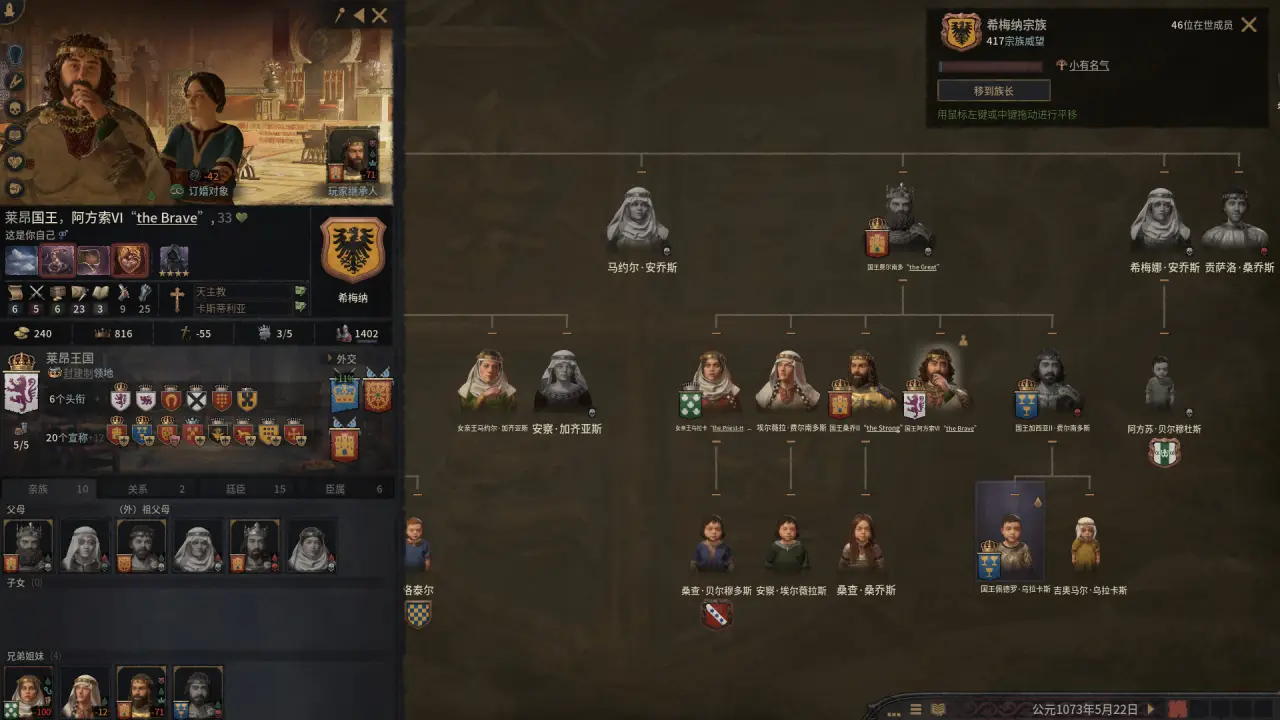
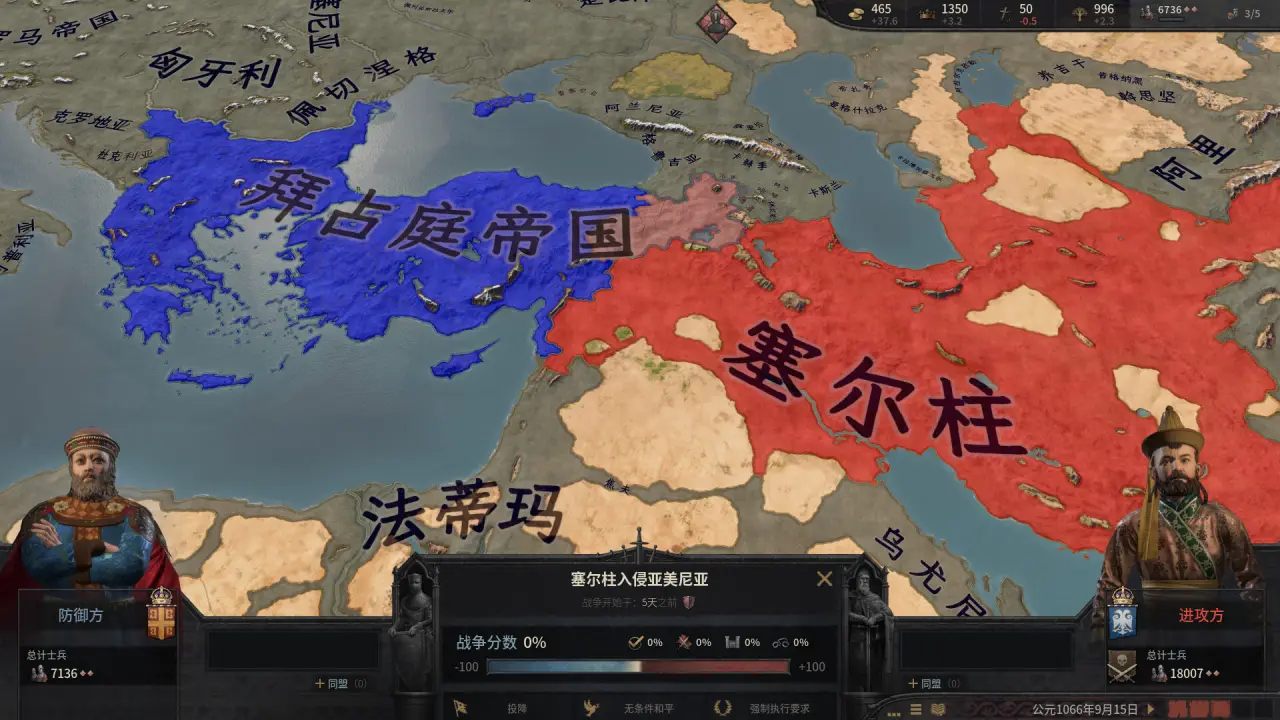
Lift your eyes from the faces to the map and the 6.5 explains itself. Crusader Kings III spans a vast sweep from Western Europe to India, the Clausewitz engine carrying thousands of real historical titles, cultures, and faiths. But the first duty of this map is to make tangled politics legible, not to be pretty. The de jure realm structure renders borders, claims, and inheritance rights as clear, readable objects — every colour, icon, and border serves the information, not the eye.
Its interface aesthetic, in other words, is functional. You will stare at this screen for hundreds of hours, and what you need is clarity of data, not gloss of light. Every shade on the map is telling you who holds what, which faith sits where, how strong a claim runs — so you can read the board at a glance. A lesser game would have buried that information under decoration; this one trusts you to want the signal over the shine.
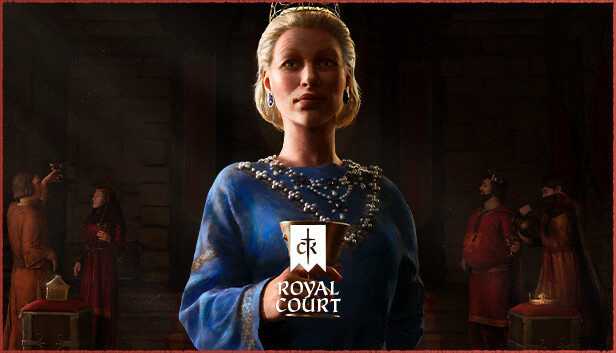
The court scene the Royal Court expansion adds, where you display artifacts and set a courtly style, gives the visuals one staged, deliberately handsome room as compensation; the game runs on console platforms too, holding that same clarity on a larger screen. None of it changes the basic posture: this is a game that would rather you understood the board than admired it. But set against the generation's spectacle-chasing benchmarks, the picture is simply not where this game competes, and chasing model fidelity was never the race it wanted to enter. There are no sweeping vistas to screenshot, no lighting showcases to lose an afternoon to; the camera mostly hovers, godlike and businesslike, over a painted political diagram. For a certain kind of player that flatness will always read as a shortcoming, and pretending otherwise would be dishonest. The 6.5 is fair — what it buys is a map so clear you can stare at it for hundreds of hours without fatigue, and a roster of faces clear enough that you grieve them when they die. For a game that asks for exactly that investment, it is a trade well made, and arguably the only sensible one.
Combat | 9.5/10
Gameplay: 9.5/10Gameplay is the soul of Crusader Kings III, and the 9.5 is earned. It locks four deep systems into one another, then uses an overhauled tutorial to tear down most of the wall that turned away countless newcomers. Depth and approachability — two things that usually pull in opposite directions — it manages to hold at the same time.
Four systems interlock, and there is no right answer, only trade-offs
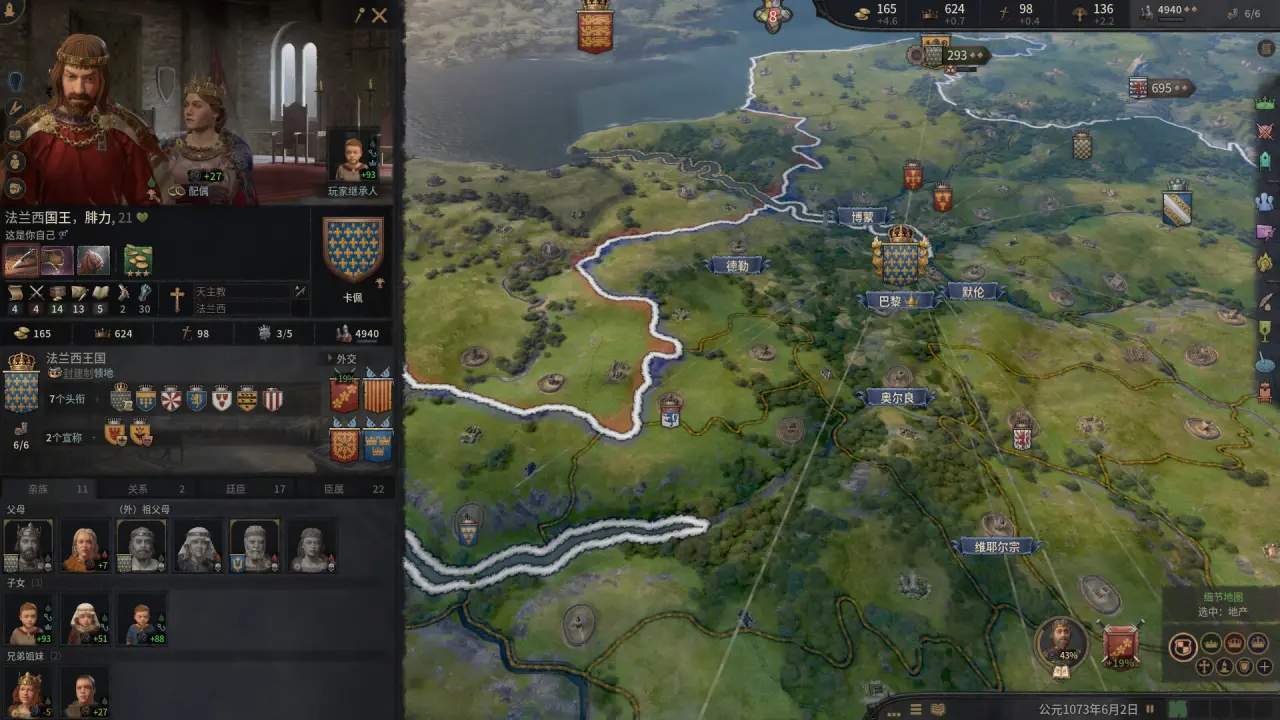
The core is four systems geared into each other: personality traits and stress, tyranny and dread, lifestyle perks, and de jure inheritance. They are not isolated numbers; they tug on one another. Take a concrete case. You play a Just, Diligent duke, and one of your vassals — an ambitious count — is quietly working to seize your title. You can move first and lawfully confine him; but as a Just character, acting without proper cause piles on stress, and enough of it can leave you paranoid. You can instead raise your own Dread so vassals fear to move against you, paying for it with a colder, more oppressive rule and a creeping Tyranny that pushes the rest of your vassals away. Or you defuse the whole thing through diplomacy, binding the two houses with a marriage — which then ripples through succession law and the map of claims.
Every choice pulls on stress, tyranny, dread, opinion, and inheritance all at once. There is no universally optimal line, only the trade-off that suits the character you happen to be.
Because traits decide which road costs you least, two players facing the same corner walk out of it differently — and the same player, reincarnated a generation later as a different heir, may not even recognise his old solution as an option. That "the system supplies the rules, the player supplies the story" design is the taproot of the game's depth, and the reason a guide can never quite tell you the right move.
Lifestyles decide what your ruler is actually good at

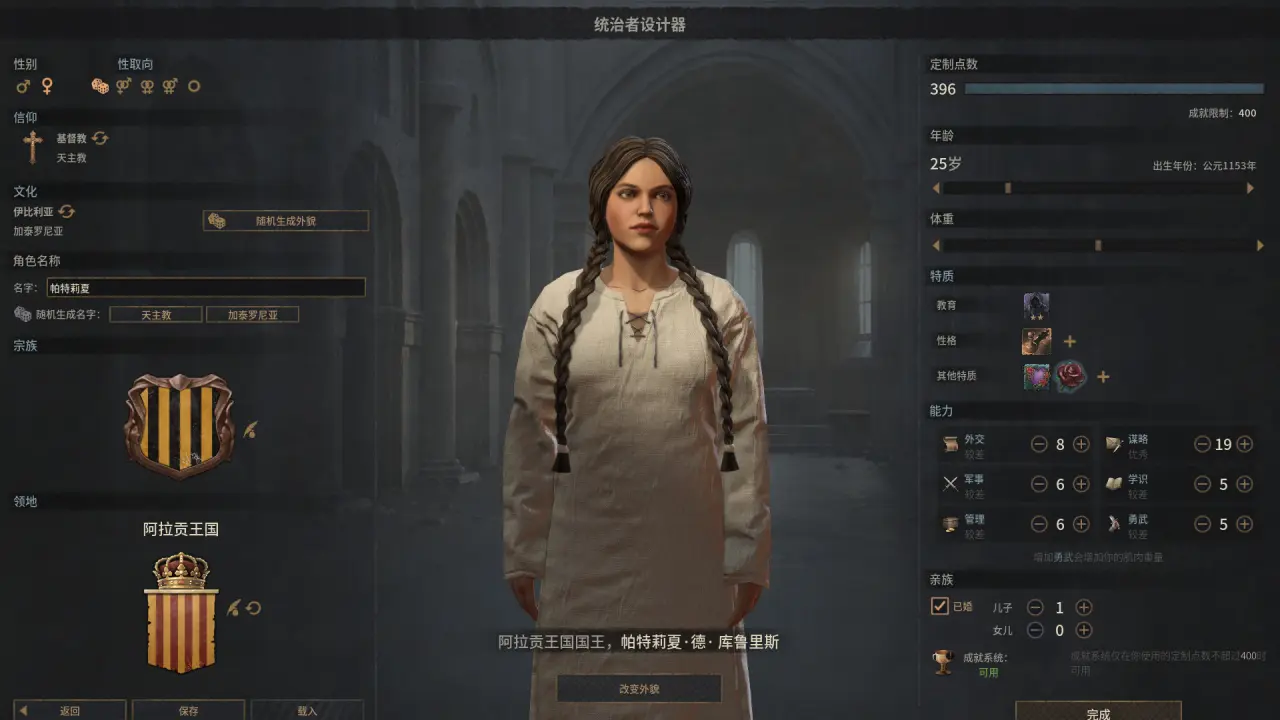
If traits set a character's nature, the Lifestyle system sets his craft. It splits into five perk trees — stewardship, diplomacy, martial, intrigue, and learning — and whichever you pour experience into is where the character grows sharp. A ruler deep in the intrigue tree thrives in the shadows, his covert moves against rivals landing more often. One specialised in diplomacy is better at alliances and persuasion, turning enemies into in-laws. One who studies stewardship keeps the realm orderly and the treasury full.
That means the same realm, handed to heirs of different natures and different lifestyles, walks toward completely different fates. It hands you a long-term goal to climb and makes "play it again with another character" feel genuinely new. Paired with the scheme system — which lets you take a range of covert actions against rivals — and set alongside marriage, diplomacy, and the martial track, it gives you a multitude of valid answers to every political bind. No two rulers solve the realm the same way.
Tearing down the predecessor's wall

The single most historically important move in the design is how far it lowers the barrier to entry. The predecessor was infamous for an opaque interface and a wall of systems that scared newcomers off; Crusader Kings III rebuilt the onboarding almost wholesale. There is a graded tutorial, context-sensitive tooltips that surface as you go, and a "hover over any term you don't understand and the game defines it on the spot" design. It even steers beginners to that small Irish county — learn the systems on a low-stakes stage, then expand outward.
As PC Gamer put it, this is "the friendliest" of the grand strategy bunch: the complexity hasn't been trimmed, but the game is dramatically better at showing how everything connects. Held against the abstract-nation play of Europa Universalis IV, this one swaps national abstraction for role-play — you aren't memorising a rulebook, you are making decisions for a specific human being, and that immersion is exactly what makes the complicated systems comprehensible and welcoming. It runs in both single-player and multiplayer, and the Tours and Tournaments expansion folds grand processions and knightly contests into the mid-game, giving the middle stretch even more to reach for. Depth, breadth, and a way in — the 9.5 stands without apology.
Content | 9.0/10
Content: 9/10Content earns a 9.0 on three stacked layers: the near-limitless hours of the open sandbox itself, the chapter-by-chapter weight of twenty-plus DLC across four chapters, and the thousands of Workshop mods that push the boundary of what the game can even be.
A sandbox with no finish line, measured in hundreds of hours

By HowLongToBeat's numbers, a main-line run sits around fifty hours, and chasing the systems to completion creeps toward two hundred. Both figures undersell it, because Crusader Kings III is an open sandbox with no win condition. There is no clean "ending" the way a linear blockbuster has one; a single campaign can run from 867 all the way to 1453, spanning hundreds of in-game years and a dozen generations of one family.
It is that "no terminus" structure that makes the content hard to pin to a single number. For the players who love it, the count runs into hundreds of hours, even thousands — plenty of them have logged hundreds and still find unseen events and untried paths waiting each run.
For players who need clear goals and instant feedback, that same openness can read as a burden: nobody tells you what to do next, and every objective is one you set yourself. The game will happily let you wander for a decade of in-game time with no particular aim, and for some that freedom is the whole appeal while for others it is paralysis. That is precisely where the game is not for everyone, and the overall section returns to it.
Four chapters of DLC that keep reshaping the loop

Crusader Kings III follows Paradox's classic long-tail model: after the base game ships, expansions arrive by the chapter, and the count now stands at four chapters and more than twenty DLC. Chapter One's Royal Court turned the abstract court into a staged, visible space and added artisans forging artifacts plus cultural customisation and hybridisation. Chapter Two brought Tours and Tournaments — grand processions and knightly contests — while Legends of the Dead added the legend system and a plague mechanic. Chapter Three's Roads to Power was crowned by critic after critic as the best expansion the game has had, precisely because its administrative government and wandering-adventurer play are systems that genuinely change the core loop rather than padding it with content. Chapter Four then pushed the map and the play wider still through expansions like Khans of the Steppe and All Under Heaven, opening new geographies and new forms of government.
The honest note: this chaptered model means the full experience is deeply tied to its DLC — the base game and the fully-expanded game differ sharply in content depth. That is simply the shape of a Paradox long-tail title; hardly a flaw, but worth knowing going in, especially if you are weighing the cost of catching up on years of expansions all at once. The base game stands on its own perfectly well; it just keeps growing if you let it.
The Workshop turns one medieval map into countless worlds

If the official DLC gives the game depth, the Steam Workshop gives it a near-limitless lateral edge. Thousands of mods sit there, one-click to subscribe and enable. The most celebrated are the total-conversion mods, which rip out the medieval feudal setting wholesale: a shogunate that moves the stage to Sengoku Japan, a Bronze Age Near East, a vampire-haunted Europe, and original dark-fantasy worlds like Godherja, complete with magic, dueling, artifacts, and coronations.
It is exactly the game's hybrid spine — top-down strategy fused with deeply personal, character-driven storytelling — that makes it such a rare canvas for modders to tell their own stories: you take the same emergent-narrative engine and run a wholly different world through it. A vampire court schemes by the same rules a Norman duke does; a Sengoku warlord feels stress over a dishonourable act exactly as a Christian king would. The framework bends without breaking.
Paired with global sales past four million and a player base that keeps climbing, that twin engine of official expansions and community mods makes this a game you can genuinely play for years. The 9.0 is a salute to that staying power, and to a content pipeline that shows no sign of slowing.


Comments 0
We'd love to hear from you
Welcome! Share your take on this game — being first might come with a surprise.
No comments yet — share your thoughts on this review!