























Opening
Here is the honest pitch. If you want a modern military shooter that costs nothing to start, your options are thinner than you would think, and Delta Force's smartest decision is that it never forces you to pick a single way to play. One client holds three completely different rhythms — a 32-versus-32 Warfare mode, a palms-sweating extraction loop called Operations, and a Black Hawk Down campaign built on its own Unreal 5 engine. Feel like ramming a control point with a helicopter today, sneaking out with a backpack full of loot tomorrow, and grinding a brutal solo campaign the day after? You never need to download a second game.
It comes out of Tencent's Team Jade studio, published under the umbrella of TiMi, and it landed free on Steam at the tail end of 2024. Eighteen-months-plus and a hundred and eighty thousand reviews later, the verdict sits at "Mixed," with a positive rating that never quite clears sixty percent. That number tells you almost everything up front: this is neither a misunderstood masterpiece nor a disaster worth piling on. It is a competent, generous, slightly anonymous package that does a lot of things well and almost nothing brilliantly.
That breadth is the whole appeal, and it is also the whole problem. The gunplay is grounded, the vehicles are genuinely fun, the seasonal content arrives at a frankly absurd pace. But expect any single mode to top its genre and you will walk away disappointed. Think of it less as a flagship and more as an all-you-can-eat buffet — every dish is edible, none is the one you'd drive across town for.
The other thing worth flagging early is how wildly the verdict swings depending on where and who you ask. PC hardcore players file it under "fine," a competent middle-of-the-pack option. Mobile players, with almost no rival of this caliber on their platform, treat it as a genuine standout. Same game, two opposite conclusions — and that split is itself one of the more interesting things about it, because it tells you the score you hear depends heavily on the company the game is keeping.
What follows is the buffet, course by course: the three modes, the look and the sound, the relentless live-service machine, and then the soft spots that nobody in the marketing copy wants to mention.
By the end you will know exactly who should install this thing and who should keep scrolling — and, just as usefully, why a game this competent never quite climbed out of "Mixed." The download is free, so the cost of trying it is close to nothing; your hours, though, are not, and the goal here is to help you spend them on the parts of this sprawling package that are actually worth your while rather than the parts the marketing leans on hardest.
Story | 5.5/10
Story: 5.5/10Black Hawk Down restages Mogadishu 1993 as a war that refuses to resupply you
You cannot talk about story here without talking about Black Hawk Down, because it is very nearly the only piece of this game that bothers to tell one. It adapts the 1993 Battle of Mogadishu across seven chapters, soloable if you're stubborn, better with a full squad of four. It runs on a separate Unreal 5 build, and the difference shows the moment you load in — this is plainly not the same team, or the same priorities, that built the multiplayer.
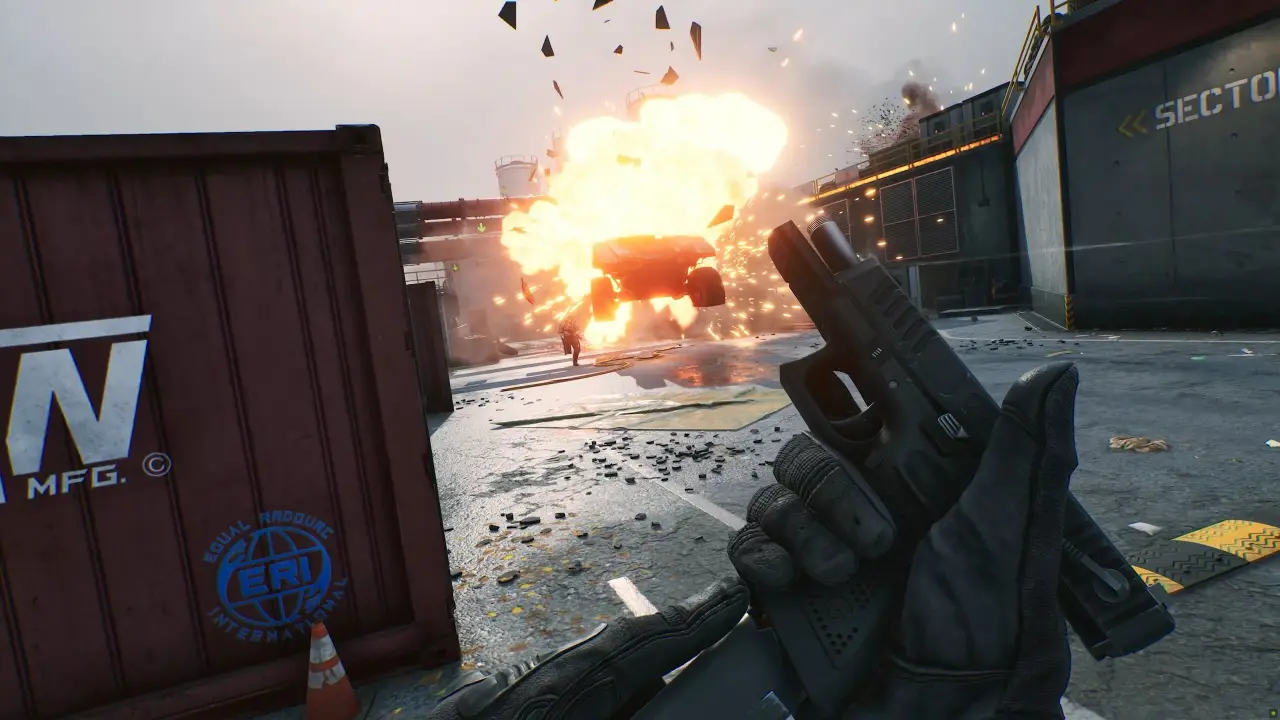
The controversy was never really about whether the story is told well. It is about how completely the game commits to the suffocation of a real battlefield. Always online. No AI teammates to bail you out when you play alone. No mid-mission checkpoints. No resupply. You cannot even scoop up the rifle of the enemy bleeding out at your feet. The design does not want you to feel powerful; it wants you to feel cornered, watching your resources drain one round at a time. When the developers eventually answered the backlash, they said it plainly: the crawling movement and the punishing scarcity are the narrative. The friction is the point.
A free campaign that somehow argued itself into a "Mostly Negative" rating
There is a genuinely fascinating mismatch buried in here. Precisely because Black Hawk Down arrived as free content, it pulled in a flood of players who normally live in arcade shooters — people with zero appetite for a hardcore war simulation. The result was a Steam rating that slid to "Mostly Negative," with the complaints clustering around brutal difficulty, the absence of a real single-player safety net, and the always-watching online requirement.

Read those reviews carefully, though, and you find a rating driven by mismatched expectations rather than broken craft. Eurogamer handed the campaign a 3 out of 5 and did not mince words, calling it atrocious — while in the same breath conceding that the wider game works fine as a one-stop shop for competitive action. Black Hawk Down, in other words, is a deliberately bitter dish. The people who love it call it authenticity; the people who hate it call it self-flagellation; almost nobody lands in between. My own read is that it has ambition and conviction, but it built the threshold so high that it locked out half its potential audience before they could appreciate the view.
Strip the campaign away and the multiplayer carries essentially no narrative at all. Nobody fires up Warfare or Operations for the plot — they show up to shoot, to capture, to extract, and the storytelling there rounds down to zero. So story, as a category, was always going to be this game's weakest leg. It is not for lack of trying; Black Hawk Down has real respect for the history it's recreating. But respect and broad appeal are different animals, and a 5.5 here isn't a slight. It's an accurate read of a game that simply parked its heart somewhere else.
If you came for narrative, then, manage your expectations going in: the campaign is a single intense bet, the rest of the package doesn't pretend to be a story at all, and that, oddly, is the most honest thing about it. Delta Force never sells itself as a story-driven game; it sells modes, seasons, and reasons to keep logging in. Black Hawk Down is the one place it reaches for meaning, and the fact that the reach is divisive rather than dismissible is, in its own way, a small point in its favor — better a swing that splits the room than a campaign too timid to provoke anyone at all.
Audio | 7.5/10
Audio: 7.5/10In Operations, your ears save your life a half-second before your eyes do
Most shooters use audio to set a mood. In Delta Force's Operations mode, sound is hard tactical intelligence. Footsteps, gunfire, and the hit registration that the community nicknames the "scalp shot" are tuned and retuned season after season. It looks like trivial fiddling on a patch note until you drop into a high-stakes match and feel it: whoever hears the other guy shift first, whoever calls the bearing first, gets to take the opening shot — and that one shot usually decides whether you walk out loaded or lose everything in the bag.
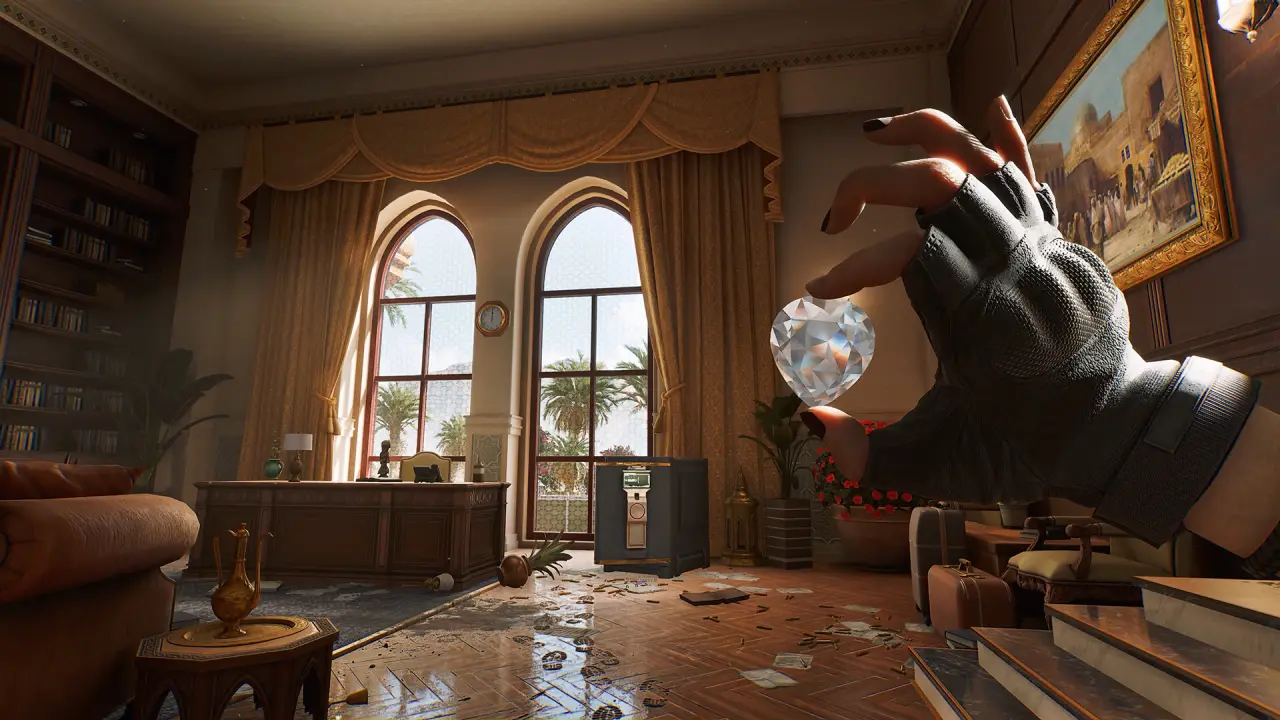
That reliance on listening got pushed to its limit in the Season 4 night-combat overhaul. Zero Dam is a map veterans could navigate blindfolded, and then night mode crushed the sightlines and turned audio into the only intelligence you could trust. Darkness here cuts both ways: it robs everyone of vision, but it quietly rewards the players who can read a room by ear and keep their own footsteps quiet. The footstep work in particular deserves singling out — different surfaces, from metal walkways to gravel to standing water, each ring differently underfoot, so a seasoned player can place an opponent on the map and even read whether they're sprinting or creeping a point, purely by ear. This is where the sound design earns its keep, not as decoration but as a genuine layer of the mind game: turning ambient sound into readable intelligence gives every Operations standoff an extra round of chess played with your ears, and it's a big part of why the mode outlasts your average twitch shooter.
Engine roar and operator gadgets turn Warfare into a loud, chaotic stew
Switch over to Warfare and the audio job changes completely. Here it isn't chasing subtlety — it's chasing scale and chaos. A helicopter thundering low over your head, armored treads grinding through rubble, distant exchanges crackling from every corner of the map: layer all of that together and you get the genuine epic-mess feeling of dozens of players fighting their own little wars on one enormous battlefield.
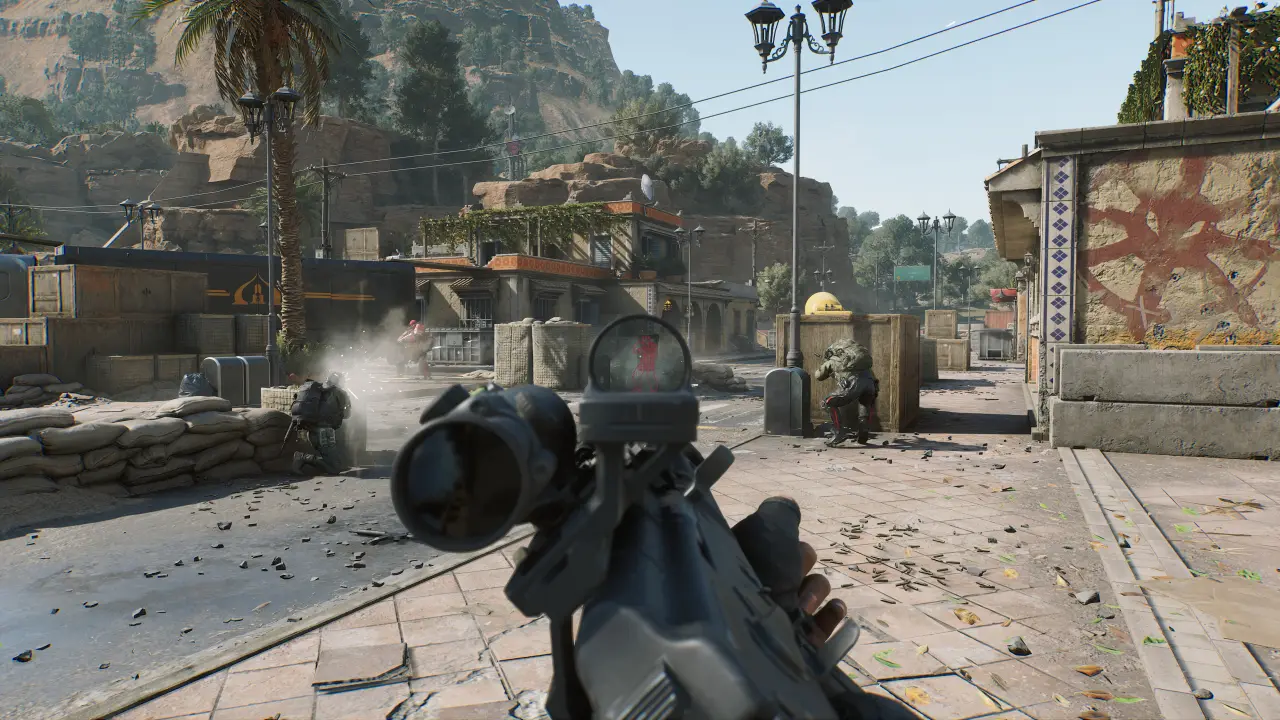
The operator abilities pull real weight on the audio side too. The whir of an operator's tracking drone spinning up, the crack of a breaching flash, the lift-off whine of a rescue craft — each one carries its own signature, so you can half-read the state of a fight by sound alone. Worth flagging: almost none of this fidelity got sanded off on phones. Mobile reviews rate it among the best-sounding and best-looking shooters on the platform, full stop. For a free mobile game to hit that bar is no small feat, and it speaks to how seriously the audio team took their job across every screen size.
Put the two halves together and the sound design is the quiet success story of the package: tactical and surgical in Operations, broad and cinematic in Warfare, and barely compromised on a phone. A 7.5 reflects how rarely audio this functional shows up in a free shooter — it's not chasing an orchestral showpiece or a signature theme you'll hum afterward, but as a working tool that feeds you information and shapes the way you play, it punches above its free-to-play weight.
Visuals | 8.0/10
Graphics: 8/10One game, two engines: multiplayer plays it safe, the campaign chases the pixels
Delta Force made a refreshingly pragmatic call on the visual front — it split its engines by mode. Warfare and Operations, the two modes that have to carry heavy online loads, run on Unreal 4 in the name of stability and frame rate, because dozens of players on screen is no place to gamble. The Black Hawk Down campaign, meanwhile, gets its own Unreal 5 build, reaching for richer fidelity and a heavier battlefield atmosphere. Everything you need to know about how a first-tier Tencent studio juggles looks, performance, and cross-platform reach is written into that division of labor.
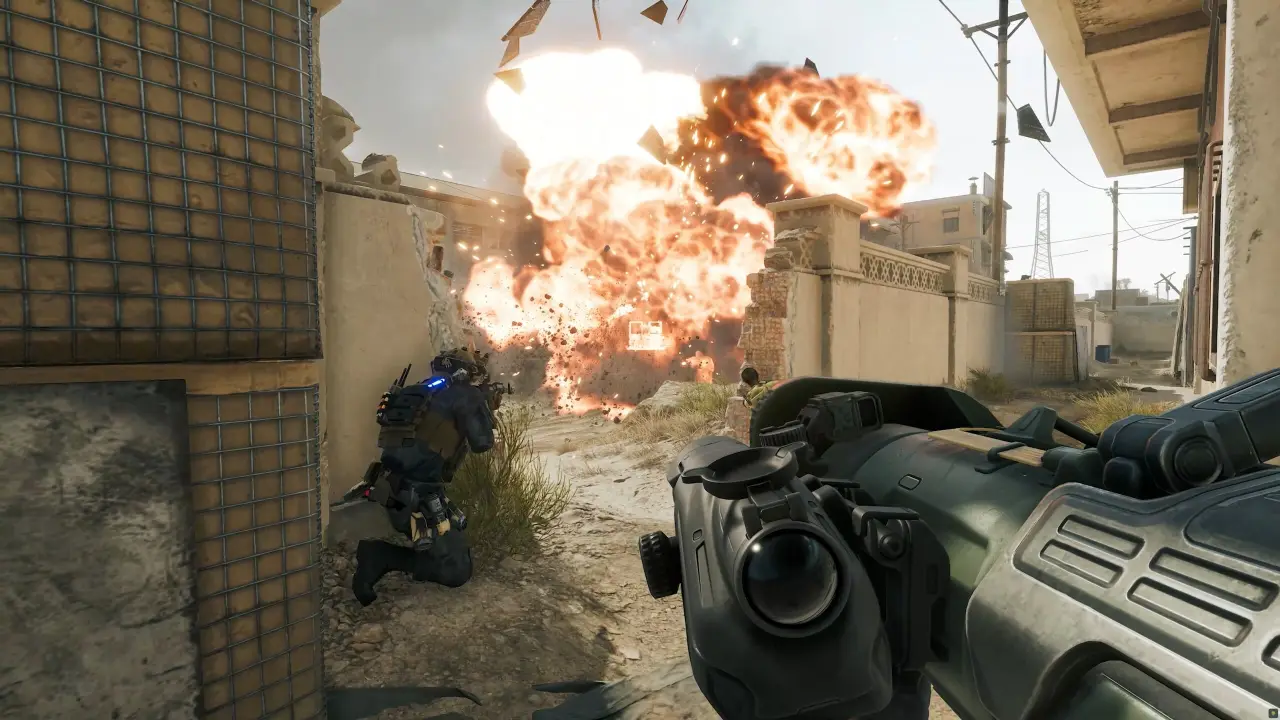
Out in the wild, the PC verdict is genuinely strong: a polished image, with environmental effects, water ripples, and the scorch marks of rounds chewing into a wall all rendered convincingly. Lighting and materials clear the mainstream bar comfortably. The art direction is textbook realistic-modern-military, and the honest truth is the identity is generic — you'd struggle to name the game from a single screenshot, because the entire genre speaks the same visual language. What it has instead is completeness and consistency; the grimy industrial weight of its environments holds up, even if nothing here is going to imprint on your memory. A distinctive, unmistakable art style? It doesn't have one, and that's the standing curse of the realistic-shooter lane — everybody looks alike, and the contest is fought over detail and stability rather than flair.
The Aftermath map can drop an entire tower, and it's the rare moment of real visual swagger
If any slice of the visuals is going to stick with you, it's the Warfare map "Aftermath" added in Season 8. It's a modern-city setting with a clear jump in the variety and density of its modeling, and its headline trick is a terrain-destruction system — buildings aren't set dressing, they can genuinely be torn down.
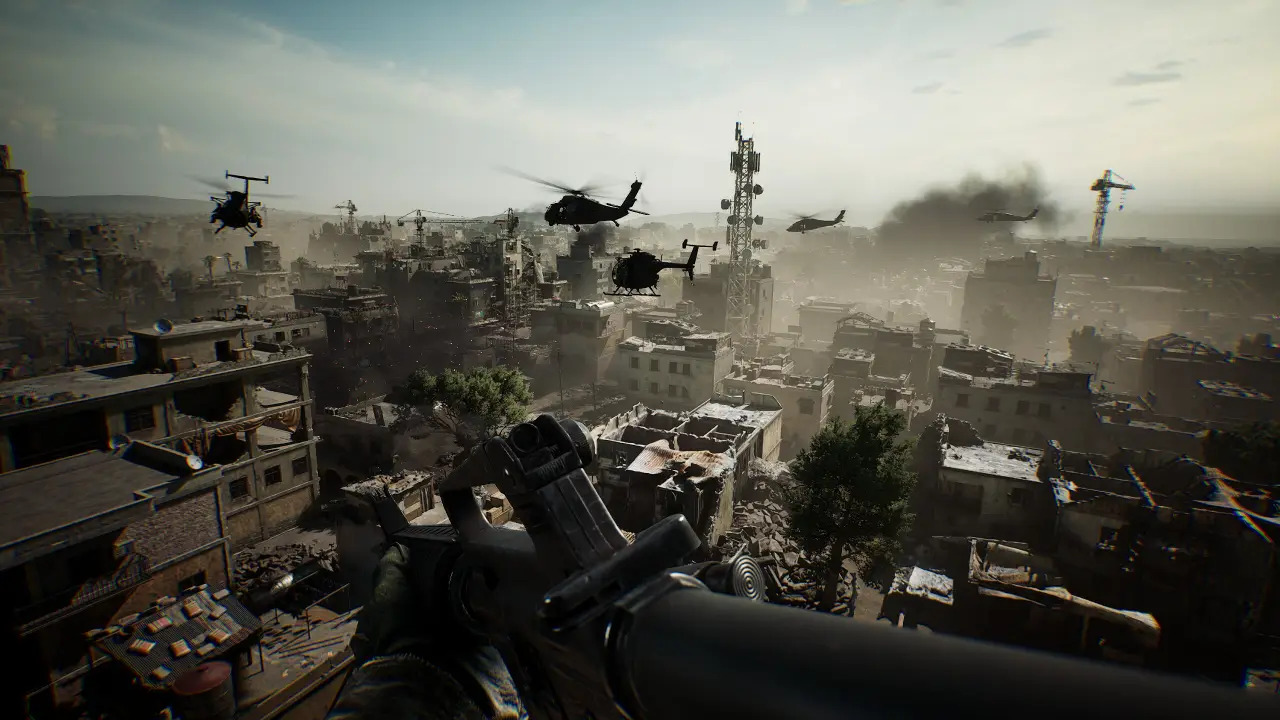
The most outrageous beat lands in the second attack-defend phase: once one side activates the servers three times, it triggers a so-called seismic weapon that collapses the entire tower at point B2. The spectacle isn't just for show — it can swing the whole match, because a fallen building rewrites the cover and the routes on the fly. The high perch you were holding is gone, the safe corridor you trusted is buried, and both sides have to recompute their plan in real time. That dynamic destruction, paired with the grid-street tactical layout, is the one moment of genuine swagger in an otherwise conservative-looking game, and it hints at what this engine could do with destruction if it leaned in. As an aside, this is exactly the direction a realistic shooter should push: when the art style can't differentiate you, interactive, match-altering environmental destruction is a far smarter way to manufacture memorable moments than simply cranking texture resolution. The frustration is that highlights like this are rare; for most of your hours the game stays safe, handsome, and entirely un-screenshot-worthy. One more note: the phone version doesn't fold either, holding 24-player Warfare without performance hitches and earning a reputation as one of the best-looking FPS titles on mobile — which matters a lot if that's where you play.
So the graphics story is two-sided. Day to day, on the multiplayer engine, it's clean, dense, and forgettable in equal measure — competent realism with no signature of its own. Then a map like Aftermath shows up and lets the seismic weapon flatten a tower mid-match, and for a few seconds you remember that the underlying tech has a ceiling well above where the rest of the game usually parks it. An 8.0 lands right in that gap: technically accomplished, artistically anonymous, with the occasional flash of what it could be if it stopped playing it safe.
Combat | 8.0/10
Gameplay: 8/10Three tempos in one client, from all-out spectacle to held-breath scavenging
The single most valuable sentence you can say about this game's mechanics is that it crams three wildly different tempos into one free client. Warfare is 32-on-32 objective combat, big and loud and immediate. Operations is three-player extraction, tense and calculating and lethal on every corner. Black Hawk Down is the hardcore co-op campaign. In another publisher's hands these would be three separate products with three separate price tags; here you just tap a mode and you're in.

Operations is the meatiest of the three. Its engine is a scavenge-fight-extract economy: you carry gear into the map, loot high-value goods, and only by extracting alive do you bank the haul — die and it all evaporates. That risk-reward dial makes every search and every encounter a life-or-death proposition, and every decision a wager between pushing your luck and playing it safe: cash out with the modest pile you've got, or sweep one more room and gamble it all. The rules point straight at Escape from Tarkov and Arena Breakout, but Delta Force is canny about dropping the entry barrier of hardcore extraction way down — IGN flatly called it one of the most formulaic and most approachable entries in the genre. For anyone curious about extraction but scared off by Tarkov's punishing welcome, this is a remarkably gentle door in.
A helicopter as a battering ram, plus four operator classes, stack another layer of tactics
A huge chunk of Warfare's joy comes from vehicles. The land-air-sea fleet here genuinely supports combined-arms play, and one reviewer put it perfectly: driving a helicopter into a control point like a battering ram is far more fun than crouching in a corner trading shots. Compared with the Battlefield series and its famously cantankerous vehicle handling, the controls here are a good deal more intuitive, and newcomers pick them up fast — none of that "I'm in the tank and I can't find the fire button" embarrassment. Crucially, vehicles aren't just transport; they're meshed into the infantry-and-objective layer. A well-flown gunship can flip the state of a contested point on its own, and that interplay of armor, air, and boots on the ground is exactly where Warfare feels best.
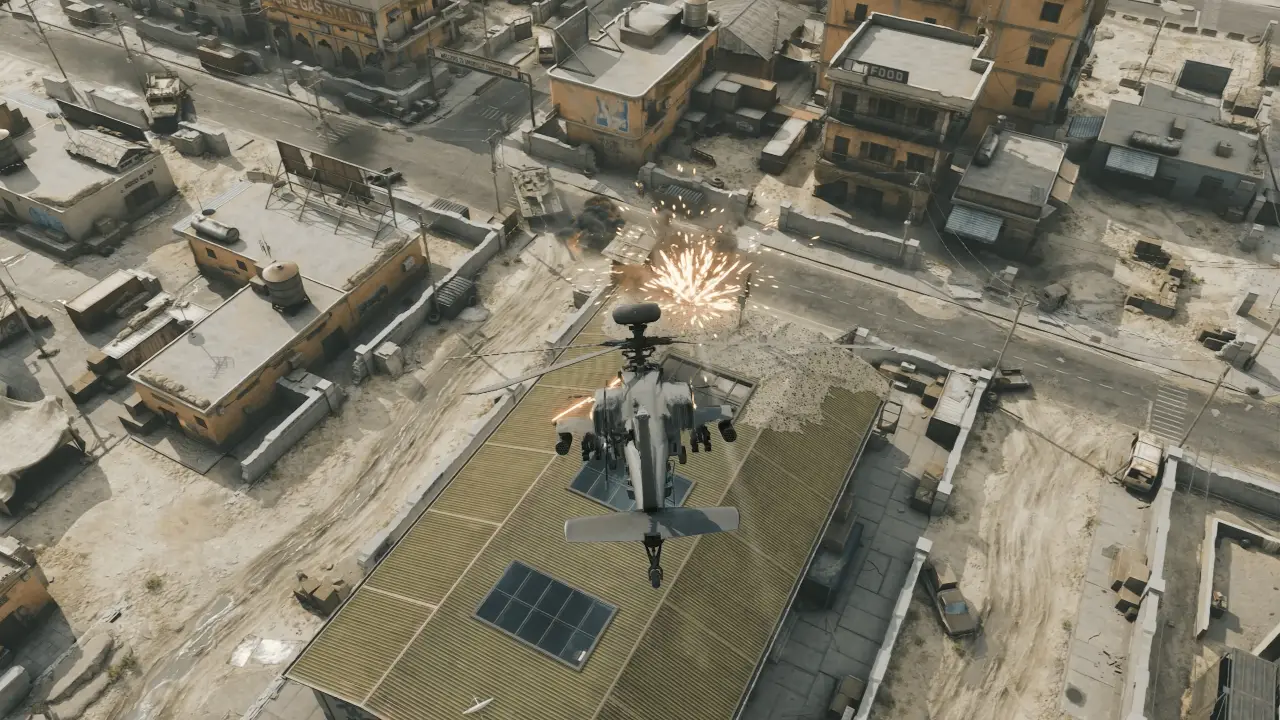
The operator system is the other layer. Four classes — Assault, Support, Engineer, Recon — each pack signature abilities that hand the team real role definition. But this is also the game's loudest argument with itself: those near-superhero powers clash hard with the realistic-military-sim image it keeps selling. When one operator can launch a drone to hunt a target and another can ping an ally's position through a wall, the authenticity thins out, and the hardcore crowd outright accuses it of an identity crisis. Layer the shooting itself on top — ten-slot weapon tuning, pre-match parameter calibration, grounded recoil and ballistics — and the feel is the bedrock of its goodwill. The trouble is that Warfare gets called a Battlefield clone by plenty of players, its original ideas run thin, and IGN branded the leveling-and-unlock loop a chore, fiddly enough to sap your enthusiasm. Add it all up and the gameplay is solid without ever being dazzling. An 8.0 is exactly where it belongs.
The fairest summary is that the breadth carries it. No single mode would survive a head-to-head against its genre leader, but the option to bounce between three of them on a whim — and to do it for nothing — is a kind of value that the leaders themselves can't match. Tarkov won't sell you a 64-player vehicle war, Battlefield won't hand you a tense extraction loop, and neither one ships a co-op campaign in the same box. Delta Force does all three, badly enough that purists will sniff and well enough that the average player rarely notices the seams. For a free download, that trade is far more generous than it has any obligation to be.
Content | 8.5/10
Content: 8.5/10Three dishes bundled for free — this is where the volume argument actually wins
When it comes to sheer content, the most concrete thing Delta Force has going is one line: it bundles three shooter experiences that would normally ship separately into one free client. Warfare, Operations, and a roughly six-hour, seven-chapter Black Hawk Down campaign, all available without spending a cent. Elsewhere that's three standalone products and three hits to your wallet; here it's a single download button. The sheer scale and value of that combination alone is enough to hold its ground in a crowded genre, and it reframes the whole conversation: you're not asking whether any one mode is the best in class, you're asking whether the bundle, taken together and priced at zero, is worth your storage and your time. By that yardstick the answer is an easy yes.
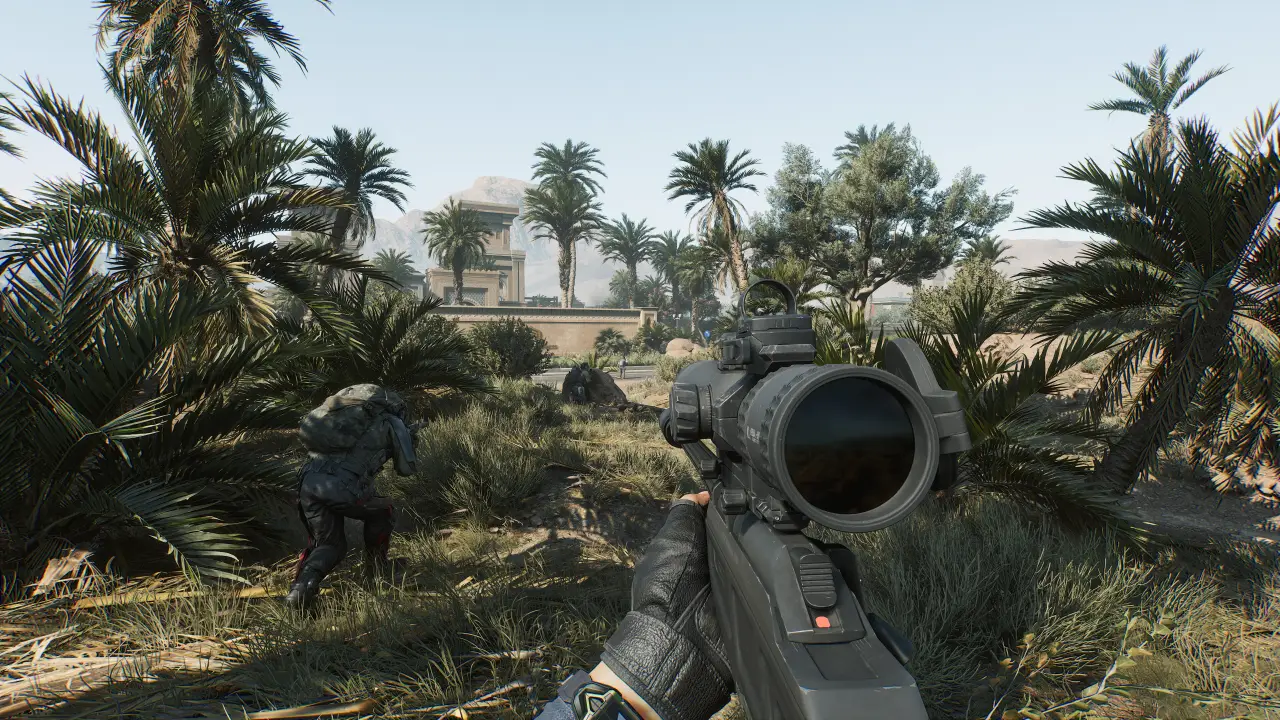
What truly props up its depth, though, is a frightening pace of seasonal output. This is a textbook live-service game, and every season stuffs in new maps, new operators, new weapons, and limited-time modes at a granularity that borders on ridiculous. Season 4, "Children of the Night," brought night combat to Zero Dam and the commander system to Warfare. By Season 8, "Butterfly Moment," it was firing out two fresh maps, two new operators, and an operator rework in a single drop — 3DM scored that season an 8.8 and called it the most content-packed installment yet.
Just look at the haul Season 8 crammed in: a Space Center reworked to 2.0, the new Aftermath map for Warfare, a support operator named Butterfly with a layered area-healing kit, a limited-time stand-and-fight mode called Crimson Owl Hunt, and a from-the-ground-up rework of the veteran operator Deep Blue from a utility piece into a frontline anchor. In plenty of paid games that volume would be sold as a premium DLC. Here it's a single free seasonal update. That cadence — shipping what other studios would charge for as routine free content — is what makes the content pillar genuinely formidable.
A playerbase that climbs after launch, and maps reworked every season to make you relearn the angles
The direct consequence of that output is that it became that rare domestic FPS that grows after launch. Registered players had already cleared 40 million by November 2024, and the Steam concurrent peak keeps shattering its own record, breaking its all-time high again and again. Most shooters peak at launch and then fall off a cliff within months; this one's curve runs the other way, climbing steadily as the seasons roll out. That upward line is itself proof that the long-tail content supply is real, not first-week hype coasting on goodwill — keeping players coming back takes actual new material, not nostalgia.

One of its nastiest tricks for holding attention is reworking or expanding an Operations core map nearly every season. Season 8, for instance, overhauled the Space Center into a 2.0 version, adding water, a dock area, and underwater passages, and quietly recalibrating the value of every spawn. That means even a veteran has to relearn the angles, the holds, and the extraction routes — familiarity gets broken on a schedule, and freshness gets topped up on the same schedule. Throw in repeated crossovers with IPs like Arknights, Alan Walker, and the Saw franchise to keep the conversation alive, and content lands at 8.5 — the firmest, least arguable mark in this whole review, and the real basis for its nerve to arm-wrestle the paid studios.
The only caveat worth attaching is sustainability: a pace this aggressive is only an asset for as long as the studio can keep it up without the quality fraying. So far the seasons have held their line, delivering reworked maps and genuinely distinct operators rather than recycled filler, but that is the bet the whole live-service model is riding on, and history is littered with shooters that burned bright on content and then ran out of road.




Comments 0
Share your game review
Join the discussion and share your review of this game.
No comments yet. Share your thoughts on this review.