


















Opening
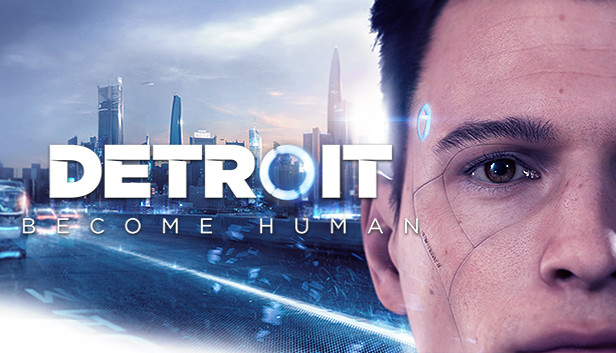
Most choice-driven games quietly cheat. They let you agonize over a decision, then funnel every branch back into the same scripted ending, hoping you won't notice the rails under the carpet. Detroit: Become Human refuses the trick. It hands you the fates of three androids — Connor, Kara and Markus — and then dares to let any of them die mid-story while the plot keeps walking, straight down the path you just severed with your own hands.
That dare is the whole game. Quantic Dream spent four years and thirty million euros turning a script of two to three thousand pages into the rarest thing in the genre: proof, at undeniable scale, that a choice can actually rewrite an ending. Finish a chapter and a flowchart blooms onto the screen — your route lit up, the roads you missed greyed out, and a completion percentage that will never, ever read one hundred. It is not showing off. It is forcing you to admit that the three-second decision you just made has locked several other lives behind a door.
Seven years on, the android-uprising story has been told and retold, yet nobody has rebuilt this particular machine: the live-growing flowchart, the nerve to kill a lead and move on. This review is about how it pulled that off — and where, just as honestly, it didn't.
Story | 9.5/10
Story: 9.5/10Strip the game down and one truth remains: branching is not a garnish here, it is the spine. Three protagonists, more than forty endings, a flowchart that runs the entire length of the game — together they build a density of consequence the genre still hasn't surpassed.
Three lives running in parallel, colliding at the finale

This is not one main quest with a few side stories bolted on. It is three complete lives unfolding at once, braided together until they meet in the closing chapter, the Battle for Detroit. Connor, the police investigator android, is sent to hunt his own awakened kind; his arc is a thriller about whether the hunter becomes the hunted. Kara, a housekeeper android, runs with a small girl named Alice; hers is the softest thread, all shelter and improvised parenthood. Markus, a caretaker android, is shoved to the front of a liberation movement; his is the grandest and most dangerous, because it grabs uprising, protest and public opinion by the throat.
What makes the structure sing is how the threads tug at each other. Every time Connor closes in on a truth in the interrogation room, he quietly destabilizes the ground Markus stands on. Whether Markus chooses peace or violence in front of a television tower changes whether the whole city hunts a runaway like Kara or lets her slip past. You are not playing three stories. You are plucking three strings at once, and the finale they resonate into belongs to your playthrough alone.
Crucially, the three voices are pitched differently enough that the cross-cutting never blurs. Connor's chapters are cool and procedural, Kara's are intimate and frightened, Markus's are loud and public — so when the game hands the controller from one to the next, the tonal shift itself becomes a storytelling tool, reminding you that the same 2038 looks like a thriller, a survival drama, or a revolution depending on whose eyes you borrow.
The flowchart and the butterfly: choice you cannot un-see

The thing that canonized this game is its visible branching flowchart. Close a chapter and your route strings into a glowing line, flanked by great grey thickets of paths you never unlocked. The cruelty of the design is that it won't let you pretend nothing happened. You see, in plain light, exactly how many futures that three-second hesitation just shut.
The butterfly effect is not marketing copy here; it is a causal chain you can replay. A throwaway decision at the start detonates a wildly different cascade hours later. Connor's "software instability" gauge creeps up with every flash of empathy until, past a threshold, he switches sides at the climax. Markus governs "public opinion," which decides whether crowds cheer or open fire. Kara's "relationship status" with Alice decides whether the two of them live to cross a border. When GamerSky handed out its 9.3, the reviewer flagged the proof in numbers: twelve hours for a first clear, thirty more spent prying at branches, and still roughly a third of the content locked away.
An honest flaw: where ambition tips into preaching

Writing android awakening as a race allegory, mapping the liberation movement onto the history of civil rights — this is the game's largest ambition and its likeliest crash site. Critics landed punches here. One review charged it with treating "historically complex topics" as set dressing and delivering only "surface-level storytelling." Another singled out Markus's political thread as "remarkably lacking in nuance," its parallels "on-the-nose." The criticism is fair. When Markus hoists a placard and chants, the over-cranked sermonizing really can pry you loose from the fiction, and the script keeps reaching for the iconography of real protest without earning the weight behind it.
Yet folded back into the whole, the flaw never reaches the bone. Connor's mystery and Kara's tenderness are restrained and moving enough to dilute the worst of it, and even Markus's arc lands its quieter beats — a stolen moment with North, a mentor's death — far better than its speeches. Set against the interactive-horror benchmark Until Dawn, whose butterfly effect lives and dies inside a single night, this game stretches its branching across three braided arcs, social argument and forty-odd endings. It is a bigger swing, a louder miss, and a far higher ceiling. The misfires sting precisely because the surrounding craft is good enough to make you expect more, and most players will forgive the preaching for the sake of the three lives it otherwise renders with real care.
Audio | 8.5/10
Audio: 8.5/10The game makes a decision on the audio front that almost nobody dares: three storylines, three composers, three musical languages that never speak to each other. This isn't budgetary excess. It scores each protagonist's fate directly into the soundtrack, and in an era when most games hire a single composer to unify everything, that one-life-one-voice extravagance reads as a thesis statement.
Three composers, three destinies, told before a single line of dialogue

Connor's thread went to Nima Fakhrara, who leaned on custom-built instruments and vintage synthesizers to hammer out a cold, mechanical, metal-echoed electronic texture. It is exactly the sound an investigator android should make while still oscillating between "machine" and "awake" — rational, clipped, yet leaking a flicker of doubt it was never supposed to have. Whenever Connor runs a scan or reconstructs a crime scene, that frigid electronic hum reads like the algorithm turning over in his skull, and it drags you into the same interrogation: am I anything more than a device?
Kara's line belongs to a composer working out of Abbey Road, all tender, held-back strings, like a hand cupped over a child's head. It never begs for tears, yet it tightens your chest every time she throws her body between Alice and danger. Markus gets a sweeping, near-operatic orchestral score recorded in Vienna, the kind of swell a movement that swallows a whole city demands. When the choir rises, you can hear the weight of a leader shoved onto the crest of history. You don't even need a nameplate; the music alone tells you who you are steering and which ending you're drifting toward. That degree of integration promotes the score from wallpaper to a silent fourth narrator, one that has already made up its mind about each character before you've finished making up yours.
Performance density and platform sound: presence built on synced acting

As an interactive film built around performance, the game runs its voice density near maximum. Three hundred and twenty-four days of capture mean dialogue, face and body were recorded together — the actors weren't tucked in a booth reading off a page, they were physically performing on a capture stage. The difference is visible: Connor's composure, Kara's panic, Markus's hesitation each fuse seamlessly to a mouth, a glance, a breath, with none of the "dub stapled on in post" friction that plagues lesser productions.
The ambient detail holds up just as well. The unbroken rain on Detroit's streets, the low electronic hum inside an android's chassis, the metronome tick of a clock in the interrogation room all lay quiet groundwork for emotion; the rain on Kara's stormy night of escape is so deliberate it practically becomes that chapter's second score. The game took home a North American industry award for original score and use of sound, and earned a BAFTA nomination for audio achievement — outside validation of a craft this assured. Set beside the studio's earlier interactive drama, the musical storytelling has clearly evolved: where the predecessor unified everything under one composer, this one fields three vocabularies to map three separate lives, a bold and unmistakable step forward.
Visuals | 9.0/10
Graphics: 9/10If the story is the spine, the visuals are the face — and in 2018 that face was the ceiling for the synthetic-android subgenre. It still holds up. Its strength was never a resolution spec sheet; it was a realism that makes you forget you are looking at a game at all.
The face: realism bought with 324 days of capture

The strongest thing on screen here was never resolution or particle effects. It was a face. Three hundred and twenty-four days of performance capture, more than two hundred and fifty actors filling five hundred and thirteen roles, seventy-four thousand unique animations — the bulk of it poured into the single task of making a human face live. The fractional twitch at the corner of Connor's eye, the contraction of Kara's pupils when a threat lands, the way Markus's jawline locks the instant he's betrayed: none of these were keyframed by hand. Real actors performed them, and the engine carried them over frame for frame.
It helps that the writing trusts those faces. The game routinely cuts dialogue and lets a reaction carry a beat — a swallow, a glance away, a held stare — confident that the capture is good enough to read without a line of explanation. That trust is the real flex; lesser productions over-write because their faces can't be left alone.
The payoff is that when the camera sits on a face for tens of seconds at a stretch, you do not break. That is brutally hard to pull off — the human brain is exquisitely tuned to faces, and a hair of wrongness drops you straight into the uncanny valley. The game shoves the lens into close-up again and again and still keeps you planted in the story. In a category that mostly advances through dialogue cutscenes, facial performance is the lifeline of immersion, and this one runs that lifeline at the strongest pitch of its generation. Most of the thirty-million-euro budget and the five-million-plus lines of code crystallize on those living faces. It is worth remembering that the whole project grew out of a face-flexing tech demo — a 2012 short whose star was a hyper-real android played by the same actor who would later become Kara. Pushing faces to the limit was this studio's obsession from day one, and the game is that obsession blooming six years later.
Engine and platform: in-house tech and the liberation of the PC build

Underwriting all of it is Quantic Dream's in-house engine, built around dynamic lighting and depth of field. The art direction for a near-future Detroit is strongly legible: wet streets reflecting signage neon, the cold white glare inside android shops, the oppressive blue-grey palette of a stormy night. Every scene works for the emotion rather than piling on detail. This 2038 Detroit isn't the silver-gleaming megacity of pulp science fiction; it is damp, tired, split between rich and poor — and that restrained near-future is exactly what makes it credible.
Platform difference is unavoidable here. The original PlayStation 4 build was locked to thirty frames, while the PC version — first on Epic, then arriving on Steam in June 2020 as appid 1222140 — broke free to 4K resolution and sixty frames, with full mouse-keyboard and gamepad support. For a game that feeds on facial detail and lighting, the jump to 4K60 is real money: a higher frame rate smooths the transitions of the captured performance, a higher resolution renders every micro-expression razor-sharp. The bump matters most in the long held close-ups, where thirty frames could betray a faint judder in an actor's blink and sixty simply does not.
Stand it next to the generational benchmark The Last of Us Part II and that game wins on cinematic lighting and scene-level direction, yet this one trades blow for blow on the raw density of facial acting. Where Naughty Dog choreographs whole environments into the drama, Quantic Dream keeps its camera fixed on the human grain of a single performance, and at that one task neither studio clearly outranks the other. Optimization on PC drew split opinions — a minority of configurations stutter — but most mid-range machines run it smoothly, and even the handheld Steam Deck is verified playable: not a benchmark, but comfortably good enough for a game whose spectacle lives in faces rather than frame-busting effects.
Combat | 6.5/10
Gameplay: 6.5/10Gameplay is the lowest score in this review and the easiest part to misread. The 6.5 isn't a verdict that the game does it badly. It is a recognition that the game never intended to compete on the lane of mechanical thrill at all — every gameplay decision bends toward one goal, making choice carry weight. Judge it on the wrong axis and you'll miss the point entirely.
The honest truth: shallow inputs, by design

Let's say the ugly part first. The core interaction is quick-time events plus dialogue trees, and the actions in your hands are genuinely limited. Fights resolve by hitting a prompt on the key frame; movement and interaction come from scanning a scene and triggering preset hotspots. Anyone arriving for real-time combat will likely sour within the first two hours — which is the root of VideoGamer's four-out-of-ten and of the player gripe that it plays "like pressing a few keys during a movie." That complaint isn't bad faith. On the pure metric of input depth, the interaction here is shallow, full stop.
It is worth being precise about what "shallow" means, though. There is no skill ceiling to climb, no system to master, no build to optimize — the hands never get more capable than they are in the first hour. If your pleasure in games comes from growing mechanically better at them, this one offers you almost nothing, and no amount of story will paper over that absence for the wrong player.
But reading it as cost-cutting is a serious error. The shallow input is a deliberate, almost stubborn trade. It wants your attention off your fingers and onto your judgment, so that every press isn't about winning but about deciding who you intend to become. When Connor faces a breaking-down deviant in the interrogation room, the button you push isn't an attack — it is "empathize" versus "press harder," and that seemingly conversational option silently rewrites the entire downstream arc. The design budget a normal action game spends on feel, this one moves wholesale onto consequence. Even the QTE prompts themselves are tuned to character: Connor's read as crisp, machine-precise inputs, while Kara's fumbling escape sequences are deliberately scrappier, so the same shallow verb carries a different emotional register depending on whose hands you're in. It is a small touch, but it shows the shallowness is curated rather than careless.
The machinery underneath: three gauges, mortal leads, and why you replay

Holding the whole apparatus up is a three-gauge system hidden behind the curtain: public opinion, software instability — the android's awakening — and relationship status. None of them sit on the HUD, yet each shifts quietly after every choice and tallies, at the end, into whether the finale tips toward war or peace. Connor's thread carries an extra layer the other two lack: scanning scenes, reconstructing how a crime unfolded, assembling the truth against a clock, which gives his sections a detective-puzzle texture that rewards a closer look.
The boldest mechanic is that character death does not trigger a Game Over. Any lead can exit a chapter for good while the story marches on without a beat — which yanks away the traditional "die and reload" safety net entirely and leaves every life-or-death choice genuinely suspended, with no take-backs. The psychological force of that is enormous: knowing one mistimed key, half a second too slow, can permanently retire a character you've poured hours of feeling into — with no second chance offered — makes you hold your breath on inputs you'd otherwise click through. Because of that, the replay drive sits entirely on multiple endings and the flowchart rather than combat; filling that chart and seeing all forty-plus endings runs a completionist thirty to fifty hours. Against the studio's own earlier work and the horror benchmark Until Dawn, the feel is just as restrained, but the depth of the branching, the coupling of the three gauges and the complexity of three braided arcs reach a height neither predecessor truly touched. You won't stay for the feel of the controls; you'll come back, again and again, to find out where the other choice would have led.
Swap the yardstick from "how does it handle" to "how heavy are the consequences," and the game leaps from a mediocre number to a one-of-a-kind specimen. The 6.5 is honest about the hands; it just isn't the number that explains why people keep playing.
Content | 8.0/10
Content: 8/10You can't measure this game's content by clear time alone, because its bulk lives in width, not length — how many unseen shapes one stretch of story can fork into. It is a content philosophy entirely unlike an open world stacking square kilometers.
Time structure: a short spine, deep branches

Taken as a straight line, the game isn't long: a first clear runs about eleven hours, fifteen with side beats folded in. Arrive expecting "finish it once and move on" and it can even feel short — short enough to surprise players conditioned by hundred-hour open worlds. The base game is the complete three-arc narrative, with no large paid expansion bolted on to extend its life, which means what you buy is a closed, finished story-box, free of the "half the plot, sold later" routine. In an era of season passes and drip-fed episodes, that completeness is quietly generous: there is nothing to wait for and nothing to be upsold, only the whole tangled tree sitting in front of you from the first launch.
But the completionist figure leaps to thirty or even fifty hours, and the entire gap is branching: forty-plus endings, the flowchart forever nagging you to turn back, the multiple routes each line can take. The content thickness isn't propped up by map area or collectibles; it's built from the countless possibilities of the same scene. GamerSky's reviewer left the most vivid footnote — twelve hours for a first run, thirty more spent specifically prying at branches, and still around a third of the content unopened. This is a logic that rewards returning often rather than traveling far: every replay walks a brand-new path through the same story-maze.
That width pays off in conversation as much as in hours. Because no two players assemble the same chain of outcomes, the game became a sharing engine — one person's Kara crosses the border with Alice and Luther intact, another's loses everyone at the same crossroads, and the gap between those two stories is entirely authored by the choices each made. The flowchart, by exposing exactly how many nodes you missed, turns a finished playthrough into an itch: you have seen your Detroit, but you have not seen the others, and the percentage counter will not let you forget it.
Versions and a sales record that proves the box

Versioning followed a clean line of evolution: a 2018 debut on PlayStation 4, an Epic Store arrival in late 2019 that unlocked 4K60, and a formal Steam release in June 2020 as appid 1222140. Each port wasn't a lazy platform copy but a push of the story-box to a fresh audience, topping up its lifespan each time.
The most forceful proof of content value is the long arc of sales and word of mouth. The game broke a million in two weeks, climbed steadily — two million by late 2018, five million by August 2020, past ten million in October 2024 — and reached fifteen million cumulative units by January 2026, making it Quantic Dream's best-selling title. On Steam, roughly two hundred and eleven thousand reviews hold a ninety-six percent positive rating, top-tier word of mouth for the interactive-narrative genre. A sales curve that barely dips is its own endorsement of durability. A 2018 game that keeps selling and keeps getting recommended to new players across seven or eight years is one whose content survives repeated revisiting, never expiring as graphics technology iterates past it. Against single-night interactive films like Until Dawn, this game's three braided arcs pull replayable density to another order of magnitude — you aren't re-watching a known story, you're assembling a new one of your own. The one caveat worth flagging is replay convenience: seeing other endings usually means re-watching long, familiar stretches, with no quick chapter jump, which turns completionism into a grind — GamerSky listed it as the game's near-only clear flaw. But that's a matter of route, not of substance: the content is plentiful; the path to it just isn't smooth. For players who genuinely care about the full ending picture, that friction buys the satisfaction of unlocking every fate by hand, and most will call it a fair trade. The box is deep; only the door to its back rooms sticks a little.

Comments 0
We'd love to hear from you
Welcome! Share your take on this game — being first might come with a surprise.
No comments yet — share your thoughts on this review!