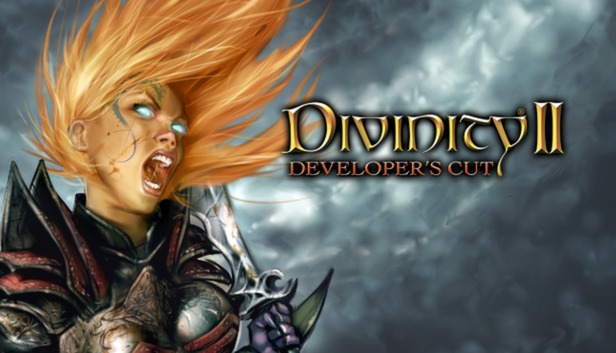
Divinity II: Developer's Cut centers its combat on shifting between human and dragon forms, with choices affecting quests and the story. At $2.82 from Eneba, the purchase makes most sense for a player already drawn to this single-player mix of role-playing and shape-shifting fights; weigh it against your budget rather than assuming a particular discount history.Compare $2.82 at Eneba with Steam's current price of $19.99.
Loading store offers
84%Steam Reviews4.6K reviews
Released: Oct 29, 2012
RPG · Fantasy · Open World · Third Person · Dragons
EnebaDivinity 2: Developer's Cut Gog.com Key GLOBAL·Platform:GOG·-86%from~ $2.82Save $17.17 vs SteamBuy now
GAMIVODivinity II: Developer's Cut EN/DE/FR/IT/PL/RU/ES Global·Platform:GOG·-84%from~ $3.10Buy now
K4GDivinity II: Developer's Cut GOG CD Key·Platform:GOG·~ $22.36-84%from~ $3.58(~ €3.20)Buy now
GOGDivinity 2: Developer's Cut·Platform:DRM-Free·-49%from~ $10.19(~ CN¥68.00)Buy now
KinguinDivinity II: Developer's Cut Steam CD Key·Platform:Steam·~ $22.37-40%from~ $13.42(~ €11.99)Buy now
Steam·Platform:Steam·United States Steam official price~ $19.99Buy now
Set a target to receive an email when an eligible offer in your selected region is at or below that amount.
Price History
Past 36 months · Updated daily
Historical Low~ $1.992023-09Current Low Across Stores~ $2.82Enebavs. Historical Low+42%
Prices cover Steam and 39 authorized stores; only legitimate offers are counted. The chart shows weekly market-wide lows and Steam's official price across the past 36 months.
Fight as both human and dragon in an RPG where choices shape quests and a story set amid powerful foes.Steam players rate it 84%% positive across 4,553 reviews.
Credits
Composer
Kirill Pokrovsky
Developer
Larian Studios
Publisher
Larian Studios · Focus Home Interactive
Steam player reviews
84%positiveVery Positive4,553 Steam reviews
Lowest recorded in 36 months
$1.992023-09-04 · SSteamBase game · same records as the chart above; USD history, not a regional Steam low.
Language support
Language
Interface
Subtitles
Audio
English
Yes
—
Yes
German
Yes
—
Yes
French
Yes
—
Yes
Show 4 more languages
Language
Interface
Subtitles
Audio
Russian
Yes
—
Yes
Polish
Yes
—
—
Italian
Yes
—
—
Spanish
Yes
—
—
Steam PC edition data · 2026-11-16
02Before you buy
How it plays
The Steam PC version is a single-player RPG. You fight as both a human and a dragon, and choices influence the unfolding story.
Languages
Steam PC lists interface support for English, French, German, Polish, Russian, Italian, and Spanish. Full audio is listed for English, French, German, and Polish.
03Frequently asked questions
Can I play as a dragon?
Yes. Combat lets you take both human and dragon forms.
Do choices affect the story?
Yes. The description says moral choices affect quest objectives and the unfolding story.
How does the creature work?
You can assemble a creature from body parts collected in battle and summon it to support you in combat.
Popular Steam reviews
Native-language selection · 10 reviews
Selected helpful reviews in this language show both recommendations and criticisms. This selection does not represent the overall positive rating; opinions reflect the version reviewed.
RecommendedSteam player
Holy smokes what have I been missing?! A whole lot...
I've played Skyrim, Divine Divinity Original Sin 1 and 2, Eldar Scrolls Oblivion, Morrowind, Witcher 3, Kingdoms of Amaular, Divine Divinity.... but this gem here... it's the perfect mixture of nolstagia and modern open world Rpgs. It's where Vampire Masquarade Redemption and Skryim kiss even though Skyrim was later in time.
I must say the reward system (i.e. after you complete a quest) is genius. You get to choose what you want. I've never expereinced that before and it's what intrigues me and allows so much personal customization for your adventure and character.
Graphics are a lil bit dated, but if you grew up playing rpgs you know how to appreciate graphics and gameplay over just eye candy.
The only gripe about this game is I have a high end computer and had load screen issues where screen would just get stuck. This is a known issue and all I did as others have mentioned was run the 4GB patch and issue was gone!!
This game is awesome!Show moreShow less
1.4 hours at review187 people found this helpful
Not recommendedSteam player
Divinity II has charm, I'll give it that. It has a beautifully realized fantasy universe, excellent writing with snappy dialogue, engaging characters, and a genre identity that seamlessly blends serious epic fantasy with satire and humor.
Despite these wonderful marks in its favor, however, the game itself is rife with flaws. Divinity II is a hard game, but not in the satisfying or rewarding way that many other RPGs claim to be. The gameplay is typically uninteresting at best and painfully difficult at worst, thanks to many random and often nonsensical difficulty spikes. The story, while incredibly well-told, is still typical fantasy tripe involving the monster-hunter becoming the monster, an evil megalomaniacal sorceror, plot-twisting betrayals that can be seen from a mile away, and more McGuffins than you can shake a stick at.
Transitioning between Dragon form and Human form is perhaps the worst offense that the game commits. While you can transform at will at almost any time, your enemies are tracked separately. Having trouble with a particularly tough pack of necromancers? Turn into a dragon and burn them to a crisp from above, you might say! Well, because of the way the game works, you can't. Those necromancers suddenly disappear along with every other enemy when you become a dragon, magically reappearing right in the same spot the moment you switch back to human form. This creates all sorts of other problems as well, like using dragon form to reach an otherwise impossible floating platform, only to be eviscerated by the sudden appearance of enemies as soon as you land. And don't get me started on how aggro is handled...
Despite its flaws, I couldn't help but enjoy Divinity. I enjoyed creating my character out of every skill imaginable. This wasn't just a fireball-spewing demon-summoning plate-armored dual-wielding berserker, it was MY fireball-spewing demon-summoning plate-armored dual-wielding berserker. As painful as the transformation process was, I couldn't help but get a gleam in my eye and a smirk on my face as I soared through the skies in dragon mode while epic fantasy music blasted in the background.
Divinity is a game that really wants you to like it. To be fair, it does fix most of its big issues by the second half of the game, Flames of Vengeance, but the first half of this 30 hour adventure can feel like a bitter ordeal up till then. The writing and charm, however, keep the game alive. It is truly a beautiful game, and one I did enjoy, personally, but it's not one that I could recommend in good faith. It is definitely a game that is worth borrowing or picking up in a sale, but unless the charm infects you, and it just "clicks" for you, there are definitely better options out there for you.Show moreShow less
32.6 hours at review419 people found this helpful
RecommendedSteam player
Divinity 2 is a game where you can (at will) turn into a dragon, attack a flying fortress & its army of dragon riders, land on the courtyard, kill the guards with a mix of sword fighting and destructive spells, subdue the fortress’s commander and then read its mind to know his deepest secrets. All this 100% gameplay, no cutscenes involved. It has to be the ♥♥♥♥♥♥♥ best RPG ever made by man, right?
Sadly, not quite. Larian Studios was held back by time constrains, lack of resources and, worst of all, the focus on consoles and their limited hardware. While the game overflows with original ideas and Larian’s usual clever writing, the execution doesn’t deliver. It’s not a bad game by any measure; the gameplay is good, some quests are creative (and funny) to do, and it succeeds in giving players interesting mechanics to play with (like mind-reading). But sadly it lacks that “special something” in its execution, making the game somewhat repetitive and mediocre by the end. Still, is a great game that’s not afraid to break the mold and bring something new to the table.Show moreShow less
16.1 hours at review182 people found this helpful
Not recommendedSteam player
Divinity II was one of my favourite games. So it is bitter to give this one a thumbs down, but there is no way around it as this version of the game is afflicted by hellish loading screen crashes and design choices that cut away the fun part of the original endgame.
The loading screen crashes appeared in the second half of the game. And they got worse and worse. So worse that I had to replay the final battle and the following cutscenes (and reboot my PC) four times before the game finally moved on to the beginning of the addon. And it was hardly enjoyable having to save everytime before you enter or leave a dungeon or even a house with one single room. Not to mention the saving marathon in the dragon tower.
As you can see in the trailer the game features battles against flying fortresses. In the original, there was an epic introduction cutscene for each fortress. They also had extensive defensive systems that you had to shut down. E.g. landing on a certain spot, fighting your way through the enemies to destroy a generator that creates an anti-dragon forcefield. Then fly through this now open space to a teleporter. And the Developer's Cut? well it ... cuts ... each intro and all of these defensive systems. Only the foot soldiers and the towers remain. But the only thing they do is granting you exp. You can simply fly straight through the whole fortress and kill the boss. The dragon content in general became a child's play.
Divinity II is still a great game and it has in my opinion the best ending of all times. But the flaws of this version can't be overlooked.Show moreShow less
37.4 hours at review250 people found this helpful
RecommendedSteam player
Divinity II Ego Draconis and Divinity II Flames of Vengeance comprise Divinity II: Developer's Cut. The former the original and the latter the expansion. Depending on how you play the length of the entire production can easily extend past 100 hours.
To start, customization was a disappointment. Selection is limited to a male and female model with appropriate sound samples from which to pick. Want to sound like a noble or a soldier then Larian has made that happen. What Larian did not make happen was allow me to choose an avatar in my chosen image. The hair and beard and color of both can be chosen but only female or male and human at that. The game has goblins, why can't the player be a goblin?
Once my disappointment over the customization screen had dissipated it was time to immerse my self in the world of Riverlon. Much like Risen, the player starts as a complete non descript. In terms of the game's systems, the player character might as well have been just expelled from the womb. Barely any attributes or acquired skills make up your profile and depending on your skill level as a gamer and how you allocate your initial allocation of attribute and skill points, the game can be rather unforgiving. Some would think challenging forcing a strategic approach, others may be put off. I thought the former and welcomed the challenge eagerly building my character for the tasks ahead. Im that context the game starts the player much like Risen or Gothic.
As you progress in Divinity II you become more powerful and the game eventually will become easier. Late in the base game there was a distinct lack of difficulty balancing by Larian. While the game continued to be entertaining the lack of eventual difficultly was a serious issue. While the game has multiple difficulty settings encompassing casual through nightmare, this wasn't enough. An additional difficulty setting was needed or the skills needed to be toned down though the game does make you feel very powerful from a role playing perspective.
My opinion on difficulty may be more a product of playing as a pure Mage. I cannot speak for Fighter, Ranger or playing a mixed class. Also note that for a good portion of the base game the game was extremely challenging even on normal. Divinity II is not on rails and you are free to explore areas outside of your capabilities.
The player is free to allocate skills to any category. Categories are broken down by Priest, Mage, Fighter, Ranger and general category to remain unnamed. Want to be a Battle Mage, a Ranger Priest, no problem. The elasticity of the skill system allows for such combinations with the only limitation being that the skills are level locked.
Divinity II tells the story of a budding Dragon Slayer who eventually is recruited to become a Dragon Knight and defacto a Dragon. Morphing into a Dragon is cool and a significant divergence in game play. Like the Dragon Knight, Dragon abilities can be allocated and strengthened through skill points. Game-play as a Dragon will have you battling all sorts of flying beasts as well as entrenched land based weaponry. At this point in the review if you are reading through the spoiler tag I want to point out that anyone who likes their flight controls inverted is in for a big surprise and for this Larian gets an F for failure and not caring about a portion of their fan base. Larian left out inverted flight for the dragon. Thankfully we can send human beings into orbit and utilities exist to help correct this issue. Using Xpadder I was able to setup a profile to control the Dragon on an Xbox 360 game controller and invert the flight controls in the process. This meant playing the Knight with the keyboard and playing the Dragon with the game-pad. A minor inconvenience but the PC version should of been patched as the Xbox version had inverted flight.
Potions, Crafting, Botany and Gemstones all play significant roles. Potions can be purchased though there is an alchemy system based on plants. Potions are not limited to health and mana and include attribute based potions as well. Potions interestingly have many level classifications with the strength of the potion increasing with the level. Crafting is gem based and like alchemy, the ability to craft is available to every player character. When you become a Dragon Knight you get your own Battle Tower and the tower has servants. Servants of which you may weaponize and armor. Servants that will collect gems and plants for you. A welcome time saving feature implemented by Larian to keep game minutia to a minimum.
Divinity II is a 2009 production and looks like it was made in 2009 though in some places the game visually shines but over all the game still looks good. Voice acting is top notch and professional. I was disappointed to see the re-use of npc models, a pet peeve of mine, though Larian did an adequate job covering up this sin and the issue didn't appear to be as egregious as Gothic 3.
Combat was simply fun and skills utilized by the player are accessed via the standard 1 through 0 keys or can be reassigned to any key. All game functions can be re-mapped including quick save. Combat is as simple as swinging your weapon and using skills. Blocking is non-existent and points can be put into the passive skills like evade. The player can also roll out of harms way.
The Developer's Cut allows the player to start the base game and expansion as originally released or in what amounts to a debug mode. Both versions are save game compatible. In the debug version, the console is accessed via F11 and you are free to do as you wish. Want to give yourself an apple ? You can do that. Mostly I stayed out of the debug version though I will come clean so to speak and admit to pumping 5 points into encumbrance to satisfy my pack rat tendencies and because I'm no fan of dealing with limited inventories in action rpgs. It bears to mention that the starting inventory limit can be managed without putting any points into encumbrance.
Divinity II and expansion are worthy for multiple reasons. Divinity II comprises originality, professional voice acting, great game-play, questing and a great soundtrack (accessible via install). A top notch action RPG.Show moreShow less
143.5 hours at review165 people found this helpful
Not recommendedSteam player
This game left me with very mixed feelings. It felt like there was a downside to every positive.
The mindreading mechanic was interesting, but paying XP to do so - often for nothing useful - invited tedious save scumming.
Combat offers some interesting options, but is undermined when enemies get stuck on the environment or simply forget about the fight and stroll away while you shoot arrows into their back. It also feels pretty simplistic when compared to other games of its genre. Seeing enemies in Kingdoms of Amalur dodging arrows and reacting to being set on fire made me realise just how basic combat is in Divinity II.
There's some enjoyable quirky humour, but also plenty of bland and tedious lore.
The game generally looks good, but the animations during dialogue are bizarre; the characters appear to be undergoing a seizure while speaking.
The prospect of playing as a dragon is exciting, but it takes a fair while to get there.
When you do get there, it's rather disappointing. It is a feature which is essentially walled off, not only from certain locations but all ground combat. Worse still, it can be graphically overwhelming - the dragon battle with Zagan prompted me to uninstall, being one of the most disorienting and frustrating segments of a game I've ever encountered.
There's a lot packed into this game, but I just couldn't embrace it.Show moreShow less
24.1 hours at review87 people found this helpful
RecommendedSteam player
At the moment this game has mixed reviews and I'll tell you why you should ignore those reviews.
Divinity II is a hardcore, unforgiving RPG with a learning curve. You will encounter areas that are a higher level than you, you will get your arse kicked, level up, do side quests and enjoy the games lore without rushing into any areas that are above your level and you will find the game won;t be as hard as you first thought.
Divinity II also has a few bugs hat can be easily avoided by saving often!!! Crashes during loading screens is a huge issue among the mixed reviews of this game but like I said, this can be avoided by saving often!
Lastly, the ending has also come up as a bad point of this game but REST ASSURED! the Developer's Cut containts the expansion that takes after the main games story and tries to correct the much hated ending of the original, so don't come into this game thiniing you have a bad ending waiting, you don't.
Thank you for reading my review of Divinity II Developer's Cut. I hope this review clears up any misinformation about the game, which I think every hardcore RPG fan should play and enjoy with out issues.Show moreShow less
33.8 hours at review97 people found this helpful
Not recommendedSteam player
Game 63 of my backlog.
*spoiler free*
I feel like I just completed a 23 hour homework assignment/project from college, turned it in, and was finally done with it. No punchline. This game is a mess.
+ For a game that originally came out in 2009, the graphics have aged decently.
+ Alt+tab and it doesn't crash
+ You can jump
+ Turning into a dragon and flying around is a joy
+ Most skills are actually useful. Nothing feels unimportant
+ Respec anytime
- The (light) exposure on armor reflecting from the sun will blind you.
- Bad music.
- Bad sound effects. Very dull.
- Refuses to load new areas over and over again, forcing you to restart the game.
- Occasional crashes on top of the loading screen glitch.
- Combat is a cheese fest.
- CC (crowd control e.g. fear, mesmerize, sleep, etc.) is incredibly annoying. If 2 or more enemies have any CC, regardless of how high your resistance is, you may just get chain CCed like in League of Legends over and over until you die. Nothing you can do except reload, and hope you resist it this time.
- Groups of enemies that ALL have a heal ability. They will be able to spam heal each other over and over faster than you can damage them, regardless of your overleveling (if you choose to do that).
- Melee characters suffer 2nd half of the game.
- Getting knocked down in any capacity induces rage.
- Getting stuck in a fight in an area you cannot possibly win because of healing enemies forces you to load a previous save, IF YOU HAVE ONE. I'm lucky I learned from playing DD and BD, as I made multiple backups. I ended up having to use one because the final boss has spam healers and I couldn't possibly win because of that. Respec respec respec. Had I not had a backup save, I would've had to start the entire game OVER.
- Platforming sucksShow moreShow less
23 hours at review37 people found this helpful
RecommendedSteam player
Pretty good, hope larian gives third person rpgs like this another go once they're done with baldur's gate 3Show moreShow less
23.6 hours at review95 people found this helpful
Not recommendedSteam player
I don't usually like writing reviews for games with little playtime because I didn't experience enough to say whether it's worth it or not, but in this case the game twisted my arm over and over until I got tired of it. I'll go for a nice chronological and more "what I was thinking at the time" path, than a "mechanical dissection" one:
Let's start from the beginning, since that's where things usually start. I had a bit of trouble making the game work on modern-ish hardware, with it constantly crashing on a specific early spot until it didn't after I tried hard enough or something. At that point, I had a small amount of time from opening the game over and over trying to pinpoint what the issue was. Eventually, verifying the cache (which didn't previously work) worked and I could actually play the game more than five minutes. I entered the first area of the game (an area that looked like every average medieval fantasy game ever) and did some exploration, checking the loot, dialogue, combat, skill system and whatever else I could find within the limits the game was putting on me at the time. It felt like a tutorial more than a first area, but I didn't learn much from what the game told me there.
Eventually I finish the tutorial section and go to the first area the game has, which is a small town with a fairly large wilderness. I go for the town first and start doing my raccoon thing, digging through every container I find. First stop was the tavern: it was then that I find out that there is no crime system at all in the game; you can grab everything you see from everywhere, be it a table someone's eating on or someone's house, and nothing will happen to you. It was weird, but I didn't really have much issue with it. The lockpicking is a vague automatic system where you either can pick the lock or can't, but the game never tells you what's the necessary level, just that you need a higher level of the skill to open certain locked containers and doors. That one I didn't like too much, but it's not like locked places had stuff that was vital for me. Quest completion was another mixed bag where it seemed like there was only one good extra reward to pick: it has you pick from what is usually more XP, more gold and useless garbage. More XP was always what I went through and it'll get clearer why later.
After completing what I can on the town at the moment, I go out and do my first (second) combat, where the enemies were complete pushovers. I decide to knock the difficulty up to hard and they still were pushovers, so I put it up to nightmare. I get my ass kicked by a pack of enemies, so I pull it down to hard again, which leads to me still getting hammered, which makes me reduce it back to normal. It left me puzzled about how the combat scaling actually works and if there was any. For now, it seems enemies have a fixed level and don't respawn. I take the ass-kicking as just me needing to level up a bit, so I do that and keep completing the quests I can at the moment. Combat is very... it's a doable kind of jank: you can jump forward and backwards, dodge sideways, use a very high jump attack (melee) that apparently only hits one enemy and there's no active blocking.
I make and remake characters after getting punished by every new enemy I find, this time focusing on a melee/magic build where I would use melee at close range and magic as a ranged option, since I don't like to do narrow focusing and am content with a little bit of everything. This little bit of everything was what I initially tried and thought it was just me making a build that sucked impossibly hard, which some games do have as an option. Much to my surprise, instead of focusing on all stats equally (vitality, spirit, strength, dexterity and intelligence), focusing on three (vitality, strength and intelligence) showed little change in how easy the combat was: certain enemies were complete pushovers, others were utterly destroying me. I still can't pinpoint what was wrong, but apparently enemies at my level were much, much harder to defeat than enemies even a level below me. Sometimes even that didn't work and the game would throw packs of skeletons a level or two below me that would easily kill me if I ever decided to approach melee range. Having no dexterity meant my ranged defense was the smallest, yet the skeleton archers were the easiest type (painfully so, doing single digits damage to my around 180 health), with the warriors and mages giving me the most trouble, sometimes blasting 30 damage per hit on a crowd of about 6 of those ♥♥♥♥♥. I was getting really frustrated.
Eventually I push through to a bandit temple where there was a gauntlet of sorts. It took me a while to understand the puzzle because it was designed for trial and error and people who can actually read minds (although the character can only read NPC minds, not developer ones, so you can see the problem forming). There is this one enemy that I just can't target. He hits me with a bow for 76 health. That's three hits and I'm dead, while avoiding traps, other enemies and staying on path to not receive a magical poison DoT that had no indication besides "the safe area is the dead bodies on the ground". Who was the ♥♥♥♥♥♥♥ idiot who thought the best idea to indicate safety in a puzzle was dead people? You don't go to the same spot a dead person is because it indicates a trap; it's logical sense and a classic trap indicator in games, but the developers did the ♥♥♥♥♥♥♥ opposite of that. Anyway, back to the enemy: he's the NPC I talked to when I first entered the gauntlet and apparently a boss. After I got to a door on the opposite end of the room, I still have to fight him a bit. His melee damage is as absurd as his ranged one, so I have to deal with him with a bow.
One thing I didn't mention is that this build did not focus at all on bow usage, yet the bow was the weapon I found myself falling back to most of the combat because of the sheer amount of damage enemies were doing to a character using the best armor they could find or buy with a stat allocation that focused on health, melee and magical defenses. Enemies on my level were destroying me with the best gear I could find on the second easiest difficulty, that also being the default one. Using something out of my build was proving more effective than anything else.
To summarise: the game is a perfectly average medieval fantasy until it gets to the combat. The combat will be the worst ♥♥♥♥♥♥♥ thing imaginable, or the easiest one. If you aren't the stereotypical Skyrim teenager that loves bows and stealth (which the game doesn't really have, aside from a decreased detection range passive when holding a bow and an invisibility spell), this game will tell you to go ♥♥♥♥ yourself in the ass with the largest cactus you can find. This frustrates me to no end because I was getting invested in the stories and quests, and wanted to experience more of the game out of genuine curiosity. Curiosity that led to my face being spat on over and over and a negative review that is only negative because of one ♥♥♥♥♥♥♥ thing: the combat. I've played games with bad combat, but I refuse to play games that actively try to make me miserable for trying to play what's comfortable for me instead of abusing cheese after cheese to get out alive on the default ♥♥♥♥♥♥♥ difficulty. This is not fair, this is not challenging and this can go ♥♥♥♥ itself. If I wanted to play a "you're either a god or an ant" combat, I'd play Warframe; I don't play Warframe.Show moreShow less
8.8 hours at review27 people found this helpful
Source: original Steam user reviews. Helpful votes are an archived snapshot, not live data. Last collected: 08/15/2026.