
Divinity: Original Sin 2 - Definitive Edition
Price History
Past 36 months · Updated dailyPrices cover Steam and 39 authorized stores; only legitimate offers are counted. The chart shows weekly market-wide lows and Steam's official price across the past 36 months.


01About Divinity: Original Sin 2 - Definitive Edition
Explore Rivellon alone or with a party, testing your skills and the environment in tactical, turn-based battles. Steam player reviews: 95%% positive from 181,502 reviews. Interface languages: Simplified Chinese, Traditional Chinese, English, French, German, Russian, Polish, Spanish, Italian, Korean, Czech, Portuguese-Brazil, and Japanese. Released September 14, 2017.
Credits
Lowest recorded in 36 months
$11.242025-12-18 · GOGBase game · same records as the chart above; USD history, not a regional Steam low.Language support
| Language | Interface | Subtitles | Audio |
|---|---|---|---|
| Simplified Chinese | Yes | Yes | — |
| Traditional Chinese | Yes | Yes | — |
| English | Yes | Yes | Yes |
Show 10 more languages
| Language | Interface | Subtitles | Audio |
|---|---|---|---|
| French | Yes | Yes | — |
| German | Yes | Yes | — |
| Russian | Yes | Yes | — |
| Polish | Yes | Yes | — |
| Spanish | Yes | Yes | — |
| Italian | Yes | Yes | — |
| Korean | Yes | Yes | — |
| Czech | Yes | Yes | — |
| Portuguese-Brazil | Yes | Yes | — |
| Japanese | Yes | Yes | — |
Steam PC edition data · 2026-10-19
02Before you buy
Play modes and controller
The Steam PC version lists solo play and multiplayer/co-op for up to four players, online or in local split-screen. Full controller support is listed.
Language
Listed interface languages include English, German, French, Italian, Spanish, Polish, Brazilian Portuguese, Russian, Korean, Simplified and Traditional Chinese, and Turkish. Full audio is listed for English only.
03Frequently asked questions
What is combat like?
Combat is turn-based, and the description highlights using the environment, elevation, and elemental combinations tactically.
Can I play with friends?
Yes. Online co-op and local split-screen are listed for up to four players.
Can I create my own character?
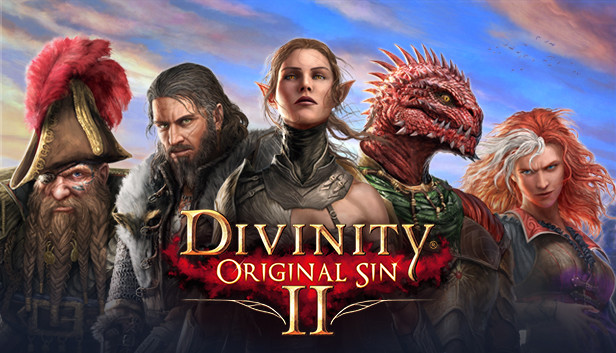
You can choose from six origin characters with their own backgrounds and quests, or create a character from the listed races.
“The elemental turn-based peak that treats the floor as a physics sandbox, with six origins and a GM mode wiring tabletop DNA into every run”
Our Verdict
Landmark on arrival, still a mountain you can't route around
Wind the clock back to its debut and Original Sin 2 walked out to a standing ovation. A 93 on Metacritic, a Mighty 92 on OpenCritic, a flat 10 from GameSpot, a 9.6 from IGN, a 9.75 from Game Informer — this wasn't one outlet's crush, it was the near-unanimous read of the entire critical floor. It was written into "one of the greatest RPGs ever made" lists the year it shipped, and that verdict has barely faded since.
The awards column is almost absurd. It took the BAFTA for Multiplayer and PC Gamer's Game of the Year, while Game Informer handed it Best Turn-Based Combat, Best Side Quests and Best PC Exclusive in one armful, for over 160 industry awards all told. These aren't decorative medals; they're a ledger recording that it hit the top tier on combat, narrative and co-op simultaneously. A game that wins any single one of those has succeeded — this one bloomed across the board.
Seen from today, its place is even more interesting. Developer Larian went on to make Baldur's Gate 3, the game that swept The Game Awards, and Original Sin 2 is the hinge on that evolutionary chain: origin characters, identity tags, turn-based freedom — almost every design gene that later sanctified Baldur's Gate 3 has its prototype here.
Trace the line back further and it runs all the way to the first Original Sin in 2015, the game that established the elemental interplay and two-player co-op this sequel then perfected. So Original Sin 2 isn't a standalone hit. It's the middle chapter of a studio teaching itself, in public, how to build the kind of reactive RPG nobody else was attempting — required reading for anyone trying to understand how Larian got where it is.
Who should buy, who should walk, and which version to grab
Start with who it's for. If what you want is high freedom, the willingness to own every choice, and a taste for grinding on tactical builds, this game is practically tailored to you. The elemental battlefield of chain-reacting water, oil, fire, electricity and poison, the dual physical-and-magic armour break, the twelve skill schools you mix freely — that's a strategic sandbox deep enough that nobody has reproduced it. Add six origins each carrying a complete character script, plus up to four-player drop-in co-op where you can stab each other in the back, and its longevity has no real ceiling.
But it will genuinely lose some people. If you find turn-based pacing slow, won't read mountains of text, and only want immediate, punchy combat feedback, this system is a burden rather than a pleasure. The isometric view plus those sprawling skill schools makes the UI information-dense, and the early on-ramp for newcomers is a real one; the armour-break rule also rewards committing to a single damage path, so mixed physical-magic squads stall and the build forgiveness runs thin. None of these are fatal, but all of them are worth settling in your head before you dive in.
On versions there's nothing to agonize over: the Definitive Edition is the standard. As a free upgrade aimed at everyone, it folds in the Act 2 rewrite, the 150,000-plus re-recorded voice lines and a Story difficulty built for the narrative crowd, dragging a barrier once treated as hardcore-PC-only down to something far more people can clear. Late in 2025 it landed on PS5, Xbox Series and Switch 2, with load times and frame rates stepping up again. Whatever platform you're on, lock onto the Definitive Edition — it's the most complete and most welcoming shape this game has ever taken.
Popular Steam reviews
Native-language selection · 10 reviewsSelected helpful reviews in this language show both recommendations and criticisms. This selection does not represent the overall positive rating; opinions reflect the version reviewed.
I'm 72 years old and these have been the best 20 hours of my life. EDIT:: After playing through the game multiple times, including finishing it on Honour Mode, I have to say that my opinion of this game is even higher than it was after those first 20 hours. After finishing this game, it feels like my life is complete and there's nothing left to live for. This may be the last game I ever play and review I ever write. I would like to thank Larian for filling a void that has been plaguing me for more than half a century. I found the main story as well as every single side quest/story to be fun and interesting. There are no boring fetch quests as far as I can tell. How you handle side quests and whether you complete them or not 'does' affect the ending; as such, they could be considered extensions of the main story. (You could be unsatisfied with the ending if you just rush through and skip things.) You can build your characters any way you see fit and almost any build is completely viable. If you don't like the way you built your characters, just wait until you complete Act 1 and you can rebuild them any way you want as frequently as you want all the way up to the very end of the game; this is very good for testing new things out. By the end of the game my main character was a fire breathing Geo/Pyro battle mage that wielded a fire staff, used Warfare skills and showered my enemies in meteors with some necromancy for physical damage in case the enemy had too much resistance to those elements; she was pretty godly. I plan on trying a solo Honour mode run next with a similar but more diverse build. (I love the lizards!) For me, the best part of this game is the combat. It's extremely well done and very fun. I can't really say any more than what the other reviews cover though. Just know that if a fight seems absolutely impossible, that it really isn't. I've gone into fights where half my party was annihilated before I got to do anything, yet I still emerged victorious. There's always a way to win even if the enemy has you outnumbered and outleveled; just gotta think! Like many reviews state, there are still some bugs. As far as I can tell, they are all minor. After multiple play throughs on multiple difficulties I have not experienced any major bugs. Nothing game breaking and nothing that really affected my gameplay much. The few bugs I've experienced: - Many unvoiced lines in Arx. - Incorrect journal entries. - Sometimes a character would act blind in combat even though they weren't (could't use any ranged skills, couldn't see around themselves, but this was rare and only lasted a single turn.) - Sometimes the enemy AI would derp out and they'd just run around or repeatedly climb up and down a ladder until they were out of AP. - Custom undead characters do not receive the appropriate immunities, such as bleeding and suffocation. (though I don't recall any of my characters ever being afflicted with Bleed...) (Fane does receive these immunities) - Undead afflicted with Decay will not attempt to avoid poison puddles (Not sure if this is a bug or an oversight). - Altitude does not affect many player or enemy melee attacks. (Entities 10+ meters above can be struck with melee.) But it does affect some skills, such as Dragon's Blaze, Laser Ray, charging skills, Battle Stomp, etc. ... I think that's about it. I'll add more if I remember them. Some reviews complain about enemies being omniscient and knowing all of your strengths and weaknesses (including whether you're undead or not), which is true, but it's also true for players. Any player with Loremaster on one of their characters can examine any NPC or enemy to gain insight into their strengths and weaknesses. Only one of your characters needs Loremaster. If you examine with someone that doesn't have it, they use the skill level of whoever does, even if that person is dead. (This even works on the final boss, at no point in the game is it unfair that enemies can spot your weaknesses.) So in summary, very fun game, great character customization, great combat, good story, a few minor bugs. It can be challenging in some scenarios but it's supposed to be; that's at least half the fun. I could mention the poor inventory management but countless reviews already cover that. Tip: Carry a couple pieces of +Thievery and +Loremaster gear with you to make sure you can pick any lock and identify any item. There may be times when your base skill isn't sufficient. TL;DR: Recommended, as shown above. 10/10 on the Completely Subjective, Arbitrary and Useless rating system.Show moreShow less
Divinity 2: Original Sin is beautiful, with a great soundtrack and the world design is also appealing. But i'm not gonna recommend it and here's why. The game counters it's own logic. Tells you to do whatever you wants, put an emphasis on freedom, character creation, dialogue, roleplay, etc, but you must play EXACTLY like the developpers intended you to if you wanna succeed. That means, finishing as much quests as you can so your level is high enough for you to be able to win fights on your own terms. So the optional quests are in fact, mandatory. You don't like some quests ? Too bad, since you cannot grind because the mobs don't respawn. But that's not the whole story about quests. The maps are quite open, giving you the illusion of freedom, but when you discover a map for the first time, you'll realise that most of it is gated by high level mobs that are going to kill you outright if you engage combat against them, thus restricting the exploration the game strangely emphases, and forcing your hand into doing things in the exact order the devs wanted you to do them. If you try to do quest B before quest A, you will die because of how much a one or two level difference with your opponent means. That's not to mention the fact that some quests are gated behind a perk/stat/item requirment. It's like Cat Mario / Syobon Action, where you have levels loaded with traps and obstacles you can't possibly anticipate, so you finish them by dying on every single obstacle at least once and memorizing safe zones. The combat system is also restricting, because of the way armor works, it's much more rewarding to set up all your characters into doing one type of damage (physical or magical) to finish fights quicker. I wanted a wizard to support my knight but that would have been a bad idea. Because why would anyone lose time into emptying a full magical armor bar if the physical one has been grinded to zero through the physical attacks you already delivered ? Being able to do damage by mixing chemicals and using the environment is a good idea, the bad thing is that those chain-reactions are usually triggered early in the fight, be it by your own attacks or your opponent's, at a time where armors are not destroyed yet, thus nullifying many effects or debuffs they could create. Nobody is sitting there, being like "Omg this game is too hard, i can't advance !" - people ARE advancing, but it is tedious and annoying. Not because it is "omg, so oldschool, so hardcore", but because the game fails to hold true to it's own principles and employs point-&-click adventure logic in many places. You are supposed to magically know how the devs wants you to approach a particular quest, area or fight. If you don't, you are going to fail, miss things, and die a lot. A good example of that would be Braccus pants. An item you can only find if your character is over a certain threshold in a certain stat, and make him interact with a particular item at a particular place, while nothing pointed that you should do that. There is a difference between not holding the player's hand and dumping them into a situation that cannot be managed unless you already have first hand experience or information. So yeah, i wanted to love this game but it is simply not amusing. It's not a challenge in the sense that you have to improve your level of comprehension of mechanics that make sense, it's simply a matter of knowing things in advance. In Dark Souls, you can win fights on your own terms by, let's say, becoming very good at avoiding attacks and counter-attacking. Or you can be a god at min-maxing, setting up stats the right way to make a great build that's gonna make the game much easier. In DoS:2, you cannot win on your own terms. I should not have to steal every painting in the game to keep my economy flowing so i can buy gear to stay relevant in battle. I should not have to kill every non-quest related NPC so i can grind all the XP not to get crushed in battle. I should not have to back-stab bosses without talking to them and miss important story elements or sacrifice my amusement because of cheesy tactics being the only way to win some fights. This "You have to know it before you even attempt" mechanic is not bad as is. I have no real problem with games that does that, however, i have one if they advertise themselves as putting the emphasis on player choice while it's clearly not how the game is designed to be played.Show moreShow less
Let's see: -Game releases in Early Access with a lot of promise -As it does Larian constantly outdo them selves with updates -They vastly increase the complexity of the AI -Improve the progression in several ways -Give us two well developed and deep extra skill trees -Create a truly grand undead race with interesting mechanics -AGAINST ALL ODD include full voice acting for a game with the amount of dialogue -And include a fully orchestral soundtrack And the reviews for this masterpiece of a game are going down because some Russians got salty over the translations being delayed a bit. This game lost it's Overwhelmingly Positive rating simply because they didn't manage to translate all of the 80,000 or so lines of dialogue in time for the release. Seriously. EDIT: To everyone asking, the game is FULLY voice acted, every NPC, no matter how insignificant has a voice. That is somewhere in the area of 80,000 voices lines, where a lot had to be recorded 8 times for each one of the player voices.Show moreShow less
Divinity 2 is definitely a game that can hold your attention for a while and you would probably really like it if you haven't played the first Original Sin. The problem for me, though, is that this game feels like a downgrade in nearly every respect from the first. The story isn't as interesting, the locations feel really bland (comparatively), combat is slower and worst of all the party interaction is simplistic at best. One of the best things about Original Sin was that you and your partner built a relationship and history together as the game went on. You had arguments about what to do in a quest and could discuss the outcomes afterwards. Over time you began to develop your own tropes. It wasn't perfect by any means, but it was far better than what you get with Original Sin 2. This game allows for 4 player co-op, which is awesome. I was really excited when I heard the announcement about that. The problem is, however, that they really had to sacrifice a lot for characterization to accomidate that. All the pre-made characters have their own quest lines and stories, sure. But you have essentially no influence on the character, your dialogues feel meaningless and what you do in a quest is entirely your own decision. There are no group decisions. It's every man for himself, which leads me to the biggest problem. As I said before Original Sin had you both discuss quest paths and if there was a disagreement, you would do a paper rock scissors minigame to decide who won. Nothing ground breaking, but it worked. Your two characters were partners and worked together for a common goal. It was kind of campy at times, but it made for a really fun and light hearted setting. Enter Original Sin 2. Not only does it not encourage working together, it in fact encourages the opposite. There are options that will only benefit one person. There are plot points that flat out tell you, "Only one person can win." It sets you against one another from the beginning. It might be interesting for some people, but I personally hated it. Coming from Original Sin where I loved the cooperative element, I hated that the game actively encouraged people to put themselves first. It might sound interesting at first, but I guarantee it really sucks to have to play a RPG where people start ignoring the story so that they can loot everything in sight before others get there first. The tone of Original Sin 2 is much different from Original Sin. In fact, the exact opposite. Original Sin had a pretty light hearted campy feel to it. Pretty much every option felt like it had a good enough outcome if you put in the effort to get it. Original Sin 2, however, is a bleak and depressing setting. The people in the world are generally terrible and there are very few happy moments ever available. There are many quest lines that actually just turn a sad situation worse even if you go through all the effort to finish everything. The story feels completely hopeless and it eventually had me choosing to do as little as possible for questing. As for the combat, they made magic a bit more accessible to people. There are more schools of magic and more abilities for you to choose from. It's interesting enough. But once again they made it worse, I think, from Original Sin. They basically halved your action points (AP) in this game. So you have less moves available in a turn. Then they added two types of defense. Physical and Magic. In order to do health damage, you have to bring one defense down to 0 and then hit with an attack of that damage type. So if you want to kill somebody with a sword, you have to get their physical armor to 0 and then hit them. Or if you want to kill somebody with a fireball, you have to get their magical armor to 0 and then hit them. All of this is done so that certain status ailments cannot be applied while certain armors are up. For instance, burning will first reduce magic armor before it takes health away. Same with stunning and knockdown. All this does is make combat feel like a chore. Before you can do anything to hurt anybody, you have to get their defenses down. But your moves are severely limited so you can maybe attack twice if you stand completely still and have max AP. It's slow and much less fun. Most of this review was comparing Original Sin 2 to Original Sin and saying 'the first one was better.' And I think it was. If you haven't played Original Sin then you will probably really enjoy Original Sin 2. But for me Original Sin 2 was a huge letdown compared to the first. This is a good game but it's a big step back. I love this studio and I really, really hope to see an Original Sin 3 or some other CRPG from them in the future. With the success of Original Sin 2, I'm sure we will. I just hope they manage to bring back all the good they did with the first Divinity Original Sin.Show moreShow less
I'm 48. I've been playing pc games since before Zork. This is the best RPG I've ever played. This is what, as a kid, I had always hoped these games would turn into. Great Job!!!! Great game.Show moreShow less
Really disappointed with the game. It does a lot of things well, but falls flat on its face in two categories. Encounter Design and writing. As someone who has played, run, and occasionally written RPGs, D:OS 2 feels amateurish when it comes to both those things. The encounter feels extremely samey, with nearly all enemies functioning the same. Almost every enemy's kit follows a checklist of AoE status effect, teleport, and heal. Their AI consists of picking a target, then dogpiling that target regardless of positioning or self preservation. Enemies will walk through fire, burn themselves down to 1HP, and be set to die next turn just to get in one more hit on target prime. Heck, they'll stand around without attacking or just spend all their AP moving if they can't attack said target. They ignore Oppotunity Attacks and Taunt effects, so the only way to prevent this is to kill or stun them. Doesn't help that most fights take place in the same sort of unfriendly terrain. Enemies get high ground, player gets hazards. Enemies get to magically appear from nowhere in flanking positions, player gets deployed in a clump regardless of formation settings. Enemy damage scales extremely quickly, but since they don't actually have gear, the player doesn't benefit from this. Pickpocket an archer NPC before a fight, and you find three gold and an empty bottle. During the fight, he will merrily pop multiple consumables, like explosive arrows or healing potions. He didn't have these before the fight, and if you kill him before he would have a chance to use them, he wouldn't drop them, either. Same for gear. The enemy archer will have better armor than your tank, and do more damage with his bow, but someone on death all his equipment vanishes into the ether. Or occasionally you'll get a pair of common quality gloves two levels behind, which he clearly wasn't wearing since they would never get his armor that high. The story of the game is stock for the Divinity series, which to be fair has always embraced the PC as special snowflake story trope. The character dialogue is iffy, but the plot frequently feels forced or out of touch with the situation. Kill a named NPC, said NPC returns in the next scene. If you let me burn someone to a charred corpse on screen, then animate a disgusting blob zombie with his corpse, that character should probably not pop up again. Overall, the game frequently feels like it was set up by a new or just plain bad GM. "These are my favorite NPCs, you can't kill them. I put them in fights, but they magically survive or escape. No, you can't loot or use their equipment, because I don't want you to look as cool as them. Haha, look how dumb you are, being ambushed by invisible enemies I made magically appear even though you were standing where they were a minute ago." Most of the game's challenge comes from this, rather than any real feel of difficulty. Few additional weird design choices: Initiative is I go-you go, meaning boosting initiative is meaningless, since you will always take turns with the enemy. Status effects are blocked by armor/magic armor, meaning these have to be stripped before you can apply effects. This seems fair, until you realize enemies have more armor and do more damage than you. Meaning they can frequently fire off these abilities and land them on the first hit, while you have to spend a turn or two chewing down armor. The armor mechanic also means you are best off focusing on one type of damage, preferably physical due to fewer resists. So in a game with six different kinds of spellcasting, one of the better teams is four 2h warriors bashing everything to death while spamming fly or teleport. Many enemies have flat out immunities to certain effects, for no clear reason. (A clear reason is something like a fire elemental being resistant to burning.) There is no way to predict this, so you can go into a fight only to find the damage types and status effects your party is built for are worthless for a given encounter. Graphics are nice. Gameplay has a lot of potential, but the encounter design lets it down. I'm in the 2nd act, and I'm sick of the fights. You get access to a wonderful variety of abilities, but you're best off running a party of all physical attackers and the odd utility spell. I want to like it. I think a really good game could be made out of the foundation D:OS2 is built on, but so far, Larian hasn't done it. On the bright side, it is way better than Dragon Commander was.Show moreShow less
My mom just came in while I was playing and told me it looked like art. I told her it was.Show moreShow less
Much like the first game, Divinity Original Sin 2 is a fun game that seems to only be fun purely by accident. There's so much to unpack here that I genuinely suspect that the developers were just randomly throwing darts at a board to decide game elements--at best. At worst they were being intentionally lazy—possibly even intentionally provocative at points. A lot of the major problems have been harped on about to the point where I don't feel the need to mention them, but for the sake of the uninformed: the armor system in this game is entirely pass/fail, you either have armor and you resist everything or you don't and you resist nothing. The turn order is mindbogglingly terrible, working on a round robin (enemy goes then you go then enemy goes and repeat) system that seems to heavily favor the enemy. The game is literally unfinished, Act 4 was shuffled together out of planks of wood and has blatant cut corners in the form of poor scripting, low effort dialogue, low effort area design, pointless quests and voice acting that varies from being poor to simply not existing. Act 3 is not much better. Inventory management is somehow worse than the first game. I think the best way I could describe the act of playing DOS2 is that if it feels like you are gaming the system, you are probably playing the game the way the developers intended. In someways this is what makes the game fun—I had a very similar experience with New Vegas, where playing the game on the yellowbrick road was boring as sin, but intentionally breaking the quests in ways that favored me was extremely satisfying. What makes DOS2 less satisfying than New Vegas, however, is that in DOS2, the things that break the game are things that the developers knew full well would break it. It is an intentionally asymmetrical experience. Things like teleporting enemies away from their allies and ganking them, planting explosive barrels around enemies before triggering a fight, stacking up on a certain resistance to the point where you heal from an element —these things are how the game is designed to be played. This of course means that certain abilities are comparatively bad because they don't do key things like strip armor, reposition allies/enemies, heal, apply surfaces, etc. The top three non-source abilities in DOS2 (Which are probably: Teleportation, Shackles of Pain, Invisibility, with special mentions to Summon Bone Widow and Rain) are so unbelievably powerful that you are gimping yourself to an extreme degree if you do not use them. The game is obsessed with it's all-encompassing armor and surface mechanics, and any ability not related to them is uniformly awful. On Tactician mode, "cheese strats" like the ones I mentioned are so ubiquitious that I legitimately do not understand how the developers intended certain encounters to be beaten. Of particular note is one instance where I needed to save a lizardwoman from the gallows, who was being hung by a single tough guard and her slave. Easy enough, just kill two people. The problem was: as soon as you instigate the fight, the guard summons four equally strong guards from thin air, all of which are right next to her so repositioning her is useless. This *by itself* would be a very challenging encounter, but it gets better. The woman had a permanent aura on her that increased her dodging abilities and those of her allies to ludicrous degrees--meaning I basically could not hit her, or anyone around her. The way I beat this encounter was, no joke: teleporting her three times in a row, at max range, into another encounter entirely with some evil bug things, and the bugs killed her. The encounter I just spoke about could have been talked about with the same words, but in an entirely positive tone. Because technically, I just teleported a woman three blocks away and had bugs rip her apart. And that's "awesome". Truth be told, it actually was somewhat fun. The crux of the issue is this: the rational person inside of me is screaming in agony when I play Divinity, while the fun-loving idiot inside of me is very satisfied. I know for a fact that this encounter was unbelivably poor. But because I beat it in a *special* way, I'm almost tricked into believing blatant disregard for sensibility produced something cool. It's like junk food. It's a momentary rush that quickly wears off when you work your tongue around it and realize it's a concoction of food coloring set up to hide a complete lack of substance. A lot of the encounters are like that, except some are even worse, in that the "trick" to the fight is the literal one way to proceed. There's a witch that will set up a MASSIVE fire resistance debuff on your party and then cast a fire spell, instantly killing the entire group. The only way to beat this fight without losing a party member is to bless the flames underneath her so you get fire immunity before she casts her debuff. Once you do that the fight is a cakewalk. It is an actual puzzle with one solution. There are other encounters that are just laughably bad. If I played a tabletop RPG where a DM pit me against 15 slow moving clay soldiers that respawn indefinitely until one of them is killed, where each of them gets their own turn and they only have one attack, I would quit that game on the spot. There's another fight that's such a literal waste of your time it's unreal. You start out with dozens of oil slugs, which turn into more slugs, which turn into fire slugs, which ignites the oil and causes the whole area to be lit on fire, which heals the slugs and hurts you. That fight took me FIFTY FIVE MINUTES but only took me one try. The final fight: I audibly laughed when I realized the final battle is just an immense battle royale between three factions, where both the magisters and the antagonist's forces have 5+ people and each of them gets at least three actions per turn. I seriously just played dead with my undead characters and WATCHED the fight happen, until only one enemy remained with a tiny amount of HP. This sort of ♥♥♥♥ should not be the optimal strategy in the climax of the game. Still somehow was not worse than the last fight of DOS1! In my DOS1 review, I said the game was flawed to an unbelievable extent, but that I had fun, so I gave it a thumbs up. Why does that not apply here? Because the context behind the game makes the state of the product totally unforgivable. To begin, DOS2 was a kickstarter project after DOS1 had already gotten kickstarted and been the most successful game for Larian in...ever. Additionally, DOS2 was in early access for almost a year and a half, supposedly to gain feedback to improve the product. Larian got feedback, and they ignored it. Changes to the armor system were heavily requested. Changes to the initiative system were heavily requested. Changes to the stat system were heavily requested. None of these things happened. As far as I can tell, Larian did not make a single change to the game during early access that actually made the game better, with the sole exception of adding full voice acting —which was probably planned anyway but only carried out during the pre-release hype. The best part? DOS2 came out unfinished after years of early access and a huge crowdfunding campaign. Even ignoring the fact that Act 4 is rushed-out trite, I cannot understand that a game with a budget in the tens of millions was released with multiple game-breaking bugs. And I do mean game breaking. About 25% of the quests I played were bugged to some extent, some of them were literally unfinishable. When I played DOS1, I kind of got the picture that Larian knew what they were doing but were being intentionally transgressive for the sake of being different. Now that I've finished DOS2 I see things in a different light. It really does feel like they just...winged the entire game, and it almost worked. I admire their ...luck?Show moreShow less
30 hours in... "That was only tutorial island!?" (200 hours later) EDIT: that was an epic ending. Thank you Larian for such a great game A shame I had nothing to use my 600k gold on....Show moreShow less
Divinity: Original Sin 2 Divinity Original Sin 2, is a game that was made with love and passion, but it isn't a masterpiece like everyone says it is due to some major shortcomings in the game design side of it. THE GOOD + The combat and RPG mechanics work extremely well. It was a bug-free experience. The only technical problem with the game is the extremely long loading screen. + Very well-done voice acting + Beautiful, colorful graphics, the finest of all CRPGs. + An awe-inspiring soundtrack, even though some music may get a bit monotonous on some maps due to uneven playtime around the maps. + Visually diverse maps and different biomes THE BAD THE BIGGEST SIN OF DIVINITY: ORIGINAL SIN 2: - In Divinity Original Sin 2, you can create your adventure, make history, and select your path! The game tells you to do whatever you desire and emphasizes freedom, character creation, dialogue, roleplay, etc. At least that's what the advertisement says. In reality, this is a gigantic lie. In fact, you must play EXACTLY as the developers intended you to play if you want to succeed. You MUST follow the path designated by the developers at every step. That means finishing as many quests as you can so your level is high enough for you to be able to win fights on your terms. So the optional quests are in fact mandatory. You don't like some quests? Too bad, since you cannot grind because the mobs don't respawn. But that's not the whole story about quests. The maps are wide open, giving you the illusion of freedom, but when you discover a map for the first time, you'll realize that most of it are gated by high-level mobs that are going to kill you outright if you engage in combat against them, thus restricting the exploration the game strangely emphasizes. If you try to do quest B before quest A, you will die because of how much a one or two-level difference with your opponent means. That's not to mention the fact that some quests are gated behind a perk/stat/item requirement. Due to these game design choices, the game is a constant session of seeking XP around the map. By using guides and other resources, you can learn where to go in order if you don't want to waste time checking each enemy encounter level one by one. This could have been prevented by leading the player little by little where to proceed, or a better way to do this is to design the game for it to have level scaling. - Considering the way armor works, it is much more rewarding to set up all your characters to deal the same type of damage (physical or magical) in order to finish fights less frustratingly. For example, in my playthrough, I chose a ranger (physical damage), a fighter (physical damage), a rogue (physical damage), and a wizard (magic damage) but because of this non-sense armor system my wizard was so weak and I had to transform it into a supporting character because he couldn't do any damage to the enemies. This way he couldn't do much either, because now he had to get all the support abilities from different skills like Geomancer, Hydrosophist, Summoning, Necromancer, etc. I got the skills but as XP is very limited throughout the game, I was not able to upgrade them all to a decent level. This armor can be defensively viable 50/50 depending upon the enemies' attack style (physical or magical). Very frustrating RNG for sure. - A key feature of the game are the items placed in the world that the player can use during encounters. Since 90% of the fights start with you being ambushed, you can't plan your attacks in advance. You also need to save spam because you don't know when you will get ambushed. - Another highly praised part of Divinity: Original Sin 2 is that there are so many abilities to use. However, because the game is so stingy with XP, there is no way you can use most of them in one playthrough. If you unlock all of them, you won't be able to complete the game because you will be underpowered that way. I don't think many people will replay this extremely long game again and again just to use more abilities in combat. The imbalance of the skills is also a thing. Some are too powerful (like most summoning skills) and some are comparatively weak. I have also considered the AP costs of the skills in this comparison. - I think most people can agree that the most important part of any RPG is the story and the way this story is presented to the player. The story here is very cliché, predictable and boring to be honest. Our companions all have much of the same backstory and their purposes are very similar. Not to mention their personalities are very edgy and boring. Because our companions do not talk to each other mostly, they do not form any bonds between them. Do not expect enjoyable companions like in Persona or Final Fantasy games. There are also no well-written side characters or NPCs in the huge world of Divinity. As with the plot presentation, it is unnecessarily complex, tiringly long, and full of unnecessary dialogue to lengthen the playtime. - As a player, I wish persuasion was not just a stat thing. It would be great if the player had to convince NPCs by what the sentence options say. - I love it when games just let you explore freely and reward you accordingly. Hollow Knight is a great example of this. But when it comes to DOS2, as the game is overly cryptic sometimes, you have to pause the game and look up what to do in order to advance through the quests. You will probably miss a huge chunk of the content without searching the wikis. Why did this game have to be so cryptic? Eventually, the player ends up spending hours on a puzzle or breaks immersion and looks it up on the guides. Either way, it hurts the overall experience. - The game is almost 90-100 hours long. This is for the main storyline, but since the side missions are mandatory, you could consider it for the whole game. - Because every fight had to have some gimmick, and this gimmick always showed itself at the end of the fight, the player almost always had to reload the fight. This is also very immersion-breaking and annoying. - SPOILER: The final boss was a huge disappointment. It was neither a well-designed boss nor did it have that final boss feeling. It was as if 10 guys had gathered and they were in a battle royale. They fought themselves and later the survivors of their battle attacked me. Kraken's extreme power is also ridiculous. - Why did this game have to have so many barrels and crates? As I checked all those crates and found nothing in most of them, I think the developers also intended to lengthen the game's play time with this. - I expect at least some reactivity in this game. For example, if you slaughter half a village, people will still sell you stuff and treat you as if nothing had happened. - Quest items should have been marked. If you accidentally sell a quest item, you will be screwed. Divinity: Original Sin 2 isn't a terrible game for sure. I can say that at some points, I enjoyed it. But as I played more and more, I noticed many shortcomings that ruined the experience. BRONZE MEDAL Thank you for reading. Follow my Curator Page: https://store.steampowered.com/curator/40523765-Bearsonal/Show moreShow less
Source: original Steam user reviews. Helpful votes are an archived snapshot, not live data. Last collected: 08/14/2026.