
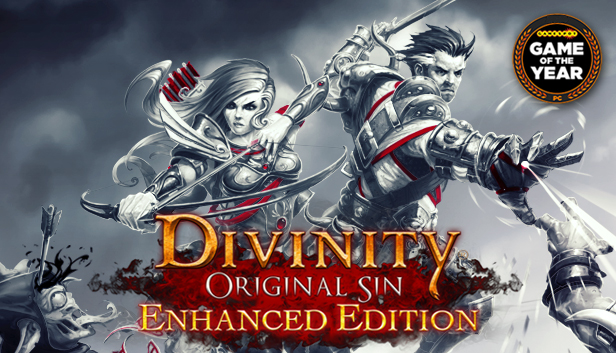

Divinity: Original Sin - Enhanced Edition
Price History
Past 36 months · Updated dailyPrices cover Steam and 39 authorized stores; only legitimate offers are counted. The chart shows weekly market-wide lows and Steam's official price across the past 36 months.

01About Divinity: Original Sin - Enhanced Edition
As a young Source Hunter, investigate a murder that draws you into a conspiracy threatening time itself. Explore an open world, discuss choices with your party, and fight in turn-based battles. Combine skills, spells, and environmental effects, while classless character creation and several difficulty modes let you shape your approach. Steam player reviews: 88% positive from 27,727 reviews.
Credits
Lowest recorded in 36 months
$3.992024-12-19 · SteamBase game · same records as the chart above; USD history, not a regional Steam low.Language support
| Language | Interface | Subtitles | Audio |
|---|---|---|---|
| Simplified Chinese | Yes | Yes | — |
| English | Yes | Yes | Yes |
| French | Yes | Yes | — |
Show 8 more languages
| Language | Interface | Subtitles | Audio |
|---|---|---|---|
| Italian | Yes | Yes | — |
| German | Yes | Yes | — |
| Spanish | Yes | Yes | — |
| Russian | Yes | Yes | — |
| Polish | Yes | Yes | — |
| Czech | Yes | Yes | — |
| Korean | Yes | Yes | — |
| Portuguese-Brazil | Yes | Yes | — |
Steam PC edition data · 2026-10-19
02Before you buy
Modes and controls
The Steam PC version supports full controller input, online co-op, and dynamic split-screen co-op. Four difficulty modes range from story-focused to especially demanding.
Language
English full audio is available, with subtitles in other supported languages. See the language section for the confirmed interface-language list.
03Frequently asked questions
Can I play co-op?
Yes. Steam PC supports online co-op and dynamic split-screen co-op.
How does combat work?
Combat is turn-based, and skills and spells can interact with environmental elements.
Are there fixed classes?
Character creation is classless, and the story includes discussing decisions with your party.
“If you love calculating every turn and watching each choice leave a mark, set aside a few long weekends and dig in.”
Our Verdict
If you had to sum up Divinity: Original Sin Enhanced Edition in a single line, it would be this: the one that stuffed a tabletop campaign into a video game, and somehow fit it onto a console smoothly. That compression is the whole story of this release, and it is the reason the package earns an 8.5 overall.
The two sections below pull the threads together — first the verdict on systems and content that carry the experience, then the question of who this game is actually for and how it stacks against its nearest rival.
Systems and content carry it
On the gameplay front, this edition preserves the original's design philosophy of near-tabletop rule complexity, making environmental interaction, elemental chains, and multi-solution quests the base color of everything you do. The Enhanced Edition's most important contribution is that it lowered the barrier to entry through controller optimization without sacrificing any of that system depth, carrying a game that could easily have lived only inside a hardcore PC niche out onto a far wider sofa. You still have to invest time to understand the rules, but at least you are no longer being dragged around by the interface.
On content, it stands at the high end of the traditional RPG spectrum: abundant quests, abundant side stories, abundant build and party options, and consequences that get written into the world's history. In theory that supports multiple playthroughs and long-term tinkering, and in practice it routinely turns dozens of hours into hundreds. The graphics and sound sit firmly at the "necessary and reliable" tier — not a technical monster, not a soundtrack for the ages, but more than enough to give that intricate system a clear, dependable stage to perform on.
The story's traditional shape and its modest main-thread tension are the reasons it cannot quite vault into the "changed the industry" bracket. Instead it reads as a finely made product aimed at a specific audience. Players who love high-complexity systems and relish calculated combat and weighed decisions will find dozens or even hundreds of hours of joy inside it. Players who prefer linear narrative or lighter play may well fall off during the rules-explanation phase.
Who it is for, and the rival
So is it worth pouring many hours into? If everything described above makes your brain whisper "that sounds exhausting," then there is no need to force it; the genre itself was never built for everyone. But if the keywords — environmental-interaction turn-based combat, multi-solution quests, heavy role-play — light you up, then this game absolutely deserves a few long weekends set aside specifically to sit down and grapple with it. That density, where every turn is a calculation and every choice leaves a mark, makes the hours vanish.
The clearest way to place it is against its main rival, Dragon Age: Origins. Both sit at the same table of high-freedom, high-complexity RPGs, but that peer leans on narrative buildup and cinematic pacing, keeping the pleasure of playing the system and stirring up trouble in the background. Divinity does the opposite: it pushes the scheming, the elemental experiments, and the consequence-rich quests to the very front of the stage. The rival wins on story-first players; this one wins, decisively, on anyone who would rather author a plan than watch one.
For the calculating RPG player, missing a run with this one would genuinely be a shame.
Popular Steam reviews
Native-language selection · 10 reviewsSelected helpful reviews in this language show both recommendations and criticisms. This selection does not represent the overall positive rating; opinions reflect the version reviewed.
In a world where "enhanced edition" has started to be synonymous with "will run on modern hardware if you shell out $20" it's absolutely refreshing to see Larian deliver this masterpiece free of charge to owners of the original. You start out with an already fantastic game that's received numerous game of the year and editor's choice awards. Then you spend a year polishing that game, and adding new features. The result is brilliant Enhanced Edtion of an already fantastic game. New features for EE: Fully voice acted - Every line of dialog now has voice acting. The voice acting is really good too Dual wield - Rogues now look more iconic with the ability to dual wield Grenades - You can craft and throw various sorts of grenades. Tactician Mode - A new challenging mode where encounters are redesigned to be harder by adding new spells and enemies into the mix. Classic mode still available obviously. Split screen co-op Controller support Updated graphics - The UI is totally reworked, the graphics are updated, and spells have new effects Updates to the story - The story, esepcially the ending, was rewritten a bit to clear up some confusing aspects I'm sure there's more, but really these ought to be reason enough to play this game.Show moreShow less
As much as I don't want to give this game a thumb's down there are so many caveats which with I would need to recommend it that I won't do so in broad strokes. The basic idea and design is good, but the implementation of as many mechanics as not is questionable. Things that work: -The core idea of the turn based combat is good, build your own character, cast cool spells, plan out your attacks instead of using reflexes. When you first start out combat feels fun and is what basically draws you to the game. -The graphics and designs are nice. -I guess the voice acting isn't bad, some of them are a bit annoying or flat. -Fast travel avoids the tedium of walking simulators. Things that just don't work for me: -Repetitive music and ambience. -Lack of creatue variety and total enemy encounters. -Rock paper scissors is terrible, some are unwinnable and there is no tie option so there is no strategy at all but losing can cause you to miss quest exp. -The dialogue gets really thin after 40% or so, and going back to characters most don't recognize you have resolved a quest they were in. -Pacing is largely terrible. Early to mid difficulty curve is off if you don't play OP builds. Puzzle difficulty curve is non existent, it's basically hovering everything to find something to click until near the very end where you have to do a fewactual things, so rather than difficult it's just tedious which is why most people solve them through "cheese" of using scoundrels and teleport instead of actually doing the puzzles. I guess some people praise this for inventiveness but I don't think it's fun to look at a huge temple and beat it in 5 seconds by teleporting past all the mechanics; that doesn't feel creative it just feels poorly planned. It can be easy to go the wrong way and complete quests before finding the precursor hints without even realizing you missed anything. -Quick saving every 5 minutes is mandatory due to random one shot traps which could be anywhere, I don't know what the point of this is at all except to be frustrating. -Reloading fights to get a good opening in the early game makes everything take longer than it should. There's some fights where you need your guys standing just so or you take a lot of unncessary damage right off the bat. -Sometimes I only had an easy time on fights because monsters would bug out and get stupid if they were too far at range. -Tenebrium is stupid and useless. -Due to limited engagements and no respawning fights, combat potential opens up too late in the game. By the time you have almost a full build going and can actually do cool stuff, the game is almost over. -Small details that are supposed to make it a "pay attention we are not holding your hand" kind of game often end up being too pointlessly obscure rather than intuitive. -Way too much junk items and equipment to pick up. -Crafting is not fun. -The story is not engaging. -The dialogue choices don't feel like impactful or meaningful choices. This partly ties in also with the limited encounters. If you do "bad" things you often miss exp and you can't make that exp up anywhere else. Or you do the bad thing and get the exp anyway and no one outside of that room knows what you did. So I don't agree with people who say the world reacts to your choices. To get full exp you basically also have to kill all the friendly but not "good human" characters, such as goblins, after completing the quests relating to them. Overall the game just lacks a cohesiveness that other better games have. Beating it doesn't feel satisfying. ** Thanks for all the hate, just for trying to write a thorough and thoughtful review unlike most of the other negative reviews which are mostly "This game is too hard it sux" or "It doesn't work on my system 0/10 don't buy it" **Show moreShow less
Sometimes, second impressions are more important than the first... I picked this game up last year, not long after finally playing "Divine Divinity", which quickly became a favorite of mine, due to the off-kilter writing, challenging and free-form battles, and stellar atmosphere and audio. With all the buzz around the latest Divinity and overwhelmingly positive reviews, I finally plunked down the premium price for the game, and entered a world of initial disappointment: The complex mechanics, challenging difficulty , and voice acting that comes out of all corners, on top of convoluted quests seemed to be a bit too much for me at the time. I put several hours into the game and then shelved it, rather disappointed. I couldn't see how the game received such overwhelming reviews with what a mess it seemed to be at the time. Fast forward about a year later, and I give it another whirl, just on a hunch...that maybe, just maybe I'd be able to find it more palatable this time. I'm sure glad I gave it another go. After reading up a bit more on the game's mechanics and stats, I started with an open mind and a brand new character. I decided to devote a good four or five hours into my first session back and really get a good undertstanding of what's going on, and that's when it just *clicked* for me. The attention to every detail, every line in conversation, every battle, every creature, scroll, skill book, ingredient and object you can interact with is unparalleled. This game gives me the same feeling I got when playing Ultima VI and Wizardry V back in the day...you want to keep exploring, learning, experimenting, and not stop playing. I'm 40 years old and have many responsibilities in life, yet I've found "Divinity: Original Sin" keeping me up until the wee hours of the morning, going to work exhausted, telling myself "I'll take a break from it tonight", but going back to play again and again. I've put about 30 hours into this play through so far and I feel I'm just scratching the surface. The writing takes some of the fantasy stereotypes and rewrites them in such a way that makes them unpredictable. Once you understand the battle mechanics and the different ways you can win a fight, it becomes very rewarding. Plenty of loot in the game, even the seemingly useless items can obtain value by crafting or sellling for a few extra gold pieces. Speaking of selling: most random NPC's you can trade with, which is a great touch: just like in real life, most people will have some sort of currency or item you'd want. Digging graves, making traps explode, talking with animals, setting random things on fire, breaking into inn rooms, the list of things to do goes on and on...and unlike a lot of RPG's, none of it feels like "filler" or busy work. I'm very much looking forward to checking out the sequel when it's officially released in later 2017. For now, I see "Divinity: OSEE" keeping me plenty of busy, and rewarded, until that time.Show moreShow less
An RPG not meant for everybody If you are looking for an easy, fast-paced RPG, Divinity: Original Sin - Enhanced Edition is not the RPG for you. This is a challenging game with heavy dialogue and slow-paced combat system. If your party is not prepared for combat, they will easily get wiped out. The combat is difficult because your party is out numbered and out levelled in most situations. There are only a finite numbers of enemies on the map so you cannot “grind” to level your party up or get better loot. The game is laid out in a linear way which forces your party to outsmart your enemies by using the proper spells and environment surroundings. I can appreciate the work done by this indie game developer, but I find this game is little too hardcore for my taste. Due to the rating system, I can’t give this game a mixed review. If you like challenge and exploration based RPGs, you might want to try out Divinity: Original Sin - Enhanced Edition. If you are a beginner to RPGs, I suggest skipping this game. At the end of the day, I have to ask myself "Did I have fun with this game?" Sadly, I have to answer no. Getting into the game combat system, puzzles and exploration was a chore for me.Show moreShow less
This game is great in many, heavy aspects, and falls short on a few light ones. The negative aspects of it are more a matter of taste rather than being poor game design. Since so many negative reviews are written by people who think the game's too slow, I'll give a fast review so that you'll have time to play it sooner. Pros: - Great game design. - Beautifully crafted world with a competent graphics engine. - Great soundtrack. - Combat is highly tactical and multifaceted. Planning and having a variety of strategies matter. (I recommend playing on Tactician Mode) - Profound character creation, that actually matters in gameplay. - Dialogue choices (sometimes) matter and help build character traits. - Humour and pop-culture references. - Lots of secrets. Matters of taste: - Very unforgiving to: Inexperienced RPG-players. Unskilled tacticians. People with bad dice rolls. Those who can't properly use Google as a last life-line. People who bought a keyboard without the F5 and F9 buttons. Sufferers of amnesia. - Slow, sometimes painfully slow. A beverage or friend to accompany you through some parts of the game is highly recommended. - A bit too few "in combat" tracks. - Arhu is ♥♥♥♥♥♥♥ everywhere. Cons: - Repetitive character auto-reactions to world effects. ("Feeling a bit hot under the collar!" "On the mend!" "What a deluge!" etcetera) - Unnecessarily slow animations and queuing outside of combat. - A little too uninformative quest log. - Some quests/parts of quests are downright uninteresting. - As with any game of any publisher, a few bugs here and there.Show moreShow less
TLDR: There is truly a great game buried deep, DEEP, down here. It’s a real shame that so much design and effort went into ways to slow down and frustrate the player. General Thoughts/Overview: Odd review time again, this game could be for you! There is so much right with it, it depends on if you can see through the flaws and embrace the virtues. So I finally played Divinity Original Sin: Enhanced Edition (DOS:EE). I’ve had this so long I didn’t even remember I’d been given a free copy of the EE. Thanks, devs, I really appreciate that. I was warned it was long… But I’m actually surprised it has more than a 10% finish rate… even the 7% finish rate of the original surprises me, it was a real slog. The easiest way to describe the gameplay, is that it’s REALLY quite good… When you’re allowed. It’s a turn based combat system based around acquirable skills based on your class, with environmental modifiers. It’s very easy to learn, very satisfying to master and to cheese, and very poorly balanced if you’re under/over levelled. The problem, dear reader, is that you’re not allowed to play unless you’ve done your homework. But I’ll get into that in a little bit. Much like every teenage boy on a message board post 2000, we are the source hunters. A dynamic duo who’s training, history, and entire lives are built around finding and destroying magic users wherever we find them. Naturally one of the first encounters in the game is with a shapeshifting magic user who we completely neglect to murder, closely followed by an encounter where we can recruit a mage to our cause in… hunting down and killing mages. Now before my propensity for being glib takes me, we should dive into the nuts and bolts. Pros: The music, voice acting, and general sound design is all delightfully nice. A lot will get repetitive if you spend the 80 hours with it that I did… But it doesn’t ever detract from the experience. As previously mentioned, the combat system is fantastic. It can lead to some frustrations, however it is fundamentally well put together and extremely enjoyable. The world is large, the maps are detailed, and you often get rewarded for exploration. This makes the hours you’ll spend combing the area for secrets much more bearable. Cons: The biggest con, as previously eluded to, is that you simply aren’t allowed to play the game. i. Quests are supremely frustrating, with many taking multiple areas and a large swathe of time to solve. This could actually be a pro, however DOS:EE is terrible at explaining and choreographing. Sometimes you just missed a lever, sometimes you need to wait 12 hours to meet someone, sometimes you just didn’t hit the thing you’re meant to hit. There is very little hand holding, and that too could have been a pro. But there is also no intuitive way of knowing what to do or where to go. ii. Equipment is an excel spreadsheet of calculations. You need to reject an optimisation mind-set to truly enjoy this game. I could not. A minimum of a third of my hours was spent comparing items and getting caught in an anxiety loop trying to determine which stats would be best, or searching every basket, bush, and rabbit hole for loot. Most of which I never used ‘in case I need it later’. Sure you can argue that’s a user end problem, but I know you’d never put money down on me being the only one. iii. Another significant portion of my time was spent out of combat, waiting on healing cooldowns. Why? Because it’s a long walk back here, and it takes less time to wait minutes to get my puny heals to fill the hp bars. Sometimes I’d eat a ton of food, sometimes I’d use my precious pots… but generally, I needed to wait. And that’s not fun. The game has such a poor inventory optimisation and gear distribution system. Give me one giant inventory and let me see everyone at once. PLEASE. Having to nip through each character to check everything every time drove me mental, to the point where my 4th character went into the final fight wearing crappy lvl 5 boots because that’s about the time I gave up on doing it all properly, and they were constantly being left out. Another way the game grinds you to a halt is with the identification, charisma, and repair systems. These cost nothing but space in your inventory where you swap out clothes. It’s a bunch of added busy body steps and it’s a tiresome detraction from the fun parts of the game. It also adds to the anxiety when it comes to crafting and improving gear… but the bonuses improve with your level, so you’re forever lugging or storing stuff ‘to use later’ because it’ll be out of date in 5 minutes when you can make a better one or you’ll find something even better than that stuffed up the arse of a nearby goblin. Suggested improvements: Single inventory with all characters on screen to do gear. Restrict loot to prevent this comparison nightmare – it wouldn’t be a problem if it were just one character, it’s because there are 4 it’s an issue. Consume keys on use, don’t give us stupid inert stones, use up quest scrolls if they’re never going to be used again, give us an indication on if we’ve read a skill/passive book. Make it open or something. This would reduce the busy work even more. Completely remove the crafting element. If we’re to repair, let the smiths do it for gold. If we can have things enchanted, give us an ally who can do it for gold. Keep reducing those pointless timewasting interactions and let us play the game. Overall Recommendation: Look. This is a great game when you can play it. I haven’t even talked about the meh story or the mediocre map design, there was so much right, and wrong, with the mechanics that it didn’t matter as much as normal. If you’re an enjoyer of tactical combat and also a patient person, or one who can stop themselves obsessively checking every nook, cranny, and create, then you might well enjoy this. If you like long and winding stories that aren’t immediately obvious, you might enjoy this too. If you don’t want your hand held, and enjoy those sort of free roam games, you might find something here. However, if you’re interested in a strong story well told. Or if you’re after a tight gaming experience with limited time. Or if you get bored easily when there aren’t any keys being jangled… Then this would be a complete waste of your money. For me, I would have enjoyed this were it a much tighter experience. I reckon if you stripped this back and just let it run, instead of having it filled with needless padding, you could probably get a solid 20-30 hours of fantastic gameplay out of it. What I got, however, was 80 hours of mediocre gameplay with a laughably bad ending. As such, I don’t feel I can recommend this. It is, however, a diamond in the rough… My curator page with reviews by genre. In case you want to find more games, or even reviews, like this one.Show moreShow less
First day. 13 hours. Wife is SO mad at me. 10/10Show moreShow less
I have mixed feelings about Divinity Original Sin. There's no 'okay' steam rating so I defer to rating it down because of the vast disparity between my opinion and public opinion. Pros: - Graphics and visuals are good. Lighting is good and models and spell effects are fantastic. There are many areas in the game that are immersive and feel like they have been lovingly made. The special effects are particularly gorgeous to look at and never get tiring. - Sound effects and music is also usually great. Sure there's one or two tracks that aren't suitable, but almost all of it is pleasant to listen to and some are particularly lovely. - Combat is easily this game's biggest selling point. It's really well made, everything looks and feels good, abilities are usually powerful and satisfying, animations are excellent and it almost never gets boring. Even the terrain surfaces change the way each battle works out. It gets even better because abilities, elemental types and surfaces all interact with each other in interesting ways, such as creating poison clouds and blowing them up using fire arrows. Lastly, the area the characters are in can change the way they play. For example, characters become slowed in sandstorms and wet in rainfall. Combat in DOS is very creative and innovative. - The character level-up system is good. It's always fun to level a character up, increasing and gaining stats, skills and traits. There's a lot of flexibility in level up choices and they can become whatever you want. - Quest decisions can change how each quest is resolved which in turn changes characters, objects and character traits. In addition, quests can be completed any way the player wants, meaning just about any party can overcome each obstacle in different ways. - Environments, traps and some puzzles have been designed so that there are multiple different ways to complete them depending on the abilities, skills and items of the party. - The game's interface is ergonomic. Everything is where player expects it to be, making the inventory and skill panels a breeze to navigate. It's easy to modify the party, use the numbered ability hot-bar or read the action points of a character (the turn order bar isn't so good). - Co-op multiplayer and local split-screen. Play with a buddy however you like! Also, controller support is handy for those which prefer them. - There's a huge amount of content. The game world is large with plenty to explore and will keep players going for many hours. - Shops can stock some useful items. DOS isn't exceptional in this regard, but at least the shops can have useful equipment. It's surprising how many games don't put useful equipment in shops. - The inventory is easy to organise via a drop-down sort menu. Using this, players can sort their items however they want. - Highly modifiable via mods and steam workshop. Cons: - The biggest issue DOS has is undoubtedly the dialogue. There's so much dialogue that the game plays out more like an interactive visual novel and too often it hasn't been written very well, fails to express a difference in personality and contains myriad references or jokes which destroy immersion. Worse still, an NPC shamelessly advertises Dragon Commander and asks you to go to the store and buy it. - The voice acting in DOS is amongst the worst I've heard. It's not Phoenix Games levels of bad, but it's still very cheesy at best. It's so bad that when combined with the dialogue, it makes the player skim the text and skip to the next paragraph. Sometimes though, there's no evading it as various characters repeatedly shout the same line of dialogue or reference literally every few seconds. - Disputes can oftentimes be infuriating and tedious. If an AI is set for a character, they will try to enforce decisions whenever they can. This is only a problem because all disputes are settled with a game of rock-paper-scissors. Regardless of AI settings, disputes are always annoying. Sometimes the decision is substantial enough that if the dispute is failed, the player has to load a previous save. - The story is mediocre at best. Most of the details are revealed at the very start of the game. The player knows they're going to fight some Immaculates and eventually Leandra and the Void Dragon. The plot is almost devoid of complexity; there's nothing which changes the player's perception of almost anything, nothing that changes the state of the party and no mystery as to what will come next or what the player will be doing. Development is linear from start to finish. In addition, I find the backstory a bit idiotic and underwhelming. A goddess was persuaded by her pet to open a box which contained a universal cataclysm? The cataclysm was merely a creature and not an undefinable force or entity? Leandra wanted to erase all of existence using the Void Dragon because of a lover's spat? Seriously?. - Character development of party NPCs is almost non-existent. They often don't act how they should and they don't change in any way as the game progresses. They are uninteresting and one-dimensional from start to finish. Almost all of the music is from Divine Divinity, Beyond Divinity and Divinity 2. I know this was done in the memory of the composer, but it still feels a bit cheap. - The lore in DOS deviates too much from previous games. Zandalor for example was portrayed as a wise and powerful wizard character in DD whereas in DOS he's like a pubescent teen. I know DOS is a prequel, but it's still too much of a deviation. - Too many puzzles aren't puzzles. They either don't require you to think or they require you to know or find something that is fundamentally required to figure them out. Sometimes, they are so secretive and cryptic that there's no indication of what the player's supposed to do at all. - There's too many instant-death traps which require high perception to be seen. Sometimes there's nothing the player can do other than save/load repeatedly. - Crafting is an unnecessary mechanic which results in the inventory being filled with crafting materials which require a lot of management. It feels like crafting was shoehorned in because it was popular at the time. - There's no point in unidentified items. There's no item curses so all the game mechanic does is prevent the immediate use of items (unless a character has a high Lore skill) and makes the player waste time identifying them all. - Battles may be fun but they are often dominated by status afflictions which stop characters from being able to do anything. In addition, some classes are inferior throughout parts of the game and though there's flexible character development, it's usually best to choose a pure character class. What I mean by this is that it's best to go for a wizard or an archer rather than a wizard/archer hybrid. - Most of the female characters have high heels. It looks as stupid as the infamous Jurassic World scene. I'm sorry if I sound like a contrarian when I say this, but overall I just don't understand the hype revolving around this game and don't think it's deserving of such extreme acclaim. Don't get me wrong, I can see the good in DOS and I don't necessarily think it's a bad game, but it's far from special. Big fans of turn-based RPGs and those who are more indifferent to the previous titles, the jokes and the references may enjoy it more than I did. Divinity Original Sin 2 fixes just about all of the problems I have with the first one. It's MUCH better, the difference is like night and day. I'd recommend skipping this one and going straight to 2.Show moreShow less
What a journey....what..a ..journey Great story, challenging quests and interesting game play mechanics. 10/10 PS: Respect to the developers for giving the enhnanced edition for free for original edition ownersShow moreShow less
I really wanted to love this game, and for while I was certain I was, but now the honeymoon's over. The game makes a great first impression, boosted by the fact that I love party-based RPGs. Shiny graphics, crisp sound, 2 customizable avatars. But then the ugliness arrives. The biggest part of the game is designing the right party setup. Do you want a balanced group, a melee-heavy group, a caster group, or rogues and archers? The game is highly difficult, even on normal, and you need your party members to do precisely what you want, in order to get anywhere. But the game immediately pours ice water on you by not allowing you to customize your two additional companions. So if you have the perfect setup in mind, you now have to work around the garbage skills your 2 companions bring. (Lone Wolf is a joke btw.) You venture forth with your less-than-ideal group of 4 adventurers. You try to (as much as possible) avoid the uninspiring and unfocused story (from a murder investigation to saving the world from an existential threat -- really?), instead opting to focus on combat and skill development. You stave off nausea and turn off the voice so you don't have listen to the ungodly blend of Southern / Scottish / Irish / British accents in the awful voice acting. You quickly realize that even though the game is supposed to be open-world, it really isn't. There are many choke points blocked by creatures too high-level for you, so you have to double back and look for something you can defeat. No such luck. So now you go back to the story. You spend hours trying to find that next scripted event that will move the story forward. Except it's nowhere to be found and you're forced to google it, realizing it was some tiny detail you missed, whose connection to the story makes no logical sense whatsoever. You will be constantly "stuck" on certain quests you didn't realize you have to put on hold until a much later point. The game touts the flexibilty of the classless system and your ability to be whatever you want. Except you must live with (and regret) your skill investment decisions every step of the way. The game uses diminishing returns to essentially force you to make balanced characters (i.e. spreading your points across several skills / stats rather than focusing on a few), but balanced characters are actually horrible (attacks miss all the time, spells fail, longer cooldown, can't equip items, etc etc). In the end, after restarting the game dozens of times, you realize you had to specialize after all. All in all, an aesthetically pleasing game (sans the voice acting), with questionable design choices.Show moreShow less
Source: original Steam user reviews. Helpful votes are an archived snapshot, not live data. Last collected: 08/15/2026.