





















Opening
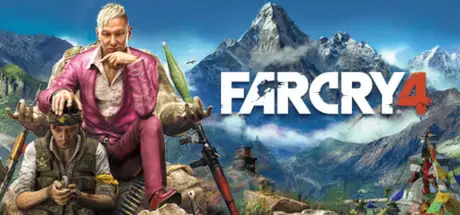
An old man in a pink suit hands you a selfie and a glass of wine, and then a knife goes into someone's throat at the dinner table. That is the first hour of Far Cry 4, and it tells you everything: the prettiest thing about Kyrat is not the gunfire, it is the way this fictional Himalayan kingdom is made to breathe before it shoves you into its bloodstream.
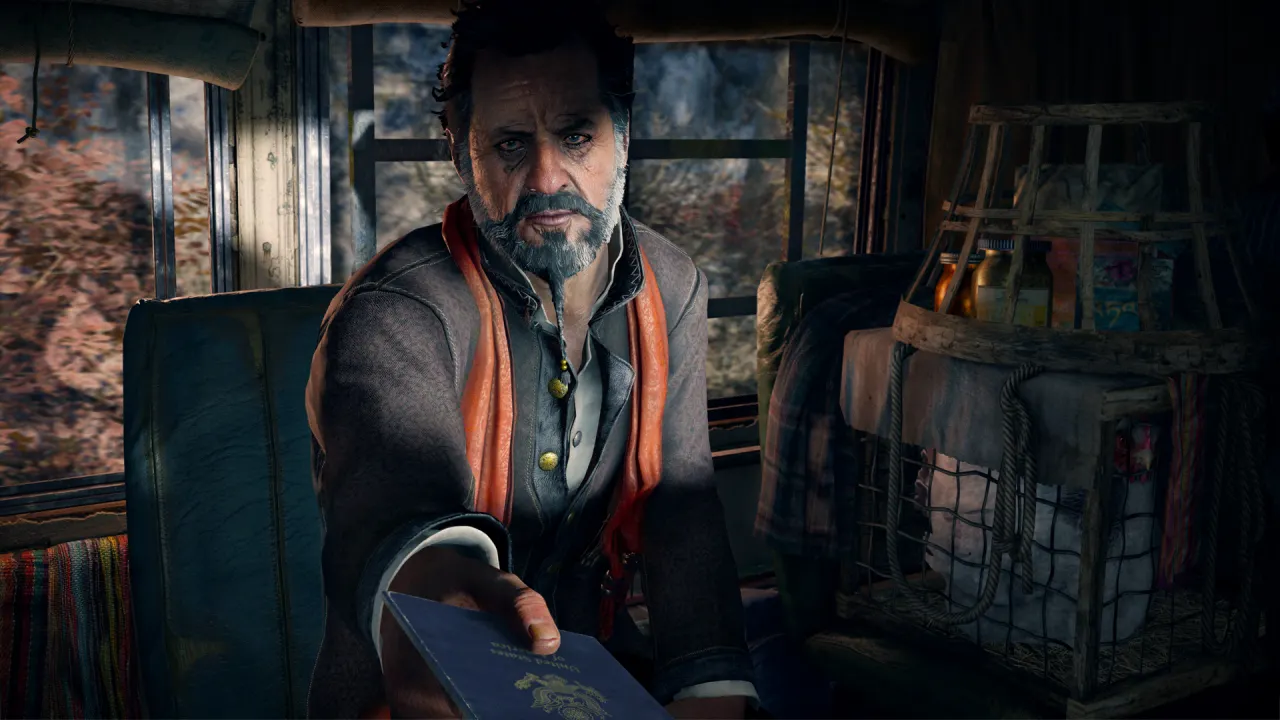
The game is in no hurry to show off its hardware. It shows you faces first, then roads, then the strange specific smell of the place — and only once you are properly inside do the snow peaks, the gorges, the lakes and the terraced fields unfold beneath your boots, layer over layer. The pull of it is not staged scenery. It is welded to exploration, to combat, to the simple act of getting from one ridge to the next alive. You are never standing outside the view looking in; you are inside it making decisions. Where to climb, where to shoot, when to hide, when to bet everything on one loud move. That is where this game gets its hooks into you — not in the spectacle, but in the steady, hour-by-hour business of surviving a country that throws weather, wildlife and warlords at you, in whatever order the morning decides. Heavily spiced, not gentle on the very first bite, impossible to put down once it lands.
Story | 6.0/10
Story: 6/10A man comes home to scatter ashes and walks into a war
The premise is almost embarrassingly small. You are Ajay Ghale, back in Kyrat to honour a single dying wish — scatter your mother's ashes at a place called Lakshmana. You barely step off the bus before the Golden Path insurgency drags you into its war against a tyrant, and from there you never get to leave. It is a smart opening precisely because it refuses the save-the-world mandate; it hands you a private, almost trivial errand and then lets blood and fire rewrite it one mission at a time.
What carries the whole narrative, though, is the villain. Pagan Min is charming and monstrous in the same breath, plating you a meal one minute and ordering your friend dragged off to be tortured the next. Every line, every entrance, arrives with its own spotlight — Destructoid said flatly that he steals the show every time he turns up, and that is no exaggeration. Set against him, Ajay stays mute and reactive, a pair of hands the plot drags through its set pieces. That imbalance is the single biggest thing the story gets both right and wrong — it gifts you one of the genre's great antagonists and then forgets to give him anyone worth talking to.
The Crab Rangoon dinner — the slyest joke the series ever told
If you remember one beat from this game, it will be the opening dinner. Pagan tells you to sit, stay put, enjoy the Crab Rangoon while he steps out for a phone call. The overwhelming majority of players bolt at the first opening and begin a forty-hour campaign. But if you simply do as you are told — sit there, do nothing, wait roughly fifteen minutes — Pagan comes back, thanks you for your patience, and personally flies you by helicopter to scatter your mother's ashes at the Lakshmana statue. The entire game ends inside a quarter of an hour.
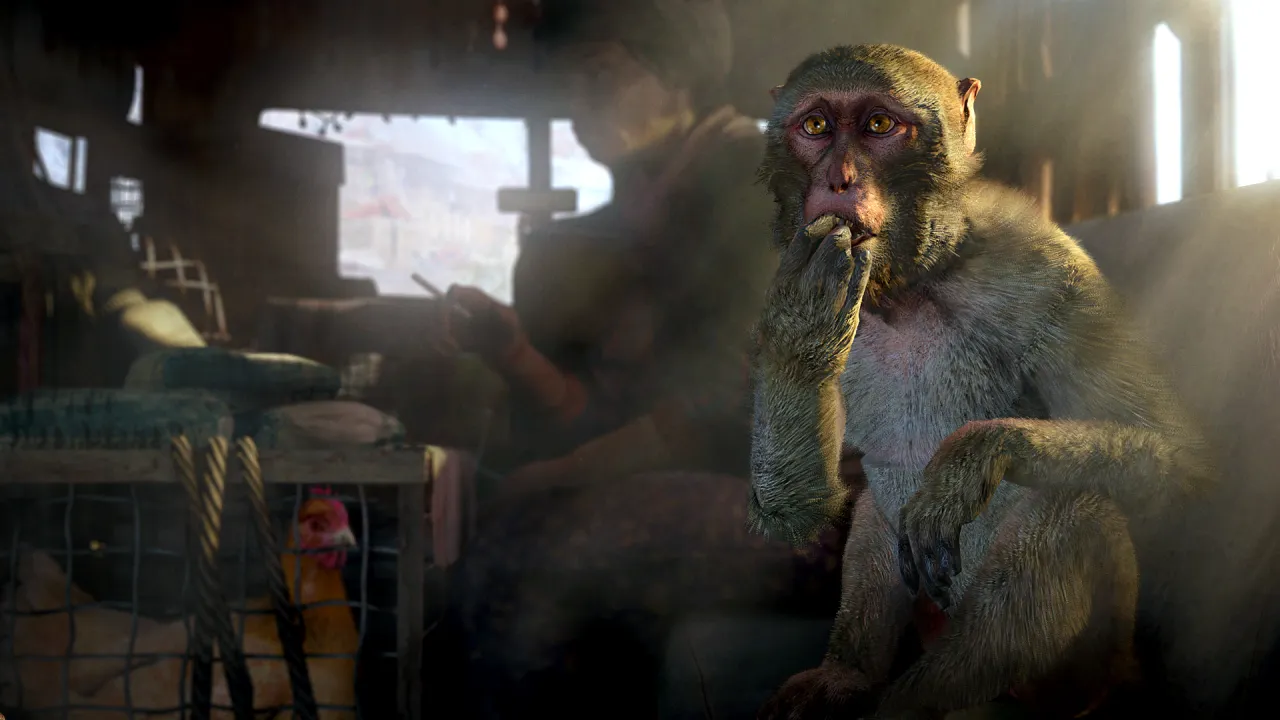
It is the cleverest piece of anti-design I have seen in an open world. It takes the one assumption every player makes — that they will resist, that they will run — and turns it into the punchline; the team apparently fretted that fifteen minutes was too long a wait for anyone to sit through.
This is not merely an easter egg. It is a posture: the game knows exactly what you assume it will do, and then it leaves a shortcut nobody ever takes. Whole studios build entire prologues that say less about a player's instincts than that one undisturbed dinner does.
Branching choices and a bloodline buried deep
Inside the Golden Path sit two commanders at war with each other — Sabal, who speaks for tradition, and Amita, who pushes for radical progress. Picking between them, again and again, bends the ending in different directions, and that branching gives you a reason to come back after the credits. The disappointment is that the two roads diverge less dramatically than they promise, and the endings carry uneven weight; this is exactly where the game's narrative ambition stalls rather than overtakes its predecessor.
The deepest thread is the family secret. Ajay's father, Mohan, once sent his wife Ishwari to spy on Pagan; Ishwari fell for him instead, and the two had a daughter, Lakshmana. When Mohan found out, he drove mother and son away and killed Lakshmana — Ajay's half-sister, and the very place his mother wanted her ashes laid to rest. That revelation turns Pagan from a cartoon despot into something bruised and human. The trouble is the vessel for all of it should have been your protagonist, and Ajay is too passive to hold it; so Eurogamer, in the end, was let down by the story. The characters stick — the villain above all — but the story underneath them never quite stands up.
It plays, finally, like a stage where only the antagonist knows his lines. You will remember the man in the pink suit who kills between jokes, and struggle to recall what you yourself were ever fighting for. That hollowness at the centre does not wreck the experience — Kyrat is too rich to be sunk by a thin lead — but it does leave a story that could have cut deeper stranded at "memorable but incomplete." Against the previous game, the world here breathes harder while the narrative nerve barely twitches. The ingredients for something genuinely affecting are all on the table; the game simply never asks its hero to pick them up.
Audio | 8.0/10
Audio: 8/10Hire a film composer, write the mountains a cold, distant score
It says something about the ambition here that Ubisoft did not reach for a games composer at all. Cliff Martinez built his name on the icy, restrained electronic scores of Drive and Only God Forgives, and before that he kept time behind the kit for the Red Hot Chili Peppers. The music he writes for Kyrat layers Nepalese folk instruments — flute, plucked strings, hand percussion — over synth pads, and the result is a place that sounds both foreign and faintly alienating.

The payoff is that Kyrat never sounds like a tourist brochure. It sounds like a real, dangerous mountain country. Walk the snowline alone and that bed of electronics, with folk motifs surfacing and vanishing, breeds a low hum of solitude and alertness. It does not flatter you; it suits the place. The score shifts under you as a firefight tightens or a long ride settles, never grabbing the camera, always nudging the mood. There is a discipline to it that games rarely manage — the music knows when to drop out entirely, leaving you alone with wind and your own footsteps, and that silence does as much work as any cue. It earned the BAFTA Games Award for Music, the hardest single piece of validation this game holds, and on the evidence it deserved it.
Gunfire, growls and wind — sound is the stealth player's second eye
If the score handles atmosphere, the environmental audio is what actually serves the play. Gunshots carry a clean sense of direction, an animal's growl reaches you from somewhere you cannot yet see, and the mountain wind rises and falls — and in stealth this information matters almost as much as anything on screen. Crouched in the grass tagging sentries one by one, you are usually reacting to a footstep, to a single distant snarl, before you commit to a move.
Voice work is a quiet strength too. Pagan's lines run hot and cold within a sentence, and it is the actor's delivery that gives them their spine-cooling charm; the Golden Path fighters, the merchants, the civilians on the roadside all carry their own accents and tempers, so Kyrat sounds inhabited rather than populated by talking quest markers. Critics did flag one trade-off — those carefully chosen folk textures often get buried under the heavier electronic mix, the flip side of Martinez's cinema-first instinct. But none of that registers in the moment. When a Bengal tiger lets out its first low growl from the grass behind you, you are not weighing the balance of the mix. You just turn around. Sound here is not wallpaper — it is the second eye you keep open to stay alive in Kyrat, the channel that tells you where the threat is before your eyes ever catch up, and the reason a clumsy reload in tall grass can feel as fatal as a missed shot.
Visuals | 8.5/10
Graphics: 8.5/10A Himalaya that is genuinely vertical
The first thing Kyrat does is sell you on its layers. Snow peaks, gorges, lakes, terraced fields and hillside temples stack on top of one another, and the god rays spilling through cloud and canopy light the whole high country into something grand and faintly unreal. This is not a flattened postcard. It is a space with height and depth, a place you can climb and leap and fall through — stand on the right ridge looking down and you will simply stop and stare for a while.
Holding all of it up is the Dunia 2 engine. It is the refined evolution of the technology behind the previous game — mature, tightly coded, efficient — and here it gets one more coat of polish. Vegetation density, the sheen on water, the receding ranks of distant mountains are all handled with real conviction, and Kyrat looks genuinely alive for it. Smoke from a torched outpost drifts the right way on the wind; grass bends as a jeep tears through it; the draw distance lets you pick out a tower three valleys away and actually plan a route to it. The place reads instantly as itself; you could never mistake it for a tropical island or a wasteland. It is its own thing, heavily spiced, not gentle on the first bite but impossible to forget. Few open worlds of its generation carry a silhouette this recognisable, and fewer still earn it through landscape alone rather than a marquee city.
The tech is all here, but the generational leap is not
On PC the feature list is long: NVIDIA HBAO+, PCSS soft shadows, TXAA, Godrays, HairWorks. The volumetric lighting does the heaviest lifting, shaping the mood of the high forests and snowfields. Performance-wise it holds a steady sixty frames at 1080p on Ultra, though the engine leans hard on a single CPU core, so plenty of players back then had to tweak settings to dodge a bottleneck.
And that is exactly where the catch sits: it looks good, not staggering. The overall impression is of a solid evolution of the last game rather than a step into a new generation. Come straight off the previous entry and you will recognise the visual grammar instantly — the same foliage shaders, the same way water catches the light, the same silhouette of a distant ridge. None of this is fatal — Kyrat's terrain design carries the spectacle, and the lighting and elevation keep it competitive among its peers well beyond its launch window. But measured against the bar of unforgettable, it wins on art direction and scene design, not on any leap in engine horsepower. The mountains earn their awe through composition and scale, not through a headline rendering trick you have not seen before.
Landmarks and weather — the details that make it breathe
What truly anchors Kyrat are the details buried in the wide shots. The gold-roofed temples up in the hills, the enormous carved Buddhas, the rope bridges slung across gorges are all landmarks you remember; spot one from a distance and you know precisely where you are. The weather system pulls its weight too: snow whips up without warning at altitude, the valleys turn lush and humid, and the same patch of map feels wholly different at a new height or hour.
The light across a single day deserves its own line. Mist pools in the morning valleys, the noon peaks glare white, dusk floods the sky orange-red, and by night only campfires and muzzle flash move in the dark — and that cycle is not just pretty, it changes the stealth. Night is your best cover; daylight gets you spotted by a distant sentry sooner, and a sudden snowstorm can swallow a whole approach in white. The wildlife is rendered with the same care: a Bengal tiger breaking from the grass has fur, weight and a lunge with real menace to it, and your pulse answers before your trigger finger does. The HUD and subtitles are merely competent, neither advanced nor obstructive. In the end the visual strength lives where it always did: in a world shaped by art direction, not in a contest of raw numbers.
Combat | 9.0/10
Gameplay: 9/10One outpost, ten ways in
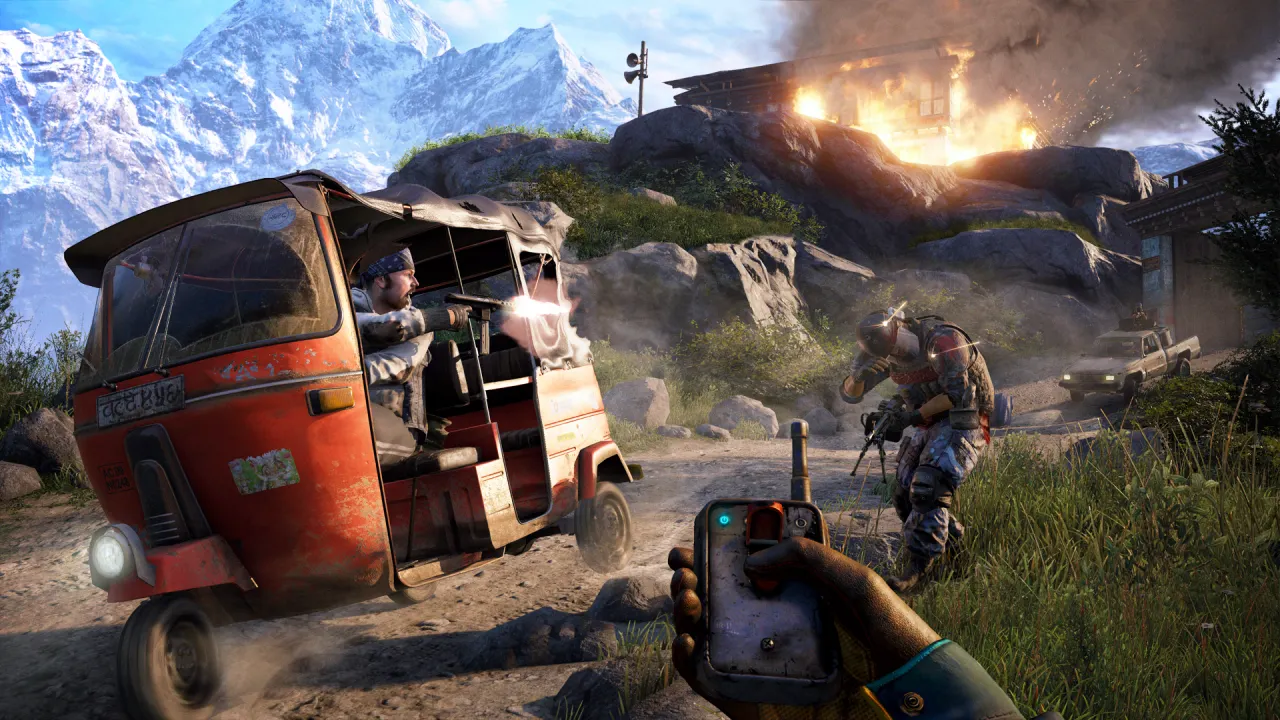
The first time you glass a smoking outpost from a hillside, the thought is never "go clear an icon." It is "how do I take this place." One front road, a few back trails, a wall you might flank, a cage you might open — the game hands you no correct answer, just a fluent grammar of assault. Crouch in the grass and take down sentries quietly, one by one. Spring a caged tiger and let it author the chaos for you. Drop from a Buzzer with a single rocket. Or ride an elephant straight through the sheet-metal gate, men and door together.
The grammar works because choices carry consequences. The core loop rests on two acts: liberate outposts for skill points and materials, and seize bell towers — silencing Pagan's propaganda — to light up the map and unlock side work. The frame is not new, but it holds, because enemy pressure, tactical room and environmental play fill the old shape to the brim. The brawls on the mountain roads make the point best: vehicles running, the fight at full tilt, the situation forever a breath from collapse, and yet you always feel one smarter move still left to make. That feeling — that the perfect solution is always one decision away, even as everything falls apart around you — is the engine that keeps the loop turning long after its parts stop being novel.
The grapple and wingsuit stand the map on end
Against the last game, the headline addition is vertical movement. The grapple gets you up cliff faces you could never reach before; the wingsuit and parachute turn altitude into a fast exit; the Buzzer, a one-seat autogyro, gives you an aerial angle to scout and strike from. Together they take a map that read flat on paper and stand it upright — you stop just routing around obstacles on the ground and start asking whether you can come in from above.
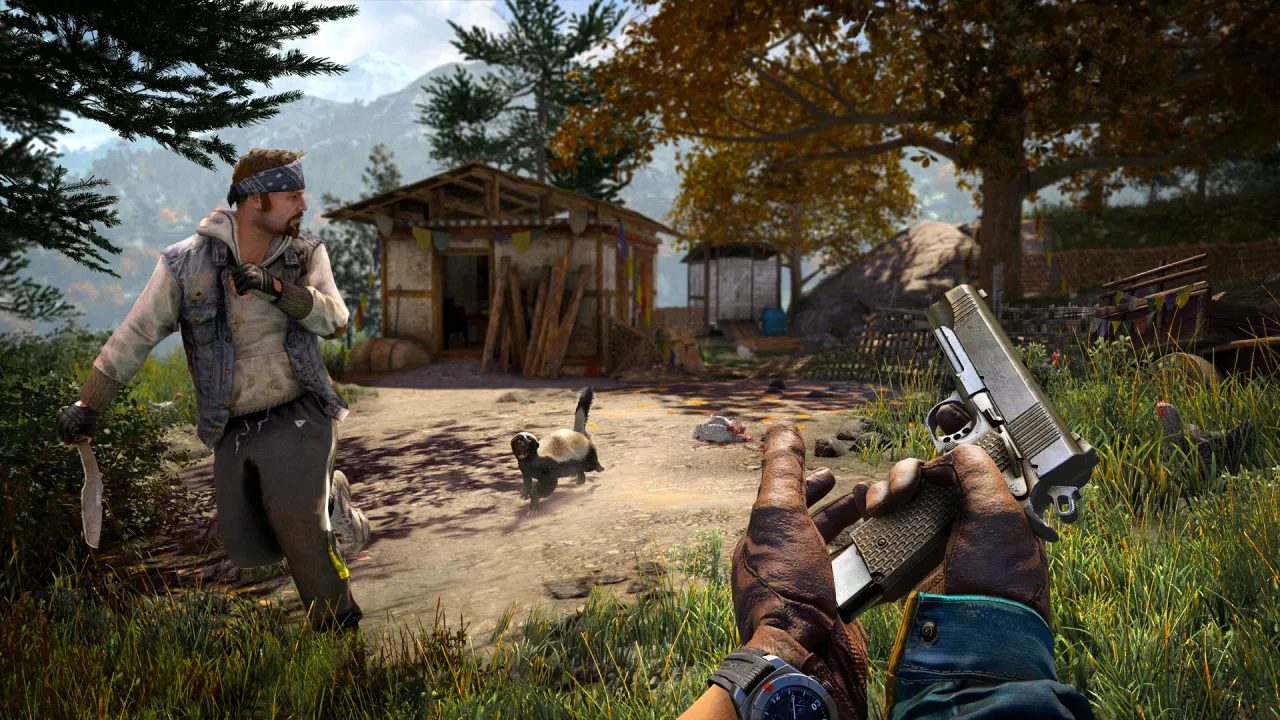
Better still is the Karma economy and its hired companions. Liberate outposts, help civilians, finish side work and your Karma climbs; the higher it sits, the stronger the allies you are able to summon and the deeper the merchant discounts run. IGN singled this design out for praise, and rightly — it gives you a real reason to do the side content rather than tick off symbols. The skill tree threads through all of it, splitting into branches for the silent knife-and-bow specialist, the survivalist who lives off hides and herbs, and the marksman who solves problems from four hundred metres out, so the way you spend points quietly decides the kind of fighter you become. Add the tigers, rhinos and snow leopards liable to crash any fight, and every assault carries a thread of the uncontrollable. The world feels properly alive for it — you can plan the perfect silent breach and still watch a honey badger wreck it before you fire a shot.
Freedom beyond the single player
That freedom reaches into multiplayer, too. The hired-companion co-op drops a second player into your campaign to clear outposts and run missions, and Kyrat's chaos turns funnier and more unhinged in two pairs of hands. The competitive side is the asymmetric clash of Rakshasa against the Golden Path, the two sides built around different abilities and different thinking. There is a map editor on top, handing the level-building tools to anyone who likes to tinker and stretching the game's life well past the credits.
Set against the great level-box stealth games, it plays a different hand. Something like Dishonored 2 grants enormous freedom inside a handful of meticulously carved enclosed levels; this spreads that freedom across a whole open map, larger and more chaotic, at the cost of the hand-finished detail of any single space. Both are valid; it comes down to whether you want density or breadth. The difficulty curve is unusually welcoming — it walks you through the basics and the tagging early, then opens up as you spend skill points, until you are orchestrating beasts, vehicles and terrain like a proper Kyrati insurgent. For players who like to work out their own method, Kyrat is a wide enough laboratory — and the kind that keeps suggesting experiments you had not thought to run, long after you assumed you had seen its whole bag of tricks.
Content | 8.5/10
Content: 8.5/10Eighteen hours for the main road, fifty-plus to strip it bare
Chase the story alone and you are through in roughly eighteen hours. Want to turn over every corner of Kyrat — every tower, outpost, collectible and side job — and the clock climbs past fifty. That is the generous tier of open-world bulk; it hands you not a narrow path but an entire mountain country to keep poking at. The point is that the hours are not all filler: seizing towers and clearing outposts is a genuinely good loop in itself, so even the repetition rarely turns into a slog. The padding that sinks lesser open worlds — the busywork you resent — is here mostly the same thing you would choose to do anyway.
The side content worth flagging first is the Shangri-La dream sequence. It lifts you clean out of the gunfire and casts you as the ancient Kyrati warrior Kalinag, fighting demons through an ink-wash fantasy space, a tiger spirit padding at your side. The mechanical and visual contrast with the main world is sharp — gone are the rifles and outposts, replaced by a bow, a blade and a colour palette that looks lifted from a scroll painting — the most genuinely surprising flavour of side mission in the package, and proof the system can step outside its own capture-the-point rhythm when it wants to. It is the rare stretch where the game stops being a Far Cry game and becomes something stranger and quieter.
Uneven DLC — a real surprise, and a real eye-roll
The paid content is where the quality scatters. Escape from Durgesh Prison is a roguelike-ish survival mode on a thirty-minute extraction timer: you wake atop a bell tower in North Kyrat and have to seize towers, clear outposts and bank skill points before you pull out. It compresses the base loop into a tense little time trial — no aimless wandering, every minute counted — and it is the cleverest of the lot, the best showcase of how this design holds up under pressure.
Valley of the Yetis is another matter. It drops you into a frozen world where liberating a relay station unlocks a night-defence mode, which sounds fresh and plays like a chore — Kotaku flatly accused it of forcing players to grind for no good reason, and the verdict is hard to argue with once the third wave of attackers rolls in. That gap in worth is the season pass's central problem: the good parts find new angles, the weak parts read like padding to fill an update calendar, and there is little in between to soften the contrast.
Arenas, editors and side work without end
Beyond the story DLC, the base game is stuffed with ways to burn time. Arena mode pits you against waves of men and beasts for experience, a pure test of combat skill; the map editor hands creation over to the players, and the tinkerers among them can build levels and stretch the lifespan indefinitely. Neither lands on every player's checklist, but their presence pushes the content boundary wider than it first looks.
The everyday stuff is still the side work and collection scattered across the map: hijack supply trucks, free hostages, hunt down lost masks and journals, photograph rare animals, sit down to knife games and gambling. None of it is complicated on its own, but woven through the outpost-and-tower loop it builds Kyrat's "something to do wherever you stand" density. There is genuinely a lot here — base game plus extras, bigger and messier than the predecessor — only not every dish rewards the same time. The content philosophy is closer to a buffet than a tasting menu: the spread is enormous, the quality uneven, and the whole thing rewards a player who knows what to skip. Picking and choosing is the comfortable way to eat: completionists get their fifty hours, and the highlight-only crowd, riding the main road and a few standout sides, gets a full plate too. Neither approach feels like the wrong one, which is its own quiet achievement — most open worlds of this size punish you for not seeing everything, and Kyrat, to its credit, simply does not care how you choose to spend your time in it.



Comments 0
We'd love to hear from you
Welcome! Share your take on this game — being first might come with a surprise.
No comments yet — share your thoughts on this review!