


























Opening
Farming Simulator 22 hands you a tractor and a patch of dirt, then walks away. No villain, no world to save, not even a line of dialogue to nudge you forward. In a year of cinematic spectacle, Giants Software bet everything on the opposite instinct: that plenty of people would rather drive a licensed combine harvester through a field that genuinely changes with the seasons than watch another cutscene.
That bet paid off to the tune of six million copies. This is a game that refuses to flatter you, refuses to hold your hand, and refuses to tell you what to do — it simply lays out one of the most obsessively credible farming systems ever built and waits to see whether you sink into it.
Critics handed it a 78. Players gave it a 5.5. The whole truth of this game lives in that gap: the most complete entry the series has ever shipped, and the one most likely to lose half its audience inside the first two hours. What follows is an honest account of which side of that divide you fall on.
Story | 3.5/10
Story: 3.5/10There is no story here, and pretending otherwise would be dishonest. Farming Simulator 22 scores a 3.5 in this dimension because its only narrative is the one you write yourself, in the ledger of your own farm — and that ledger has no author but you.
The blank page where a plot should be
Boot the game and nothing happens. No opening cinematic explains why you've arrived, no narrator sets the stakes, no quest-giver points you anywhere. The game runs on a single unspoken premise: this land is yours, so now figure it out. Contract jobs — odd tasks for neighboring farms that earn you starter cash — are the closest thing to objectives, but they feel more like self-imposed KPIs than anything a writer actually designed. The game hands you the keys and leaves you to it.
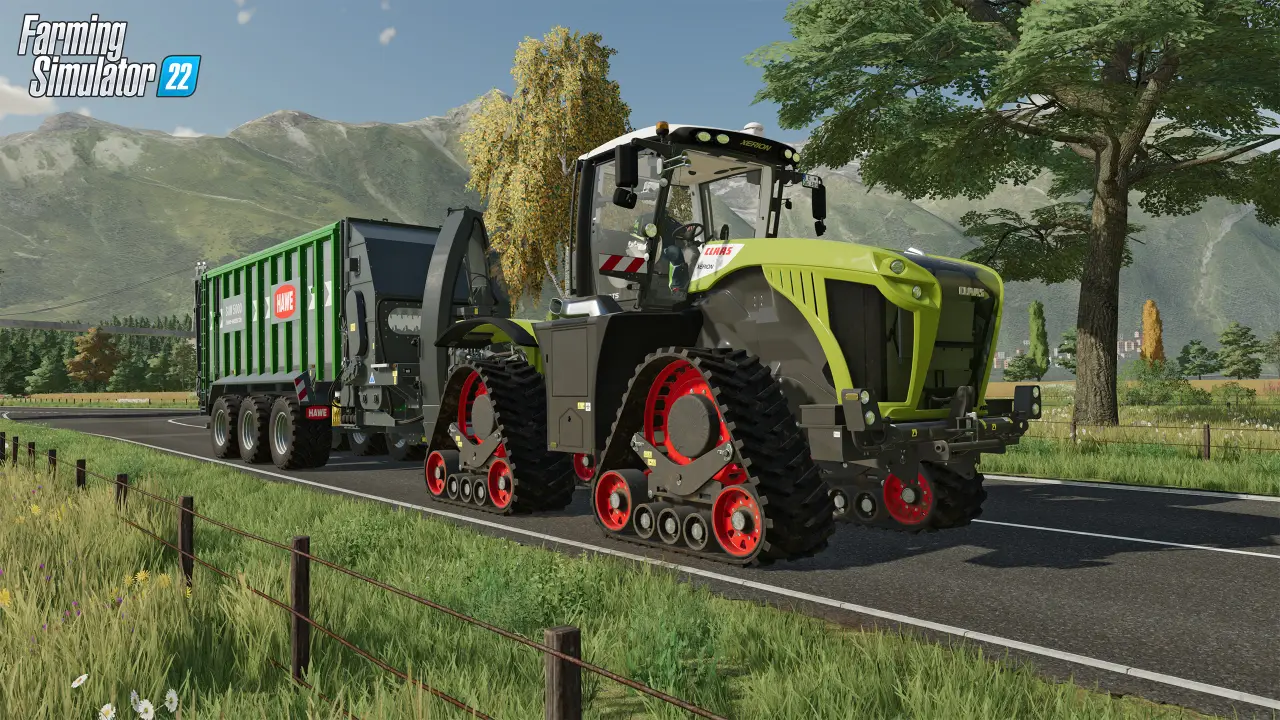
What grows out of that vacuum is genuinely personal. The first loan you repay, the second field you buy, the first production line you finally turn into a complete loop — those wins belong entirely to you, because nobody charted the route. You are writing an unscripted founder's story: when to expand, which sector to bet on, whether to gamble on debt for a shiny new harvester. In an era drowning in scripted spectacle, returning that authorship to the player feels almost subversive.
And because of it, no two farms grow the same way. One player turns a plain into an endless sea of golden wheat; another bets on livestock and ends up with herds of cattle; a third dives straight into forestry and processing, running a raw-material-to-finished-goods operation. There's no right answer and no story reward for any of it, yet together those choices form a kind of private epic — your farm is your tale, its rise and stumbles written entirely in your own management decisions. Building meaning out of player behavior rather than authored text was an unusual choice in 2021, and a quietly distinctive one.
Stardew Valley, and the people this game refuses to have
To grasp how total the narrative absence is, set it beside its closest thematic rival. Stardew Valley builds an entire emotional world out of Pelican Town — thirty-odd residents, each with a personality, a schedule, a quiet arc you can nudge along by courting them or coaxing the shy ones out of their shells. Farming there is the shell; the bond between people is what keeps you logging in.

Farming Simulator 22 sprints the other way. There are no townsfolk to talk to, no romance, no character who shifts because of anything you do. It strips out the very thing Stardew treasures most — people — and leaves only soil, steel, and spreadsheets. When Chinese outlet GamerSky called it "more than a farming sim," it was praising the depth of its systems, not the warmth of its cast; even that review conceded that the drive comes from the player's own urge to grow the operation, not from anything the game itself provides. There is no quiet arc to witness, no shy neighbor to draw out, no festival that ties a community together — only the steady, wordless rhythm of work and the numbers it produces.
Two kinds of memory
The split shows up in what each game leaves behind. Stardew players remember a character's birthday, the warmth of a particular conversation. Farming Simulator 22 players remember that late night when a supply chain first ran cleanly from end to end, or the moment they finally scraped together enough for the combine they'd been eyeing for ten in-game hours. One memory is about people; the other is about work. Neither is superior — they are simply different ways of feeding the same hunger, one outward toward human warmth, one inward toward earned control.
So the verdict is plain, and it cuts both ways. If you came for characters, plot, or emotional payoff, this game will disappoint you flatly; momentum, pull, and dramatic arc are pillars it never bothers to build, and no patch will ever add them. But if you can accept that the story lives not on the screen but in that thickening ledger inside your head, the blank page becomes yours to fill, and the absence stops feeling like a hole and starts feeling like room. That contradiction — reflected harshly in the score, quietly embraced by a devoted few — is the honest truth of this dimension, and it's why the 3.5 tells you almost nothing about whether you personally will love it.
Audio | 5.5/10
Audio: 5.5/10Crank the volume, fire up a combine, and Farming Simulator 22 finally finds its voice — in the growl of an engine, not in a single note of music. Almost all of its audio value comes from mechanical and environmental realism, and that lack of strength elsewhere is why this category lands at 5.5.
Engines are the one thing it gets right
Drive any machine and you hear metal meshing, bolts shuddering, an engine climbing from a low idle to a strained roar. Giants' own audio team has explained that vehicle sound shifts in real time with the surroundings — the echo off a barn wall differs from the open field, and a fully loaded engine strains audibly where an empty one purrs. For players who enjoy operating real machinery, that layer adds a lot to the immersion. The hardware sounds like hardware, and when you're three hours deep into a harvest the steady mechanical chorus does a quiet, underrated job of keeping you there.

Fidelity, though, is not the same as perfection. A recurring community gripe cuts straight to it: four hundred-plus licensed machines, yet too many of their engines bleed into one another, indistinct and interchangeable. The license bought the silhouette and the model number; it never bought a unique voice for each one. Casual players will hardly notice, but for enthusiasts who can identify a real tractor brand by ear, it's an obvious miss. The sheer number of players who swap in third-party sound mods quietly shows that the stock audio falls short — and the fact that the modding scene treats engine packs as a marquee category tells you exactly which sense this audience cares about most.
A soundtrack you'll never hum
Judged purely as music, Farming Simulator 22 has almost nothing to offer. There is no theme you'll carry out of the game, no melody worth remembering; the background score is so muted it borders on absent. That's not pure failure so much as a deliberate trade. This is a game built for hundreds of hours, and plenty of people farm with a podcast or their own playlist running. A score that demanded attention would only get in the way, and Giants clearly decided that unobtrusive was the safer call than memorable.

The cost of that decision is real all the same. Games that lean on a strong identity often borrow it from their music — the right motif can become a series' calling card. Farming Simulator 22 forfeits that entirely. There is no audio signature here that anyone would recognize out of context, nothing that does for this game what a famous theme does for its rivals. It's the single clearest reason the dimension can't climb out of the mid-fives no matter how good the engines sound.
Ambience does the quiet heavy lifting
What actually holds the soundscape together is ambience. Wind sweeping across the fields, livestock calling in the distance, and the weather shifting audibly with each season together create a quiet, almost therapeutic farm hum. It suits the slow, semi-idle play the community fondly calls "farming to unwind," and it's a big part of why so many treat this as a wind-down game rather than a demanding one.
Set against Euro Truck Simulator 2, which earns its own reputation on mechanical sound, Farming Simulator 22 runs a more crowded mix — combine, tractor, and trailer can all overlap at once during a coordinated harvest, layering into a genuinely complex field of sound that few games in the space even attempt. There's a real craft in keeping all those overlapping engines and ambient layers legible rather than muddy.
On balance, then, the audio is convincing and sufficient rather than moving. The engines earn their keep, the ambience does honest, unglamorous work, and the wide silence where a memorable score should sit keeps this dimension from ever lifting its head above the middle of the pack.
Visuals | 6.5/10
Graphics: 6.5/10Farming Simulator 22 chooses credibility over spectacle. Its fields, crops, and machines look meaningfully better than the last entry, yet measured against 2021's cross-gen showpieces they sit squarely in the middle of the pack — and that honest plainness is exactly what a 6.5 looks like.
A self-built engine that sells the work
The game runs on Giants' in-house GIANTS Engine 9, and side by side with Farming Simulator 19 the gains are obvious. Crops move through their growth stages with continuous, legible change, from sprout to harvest; tilled soil carries real texture and a sense of moisture; the four hundred-plus licensed machines hold up under a close camera, cab interiors, tire treads, and articulating arms all modeled with care. For a game whose central joy is watching equipment do its job, that fixation on mechanical detail isn't vanity — it's the foundation of the whole illusion.

The moment-to-moment feedback while you're working is what sells it most. A harvester rolling through wheat — stalks vanishing row by row into the header, grain spilling from the auger — is rendered with genuine conviction. Earth peeling away behind a plough, a seeder cutting tidy furrows, the stubble left standing after a cut: none of it dazzles alone, but stacked together it builds the unmistakable sense that you are actually laboring. That is the clearest case for art that serves immersion rather than showing off.
It helps that the camera rewards attention up close rather than at a distance. Lean in on a working machine and the small touches hold: dust kicked up off a dry field, the way a header tilts to follow uneven ground, mud caking onto tires as the weather turns.
These aren't the flourishes that win screenshot awards, but they're the ones that make you believe in the place while your hands are busy on the controls. The game is engineered to look right from the operator's seat, which is precisely where you spend your hundreds of hours — and a presentation tuned for that vantage matters far more here than one built for distant beauty shots.
The cross-gen ceiling, and a UI that fights you
The single biggest visual upgrade is the new dynamic seasons. Summer slides into autumn and the fields turn gold; winter lays snow across the ground and the light turns cold and brief; spring brings the landscape back to green. Crucially, the change isn't a cosmetic filter — it's wired into the systems. Snow means you can't sow, and the golden fields tell you it's time to harvest before the frost. Every shift in color on screen maps onto a decision you have to make, and that fusion of look and mechanic does more for a sim than any pile of effects ever could.
Work the same field through a full year and you feel time pass over it — the bare furrows of spring, the heavy green of summer, the gold rush before the frost, the white hush of winter. It's a small thing on paper and a quietly powerful one in practice, because it gives a static plot of land a sense of life and consequence that screenshots can never capture.

The rest is less impressive, though. As a 2021 cross-gen title, the broader presentation doesn't measure up to top-tier AAA games. On PS5 and Xbox Series it pushes higher resolution and frame rates, but character models, distant terrain, and foliage density all stay unremarkable — animations look stiff, far-off detail thins out fast, and the human characters in particular fall well short of the care lavished on the machinery. It never gives you the vista-from-a-mountaintop moment, no breath-catching light show; what it gives you instead is a stretch of land you'll willingly tend for hundreds of hours and genuinely believe exists.
The harder problem is the interface. As the farm sprawls and the fields multiply, the management menus turn clumsy — buried deep, starved of information, demanding several clicks to check a single plot or dispatch one machine. The map screen, too, can leave newcomers lost in a sea of icons once the operation grows. Compared with Stardew Valley's instantly readable pixel-art UI, this trade-off — fidelity for legibility — is the subtle cost of the 3D approach. Taken together, the visuals are a study in functional realism: built to serve operation and immersion, not to stun. Players who understand that will admire the restraint; anyone expecting a feast for the eyes will find it plain, and that honest plainness is exactly what a 6.5 looks like.
Combat | 7.5/10
Gameplay: 7.5/10This is where Farming Simulator 22 comes into its own. Four interlocking income streams and an industrial-grade production-chain system turn "farming" into a business that demands real thought, and that depth is why it gets a 7.5.
Four sectors that feed each other
At its core are three main loops — crops, livestock, and forestry — with contract work layered on top. Crops mean the full sequence of tilling, sowing, fertilizing, and harvesting; livestock spans cattle, sheep, pigs, horses, and chickens, each with its own feed-and-output chain; forestry is its own business of felling, hauling, and processing timber. When your main crop hasn't matured and cash runs thin, taking on contract jobs for other farms becomes the bridge that keeps you solvent. None of these run in isolation — they bleed into one another. Cattle need fodder, fodder comes off your own fields, timber sales bankroll the next equipment upgrade, and the whole thing closes into a small, self-consistent economy.

What lifts the system is the hardware. More than four hundred officially licensed machines from John Deere, CLAAS, and over a hundred other real-world brands give the game a sense of authenticity that few others have matched in the past decade. One combine cuts the wheat while a tractor hauls a trailer alongside to catch the grain in real time — that assembly-line choreography isn't a single button press. You have to dispatch the vehicles, line them up, and time the handoff, with physics that feel believable at every step.
From planting crops to running factories
Where earlier entries stopped at "grow grain, sell grain," the new production chains feel like a real step forward. You can buy and place thirteen types of plant on your land, turning raw goods into higher-value products step by step. Milk goes to the dairy and, with sugar, becomes chocolate; that chocolate moves to the bakery, joins eggs, flour, and strawberries, and comes out as cake to sell. Closing a full chain like that can take several in-game years, but it hands you a long-term goal beyond "earn money for a bigger machine" — you stop being a farmer and start running a vertically integrated agricultural company.
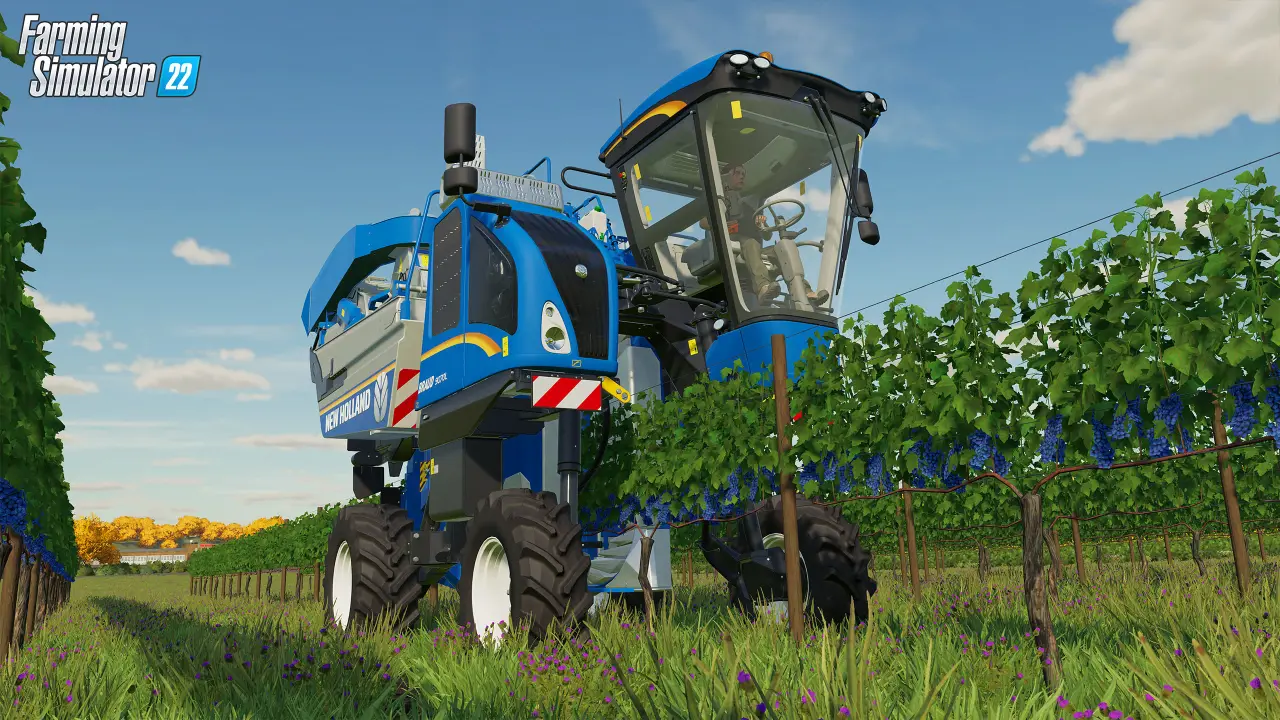
Multiplayer widens the appeal further. The game supports full crossplay — up to sixteen players when a PC hosts, or six on consoles — and it's at its best when a few friends split the work on a single farm: one on the combine, one hauling, and one minding the factories.
Playing through a shared save with friends over several months shows off the design's real charm far better than going solo. At heart this is a cooperative management game, and that busy-but-orderly assembly-line rhythm is genuinely hard to recreate alone; the catch is that everyone has to install the same mods and content as the host, a small friction that the in-game hub mostly smooths over. Multiple outlets reach the same conclusion — that the game is best played with others — and that isn't just a throwaway point; it genuinely changes how the whole experience feels.
Timid innovation and a brutal on-ramp
That said, the gameplay has some real weaknesses. The sharpest critique targets a stalled core loop: next to its predecessor, the fundamentals barely shift, and PC Gamer flatly says the series is "overdue for a gameplay makeover." Seasons and production chains are genuine highlights, but several of those features existed for years as community mods first, so veterans may see them as official versions of old mods rather than real design breakthroughs. That distinction matters, because it shapes who walks away satisfied: a newcomer meets a deep, fresh-feeling system, while a returning veteran sees a familiar loop in a new coat of paint.
The other chronic flaw is how hostile it is to newcomers. A thin tutorial and open-ended structure leave players asking, "What do I do now?" Multiple outlets note that newcomers often get flummoxed, and players in Chinese communities say many only found their footing by relying on third-party guides. Layer on the franchise's old jank — the odd physics glitch flinging a tractor skyward, the occasional multiplayer desync — and the result is a game with a high ceiling guarded by a wall that turns plenty of people away at the door. The skill is real, the depth is real, but so is the climb required to reach either.
Content | 7.5/10
Content: 7.5/10On sheer volume, Farming Simulator 22 is a bottomless pit. The base game alone can last for dozens of hours, and once the mod ecosystem opens up it starts to feel nearly endless — that's the main reason it earns a 7.5 in this category.
Dozens of hours is the baseline, and hundreds is normal.
According to completion-tracking sites, the main run takes around forty-seven hours, while seeing everything averages roughly a hundred and fifty. Those figures understate it badly, because the game has no concept of "finishing" at all. A single save can absorb hundreds of hours without ever bottoming out: you start on one small plot, scrape together your first profits, and grind your way up to a sprawling empire of multiple farms, several interlocking sectors, and a dozen humming factories.

What holds that long arc together are the three sectors and the thirteen-plant production chains. Filling out and closing a full chain takes several in-game years, which means there's always a next thing to chase — a new crop to plant, fresh livestock to bring in, a supply line to make fully self-sufficient.
For players who love optimizing a business to the last detail, this layered system generates goals almost endlessly. You can chase pure profit, aim for total self-sufficiency where nothing leaves your land unprocessed, or simply collect every machine and try every map the game and its mods have to offer — each of those is a hundred-hour project in its own right.
What makes it sing is that the content isn't a flat checklist but a network that feeds itself. You build a factory to earn more, the factory needs inputs, inputs force you to expand planting, expansion demands more machines and hands, and that pushes you back toward contract work to refill the coffers. Solve one bottleneck and the next one surfaces on its own. That self-propagating structure is exactly why you sit down for one session and look up at 2 a.m. — it doesn't nag you with a quest log; it pulls you along by its own chain of cause and effect.
There's also no failure state and no clock forcing your hand, unless you deliberately switch on seasonal crop loss, so the content bends to whatever pace you bring. Want to sprint toward maximum profit? Go. Prefer to tend one small plot each evening as a way to wind down before bed? That works just as well. This forgiving rhythm is what lets the same content hold up for radically different players — hardcore optimizers can mine hundreds of hours of depth, while casual farmers can find their own quiet corner in scattered fifteen-minute sessions, and neither feels shortchanged.
Mods are the real moat
If the official content is already solid, the mod ecosystem is what pushes the whole thing toward "limitless." A built-in mod hub includes thousands of entries, and the smartest part is that console players can install those vetted mods with a single tap too. Consoles have traditionally been poor platforms for mods, yet here PS5 and Xbox owners can add mountains of third-party machinery, maps, and scripts, narrowing the gap with PC considerably.
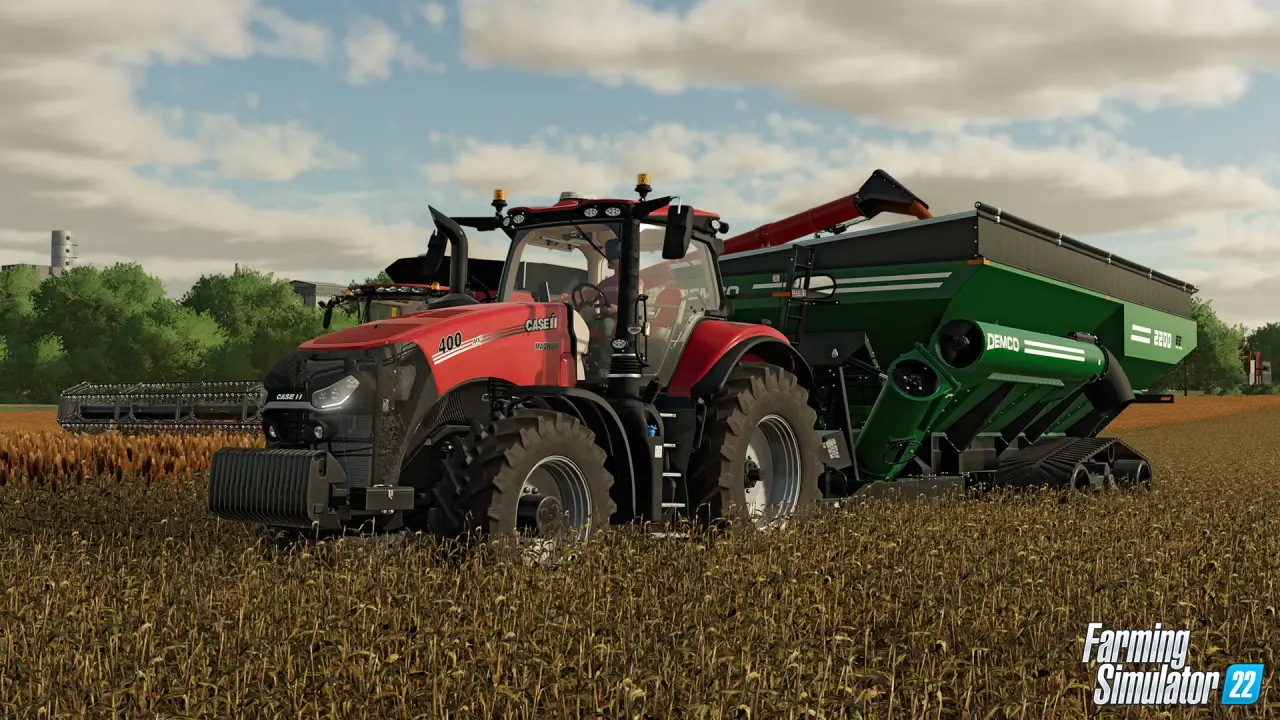
The real reason many players stick with it for years is not the vanilla build, but Farming Simulator 22 with forty mods bolted onto it. Mods let every farm grow into something singular — top-tier machines nobody could afford in real life, custom maps with wholly different terrain, even scripts that rewrite the economy from the ground up. That means the community can keep the game fresh long after official support slows, and that's what gives its content such lasting depth.
Giants keeps maintaining it too. A Platinum expansion, smaller themed packs, and a steady stream of patches have rolled out over the years, fixing bugs, improving performance, and broadening mod support along the way. Six million-plus copies sold gives the studio ample reason to keep funding that long tail rather than letting it wither. Whether you stick to vanilla or dive deep into mods, this game stays compelling in a way many shallow novelty titles do not — and that durability, more than any single feature, is what the content score is really rewarding.




Comments 0
Share your game review
Join the discussion and share your review of this game.
No comments yet. Share your thoughts on this review.