

















Opening
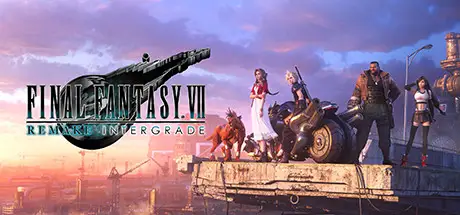
Most games would have treated Midgar as a tutorial. In the 1997 original, that is exactly what it was — five or six hours of bombing reactors and meeting the crew before a cargo lift carried you out into the wider planet and the real adventure began. Final Fantasy VII Remake Intergrade does something that should not have worked: it takes those five or six hours and turns them into a thirty-hour game.
The audacity is the whole point. Square Enix didn't pad the opening; it excavated it. The Avalanche grunts you barely remembered from the original now have faces, jokes, and endings of their own. You no longer pass through Midgar on your way to somewhere better — you live in this diesel-punk city long enough that leaving it actually hurts.
This is the Intergrade edition, which bundles the base Remake with EPISODE INTERmission, the new Yuffie campaign, under Steam appid 1462040. It arrived on PC in June 2022. It is not Rebirth, and it is not the PlayStation 1 classic. It is the first leg of a remake trilogy, and it ends the moment you finally step out of Midgar.
The scores tell you where it stands before this review even starts: 86.5 on OpenCritic, 88% positive on Steam, 8.2 from GamerSky and 8.5 from TGBus in the Chinese press — among the highest-rated modern Final Fantasy games by any measure.
What follows takes it apart dimension by dimension: story, audio, graphics, gameplay, content, and the overall verdict. It also lays out, plainly, the one limitation that hangs over everything — the story stops at Midgar — and whether that ceiling should change your mind about buying in.
Story | 9.0/10
Story: 9/10Five hours of plot, slowed down and lived in
The skeleton is unchanged. Cloud, a chip-on-his-shoulder ex-SOLDIER, takes mercenary work for the eco-terrorist cell Avalanche, blowing up the mako reactors that Shinra uses to drain the planet's Lifestream. What the Remake adds isn't new plot — it's texture, and a lot of it.

You walk the Sector 7 slums on foot. You linger in Seventh Heaven while Tifa wipes down the bar. You stand under the great plate that hangs over the undercity like a lid, sealing the sunlight and the upper class away from everyone beneath it. The original told you Midgar was a machine for crushing the poor; the Remake makes you feel it in your knees as you climb. That translation — from a fact you read to a place you inhabit — is where most of these thirty hours earn their keep. Nobody bolted on a bigger story. They simply made the existing world thick. The vendors who remember your last visit, the kids running errands in the slums, the way the upper plate's light never quite reaches the streets below: none of it advances the plot, and all of it makes the plot matter more when it finally moves. It's world-building by accumulation, the slow kind that most games skip because it doesn't show up on a feature list.
Biggs, Wedge, and Jessie get their lives back
In 1997, the Avalanche trio were set dressing; you'd be forgiven for not learning their names. The most quietly devastating thing the Remake does is hand each of them a full arc.

Jessie is the standout. She drags Cloud home to meet her actor mother and her father slumped on the couch, and a whole exhausted, proud, working-class household snaps into focus in a few lines. So when the plate over Sector 7 comes down later, the catastrophe lands with real weight rather than as a number on a cutscene, precisely because you spent an afternoon in her ordinary life first. This is the part rivals can't easily copy: the game doesn't move you with spectacle. It moves you with the small domestic details the original skipped, the throwaway conversations that quietly stack up until a death you'd have shrugged off in 1997 now actually stings. By the time the arc closes, three names you couldn't have recalled have become people you'd rather not lose.
A villain who haunts before he arrives
Anyone who played the original knows Sephiroth barely appears in the Midgar section — his story unspools much later. The Remake makes a bold call and scatters him across the whole run, in visions, flashbacks, and shards of memory that stab Cloud without warning, never quite letting you tell hallucination from recollection. The silver-haired antagonist stops being "the big bad who shows up eventually" and becomes a dread that's been clinging to you since the first hour. It gives the Midgar chapter a dark thread hanging overhead and plants a hook for everything still to come. For newcomers it's a thickening mystery that refuses to resolve; for veterans it's a reunion that grips you even though you already know exactly how it ends, and maybe it grips you precisely because you do.
A finale that places a public bet
If anything here will split longtime fans, it's the ending. The Remake introduces the "Whispers," arbiters of fate, and all but announces that this retelling will not march obediently along the 1997 script — it intends to honor your memory and rewrite destiny at the same time.

Some call it inspired; others call it an affront to a classic. Either way it accomplished one thing — it got everyone who played the original to sit back down and argue about where a near-thirty-year-old story goes next. An ending that can start a fight is, in its own way, a success. The only real cost is the one baked into being part one: the tale stops at Midgar, cutting out right where it should crest, leaving the genuine planet-spanning journey to Rebirth. You leave with your appetite deliberately whetted — both the charm of the thing and the price it pays for being a beginning.
Audio | 8.5/10
Audio: 8.5/10The train rolling into Midgar, and a score that earns the moment
Ask for one image that defines this game's music and you land on the opening: a train easing into the station, the camera pulling back across the whole city, the score swelling up to meet it. That theme, re-orchestrated from Nobuo Uematsu's original work, gets singled out by nearly every review as a textbook way to open a game, and it deserves the praise.

The soundtrack's real trick isn't a single great track. It's that melodies you've hummed for two decades come back rearranged and slotted into the scenes they belong to — a driving electronic-rock variation in combat, something coiled and quiet during stealth, the warm everyday key the moment you step back into Seventh Heaven. The music breathes with the story instead of sitting under it. A theme you first heard as a tinny chip-tune in 1997 swells here into full orchestration, and the recognition lands like meeting an old friend who has somehow grown into the person you always hoped they'd become.
Full voice acting pushes the cutscenes toward cinema
Where the original leaned on text, the Remake is fully voiced in both Japanese and English. Cloud's awkwardness, Tifa's warmth, Aerith's mischief — you hear them performed rather than imagine them.

Paired with cinematography that rivals top-tier JRPG presentation, the narrative stretches stop reading like "a game" and start reading like an animated film you happen to control. The bickering, the things characters almost say, the barbs that fire off mid-battle — the cadence of a voice carries reams of emotion that no text box could. A pause before a confession, a crack of nerves in a one-liner, the way Tifa softens a word she means to keep sharp: all of it does narrative work the original could only gesture at. It's the clearest answer to why a story confined to one city never feels thin across thirty-plus hours: every line was actually acted, and every character is alive in your ears rather than a moving portrait on screen.
Stagger cues, faster loads, and a lighter Yuffie key
There's an easy-to-miss detail in combat: the audio feedback on the Stagger system. The instant you fill an enemy's stagger gauge, a crisp chime and a little hitch in the sound tell you the window is open — now hit it for everything. That auditory payoff lends a fundamentally tactical battle the snap of an action game, and after a few hours you start reacting to the sound before your eyes even register the gauge filling — the audio becomes a combat sense in its own right. On the PlayStation 5 upgrade, with the framerate lifted to 60, audio and visuals lock together more cleanly, and the console's SSD makes loading all but vanish, so the leap from menu to battle is near-instant — and that immediacy, the sense that a fight starts the instant you want it to, is itself part of how the whole presentation feels. Yuffie's episode, meanwhile, deliberately swings its score toward something nimble and bright — even Fort Condor, that pocket minigame, gets its own faintly addictive theme that loops in your head long after you put the controller down and sets it apart from the main game's heavier, epic register. It's a small touch, but it tells you the audio team treated even the side content as worth scoring properly rather than recycling a loop, and that care is audible in every single corner of the city you walk through. When a studio bothers to write fresh music for a board game tucked inside a four-hour bonus chapter, you can safely assume it didn't cut corners on anything you'll actually hear.
Visuals | 8.5/10
Graphics: 8.5/10A diesel-punk Midgar built in Unreal Engine 4, where lighting does the talking
The game runs on Unreal Engine 4, and Midgar is a textbook diesel-punk city — pipework, neon, rust, steam, the wealth of the upper plate and the squalor of the undercity crammed into the same frame. What brings all of it to life is the lighting.
Neon signage smears across wet streets, mako glows a sickly blue inside the reactors, the cold metal of the Shinra Building catches a hard highlight. The game paints the city's class system in light and shadow almost more than in dialogue. Stand in the slums, look up, and the shadow thrown by that sky-sealing plate says more about how these people live than any line of script could. The landmarks — Reactor 1, Seventh Heaven, Shinra HQ — are all instantly legible, the kind of places you remember after a single pass. The neon above and the rust below are framed in the same shots on purpose; the art isn't chasing prettiness so much as speaking for the story, reminding you with every grime-streaked corner what kind of machine this city is. Even the color grading does narrative work: the slums sit under a perpetual sodium haze while Shinra's interiors gleam a sterile, expensive white, and you read the gap between those palettes long before any character spells it out for you.
The PC build can out-resolve PS5 — with a strangely thin options menu
PC is the visual ceiling here. It supports up to 4K and 120fps, and at max settings the texture detail and the materials on characters' outfits — the grain of leather, the nap of fabric — read more crisply than on PS5. Multiple outlets confirm the port is technically solid and runs beautifully.
But there's a jarring catch: the in-game graphics menu is oddly sparse, exposing mainly textures and shadows, none of the dense banks of sliders a typical PC release ships with. Anyone who likes to tune things granularly will feel their hands tied; most of the time all you're really doing is maxing the resolution and unlocking the frame cap. There's no shadow-quality ladder, no ambient-occlusion toggle, no texture-streaming dial of the sort PC players take for granted, so fine balancing on weaker rigs is largely off the table. Add the roughly 100 GB install and it asks a fair bit of both your hardware and your drive before it'll show you its best.
The Switch 2 port throws the ceiling into relief
In January 2026 the game also reached Switch 2. The handheld version reviewed at 9/10 and earned the label "first-class port," but it owns its compromises honestly: a softer resolution, reduced texture work on flowers and scraps, a little dithering at the edges of Cloud's spiky hair, and a 30fps lock. None of that applies on PC or PS5, which is exactly why the comparison flatters those two. Squeezing a whole city onto a machine that fits in your hands demands trade-offs; pulling off a "first-class" conversion is no small feat, but it was never the version meant to win a graphics shootout. If you want the best-looking Midgar and own a mid-range machine, PC is the call. If you want to carry the complete package anywhere, Switch 2 is yours. They serve two different appetites — work out which one is yours before you pick a platform. What's worth stressing is that even the handheld's compromises are the kind you only notice when you go looking; the core art direction survives the shrink intact, which is the surest sign that Midgar's strength was never raw resolution but the way every surface was designed to carry meaning.
Combat | 9.5/10
Gameplay: 9.5/10Slash while you calculate
The smartest thing this combat does is refuse to choose between action and turn-based design — it welds them together. You move, dodge, and chain basic attacks like an action game, but the moves that actually decide a fight — magic, abilities, items, Limit Breaks — all cost ATB, the Active Time Battle gauge.
And basic attacks are how you build that gauge. The instant you open the command menu, time slows to a near-pause, handing you a window to think. So every fight settles into a distinctive rhythm: dart in and swing to bank ATB, slow down to weigh fire versus a heal, dart back in. It keeps the feel of an action game while preserving the chess-like pleasure of an RPG. That "slash while you calculate" hybrid is the root of everything good here.
Stagger is the system every boss orbits
If ATB is the engine, the Stagger system is the throttle. Every enemy carries a stagger gauge, and you fill it by playing to the prescription — the element it fears, the opening it leaves mid-attack.
Fill it and the enemy drops into a pressured window where your damage spikes hard. So nearly every boss fight reduces to the same question: what's the fastest route to stagger, and how much burst can you dump in that window? It pushes you to study each foe's weakness and tells rather than mash one combo. Better still, the road to stagger differs wildly from enemy to enemy — some crack to a specific element, some demand an interrupt as they wind up a big cast, some make you strip a shield first. That turns "how do I stagger this thing quicker" into a puzzle you re-solve every encounter, which keeps combat worth chewing on even when you're grinding the same district.
Four characters, four playstyles, swapped on the fly
Each party member has a sharply defined role, and switching characters is close to switching whole games. Cloud is the balanced anchor; Tifa stacks stagger fast with rapid combos and her own mechanic, the knife that pries the window open; Barret puts out steady ranged damage and swats airborne foes with ease; Aerith is the magic and support hub. In a hard fight you're constantly cycling between them — letting the AI bank ATB while you drive the right body for the moment. Pin an airborne enemy with Barret from range, swap to Tifa to slam the stagger gauge full, swap back to Cloud to unload in the window, then flick to Aerith for a barrier when it goes south. It upgrades "controlling one character" into "commanding a squad," and it's why the combat keeps revealing depth even though it never leaves Midgar. The genius of it is how seamlessly the two modes coexist: a newcomer can lean on the Classic difficulty, let the AI handle the busywork, and still feel competent, while a veteran can micromanage every ATB bar across four bodies and wring out damage numbers the casual player never sees. The same fight can be a relaxed action romp or a tense optimization puzzle depending entirely on how much you choose to engage with it, and very few action-RPGs thread that needle so cleanly.
Yuffie and Fort Condor: a second toy box entirely
Yuffie plays nothing like Cloud's party. She wields an oversized shuriken she can hurl to flip between melee and range, casting ninjutsu at wherever the blade lands. Add new partner Sonon's synergy mode — he tags along under AI control, and once your ATB is full you can issue commands and fire synergized attacks that build stagger faster — and the whole kit reads high-speed and acrobatic, described by reviewers as a Platinum-style action character who wandered into the wrong game and drew out some of its most entertaining, most demanding fights.
Her episode also hides a time sink: Fort Condor. It plays a little like a lane-pushing tower battler — spend resources to summon units that march on the enemy base and attack on their own, governed by a rock-paper-scissors color wheel of red, green, and blue, with the goal of leveling the opposing stronghold. With five difficulty tiers and a pile of collectible boards and pieces, it's both daft and addictive. The one cold splash is the controls: the new mouse-and-keyboard support is the lone addition that never quite clicks — playable, but the action combat strongly wants a pad. Set against Final Fantasy XV's half-baked lurch into action, this real-time system is plainly more finished and more finely tuned.
Content | 6.5/10
Content: 6.5/10Thirty-plus hours grown from a five-hour seed
By the numbers, the main story runs around 33 hours, and chasing the collectibles, side quests, and challenges pushes you toward 80. Drop that back into the original's frame and it gets startling: in 1997, the Midgar section took five or six hours. The Remake made the same opening five or six times larger.
None of that time is filler. Beyond the main line, Midgar is dotted with side quests, the Shinra combat arena hosts challenge bouts, and Fort Condor packs its five-tier minigame ladder and a heap of collectibles. The density comes from making one city dense, not from stretching a map and stacking fetch quests to inflate a clock. There's a real difference between an open world that pads its hours with map icons and a linear game that fills them with handcrafted moments, and this falls squarely in the second camp — every hour you spend has a reason to exist beyond ticking a completion meter.
The Yuffie episode is free — and undeniably short
The marquee addition in the Intergrade edition is INTERmission, the Yuffie-led chapter, and crucially it's built in at no extra charge. It fills in the prologue before the main cast ever meets her — her infiltration of Midgar and her scheme with Avalanche brass to steal the ultimate materia — and caps off with a teaser linking the main party to Zack that keeps you leaning toward the sequel.
Its flaw is just as plain: it's short. Two chapters, roughly four hours, and both TGBus and GamerSky flat-out flagged it as too brief. It's a refined appetizer rather than a full plate — high quality, low quantity, the kind of thing you finish still wanting more. The two chapters move fast and rarely pause, so the brevity never feels like the game running out of ideas; it feels more like a tight short film that ends before it has a chance to sag, which is its own kind of discipline even if it leaves you wishing for a second helping. That said, the four hours are packed: Yuffie's fresh shuriken combat, the Sonon synergy, and a Fort Condor board deep enough to lose an evening to amount to a whole second register of play tacked onto the main game. For anyone who just rolled credits and isn't done, it's the natural extension; since it's thrown in for free, the brevity reads more as "the bonus is small" than "the main course was cut."
The ceiling: the story stops at Midgar
You can't discuss this game's content without the one structural limit: it's part one of a trilogy, and the whole thing covers only the Midgar chapter. However thick it makes that city, the story cuts off the moment you leave Midgar and the true planet-spanning adventure is about to open, handing all of it to Rebirth.
So if you wanted the complete Final Fantasy VII journey in one sitting, this one is built to leave you hanging right at the threshold. That isn't a bug you can patch around; it's the shape of the project. Buying part one means signing up, consciously, for a story told in installments years apart, and how much that bothers you is the single biggest factor in whether the content here feels generous or frustrating. Worth noting, though: this package has a long tail. In January 2026 it landed on Switch 2 and Xbox Series X|S with a maxed-stats boosted mode, and it keeps getting re-released. That alone says something — even as a prologue, this content is still considered worth bringing back to the table years after launch, which is not the fate of games that merely padded their runtime.




Comments 0
Share your game review
Join the discussion and share your review of this game.
No comments yet. Share your thoughts on this review.