
DLCFirewatch Original Soundtrack$5.99→via Steam
Prices cover Steam and 39 authorized stores; only legitimate offers are counted. The chart shows weekly market-wide lows and Steam's official price across the past 36 months.
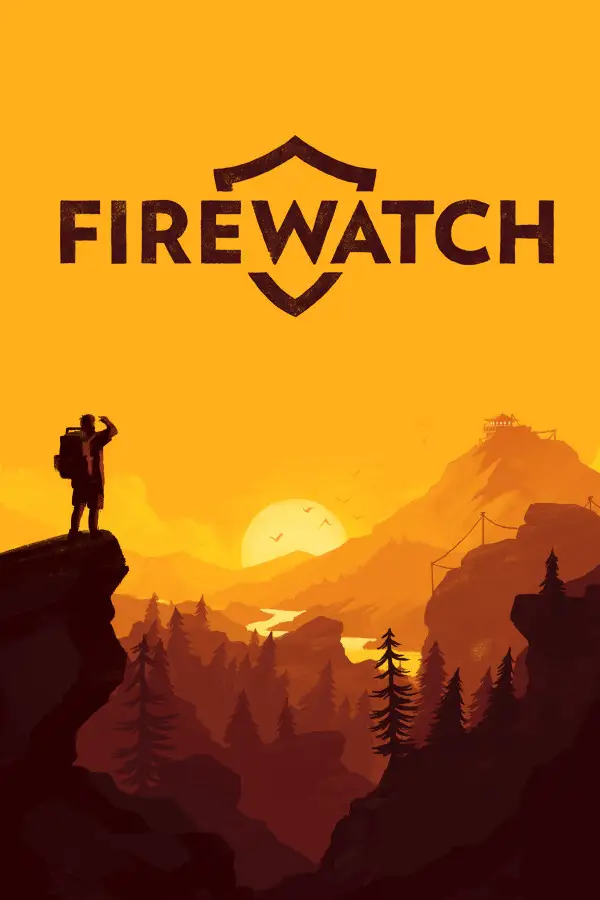
“Olly Moss's flat design, walkie-talkie dialogue, and 1989 Wyoming wilderness make this the walking simulator subgenre's ceiling work”
Firewatch holds an unusual place in the history of the walking simulator. It is not a universal phenomenon in the way Minecraft is, nor a sprawling narrative ARPG benchmark in the way The Witcher 3 is. It is something more specific: a focused indie walking simulator built on dialogue, nature, and psychological storytelling, and as Campo Santo's debut it carried the burden of dragging the whole subgenre into mainstream view on the strength of three pillars at once, its art, its voice work, and its script. It cleared that bar on arrival. Game of the Year from Polygon, a 9.3 from IGN, and a shelf of heavyweight awards in its first year made it one of the rare cases of a studio's first game becoming an instant landmark.
The numbers back the reputation up. More than 91,000 Steam reviews hold a 90% positive rating, and the critical scores, IGN's 9.3, a Metacritic of 81, Polygon's Game of the Year, line up closely with the player consensus. That agreement between the scoring apparatus and the audience is what keeps Firewatch on must-play lists a decade later. Its award haul is dense for a game this small: Polygon's 2016 Game of the Year, the Game Developers Choice award for Best Narrative in 2017, a BAFTA for Best Debut in 2017, a Golden Joystick for Best Indie in 2016, and a Unity award for Best 3D Visual Experience. Placed on the subgenre's timeline, between the more abstract pioneers and the anthology-driven successors, it occupies a distinct niche of dialogue-driven psychological storytelling and remains one of the easiest doors into the whole genre.
The target audience is clear. If you want a walking simulator built on story, visual identity, and psychology, or if the themes of middle-aged marriage, self-avoidance, and emotional repair land for you, Firewatch is close to essential, and the official simplified Chinese support plus broad platform coverage make it more accessible than most of its peers. The anti-audience is just as clear. Players with no patience for pure narrative will feel like they only watched a story for six hours, players who want mechanical challenge will find it weightless, and anyone who needs a cinematic conspiracy payoff will read the anti-climax as a letdown.
On the question of substitutes, the answer circles back to the angle. The combination of Olly Moss's flat-design art, the walkie-talkie dialogue, and the 1989 Wyoming self-exile has gone ten years without a true replacement. Gone Home leans indoor and domestic, What Remains of Edith Finch leans toward its family anthology, Dear Esther leans abstract and poetic, Tacoma leans sci-fi and holographic, and none of them does what this game does. For anyone drawn to narrative-driven indie work, Firewatch is still, in 2026, an unavoidable pick, the short runtime and divisive ending fully acknowledged. Play it with headphones, no walkthrough, no spoilers, across two or three quiet afternoons, and let the first playthrough hit you the way it was meant to.
Player Reviews 0
We'd love to hear from you
Welcome! Share your take on this game — being first might come with a surprise.
No player reviews yet — be the first!