
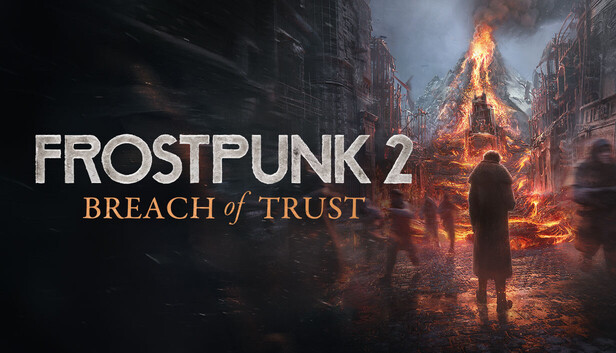

Frostpunk 2
Price History
Past 36 months · Updated dailyPrices cover Steam and 39 authorized stores; only legitimate offers are counted. The chart shows weekly market-wide lows and Steam's official price across the past 36 months.


01About Frostpunk 2
Lead a city through endless winter as its Steward, expanding districts, securing coal and oil, supplying food and warmth, and negotiating with powerful factions. Decisions about research, laws, and heat distribution shape how society faces each crisis. Steam PC player reviews are 74%% positive from 21,027 reviews. English is among the available interface languages. English and Simplified Chinese full audio are available. The game was released on September 20, 2024.
Credits
Lowest recorded in 36 months
$15.242026-07-30 · KinguinBase game · same records as the chart above; USD history, not a regional Steam low.Language support
| Language | Interface | Subtitles | Audio |
|---|---|---|---|
| Simplified Chinese | Yes | Yes | Yes |
| Traditional Chinese | Yes | Yes | — |
| English | Yes | Yes | Yes |
Show 11 more languages
| Language | Interface | Subtitles | Audio |
|---|---|---|---|
| French | Yes | Yes | — |
| Italian | Yes | Yes | — |
| German | Yes | Yes | — |
| Spanish | Yes | Yes | — |
| Japanese | Yes | Yes | — |
| Korean | Yes | Yes | — |
| Polish | Yes | Yes | — |
| Portuguese-Brazil | Yes | Yes | — |
| Russian | Yes | Yes | — |
| Turkish | Yes | Yes | — |
| Ukrainian | Yes | Yes | — |
Steam PC edition data · 2026-10-19
02Before you buy
Mode and controls
The Steam PC version has full controller support and a single-player mode. You lead a city through an unending winter and political conflicts.
Languages
Interface language options include English and Chinese, among others. Full audio is available in English and Simplified Chinese.
03Frequently asked questions
What do you do in Frostpunk 2?
As Steward, you govern a city in a post-apocalyptic winter. Expand districts, manage resources and heat, and navigate the competing interests of political factions.
Is there a sandbox mode?
The campaign is a multi-chapter saga spanning the Steward's life. Utopia Builder is a sandbox mode with unlimited playtime for social and infrastructure experiments.
What is FrostKit?
FrostKit lets you create custom maps, models, and scenarios inside the game.
Popular Steam reviews
Native-language selection · 10 reviewsSelected helpful reviews in this language show both recommendations and criticisms. This selection does not represent the overall positive rating; opinions reflect the version reviewed.
Please Play Frostpunk 2 With an Open Mind We should be rewarding risky development decisions, not punishing them if we want better video games. I've got over 200+ hours in the first game at 100% completion. Safe to say, I'm a pretty big fan of 11 Bit Studios' work. As of writing, I have played through the main campaign 4 times and also finished a run of Utopia Builder. While this game isn't perfect, no game is, I certainly had a lot of fun. But I can clearly see not everyone feels the same. I have seen plenty of people criticize different elements including the lack of intimacy, the 4k strategy based management, and even the story, and while some of them are valid, I think the bigger picture is being missed here. Frostpunk 2 is a different game and that is okay. Isn't it so wonderful that we have two unique games rather than simply a sequel that is formulaic like every over AAA studio now? Two games that both push the games industry forward by being unique and fun, rather than drag it back by appealing to nostalgia and shoving micro-transactions in your face? Shouldn't we applaud 11 Bit Studios for taking big risks both narratively and mechanically even if that don't land it perfectly every time? (I do think they landed here but not everyone agrees). Please if you give FP2 a try, spend some time with the mechanics and give it a fair chance. You are allowed to like the first more, but putting it down because it wasn't FP1.5 isn't very fair. There was a ton of love and soul put in to this game. It's truly worth a shot. I'd of course would love to have a civil discussion in the comments. Cheers!Show moreShow less
This game lacks soul. The Frostpunk experience we had in first game is completely gone. In general I would recommend the game as a game, but I do not recommend as a Frostpunk successor. This game has no Frostpunk vibes, it's basically Cities Skylines: Frostpunk, just with some annoying politics overlay. Or maybe Civilization. Or something in-between. Frostpunk made us relate to, and care about our citizens. Every single one mattered. Every single cold wave made us fight for the survival of all of our fellow citizens. Deciding if we should lower heating in the hospital, or maybe in the food farm. Decisions, hard decisions. Frostpunk 2 is more like... excel balancing simulator. I do understand that time has passed and the city building is a bit on the bigger scale, but having tens of thousands people? I'm completely detached from them. They are just a number in a sheet. Hell, I can't even see them - the game just adds some Tron-like light-lazers traveling around the city. Also, what the hell is going on with the roads connections (the automatically generated ones)? I wish it was more like Frostpunk 1, just with maybe hundreds-to-thousands instead of tens of thousands of people? The politics aren't too bad, but they are a bit annoying and with the detachement from our citizens... Meh. Also, heatstamps. That's a hard pass. "We are staaarving! We have the resources to build food producing buildings, but we rather die than build it without getting those sweet, sweet heatstamps!" -_-... Performance also seems to be an issue. I have radeon 7900 XTX (24GB vram), Ryzen 7900, 64 GB RAM and 12000mb/s SSD. I'd expect this game to have a bit more than just 25-30 FPS on 4k resolution having everything on ultra. 90% of display is literally snow, doesn't seem to be super complicated to compute. There's no ray-tracing. Turning on FSR to Quality mode and turning on frame generation makes it better, 80-100 FPS, but dear lord, those options should be an addition for lower end computers, not a must-have on a non-raytracing game.Show moreShow less
Bigger is Better (and Worse) Frostpunk 2 is strategic city builder first and a survival title second... which completely inverts the priorities of its prequel. Four-Minute Video Review: https://youtu.be/pGkrYNnbMOo Whereas Frostpunk 1 presented players with a single, intimate city that forced you to painstakingly place buildings one at a time and, in doing so, develop emotional connections with each frigid inhabitant, Frostpunk 2 goes BIG. WHAT’S NEW? Individual buildings have been replaced by districts that you’ll place atop resources scattered about the map after “frostbreaking” through the frozen ice to reach them. While you can expand each district and add specialized, buff-bestowing buildings to them, the overall effect is a disconnected, rather cluttered-looking supercity as opposed to Frostpunk 1’s smaller, interconnected organism. Citizens, meanwhile, have been replaced by factions, each of which has a different agenda and core belief system that you’ll need to balance and exploit when it comes time to research improvements and pass laws in the Council—a fun new mechanic that allows players to negotiate with different factions to broker coalitions and enact legislation via majority. While I very much enjoyed outmaneuvering Council bureaucracy by playing faction desires off of each other, these council meetings are nonetheless slow burn and infrequent compared to the prequel’s emphasis on intense, minute-to-minute pop-up narrative decisions. Oh, and the council member bios are almost hilariously shallow and randomized. Finally, Frostpunk 2’s arguably biggest new feature—settlements—is something that the city builder genre has had for years now. It’s nothing groundbreaking (frostbreaking*), but it is a logical evolution of the original's small-scale formula. But does it, and all of these other changes, make for more compelling gameplay? MY OPINION Yes and no. I’m seeing some reviews absolutely bash this game because it abandons what made its predecessor so memorable. But, like... what else was it going to do? Frostpunk was a huge hit, yes, but you can’t just copy/paste it, and there’s no denying that injecting the franchise with a sense of scale has opened up the game in complex and satisfying new ways. There’s a lot about Frostpunk 2 that impressed me, perhaps most of all Style. While the animations are a little rough (things pop in and out of existence too often), the overall visual effect is still a pretty one. Frostpunk 2’s emotional and orchestral soundtrack, meanwhile, adds pain and beauty to this desolate world, while screaming, windblown snowstorms and the crushing beat of your empire’s industrial pulse combine to create a memorable atmosphere. As for playability, I never encountered a crash or glitch, and only on rare occasion did I get some frame stuttering on ultra settings. And I found the User Interface to be sleek yet helpful and intuitive. Swapping from your main city to a settlement can be done with the push of a button, and at any point you can hover over an element and press T to open its tutorial page, of which I made frequent use (the game is complex!). This said, I was unimpressed by Frostpunk 2’s story. It’s not bad, it’s just plain and completely lacking in memorable characters. You play as the city’s faceless new steward (side note: I thought my name was “Stuart” for longer than I’d care to admit) after its old captain passed away because someone left him out in the cold for too long (kidding... probably?). In each of the game’s handful of chapters, you’ll discover a new resource or technology and then complete a long checklist of bland objectives. Repeat. It’s a missed opportunity, considering how much lore and worldbuilding went into each faction—would've loved for each of them to get a figurehead you could interact with instead of the detached, albeit interesting Council lawmaking process. FINAL SCORE In the end, Frostpunk 2 stops short of being the genre changer that was its predecessor. And, while it adequately expands upon its prequel's core mechanisms in understandable ways, I pity the players that go in expecting to recapture the first title’s intimate brutality. Nonetheless, I enjoyed Frostpunk 2 for what it is: a sequel! It’s bigger, it’s more complex, and for its AA level of production I think it’s reasonably priced at $45 USD (though $30 would've been nICE... get it? ICE? Because Frostpunk is cold? Hello?? Is this thing on??). I’m giving Frostpunk 2 an aggregate MEGA score of 3.55/5 (full scoring breakdown, from Plot to Sound, available in video form) and am happy to answer any questions you have about the game or my review. Thanks for reading! STEAM CURATOR: https://store.steampowered.com/curator/42044015/Show moreShow less
I'll put it like this: Frostpunk 2 isn’t a bad game. But it definitely doesn’t feel like the first Frostpunk. In the original, everything had a purpose. Every citizen mattered. Even the way you laid out your streets had meaning. Every decision carried weight. But here? I just don’t feel it. Building the reactor in The Last Autumn—racing against time—that felt special. Every bell toll felt like a failure, a reminder that the reactor wouldn’t be as perfect as it should’ve been. Saving the saplings as a small group of stranded scientists? That was beautiful, meaningful. But in this game? Clear some snow, place some buildings, go out, fetch 1,000 people, send them to a colony, establish a resource line. It’s just... missing that emotional weight.Show moreShow less
This is a Frostpunk game. It isn't the same spin on Frostpunk that Frostpunk 1 was. The city building elements are simplified in favor of "grand strategy game" stuff that I don't think will be to everyone's liking. You no longer place individual buildings, you place districts that then fill with buildings. Think of it like placing zones in a simcity style game. You can plop buildings down inside the zones, but it's very much not the same magnificent, visceral city building experience that Frostpunk 1 brought to the table. Meanwhile, the game has added faction-based diplomacy, a (admittedly shallow) economic system, and a resource management system that involves balancing goods across different colonies and settlements. While there isn't "warfare" in a conventional sense (you won't be attacking anyone), you will need to deal with civil wars. In other words, all of the grand strategy elements are there. Are they good? Well, I'm probably a better audience for this change than most, as I play a lot of grand strategy games by other developers. I enjoyed the combination of zoomed-out city building and grand strategy. This isn't something that I've seen before. That's the thing, really. If you're really looking for a more advanced Frostpunk 1 experience, you will be disappointed with Frostpunk 2, and there are no changes that can be made to make that situation better. However, if you're looking for a great Frostpunk game that isn't Frostpunk 1 at all, then you'll likely find a lot to enjoy in Frostpunk 2. The things that I dislike about Frostpunk 2 are generally patchable items like the UI/UX (it feels rough around the edges, and dark mode is still experimental), there are crashing/sound issues, and there are major stability issues in the Mac version that I'm singling out because they were really frustrating to encounter. Things that I wish were different/better? I look forward to seeing if we get more story content. Right now there's a single campaign and while I enjoyed it a lot, I wish there was at least one more story to play through. I look forward to a working dark mode, because I'm older and my eyes are not very good anymore. Other than all of that? Would I recommend this game? It depends. If you're looking for Frostpunk 1+ then this isn't going to ever be that. If you're looking for a frosty grand strategy game? Then, you'll find a lot to enjoy here, but you may find more to enjoy later after the game has had some patches and content releases. With all of that said, this is definitely the successor to Frostpunk 1. At the end of Frostpunk 1, you'd stabilized the city, you'd survived. In many ways, a successor to that game, carrying on the storyline, would almost have to be a grand strategy game. More population, more resource needs, more problems.Show moreShow less
Frostpunk 2 is not the sequel I expected, or wanted. The first game was very difficult, even on normal settings, and presented a unique challenge in a wonderfully realized setting. Frostpunk 2 is an easy game; the playthrough defining decisions make a return, but the consequences of those decision are so trivial that they make as well be flavor text. Within 2 hours of starting my first and only playthrough, I'd completely solved all resource issues and turned the game into a map painter. Worst of all is the "crisis" at the end of the game, where one of the political factions rebels. This is built up in the narrative events for the entire game, and I was anticipating something like the mega-storm that happens at the end of the first game. Nope. A handful of your districts "rebel," and you press a button to repress them, and a few weeks later it returns to normal. You do that a few times, the rebellion ends, and the game is over. I was so disappointed that I couldn't even bring myself to write this review until half a year later. What a wasted opportunity from a studio that's made some all-time great games.Show moreShow less
For once, critics more on-point than the overall fanbase If you want a description of the gameplay systems, etc, the critical reviews are a fine place to get that info. What you won’t get there is an explanation for why this game isn’t being better received on Steam. This is a bold game by a daring studio, and I am amazed they largely pulled it off. In an era of increasing homogeneity in games, this is a rare original work. I do not normally care how other players review a game I like, but I am genuinely astonished by the negative responses from many FP1 players. It reminds me of a quote about Orson Welles’ film The Magnificent Ambertsons, which was reshot and butchered by his studio. “RKO hired Welles to make a masterpiece. He delivered a masterpiece. And they didn’t like it.” Well, FP1 players asked for a sequel where they could build a bigger city and colonize new cities; a sequel that expanded upon the moral and ethical dilemmas of leadership on the edge of survival; and a sequel that could be modded. 11bit delivered on all fronts, and apparently some FP1 players have now decided they don’t like it. Therefore, the first thing I can say is that, if you are looking at this game without having played FP1, you can ignore 90% of the negative reviews (which are largely complaints about the very things that most of the fanbase requested). Approach this game on its own terms because, yes, it is a masterpiece. Beyond that, here are a few other points I think will be helpful for players new to the franchise: 1) Play the story first on easy. Read the tutorials sections. Prepare for some frustration – apparently some FP1 players forget how frustrating that game could be to a newcomer. The game is supposed to be challenging. Your first playthrough should have the game paused half the time planning your moves. Be deliberate. 2) No, this is not like playing Civilization. I am not sure how many people making that complaint have actually played Civilization, but the only way in which this is more like Civilization than FP1 is that it uses a polygonal building grid instead of FP1’s polar system. That’s literally it. Every other gameplay mechanic and feature is simply an expansion of something in the first game. There are no military units, no other leaders or societies, no traditional diplomacy, and this is not turn-based. 3) People complaining that the political mechanic is “frustrating” or “messy” are apparently under the mistaken impression that real-life politics is any different. 4) This game is built as much around the Endless mode as the story, which is not quite as compelling as the first game’s scenario (yet). I have zero interest in Endless mode with FP1, while here it’s consumed half of my many hours in the game. As DLC and mods become available, I am sure the number of compelling scenarios will grow here. 5) Frostpunk 1’s sense of investment was almost entirely player-driven. Mostly it was a small scope management sim with simple mechanics that was difficult to master. Think of FP1 as a Rubik’s Cube – simple, tough, yet satisfying – whereas FP2 has more mechanics and more emergent gameplay (exactly what most of us wanted). 6) I think the players upset with the game are a segment of FP1’s fanbase who only wanted a small, narrowly focused survival simulator. That’s fine, but why they would buy this sequel, which has been heavily advertised as being more complex and not just about survival, is beyond me. That review claiming most of the playerbase disowned the game after the beta is nonsense. I returned the game then because it was too new to learn in a week, rebought at launch, and think it’s a masterpiece. 7) This game had several technical issues at launch, most of which have been resolved (without a change in many of the old reviews). The UI is nowhere near as bad as some people are making it out to be. In fact, it’s kind of brilliant considering how much info it conveys all at once. Performance is UE5 – don’t push Lumen lighting past medium, the performance hit isn’t close to worth it. This is a rare game I am happy to play at 60fps. Save frequently as the game does crash occasionally. I have never really bought the “gamers are the problem” narrative. But the response to FP2 leaves me wondering if gamers are holding back games as an artistic medium. This is a remarkable and original game that could have played it safe but refused to and, in doing so, offers both fun and a rare glimpse into the messiness of leadership and politics. It is well worth both the price and your time. I hope 11bit is not discouraged and delivers more innovative content with its DLC and, one day, Frostpunk 3.Show moreShow less
I really want to enjoy my time here, and I think there might even be an okay game underneath, but the UI/UX makes the experience an uninspired (compared to FP1) slog. - Selecting *any* district, overworld map pip, or research forcibly moves the camera. -- As the UI moves with the camera as well, you have to constantly "chase" buttons on the UI. IE, turning on overdrive on the generator requires you to select the district with the generator, then chase the element to actually click the tiny overclock button. Anytime you want to interact with *any* buildable, you have to chase the buttons you want to click, which has resulted in me miss-clicking things. --- In one instance, because of the UI drift, I enacted emergency shifts, causing trust to plummet unnecessarily. Why this decision was made baffles me and continues to degrade the experience every time I play. - Pausing the game brightens the screen and opens up the view area, while unpausing darkens the borders and narrows the view. -- Typically, I would associate a darkening of the screen and narrowing of view to be associated with a paused state. There are many split seconds during play where I second guess whether it's paused or not, which adds unnecessary friction. - Cannot see what you're currently researching in the research tree. - District Output and Demands are placed at the *bottom* of the UI, instead showing extra details like special buildings and modifiers first - Faction disposition meters pop-open an info panel that blocks view of the faction stats, often leading to it being difficult to see what the faction stats are unless you know to hover *only* over the top half of the faction portrait. - When a faction wants to replace a law with another, there is no way to see what the effects of the current law they are replacing is in the council view. - Research costs Heat Stamps, but in the research window, there is no way to see how many heat stamps you currently have. - Mousing over the Research button shows the current sub-research description, rather than the broad topic. In conjunction with not showing what you're currently researching, if you mouse over the buttons and see "Heat Recycling" is being researched and want to stop or change it, you need to just *know* this is part of "Waste Heat Conversion" in the research screen, or spend minutes clicking around to find it. - When placing unique buildings in districts, the menu at the bottom has tabs to select the types of districts things can be built in. Since different buildings can be built in different districts, you often have repeating buildings across each tab, which makes the tabs feel meaningless and confusingly organized. -- When placing a Deep Drill, you have to place it on an infinite node. Nowhere in the description does it say this, nor show the "infinite node" symbol in its requirements, leading me to constantly try to build it but not be allowed, with no indication as to why. - Trails are unintuitive to build, requiring you to understand to click little grey dots between on-map "pitons", instead of just clicking on what appear to be the obviously telegraphed "pitons." - Special (and heartfelt sad) note to the loss of unique design and SFX in the UI from FP1. In the prior entry, opening panels clicked and whirred, with accompanying sounds. Panels were dark and icy, with elements of filligree, fitting the theme while being unique, and snappy. FP2's UI goes for a slick, modern and corporate feeling UI, with little to no variation in their interaction sounds or design. In a game focusing on oil and ice, aside from the research screen, the UI feels its influence little. Instead we have a confused, sterilized, and "clean" UI that fails to provide information nor interesting design. -- I can still hear the sound of clicking on that giant temperature button in FP1 and seeing the city light up in that infrared view with associated gear chunking and whirring. There's nothing to that effect here. My SFX/VFX autism is extremely disappointed. There are also many issues with performance, narrative, design focus (many mechanics that don't necessarily have meaningful interaction with you, or with each other), and player expression(there's little opportunity to create a city that is satisfyingly laid out and "beautiful" as the buildings and roads are, often confusingly, autogenerated) but the UI/UX is the absolute killer. Every interaction is marred by it.Show moreShow less
A notification popped up telling me one hundred of my citizens had died due to the cold. I thought to myself "Well, I'll have to get some shelter built soon." And then I thought about that. In Frostpunk 1, a single death was a tragedy; a hundred would have been a nearly unthinkable disaster. In Frostpunk 2, a hundred deaths was a shrug and a reminder to get more housing built. The game dehumanizes your citizens, and I think that was a deliberate move to make you think about what happens when you don't have connections to the individuals you govern. One death is a tragedy; one hundred, a statistic.Show moreShow less
My initial impressions with the game, having played the original Frostpunk for 130+ hours, has not been great. The game itself is... fine. Not great. But it's not some buggy mess, it just struggles to be fun. There is some part of me that wonders if we're going to see a mobile release follow shortly, because a lot of the structure of the gameplay could be akin to a mobile game. But outside of the setting, the vast majority of core mechanics have changed. It seems as if the team wanted to fix how late game Frostpunk 1 required quite a bit of building micro-management at times, but they've responded by throwing the entire gameplay style of the original out the window. Not only is there upsettingly little control over the actual resource harvesting itself, but furthermore there really isn't the opportunity to do much truly of value town customization wise. There is essentially zero opportunity to create your wasteland town as there was in the original game, all you truly do is pick which tiles are used for a very generic production pattern. Everything is tile locked, and it feels more like some sort of modded version of Civ V than it does the original Frostpunk game. If this wasn't being published by the original studio, I'd have sworn the Frostpunk IP had been sold off to another developer, because there is really nothing in common with the original gameplay loop. To make the changes easier to grasp, here's a list of what I've noted so far: - Time flows has been changed, with there no longer being a day/night cycle. Weeks fly by rather meaninglessly, rather than spending the day optimizing your town for what resources you need next. - Resources are stockpiled now. To what end, outside of occasional gameplay objectives, is pretty valueless. All it does is prevent debuffs from things like starving, or lack of goods, or lack of housing - and those debuffs generally aren't noticeable. Starving as a whole is pretty meaningless, as is your citizens dying, as they'll generally repopulate at a faster rate than whatever they're dying at. It's a minor inconvenience. - Research is entirely unclear as to what needs to be focused, as research generally doesn't unlock buildings, but rather bonuses. Personally, I think that lacks the punch of being able to then place the newly researched building afterwards, so it feels lackluster. - Heat is just this abstract thing that you have to make by getting fuel, but there's really no need to research to upgrade the generator in this gameplay loop. You just feed it more oil/coal, and you get more heat. No need for heat zones anymore. It feels pretty unrewarding generally, and while there's some small bonuses for planning your town to optimize heat, the bonuses are lackluster and almost not worth pursuing. - Breaking through the frostpack to build more buildings is pretty much just a bloat function to slow down the gameplay. It costs you resources, and I believe it's there to make you have to plan your settlement. But it fails at that, because you break through the frostpack in whatever section you choose pretty quickly. So it essentially just ends up being a credit drain, which isn't a fun or challenging dynamic, it just means you frequently find yourself unable to do anything as you wait for resources to build up. - The colony system, while somewhat novel, really just makes this game a resource balancing game between settlements. It does not seem to be intended to be a resource balancing game, so it's a pretty poor resource balancing game. - When you create a colony, it takes workforce equally from all your buildings. While it's nice that it doesn't do it randomly, thus ruining your economy, it does mean now every building you have is understaffed, and you will have to manually fix that for each and every one. - Frostland exploration feels like a checklist. There has yet to be any big decisions, or excitement from finding steam cores, or excitement from finding anything. Outposts you establish can give you a trickle of resources, but not a meaningful amount that does any more than replace one building in your city, and you already have to make one building to get the frost scouts to establish the outposts. I'm not excited when my frost scouts are going somewhere new. It's just another task that apparently has to be done. - Crime ends up being a factor, but it's just another debuff, rather than something where you're worried about your precious citizens being killed in the night. (Although again, night doesn't exist anymore) You might get a heartbreaking message about a missing child, but that child will be replaced within the next day by ordinary population growth. - The "roads" are just flavor on the screen, and appear to generate almost randomly. Zero regard is made for "would you actually make a road this way", and I want to compare it to slime mold paths, but slime mold paths actually try to be efficient. - You can't even zoom in far enough to truly enjoy the hustle and bustle of your city you're making. Gone are the days of seeing church processions in the night, your citizens are just gold streaks on a path. - Automatons, in all ways but flavor text and non-interactive objects on your road, appear to have been completely removed from the game. - Temperature changes happen. They're generally meaningless outside of suddenly you require more coal/oil. They're also far less frequent, so they tend to sneak up on you, at which point you are met with a generally uncompelling alert telling you things got colder. You tend to forget that occurred within about 15 seconds, because you really don't have to do anything. At time of writing, I've gone through the prologue and part of chapter 1. There has yet to be any compelling story, just "you're running out of coal, establish an outpost to get oil!" There's still plenty of content to follow, and I won't be refunding the game. Thus I'm hopeful I'll change this review down the line. But so far, I've been horrendously disappointed considering I was hoping this would be the original game, with expanded content and mechanics. Instead, this has been a kneecapped homage to the original. The changes that have been made to the original gameplay loop have been at best, different, and more frequently just downright worse. I want to give the game a chance to get fun, but so far it just hasn't been. One positive has been the town council meetings. It's a cool dynamic to add so far, and having the need to sway votes with other political votes has been interesting to have to factor into the gameplay. But even this aspect requires some criticism, as interactions with factions generally has felt like interacting with monoliths of different names. Each faction is really only being distinguished by what they may ask for, or how much they have to offer voting support wise. I could see how some people could find the game to be a 6/10. Maybe even a 7/10 if you like mobile games. But the insane amount of 9/10 reviews Frostpunk 2 is touting in it's advertising is just baffling to me. The vast majority of Metacritic reviews all seem to have one thing in common - very few of them mention any actual gameplay, and rather focus on the setting itself. Which would be fine if this was a visual novel, but it's a game being sold at AAA prices. On top of that, the setting is notably far less compelling than the first iteration of the franchise. Somehow, the studio that made This War of Mine, one of the most emotionally compelling games I have ever played in my life, has managed to make the emotional attachment you have to your citizens colder than the frostland itself. In conclusion, if you're looking at buying this because you loved the original, I do not think you'll enjoy how the gameplay loop has changed. If you're looking at buying this because you loved the setting, you may be able to trick yourself into enjoying it.Show moreShow less
Source: original Steam user reviews. Helpful votes are an archived snapshot, not live data. Last collected: 08/15/2026.