























Opening
Wake up the size of an ant and the lawn becomes a cathedral. A single dewdrop is a day's drinking water. The ladybug dozing on a leaf overhead is taller than you are, and the family dog, somewhere far above, is a god you will never meet. That is the opening trick of Grounded, and it never stops paying off. No wasteland, no alien moon — just the backyard every kid has stared into, scaled up until it turns lethal.

The studio behind it is Obsidian, a house built on talky role-playing games — Fallout: New Vegas, Pillars of Eternity, The Outer Worlds. While most of the team chased the stars in The Outer Worlds, thirteen people quietly started a survival game in the grass. That side experiment grew into a twenty-million-player hit across four years, took home a Golden Joystick for Xbox Game of the Year, landed an 83 on Metacritic and an 84 percent recommend rate on OpenCritic, and eventually earned itself a sequel.
What no rival can easily copy is harder to name than a screenshot. It is a survival game with an actual story pulling you forward, made by a studio that then turned accessibility into a genre benchmark almost as an afterthought.
None of that would matter if the minute-to-minute were a chore, and it is not. The loop is taut, the world is dense, and the shrink keeps re-selling itself every time a familiar object — a juice box, a discarded soda can, a sandbox — looms up reframed as a landmark. The rest of this review takes that apart, one piece at a time: story, audio, graphics, gameplay, content, and the verdict that ties them together.
Story | 8.0/10
Story: 8/10Four kids, one amnesia, and a backyard that knows more than it lets on

It is 1990. Four teenagers — Pete, Max, Willow, Hoops — get shrunk to ant-size by a device called the SPAC.R and wake in a suburban backyard with their memories wiped clean. Your first job is not to fight anything. It is to figure out what happened to you. Push deeper and a kidnapping plot run by a corporation named Ominent surfaces, tangled up with Dr. Wendell Tully, the man who shrank you in the first place.
The mystery is dangled with real craft. Grounded does not bury its plot in optional logs you will never open. It turns three questions — who am I, why am I here, who is responsible — into the reason you keep digging. Scattered labs, audio tapes and terminal records assemble the truth one fragment at a time. The Raisining Syndrome, the hunt for an Embiggening Formula, the final standoff with Director Dalton Schmector: these stack into a back half that keeps escalating, and the ending bends to the choices you make. You are not shown a story. You excavate one.
BURG.L turns plot into a to-do list, and that is the whole magic trick

The thing that keeps Grounded's narrative welded to its play is a robot. BURG.L sits in the Oak Lab, hands you a quest every day, and pays out a currency called Raw Science that you spend on new blueprints and recipes. The trick is elegant: story progress, objective and character growth all run down the same wire. You are never grinding combat so you can earn a cutscene later — you take BURG.L's job, and the story moves a notch while you do it.
This is Obsidian's day job showing through. Look at The Outer Worlds, from the same studio: that same instinct for threading a world through quests, for letting players understand a story by doing things inside it, gets carried wholesale into survival. The genre's chronic weakness is the missing spine — most sandboxes drop you in a field and leave you to invent your own fun.
Grounded keeps a voice at your shoulder, always pointing at the next thing worth doing. And because that voice belongs to a character with a personality rather than a faceless objective marker, the structure never feels like a checklist. BURG.L cracks jokes, doles out lore in offhand asides, and slowly becomes a companion you are working for rather than a menu you are clearing. The quest spine and the cast end up reinforcing each other, which is the sort of small, compounding design win a narrative studio knows how to land.
Set it next to Subnautica and the door swings open wider

Any talk of survival-with-a-soul has to reckon with its sharpest rival, the deep-sea benchmark Subnautica. Both stitch structured story beats into the survival loop; both let you peel back a larger mystery while scrambling to stay alive. But they walk opposite roads. Subnautica leans on isolation and the dread of the deep, pushing you to the edge of panic before it hands over any growth. Grounded uses company and the friendliness of a backyard to make the same narrative depth approachable — call three friends, build a base, advance the plot together. One is a lone stand against the abyss; the other is a pack of kids exploring familiar grass.
The dimension has a genuine flaw too, and it is the same one. Coherence suffers. The main thread keeps getting splintered by the survival loop and the litter of collectibles — a tape hooks your curiosity, then you spend half an hour rummaging through weeds for crafting parts, and by the time you surface the story has gone cold. The writing is a strong seed, diluted by the rhythm of gathering and building. That, plainly, is why it cannot reach for a higher number here, and it is the structural tension every survival-plus-narrative game runs into. Grounded handles it better than most — the spine survives the splintering — but it never fully escapes it, and players who came chasing a tight, uninterrupted story will feel the seams more sharply than the rest.
Audio | 6.0/10
Audio: 6/10You hear the spider before you see it, and that is the design working

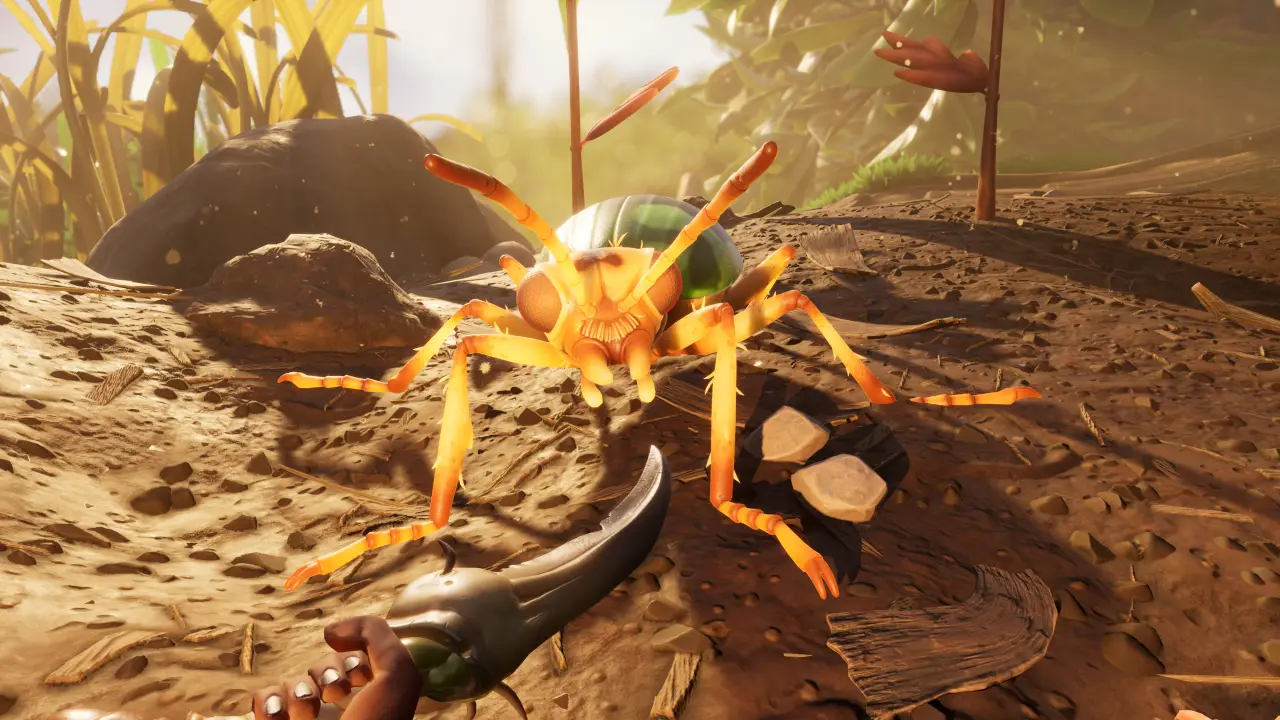
Shrink a person to ant-size and sound changes its job entirely. In Grounded, ambience is not wallpaper — it is a survival tool. The scrape of footsteps on a leaf, the rising drone of wings closing in from somewhere off-screen, the wall of chittering that surrounds your base after dark: all of it feeds you bearings and warnings. Players say the same thing over and over — you almost always hear the spider before you see it. That dry skitter of legs from deep in the weeds gets your palms sweating before the thing ever crests into view.
Wiring hearing into play like this takes real discipline. When you are building and gathering in a pitch-black yard, reading unseen danger by ear, sound becomes information as vital as your health bar. The game does not reach for cinematic walls of noise or cheap jump-scare stings. It uses restrained, precise ambience to keep one fact pinned to your chest at all times: you are small, the world is huge, and something is always out there. In a shrunk-down setting, even wind across a blade of grass swells into the overture to a threat — and that care is where audio genuinely earns its keep.
Voice and score: a competent floor without a memorable ceiling

Cutscenes and BURG.L's lines are fully voiced, and Obsidian did not skimp on the cast — there are faces here you will recognize from Western animation and games, lending character to a survival thread that could easily have rung hollow. BURG.L in particular, with that dutiful, faintly goofy robot cadence, becomes a favorite for a lot of players; you start looking forward to the daily trip to its lab. But to be straight about it, the voice work only blankets cutscenes and key story beats. For long stretches of ordinary play there is no human voice at all, just you, your tools, and the bugs.
The score is the softer spot. It runs ambient, serving the swing between tension and calm as you explore — strings tighten on contact, then ease back into quiet once you are clear. As dynamic underscoring it does its job, and Obsidian even put out a soundtrack as separate DLC for the people who want it. The problem is it never lands a theme that snaps the game to mind the instant it plays; finish a whole session and you will struggle to hum a single bar.
Hold it against Subnautica, which uses sound to magnify the loneliness and dread of the deep, and Grounded simply reads lighter, easier to forget. That is not a fatal sin — a backyard at noon is not meant to feel like a drowning trench, and the lighter register suits the game's friendlier, co-op-first mood. But it does mean the soundtrack rarely does heavy lifting on its own; it supports the moment instead of defining it. Ambience is the clear bright spot, the score a serviceable backing track, and added up, audio only reaches a solid pass — the lowest of its six dimensions, and not unfairly so.
Visuals | 8.5/10
Graphics: 8.5/10The shrink lives in a dewdrop's reflection

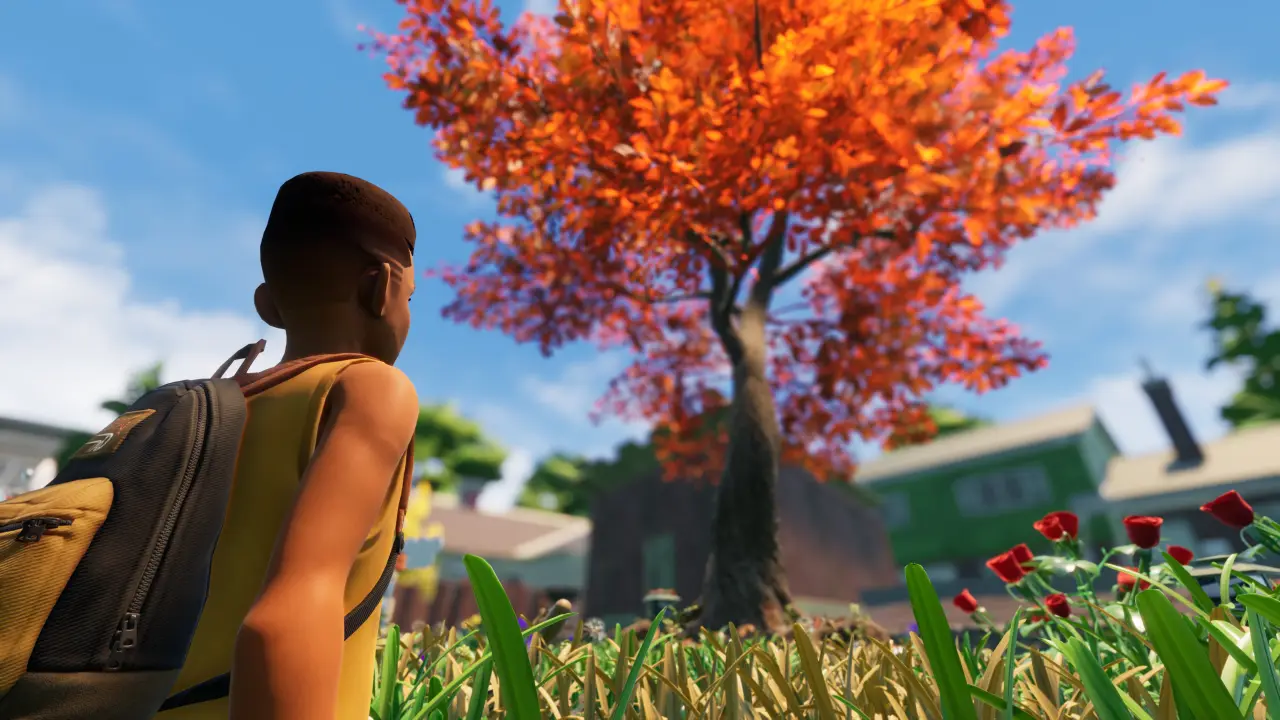
Grounded runs on Unreal Engine 4, but its cleverest move is not how much fidelity it stacks — it is how airtight it makes the illusion that you have actually been shrunk. The grain of a leaf, the bead of light skidding across a dewdrop, the layered sheen of an insect's shell: everything is rendered to the standard of an extreme close-up. Crane your neck at a foxtail rising like a tower, glance down at a grain of sand the size of a boulder, and the scale dislocation lands a fresh jolt of awe no wasteland or alien moon can offer.
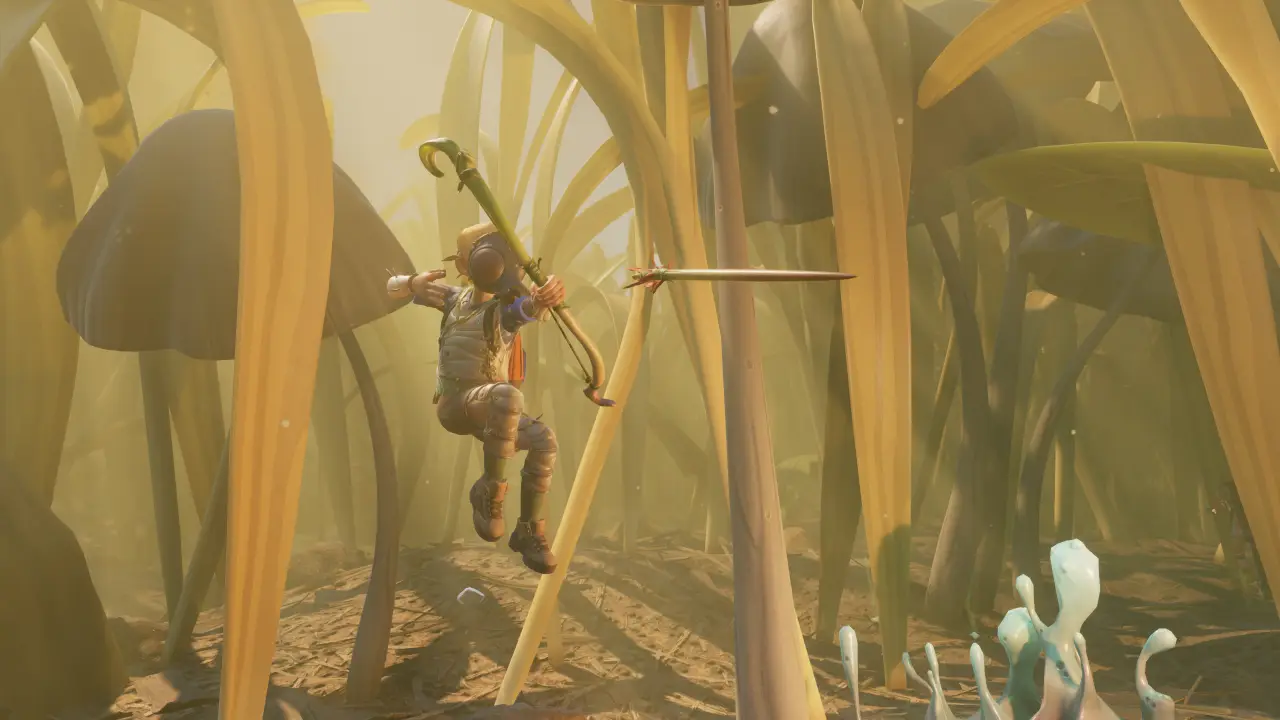
The art direction plays a smart angle too. It skips the grim realism survival usually defaults to and goes for bright color, somewhere between cartoon and lifelike. The yard is a warm gold-green in the afternoon sun, the mushroom biome a sickly enchanting blue, a bitten apple flushed an inviting red — palettes that turn a setting that should be skin-crawling into something dangerous and lovely at once. You catch yourself stopping for a shaft of light through the grass even as you watch the corners for spiders. This is creativity over raw horsepower, an engine's limited muscle spent exactly where it counts: on selling the spectacle of scale rather than the brute count of pixels.
One backyard, sliced into wildly different biomes

Plenty of people doubt how much variety a single backyard can hold, but Grounded carves one continuous map into biomes that feel nothing alike. Across four years of free updates the mushroom patch, the woodpile, the upper yard and the koi pond arrived, each with its own palette, lighting, enemies and resources — you plunge from gold-green lawn into a dank mushroom thicket, then dive beneath the koi pond's surface. That zoning quietly defeats the visual fatigue of a single locale and keeps "exploring the yard" from ever going stale.
Worth flagging is the visual side of its accessibility work: Arachnophobia Safe Mode. A bank of sliders walks a spider's detail steadily down — strip the bristling leg detail, simplify the silhouette, and at the far end a lunging spider collapses into a floating dot. The empathy behind that simple toggle is real; plenty of players with a genuine phobia would once have quit at a single promo image, and these sliders let them stay. It is why outlets hold it up as a benchmark, and why the game drew a Game Awards 2020 nomination for Innovation in Accessibility — a high point right where graphics and experience design meet.
Mind which machine you buy it on

The dimension cannot dodge platform variance, and it bears on where you should buy. On Xbox Series X and PS5 the game holds steadier and the frame rate is firmer — the best place to drink in all that miniature detail, with the dew, grain and shell layers intact. The Switch version, hemmed in by the hardware, makes obvious concessions in fidelity and stability, and its 70 on Metacritic sits a fair distance below the PC version's 83, with resolution and frames both clipped.
So if visual texture matters to you, lean toward the high-performance platforms; if you only want handheld co-op from the couch, the Switch build plays fine, just brace for the downgrade. None of these are dealbreakers — the art holds up because it was never leaning on raw resolution in the first place. Against the era's parade of brute-force graphical showcases, Grounded takes a different road. It wins on scale and direction rather than a spec sheet, and that road keeps it distinctive on every box it lands on, from a maxed-out PC down to a Switch in handheld mode. Years from now, when this generation's photoreal showpieces have aged into looking merely dated, the stylized, scale-driven look of a backyard turned wilderness is the kind of art direction that tends to hold up — the imagination did the heavy lifting here, and imagination does not get outpaced by the next graphics card or the next console generation. That is the quiet, lasting advantage of building a look around an idea instead of a passing technical benchmark.
Combat | 9.0/10
Gameplay: 9/10Gather, build, survive — but something is always pointing the way

The foundation is the classic survival trio — gather, craft, build — plus three meters to mind: hunger, thirst, stamina. By day you scrounge the weeds and patch up your base; by night you hold it against the bugs. None of that sounds new. What sets Grounded apart is how tightly the loop meshes: every action pays a clear dividend. Chop a grass plank, dig up a lump of clay, and you immediately know what it builds toward. That instant hit of reward is the bedrock reason one more session keeps turning into three.
The real masterstroke is tiered tools. You start with the sorriest pebble axe and work up through the insect hammer, the spider-fang dagger, the mint mace — and each rung unlocks a fresh batch of harvestable materials and beatable enemies. That tool ladder runs like an invisible progression axis, laying out exactly where you can go and what you can fight right now.
You always know the next goal — precisely the sense of direction most open sandboxes lack. It is a quiet but enormous design choice: instead of paralyzing you with a blank slate, Grounded gives every session a natural arc, where upgrading one tool opens a new region, which yields a new material, which builds the next tool. The loop pulls you forward on its own momentum, and that is why so many players describe "just one more upgrade" turning into a lost evening.
Mutations and Milk Molars bolt a light RPG onto hardcore survival

On top of the survival floor, Grounded buries two growth tracks that smuggle in Obsidian's RPG instincts. The first is Mutations: repeat a kind of action and you unlock an equippable passive — chop a lot of wood, drink a lot of smoothies, swing in melee, and you earn the matching perk. The second is Milk Molars and Mega Milk Molars, hidden permanent upgrades strewn across the yard that boost health, stamina and smoothie slots.
What makes the pair sing is that getting stronger carries both an instant thrill of discovery — the moment you turn up a hidden molar in some forgotten corner — and a long game of build planning, shaping a whole loadout around a chosen mutation. They are not stats forced on you; they are the sweet payoff for exploring and experimenting. Stack on the boss fights, the Broodmother chief among them, and the underwater diving and oxygen management the koi pond update brought in, and Grounded offers far more than the lazy mental image of "swinging at grass in a yard." Its systems run deep enough to keep handing you new things to chew on dozens of hours in.
Difficulty spikes and the company that cures them

The dimension's most contested ground is the difficulty curve. Solo players run straight into random spikes — cruising one minute, pinned and pulped by an upgraded spider the next. Spiders especially turn into progression blockers: thick-skinned, hard-hitting, walling you out of a region until you are geared for them. For lone wolves that volatility cuts deep, and it is the main reason several outlets settled on more cautious scores.
The antidote was baked in early: co-op. Up to four players online, paired with Shared Worlds so teammates can keep pushing even when the host is offline, and the spikes that wreck a solo run dissolve into the pleasure of coordination — one pulls and tanks, one burns it down, one hangs back gathering supplies and raising walls. The spider swarm that stonewalled you alone becomes a clean, satisfying team fight. Held against same-era peers Valheim and Rust, Grounded is neither as severely open as the former nor as built on PvP grief as the latter. It is the more curated, more goal-driven PvE answer: keep the depth and the challenge survival is supposed to carry, and shave off the busywork that only burns patience. That sense of proportion is where its design feels most grown-up — it understands that survival's appeal is the climb, not the cruelty, and tunes the friction accordingly. The result is a game hardcore enough to respect you and lenient enough to keep you, which is a harder balance to strike than either extreme.
Content | 8.5/10
Content: 8.5/10Thirty hours to eighty-five — what one backyard can actually hold

Do not let the "it's just a backyard" framing fool you — Grounded carries real heft. Per How Long To Beat, the main story runs roughly 30 hours, the main plus extras lands around 50, and a completionist chasing every collectible and achievement is looking at 85 hours and up. For a survival game that is more than generous, and the rarer feat is that it stuffs all of it into one continuous map. There is no padding by photocopied outposts across sprawling acreage — just a single yard carved and layered and packed with secrets.
What props the heft up is a weave of overlapping content: BURG.L's daily quests hand you long-range goals, hidden Milk Molars coax you into every corner, boss fights like the Broodmother deliver staged crescendos, and the map is dotted with easter eggs plus a New Game+ mode built for the hardcore.
None of it sits as an isolated checklist item — it is all choreographed onto the same map, so you tend to set out for one quest, get pulled sideways by a molar, then clear an elite that happened to be in the way. That "one thing leads to another" design makes it genuinely hard to feel there is nothing left to do out here. The density also means the hours rarely feel like padding; you are not walking ten minutes between objectives, you are tripping over the next one. For a single-map survival game, that compression of content into space is the quiet trick that keeps the runtime honest.
Four years of free updates, from early access to a finished thing

Grounded's present size was spooned out across four years of free updates. When it launched into early access in 2020 it covered maybe twenty percent of the main campaign; Obsidian then listened to the community while rolling out major drops — Shroom and Doom, with the mushroom biome and its first boss, the Broodmother; The Koi Pond, with underwater diving — before shipping the full 1.0 in 2022.
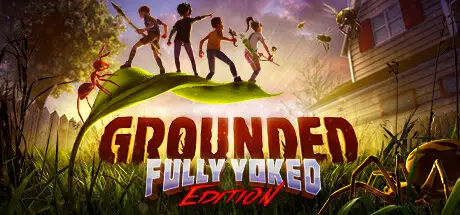
That live-service road closed out with the Fully Yoked 1.4 update in 2024 — the final planned content drop, adding new bosses, the New Game+ mode and a batch of buried easter eggs, while carrying the game onto PS4, PS5 and Switch all at once and shipping a physical collector's edition alongside. For a newcomer who wants the most complete shape of the game, today's finished build gathers four solid years of accretion, which makes it plainly the version to buy — late arrivals walked into a bargain, getting in a single sitting everything veterans waited four years to assemble. That keep-adding, never-subtracting cadence is exactly why Grounded's reputation rose rather than slipped over time.
Twenty million players did not show up by accident

Content value ultimately gets tested by hard cash and word of mouth. Grounded sits at Very Positive on Steam, 90 percent positive, with a cumulative player count north of 20 million — over 5 million in the first six months of early access, more than 15 million by the end of 2022, a curve that stands out in the genre. The most telling detail: when the price rose on the move from early access to full release, plenty of veterans did not gripe. They shrugged and said the hike was worth it, which is about the strongest endorsement of density and good faith a game can get.
Set against same-era blockbusters that pad their runtime with map acreage and screenfuls of question marks, Grounded proves a point — one backyard, honestly filled and quietly seeded with surprises, outlasts ten empty maps and better honors every hour you put in. The numbers are not vanity metrics either; a survival game lives or dies on whether players stick around to build, and twenty million of them did. A genre this crowded does not hand out that kind of retention to thin games — it goes to the ones that keep giving players a reason to log back in, and Grounded spent four full years making sure it always had a fresh one waiting. That staying power, sustained over years rather than weeks, is exactly where it earns its high mark on content.





Comments 0
Share your game review
Join the discussion and share your review of this game.
No comments yet. Share your thoughts on this review.