

HUMANKIND™
Price History
Past 36 months · Updated dailyPrices cover Steam and 39 authorized stores; only legitimate offers are counted. The chart shows weekly market-wide lows and Steam's official price across the past 36 months.



01About HUMANKIND™
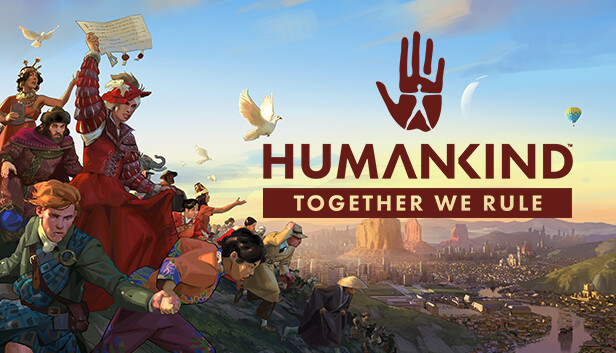
Lead a civilization through history, combining cultures from different eras to shape a distinctive society. Decisions, discoveries, and battles build fame, while tactical engagements play out in turns on the world map. Steam player rating: 68% from 22,221 reviews. The Steam PC version supports single-player and multiplayer matches for up to eight players. The interface is available in Simplified Chinese, Traditional Chinese, English, French, German, Spanish, Polish, Russian, Portuguese-Brazil, Korean, Italian, and Turkish. Released August 17, 2021.
Credits
Lowest recorded in 36 months
$0.002025-02-06 · Epic Game StoreBase game · same records as the chart above; USD history, not a regional Steam low.Language support
| Language | Interface | Subtitles | Audio |
|---|---|---|---|
| Simplified Chinese | Yes | Yes | — |
| Traditional Chinese | Yes | Yes | — |
| English | Yes | Yes | Yes |
Show 9 more languages
| Language | Interface | Subtitles | Audio |
|---|---|---|---|
| French | Yes | Yes | — |
| German | Yes | Yes | — |
| Spanish | Yes | Yes | — |
| Polish | Yes | Yes | — |
| Russian | Yes | Yes | — |
| Portuguese-Brazil | Yes | Yes | — |
| Korean | Yes | Yes | — |
| Italian | Yes | Yes | — |
| Turkish | Yes | Yes | — |
Steam PC edition data · 2026-10-19
02Before you buy
Play modes
The Steam PC version offers single-player and multiplayer, with matches of up to eight players. Battles are turn-based on the world map.
Language
English is among the supported interface languages and has full audio. Supported languages also include Simplified and Traditional Chinese.
03Frequently asked questions
What is HUMANKIND™ about?
Lead a civilization from the Ancient to the Modern Age, combining cultures from different eras as you shape its history.
How do you win?
Fame is the victory condition. Deeds, moral choices, and battles won all contribute to it.
How do battles work?
Battles unfold in turns on the world map, where you command individual units; large engagements can span multiple turns.
Popular Steam reviews
Native-language selection · 10 reviewsSelected helpful reviews in this language show both recommendations and criticisms. This selection does not represent the overall positive rating; opinions reflect the version reviewed.
I feel a bit bad for the developers, they get a lot of negative reviews for a game which is really quite good. 90% of those reviews seem to be either complaints about the game not starting (or crashing) or people saying its either not enough like civ or too much like civ. Simultaneously, somehow. The game plays very well and people custom to the UI of the endless titles will find their way here as well. If not then the game offers a tutorial and a (in my opinion) very intuitive UI. I personally love the function to "build" your own civilization instead of choosing a premade, finished one like in civ - and then playing as the USA under Washington in 2355 BC. Somehow. I personally agree that I would like civs to be more "limited" to decisions of previous ages (so for example if you picked the Nubians you should not really be able to switch to England later) but thats just a personal feeling, I understand that it would limit the game quite a lot. Currently I can definitely recommend the game, its an amazing 4X experience and I personally did not experience any crashes or instabilities so far - even the "frame rate problems" many here described have so far not occured to me. Thanks devs for this game, was about time Civ gets a rival!Show moreShow less
I get why they decided to do it this way. Mao Zhedong fighting Napoleon with war elephants in 1000BC was always a bit of a running joke in the old Civ games. So instead of playing a single civ from start to finish, Humankind has you switching to a different civ every time you advance to the next age. The result is a complete sense of schizophrenia and alienation. You start as Egypt, then turn into Rome, then become England, Korea, then France. Meanwhile, they're all being led by the same blonde pale dude (your avatar), cosplaying and looking super out-of-place half the time. Your cities are still called Memphis, Thebes, etc. The architecture just bizarrely changes from Egyptian to Roman, then suddenly East Asian, then suddenly European again. There's absolutely no sense of consistency, theme, or ownership. Pretty soon, you're just minmaxing the abstract game mechanics, getting your numbers up, and stomping the other nondescript, schizophrenic cosplayers without any feeling of leading a people through history. Meanwhile, the same thing is happening with your neighbors: you start next to Harrappans (ancient Indians), so you've gotten used to thinking of them as Indians. You're intuitively expecting an Indian culture to be developing next to you. But now they're Celts. And now they're suddenly something else. The idiot on the other side is Mycenean-Hun-Polish-Aztec-Whateverthehell. You feel no sense of relatability or connection to the other civs, because you don't even know how you're supposed to visualize them in your head. Pretty soon, you're only killing them or ignoring them. Ironically, this approach also gives you less, not more freedom. Want to play England? Nope, wait until the middle ages. Want to play Russia? Wait until the game is nearly over. On the highest difficulty settings, you also have to be mindful of the bonuses/abilities each civ gives you, which further restricts you to only a couple options that are actually viable in your situation. On that note, Humankind also sacrificed one of the main things that gave the old Civ games so much of their personality - the cast of historical leaders. You won't get to feel that gravitas and weight of dealing with Alexander Macedon, Chingis Khan, or Lenin. Instead, the aforementioned schizophrenic, faceless cosplayers periodically disturb your minmaxing, forcing you to remember who the hell they're supposed to be during this particular five-minute interval. This is 180 degrees from the incredibly diverse, flavorful factions in Endless Legend and Endless Space 2, where you really feel that you're playing a very distinct faction with its own special character and feeling, surrounded by other interesting people. Amplitude rejected one of the main things that made their games so good. The aesthetics also rub me the wrong way, although I have the same complaint about Civ 6. The avatars are fidgeting and grimacing like BuzzFeed eunuchs, not world leaders. The art is happy-campy-colorful, which forms a surreal backdrop to the war, starvation, industrial pollution, and tyranny that is supposedly unfolding in front of you. The game seems to struggle to take itself seriously, which doesn't exactly help the player take it seriously. The underlying mechanics are mostly very solid, Amplitude knows what they're doing as always. There's a well-made game somewhere underneath all that. Unfortunately, that's not enough to salvage a game devoid of any immersion or sense of investment. I have to make this a thumbs down, because these problems can't be patched out or fixed with DLC. I'm a big respecter of Amplitude and it hurts like hell to criticize them, but Humankind doesn't live up to their previous games. I apologize for being verbose. --------------------------- EDIT: Thanks a lot for sharing your views in the comments. I wasn't really expecting this many people to read this review. Many people have raised some valid points that deserve a response. 1) "You didn't mention that you can "transcend" and stay with your civ. You can also keep your transitions consistent and plausible." This is true, and I should've mentioned this in the review. Unfortunately, it doesn't solve many of the problems. a) your neighbors wont bother with consistency, and will always be schizophrenics without identity b) If you want to play (for example) a consistent Chinese civilization, but your opponents grab Zhou first, and then grab the Mings first, then you wont be playing China. 2) "Why buy the game in the first place, if you knew it has civ-hopping?" That's a valid question. The answer is a) I knew about it, but I didn't realize how bad it would grate on me until I played the game for a while. I suspect many people had the same feeling. b) I was expecting the transitions to be sensible: Gauls can become Brits, ancient China can branch off into Koreans and Japanese, Olmecs branch off into Aztecs or Mayans, Greeks into Byzantines, etc. I wasn't quite ready for Egyptians becoming Japanese. 3) "But that's how history works" Egyptians into Japanese? Many folks fell into a false dichotomy between "cultures stay the same" and "cultures transform suddenly, dramatically, and randomly". Reasonably historical cultural evolution was already modeled in most 4X games: ideological/religious drift, socioeconomic changes, technological progress, as well as people getting conquered, assimilated, colonized by others. Humankind adds a new dynamic - voluntarily and randomly reinventing your whole national identity, complete with remodeling all your buildings and Michael Jacksoning your whole population into another ethnic group. Which, as far as I know, doesn't real. That's why it's so garish and immersion-breaking. 4) "It's not sensible to compare Humankind to Civ, they're two different games." I completely agree. I'm not concerned about maintaining Civ's "canonical" forms, and I prefer many of Humankind's game mechanics regardless. My disappointment mostly comes from comparing Humankind to Endless Legend and Endless Space 2, which are both Amplitude games. This really feels like a step back from both.Show moreShow less
As someone who played a whole heck of a lot of Civ, both SP and top-level competitive MP, I'd like to offer up on Humankind: Humankind is a really good game. It's NOT a great game - yet - but it could be. It has some pretty significant balance issues that need resolving before that. (Some strategies are embarrassingly more potent than others, and some nations are absolutely a joke compared to others.) ...but that's to be expected from a "first generation" game. This isn't Civ 6 which is basically iterating on the same formula circa late Civ 3/Civ 4. Humankind does some very bold things that Civ - inertia of time and tradition - would never have the guts to do. You change tribal identities every era. Humankind solves the SoD/bottleneck problem with a genuinely clever combat system that actually allows over time reinforcement. Humankind also solves the "why would I stop beating your face in?" problem rather nicely, and even solves Civ's perennial "endless sprawl" issue rather elegantly. "Go wide or go high" is a legitimate choice - and even more cleverly, you can reverse course later if you change your mind! Having said that, Humankind is not (yet) in a position to say "We can/will unseat Civ for all time." Humankind still struggles with the "I already know I won the game and I still have to play it out" problem - much more so than Civ does. It has a fair number of bugs, a few of them genuinely gameplay disrupting. (Temporary, no doubt, but some genuinely rough.) Humankind's lack of diplomacy win is... curious. Their victory model will please some and infuriate others. (Looking at you, Apolyton SP gurus who steal deity-level wins at the last second.) All in all, I'd encourage any/all 4x players to encourage this dev and buy this game. It might - or might not - be the game to unseat Civ. What it WILL do, most certainly, is light a fire under Firaxis's hindquarters to do more than just a lazy iteration for the next Civ. (I'd argue C5 and C6 are exactly this.) Long story short: Humankind might or might not be a win for Firaxis's competition, but it's definitely a win for players. Give it a go!Show moreShow less
Conceptually the game is really refreshing and interesting—each era provides an opportunity to further develop a premeditated long-term strategy, or dynamically adapt to the game's situation. In theory, this should lead to matches feeling unpredictably distinct from one another, and therefore prevent the game from getting stale as your experience, knowledge, and skill level increases from playing it. In practice, however, the cultures are too poorly balanced, and, consequentially, not distinct enough for many of these adaptive strategies to occur as they are seemingly intended. For example, you may pick the Assyrians as your first cultural selection, intending to harass and plunder your neighbor's territories with your military, stealing gold and territory to further your own expansionist agenda in the process. This seems to be the clear design goal of the Assyrians, but they do not excel at it when compared to other cultures with entirely different design goals. The Harappans, for example, are clearly intended to be a culture which focuses on empire growth and development (traditionally, 4X players might call the Harappans' design that of a passive, “tall” faction, and the Assyrians’ design that of a militaristic, “wide” faction). The Harappans definitely beat the Assyrians at growth, as they ought to, but building and incorporating new outposts requires influence, and, because influence is generated per population, the Harappans are often better at claiming unsettled territories than the Assyrians. Additionally, military units cost population and either production or gold, all of which the Harappans should quickly outproduce the Assyrians in thanks to their ability to work so many population slots at once. So, when the Assyrians produce their superior unit to gain early dominance, they are crippling the early development of their first city by costing it population and vital early production or gold, to secure territories they don’t yet possess the influence to claim. Meanwhile, the Harappans’ growth advantage allows them to outpace the Assyrians in every important aspect of their design goal past the first handful of turns, making the Assyrians’ focus irrelevant. All of the era’s culture pools contain these kinds of ‘illusionary’ choices, where some of the culture’s gameplay orientations are more of an aesthetic choice than a strategic one. Unless you are the kind of player who enjoys playing at a clear disadvantage for the sake of style, this results in the player feeling like only a minority of the faction choices are viable choices. Additionally, some of the factions excel at fulfilling their design goal so much (The Khmer are a particularly egregious example in this case) that choosing a similarly aligned culture in following eras becomes redundant. These factors all result in the selection of your culture having the opposite effect to the intent; deciding what faction to play quickly becomes stale. If you’ve selected the Egyptians as your first culture—a culture which is very proficient at generating incredible amounts of production—you are less likely to feel like you need to select another faction focused on generating production later in the game. Considering the already small pool of viable cultures, this further shrinks your pool, making consecutive playthroughs much more similar than they should be. Separate playthroughs will contain a variety of cultural selections, but from a significantly limited pool, and with a dull, predictable combination of cultures representing each aspect of empire development. The game’s approach to war and diplomacy require either of them to be long-term commitments, rather than impulsive choices, which I find quite good. Tradable resources are represented by an undepletable number relative to your number of deposits, of which access can be purchased. Diplomacy is streamlined through the removal of quarrelsome haggling between both by compressing everything into a number of progressive, independant treaties. This prevents trade from feeling unreasonable due to the uncompromising nature between both parties, especially since these interactions can generate war support in either direction. War support is the resource required to maintain and reap the rewards of a war against each of your opponents, forcing you to take their actions, demands, and grievances more seriously. Though this system sometimes results in unexpected or seemingly unintuitive outcomes, like not having enough war support to keep occupied territory when your opponent is forced by a lack of support to surrender, I generally liked it. The mechanic prevents the game from becoming a snowbally steamroll when one opponent gains a sudden advantage, and keeps war from feeling frivolous and unpredictable. The pacing of the eras is one of Humankind’s biggest problems. Early and mid-game eras are understandably the most important, since they establish your borders and early disputes, but late-game eras are far too compressed by comparison. Many of the technologies are made inferior by the one directly following it (like the technology for contemporary tanks directly following the technology for WWII era tanks), while others are completely irrelevant because they do not progress you towards the easy-to-execute scientific win condition enough to justify their rewards. These problems are magnified by the player’s tendency to grow exponentially in nearly all possible categories during these eras, with science easily being the worst offender. This is primarily because of poor balancing on the features added by the later era’s technologies, which are able to propel even the poorest civilization to the moon if they have access to the right stuff, or, in the case of science, poor balancing of cultures traits you can only get access to later in the game. In extreme cases, it is possible to spend only a couple of turns in some of these eras, especially when trying to achieve a scientific victory. The late-game eras are also the stage when the AI usually starts falling behind, and the game starts to feel like you're kicking a can down the road. In my playthroughs, it was normal for my neighbors to still have horsemen and swordsmen when I had the ability to produce tanks and planes, even when the scores were somewhat close. This is so much the case that I would usually abandon having a military at this stage, since the units any potential attacker would siege with were unable to beat my city’s free garrison and implacements, and going for a military victory almost always seemed too time-consuming compared to a scientific one. In my first 30 hours or so, when I was still learning how to play this game, I was visibly excited to try and master all the fresh concepts and ideas this game brought to the genre. Once I had a good grasp of them though, I quickly understood how unrealized this game’s potential is in its current state. That excitement hasn't left, but it's been tempered by disappointment. I don’t think Humankind is a bad game, I think it’s simply an unfinished one. I think Humankind will become an excellent game once the cultures have been rebalanced, the AI enhanced, and the technology tree more well-rounded, as well as some smaller things. If you’re itching for a new 4X game, Humankind will definitely keep you entertained while you master the new mechanics it introduces, but expect it’s replayability to be low when compared to other 4X games until these problems are addressed.Show moreShow less
I genuinely don't understand the hate for this game. I've clocked thousands of hours on 4x games over my life, especially Civ 6 and 5. After two full playthroughs, I think Humankind is very close to being my favorite game of the genre. I think the biggest draw of Humankind is that you switch cultures every era, which is ironic because that's the main reason I resisted purchasing at first. I was expecting "Civ-like" cultures -- play as Australia in the Ancient era, Japanese in the Colonial era, etc. I was pleasantly surprised to see that the culture selection actually matches the era in a historically accurate way; that is, you're playing cultures that actually existed in the Ancient era and evolving into a different historically accurate culture in the next. The result is a much more seamless and immersive playthrough than Civ 6, where you might start as Teddy Roosevelt in 4000 BC and play him through to 3000 AD. Not only does that make no sense whatsoever in a historical context, it also makes the game drag. In Humankind you have a completely new play style to look forward to every 30-60 turns. Other pros: -Beautiful art style -Military combat is far more interesting than Civ franchise. There is an option to micromanage battles and terrain is far more relevant. I usually opt for "manual battle" but "autodeploy" so I get to watch massive 40 unit battles take place but only interact when the autoplay is really screwing up. -Simple endorphin rush because you can earn up to 21 era stars per era versus 7 or whatever on Civ 6. -Fun strategy involved with deciding when/how to evolve your culture between eras in order to maximize fame and respond to whatever you're dealing with in-game at a given time (war, trying to catch up on research, expanding to a new continent, etc) Simply put, this game is far more immersive than any other 4x I've ever played. The constant culture switching introduces a whole new tactical element to the genre. What used to feel like a total slog through the mid game of Civ 6 is now consistently engaging in Humankind. That said, this is a new game, and there are some issues that a hope the developers fix. -Nukes are essentially worthless. The range on all missles is not near enough to ever have hope of hitting one of two opponents cities, unless you set up an city right on their borders. For some reason, ICBMs just don't exist in this game. -It is really difficult to tell what districts are built in a city unless you mouse over each individual tile, which makes planning adjacency bonuses pretty annoying. -In a similar vein, it's also difficult to see roads and rail systems. Additionally, there should be other transport systems besides just road, highway, rail, and air. I'd like to see some kind of natural dirt road evolution prior to the road tech unlock akin to how traders make roads in Civ 6. -If an opponent has a navy, it is virtually impossible to safely transfer embarked land units to their border because embarked units get immediately one shotted by every naval unit. This is even the case if your naval units and embarked land units are part of the same army. There needs to be an "escort" option that prevents embarked units from being attacked before the naval component of the army is destroyed. -AI players seem to be generally resistant to trading if they don't like you a lot, even if they need resources that you have. That doesn't really mimic reality. -Unless you're really really trying, Aesthete stars are very difficult to earn, especially early game. The first game I played I had nearly the entire map in my sphere of influence, yet I was struggling to accrue enough influence to found outposts, let alone earn stars. The fact that Common Districts are essentially wastes of space (they don't really benefit exploitations) makes this issue worse. This should be balanced. I hardly ever write reviews for games but I felt the need to defend this one because it's getting so much undue hate. It's a solid 8.5/10 and could easily be the best in the genre with a little tweaking.Show moreShow less
Well Amplitude's magnum opus (their words, not mine) is finally here. Announced in 2019, and with a tumultuous development, Humankind is finally in our grubby little grognard hands. With a long history of critically-acclaimed 4X titles on their belt, a Civilization-style 4X foray sounds like a match made in Heaven. But is it? Since we're in the earlier stages of this game, which will likely receive numerous updates, I'll give the nitty gritty, and update it as it becomes a more complete and cohesive package. And boy, is there a lot to say even now: The Good First and foremost, the game is beautiful. Amplitude has built a reputation of creating stunning backdrops for their games. Humankind doesn't disappoint, even in the smallest maps the worlds feel lush and ripe for exploration. Districts built by the player create a sprawl that must be seen to be believed. By game's end, civilizations will have megacities spanning continents that truly leave the feeling that the player has built up a magnificent civilization. What's more, the game has a stunning soundtrack that never fails to set the mood. Like its Endless titles before it, the player is treated to a fantastic score that never leaves you wishing you could leave an era to escape cacophony as in some other games. The game's combat system is reminiscent of its Endless Legend titles, though it lacks many of the characteristic design choices that made it stand out. Players' armies are composed of individual units brought together in a single stack. When combat occurs, the player then has to arrange them on a line, and maneuver and attack them. Many factors come into play, including unit type and terrain, which all come together to make it a bit more strategic than the simple bop and drop style as is common in Firaxis titles. It serves to give the game a bit of identity, but not much. Unit types are different, but one can't help but wonder why Amplitude didn't include at least some of the mechanics that made Legend fantastic such as hero units and equipment customization. The diplomacy system is a step up from its contemporaries as one would expect from Amplitude's pedigree. Players are capable of recognizing grievances that their neighbors have inflicted on them, and leverage them to create demands. If not met, they build up war support, which when high enough can be used to engage in warfare and, should the player be victorious in combat, be used at the conclusion of war to divvy up cities and territories, and even force their opponents to act as a puppet. It is somewhat barebones as it stands --this will be a running theme, if this is not clear yet-- but the system in place is a great base that can be built upon. The Bad Civilization has always ran on a difficult system. Emerging from the boardgames of yesteryear, players are left to suspend their disbelief in making sometimes anachronistic choices in civilization choices. Yes, George Washington was not alive in 4000BC, and that can be jarring. Amplitude's response to this in Humankind is to give players the choice of a number of cultures to assume the role of at given points in history. At first glance this is a spectacular idea: Coming out of a hunter-gatherer society and assuming the role of the Assyrians certainly FEELS pretty cool. The issue instead comes when the player transforms from the Assyrians into a radically different culture, such as the Greeks. There is no continuum, the player simply transforms from one into another. Instead of having a cohesive culture that is built upon and molded over time, the player simply morphs into a radically different society. The issue is compounded in that this characteristic is shared by ALL players. Those pesky Egyptians to the north? They're now those pesky...Goths? There is a massive disconnect in how the player approaches others and themselves. Instead of identifying civilizations by cohesive identities, they do so by color. You learn to identify your enemies by shade on the map more than anything, which can be rather offputting. The Ugly Oh boy, where to begin. Humankind is a game tailor-made with a scoring system called Fame. Instead of vying for supremacy by attempting to reach the stars first, or conquer every other culture, the player is instead tasked with trying to build score before the game ends. While it is possible to win via alternative methods, it is extremely unlikely to finish them before the conclusion of the game's turn timer. Players are given a huge number of choices, many of which cannot be made as they have to prioritize gaining Fame at the expense of all else. In one way it makes for a more cohesive GAME, as the player is free to choose from a number of cultures in each phase that could give them potentially more points. But being that Humankind was opting for a more introspective and player-built civilization simulation, it falls flat. As the game draws to a close, players vie for supremacy not by racing to defeat an opponent or stop an imminent religious conversion, but instead build a few cities and research technology to get just a few more stars before the turn timer runs out. It bears repeating as already stated, but the game's systems are wildly under-utilized or plain unfinished on almost every level outside of combat and citybuilding. They are exhaustive, but I will list the largest offenders: 1.) There is a system of religion in the game which is almost entirely useless. The player forms one in the Ancient era, and regardless of choices made (or lack thereof) will almost certainly reign supreme over all others by the end of the game. There is no sense that the player has any real attachment to it whatsoever, and that is exemplified by the fact that everyone's religion will almost certainly simply be some form of ancient polytheism from beginning to end. 2.) The player needs strategic resources to build a number of units and buildings, but to say they are scarce is an understatement. It is extremely common that in most games you will be unable to build any modern units or endgame structures, including planes, as the resources needed will either not spawn at all or be in such remote locations that the player has no way of accessing them before the game is over. 3.) There is a system of pollution which must have not been tested at all. Later technologies will give the player access to train stations and airports which, as in Civilization, gives the players access to quicker transportation or means to field air units. However, they also produce pollution. In Civ games pollution generally is featured as a gradient, with later titles such as VI's Gathering Storm DLC having a system of flooding, desertification, and natural disasters which gradually slow the player's progress and force them to use technology to solve their problems. Humankind turns this up to a thousand. Building a single train station and airport in a city is liable to cause your city to go from zero to low pollution, which for some reason will almost certainly lead to instant anarchy and collapse of any city that builds these structures. At its core, Humankind is great. But it's caked in a layer of grime that needs to be scrubbed. Heavily.Show moreShow less
I'm a 66 yr old gamer or a old man that like playing PC game. I was deciding between this game and New Civilization, after doing my homework decided on Humankind. And never look back, this game is challenging in all molds, I love playing in Humankind mold and also on line, I play for over 610 so far and not tired from it yet, narrating & graphic are all great. I recommend this game highly to all who thinking about getting it,Show moreShow less
TL;DR: Half baked game. Not ready. Picture a group of friends discussing their favourite 4X games and wishing this game had this other game's feature or this mechanic they think would be cool. Would this fantasized game be any good? I don't know, you'd have to test the mechanics first and fine tune the interplay. Well, this part was skipped and Humankind got released anyways. Here's a few examples of what happens when adding cool untested concepts on standard concepts : - STANDARD CONCEPT: Each culture founds a religion very early. Each time a religion reaches a certain number of follower, it has to pick and add a tenet that adds some bonus to the culture following this religion. - COOL CONCEPT: the list of available tenets will be shorter each threshold, so it's not just a matter of getting the tenet that suits your playstyle since you might very well end up with no tenet to pick at all if your religion is seriously lagging behind. - PROBLEM NOT THOUGHT THROUGH: if the player is last to pick a tenet and every tenet from the ever shrinking list has been picked up already, the game can't continue. This possibility has just not been considered and you can't play anymore. It's not game over mind you: you just can't hit "next turn" on your 352nd turn. (no, turning off the mandatory notifications in the settings does not fix the problem) - STANDARD CONCEPT: Pollution is bad. - COOL CONCEPT: There's a GLOBAL pollution score. If the GLOBAL score gets to a certain threshold, it's game over. Nations frown upon heavy polluters. - PROBLEM NOT THOUGHT THROUGH: There's no endgame as the AI just doesn't care and spams polluting low tech industries until everybody dies. Opponents still trade or ally with each other no matter what. Game ends prematurely because you were managing your pollution output and 9 other opponents were not. Think about it just a second. Your 400 turns game ending abruptly not because the AI beat you but because it made bad decision that impacted your game too and you couldn't do anything about it. It is accurate in a sense but in terms of gameplay, it's a very poor mechanic. - STANDARD CONCEPT: Turn base game, they move, I move. - COOL CONCEPT: Turn based game: everybody move at the same time. - PROBLEM NOT THOUGHT THROUGH: The civics, research, events etc. all pop up in your face. Once you've cleaned up the screen, the Huns are on you because, the AI doesn't read pop ups. - STANDARD CONCEPT: Fight for resources. Resource nods are undetermined until the relevant tech is researched. - COOL CONCEPT: Strategic resources (oil, copper, uranium etc.) are very scarce (like 3 or 4 max) and you need multiple of one kind to produce X, so you will need to trade for them eventually. - PROBLEM NOT THOUGHT THROUGH: Often times there's not even enough of said resource generated in the whole map to even produce X. So the related tech is just useless. (remember it could be something like oil, which accurately is king of the last era.) What if you've been lucky and there is indeed a grand total of 3 oil nods (just what you need to produce X) on the whole map and you have 2, your ally has 0, and your enemy has the last 1? Good luck trading with them now, you should obviously have secured that mysterious resource nod at the other end of the map in the neolithic era. - STANDARD CONCEPT: War score + War attrition penalty on pop. - COOL CONCEPT: The population of warring nations can force a surrender from their leader (be it you or the opponent). They also dictate if you can go to war or not. - PROBLEM NOT THOUGHT THROUGH: I don't know what's going on really. Aside from battle won = +war support and battle lost = -war support, the rest is too hazy. Players that play the Xterminate game in those 4X games are really pissed in the forums. Especially when the opponent surrenders in a few turns (low war support) and they HAVE to accept the surrender and stop the war immediately, in exchange for a pitiful territory they don't care about while the AI keeps its resources and capital. I don't favor this game style so I play Xploit and just ally with a trusted partner. So while peacefully minding my economic growth, and as my war support against my ally was understandably getting lower and lower, I did get noticed that I was going to lose the war (huh, what?)... against my ally (seriously, what?) ...because of low war support from my pop. (Are you OK game?) Also, reading the forums it appears that a city can not be attacked from sea. Could be a reasonable mechanic but what if the city spans over an entire island? Well, you can't disembark troops in said city since this would be attacking from the sea. Consequence: Your pop is getting tired of this war you can't win. You lost the war. - STANDARD CONCEPT: Pick a leader and lead a civ. - COOL CONCEPT: Create a leader and lead a civ. - PROBLEM NOT THOUGHT THROUGH: The choices are cosmetics, which, while very welcome, is of very low relevance in this kind of game. Some perks to pick would have made more sense. Speaking of perks, there are some perks you can actually pick for your avatar, together they make your "AI persona". It's intended for your avatar to be exported into someone else's game and then behaves as you intended to (say, aggressive + favors luxury ressources.) I don't care about how much someone else is going to have playing against my avatar. I would have preferred to either pick perks or buffs for MY playthrough or design some opponents. UI and TOOLTIPS: The list of those nonsensical overthought issues goes on. It doesn't help that the tool tips often are hazy at best, if not downright misleading. Exemple 1: nuclear submarine with nuclear propulsion and nuclear weapons (says the tool tip) can't launch nuclear missiles. (Fun fact of those 4X games: the nuclear submarine will lose a 1v4 against 16th century ships but it sails 2 tiles faster). Exemple 2: I really would have like to know why this Carthaginian port was previewing a +14 food prod when placing it, then showing a +1 food prod once built while my city total food prod actually grew +14. (bough the production to get the numbers instantly and compare.) Exemple 3: Had a perfect game to test culture switch (could cause you to lose a territory): I spawned on a peninsula the size of a small continent. Closed off the peninsula and maintained a buffer territory as a no man's land. Only one single nation on the other side of the no man's land. Fought them a lot so they could never settle against this border. We never traded, obviously, and I never met anyone else since early boats can't go through high seas. By medieval era I was doing great and they were doing poorly. I however had the displeasure to see that my pop was under the influence of their culture (How?) and another AI unknown culture (what the?). No other info except from convoluted colored lines that seemed to indicate I somehow had some relation with this unknown AI opponent, far away in the fog of war. CONCLUSION: I do have to say however that the game looks pretty, the music's great and I am one of the players that enjoy the sarcastic comments of the voice over. I also have to say that switching culture between eras is refreshing and it adds a layer of strategy (pick your favorite now or wait a few turns and take what's left) but it is also very confusing when reading notifications about opponents. (=>wait, who's Brazil again? were they the despicable Huns or the amicable Nubians?) Other than that, I can't recommend the game to any 4X game fan for the reasons stated above. Side note: if you've seen videos about the cool tactical map on the battlefield, do note it will most likely feature your machine gun nests mowing down 16th century halberds. It is helpful for a few tight early battles (the mammoths you've seen youtubers fight against) but some things don't change in 4X games: if you're ahead of the curve, you just mow down the opposition and autoresolve.Show moreShow less
I suspected I was going to give this game a recommend pretty early on in my time with it, but I wanted to actually finish a campaign for a broader take on it. Now that I've done so... Let's start with what I found to be pain points, since the largest offender was in the ending portion of the game and as I just finished my campaign, that's what's on my mind: Pollution - I just don't really see what has been added with this mechanic. Full stop. It just feels really separate from everything else going on. When you first encounter it, your main way to fight it is a mere stopgap, planting trees. This takes up a build spot in the city's queue and in many cases, the build time for the forest is longer than the cleansing effect it has on pollution (2 turns). The scaling for its severity makes absolutely no sense either. Even just going from very low to low makes for a really strange jump in severity on both the local and global levels. The entire mechanic needs some iterating. Attach some fame to the more overt actions of combating it, or for being the "greenest" empire perhaps. Maybe have the narrator announce its presence if it's going to be a whole new mechanic at the end of the game. Or if you can't get him back in the studio, a pop up at least. As it stands it's just a little number thrown on top of the competitor emblems late game and if you miss it (you'd be totally forgiven for doing so) or don't quite know what to do with it beyond plant trees, welp, good luck! Also, yes, in my game I did figure out how to manage it and kept it no higher than "low" but that doesn't forgive throwing an entire mechanic 2/3s of the way into the game with little explanation beyond a few gas mask icons dotted about. Anyway enough about pollution... Religion -- It's flat. It generates grievances for war. That's... about it, really. There's no fame attached to it and no, fame attached to a wonder that just so happens to give faith doesn't count. Nearly all kinds of wonders gave fame anyway. So, right away it's not part of the victory system. Going further though, even if we consider that religion only being good for war serves its purpose within the game, well even that argument gets thrown away at the end of the religious civics! The Irreligion civic takes all of religion and gives you two choices. On the one hand, Secularism, it throws the entire mechanic out. No exaggeration. The button itself just stops relating to you entirely. No more holy sites, no more grievances neither for nor against. All done! OR Atheism, your empire's one religion is that god/s don't exist, and now the narrative side of the mechanic is at complete odds with the function of it. Your people are galvanized against outside faiths (fair enough) you can still push faith claims (???) and in fact faith is boosted (???). Pace -- The game was very much balanced around the normal 300 turn speed. That's not a problem on its own, they have to use something as the barometer for what is, in fact "balance." I just feel like all of the game's math really falls apart when you try to go faster or slower than that. Things don't adjust well at ALL. I was playing alongside a friend. They were on normal, I tried endless, and our experiences were vastly different ranging from how the AI was handling fame to different productivity markers not lining up in any sensible way. For everything I said above though, the game does feel really good to play even despite what I've laid out. Furthermore, I believe everything I said above can be fixed with some iteration and some more looking at the math. These are things that can be addressed during the post-launch support cycle for a game. Amplitude Studios does significant post-launch work on their titles. I have every reason to believe this stuff will get touched up. On to what's good: The War Support system makes sense to me, it's not the first time I've run into such a mechanic (Stellaris) and here I feel it's even more clear. The trade system's framework is probably the best trade framework I've ever interacted with in a 4x, period. The math could use a little touching up, I actually think trade is a bit too strong right now, too front loaded. I'd like to see more of its wonderful effects be pushed into the "wondrous effect" tier of any given resource but that's details. The actual act of playing with the trade system is absolutely beautiful. An empire has a thing, we discuss our trade level, I buy a portion of it. Access granted. Nice and simple. None of this only one of us can have access to any one share of a given resource or the constant SPAM of garbage tier trade deals of past game. You now the ones. ____________ "I'll give you 70 gold lump sum for lifetime access to your oil." "No." *15 turns later* "I'll give you 70 gold lump sum and 2 bottle caps per turn for 10 turns for lifetime access to your uranium, oil, silver, AND you give me 2000 gold lump sum in return" _____________ Infuriating. In fact, I'd extend my praise for trade to the diplomacy system as a whole, with a caveat. I don't think it's done yet. What's there now is excellent as a framework, and pleasant to use. Building levels of permissions as trading peers with very clear differences as you push across the table. From no trade, to just luxuries to all trade. Good stuff. Some other basic states. Open or closed borders, Sharing maps. Non-aggression. I even like what currently exists for alliances. I just think more can be done with it, allies helping with your cities' shared projects or giving gifts (separate from demands which are often on threat of violence and have a way of souring relations) just as example, and perhaps an espionage type system down the line. Sharing intelligence basic intelligence intel? Spy corps working together completely? That kind of thing. Anyway, the game is also gorgeous to simply look at whether it's panning the landscape in search of new exploitation opportunities or zooming in to take in all of the moving parts of everyday life in your empire. Music is another good one here. Particularly the battle music. I found myself manually attending to some battles which were forgone conclusions just to bob to the battle rhythms. The AI does a decent job on the whole on normal speed and the proper difficulty setting (whatever is proper for you). You'll find yourself middle of the pack (or lower) and have to do some maneuvering to take the top spot. There is some snowball to be had, but that's just 4x gaming really. Depending on difficulty though and your own skill level though, you might not crest that point until the 4th or 5th era (empire difficulty). I intend to try Civilization difficulty next and see how that goes for me. Finally on the micro level, during the battles. The AI does a very good job of keeping terrain bonuses in mind, utilizing range and opening firing lines for the units who need them. It will also focus fire effectively. Taking everything I've said in this review into account, I can certainly recommend this game at its current stage, at the very least it's one worth keeping an eye on. This is the most foundationally sound 4x I've put my hands on in a while. There's nothing that sticks out to me here on Day 2 where I think to myself "yep... I'm definitely going to keep hating this at the end of year 2." The problems it has can, and have in the past in other games, be addressed. There are no fundamentally broken things that just can't be reconciled. And when the game is in its stride doing its best, and you're invested in that "one more turn" mentality, goodness does it sparkle, even now. Hours fly by in Humankind! I can't wait to see where this thing goes.Show moreShow less
This is the very first Amplitude game that I am truly disappointed with. But here's the thing... Humankind is the rare civ-like / 4X-like game that is not about making Your civilization bigger, stronger, more cultured, or more technologically advanced. The whole point of Humankind is to play a metagame instead - i.e. to delay and hinder Your growth in order to collect more of so-called Fame (which is gained with metagame arbitrary achievements or “stars”). You want to conquer the world? Think again! Going to war will mean slower stars for You, and thus Your peace-loving opponents will win. Yah, even if You are conquering the whole world eventually, they can still win, because, You know, they were more famous for things like having 5 peops of population when they had still been tribal / when they had still existed. OK, so You want to win by developing Your civ instead? Sure, just don’t advance into new eras *too fast*. Getting few cities with 8-peops each when You are still in Ancient era may give You more stars than having dozen of 38-peops cities in Contemporary era. Which means that if You rushed through the game, ultimately reaching 99% of the globe’s population, dominated all the cultures and religions, learned 40+ more technologies in comparison to Your most advanced opponent, etc. – well, it all probably means crap, because Your opponents were smart enough to remain in the Ancient era until 1700 AD, and by growing their fourth city to 8-peops at that time completely obliterated You with their newly gained Fame. Don’t get me wrong: the game looks nice, plays nice, some mechanics are nice, and there is still a lot of potential in it... But, unfortunately, the very core mechanic of Fame is completely broken. Sure, I can play with it – I can easily beat AI in the metagame of collecting stars. But to do this, I must hamstring my own empire, I must postpone my own growth until I have fulfilled enough arbitrary conditions, rinse and repeat through all the eras. Which is hardly difficult, but very, very unsatisfactory and immersion-breaking. There are other broken mechanics in Humankind as well, but this one alone – playing a metagame instead of an actual 4X – is more than enough for me to give the game a thumb down. I really hope this will get fixed with some of the updates, but since Fame is the main core mechanic of Humankind... Well, let’s hope.Show moreShow less
Source: original Steam user reviews. Helpful votes are an archived snapshot, not live data. Last collected: 08/15/2026.