

Hyperdimension Neptunia Re;Birth1
Price History
Past 36 months · Updated dailyPrices cover Steam and 39 authorized stores; only legitimate offers are counted. The chart shows weekly market-wide lows and Steam's official price across the past 36 months.




01About Hyperdimension Neptunia Re;Birth1
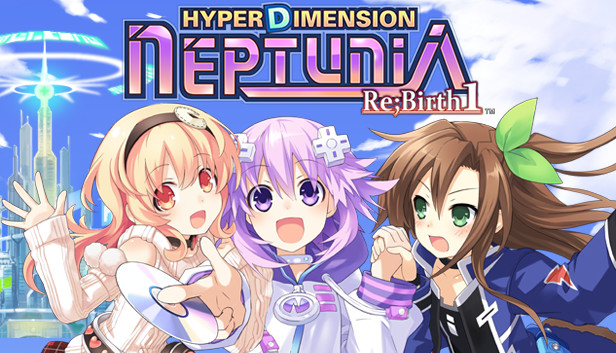
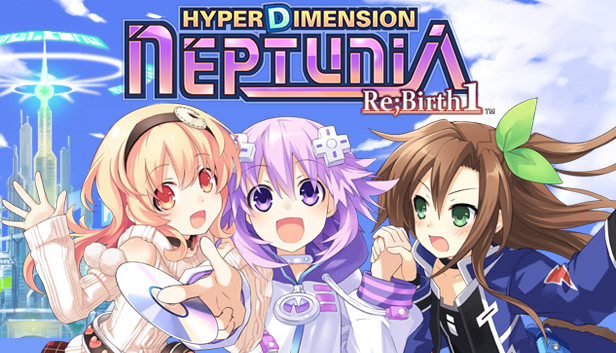
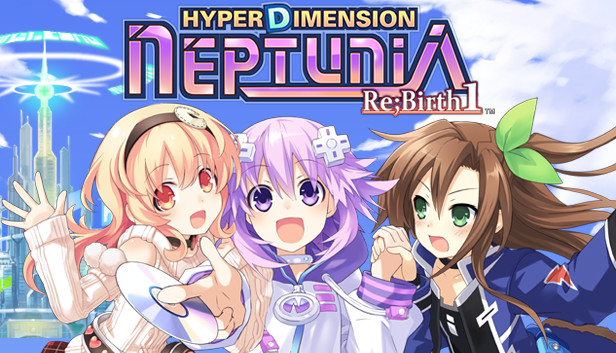
In Gamindustri, the goddess Neptune falls from the heavens and loses her memories. Joined by Compa, IF, and the sentient book Histoire, she travels across four nations to save the world. This JRPG pairs turn-based battles with customizable gear, abilities, and a knowingly irreverent story. Steam player rating: 94%% positive from 10,138 reviews. Supported interface languages: Traditional Chinese, English, and Japanese. Released January 29, 2015.
Credits
Lowest recorded in 36 months
$3.382024-05-13 · GamersGateBase game · same records as the chart above; USD history, not a regional Steam low.Language support
| Language | Interface | Subtitles | Audio |
|---|---|---|---|
| Traditional Chinese | Yes | Yes | — |
| English | Yes | Yes | Yes |
| Japanese | Yes | Yes | Yes |
Steam PC edition data · 2026-10-20
02Before you buy
Combat
Steam PC battles let you field up to three characters, with three more in support; you can swap characters during combat.
Controls and languages
The Steam PC version has full controller support. Interface languages include English and Traditional Chinese, and full audio is available in English and Japanese.
Customization
Plans can adjust settings such as enemy difficulty and dungeon treasures. You can also craft equipment with abilities.
03Frequently asked questions
What is the story about?
Neptune loses her memories and travels across four nations with Compa, IF, and Histoire to save the world.
How many characters can battle?
Up to three characters can fight on the field, with three more available as support.
Does it have a Japanese language mode?
Yes. The game features a Japanese language mode.
“A character-driven, lightweight turn-based JRPG: lively presentation but rough systems and an unmistakably dated feel, best suited to series fans and lovers of anime-style casts.”
Our Verdict
The best way to approach Hyperdimension Neptunia Re;Birth1 is not as a JRPG that needs to prove itself across the board, but as a piece of old confectionery with a very specific flavor. Sweet. Light. Carrying a little of the coarse grain that the era left behind. The only firmly grounded critical references are the 7 out of 10 from Destructoid and Hardcore Gamer, and that position is, honestly, quite accurate: this is not a bad game, but it is clearly not at the level where everyone should feel obligated to catch up on it. It is a title you have to accept on a vibe level first, and only then talk about its strengths and weaknesses.
A Niche Title With A Stable Fan Base
The scoring picture is consistent and modest. The citable review scores hover near 7, which places the game squarely in "worth a try" territory rather than "essential." At the same time, the Steam reception tells a quieter, more flattering story: a 94% positive rating across more than ten thousand reviews points to a small but devoted base that knows exactly what it wants from this series and keeps getting it. Those two readings are not in conflict. Broad critics land it as decent; committed fans land it as a reliable comfort pick. The truth of the game lives in the gap between those two numbers.
It also matters that this title is now more than five years old, and that historical context directly shapes how it should be judged today. Many things that once registered as "cute little quirks" can now read as "why is it still like this," and some of the character writing and visual shorthand that felt fresh at launch may not feel as novel now. The era is part of the experience, and pretending otherwise would do a prospective buyer a disservice.
Who Should Play, And The Rival Comparison
So is it worth the few dozen hours? If you already like the Neptunia series, lean toward lighter-flavored Japanese RPGs, and are willing to accept the systems and packaging of an older work, then it is a reasonable pick. Just do not arrive with sky-high expectations. If, on the other hand, you are here for a game with deep mechanics, a strong story, and audio-visuals that can stand up to scrutiny, your time is better spent elsewhere. The audience boundary here is unusually clear, and respecting it is the difference between a pleasant run and a frustrated one.
Set against its main rival, The Legend of Heroes: Trails into Reverie, the trade is easy to articulate. That kind of work offers greater narrative density and deeper systems, but it also asks for more patience and a heavier commitment. Re;Birth1 wins on the opposite axis: it is brisk to pick up, its cast is instantly recognizable, and its self-deprecating humor gives it a personality that the more serious option lacks. Neither is strictly better; they answer different cravings. In one line, this game is neither "must play" nor "avoid at all costs." It sits in an awkward, honest place: the people who like it will forgive a lot, and the people who do not were probably never going to be sold in the first place. That is not a triumph, but it is a clear and fair verdict.
Popular Steam reviews
Native-language selection · 10 reviewsSelected helpful reviews in this language show both recommendations and criticisms. This selection does not represent the overall positive rating; opinions reflect the version reviewed.
If you angle the camera correctly and jump with some of the characters their skirts will go up and you can see their panties.Show moreShow less
Hyperdimension Neptunia; reBirth1 is a traditional Japanese role playing game combined with a visual novel. The game caters to a niche audience and makes no effort to accommodate newcomers or uninitiated. The storyline borders on the acceptable limits of both the narrative meta and the digital millennium copyright act. The gameplay is demandingly taxing on the player’s patience. Furthermore, the presentation is borderline insanity and will ultimately make or break the experience. Hyperdimension Neptunia reBirth1 is a game that only pleases a very narrow audience through a collection of either off-putting or appealing elements. The game’s storyline demands an extreme measure of patience from the player and a great deal of tolerance for overused references and clichés. Hyperdimension Neptunia reBirth1 is set in Gameindustria; an analogous universe that represents the four sided console war of the seventh generation. Each nation or faction is governed by a goddess, or avatar, that represents the faction’s home console. The player takes control of Neptune, an amnesiac avatar who represents Sega, who in turn has to travel the world and gather allies and fight enemies in the respective lands referencing Sony, Microsoft and Nintendo. Each nation is headed by a respective goddess with each their own distinct appearance and personality. The ensemble cast is rounded out by characters representing popular franchises and companies such as Tekken and Monster Hunter. The plot has Neptune search the lands for her purpose in life and reason behind the constant attacks on everyone’s nations by a mysterious adversary. The majority of the plot is told through scrolling text accompanied with expressive portraits. The sheer extent of time that is spent reading is jarring. A large portion of the narrative is dedicated to characters’ development, usually manifesting in a three-way discussion on the merits of substantial bosoms or the palatability of dairy products. The discussions are rife with references to videogame history, internet memes and porn chichés which all add up to a staggering number of times that the player will end up rolling their eyes and sighing in mild annoyance. The overall experience is not helped by the characters instance on breaking the fourth wall and actually berating themselves for talking too much, only to resume the cacophony of clichéd locution. In all, the plot wafer thin in depth, richly spread with stale tropes and references. Gameplay revolves around a battle system and exploration with some novel ideals, but ultimately grows stale and monotonous. When not trapped in an incessant lecture on the benefits of fruits from the nightshade family the game plays like a traditional Japanese role playing game. The player explores dungeons with different enemies and treasures to fulfil quests and craft new items. The crafting system allows the player not only to make new weapons and armour, but also reduce the difficulty to increase the amount of power generated when using attacks or the amount of experience points awarded after a fight. A general battle will be turn based, with each character being a given a slot in a sequential order governed by the character’s statistics. The player must the position the character adjacent to the enemy and select from the available attacks. Attacks come in three varieties and are either geared toward the generation of EXE power, dealing raw damage or the deterioration of the enemy’s defence gauge. When a certain amount of EXE power is earned additional attacks may be used or the special abilities may be unleashed to generally annihilate the enemy in a grandiose and gratuitous manner befitting of a mainstream Japanese cartoon. While the system is fully customisable and offers some level of depth, it quickly degenerates into an automated sequence where EXE building will be followed by guard breaking and ultimately unleashing the aforementioned special attacks to quickly end the fight. However, while there is a system in place with elemental attacks and a physical versus magic attack split, it hardly ever has any effect on the battle’s procedure; eliminating any all need for proper tactics. Furthermore, the game’s difficulty tends to spike to unreasonable levels and demands a degree of mandatory grinding for experience before allowing the player to pass to the next chapter of the story. Naturally, grinding comes into play when using the craft system as it demands items only dropped by certain enemies. These enemies only drop the items by chance, so repetition sets in fast when the same enemy is slain over and over in an attempt to acquire a particular item. Hyperdimension Neptunia reBirth1 stagnates fast under its almost archaically traditional combat system and barely acceptable random drop mechanics while exploring monotonous and linear dungeons. The overall presentation is where game finds its initial appeal, however, upon further inspection will be the most prominent factor for playing or dropping the game. While the game is bright and colourful, both in setting and characters, the game is terribly guilty of reusing its assets to a criminal extent. It is not uncommon to find the exact same enemy in the final stage as one you found in the introduction stage. Only the name will make any difference. The dungeons themselves fall victim to the recycling of assets as well. The game contains exactly one warehouse map, and it is reused five times, each time filled with the same or palette swapped enemies. The main characters themselves in the meantime suffer from stale animations. Characters seem to float over the ground rather than walking on it. Jumping might as well have been teleportation because it violates roughly eight of the twelve rules of animation. When attacking, there is either a blinding flurry with no weight to it, or a brutal swing that looked cool, but did not do any significant damage. During the story scenes the characters interact through portraits with various expressions. Particular focus is placed on character’s chest area. Considering the lack of assets in the aforementioned region on some of the characters in addition to the rather revealing attire, it might not be the best game to have installed on a hard drive if the player’s country of residence has a legal grey area in regards to the depiction of underage looking characters. The visuals are accompanied by music and voice acting that breach any and all limits that can be endured by a living soul. The music is catchy and appropriately a blend of techno, rock and chiptune. However, the cuts are extremely short, so the same few notes play ad infinitum until insanity ensues. The voice acting is beyond comprehension. Most characters have voices that are so high pitched they can shatter glass. The fact that most of the delivery consists of screaming and yelling only aggravates the situation. Considering that all the of game’s text is voiced will quickly lead to the realisation that in addition to a JRPG, this game also contains an audio book where the entire novel is screamed at you. Luckily the game features an English voice track that is considerable more subdued and less obnoxious in addition to not dubbing half the dialog in lieu of some much needed silence. In all, Hyperdimension Neptunia reBirth1 is a very special game with a number of features that appeal to a very small audience. However, for everyone else, this game suffers from stale gameplay, agonising voice acting, grating music, substandard animation and modelling, a bizarre story and dubious character development. Yet, if all of the aforementioned complaints are exactly the elements you are looking for in a game, then I would recommend it. Anyone else will want to take note of it, and rather look for a more conventional game.Show moreShow less
I'm not sure what prompted me to get HNR;B1. Yes I play Japanese videogames, yes I watch a little Annie May, and hell I even listen to Hatsune Miku. However, I'll be deep-fried in damnation before I tolerate uguu moeblobs crying over baka oniichan and the lack of senpai-noticing. That's not what this game is about though. The art might give you that impression, and there is some fan-service, but I dare say the best qualities about HN are the characters and writing. HN is broken up into 8 chapters. Typically there's plot, then shopping, more dialogue, random people handing you "plans", dungeons (both forced & optional), and then more plot. It's a standard setup and if you know what you're doing and/or skipping dialogue this game can be quite short. I wouldn't recommend it though, because the actual game portions aren't the greatest. From what I've read, this edition of HN is a massive improvement over the original in terms of exploration and combat. This must mean the first version was really dire. Getting around is handled via a map-screen, with dungeons representing the only "on-foot" portions. While the dungeons include various niceties like no random encounters, the lay-outs tend to repeat quite often. We're talking the exact same lay-out, and the enemies that populate them tend to be the same creatures you already fought, except stronger. There's no other way to say it, the dungeons in this game are weak. At least they're short, and they aren't bogged down by elevators, lots of stairs, and mind-numbing puzzles. The combat fares a bit better. It's turn-based and over-time you develop combos. There are three types: rush for building EXE meter (super moves), power for straight damage, and break for taking down shields. There are a variety of other skills like healing, buffs, and so on. The roster of playable characters eventually blossoms to over a dozen as well. It sounds like a lot to take in, but for the most part this is not a difficult RPG. There's very little strategy aside from "use a lot of super moves" and the ever-important "heal when you're low on HP". If you're getting slapped to heck and back, it's probably because your level isn't high enough. Late-game grinding isn't really a hassle either. A lot of optional super-enemies drop enough exp to level multiple times in a single battle. I suppose the level of difficulty can vary greatly, depending on how much leveling you do. Some players might find more entertainment in avoiding optional fights, so that every regular encounter is hard-fought. Eventually though you're going to become OP, you can't resist it. Most of the grind in this game is in finding all of the materials. Those plans I mentioned earlier add things to the game. New equipment, new abilities, more dungeons, and so on. They require materials stripped from the cold dead flesh of the monsters that you kill. This is best tackled with a guide. The in-game "Nepedia" is nice, but it pales in comparison to a guide from good ol' gamefaqs and the always handy CTRL-F. Materials (along with corpses) can also be turned in for quest rewards (if applicable). Quests are interesting in that completing them can raise & lower shares. The gals of HN are always talking about shares and their importance in the console war. This never really becomes a factor until 1) the ending and 2) the acquisition of hidden characters. It's something to keep in mind. I guess I should mention that aside from the ridiculous "millionaire" achievement, HNR;B1 isn't bad if you're a completionist. Doing everything (aside from some DLC) in the game took me less than 30 hours. I have played through the Vita game as well. That first play-through took about 30-35. If you don't skip cut-scenes, the length is more than reasonable. Notice the lack of character discussion in this review. Yeah, I'm not going to spoil the best aspect of the game. The cast of Neptunia is great, and the voice-acting (both ENG & JPN) is very well-done. I mean okay yeah, it's cute girls, some of whom transform into something exceptionally form-fitting, but the dialogue is rarely dull. Aside from a couple (expected) interactions, the cast doesn't get too hung up on the standard Annie May tropes either. Call me shallow, but I also got a kick out of all of the videogame references. The most amusing one to me is Neptunia herself. The other goddesses are Leanbox, Lastation, and Lowee. Since the plot of this game involves a console war, you can guess what those names refer to. So what's the deal with Neptunia? Back in the mid 90s, Sega was planning a console that combined the Genesis & the 32X. It was called Neptune. Honestly, I can't think of a better system that represents Nep-Nep, she is quite a random character. So yeah, I recommend HNR;B1. As far as J-RPGs go it's not particularly great, but it has so much charm I can overlook its faults. Also, it's appropriately-paced and the port isn't too bad (although I had to switch to XP compatibility due to constant after-battle crashes). Don't write this game off simply because you visited the community hub and saw a few questionable images. If you liked this review or want to see more recommended games, be sure to follow our curator group: Follow Original Curator GroupShow moreShow less
I actually enjoyed this game, but wouldn't recommend it to most other players, because it is a certain kind of ridiculous This series is a very particular type of game that mixes turn-based RPG battles with long dialogue cutscenes that are almost like a visual novel. The characters are cute, and the whole world is a parody -- the name of the world is "Gamindustri", so it's all about video games. There's even a character named "Tekken" who attacks with fisticuff combos like a character from Tekken. The humor in this game is occasionally great. More often, though, it's a cutesy self-referential fourth-wall breaking that may appeal to a certain type of player but probably not others. Which may well describe the whole game; you need to like the cutesy anime VN aesthetic and have patience for very long dialogue cutscenes because you like the characters. The characters are at least very pretty in the cutscenes, animated breathing so it's not just a static image. Likewise, the turn-based battles actually look pretty decent. Unfortunately, it's all flash and no substance; in this case you're basically running many variations of the same few dungeons, fighting retreads and recolors of various enemies in mostly uninteresting turn-based combat interrupted by ridiculous sequences for your special moves like a FFVII summon. I mostly played this as a game to grind while watching Netflix, and indeed, grinding was required for me to beat the final boss. Still, in spite of all the negatives, there is an undeniable charm to the game. And maybe I'm biased because the ending credits made me smile and filled my heart with joy. But this is a game for anime nerds who like video games, probably by anime nerds who like video games, and while the gameplay isn't very good alternating between grindy turn-based combat and long dialogue scenes, there's charm here for people who like that sort of thing. It's sort of like a cake made by your five-year-old: It's not good enough that I'd recommend it to most people, but it's charming and I like it anyway even though the quality may be dubious. (And if this particular strange combination sounds appealing to you, maybe you'd like it too.)Show moreShow less
Let's start with a note: Neptunia saga is not for all, that's a fact. As far as you can try if you don't like these "breaking the fourth wall", other games references and the fact the characters (at least the main ones) are girls you are not going to enjoy it. Now let's talk about the game: HDNRB1 is not just a remake of HDN, infact much is changed between story and mechanics. The game is a quite hard JRPG, at least at the begin, sadly later you will probably going to spam these EXE (super like moves) destroying everything in your path but still the game gives out quite a challenge. There's not actuall grinding like other JRPGs but still you can't go around ignoring enemies or you'll be in trouble against these End chapter bosses. Graphically the game is not that bad but not everyone like the "anime style". Musics are good even if not that many. Dungeons are... well there's many dungeons but not many types, you will find yourself unlocking many dungeons sure but in the same times many of them are just the same one with some differences and nothing more, same for the enemies, so be aware, if you want to see differences at every corner you are not going to like it. As port is not perfect but still this is the very first port made by IFI and, in my opinion, they made a good job in the end. Should you buy it then? Yes, you should. Still, like i've said at the begin, this game is not for everyone but who knows, you may find yourself having more fun than you think.Show moreShow less
When you play a game, there's 5 things you should look at. Characters, Story, Graphics, Music, and Gameplay. Most of those are pretty self-explanatory. This game can be described as a JRPG with a visual novel style to storytelling. So let's dissect each topic, starting with story. The story is pretty standard of a JRPG-esque game. You have amnesia(As usual in JRPGs...) and there's this villian who is doing evil stuff. Additionally, you'll be helping out people across the land with their only little problems while furthering your own goal(In this game, it's find parts to make plot appear and to stop the villian). What's different is that everything has a video game motif, with the world being called GameIndustri, with the country of Lowee(Wii), Leanbox(XBox), Lastation(Playstation) and Planeptune(Sega Neptune). They were probably reaching with the Neptune. There is also a war going on... The Console Wars! But apparently no one pays a lot of attention to things like that as apparently most citizens happily travel from one land to the other, make plenty of trade(according to the game, Lastation and Planeptune are very close with each other as trade partners), and generally lead peaceful lives. The console wars really refer to the four leaders of the four lands who hate each other at the start and want to kill the others to become THE ruler. What terrible rulers. But then story happens and they become friends. That much is revealed in the opening cutscene. For the story, it's pretty standard JRPG. It's pretty weak and there aren't any surprises or anything. However, it's made up by the Characters. The characters are written well and have fair personalities. Most of them anyways. The characters are basically aware that they are in a video game and take a lot of digs at themselves, gaming, and tropes in general. In other words, the characters are very silly and spend most of the time joking around or making fun of something/someone. One of the sad parts is that some of the characters have 'lost in translation' moments from translating Japanese to English, and some references are forced out as a result, regardless of what the character said. If you pay attention you can see where they try to force a joke out, and it's sad. So the main character is an amnesiac. The rest of the characters are summed up as simply: Moe blob, cool big sis, tsundere, gamer, quiet but explodes when angry, LARPer, and 'The Rest'. The characters bounce off each other fairly well and easily have fluid conversations, with characters often getting poked at and casually threatening each other. The only problem is that in a game where 7 playable characters are shown and have well-defined personalities, another 6 characters have next to no personality appear, and are mostly 'just there'. Although it's harsh to say that they have no personality, it's more like they joined the party too late and can't keep up with the established personalities, as well as the fact that their own personalities are fairly sensible and straightforward. In fact, a few characters you get that have a grand total of about 10 sentences. There is a reason for that though, so it's forgiven? The villians aren't written badly, they actually seem like people, especially compared to the silliness brought to the table by the main character. They are almost always very serious, degrading, and occasionally bicker with the characters as well. Villians should joke around too at least once in a while, it just makes them a bit more relatable or personal. It's a little hard to make fun of the characters in a game when the characters themselves are already doing that, Nevertheless, I would give the characters a solid 8/10. There are some moments of brilliant humor brought by the characters, but the bland characters ruin it a little. Then the graphics. There honestly isn't a lot to say about this one, it was a game made on the PS Vita, which had enough power to run PS3 games. Everything is pretty as to be expected, with a few texture splits here and there. Everything is well detailed and fits well together. The game plays as a visual novel, so about 70% of the time you'll be looking at a portrait of the characters with a background. The backgrounds are as detailed as you can expect from a game this size, unlike many indie visual novels in where there's a dirt path background or maybe a stereotypical classroom. The characters move slightly so they have small animations that are done in the middle of a conversation, usually for comedic effect. Better when you think of other visual novels like that tend to just have a still picture. Nice to see some movement. The graphics are what you'd expect from a PS Vita game. Good all around. When you think of JRPG music, you always think of the Final Boss music. Smithy from Super Mario RPG, Sephiroth from Final Fantasy VII, final boss music is always tremendous. It's probably the second most important tune in the game, right behind the intro scene music. Well.. Not so much here. The final boss music wasn't that great. The music was at its best during the visual novel parts of when everyone was talking, it set the mood very well. The dungeons are either up-beat techno, drab cave, or easy-going nature tune. The voices were all fine, I would say to listen to this in Japanese though. It has more feeling compared to the english voices. Best music was probably the intro. Not bad, could be better. Gameplay can be described as such: The grind is real. You go to a dungeon, beat up baddies, then go to town and make fun of everyone, a quick serious scene, then back to the dungeon. There are also a lot of side dungeons in case you wanted to grind some more, but they look exactly the same compared to the regular dungeons. Lazy workmanship! You will need to mind you, the difficulty can really jump sometimes. Like, seriously. There are a lot of little notes on the map and in the town that make references to games and animes(Oh look, it's maryo!). The battles themselves are what I love in some games. Turn based field in where you have to consider your positions. You even do a bit more damage if you attack an enemies back. Lot of little details in the battle system, although for me, it boiled down to the triangle formation, where enemies tend to clump up in the middle for easy AoE and I'm safe from their AoE. Not much to say about battle system, it's just well done. The crafting system is where it's at though. During gameplay, you get RAM, and you use that ram along with item requirements to unlock new weapons, clothing, dungeons, dungeon enhancements, and perks. The perks are wide reaching, with things like EXP UP or "Always see hidden items". Those perks are also optional even after you get them, which is something that should be in all RPGs. Additionally, there are hats and clothing that change your model. There are a good amount of clothing which I fussed over like a mom clothing my kids, but the hats.. So many hats. More than TF2. The amount of hats is absurd. Even if this was just a visual novel with dress up, I'd play it anyways. Everything but the dungeons are great. So would I recommend this game? No I wouldn't. This game has a bit of a "Stick of Truth" or "Duke Nukem Forever" feel to it, in where if you're not familiar with the subject matter(a lot of games and anime), a lot of it just flies over your head. Unlike Disgaea in where you can play the game without knowing anything and it'll still be funny on its own right, this game makes a lot of references for its humor, which can really hurt it at times since most people may not be familiar with it. If you play a lot of games and watch a lot of anime, then I would recommend this game. I mean, I enjoyed the time I spent, it's good. Just not great. Side note: Would you believe the creator of Megaman made this game?(Not true, whoops!)Show moreShow less
Nep-Nep : Check Pantsu : Check Wife thinking I'm a perv : Check WORTH IT!Show moreShow less
Look, if this is your favorite game, that's totally fine. Good for you. The industry has different genres for this exact reason - different strokes for different folks (pun entirely intended). With this in mind I ask that please, do not take this the wrong way, but I personally cannot in good conscious recommend this game to anyone. Visually, the best way to sum up Hyperdimension Neptunia Re;Birth1 is "softcore loli porn: the JRPG". And again, if that's your thing, that's totally fine - but if it isn't, you're not going to enjoy the visual novel aspects of the game, which include 'animated' fanservice sequences where literally only the characters' breasts are animated. Within the first minute and a half of the game, the primary characters are introduced in armor that is not only impractical for battle but impossible to wear in real life, while the dialogue referencing their centuries-long war over who deserves to be god devolves into an argument over whether breast size should be a factor in determining who has control over literally all of creation. As a number of other reviewers have pointed out (and I hate to recycle the words of others here), it's a very niche brand of humor, and unless you're a hardcore anime fan - and again, specifically the loli genre - you're not going to get a lot of enjoyment out of this title from a writing standpoint. Everything is designed to be 'cuteness overload' while somehow simultaneously completely oversexualized, and that really just isn't going to appeal to everyone, which is why the 'Overwhelmingly Positive' rating on Steam feels both baffling and completely unjustified. Regardless of your softcore porn preferences, moving past the visual novel aspects (which are about 50% of the game), the gameplay itself aims to be a mix of a traditional turn-based JRPG while combining elements of a basic tactics system in which you have to physically move characters within range of their opponents, which presumably opens them up to attack. However, given the range of movement afforded characters from the start of battle with most low-leveled monsters, this system doesn't appear to make much sense because both you and your opponent will easily be able to close any starting gaps within the space of a single turn. Perhaps with the addition of long-ranged characters later on in the game, the tactics aspect will actually begin to shine, but for the beginning levels its inclusion is more mildly confusing and frustrating than anything else, especially considering that visually the system actually looks nice. Aside from this, however, the combat boils down to your basic JRPG fare, and there's nothing really special about it - because, again, the combat is really only half the game anyway. I'm not sure if the combat improves in the game's sequels, but I'm far less tempted to shell out any more money to even attempt to try them given my experience thus far with Re;Birth1. The greatest setback of them all, however, is the game's controls. As the store page says, for a long time this game was exclusively available on consoles, and it is made abundantly clear from the very first dungeon that Re;Birth1 was not designed with PC gamers in mind. The keyboard controls are abominable, even with keymapping, and it turns the entire experience into a taxing, joyless, tedious affair. I don't think I'd recommend anyone even attempt to play this game without a controller, unless you have the miraculous, nigh-inhuman patience required to alternate between using the mouse and having both hands on the keyboard just to be able to navigate the first dungeon. It's just that infuriating, and this problem persists into the combat sequences, where you will often find yourself having to once again alternate between using the mouse and having both hands on the keyboard within the space of a single turn, just to be able to select more than one target. It is absolutely mind-boggling that there isn't a warning on the store page that a controller is recommended for this game. Oh, and by the way, every single key prompt is designed with a controller in mind, which makes memorizing the keymapping even more difficult. The game's writing, meanwhile, is an entirely different source of frustration. The plot is a thinly veiled parody of the console war between Microsoft, Sony, Nintendo, and Sega (?), and in this reality all four are middle to highschool-aged girls guilty of more fourth-wall breaks than Deadpool himself. It's an interesting premise that gets heavily bogged down by the 'cutesy' anime dialogue of our loli protagonists, and it's a shame, because the concept of playing as characters who are aware they are in a video game is one that is seldom used. Unfortunately, Re;Birth1 fails to utilize its basic premise to its full potential. I'm sorry if this all sounds harsh. Again, obviously this game appeals to some people. I sure as hell don't know why, but if this is your kind of game, hats off to you. I'll never judge you for that. But the point of this wall of text is that this game really isn't designed to appeal to the average gamer - or, hell, most gamers in general. And people deserve to know that, given that this game still has an 'Overwhelmingly Positive' rating. If you absolutely have to try Re;Birth1, get it on sale - but it definitely isn't worth the retail price tag, and I cannot recommend anyone spend $29.99 on this.Show moreShow less
As someone who played this game to platinum three times on the Vita (thanks, stacking region trophy lists!), I find it to be the best Neptunia released in the West yet. The gameplay is simple to grasp and fun to play and the script is the best yet with quite a few funny moments, which is a huge step up from the very first game's cringe-worthy reference overdosing every few seconds. The English dub is also very good. Just one note: the cutscene portraits weren't scaled up, which is quite noticeable during cutscenes, particularly against the much crisper backgrounds. It's not a dealbreaker, but it may bother some people.Show moreShow less
Bought this game a while ago and I don't even know why I got it. It's not really bad but It's not good either. It's basically just some really weeby JRPG with loli girls and girls in skimpy outfits with huge tits, y'know, what you'd expect. It's got a ton of grinding which yet again is to be expected. Being a fan of the Final Fantasy series though I don't have much of a problem with this although some people can find this a tedious task and it's not for everyone. Combat style is kind of unique in it's own way but it's not mind-blowingly revolutionary. With the sort of visual novel story and whatever . Graphics look really clean and the artwork is nothing to complain about. Story-wise I suppose if you watched the anime you'd understand it better and get more enthralled into it but as an outsider looking in I didn't find it all that gripping. Just some loli girl with amnesia. To sum it up, this mainly comes down to me not being able to get into the game itself. I might be being too harsh but I think if you want a quality JRPG go find something else like Final Fantasy or Persona. Maybe I should play this game more and give it another chance but frankly I just can't really get into it and don't have the time. If I wanted kawaii anime girls, I'd go to Gelbooru. Likely I'm going to be slaughtered for this unpopular opinion but I don't really care.Show moreShow less
Source: original Steam user reviews. Helpful votes are an archived snapshot, not live data. Last collected: 08/15/2026.