
























Opening
The first storm in ICARUS does not ask permission. One moment sunlight is filtering through a canopy rendered down to the wood grain, condensation fogging the inside of your visor; the next, the wind climbs, whole stands of trees bow and snap, and a lightning strike walks a fire through the dry brush toward the cabin you spent two hours building. On this terraforming-gone-wrong planet, weather is not wallpaper. It bites.
That is the opening lesson RocketWerkz — the studio DayZ creator Dean Hall built — wants you to learn fast. The team rebuilt Unreal Engine 4's atmospheric tech into a weather machine that actually shapes how you play, then bolted onto the whole survival loop the one switch most of its rivals never dare to install: you can lose.
This is not the genre's usual endless farm sim. Every prospect drops you with a real-time clock — three days at the shortest, twenty-nine at the longest — and if it runs out, your explorer dies on the rock for good. Your gear resets each run, but your talents and tech tree keep growing on the account. That blend of cruelty and addiction is why a near-five-year-old game clawed its way back onto Steam's bestseller chart in late 2025. So let's break it down, one dimension at a time.
Story | 5.5/10
Story: 5.5/10Let me be blunt up front: story is the weakest of the six dimensions here, a 5.5, and the reason is simple. ICARUS tells a tale you forget the moment you log off.
The premise is a sci-fi shell, not a hook

You play a contractor dropped onto a planet where terraforming went wrong, sent to prospect a resource called exotic matter and haul it back to an orbital station for cash and tech. It sounds like setting; it plays like an alibi. The fiction exists mostly to give "go mine, come back alive" a respectable excuse, and the seams show within the first hour. There is no villain you love to hate, no companion who walks the wilderness beside you, not even a protagonist with a motive sharper than a paycheck.
Missions split into Open World operations and tighter Individual Missions, yet neither form carries much narrative weight. No line of dialogue pins a character in your memory; no twist keeps you up at night. GamerSky scored it 7.0 under the headline "space pioneer" and barely mentioned the plot at all. Sixteen critics on the aggregator landed on a 69 with a 33 percent recommendation rate, and a thin story sits among the faults they name again and again. This is consensus, not one outlet's grudge.
Environmental storytelling that asks a lot of you

So is the writing worthless? Not quite. The weight of the story has been moved out of dialogue boxes and into the world — ruins, wreckage, the odd scattered log that hints at what happened here before you arrived. You unearth a collapsed outpost in the desert; you spot a half-buried rig at the edge of the tundra. Why the terraforming failed, what the expeditions before you ran into — the game never answers those questions directly. It leaves you to reconstruct them out of the wilderness yourself. The narrative lives in details that never speak. Players who enjoy assembling the puzzle themselves will find a quiet flavor in it, and will stop to read every log they find; players who want a plot to push them along will simply feel lost and skip the lot. It is a mode of storytelling that knows exactly who it will and will not reach, and makes no apology for it. The trouble is that environmental fragments only carry a story if the world is dense enough to reward the digging, and ICARUS sits right on the edge of that threshold — there is enough lore to satisfy a player who actively goes looking, but not enough to ambush a player who does not. For everyone in the second camp, and that is most people, the planet simply reads as empty rather than mysterious, and the difference between those two impressions is the whole ballgame for this kind of writing.
A deliberate trade, measured against the best of its peers

This thinness is a choice Dean Hall made on purpose. His DayZ had no scripted story at all, leaving players to author their own out of tension and mistrust; with ICARUS he handed survival a win-or-lose condition and a goal line, but still refused to lead you by the hand through a plot. The bare narrative is, in part, the price of a deliberate mood — desolation, the persistent sense that you are one small, expendable trespasser on a world that was never meant to host you. Stuff a twisting epic into that, and you would shatter the very loneliness the whole thing is engineered to deliver. The game would rather you feel empty than feel crowded; it picks silence over noise on purpose, and that restraint is consistent with everything else it does.
Hold it up against Subnautica, the most obvious survival-narrative high bar of its era, and the contrast sharpens. Subnautica frightens you into competence; its creatures and drifting husks are threat and story braided into one strand. ICARUS surrenders narrative entirely to systemic pressure, manufacturing tension from weather, temperature and the ticking clock rather than from any reveal. Both bets are valid. But if you came for the writing, this trip will let you down — read it as a faint piece of prose, not a blockbuster, and your expectations will sit where they should.
Audio | 8.0/10
Audio: 8/10Audio is this game's most underrated strength, an 8.0, because it does not merely sound good — it keeps you alive.
Your ears read danger before your eyes do

On this planet, the soundscape is an early-warning system. When the wind climbs in pitch, a tree-felling tempest is usually minutes away, and you had better find shelter before it lands. When the ambient animal chatter cuts out all at once, a predator is closing, and your hand should already be on a weapon with your back against a wall. By wiring threat directly into the mix this way, ICARUS turns sound from background scoring into hard information, sitting right beside your health and temperature bars as a thing you actively monitor. You can half-read your own safety without ever glancing at the screen, the same way a sailor reads a sky. After enough hours you stop consciously listening at all and simply react, the way you would flinch at a sudden noise in a dark house, and that is when the design has truly clicked into place — the audio has become a sixth sense rather than a feature you have to remember to use. Few survival games earn that kind of automatic, body-level trust in their sound.
Restraint over hand-holding
That restraint is the clever part. There is no screen-filling arrow shouting "danger" at you — the alarm is buried in the environment, and you are the one who has to judge it. The low rumble before a thunderhead, the crackle of fire walking through dry grass, that single wrong rustle in the brush at night: each cue maps to a concrete decision. Pull back, dig in, or sprint to smother the flames before they reach the timber. Play with your ears open and you survive a little longer; play distracted, podcast in the other ear, and you will die for reasons you never actually heard coming. The mix rewards focus and quietly punishes drift, which is exactly the contract a survival game should be making with your attention. It treats your ears as a tool you are expected to maintain, not a channel for mood music, and the difference shows the first time a sound you almost ignored turns out to have been the only warning you were going to get. Other games would have flashed a red icon and a tooltip; this one trusts you to have been paying attention, and that trust is flattering in a way modern design rarely bothers to be.
Distinct biome mixes, faithfully carried to console

From forest to scorching desert to arctic tundra, every biome owns its own acoustic signature, and the separation is sharp enough to navigate by. The woods layer birdsong over insects and the occasional far-off growl; the desert is dry wind throwing grit against your suit; the tundra is a vast, cold howl so empty you can hear your own pulse in the gaps. Folded into the oxygen and temperature systems — the ragged breath when you are starved of air, the chatter of teeth in the deep freeze — the whole bed keeps hammering home that this world does not want you here, and it gives survival a legible rhythm: calm, alert, critical, escape, every beat tracked by ear rather than by a meter. None of it thins out on console, either. Australian outlet WellPlayed handed the console edition a 7 and singled out "beautiful visuals and sound design" as a highlight; on the new hardware the ambience is still gorgeous, and through headphones the sense of being wrapped inside an entire planet is barely a step behind the PC. Set it beside The Forest and the philosophy diverges: that game maxes out dread through the footsteps and shrieks of mutants, its menace anchored to concrete enemies you can name. ICARUS goes one step further and makes the sky itself the threat — what scares you is rarely a monster, it is a heaven that is about to turn on you. That environment-led pressure, rather than enemy-led pressure, is a rare touch in the genre and the real backbone of its eight.
Visuals | 8.5/10
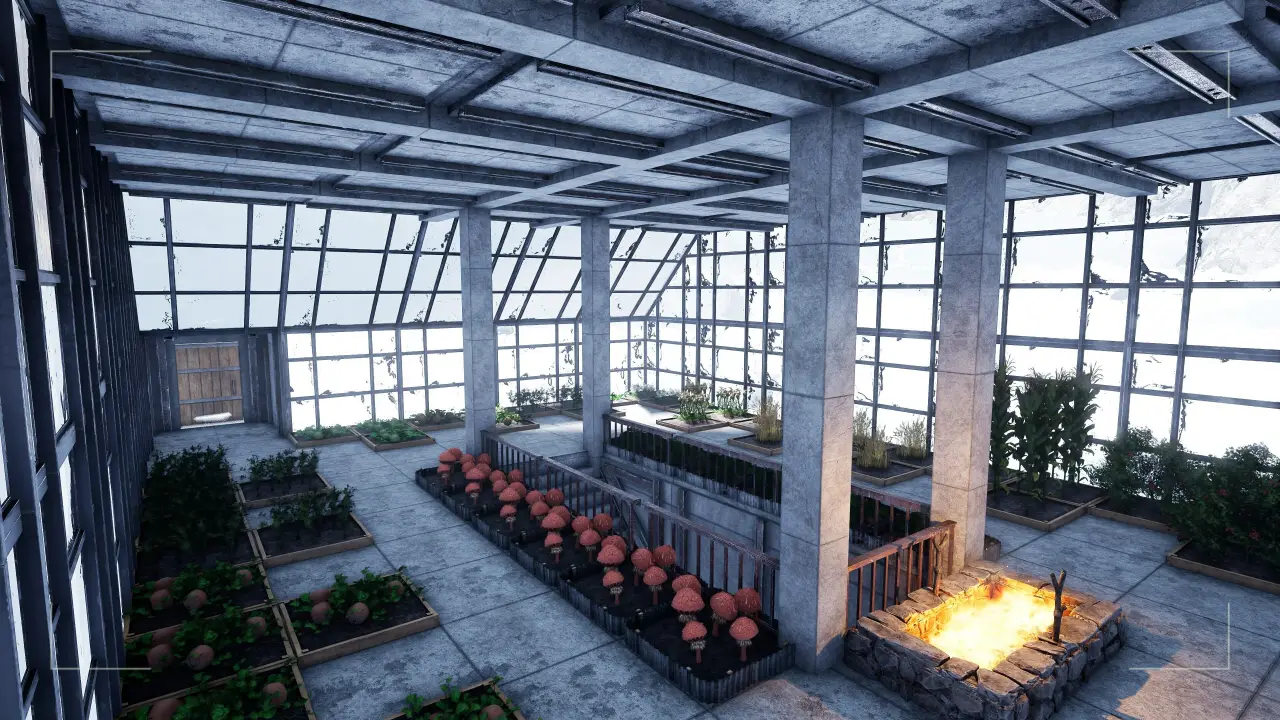
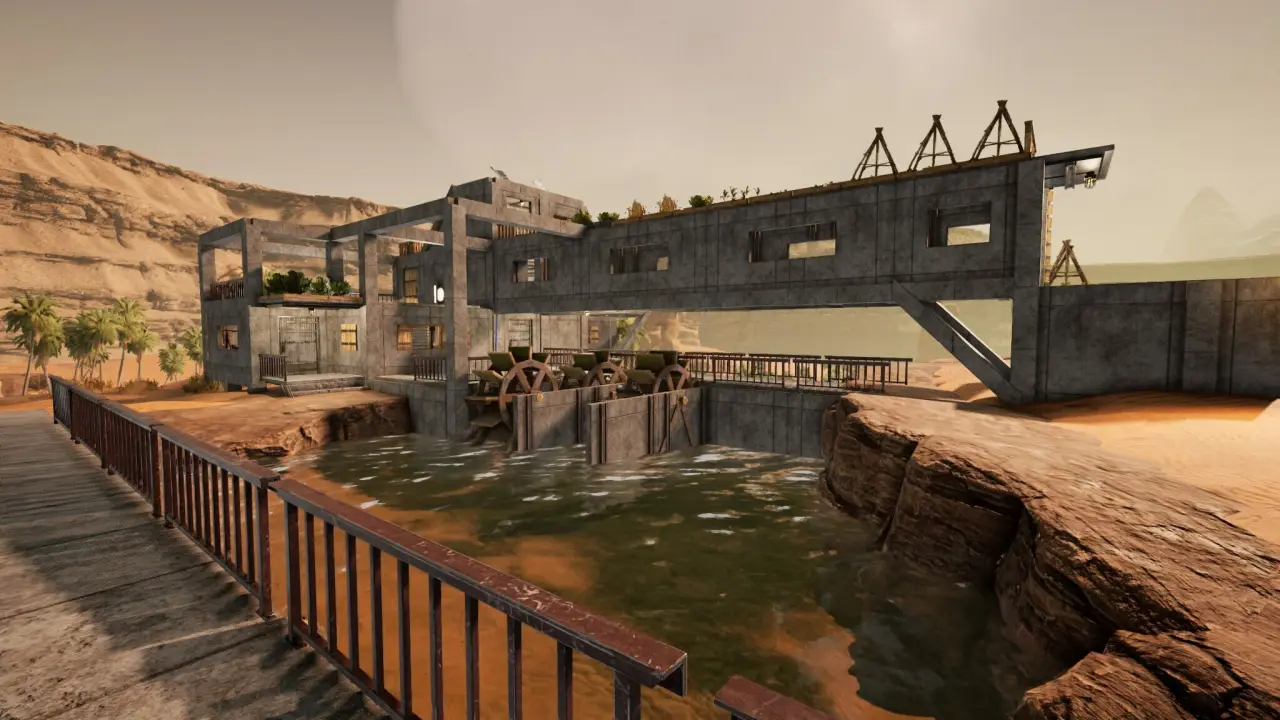
Graphics: 8.5/10Graphics is the highest-scoring dimension at 8.5, and the most valuable thing about it is not that it looks good. It is that the good looks do work.
A weather system that fells trees and burns down your base

RocketWerkz did not settle for Unreal Engine 4's stock atmospherics. The studio layered an entire bespoke biome-and-weather system on top of it, and the payoff is tangible: high winds bend and snap whole tree lines and fling loose objects across camp, while a lightning strike on the canopy can ignite a forest fire that races toward the timber base you sweated over and reduces it to ash by morning. Weather here is not an effect for screenshots — it is a variable that rewrites the fight and can erase hours of work. You do not really grasp the system's weight until the first time you watch your own home burn through.
Underpinning the spectacle is a foliage detail system that lets weather physically interact with plant actors instead of playing out on a separate track. What you see is not an animated weather decal but a chain of cause and effect — wind rises, trees lean, lightning lands, fire catches and spreads along the dry undergrowth, each step shoving the next. Critics keep praising the smaller touches too: timber textured down to the grain, the film of condensation that fogs a frozen visor when the temperature drops. This is the textbook case of visuals serving play rather than upstaging it. You watch the sky to make decisions, not to stop and admire it, and the most beautiful moments tend to arrive precisely when they are also the most dangerous. That coupling of awe and threat is the system's signature, and it is the rare survival game where pausing to take in the view is genuinely the wrong call — the storm that looks magnificent on the ridge is the same storm that is about to be standing on your roof, and learning to feel dread instead of delight at a gorgeous horizon is part of how the planet trains you.
Memorable biomes, and the console trade-offs

From lush forest to blazing desert to the hollow arctic tundra to the ocean, every biome lands a memorable look and a distinct quality of light. The god rays knifing through the canopy, the bleached glare of desert noon that washes the colour out of everything, the pitch black of a polar night where your headlamp carves out a single trembling coin of vision — all of it serves a different flavour of survival pressure rather than swapping a skin and calling it variety. Each new biome's shift in palette is itself a warning that the rules just changed and your old instincts need recalibrating. The desert does not merely look hotter; the way the heat haze smears the horizon tells you to ration water before a single meter moves. The tundra does not merely look colder; the flat blue cast over the snow is the game whispering that exposure is now the thing most likely to end your run. The art direction is doing quiet tutorial work, teaching through colour what a pop-up would otherwise have to spell out.
What the new-gen port keeps and what it drops

The console build faithfully reproduces the PC look — from a still frame you would genuinely struggle to tell the two apart — but it carries one unavoidable flaw that no amount of fidelity papers over. The interface was never properly rebuilt for a controller: the dense inventory, crafting and tech-tree menus use small icons and clumsy navigation that turn lethal when you are mauled and scrambling to repair armour or brew a remedy, where one mis-tapped slot can cost a life. There are minor graphical hitches and the odd crash on the new hardware, the sort that patches should iron out. Measured against its closest visual rival, ARK: Survival Evolved Ultimate Edition, ICARUS pulls clearly ahead on realistic lighting and dynamic weather — ARK wins on creature variety and sheer scale, ICARUS wins because the wilderness itself is simply more convincing and more frightening. It does not overwhelm you with quantity; it pins you with texture and mood into the exact feeling of being alone against a hostile world.
Combat | 7.5/10
Gameplay: 7.5/10Gameplay lands at 7.5. It owns one of the boldest designs in the genre and one of its most off-putting penalty systems — and those are, in truth, the same thing.
The losable timed prospect, where the whole loop hinges

What sets ICARUS apart is that it bolts a real-time countdown onto survival. Each prospect is a timed drop — three real days at the shortest, twenty-nine at the longest — and the studio is adamant that the "real-time" part is non-negotiable: when the clock hits zero, your explorer has missed the launch window and dies on the planet for good. Shacknews called it the most daring and most divisive idea in the game, a survival title with a lose switch wired in. The crowd that loves it finally has stakes and tension; the crowd that hates it feels shackled to the wall clock.
That single decision forces you to rethink how every minute gets spent. You cannot drift and farm at leisure the way other survival games let you; you have to budget the rhythm — gather by day, build by dusk, defend by night — because the deadline is always overhead, always moving, never once pausing while you deliberate. It converts survival from an open-ended state you can stall in forever into a race with a finish line: clear the objective and extract before the window shuts, or stay on the rock with your character for good. Most survival games dodge that pressure on purpose, precisely because it is uncomfortable, and yes, it will turn some people away at the door, but for everyone else it is exactly what gives each drop its weight. A run you can fail is a run that means something, and the genre rarely lets you fail at all. Most survival games are, structurally, impossible to lose — you respawn, you recover your stuff, you carry on as if nothing happened, and the worst outcome is mild inconvenience. ICARUS reintroduces real consequence, and consequence is what makes a victory feel earned rather than inevitable. The flip side is that it also makes a careless mistake genuinely costly, which is the same coin viewed from the other face, and your tolerance for that coin will decide almost everything about whether this game is for you.
Wipe-on-exit gear, persist-forever progression, and the brutal math of failure

A deadline alone would not be this severe, so the game also strips you near-bare every drop — the physical gear you accumulate on a run is gone the moment you leave. It sounds like pure punishment, but the compensation lives one layer up: the explorer's talent tree, workshop tech tree and blueprints persist permanently on the account. The talent tree spans skills, jobs and weapon specialties, fusing stat boosts with active abilities into one line of hard choices; the workshop tree extends the orbital tech tied to the station you launch from, existing as cross-mission progress that outlasts any single expedition. PC Gamer admitted that the dreaded from-scratch grind proved far less punishing in practice, because with tech and blueprints already unlocked, rebuilding gets faster every time — veterans recreate in minutes what once took hours, so the repeated openings become a kind of muscle-memory satisfaction rather than a backtrack.
The catch is how little room for error the loop allows. Death wipes all the XP banked toward your current level, respawns you at a random spot if no shelter exists, and a failed prospect simply deletes the character — stacked together, those penalties leave solo players almost no margin. That is why solo and co-op feel like different games: up to eight players can split the labor of chopping, mining, crafting and hunting, hitting the timed quotas with ease, whereas the console edition's cut to four players and its friends-only, no-matchmaking setup squeezes the balance even tighter. Set against its most direct rival, ARK: Survival Evolved Ultimate Edition, the difference is plain: ARK keeps you hooked with dino-taming and near-endless progression, a loop built on accumulation, while ICARUS uses the timed, losable prospect to make every run a survival campaign with a clear goal and real pressure. The former suits people who want to run a base for the long haul; the latter suits people who want tight, repeatable sorties. It is not better — it is choosier about who it is for.
Content | 8.0/10
Content: 8/10Content scores an 8.0, earned by two expansions and years of free updates that stacked a thin launch survival game into hundreds of hours.
Two expansions that roughly doubled the game

Since its 2021 launch, ICARUS has shipped two major paid expansions. Styx arrived on 27 May 2022 at nineteen dollars, adding more sci-fi caverns and alien terrain beneath the original forest, desert and arctic, pushing exploration a full layer underground and giving the surface-bound loop somewhere genuinely new to go. New Frontiers followed on 24 August 2023 at twenty-nine dollars, big enough to read as half a new game on its own — a whole fresh map, a standalone mission campaign, new animals and boss-tier creatures, plus pets and rideable mounts that shove the pure-survival loop firmly toward colony-building. Riding a tamed mount across a planet you personally clawed back from the storms feels nothing like the early hours spent shivering in a bush, and that arc of progression — from prey to settler — is precisely the kind of long curve a survival game needs to keep people invested past the first dozen hours. The two expansions are not side dishes; they are the second and third acts the launch build was missing.
Modes, biomes and a port that bundles it all

Breadth is not just a map count. The game offers Open World operations and Individual Missions: the former hands you an open region to develop and grow a base over the long term, letting you sink in and build something lasting, while the latter packs tighter, sharper timed challenges that force efficient, disciplined work against the clock. They map cleanly onto "I want to slowly build a home" versus "I want one hard fight," and you can swap between the two by mood and by how much free time the evening actually holds. Layer in the forest, scorching desert, arctic tundra and ocean biomes, each with its own resource spread, its own hazards and its own counters, and simply learning all of them well enough to survive comfortably is a serious time investment in itself. The game does not hand you mastery; it makes you earn fluency in each environment separately, and that learning curve is itself a substantial chunk of the content. Knowing how to thrive in the forest tells you almost nothing about surviving the desert's heat or the tundra's exposure, so each biome is effectively a fresh skill check rather than a reskin of the last one. For players who treat that as a puzzle to solve, the breadth is a feature; for players who just want one comfortable home base, it can feel like the game keeps moving the goalposts on purpose.
Why the depth holds up against newer peers

The friendliest thing for newcomers is that the console edition bundles the base game with New Frontiers, handing you years of accumulated content in one purchase with no add-on FOMO — and that is the backbone behind hundreds of hours at console launch. Measured against the recent co-op survival wave, Valheim wins on lightness and easy onboarding, Enshrouded wins on visual polish and exploratory depth, but on raw total volume and the depth of the building system, ICARUS still comes out ahead thanks to that long tail. A fair caveat, though: the quantity is there, but the density is not even. Plenty of mid-to-late objectives start reusing the same locations and layouts, and the grind shows clearly once you have seen them a few times — an open-world survival hazard ICARUS does not fully escape. The first half is discovery, every drop turning up something you have not built or fought yet; the second half edges closer to a job, repeating beats you have already mastered. Whether that trade is worth it comes down to how much you enjoy the moment-to-moment loop itself, because the back half asks you to like the doing more than the discovering. If chopping, smelting, building and defending are intrinsically satisfying to you, the repetition reads as comfort food rather than chore, and the hundreds of hours are real hours you will happily spend. If they are merely the means to an end, the seams will start to chafe well before the content runs dry, and you will likely set the game down with plenty technically left to do. It is a generous package either way, but its generosity rewards a specific temperament more than a casual one.





Comments 0
Share your game review
Join the discussion and share your review of this game.
No comments yet. Share your thoughts on this review.