

























Opening
No dragons. No magic. No chosen one with a prophecy stapled to his forehead. In 2018 a small Prague studio looked at the medieval fantasy playbook, tore out every supernatural page, and dropped you into the body of a blacksmith's son who can neither read a sentence nor hold a sword straight. This, it told you, is Bohemia in 1403. Now go survive it.
Kingdom Come: Deliverance has never been interested in flattering you. Its opening hands you no legendary blade — it hands you a beating from an ordinary soldier who chases you across your own village. It will not let you quicksave your mistakes away; you have to drink a flask of Saviour Schnapps just to keep your progress. It will not even teach you to read. The letters on the page stay as gibberish until you grind your literacy up in-world, one squinting attempt at a time.
That stubborn realism is the contract Warhorse Studios offers. Accept its rules, and it returns something almost nothing else in the genre can: a medieval world that feels genuinely lived in. The mixed mid-seventies aggregate hides a furious argument — some players bounced off the steep wall and the rough launch, others endured all of it just to read this Bohemian epic to its end. The question this review answers is the one underneath that split: when a game carves "hard" and "true" into every system it owns, is the trade worth making?
Story | 9.5/10
Story: 9.5/10A commoner's epic that starts with ash

The story refuses to pose. Henry is a blacksmith's son in the village of Skalitz, and the most consequential thing you do in the first hour is run errands for your father, bicker with neighbours, and take a thrashing from the local drunks. Then the mercenaries arrive. The village burns, your parents fall in front of you, and you crawl out the other side with nothing — no title, no skill, no plan.
That is when the arc of revenge and redemption actually lands, and it lands without a single prophecy holding it up. Henry is not destined for anything. He is a frightened young man who lost everything, and what drives him forward is grief and instinct rather than fate. Few RPGs are brave enough to begin from that low, and fewer still make the climb out of it the whole point.
Gamersky's reviewer put the experience better than any score could: they would rather endure the dreadful bugs, the unforgiving design and the stuttering than walk away from this Bohemian epic before reading it through. That sentence names the central tension — the barrier is brutal, but the payoff is heavy enough to justify the climb.
Side quests that rival the spine
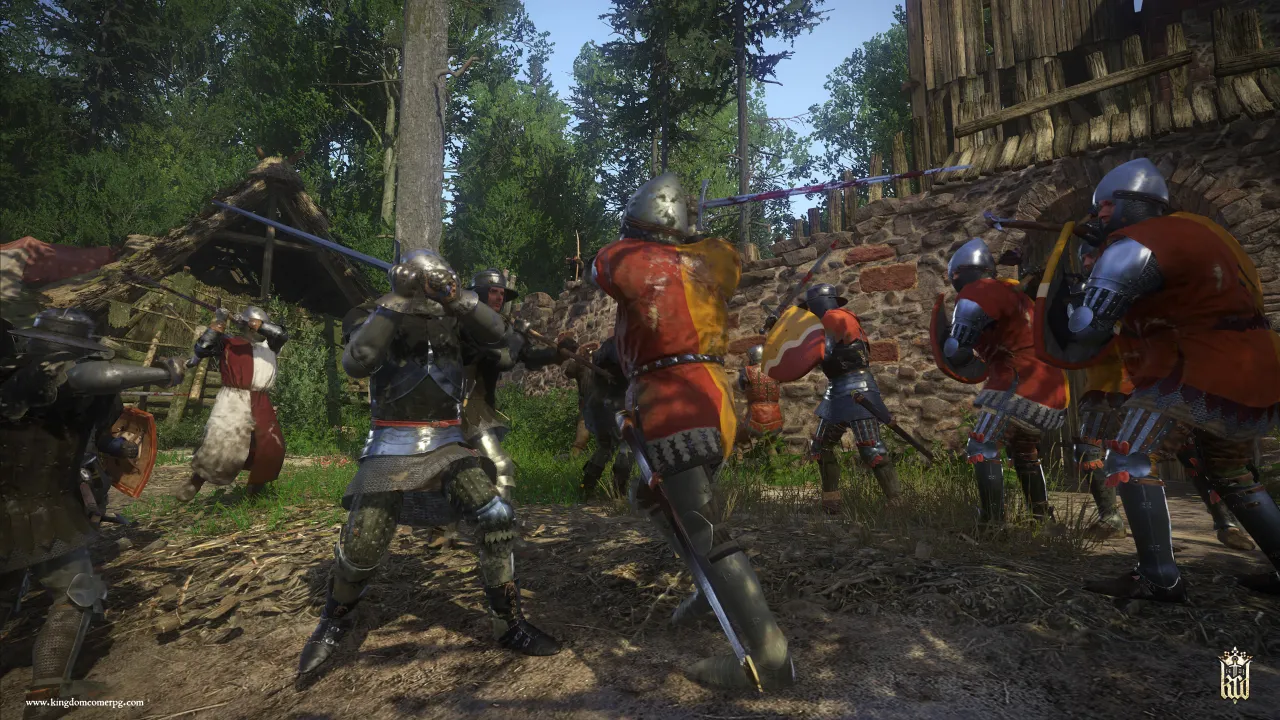
The thing that won Warhorse a narrative award was not the main thread but the writing density of its side content. These are not checklist errands. They are small, complete stories with a beginning, a turn and an end, and most of them refuse to hand you a clean moral answer.
Players still trade stories about the priest stand-in, where you have to deliver a sermon for a drunken cleric after a ruinous night of your own, slurring scripture from the pulpit while barely upright. It is one of the funniest sequences the genre produced that year. Set against it is the plague village, where a simple cry for help unspools into a knot of faith, mortality and consequence with no correct choice waiting at the bottom — only choices, and people who live or die because of them.
What makes those branches feel alive is the classless build married to the speech system. A given quest might be talked down, slipped past in stealth, or kicked open by force, and the routes lead somewhere different. Choice here is not a cutscene fork; it genuinely reshapes the run you are living, which is exactly why the game rewards a second pass.
Henry, written from the ground up

Henry himself is the quietest triumph of the writing. He starts as a borderline illiterate country boy and ends as someone who can read a contract, hold a court conversation and stand his ground against a knight — and crucially, you feel every rung of that ladder because you climbed it. Director Daniel Vávra, who cut his teeth on the grown-up, story-first crime tone of the Mafia series, bet the whole project on the power of an ordinary life rendered honestly.
The supporting cast earns its keep too. Lords, priests, bandits and barmaids are written with enough texture that the world stops feeling like a quest-dispensing machine and starts feeling like a society with its own grudges and bargains. Sir Hans Capon, the foppish young noble who slowly becomes a genuine friend, is a particular highlight — their bickering camaraderie gives the grim historical drama a human warmth it badly needs. When you finally win a duel against a real soldier, the satisfaction is not numerical. It is narrative. You have lived the distance from helpless to dangerous, and the game made you feel every uncomfortable step of it.
The cost it asks, set against Skyrim

Place it beside the obvious peer — Bethesda's The Elder Scrolls V: Skyrim — and the contrast clarifies what it is. Skyrim is the benchmark of fantasy freedom: dragons, spells, the room to become anyone. Kingdom Come walks the opposite road and surrenders all of that imaginative latitude for something Skyrim can never offer, which is the texture of real history. Its narrative is welded to its accuracy — no supernatural elements, a Bohemia whose politics, churches and armour all reach for the historical record. Neither game is better; they are different trades, and that is the honest comparison.
It is not flawless. The shaky launch build and recurring stutter could shatter immersion at the worst moments, the pacing sags in places, and even the Chinese press conceded this is a root cause of the game's split reputation. A few threads also resolve more abruptly than the careful build-up deserves. Yet even carrying that baggage, the narrative remains the part people remember, and the part nothing else has managed to replace — a commoner's epic told with a conviction that outlasts its bugs.
Audio | 6.5/10
Audio: 6.5/10Restrained period scoring, by design

Jan Valta and Adam Sporka score the game the way a careful historian would — quietly, and on period terms. There is no swell of triumphant orchestra muscling your emotions to a peak. Instead there is a spare, slightly austere set of themes that hold the era in place. Ride a horse through the Bohemian countryside at dawn and the strings underneath do not perform; they simply pin you to the year and let the landscape speak.
That restraint is part of the same uncompromising-realism temperament that governs everything else here. Music is not a hype machine in this world. It is a backdrop that knows its place, stepping aside when a duel, a conversation or a view needs the floor. The voicework follows the same brief — competent, English-led, sturdy enough to carry the historical drama, but without a single standout performance that lodges in memory. It is honest journeyman craft in service of immersion, never a selling point of its own.
The price of all that discipline is a shortage of hooks, and that is the plain reason audio is the lowest of the six scores. Nothing here is wrong. But nothing here is the kind of theme you hum on the bus a week later, and a soundtrack with no memory of its own is hard to celebrate. The music is the right music for this world; it is just not music that follows you out of it. For a game that pours its conviction into accuracy and atmosphere, that is a defensible call rather than a failure — but it does leave the audio without a single moment you would queue up on its own.
Environmental sound carries the world

Where the audio genuinely shines is in its foley. Footsteps change weight on mud, stone and grass; blades land with a dull metal thud rather than a Hollywood ring; wind threads through the trees; a market square layers haggling, the smith's hammer and children underfoot into a soundscape that simply sounds like a place where people live. Slip into a stronghold at night and every one of your own footfalls tightens your chest — a tension that is, in large part, manufactured by sound.
That success quietly confirms the whole project's priorities: spend the budget on making the world believable, not on making it dazzle. The score is a capable supporting actor that hands the stage to the story and the setting and is content to stay in the wings. For players who care about total immersion, that humility costs the game nothing. For anyone hoping a soundtrack might become a memory in its own right, Kingdom Come never delivers that unforgettable signature piece — and against a peer like The Witcher 3, whose Priscilla's Song became a calling card, the gap is impossible to miss. The Witcher's score both serves its scenes and stands on its own as something players sing back; Kingdom Come's stays a capable atmospheric layer that struggles to survive outside the game itself. It is a reasonable trade for a title this devoted to immersion, but it is the one dimension here that is hard to show off.
Visuals | 7.5/10
Graphics: 7.5/10A Bohemia rebuilt in CryEngine
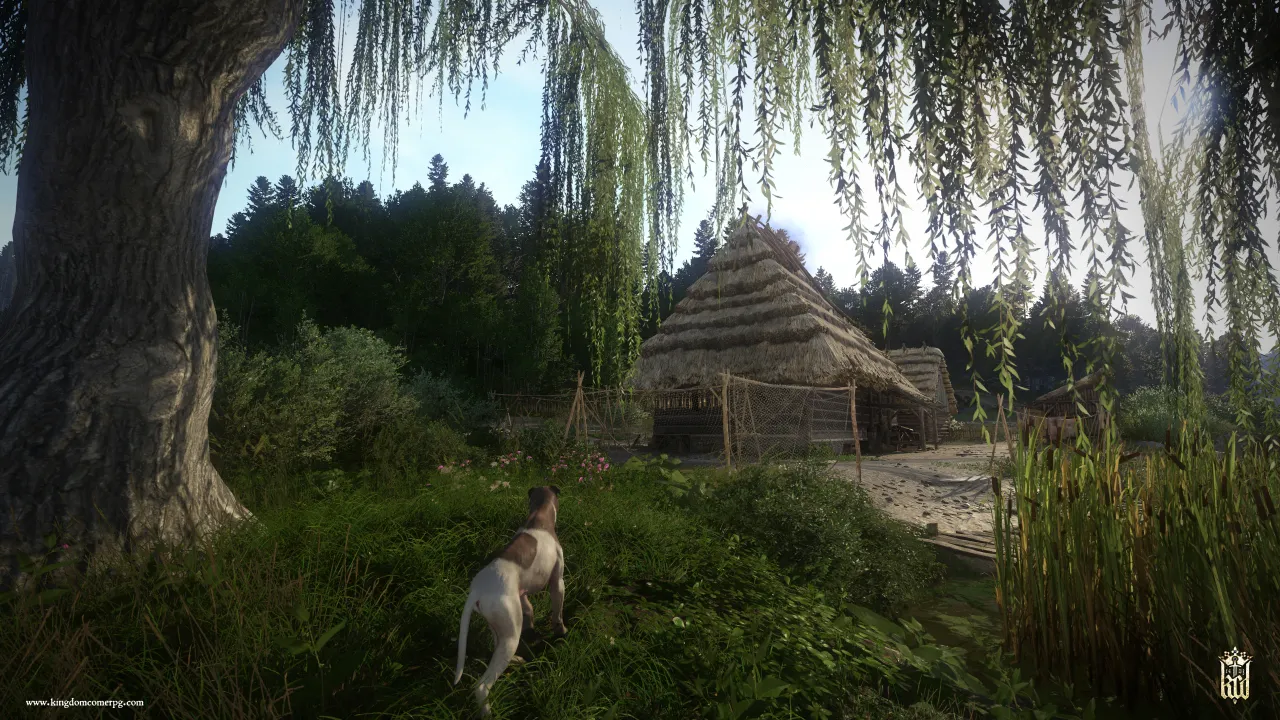
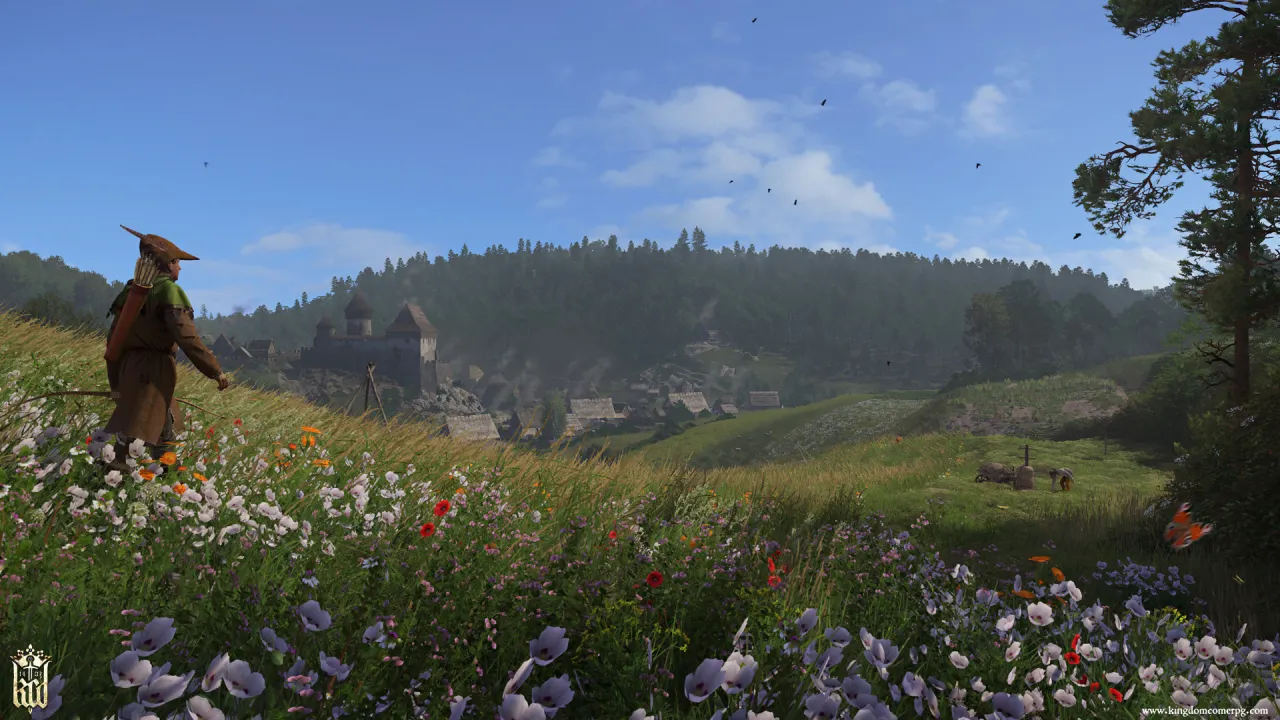
Kingdom Come uses CryEngine to raise a medieval world you can believe in, and the art direction is fused to the historical research. Rolling fields, mud-rutted lanes, stone churches and timber farmsteads — none of it is fantasy embellishment. Everything reaches for the look of early-fifteenth-century Bohemia. The visual goal here is not spectacle but correctness; it wants you to accept that this place once existed.
The realism does not chase the eye with effects. It earns the eye with restraint, and that restraint is itself a statement of intent. This is a game that would rather be plausible than pretty, and across long stretches of countryside it is quietly, convincingly both. The palette stays earthy and grounded, the architecture follows real period construction, and even the clothing and armour are modelled on surviving records rather than fantasy silhouettes. You feel the research in the frame, and it is the research, more than any single shader, that does the heavy lifting. Whole towns were reconstructed from historical maps, and the result is a place that looks less like a level and more like a location — somewhere a historian could point to and recognise.
Detail that makes the world breathe

What sells the illusion is the living detail. Dynamic weather and a day-night cycle make no two mornings identical — dawn fog, harsh midday sun and rain-slick mud all genuinely shape what you can see and do. Over a thousand distinct townsfolk keep their own schedules: they head to work, return home, attend church, sleep. Stack those systems together and you are no longer looking at a pretty backdrop but at a world where people are, visibly, getting on with their lives.
Light does its share of the work too. Morning sun cutting through trees, candle flame flickering across an interior, the oppressive grey of a wet afternoon — all of it is staged with real atmosphere. When the setting sun turns a whole wheat field gold, you stop not because the scene is lavish but because, for a moment, it is simply true. The same goes for the small textures of daily life: smoke curling from a chimney, livestock penned beside a cottage, a miller's wheel turning by the stream. These are not set dressing you admire and forget; they are the connective tissue that makes the place cohere into somewhere real.
Platform gaps and a long road to polish

You cannot talk about the visuals without the platform story. The scores tell it bluntly: the PC build sits at a generally favourable 76 on Metacritic, while the console versions slumped to 68–69 and "mixed." That gap is mostly frame-rate wobble and long load times on consoles — the same game, a full tier of experience apart depending on the hardware.
The launch build is the other unavoidable chapter. Stiff facial animation and assorted technical faults dragged the early impression down and earned Game Informer's 5.8 and its "broken on a technical level" verdict. Those rough edges were real, and they did real damage to the game's first impression with a wider audience. To Warhorse's credit, years of patches ground the game into a stable state, smoothing animation, fixing quest blockers and reclaiming performance, and by 2026 the PS5 and Xbox Series next-gen update pushed frame rates and loading further still. That "rough first, marathon after" trajectory is the price a small studio pays for swinging at an open world on a fraction of a triple-A budget — and the long support tail is also a measure of the team's stubbornness.
Measured against the realism ceiling

For a contemporary realism benchmark, Red Dead Redemption 2 is the ceiling you cannot dodge. Rockstar's top-tier budget and years of polish produced the high-water mark for grounded open-world visuals of that era. Kingdom Come is nowhere near it on budget or polish — texture fidelity, lighting and animation finesse all sit a visible notch below.
And yet, at the level of art direction, the two share a sincerity. Both refuse spectacle in favour of credibility; both treat "make the player believe this era existed" as the first job of the image. Kingdom Come cannot match Red Dead's technical altitude, but it wrings a remarkable amount of historical texture out of its limited means, and on a budget many times smaller. Where Rockstar had hundreds of artists and years to spare, Warhorse had a fraction of both and still made a Bohemia that holds together. As recent patches and ports level the experience across platforms, the final point of its visuals was never the benchmark numbers — it was whether you forget you are looking at a screen and start believing you are standing on Bohemian soil. On that count, it succeeds.
Combat | 8.5/10
Gameplay: 8.5/10Directional strikes turn every duel into a read

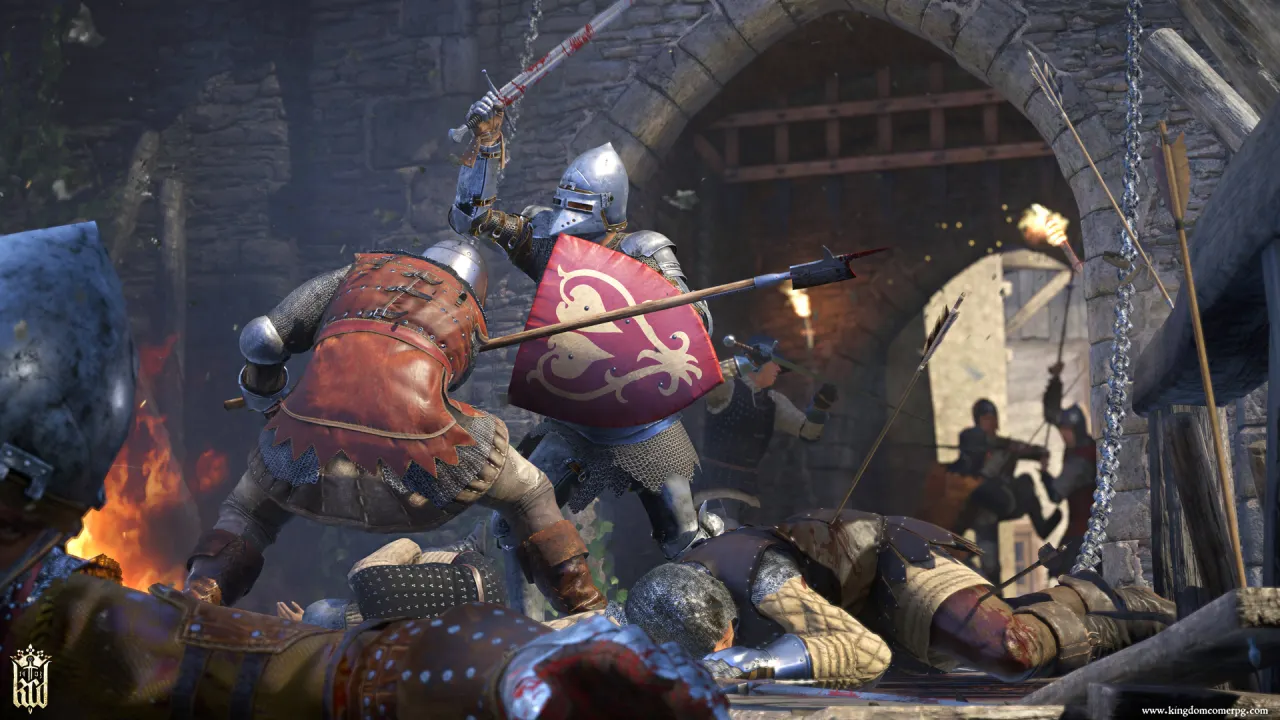
Combat is the part most likely to turn players away and most likely to hook the ones who stay. At its core is directional striking: a star reticle in the centre of the screen maps the angle of your swing, and the angle you choose tells your opponent whether to block, dodge or counter. A physics-based model calculates the reaction from the speed and weight of the blow, so every cut lands with genuine heft.
One on one, the tension is rare for the genre. You read the stance, you wait for the recovery frame, you land a perfect block at the exact instant the strike comes in, and you answer with a master strike. When a full exchange flows cleanly, the satisfaction is something no button-mashing brawler can hand you — because what you won was judgement and patience, not reflex. The game asks you to respect every encounter, and that demand is the line between it and the power-fantasy hack-and-slashers. Footwork matters, fatigue matters, the weight and reach of your chosen weapon matter; a longsword duel against a trained knight feels like a negotiation conducted in steel, where one impatient swing can end you. It is combat that rewards the head as much as the hands.
A grow-by-doing build and a lived-in sim

Progression is just as unorthodox. There is no class, no warrior-or-mage fork at the start. Everything grows by use: swing a sword and your strength climbs, sneak and your stealth climbs, pore over books and your literacy slowly resolves the gibberish into legible text. Strength, agility, speech, individual weapon proficiencies, alchemy, lockpicking, horsemanship, the hunt — each is its own track, fed only by what you actually do.
What makes it sing is how deeply that build sinks into a living simulation. Alchemy is not a menu click; you grind, boil, stir and bottle by hand, following a recipe step by step over an open flame. Lockpicking asks you to control angle and pressure with the analogue stick, and a shaky hand snaps the pick clean in two. Sleep, food and stamina needs keep reminding you that you are inhabiting a flesh-and-blood man who tires, hungers and can fall ill. Even your clothes get dirty and bloody, and a filthy, reeking Henry is treated differently by the people he meets. This is the design that turns "realism" from a slogan into something your hands can touch — and it is the connective thread that makes the commoner fantasy hold together.
The save controversy, two-sided
Then there is the lightning rod: saving. A manual save burns a flask of homebrewed Saviour Schnapps, which means you cannot rewind your mistakes on a whim. Defenders call it the wellspring of immersion — when you know death sends you a long way back, the dread of a stealth run or a picked fight becomes real. Detractors call it a punishment aimed at players with normal sleep schedules, a sting that the crash-prone launch build only amplified. Later patches added save-on-exit and other compromises, but "should saving be rationed" remains the game's most enduring design debate.
It is, in the end, a system with a temper and a weight, one that dares to design "you cannot win this yet" into the experience on purpose. It is not a flawless system — pull a one-on-one into a multi-attacker melee and the camera and lock-on fray into chaos, with several enemies at once dissolving the elegant duel into a scramble. But its imperfections are honest ones, born of ambition rather than laziness, and they sit alongside highs that few combat systems of its era reached. You take the rough with the remarkable, and most who push through decide the bargain was worth it.
Where its hands-on feel sits

A couple of sideways comparisons fix its place. Against Mount & Blade II: Bannerlord, which leans into large-scale skirmish and the feel of commanding a melee, Kingdom Come stakes everything on the precise one-on-one read — superior in the duel, weaker in the chaos of mass battle. Against The Elder Scrolls V: Skyrim, whose swinging is simplified and welcoming, Kingdom Come is far steeper at the door and far deeper once you are through it. Early Henry can barely keep his grip, and being run down by a single common soldier is a normal part of the opening hours — a wall a lot of people die on, and a wall the game refuses to lower for you. It never tries to make everyone feel powerful. It tries to make the players who study it feel a depth they will not find elsewhere, and for those who put in the hours, the climb from clumsy peasant to feared swordsman is the single most rewarding progression the game offers.
Content | 9.0/10
Content: 9/10Hours, scale and four expansions

By the numbers, the content is substantial. HowLongToBeat clocks the main story at roughly forty-one hours, seventy to eighty with side content, and frequently a hundred and thirty or more for a hardcore completionist run that masters every skill. None of that is padded filler. It is long because the realism genuinely costs time — travel takes real time, duels take patient practice, and every single trade has to be ground up by hand rather than unlocked from a menu.
The composition has real weight behind it: sixteen chapters of main story, over fifty side and activity quests, around three and a half hours of cinematics, and motion capture from more than fifty actors feeding a cast of over a thousand distinct NPCs. Wrap that in dynamic weather, a day-night cycle, and the full suite of medieval life skills — alchemy, lockpicking, herb-gathering, hunting, literacy, riding, smithing — and what you are handed is not a big map so much as a complete experience of living in that era.
Four DLCs extend the package further. From the Ashes hands you a village-rebuilding management layer that turns you from survivor into builder, complete with appointing officials and watching your settlement grow; The Amorous Adventures of Bold Sir Hans Capon plays for light comedy, a welcome breather in an otherwise taut historical drama; Band of Bastards adds a harder-edged mercenary-company thread with rougher company and bloodier work; and A Woman's Lot shifts to a female perspective through the character of Theresa and was given free to early crowdfunding backers. Stacked onto an already generous base game, they raise the ceiling another full notch, and because each leans on a different tone — economy, comedy, brutality, perspective — they broaden the game rather than simply lengthen it.
Density over breadth
That depth is a double-edged sword. Hauling an entire medieval life into the mechanics is both the selling point and the barrier. You have to genuinely enjoy the slow rhythm of grinding herbs, picking a lock by hand and deciphering a page of text to find the fun in it; if all you want is to push the plot and feel powerful, those same details curdle into chores. This content was never built for everyone, and it makes no apology for that. The same systems one player calls tedious, another calls the whole point — your mileage depends entirely on whether you came here to inhabit a life or to clear a checklist.
The PC mod scene is the other guarantor of its longevity. From visual overhauls and UI fixes to difficulty tuning, the community has poured out a flood of mods, and hardcore packs like the Ultimate Realism Overhaul push weapon and armour ranges and damage to a far harsher extreme. Between four official story expansions and an endless community workshop, the total volume runs well past the base game — for a 2018 single-player title, its lifespan has been stretched remarkably long, and players are still crawling back to retune and replay it.
Hold it up against a contemporary scale benchmark and the philosophy sharpens. The Witcher 3 wins on breadth — a vast map and a mountain of polished side stories spread across two continents. Kingdom Come's logic is the opposite: a not-especially-large map that wins on simulated density. An hour of Witcher walks you past more vistas and more stories; an hour of Kingdom Come sinks you deeper into one era, one valley, one set of trades you are slowly mastering. Both are open worlds, but the way they fill your time is not remotely the same thing — and measuring Kingdom Come with a "how big, how many" ruler simply misreads where its hours actually live. Its real thickness hides in the density: in every craft you grind by hand, in every side quest with genuine moral weight, in the realistic rhythm that forces you to take time seriously. For players willing to slow down, it fills a hundred-plus hours without feeling hollow; for those who only want to fast-forward, it reads as friction at every turn. This content was never priced by quantity — it pays out in proportion to how deep you are willing to sink.





Comments 0
Share your game review
Join the discussion and share your review of this game.
No comments yet. Share your thoughts on this review.