
























Opening
The first time you crank a force-feedback wheel to its limit in Le Mans Ultimate, the resistance that pushes back is not a rumble effect or a canned vibration. It is weight. Real, simulated, mechanical weight, the kind that makes your forearms tense before your brain has finished processing the corner. Plenty of racing games print the word "hardcore" across their store page; this one engraves it into the grip of a tyre that is heating, cooling, and slipping in real time underneath you.
Le Mans Ultimate is the official game of the FIA World Endurance Championship, built by Studio 397 on the bones of their rFactor 2 simulation technology and published by Motorsport Games. That lineage matters. This is not a studio chasing a mass-market thrill; it is a team that has spent years modelling the exact way rubber deforms against asphalt at two hundred kilometres an hour. The result is a simulator that asks more of you than almost anything else on the market, and rewards the players willing to meet it on its own uncompromising terms.
What follows is a six-dimension breakdown of how the game holds up across its driving model, its presentation, its sound, and its content. Because this is endurance racing rather than a story-driven campaign, the "story" we examine is the one the licensed calendar tells: the career framework, the twenty-four-hour centerpiece, and the professional structure that gives a season its shape. There is no cinematic narrative here, and pretending otherwise would do the game a disservice. What there is, instead, is a relationship between you, a machine, and a ribbon of road, negotiated one corner at a time over dozens of hours. If that sounds like a chore to you, this is not your game. If it sounds like a promise, read on.
Story | 7/10
Story: 7/10Le Mans Ultimate has no plot, no protagonist, and no cutscenes, and trying to grade it as if it did would miss the point entirely. What it has instead is a narrative built out of a real-world racing calendar, a career structure, and the slow-burning drama of an endurance season. The "story," such as it is, lives in the licensed events, the championship standings, and the long arc of a single twenty-four-hour race. Judged on that axis, the game tells a surprisingly compelling tale.
The licensed calendar as a narrative spine
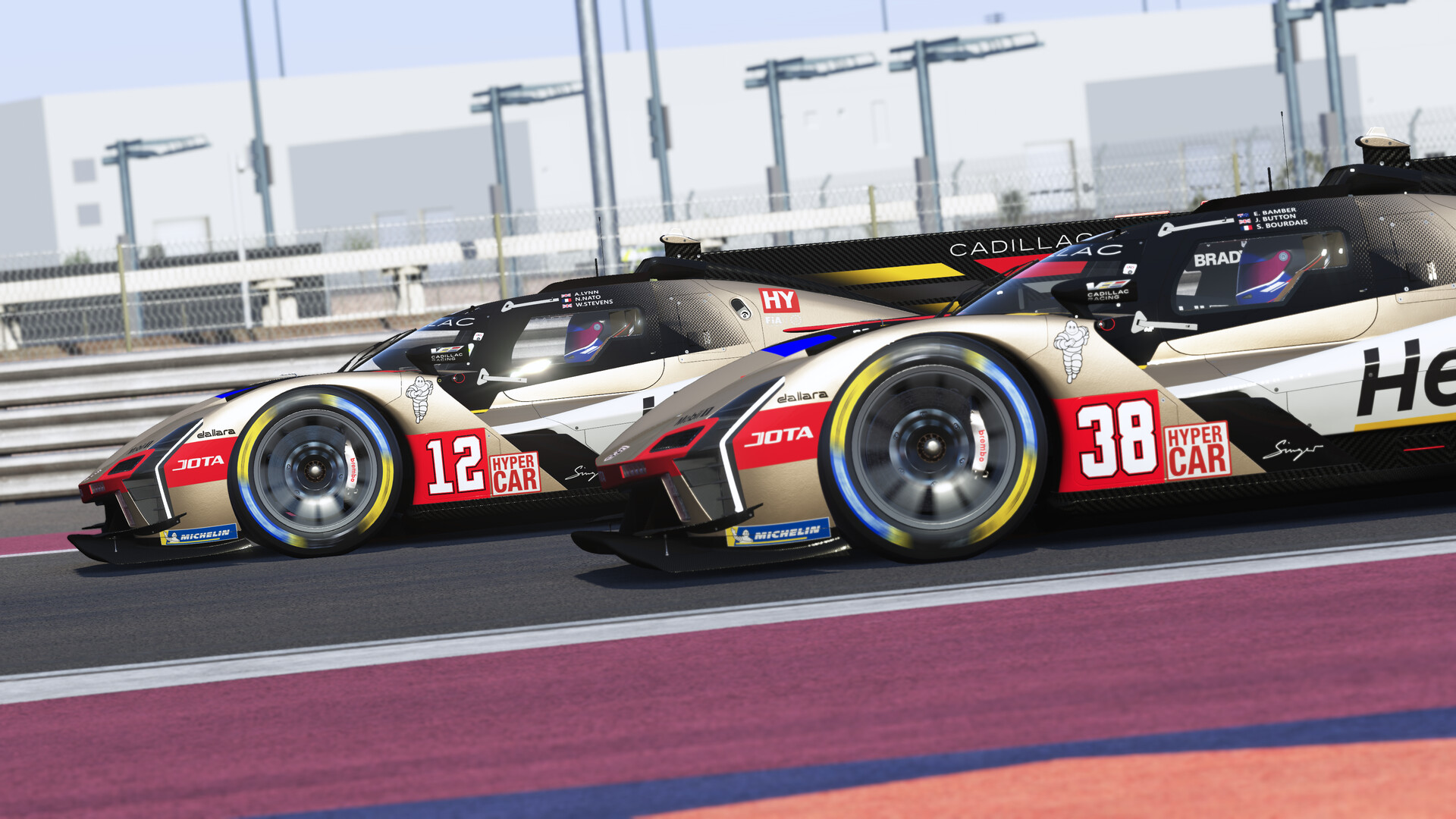
Set aside the expectation of a written story and a different kind of structure reveals itself. Le Mans Ultimate is the official game of the FIA World Endurance Championship, and that license is not a logo slapped on a menu. It is the organising principle of the entire experience. The event calendar, the class structure that pits Hypercars against GTE machinery, the qualifying-into-race rhythm of a real weekend: these are the beats that replace chapters and acts. Each round of the season carries its own character, and progressing through them feels like turning pages, even though no words are written.
This is where the authenticity mandate from Studio 397 and Motorsport Games pays off. The developers did not invent a fictional racing league with made-up tracks and cars; they recreated a championship that exists, with rules and a hierarchy that fans already understand. The narrative tension comes from that fidelity. When you line up for a round, you are stepping into a frame with real stakes and real history, and the game trusts you to supply the emotional investment rather than scripting it for you. For the audience this game is built for, that trust is the entire appeal.
The career season and the 24-hour centerpiece
The career mode is the closest thing the game offers to a single-player throughline, and it functions as the spine that holds a season together. You are not following a rags-to-riches storyline with rivals who taunt you in cutscenes. You are accumulating points, managing a season's worth of results, and watching a standings table tell its own quiet story round by round. The drama is statistical and self-authored, which sounds dry on paper but plays out very differently once you are in it, watching a championship slip away because of one bad pit decision three races ago.
And then there is the twenty-four-hour Le Mans event itself, the emotional centerpiece around which everything else orbits. A full endurance race is a story with a clear three-act shape whether the designers intended it or not: the cautious opening stints, the grinding middle hours where the weather turns and the field thins, and the tense final push toward the flag. Day bleeds into night and back again. Tyres go off, fuel runs low, and a mechanical mistake at hour nineteen erases a lead you spent eighteen hours building. No screenwriter could script the specifics, because they emerge from the simulation, but the emotional curve is unmistakable. This is the narrative the game actually tells, and it tells it better than most scripted racers manage.
No side quests, only races, and why that reframes the pacing
It is worth being honest about what is missing, because some players will feel the absence keenly. There are no side quests here, no optional missions, no collectibles strewn around an open world to pad out the runtime. There are only races. Older write-ups of this game sometimes praised its "side content," which is simply inaccurate; the game was never built that way. What you get is the events, the championship, and the practice you put in to be ready for them.
That structural austerity reframes how you spend your time. Without busywork to distract you, every hour you invest goes directly into the one thing the game cares about: getting faster, more consistent, and more strategic on track. The pacing is not dictated by a quest log but by your own appetite for improvement. For players who want a game that respects their time by not wasting it on filler, this is a feature. For players who expected a sprawling single-player adventure with a story to follow, it will land as a disappointment, and they should know that going in. Le Mans Ultimate is a racing simulator first and a piece of authored fiction never. On the terms it sets for itself, the narrative of a season is more than enough.
Audio | 8/10
Audio: 8/10There is no soundtrack in Le Mans Ultimate, and that is the right call. Turn off whatever you were expecting in the way of music, put on a decent pair of headphones, and let the engines do the talking. The sound design here is not background filler; it is a second instrument panel, feeding you information you cannot get any other way.
Recorded engine notes that carry real information
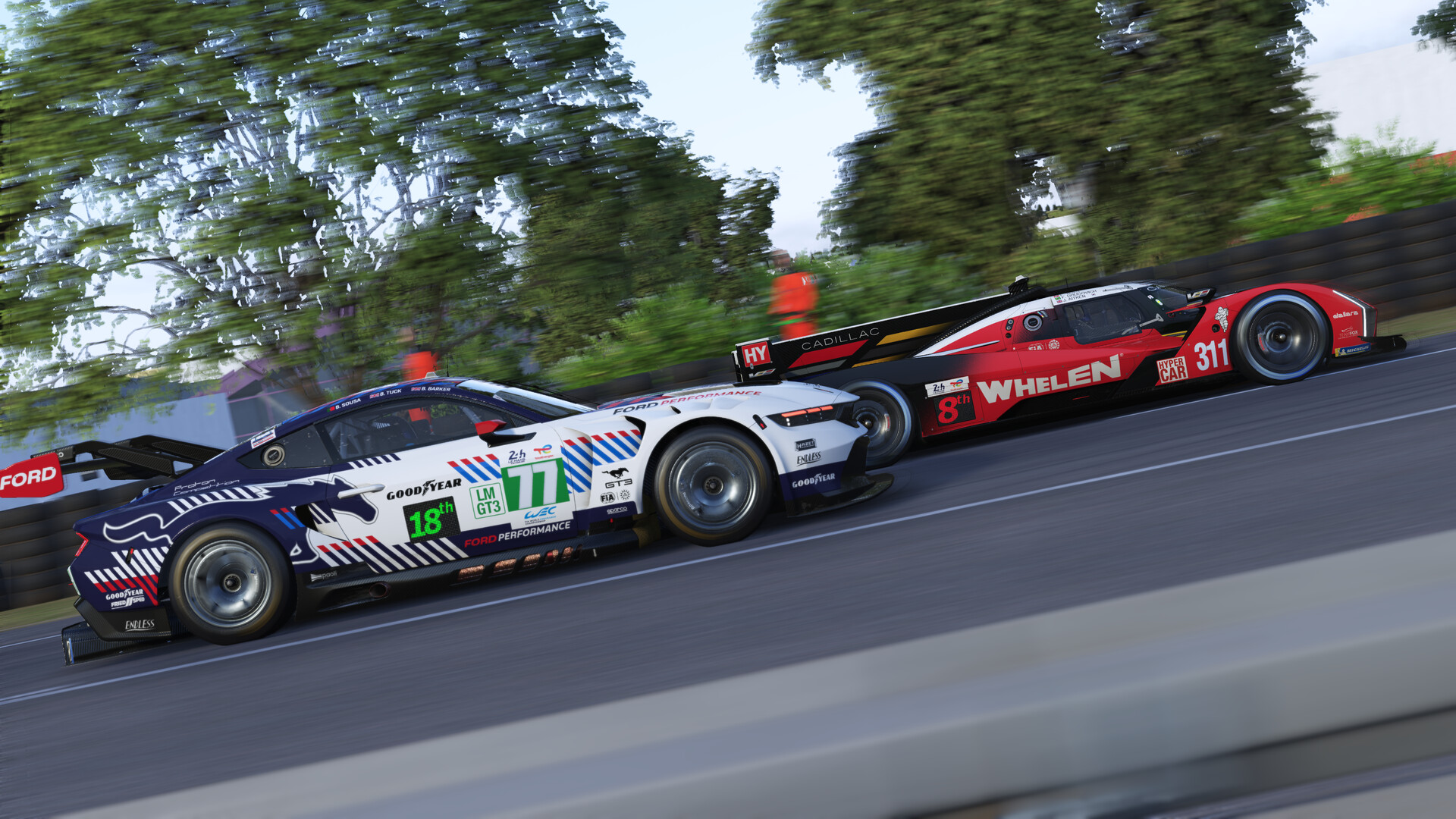
The engine audio is built from recordings of the actual cars, and the difference between that approach and a synthesised loop is immediately obvious once you have spent any time with it. At idle, the motor judders with an irregular, mechanical roughness. Climb toward the redline and the note sharpens into a scream that sits in a completely different register. These are not two ends of a single pitched-up sample; they are distinct behaviours captured from a real powerplant, and your ear learns to read them.
That readability matters because the engine note becomes a gauge. Long before you glance at the tachometer, the tone of the car tells you where you are in the rev range, when to shift, and whether you are bogging the engine out of a slow corner. The sound carries texture that a synthesised tone never could: the slight hesitation as the revs hang between gears, the change in character as the engine loads up under acceleration, the way the note thins out when you back off and let the car coast. Each of those qualities maps to a physical state of the machine, and your ear learns to decode them without conscious effort. After enough hours, you stop consciously listening and simply respond, the way a real driver does. The sound stops being something you hear and becomes something you drive by, an instrument as reliable as anything on the dashboard.
Spatial audio you can place rivals by
The other half of the audio achievement is positional. The spatial mix is genuinely excellent, to the point where you can locate a rival by ear before you ever see them in a mirror. A car closing on your inside has a presence that moves across the stereo field as it approaches, and that information changes how you defend a corner. In wheel-to-wheel racing, knowing where the other car is without taking your eyes off your braking point is the difference between a clean pass and contact.
This is where headphones transform the experience. On speakers, the positional cues are present but flattened; on headphones, the soundstage opens up and the car around you becomes a three-dimensional space. You hear the wall on one side, the open track on the other, and the machine bearing down behind you. The mix tracks not just left and right but the sense of something approaching from over your shoulder, fading as it pulls alongside and then surging again as it tucks into your slipstream. In the chaos of a race start, when a dozen cars are jostling for position into the first corner, that spatial awareness is the only thing keeping you out of trouble, because you cannot possibly watch every mirror at once. It is immersive in the truest sense, not because it is loud, but because it is accurate, and accuracy is what you can actually use behind the wheel.
Pit-lane and grandstand ambience with real distance
Beyond the cars themselves, the environmental audio gives the circuit a sense of place. The clatter of the pit lane, the swell of the grandstands, the way crowd noise rises and fades as you sweep past a packed section of fencing: all of it carries genuine distance falloff rather than sitting as a flat wall of white noise. This is not generic ambience layered on for atmosphere. It is the sound of a racing venue, with sources that have real positions in space.
The cumulative effect is a soundscape that pulls double duty. It builds the atmosphere of an endurance event, and it hands you a constant stream of usable feedback. The two functions reinforce each other rather than competing: the same crowd swell that makes a fast section feel momentous also marks your position on the lap, and the same pit-lane clatter that grounds you in the venue also signals the transition from racing to the careful, speed-limited crawl of a stop. Over the course of a long stint, this layered audio becomes a companion, a steady soundtrack of mechanical honesty that tells you everything the visuals do not. Cut the music, keep the engines, and you have exactly what a racing simulator should sound like, a presentation that respects your ears as much as your eyes and never once reaches for a backing track it does not need.
Visuals | 8/10
Graphics: 8/10The moment Le Mans Ultimate justifies its visual ambitions arrives the first time you burst out of a tunnel into a downpour, wipers thrashing across the screen, and realise that the ray tracing is not a checkbox feature but a functional one. The graphics here are tuned to a single purpose: telling you what the track is doing so you can decide what to do next. They are visuals in service of decisions, and that focus is what separates this game from racers that prioritise a pretty screenshot over a readable road.
Ray-traced reflections that read as information
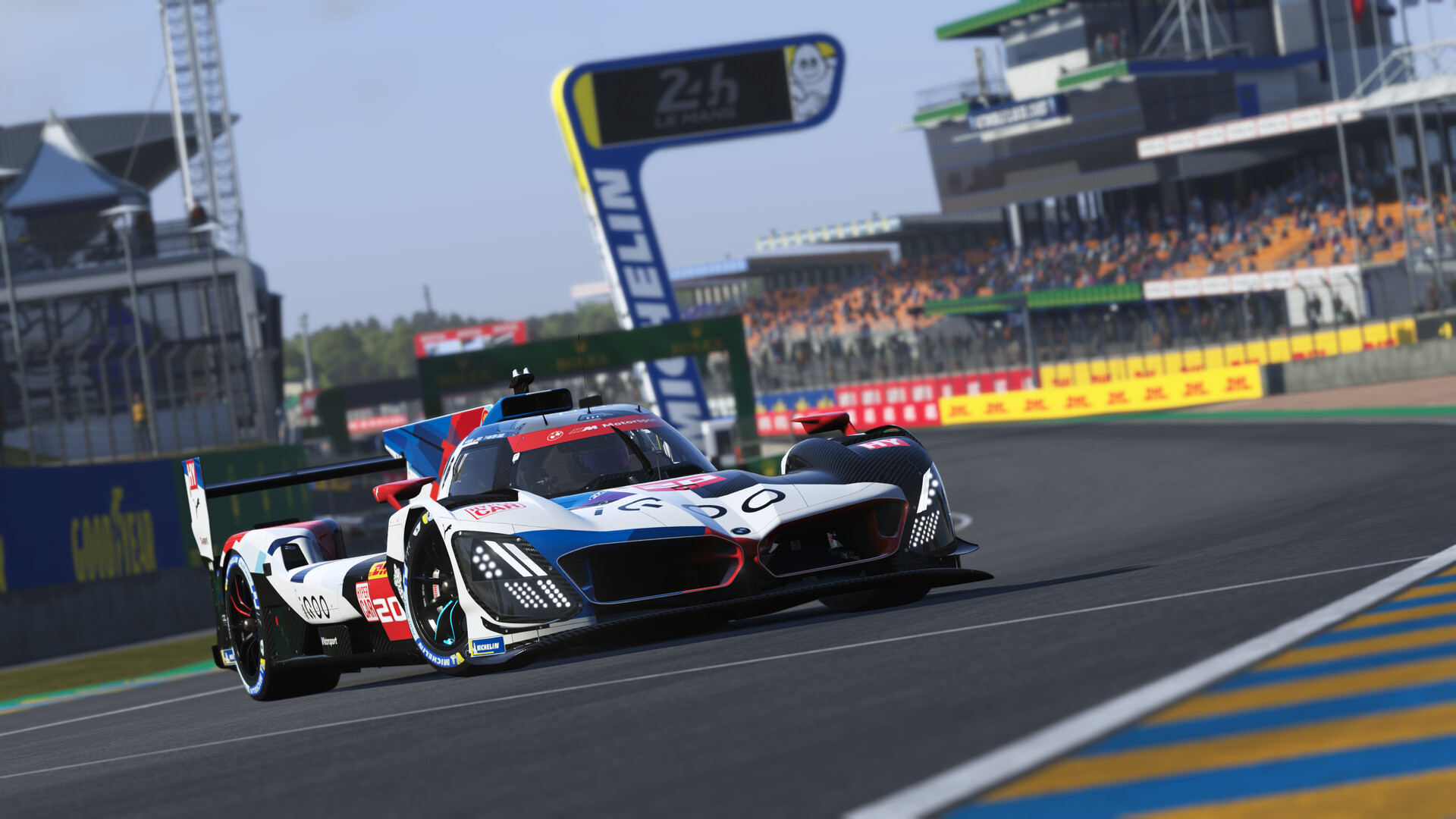
Real-time ray-traced reflections are the headline graphical feature, and the game uses them with unusual restraint. During night racing, your headlights sweep across a wet surface and the light that bounces back is not a baked reflection texture but a live calculation. That distinction has practical consequences. You can see exactly where standing water is pooling, which means you can see where grip is about to vanish, which means you know where to lift off the throttle before the car tells you the hard way.
This is the through-line of the entire visual design. The reflections are beautiful, certainly, but beauty is a side effect rather than the goal. The point is legibility. A puddle that catches your lights is a warning, and because the reflection responds accurately to the geometry of the scene and the position of your car, you can trust it. In a game where a single moment of lost grip can end a stint, being able to read the road surface this precisely is worth more than any amount of decorative gloss.
Dynamic weather that changes the physics, not just the picture
The dynamic weather system is the other pillar, and crucially it is not cosmetic. Cloud cover moving across the circuit changes the track temperature, and track temperature changes tyre pressure and grip. You will not always see this with your eyes; the connection between a passing cloud and a degree of asphalt temperature is invisible in any individual frame. But you will feel it in the wheel and read it in your lap times. The weather is doing real work under the surface, and the visual presentation of it is the tip of a much deeper simulation.
This is the principle the developers keep returning to: the picture serves the driving, not the other way around. A rain shower is not there to look dramatic, though it does. It is there because rain changes everything about how the car behaves, and the visuals are the interface through which you perceive that change. When you watch the spray kick up off the car ahead and lose visibility into a braking zone, that is not a graphical flourish; it is a tactical problem the rendering is honestly presenting to you. The weather and the physics are two views of the same system.
Night racing legibility and the rough edges
Where all of this comes together most impressively is in night racing on a wet surface, the single most demanding lighting scenario the game has to render. Picking your braking point out of the gloom, judging the edge of the track by the way your lights fall across it, threading between cars whose tail lights are your only reference: it is genuinely tense, and the visuals hold up under that pressure. The legibility that the ray tracing and weather systems provide is exactly what makes these conditions survivable rather than a guessing game.
It is not flawless. There is occasional texture pop-in, most noticeable during fast scene transitions when the game is loading a lot at once. It does not affect the driving in any meaningful way, but it can briefly break the spell, a reminder that this is software pushing hard against its budget. It is a blemish on an otherwise convincing presentation rather than a flaw that undermines it.
Taken as a whole, the visual package is confident and purposeful. Every system, from the reflections to the weather to the lighting, exists to make you more willing to commit to the throttle, because you can trust what you are seeing. That is the highest compliment you can pay a racing game's graphics, and Le Mans Ultimate earns it.
Combat | 9/10
Gameplay: 9/10Everything in Le Mans Ultimate funnels down to the handful of square centimetres where rubber meets road. The driving model is the reason the game exists, and it is the reason it will either grip you completely or push you away inside the first hour. There is no middle ground and no difficulty slider that makes the fundamental physics polite. You learn to drive on its terms, or you do not drive at all.
Tyre grip as a constant negotiation
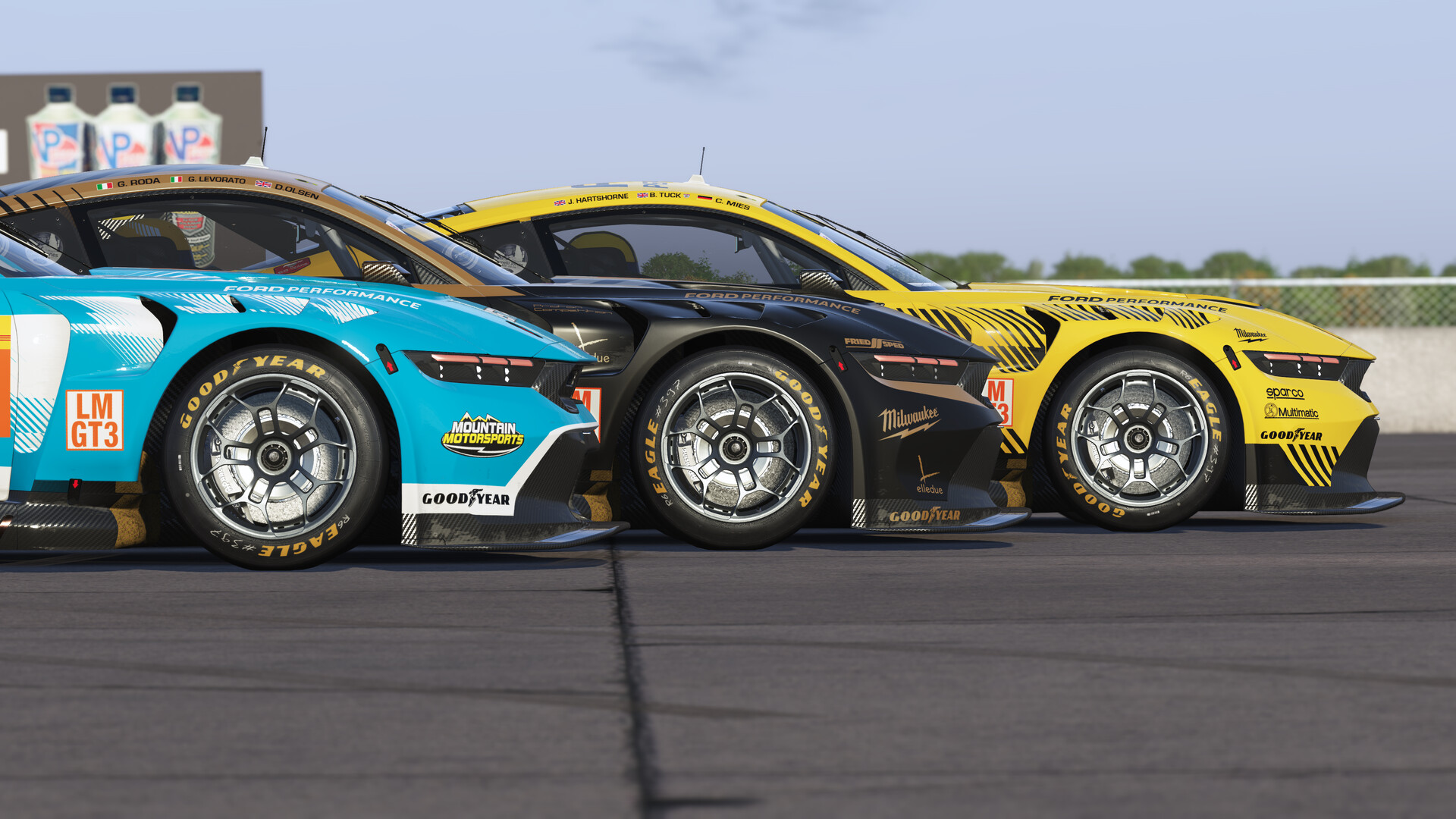
The high-fidelity tyre model is the heart of it. Grip is not a fixed number; it is a living quantity that responds to load, temperature, and how smoothly you are asking the car to do what you want. Lean on the front tyres too early and the car washes wide in understeer, the wheel going light in your hands as the front loses its bite. Get hasty with the throttle on corner exit and the rear steps out in a slide whose trajectory, crucially, behaves exactly the way the physics promises. Nothing here is scripted theatre. It is a physics engine speaking plainly, and every corner becomes a negotiation between you and the road surface.
The first ten hours are humbling. You will spend them catching slides, missing apexes, and wondering whether the game is broken or you are. It is you. Push past that wall and somewhere around the twenty-hour mark a different sensation takes over: the precision of a system where every input has a clear, predictable consequence. Brake a metre earlier and you feel the difference. Trail the brake into the corner and the front bites. The car does what the laws of physics say it should, and once your hands internalise those laws, the driving becomes deeply satisfying in a way that no assist-heavy arcade racer can replicate.
Force feedback and the hardware that delivers it
None of this lands without the right interface, and here the game is generous. Force-feedback wheel support is broad and reliable, covering the major hardware on the market with so few compatibility headaches that plugging in and feeling immediate, detailed feedback is the norm rather than the exception. For anyone who owns a wheel, this matters enormously; the worst outcome for a hardware enthusiast is a game that does not recognise their kit, and that frustration is largely absent here.
What the wheel transmits is the whole point. Every kerb, every camber change, every ripple in the asphalt arrives through the force feedback as a distinct sensation. Understeer announces itself as the wheel going slack; a loaded front tyre fighting for grip pulls back against you. This is information your hands receive faster than your eyes can confirm it, and learning to drive by feel rather than by sight is the craft the game is quietly teaching the whole time. Your arms will get tired. That fatigue is the game working as intended.
Strategy, weather, and how it stacks up
The driving is only half the gameplay loop; the other half is strategy, and endurance racing is where strategy becomes a discipline in its own right. Pit timing, tyre choice, and fuel management all interlock, and shifting weather throws the whole calculation into flux. A pit stop made one lap too early or one lap too late can decide a race that has already run for hours. Reading the sky, the track temperature, and the state of your tyres, then committing to a plan, is as much a part of winning as your pace on track. It rewards thinking ahead, not just fast hands.
Set against the hardcore-sim benchmark that defines this corner of the genre, Le Mans Ultimate holds its own on raw physics fidelity while carving out its own identity through the endurance discipline. The tyre model and force feedback stand comfortably alongside the most respected names in the space; players coming from the established hardcore titles will find the depth they expect. What this game adds on top is the specific rhythm of long-distance racing, where consistency over hours matters more than a single heroic lap. It is a demanding, uncompromising driving experience, and for the audience it is built for, that is precisely the appeal.
Content | 7/10
Content: 7/10How much game is here depends entirely on what you are counting. If you measure content by the breadth of tracks and cars on offer at this moment, Le Mans Ultimate is on the lean side and makes no secret of it. If you measure it by the hours a committed driver can pour into mastering what exists, the picture changes completely. This is a game with a small footprint and a deep well, and which of those facts dominates your experience depends on who you are.
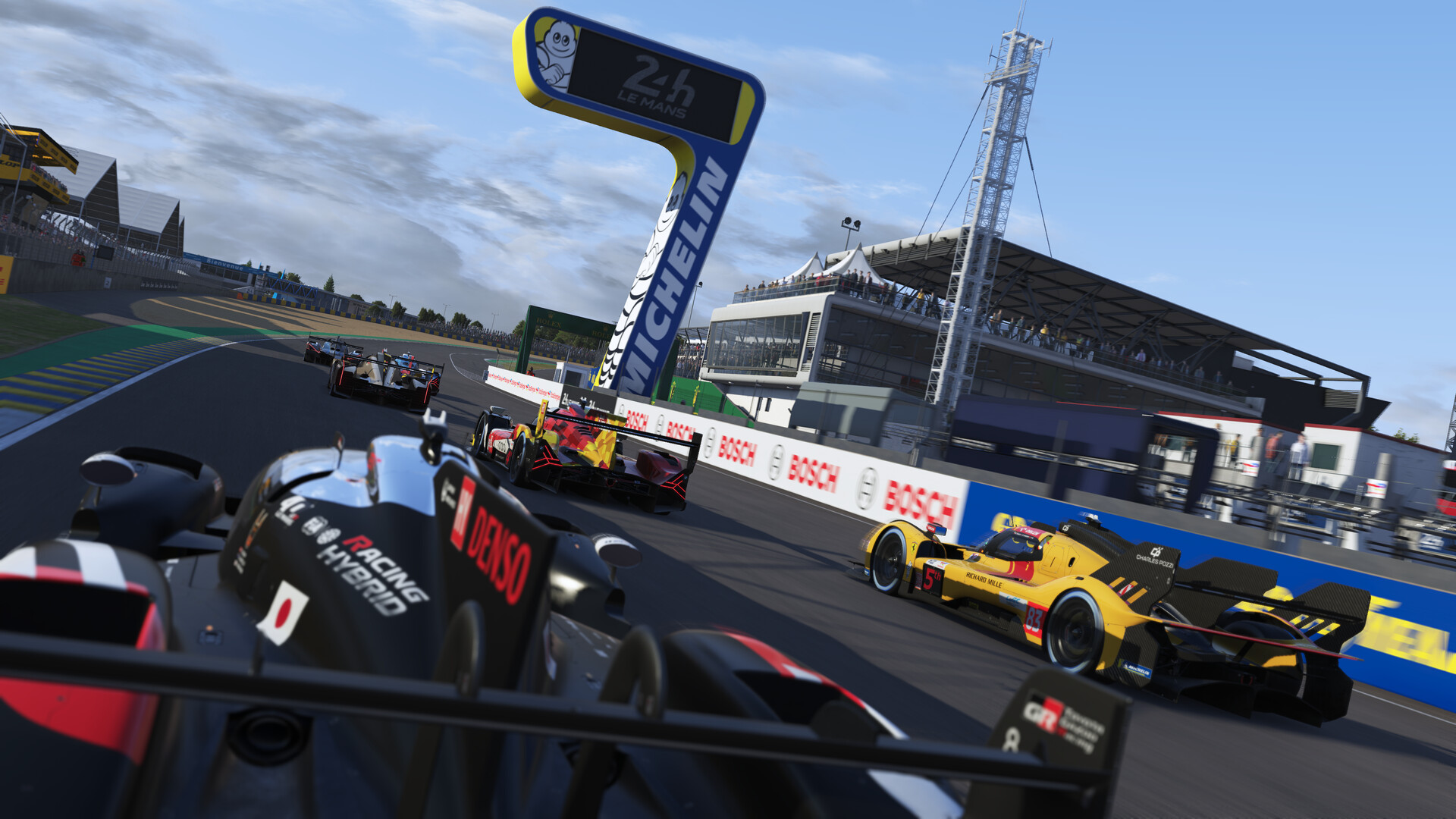
The career season and the event roster
The primary single-player content is the career framework and the roster of licensed events that fill it. This is where most players will spend the bulk of their time, working through the championship calendar one round at a time. The structure is straightforward and purposeful: there is no open world to wander, no progression tree of cosmetic unlocks to grind, just the events and your performance in them. The depth comes not from a sprawling map but from the challenge each track presents and the long arc of contesting a full season.
It is worth correcting a misconception that has trailed this game in older write-ups, which sometimes credited it with high-quality "side missions." There are no side missions. There never were. The game is races and the practice you put in to be ready for them, and judging it against a content checklist built for an open-world action game does it a disservice. What you are buying is depth of simulation, not breadth of distraction, and the event roster is the vehicle for that depth.
Online competition and the practice loop
Beyond the single-player career, online ranked competition is a significant and growing part of what the game offers. Structured racing with clean-driving protocols gives the experience a competitive backbone, pitting you against other humans in events where reputation for fair racing is itself a form of progression. For a simulator, this is where the long-term life of the game lives; the AI can only teach you so much before racing real opponents becomes the real test.
Underpinning all of it is the practice loop, the hot-lapping that keeps replay value high in a game with a deliberately limited content count. Because the driving model is so deep, a single track is not a thing you complete and move on from. It is a thing you keep returning to, shaving tenths off your best lap, refining your braking points, learning where the grip lives in different conditions. One of the older notes on this game observed that you might finish the "main content" in forty hours but still be at fifty-eight percent completion after seventy, and that captures the dynamic exactly. The content is small on paper and enormous in practice, because mastery, not completion, is the real metric.
Early access reality and the roadmap risk
All of this comes with an honest caveat, and it is the most important thing a prospective buyer should understand. Le Mans Ultimate launched into early access, and the track and car counts reflect that. There are enough circuits to keep you busy and enough machinery to learn, but the catalogue is thinner than a fully released racing game would offer. If you are the kind of player who burns through content quickly and wants endless variety on day one, the current roster will feel constrained.
The developers have committed to a content roadmap, promising additional tracks and cars in future updates. That promise is the crux of the value calculation, and it cuts both ways. A roadmap is a plan, not a delivered product, and buying into early access means buying into a future that depends on the studio executing on it. If the updates arrive on schedule, today's lean catalogue becomes tomorrow's robust one, and early adopters will have grown alongside the game. If the schedule slips, the content gap persists longer than anyone would like. This is the standard early-access bargain, stated plainly: you are not just buying what is here, you are placing a bet on what is coming. For the right player, with patience and a long horizon, that bet is a reasonable one. For anyone wanting a finished package right now, it is worth waiting to see how the roadmap unfolds.





Comments 0
Share your game review
Join the discussion and share your review of this game.
No comments yet. Share your thoughts on this review.