















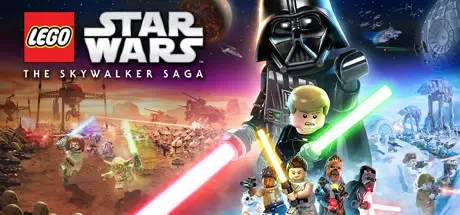


Opening
Nine films, one box of bricks. That is the absurd, wonderful pitch behind LEGO Star Wars: The Skywalker Saga, and it is exactly as oversized as it sounds.
TT Games did not simply staple the trilogies together. They took the loudest moment from every movie and rebuilt it as something you actually play — you race a podracer down a Tatooine canyon, you drop an X-wing into the Death Star trench, you stand up a tower defense on Naboo. The studio shipped 3.2 million copies in two weeks, a record for the LEGO games line.
A record launch is not the same as a flawless game, though. The storytelling is thin, the new camera occasionally loses the plot, and the open planets lean hard on fetch chores. None of that stopped it becoming the most beloved entry the LEGO series has ever produced, which makes it a genuinely interesting thing to pull apart: a game that gets one big thing very right and several smaller things noticeably wrong, all at once. So let us take it dimension by dimension and work out whether this brick-built saga is worth the rerun — and for whom.
Story | 5.5/10
Story: 5.5/10It opens on a Tatooine sunset and then flattens nine films into a flipbook

The game starts you under the twin suns of Tatooine, retracing the Skywalker line across all three trilogies. It is a smart place to begin. Long-time fans only need to see those two suns hanging over the dunes and the nostalgia does the rest.
The trouble is the ambition. Nine mainline films are carved into nine episodes of five levels each — forty-five in total — and crammed into a single game. That sounds glorious until you play it, at which point you notice how thin each individual film has become. A two-hour movie now gets five short levels, so the plot reads less like a story you sink into and more like a flipbook of greatest hits.
That is the honest reason I scored the story low. It covers the most and tells the least. You finish an entire saga and what sticks is "oh, that bit is that famous scene," not any character arc earning its weight. Narrative density is the thinnest brick in the wall.
Take the clearest case. The Phantom Menace gets five levels, so Anakin's whole climb from enslaved kid to budding prodigy collapses into a handful of flashes; the level flips over before you have had time to feel anything for him. Run that compression across nine films and the transitions between episodes start to feel like hard cuts — one second you are smashing battle droids, the next you are dropped into the cold open of the next movie, with none of the slow-burn build the films used to earn their payoffs. For longtime fans it does not register, because your head already fills the gaps. As a measure of the storytelling's own completeness, though, it is a real deduction.
Spaceballs, not Shakespeare: it would rather goof on the films than retell them

Get one thing straight: this game never set out to be serious. It runs on trademark LEGO slapstick, replaying scenes you have watched a hundred times with a fourth-wall wink or a sight gag dropped in. Darth Vader pulls faces the films would never allow; a Jedi master takes a pratfall on something suspiciously banana-shaped.
That tone has real upside. It is light, it is all-ages, and a family can sit around it without anyone squirming. More than one outlet reached for Spaceballs to describe the ribald humor, and the comparison fits. The jokes never punch down and rarely overstay their welcome; a gag lands, the scene moves on, and the pacing stays brisk even when the plot is barely there. For a game you might be playing next to a seven-year-old, that lightness is a feature, not a failing.
But it also draws a line. Almost every joke assumes you already know the source. Sit a Star Wars newcomer down and the dense cameo gags simply fail to land — you cannot laugh at a parody of something you have never seen. So this is made for the faithful, not a primer for newcomers, and its audience picture is unusually clear.
Against The Complete Saga, it reaches wider and digs no deeper

Put it back in series context and the shape comes into focus. The 2007 Complete Saga already squeezed the prequels and the original six into one game and lives in a lot of childhoods. This entry is more ambitious — it is the first to gather all nine mainline films into one unbroken run.
But wider is not deeper. The older game covered only six films, yet handled each with more room to breathe; this one has to sprint through nine, so every movie gets only its brightest beats. The Phantom Menace, for instance, is reduced to a handful of recognizable hits with the connective tissue trimmed away, and you feel the seams between episodes. If you came to revisit the whole of Star Wars in broad strokes, the coverage delivers. If you wanted any single film told properly, it cannot. The story here is a table of contents, not a book — useful for finding the chapter you love, useless for actually reading it.
Audio | 8.5/10
Audio: 8.5/10John Williams walks in the door, and suddenly this is the strongest brick in the box

If the story is the thinnest part of this game, the music is the thickest. It draws straight from John Williams' classic Star Wars score — the Imperial March swells before Vader even enters the frame and the hair on your arms is already up; the Force theme opens out at the right moment and the "yes, this is Star Wars" feeling lands in a second.
The score is dependable precisely because it never had to gamble on writing something new. Star Wars music is among the most recognizable in film history, and piping it untouched into the combat and cutscenes pins the atmosphere to the wall. You are racing a podracer over Tatooine or diving the Death Star trench, and the melodies running underneath are the ones already living in your memory. The immersion is stronger than a family game has any right to be. Better still, the game swaps to each film's own theme as you move through its episodes rather than looping a single track, so the music doubles as a signpost — you can tell which movie and which beat you are in by ear alone, a small touch handled with real care.
Original cast, archival film audio, and not a "piu" out of place

Voice work is the other place real care shows. The game brings back some of the original cast — Anthony Daniels as C-3PO, Matthew Wood, who has voiced countless corners of the galaxy — and blends them with archival audio lifted from the films themselves. The result is that a large slice of what you hear is the correct voice, not a soundalike doing an impression.
That authenticity is worth a lot to fans. The signature hum of a lightsaber swing, the "piu piu" of a blaster, that string of R2-D2 beeps nobody understands and everybody understands — all of it is recreated faithfully. These are not decoration; they are the audio signature of the whole franchise, and the game keeps every one of them.
There is a funny chemistry, too, between those correct sounds and the goofy LEGO tone. You hear Vader's voice — about as familiar as a voice can be — while he pulls a pratfall the films would never permit, and the mismatch itself becomes the joke. The straighter the sound, the sillier the picture, and the wider that gap the funnier it plays. It is an effect only the "real audio over slapstick" combination can pull off.
Set it beside the same-IP but hardcore Star Wars Jedi: Fallen Order and the audio edge here is exactly that directness — it never had to build a new sonic language, because borrowing the films' own already wins. Fallen Order had to compose around its own story; this game simply opens the vault and lets five decades of iconic sound do the work, and for a nostalgia play that is the smarter bet.
A Mumble Mode hides in the options for the lapsed LEGO faithful

One small touch sums up the studio's care: a hidden, optional Mumble Mode. Switch it on and every character reverts to the wordless, "mumble-mumble" gibberish of the classic LEGO games.
It sounds like a strange feature, but it hits a very specific nostalgia. The early LEGO games had no real voice acting; they told their stories through exaggerated mime and vague mumbling, and that is how many people first remember the series. Building both the full voice track and the wordless babble, then letting you choose, is a thoughtful move — you can have the authentic Star Wars soundscape or the daft, warm noise that belongs to old LEGO and nobody else. It is a tiny toggle, but it speaks to a studio that understands its own history and trusts players to know which version of the joke they grew up on. Few games bother to preserve their own past this deliberately.
Visuals | 7.5/10
Graphics: 7.5/10The best-looking LEGO game yet — even the plastic catches the light

Line this entry up against every other LEGO game and the visuals are plainly the strongest of the bunch. The clearest jump is in the materials: the glossy sheen of a plastic brick, the matte of a worn piece, the slight translucency of a clear stud — all of it rendered with care. Lean in on a minifigure and you can almost feel that it was built from real plastic, right down to the faint mold seams a real LEGO piece carries. It is the kind of tactile detail the series never used to bother with.
Scale and detail have stepped up too. Across twenty-three open hub planets, from the twin-sunned dunes of Tatooine to the white expanse of Hoth, each environment reads with strong identity, and the lighting and depth of field give this brick-built galaxy real heft. Cantinas glow with warm interior light, snow scatters convincingly underfoot, and distant skylines sit in a soft haze that sells the sense of a place far larger than the playable space. This is no longer a flimsy plastic set; it is a galaxy with air and scale to it, and one that holds up whether you are barrelling through a story level or just wandering a hub for the view.
PC runs the saga at high resolution and frame rate; Switch is the weak link

The gap between platforms is worth spelling out. The PC build is the best-looking version of this saga, capable of high resolution and frame rate with a fairly full set of graphics options, and the steady framing makes it the most comfortable way to play. The current-gen consoles, PS5 and Xbox Series, hold up well too.
The Switch version is the weakest of the lot. Hamstrung by handheld hardware, it makes obvious concessions on resolution and frame rate — a softer image, a more conservative framerate, and the occasional dip when a busy hub planet fills the screen with minifigures. The trade-off buys you portability, which for a couch-and-commute game like this is not nothing. The PS5 and Xbox Series versions sit comfortably in between, with quick loads and a steady image that make them an easy default if you are not chasing PC's ceiling. If visuals are your priority and you have a choice of platforms, PC is the pick. If you just want to play in bed and are not fussy, Switch is acceptable, but go in expecting the compromise rather than being surprised by it.
A holographic UI suits the setting until the collectible pile buries it

The interface is a point in its favor. The menus and maps lean into that signature Star Wars holographic blue, and the moment you open one it simply looks the part — tightly matched to the overall art direction, and clearly considered.
The snag is the sheer volume of collectibles. There are 1,166 Kyber Bricks, plus minikits, datacards and hundreds of characters to unlock — so many that the late game has you digging through menus just to work out what you are still missing. The holographic UI is handsome, but asked to carry a list this enormous, the page-flipping drudgery shows. Each planet sorts its collectibles into categories, and pinning down one stray Kyber Brick often means hopping across several sub-menus. The map screen, gorgeous as it is, was clearly designed to look like a Star Wars hologram first and to be a fast checklist second. It is not fatal, but it is a small cost of all that bulk landing on the presentation layer.
Combat | 8.0/10
Gameplay: 8/10Lightsabers finally combo — you can block, deflect, and counter back into the chain

The biggest reinvention is in combat, and the part that genuinely surprised me is the lightsaber. In the old LEGO games, swinging a saber meant mashing one button into oblivion. Here, the saber gets a real combo system for the first time — light, heavy and Force attacks chain together, you can block incoming blaster fire and deflect the bolts straight back, and you can counter mid-hit to keep the string alive.
Do not mistake it for Soulsborne depth. But against the one-button hack of its predecessors, this is a meaningful step up in feel. Different character classes carry distinctly different movesets — a Jedi swinging a blade and a Bounty Hunter laying down fire play to two separate rhythms. TechRadar described the combat as "rebuilt brick by brick," and that is the right phrase.
The Force powers finally pull their weight in a fight, too. You can grab an enemy or a loose piece of the environment with telekinesis and hurl it, scattering a charging squad of stormtroopers in one motion — the kind of "environment plus combat" beat the old LEGO games barely had. It is not deep, but it is enough to keep every scrap a little fresh instead of mashing the same button start to finish.
Blaster characters move to over-the-shoulder aiming, with cover to duck behind

Characters with blasters get an entirely new mode of play: third-person, over-the-shoulder shooting. Aim and the camera pushes in to focus, just like a normal third-person shooter; you can also tuck behind cover, Gears of War style, and pop out to suppress.
This is something the LEGO series simply never had, and it gives blaster-wielding characters a feel fundamentally distinct from saber characters for the first time. Holding a Bounty Hunter's blaster, lining up a shot down the new sightline, genuinely changes how you read an encounter. Honestly, though, the cover system barely registers in practice — enemy AI and level design rarely push you hard enough to need it, so it lands as a feature that exists more than it earns its keep. Reviewers kept flagging the same split: the over-the-shoulder aiming is a real improvement, the cover bolted onto it is largely redundant, a checkbox feature that the encounters never quite ask you to use.
Every film's set-piece becomes its own little game

If combat is the foundation, the thing that actually keeps forty-five levels from blurring together is how cleverly it gamifies the movie set-pieces. This is the high point of the whole dimension.
It refuses to just walk you through a brawl. Instead it tailors a mode to each film's marquee moment: the podrace Anakin runs in The Phantom Menace becomes a racing minigame; the battle of Naboo turns into a tower defense; the Death Star trench run in A New Hope is a level of X-wing shooting. One level you are flat out racing, the next you are arranging defenses, the one after that you are weaving through laser fire in a starfighter — the play rarely repeats, and that variety is the core of how it stays fresh across dozens of hours. It is the single design decision that most justifies cramming nine films into one box.
The reinvention is not fully landed: the new camera glitches, the upgrades feel hollow

Not all of the reinvention lands, though. The most criticized piece is that new camera. In tight close-quarters fights, or when you move off after Force-lifting an object, it occasionally throws a fit — characters vanish or get shoved off-screen and you briefly lose track of your own avatar. The problem is worse in two-player split-screen, where the space is cut in half and the new angle has both players elbowing each other out of frame the moment they drift apart.
The upgrade system is similarly hollow. Ten classes each carry signature abilities you unlock and strengthen with Kyber Bricks (1,166 of them across the game), but most of those upgrades are marginal — present or absent, the core experience barely shifts. You will pour bricks into the tree because the game dangles it in front of you, not because any single node changes how a fight plays. Against The Complete Saga's fixed top-down, one-button hacking, this entry is genuinely a tier up overall. There are just a few loose screws rattling on that higher tier.
Content | 8.0/10
Content: 8/10Roughly 23 hours to finish, and near a hundred to complete

Start with the hard numbers. Pushing through all forty-five story levels runs around 23 hours, a genuinely solid length for a family game. But the campaign is only the appetizer; the real bulk hides in collection and 100% completion — gathering all 1,166 Kyber Bricks and unlocking the 300-plus characters pushes you toward 95 hours, knocking on a hundred.
That gives it an unusual content curve. The first twenty-odd hours, riding the campaign, are the best of it — the level design and set-piece recreations flow start to finish. After that you slide into Free Play and grind collectibles, and the fun rests almost entirely on whether you, personally, are a collector. If you are, this is a hundred-hour sink; if you are not, the credits roll and you put it down. It is a quintessential more-is-more game.
Set your expectations here. Free Play, unlocked after the campaign, essentially hands you any character and class you have earned and sends you back into old levels to reach the collectibles your story party could not. The design logic is plain — each class ability is a key, each Kyber Brick and minikit is a lock, and you return with the right key to open the right lock. Players who love the cleanup-and-complete loop will be hooked; if a progress bar does nothing for you, that same loop turns into busywork fast. Work out which one you are before you commit to the hundred-hour tail.
300-plus characters, 100-plus vehicles, 23 planets, plus the Galactic Edition packs

The scale really is imposing. Over 300 playable characters, over 100 vehicles, 23 explorable planets, with space combat to be had between them. Simply assembling that roster of characters and vehicles is a vast undertaking — heaven for completionists, and faintly exhausting for everyone else. The number on the box is part of the pitch, but it is worth remembering that quantity is doing a lot of the heavy lifting here.
On the DLC front, the Galactic Edition folds in several character packs, pulling figures from The Mandalorian, The Bad Batch, Solo and Rogue One into the mix. If you are the kind of player who wants to buy once and have access to everything, going straight for the Galactic Edition is the cleanest call; it widens the playable roster on top of the standard release, sweeping in characters from spin-offs outside the nine films, which is especially friendly to the collection crowd. None of those packs reshape how the game plays — they are roster filler more than new content — but for a completionist the appeal is precisely that there is more to chase, and the bundle saves you buying them piecemeal later.
The open planets are mostly chores, and co-op is local split-screen only

Big does not mean uniformly good. The open hub planets are the most divisive part of this entry: they look lovely, but the side missions inside them are mostly "go grab this and bring it back" or "help me find a few items" — fetch chores short on genuinely designed, worthwhile tasks. One outlet went so far as to say parts of the open areas exist for the sake of existing, even working against the game — the linear levels are the meat, and the open zones dilute them.
Co-op carries an obvious shortfall too: it supports local split-screen for two only, with no online play, which in 2022 already felt like a generation behind where most family games had landed. Sharing a couch has always been the series' strong suit, and parents or partners on one machine is the sweet spot; but anyone hoping to link up with a distant friend to relive Star Wars together will find that road simply does not exist. Set it against the same-IP, nostalgia-fueled Hogwarts Legacy — that game leans on a whole open world to carry its tail, while here the entire tail rides on one thing: collection.





Comments 0
Share your game review
Join the discussion and share your review of this game.
No comments yet. Share your thoughts on this review.