


DLCLibrary Of Ruina SoundtrackLoading store offers

Library Of Ruina makes progress part of the battle loop: guests challenge your librarians, and their books can strengthen the library, add cards, or help bring in new guests. At ≈ $10.28 from  GAMIVO, weigh that strategic collection-building against the time you want to spend learning its card-and-dice clashes.
Steam PC reviews are 94%% positive across 41,307 reviews. The available facts describe single-player play, so the tactical appeal is centered on building your library through successive guest encounters. At $29.99 on Steam, this offer saves ≈ $19.71 against the same base game there.
Loading store offersPrices cover Steam and 39 authorized stores; only legitimate offers are counted. The chart shows weekly market-wide lows and Steam's official price across the past 36 months.
Run a library where invited guests face librarians in card-and-dice battles. Read opponents’ planned cards, choose counters, and use books gained from defeated guests to develop librarians, build the library, and invite further guests. Steam reviews: 94%% positive from 41,307 reviews. Steam release date: August 10, 2021.
| Language | Interface | Subtitles | Audio |
|---|---|---|---|
| Simplified Chinese | Yes | Yes | — |
| English | Yes | Yes | — |
| Japanese | Yes | Yes | — |
| Language | Interface | Subtitles | Audio |
|---|---|---|---|
| Korean | Yes | Yes | Yes |
Steam PC edition data · 2026-10-22
Steam PC lists English, Simplified Chinese, and Traditional Chinese interfaces with subtitles, plus Japanese full audio and subtitles.
Battles use cards and dice; books from defeated guests can provide materials, librarian bodies, battle cards, and invitations.
It follows Angela, the Sephirot, and Roland after the events of Lobotomy Corporation, while exploring events in the City.
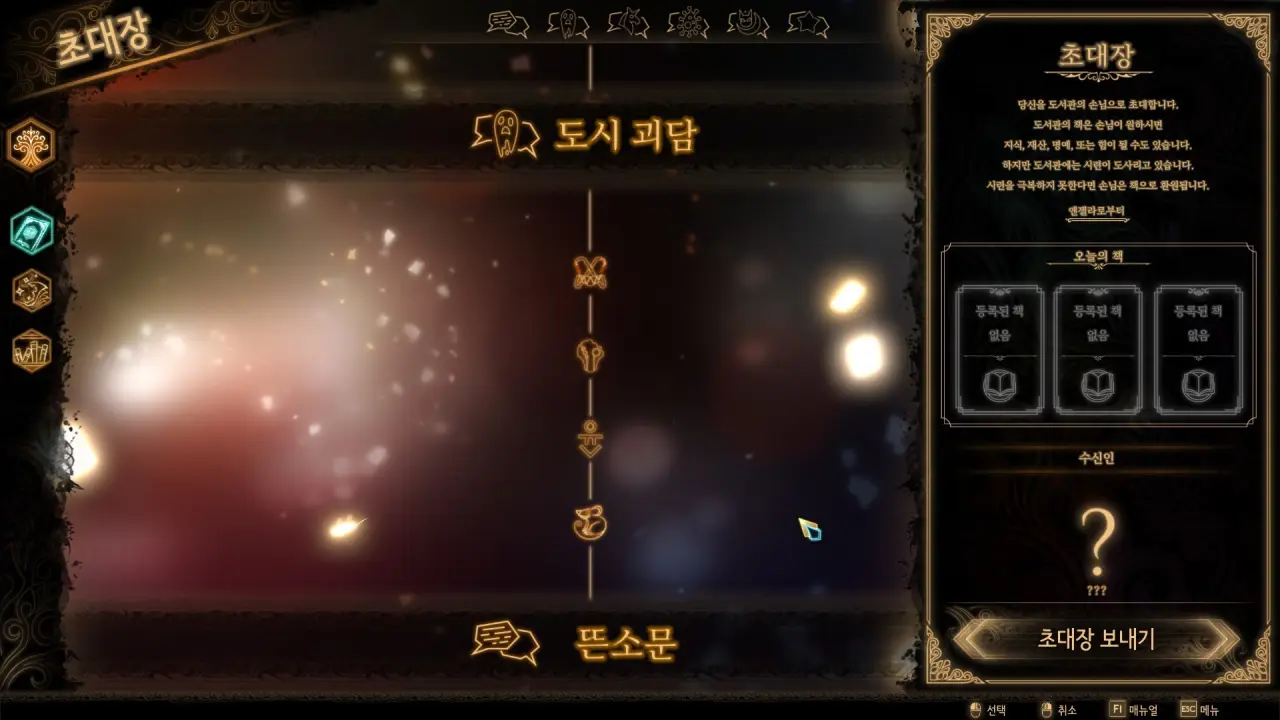
You can inspect guests’ planned cards and choose cards to oppose them. Dice outcomes and effects influence the clashes.
Books can develop librarians and the library, provide battle cards, or be used to invite other guests.
“For its first ten hours it explains almost nothing, but once the speed dice and Stagger click and you claw back a fight with a Mili track swelling behind you, it pins you down. Come for deep strategy and dark storytelling.”
Library of Ruina is one of those 2021 games that doesn’t just “hold up” today — it still feels stubbornly specific, in a good way. This was ProjectMoon’s second big step in its City universe, and you can feel that ambition all over it. It came out of early access in August 2021, but it doesn’t behave like a clean, modern, easy-to-digest release. It’s dense, moody, and absolutely convinced that you’re willing to work for it. If you’re the kind of player who wants dark character drama tied directly to systems, this is where the game starts flexing. It doesn’t separate the story from the deckbuilding. It welds them together. You win a fight, you read someone’s life as a book, and then you turn that into power. That’s the hook, and it’s still the best thing about the game.
And honestly, that’s why the score split around it makes sense. Steam sitting at 94% positive from 38,346 reviews tells you a lot of players locked in and loved the ride. But the broader critical picture has been more uneven, especially once you get to the Switch version, where the rougher performance and lower visual quality dragged it down hard. So if you’re looking at this in 2026, the answer is simple: play the PC version. That’s the version that makes the combat, the text, and the pacing actually land the way they’re supposed to.

My blunt take? This is a great game for the right person and a miserable one for the wrong one. If you want something light, fast, and easy to bounce into, skip it. Library of Ruina throws speed dice, Stagger, Light, and Emotion Level at you early, and the first five to ten hours can feel like walking through fog while someone keeps handing you rulebooks. It’s not gentle. It’s not trying to be. The menus are fiddly, the page management can be a headache, and the game loves making you dig through dense systems before you feel fluent. That’s part of the appeal for hardcore strategy players, but it’s also the part that will make casual players bounce off hard.
The real audience here is obvious: people who don’t mind reading a ton, people who want dark character-driven storytelling, and people who like their strategy games to fight back. Compared with Slay the Spire, this isn’t about the simple rush of random card draws. It’s slower, heavier, and much more tied to narrative payoff. The Burn system is the killer idea: beat guests, turn their lives into books, and then use those pages as part of your own build. That’s the game’s identity in one sentence. If that sounds cool, you’re in for something special. If it sounds exhausting, trust that instinct.
Selected helpful reviews in this language show both recommendations and criticisms. This selection does not represent the overall positive rating; opinions reflect the version reviewed.
Source: original Steam user reviews. Helpful votes are an archived snapshot, not live data. Last collected: 08/15/2026.
