























Opening
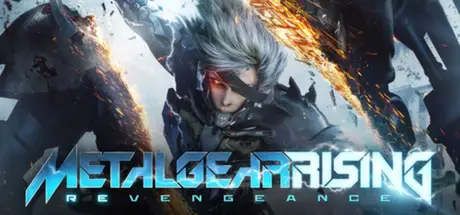
Some games you remember for their story. Metal Gear Rising: Revengeance you remember in your thumbs — the muscle memory of leaning into an incoming blade, flicking the stick across at the last possible frame, hearing steel ring against steel, then carving the attacker clean in two. The campaign barely lasts six hours, and it leaves a dent far larger than its runtime.

It began life as a Kojima Productions stealth spin-off, stalled out, and was handed to PlatinumGames to tear down and rebuild from the studs. They rewrote its soul from "sneaking" to "slashing at full sprint." What came out the other side is a strange, glorious machine: it keeps the series' cutscene monologues, political conspiracies and philosophy, yet plays like one katana against an army of cyborgs and a building-sized war machine. Critics landed it at 83 on Metacritic, 84 on OpenCritic, and more than a decade on, its Steam approval has climbed rather than slipped, parked at 96 percent. It is not flawless. The story runs short, the camera throws fits. But it does one thing so well that almost nobody has managed to copy it since.
Story | 7.0/10
Story: 7/10Taking a character built for stealth and reforging him into a war machine was the boldest call this game made before a single sword swing. Raiden, once the man who hid behind cardboard boxes, is now a cyborg ninja on a private military payroll, charging a high-frequency katana straight into the enemy line. Veterans will clock the familiar undertow of political conspiracy; newcomers can relax, because this story stands entirely on its own and demands no prior homework. The plot opens four years after Metal Gear Solid 4, but it never leans on that to make sense.
A severed arm that uncovers a harvest
The whole thread of the campaign unspools from a single humiliation: in the opening minutes, the rival swordsman Jetstream Sam takes Raiden's arm clean off. That defeat is more than a wound to the body. It drags him back to face what he is — a former child soldier who never stopped being a weapon.

Pull on the revenge thread and something far uglier comes loose. Raiden uncovers a scheme run by the terror outfit Desperado: harvesting the brains of children to mass-produce the cyborg soldiers of the next war. The emotional weight lands precisely here. A child once turned into a soldier is now the only thing standing between the next batch of children and the same fate, and the game knows exactly how heavy that mirror is. It lets Raiden's rage curdle into something darker before it asks him to climb back out.
The game commits to a linear path with no branching endings, but it spends that linearity well — dense cutscenes and mid-fight radio chatter trace Raiden's arc from raw vengeance to an uneasy peace with his own capacity for violence. There is a midpoint where he stops pretending to be the reluctant hero and simply lets the killer off the leash, and the writing has the nerve to sit in that discomfort rather than smooth it over. You are not choosing. You are watching a man negotiate a treaty with himself, and losing ground in the negotiation before he wins it back.
Villains who argue back
If the protagonist's arc is the skeleton, the rogues' gallery is the meat, and it is where the writing genuinely shines. The Winds of Destruction each carry a worldview, so every duel doubles as a debate. Mistral, all whirling polearms, speaks for the discarded; Sundowner worships chaos for its own sake; Monsoon, splitting his body on magnetism, crams nihilist sermons into the gaps between dodges. None of them is a health bar with legs. They are propositions Raiden has to dismantle on his way to the truth.
Senator Armstrong drags that "argue with your fists" design to its summit. He preaches survival of the fittest and wants to burn America down to rebuild it, throwing his own bare hands against Raiden's blade, and his "Nanomachines, son!" has become one of the most quoted lines the series ever produced, still circulating in player communities a decade later. What makes him land is that the game half-agrees with him — he isn't a cartoon, he's a coherent, repugnant thesis the writing genuinely wrestles with, which is rarer than it sounds in a game about cutting robots in half. The catch is tone. Stuffing this much philosophy into a fast slasher means the pacing isn't always smooth — some cutscenes run long, and the radio sermons can cut in right as you hit your stride. Series fans call it the franchise's chatty charm; the impatient will reach for the skip button. That seam between sermon and spectacle is the story's clearest flaw, and the main reason it can't score higher. The codec calls in particular can sap momentum, and not every philosophical detour earns the runtime it claims. Even so, it serves up a tale with more to chew on than nearly any pure action game around — a story willing to ask what a weapon owes the world that made it, dressed up in enough heavy-metal spectacle that you almost don't notice it's being thoughtful. That ambition, ragged as it sometimes is, is precisely what keeps people quoting it years later, long after slicker scripts have faded from memory.
Audio | 9.5/10
Audio: 9.5/10Ask players to name this game's finest hour and the soundtrack wins in a landslide. Jamie Christopherson didn't write a polite layer of background music. He built an engine that breathes with the fight and reaches for the throttle exactly when you need it.
Music as a mechanic, not a backdrop
The most celebrated trick is the dynamic vocal layering in boss fights.

While you trade blows with rank-and-file enemies, the mix holds back — instrumental only, tense but coiled. Then you grind a boss down to the wire, and the vocals slide in seamlessly, the whole track snapping from a held breath to a full-throated roar. That choice turns the climax from something the game plays at you into something you trigger with your own hands. You are not listening to a hype song; you are dragging it out of the speakers one slash at a time. Almost everyone who played it remembers the first chorus hitting, the prickle up the back of the neck, the grip tightening on the controller. Sound feedback and combat tempo are welded together here, and the seam never shows. Crucially, the vocals don't just arrive — they escalate, so a fight that drags into its second phase keeps gaining altitude instead of looping the same eight bars. The music is essentially a second health bar, one that tells you how close you are to the moment everything pays off.
Lyrics that double as character writing
Every boss gets a signature theme, and the lyrics quietly map onto that character's philosophy.
The magnetism-splitting motormouth has a track about his fixation on memory and pain; the polearm-wielding fighter gets a song that voices the loneliness of a designed weapon. Swing your blade and you are, in effect, mid-argument — music, dialogue and combat all pointing at the same idea in the same instant. It means the soundtrack isn't a playlist of cool songs bolted onto cool fights; each track is a character study you can only fully hear by beating the person it describes. The better you understand a boss, the more the words land, so the music rewards attention the same way the combat does — it gives back exactly as much as you put in. There's a reason fans dissect these lyrics line by line years later, treating them as genuine text rather than disposable hype. That degree of narrative integration through the score is vanishingly rare in action games, and it is the core reason fans canonized this soundtrack and still trade the lyrics like scripture.
From cult track to internet meme
The reach of this music spilled far past the disc. The final-fight and credits themes have spent years recycled across video platforms, reaction clips and remixes, fermenting into long-running internet memes. A fair share of younger players met the "Nanomachines" gag and those songs online first, then went back to play the game because of them. A score from a decade-plus-old title carrying that kind of cultural staying power is the loudest proof of quality there is. The hit feedback holds up too — the metallic crack of a landed slash, the bright chime of a clean parry, the full-body tear of a Zandatsu — every sound quietly stacking onto the rush. None of it is loud for its own sake; each cue carries information, telling you a parry connected or an armor plate gave way before your eyes even catch up. And a seasoned voice cast sells the gleeful absurdity of a man who fights tanks with a sword, committing so hard to the melodrama that the silliest lines land as sincere. Put the score, the hit feedback and the performances together and you get an audio package that doesn't merely accompany the action — it actively makes the action feel better than the inputs alone would earn.
Visuals | 8.0/10
Graphics: 8/10Visually, this is the quietest part of the package and the one hiding the hardest tech. It doesn't try to stun you with photorealism. It leans on two things instead: a relentless sense of speed, and a trick that looked like sorcery in its day — letting you slice almost anything on screen in real time.
Real-time cutting, a genuine technical marvel
The visual foundation under the whole combat loop is the real-time cutting physics running on PlatinumGames' own engine.

Enter Blade Mode and time nearly freezes; a freely rotated cutting plane drops over the scene, and you draw a line across an enemy at any angle you like, the object splitting precisely along the path you traced. This is not a handful of pre-baked break points. The geometry is computed live from the stroke you make — position, angle, shape, all yours. Slice a single foe into a dozen ribbons if your reflexes allow it, or thread one surgical cut to sever exactly the limb you want; the engine honors whatever line you commit to. It is the kind of systemic toy that never stops being satisfying, because the result is always authored by your own hand rather than dictated by a canned set piece. Critics at launch called it a marvel of high-speed 3D manipulation and a technical masterpiece, and even now the number of games that pull off arbitrary-angle live cutting this smoothly stays tiny. What sells it isn't the spectacle of the slice alone but how readable it stays at speed — you can watch a girder, a watermelon or a cyborg's torso fall apart exactly where your line went, with no cheating, no canned animation papering over the seams. It's a feature most studios would have faked, and Platinum simply built it for real. That is the visual department's proudest asset, and it earns the boast.
Style, scale, and the camera's one bad habit
The art direction is fast, sharp, and slathered in metal and neon. It never chases wallpaper-grade frames; it bends every pixel toward that word, fast — slicing camera cuts, bursting effects, sprays of severed steel all feeding the forward momentum. The opening duel against a building-sized war machine sets the absurd, heroic tone of one katana versus a moving steel fortress inside the first minute, and the style is loud enough that you'd never mistake this game for anything else. Textures and environment detail were never going to win awards even in 2014, and a few backdrops look flat under scrutiny — but the game so rarely asks you to stand still and scrutinize that it hardly matters. Motion is the art here, and in motion it sings louder than any static screenshot could ever capture.
Then there's the platform question, which directly shapes how it feels. The 2014 PC port unlocked 60fps and higher resolution, comfortably outpacing the original console builds that ran at a less stable 30. For a game whose whole spine is parry timing and slash rhythm, the higher frame rate isn't garnish — it's oxygen, every parry window and every landed cut snapping into place with more trust, the inputs reading the instant you make them. Plenty of outlets named PC the definitive way to play for exactly that reason, and a decade of modding and performance fixes has only widened the gap. On modern hardware it runs effortlessly, which means the only thing standing between you and the experience the designers intended is your own thumbs. The one real blemish is the camera: pinned against a wall or swarmed by a crowd, it occasionally lurches and hides the exact wind-up you needed to read, which stings most on the hardest difficulty where mistakes aren't forgiven. Devil May Cry 4 framed its action more steadily and rarely fought you for a clean line of sight, but Rising trades that polish for a live-wire intimacy its rivals can't manufacture. It is a fair criticism that lands hardest in tight corridors and against large enemies, and Platinum never fully solved it across the campaign. Still, weigh it honestly: a camera that occasionally stumbles against a cutting system that nobody has matched is not a hard trade to accept. The blemish is real, but it never once threatens to define the experience.
Combat | 9.5/10
Gameplay: 9.5/10The combat is this game's soul and the reason it still has no real substitute a decade on. This is not a slasher where you mash a combo and watch the fireworks. It is a close-range argument that demands you step toward the danger and place every cut with intent. Learning it takes time, and a little humiliation, but once it lands, the market struggles to offer you anything that fully replaces it.
Blade Mode and Zandatsu: making the cut the core loop

The heart of it is Blade Mode and Zandatsu, a pair of interlocking moves. Shave off enough of an enemy's armor, or catch the stun after a whiffed attack, and you drop into Blade Mode: time crawls, and you draw a line across the target at any angle to carve it open. The real payoff hides in the Zandatsu — slice out the glowing fuel cell inside the body, and Raiden crushes it in his fist, instantly refilling health and energy to the brim. So "break the guard, enter Blade Mode, carve the cell, drain it dry" becomes a closed loop, the literal backbone of the fighting. It hands you a counterintuitive, addictive truth: here, offense is the best defense. The closer you press, the more recklessly you draw your blade, the longer you live and the fuller your gauges stay. That is the near-inverse of how most action games want you to play, and it is the wellspring of the game's one-of-a-kind feel. Nothing else rewards aggression with survival quite this directly. The longer you sit with it, the more it reshapes your instincts: you stop backpedaling, stop waiting for a safe opening, and start treating the enemy's body as a refill station you have to earn at knife range. It is a loop you can feel rewiring you in real time.
There is craft hidden in the texture of it, too. Different enemies armor up in different ways, so the cut you need shifts moment to moment — a clean horizontal here, a precise vertical there to thread between plates. Heavier foes force you to whittle before you can finish, and the rhythm of "whittle, stagger, Blade Mode, drain" never quite settles into autopilot. That constant micro-adjustment is what keeps a loop this simple from going stale across a whole campaign.
Parry, replay, and the bottomless climb
There is no dedicated block button. Raiden's parry is a combined input — push the stick toward the incoming attack while tapping light attack — with a narrow, unforgiving window. Worse, the game barely teaches it, dumping the whole burden of finding the timing onto you. Nearly every newcomer spends the first hour or two getting battered, and that is exactly where it loses people. But the turn tends to arrive in a single moment. You suddenly get it — parry means meeting the strike, not fleeing it — and the entire system blooms open, all that earlier frustration cashing out as raw control. That leap from punching bag to ruler of the room is the gift this game saves for anyone stubborn enough to stay, and it is why people run it back, playthrough after playthrough. Pair it with Ninja Run — a sprint that auto-deflects bullets and scales walls — and you chain movement and murder into one unbroken waltz, sliding from a wall-run into a parry into a Zandatsu without ever touching the brakes. Past the credits, the real depth opens: every stage grades you S to D on time, damage and finishing flair, and the difficulty ladder runs all the way up to Revengeance, where a no-damage S rank is the genre's terminal flex. Chasing those ranks turns a six-hour campaign into a months-long obsession, because the scoring rewards not just survival but style — the cleaner and faster you dismantle a room, the higher you climb. Devil May Cry 5 stacks flashier strings and a fatter move list, yet it can't hand you this parry-as-offense, cut-as-healing intimacy — the thing nobody has truly cloned since. Other games have great parries, and other games have flashy finishers, but the specific feedback loop where your defense, your healing and your highlight reel are all the same button press remains stubbornly singular. That is why veterans still come back to it long after they've burned through its flashier descendants.
Content | 6.5/10
Content: 6.5/10On content, the game has to own one fact up front: the campaign is short. But short and thin are not the same thing, and this is a case where a lean main line levers open far more play than its runtime suggests.
A six-hour campaign with no filler
The story runs roughly five to six hours, and if you only push forward, a single weekend clears it.

Set against today's forty- and hundred-hour norms, that looks brief at a glance, and it is the most direct reason content scores low here — no point pretending otherwise. Flip it around, though, and almost none of those six hours is padding. The game runs a tightly curated, stage-based structure: each level is a composed run of combat, spectacle and boss work, with no vacant open world to jog across and no busywork sidequests bolted on to inflate the clock. Every hour of budget went into density, packing your time wall to wall with high-intensity slashing. The pacing reads more like an album than a sprawling box set — every track earns its place, the lulls are deliberate breathers, and the whole thing is engineered to end before it wears out its welcome. That is a discipline a lot of bloated modern releases could learn from, and it makes the short length feel like a choice rather than a shortfall.
The replay engine that quietly triples the runtime
The real longevity was never in the first clear; it unfurls after the credits. The S-rank chase and that near-bottomless difficulty ladder are a deep well of repeat play on their own — going for all-S, or for Revengeance, can mean grinding each stage dozens of times, shaving off tenths of a second, hunting cleaner routes through encounters you thought you'd memorized. The scoring is strict enough that a "good" run and an S run feel like different skill brackets entirely, which is exactly the carrot a combat system this deep needs.
On top of that sit three standalone add-ons: the tutorial-and-challenge VR Missions, the Sam chapter where you pilot the rival, and the Blade Wolf chapter that fills in a companion's backstory. The Sam content earns a special mention — he fights with a katana only, his parry window is tighter and crueler than Raiden's, and he can taunt enemies for more output at the cost of more incoming damage, an advanced exam built for players who already chewed through the main game. It reuses familiar bosses but rebuilds them with new attacks and fewer openings, so muscle memory from the campaign actively betrays you. The Blade Wolf chapter, meanwhile, leans more on story than challenge, but it deepens a side character the main game only sketches. Together the add-ons aren't filler tacked on for a season pass — they're sharpening stones, each one pushing the parry-and-cut precision to a new ceiling for anyone who fell for the core.
A different bargain from its open-world sibling
Fold in collectibles — left arms, ID tags, the gag pin-ups tucked in corners — and a complete run with grinding and every add-on counted clears twenty-plus hours, far past the impression those opening six leave. For a low-priced title, that's a genuinely solid density of content.
Hold it next to Metal Gear Solid V's sprawling open stealth sandbox and the contrast is stark: Rising never reaches for breadth or system clutter. It spends everything on making each cut land hard. That is the textbook Platinum trade — depth for breadth, replay value for runtime, mastery over mileage. One game wants to be a place you live in for a hundred hours; this one wants to be a routine you perfect over a hundred attempts. Neither is wrong, but they are answering completely different appetites. For anyone after a short, sharp game that somehow refuses to run dry — the kind you can finish on a weekend and still be replaying months later for a better rank — that supposedly losing bargain turns out to be exactly the relief they wanted. The brevity stops feeling like a shortcoming the moment you realize the game was never really asking you to finish it once; it was always asking you, quietly, to master it forever.


Comments 0
We'd love to hear from you
Welcome! Share your take on this game — being first might come with a surprise.
No comments yet — share your thoughts on this review!