




















Opening
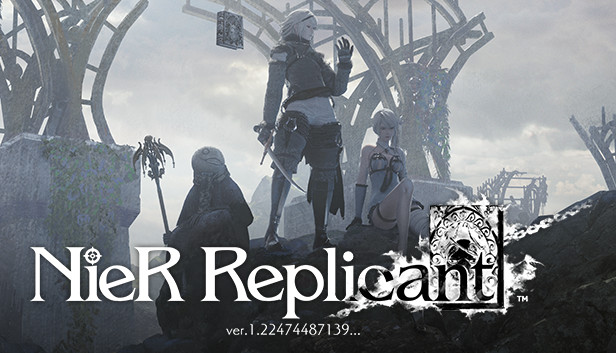
There is a stretch of empty stone street near the start of NieR Replicant ver.1.22474487139... where I simply stopped and stood for a while. Sunlight slanted in through the archways, vines hung against the walls, and the whole scene felt as quiet as a line of dialogue that had already been spoken and could not be taken back. That stillness, more than any single sword swing, is what tells you what kind of game you are dealing with. This is not a remake that wants to overwhelm you with spectacle. It is a 2021 enhanced version that keeps the strange, melancholy bones of an older title and wraps them in something cleaner and more modern, then quietly asks for your patience.
The press was right to say it preserves the framework of the original. You can feel the skeleton of an older game underneath everything: the mission structure is not new, and the environment technology does not sit in the industry's top tier. None of that is hidden. But the other half of the verdict holds just as firmly. The characters, the art, and the action staging have all been reworked. Combat is faster now, the emotion runs heavier, and most importantly, the multi-playthrough structure keeps peeling back the truth layer by layer until the weight of it catches up to you long after a scene has ended.
So this is the honest shape of the experience. It is uneven, occasionally old-fashioned, and never the kind of flawless modern package that pleases everyone on the first hour. Yet it has something most polished titles never manage: real memory. It is a game that leaves a mark precisely because it refuses to smooth away its rough edges, and the things it leaves behind feel true.
Story | 9/10
Story: 9/10The most impressive thing about this story is not that it tells something enormously complicated. Quite the opposite. It hands you a tragic outline you can follow on the first pass, then uses the multi-playthrough structure to pry that wound open a little further every time you return. The shape is legible from the start; the depth is what arrives later.

A chorus that arrives before its lyrics
The cleanest way to describe the narrative architecture is to compare it to a song that leads with its chorus. You catch the melody on the very first listen, you hum it before you understand it, and only later do you realize the lyrics cut deeper than the tune ever did. That is exactly how the multi-playthrough reveal works here. Your first run gives you the emotional silhouette: a protagonist, a bond worth protecting, and a world that has already lost too much. It is complete enough to satisfy, and it never feels like a trailer for the real thing.
Then you go again. The same scenes return wearing different weight, because now you carry information you did not have before. Encounters you once read as straightforward turn ambiguous, even cruel. A figure you took for an obstacle becomes a person with a reason; a victory you celebrated becomes something you would rather not have won. The press was unanimous in listing the story among the game's genuine strengths, and I understand why completely. It is not about the number of twists. It is about how a low, pressed-down sense of tragedy keeps sinking through the floor of every chapter, refusing to let you settle. The game never lectures you about its themes. It simply lets the same events accumulate meaning until the weight becomes impossible to ignore, and that slow accretion is far more effective than any single dramatic revelation could have been.
Emotion that lands a beat late
What makes the writing distinctive is its timing. Very little of the feeling detonates on impact. Instead it lands a beat late, after the scene has technically ended, when you are already walking toward the next objective and the meaning quietly catches up. That delay is deliberate, and it is the source of the game's lingering aftertaste. You finish a sequence thinking you understood it, and an hour later the real implication settles into your chest like cold water.
This is why the relationships matter more than the plot mechanics. The bonds between the central characters are the load-bearing structure of the whole experience, and the multi-playthrough design exists to test those bonds from new angles rather than to pile on spectacle. By the time the later loops recontextualize earlier choices, you are no longer watching a tragedy unfold at a distance; you are implicated in it. The theme of mortality is handled with restraint, never milked, and that restraint is exactly what gives it gravity. There is a discipline to how the writing withholds. It trusts you to do some of the emotional work yourself, to connect the gaps it deliberately leaves open, and the result is that the heaviest moments feel discovered rather than delivered. You arrive at the sorrow on your own terms, which makes it stick.
Foundation stone of a larger world
There is one more reason the narrative carries such weight: it is not merely the tale of a single fate. It is also an important origin point for the broader NieR universe, the foundation slab that later entries are built on. That role could have felt like homework reserved for lore obsessives, but it does not. Even a player who knows nothing about the wider series can feel the thematic mass of it, the sense that these events ripple outward into something far larger than one town and one family.
That larger context also gives the smaller story a strange resonance. Knowing that these events seed a whole future timeline makes the intimate losses feel less like an ending and more like a first crack in something vast. The personal and the cosmic reinforce each other instead of competing, and that balance is one of the script's quiet achievements.
Approached that way, the storytelling demands patience, and it is honest about that demand. The pacing of the reveal asks you to come back, to sit with discomfort, and to trust that the structure has a payoff. Once you accept that rhythm of repeated, escalating disclosure, the aftertaste is enormous. Genuinely enormous. It is the rare game whose story you keep re-reading in your head days after the credits, finding new edges you missed, and that durability is the clearest argument for everything the design asks of you.
Audio | 9/10
Audio: 9/10The soundtrack here is not background wallpaper meant to set a mood. It is closer to the one spoonful of sauce that actually decides how a dish tastes; remove it and the meal is still edible, but it is simply wrong. Keiichi Okabe's score is widely regarded as a masterwork, and on this point there is no suspense at all.

Music that decides the flavor
Almost every outlet agreed that the music is among the game's single greatest strengths, and the praise is not vague. The melodies read emotion with uncanny precision. In the quiet stretches they coax out the unspoken fatigue hanging between empty cities, ruins, and the people picking their way through them. The vocal lines, sung in that invented choral language, hover somewhere between a hymn and a lament, and they make even an ordinary corridor feel like a place where something has been lost.
Then, when the pace turns fierce, the same score twists combat and narrative into a single braided rope. A boss encounter stops being a mechanical test and becomes an emotional crescendo, because the music is climbing right alongside you. This is the part that separates a good game score from a great one: the soundtrack is not commenting on the action from the outside, it is inside the action, pushing it. You can feel the arrangement shift as a fight escalates, the vocal line swelling at exactly the moment the stakes spike, so that the mechanical climax and the emotional climax arrive together. That synchronization is hard to engineer and easy to fumble, and the score nails it again and again across the campaign.
Identity you remember first
The truly remarkable thing is that the music is not merely pleasant; it is identifiable. You walk away remembering the specific emotional color of a given theme, and the strange thing is the order in which memory works. You recall the feeling in your ears first, and only afterward do you remember the scene it was attached to, the moment of loss it scored. Most games are remembered for a boss you defeated after the credits roll. Far fewer are remembered because you hear the song first and the story comes flooding back behind it. This one belongs firmly in that smaller, rarer category. Months after finishing, you will catch a fragment of one of these themes somewhere and the entire mood of the game will rush back, intact, as if no time had passed. That is the signature of a score that has done more than accompany a game; it has become inseparable from the memory of playing it. Few soundtracks in any medium achieve that kind of permanence, and the fact that this one does is the single clearest reason the audio sits at the very top of the package.
Voice work that holds, never grabs
The voice acting is just as steady, and steadiness is exactly the right word. The principal performers never reach for scene-stealing exaggeration. Instead they hold the characters' emotions in place, letting the writing breathe without smothering it. For a work this fundamentally tragic, this saturated with a sense of fate, that restraint is essential. If the voices rang even slightly hollow, the entire emotional structure would collapse under its own weight.
It does not collapse. The performances trust silence, trust the small catch in a line over the big theatrical swing, and that trust pays off scene after scene. A line delivered half a tone too flat would read as wooden; a line pushed too hard would read as melodrama. The cast finds the narrow space between those failures and lives there, letting grief register as weariness rather than wailing, which is exactly right for a world this exhausted. Paired with Okabe's score, the result is an audio package that does more narrative lifting than the cutscenes themselves. When people say they replayed this game for the soundtrack, they are not exaggerating; the music and voice work are the connective tissue that makes the tragedy land, and they are reason enough on their own to give the whole experience your time.
Visuals | 8/10
Graphics: 8/10The most immediate impression I took from this visual upgrade was a single image: the enormous mechanism of glowing cubes buried in the underground ruins. It is not the kind of showpiece that floors you with raw technical bravado. It is something subtler. It is the original's strangeness finally getting a shell that fits it properly.

A fitting shell for old strangeness
The press was split on the graphics, and that split is entirely reasonable. The character models, the art direction, the action staging, and the effects are all noticeably smoother and more modern than the original release. The cast now sits much closer to what players expect from the words "remake" or "enhanced edition." This is most obvious in motion: the camerawork during combat and the way abilities are staged make it clear the team was working hard to wrap an old skeleton in new skin, and for the most part the seams do not show.
What the upgrade does best is preserve the eerie, dreamlike identity of the original while sanding off the worst of its dated edges. That glowing-cube mechanism is the perfect emblem of the approach. In the older version, the strangeness was there but undersold by the presentation. Here it finally reads the way it was always meant to, legible and uncanny at the same time, and that is a more meaningful kind of improvement than a higher polygon count would have been.
Where the old framework shows
Honesty requires the other half. The environments and world rendering still hold to the framework of the original, which means the technical ceiling does not sit in today's first tier. Look closely at the snow-covered districts, the broken-down shops, the collapsing towers, and you find the atmosphere is right and the composition is good, but the sense of an earlier era is impossible to fully hide. Textures and geometry occasionally give away their age, and traversal can feel like walking through spaces designed under older constraints.
The important point is that this is not a pure liability. To a real degree, that slightly dated, slightly austere look actually rhymes with the work's own desolate, alienated temperament. A world about decline and loss is not poorly served by environments that themselves feel a little worn and left behind. There is a version of this game with cutting-edge fidelity that would, paradoxically, feel less appropriate. The roughness here is not always a flaw; sometimes it is a tonal asset. The emptiness of a plaza reads as loneliness rather than as a missing detail pass; the flatness of a distant skyline reads as exhaustion rather than as a budget shortfall. The presentation and the mood are pulling in the same direction often enough that the technical shortfalls rarely register as the failures they technically are.
A restored old film
The cleanest way I can summarize the visual identity is to call it a restored old film. The grain is still there. You can see it, you are meant to see it, and nobody pretended it was a brand-new negative. But the color grading is finally correct. The contrast lands, the mood reads, and the whole thing looks the way you always wished the original had looked in your memory rather than on your screen.
That framing matters because it sets the right expectation. If you walk in demanding a 2021 technical showcase, the environment work will let you down, and the reviews that docked it for fidelity were not wrong on the facts. But if you walk in wanting the original's atmosphere delivered with competence and care, the upgrade is a clear success. The snowy ruins, the fog, the quiet coastal vistas with a distant lighthouse and a broken bridge all land with genuine compositional intent. It is a presentation built to serve mood over benchmarks, and judged on that basis, it does exactly what it set out to do. The character work in particular benefits from the upgrade, with expressions and animation now carrying enough nuance to sell the quieter dramatic beats, and the ability effects during combat give the action a legibility the original could only gesture at. Hold the two releases side by side and the gap is obvious; the new version simply looks like the game these environments were always trying to be, even when the underlying geometry shows its years.
Combat | 8/10
Gameplay: 8/10One encounter in the snowbound ruins tells you almost everything you need to know. You leap, you swing your weapon mid-air, and in the same motion you dodge an incoming wall of projectiles. The rhythm is visibly crisper than the label "old game remaster" would lead you to expect.

Faster than its label suggests
Watch the lunging strikes across the wooden bridge and you notice a clean, syncopated snap when the animations chain together, nothing dragging, nothing mushy. The press described the feel as reaching toward the high-speed action of its own sequel, and that direction is correct. The reworked combat is more modern in the hand. Weapon switching, magic, and combo strings genuinely cooperate, which means this is not a system that survives purely on flashy effects. The longer you play, the more you understand that "fast" here does not just mean the animations are quick; the decision-to-feedback loop is more direct too. You commit to an action and the game answers immediately, and that responsiveness is what carries the moment-to-moment play. There is a tactile snap to dodging through a projectile pattern and answering with a counterattack, a sense that the inputs and the on-screen result are tightly coupled with no mushy delay in between. That tightness is the single biggest reason the combat reads as modern rather than as a museum piece. It is the difference between watching an old system and actually inhabiting a responsive one, and you feel it within the first few encounters rather than thirty hours in.
Systems that actually interlock
The depth comes from how the pieces interlock rather than from raw move count. Melee strings, weapon swaps, and ranged magic projection form a real rotation. Against a wall of projectiles you lean on magic and spacing; against a single tough foe you lean on commitment and combo extensions; and the satisfaction comes from reading the situation and choosing the right tool rather than mashing one button. None of it is brutally demanding, but it has enough texture that an encounter you once cleared by spamming attacks becomes one you start to play with intention.
That is the quiet hook of the combat. Early on, fights register as chores, as clutter to clear out between objectives. Once weapon switching and ability pairing click, the same fights flip into something you keep going at because it simply feels good in the hands. The progression of mastery is gentle but real: you stop thinking about individual inputs and start thinking about flow, chaining a magic projection into a melee string into a swap into a dodge as one continuous thought. The game never turns into a pure character-action showcase, but it earns a place in that conversation more convincingly than its origins suggest, and the high-speed lineage is something you feel rather than something you have to take on faith.
Where the old bones ache
Now the problem, stated plainly. The mission structure and the flow of progression still carry obvious traces of an older game, and that directly affects the pacing. You get lit up by a strong combat sequence, then you are sent straight back into a more traditional, more repetitive style of advancement, and the momentum you just built gets interrupted. The contrast is the issue. If the whole game moved at the speed of its best fights, the dated quest design would sting far less; instead the two rhythms keep colliding.
Is it fatal? Not at all. The reason it never sinks the experience is that the core combat is strong enough to absorb the friction. Once you are fluent with weapon switching and skill coordination, a lot of encounters shift from "clear the trash" into "honestly, one more fight wouldn't hurt." It is occasionally annoying and occasionally addictive, sometimes within the same hour. The old bones ache, but the muscle laid over them is modern enough that you keep moving, and the better you get, the more the friction recedes into the background and the speed takes over. By the back half of the game, you have internalized enough of the rhythm that the dated stretches become brief speed bumps rather than walls, and the combat you once tolerated has quietly become the part you look forward to most.
Content | 7/10
Content: 7/10This game is not short on content. The main campaign, the multiple-ending structure, the side quests, the collectibles, and the weapon-related completion requirements are more than enough to stack the hours up. Between the campaign itself and everything orbiting it, you can sink a very large number of hours here without scraping the bottom of the barrel. The trouble is never that there is too little to do.

Plenty to do, unevenly done
The real issue is unevenness. From the critical consensus, the side-quest count is healthy and the incentive to replay genuinely holds, especially because the multiple endings give you a concrete reason to keep going. You are not replaying purely to tick boxes on a checklist. At least part of the time, you are chasing the truth the game keeps disclosing in stages, and that pull is real in a way most completion-bait content cannot manage.
But the side-quest quality is not consistent, and that inconsistency hurts the pacing. The strong optional content presses the world's sorrow one layer deeper, deepening the desolation rather than padding it. The mediocre side quests do the opposite: they remind you, abruptly, that this is a work carrying an older design philosophy. Lined up together, the good and the unremarkable feel like an album with a few outdated arrangements mixed in among the standout tracks. It does not ruin the whole, but it absolutely lets some of the air out of the mid-game excitement. The best optional stories here can rival the main beats for emotional impact, which makes the weaker errands sting more by comparison; you know the design is capable of better, so the filler reads as a missed opportunity rather than a neutral baseline.
Replay value with a reason
What rescues the content from feeling like mere busywork is that the replay loop is wired to the narrative rather than to grind. The multiple-ending design means a second or third run is not a victory lap; it is a continuation, a way of seeing the same events with new knowledge. That single decision does enormous work. It transforms what would otherwise be repetitive padding into something closer to chapters of one continuous story, and it is the strongest argument for spending dozens of hours here rather than a tidy single playthrough.
It also reframes the weaker material. A forgettable fetch quest on your first run can read differently on a later loop once you understand the stakes underneath it. The content is not uniformly excellent, but the structure around it keeps giving even the ordinary pieces a chance to matter. The knowledge you accumulate across runs acts like a lens, and ordinary errands you breezed past the first time suddenly carry a charge once you know who these people are and what is coming for them. That is a smarter use of replay than simply locking endings behind a difficulty wall, and it is the reason the "is it worth replaying" question lands on yes.
Quiet places worth the detour
The level geography deserves credit on its own terms. The fog-shrouded canyon, the suspension bridges, the ruined fortress strongholds are all genuinely good at provoking the urge to explore. They are spaces that reward curiosity, and the atmosphere does a lot of the heavy lifting where the quest design occasionally falters. You wander not because a marker told you to, but because the place itself looks like it has a story folded into it.
And then there are the quiet pockets. Fishing by the sea, the still moment with a distant lighthouse and a broken bridge on the horizon: these stretches give the content real texture and keep it from feeling monotonous. They are the breathing room between the heavier beats, and they are exactly the kind of small, unhurried scene that lingers. Without these pauses the relentless melancholy would flatten into monotony; with them, the world feels lived in rather than merely sad, a place with weather and dusk and idle afternoons rather than a single unbroken note of despair. So is it worth playing through several times? Yes. You simply have to accept the honest caveat: not every single hour is equally brilliant, and the deal is worth taking anyway.


Comments 0
We'd love to hear from you
Welcome! Share your take on this game — being first might come with a surprise.
No comments yet — share your thoughts on this review!