

















Opening
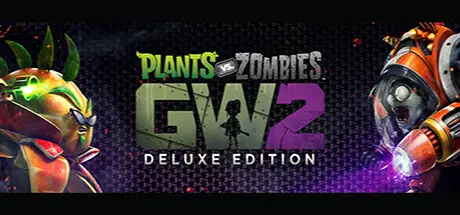
Let us clear up the biggest misunderstanding first. If you clicked in expecting the top-down game where you plant a row of peashooters and watch zombies shuffle into them, this is not that game. Garden Warfare 2 belongs to a completely different branch of the franchise — it is a third-person team shooter. You are no longer the god-view commander placing units on a grid. You drop onto the lawn yourself, take direct control of a single peashooter or a single zombie foot soldier, and trade fire with real players and AI across a sprawling suburban war zone.

And yet it is unmistakably Plants vs. Zombies. The candy-bright cartoon palette is here, so is the bloodless rule that a defeated character simply pops into a potted plant or a gravestone. What PopCap pulled off is a kind of magic trick: it wrapped a genuinely meaty team shooter — fourteen classes, more than a hundred character variants — inside a shell that anyone in the room can pick up and laugh at. The numbers back it up. An 82 on Metacritic, an 81 on OpenCritic, and a 90 percent positive rating across 43,371 Steam reviews that has barely budged in years. This review answers the only questions that matter: what makes it fun, who will fall in love with it, and who should walk straight past. The short version is that it is one of the most generous, welcoming, and quietly deep multiplayer shooters of its era — provided you understand going in that it has no story to tell and asks you to grind for your toys. Stick around for the full breakdown of where it shines and where it falls short.
Story | 5.5/10
Story: 5.5/10Dr. Zomboss took the suburbs — this time the plants are the invaders
Garden Warfare 2 has no traditional linear story, and it is honest about that from the first second. There are no hours of cutscenes, no scripted dialogue beats, no plot to follow. The narrative lives entirely in the setting. After the events of the first game, Dr. Zomboss has seized all of Suburbia and turned the neighborhood into zombie turf. The plants now have to fight their way back in from the edges. That single reversal is the biggest narrative shift from the original Garden Warfare: last time the plants defended their home, this time they are the ones storming the gates.

None of this is told to you out loud. You read it off the world. A zombie space station floats overhead, whole blocks have been retrofitted with undead architecture, and the plants have thrown up makeshift defenses along the front. The lore is laid out where you can see it, not buried in menus.
You do not need to parse a line of text — one glance at the map tells you who is winning this tug of war. For a family-friendly shooter, that featherlight, never-in-the-way approach is exactly right. Kids do not get stuck on plot, and adults do not have to sit through ten minutes of animation before a single match. Painting the story into the scenery is the smarter move anyway: it sets the table without ever keeping you from the fun.
The Backyard Battleground does the storytelling — by being a place, not a movie
If this game has a narrative center of gravity, it is the Backyard Battleground. It is the forward base of the whole plant-versus-zombie standoff: a plant half on one side, a zombie half on the other, and a contested no-man's-land of crossfire in between. You take quests here, customize your characters, rope in friends, and fend off waves of AI. The entire world unfurls outward from this single hub.

The quest board strings together a generous run of comedic side jobs — go thump a wave of enemies in some corner, retrieve something that got stolen, hold a position. Every line of writing is absurdist, deadpan, stuffed with the series' trademark gags, and not one of them reaches for a sincere tearjerker. The whole thing exists to make you grin. That "tell it through environments and quests, never through long dialogue" philosophy lets solo players sink hours into the Backyard, grinding and unlocking at their own pace instead of running dry the instant they realize there is no campaign. The quests have a real sense of proportion, too — the difficulty climbs gently, the coin rewards are tangible, and that turns the missing story from a flaw into a slow, steady rhythm you can chip away at.
If you want a serious narrative, the cupboard is bare
Let me be straight with you: the story is the thinnest part of this whole package, and the 5.5 we gave it reflects exactly that. There is almost nothing here for a player who wants narrative to chew on. No protagonist arc, no agonizing choices, no branching endings, not even a proper main storyline to follow. You did not come here to be moved by a tale, and the game knows it.
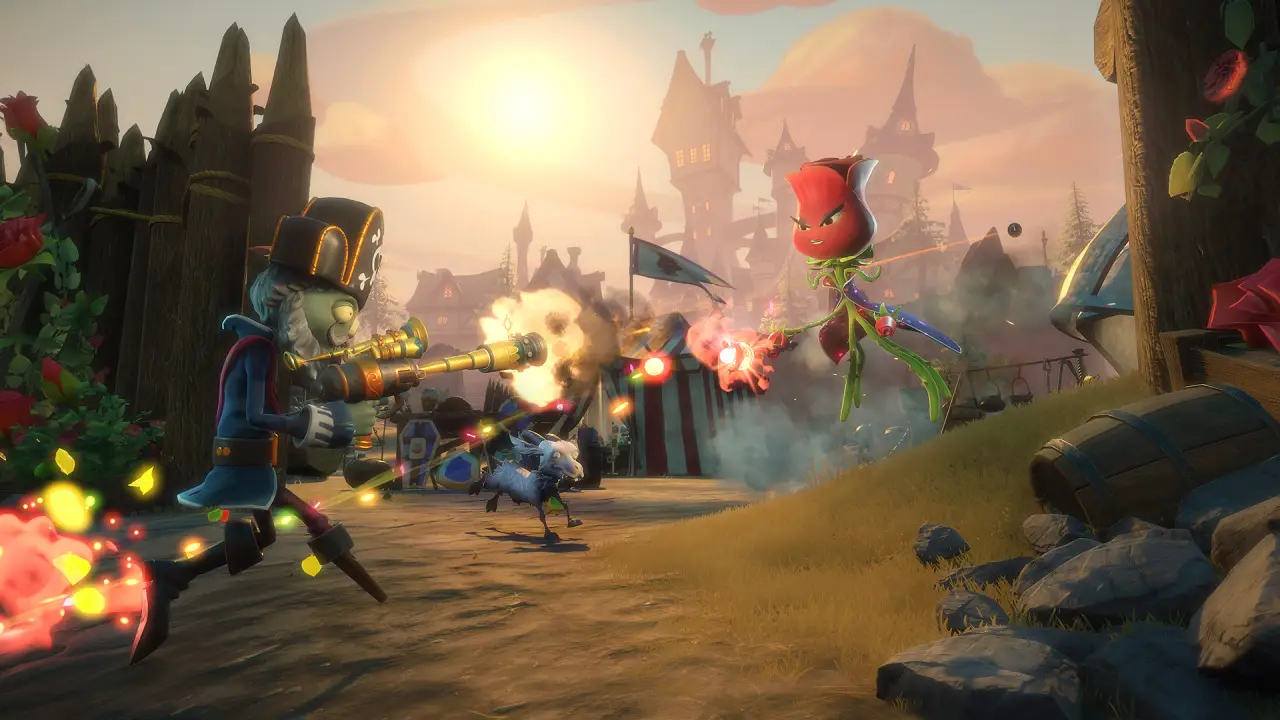
Its characterization runs down an entirely different track — built out of silhouette, of kit, of the goofy animations that play out mid-firefight, never out of lines and lore. In that respect it shares a surprising amount of DNA with its contemporary Overwatch. Neither game leans on cutscenes to sell a cast. Both let you learn who a character is from how they move, how they shoot, what grunt they let out when they take a hit. The difference is that Overwatch propped up its roster with a flood of animated shorts and backstory, whereas Garden Warfare 2 cut even those, folding away every last narrative ambition to focus on a brawl that needs no script. The right player finds that refreshing. The wrong one finds it empty.
Audio | 8.0/10
Audio: 8/10Not one line of dialogue — it makes you laugh with grunts and explosions
The sound design here carries one wonderfully counterintuitive trait: there is essentially no spoken dialogue. Plants and zombies never say a real, coherent sentence. They grunt, groan, mutter, and unleash a whole vocabulary of silly noises instead. The peashooter fires with a chirpy "pop-pop-pop," the zombie takes a hit with an "urrgh," the sunflower heals in a sprinkle of chimes, and explosions land with a cartoon "boom." A full match plays out like a wordless slapstick comedy.
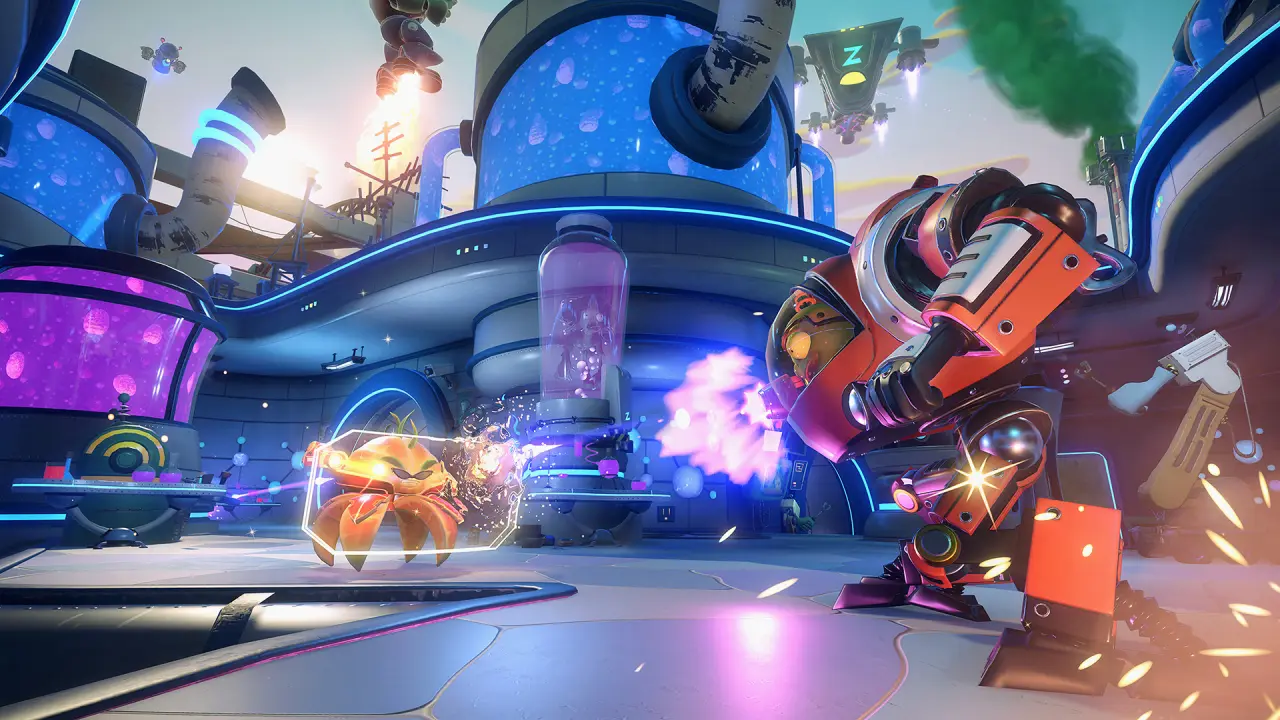
That "comedy without dialogue" is a series signature, and it is the invisible hero behind the game's all-ages reach. Because nothing rides on language-specific lines, localization is basically frictionless — whatever country you are from, you hear the same set of noises, with no translation stiffness and no dubbing that lands wrong. It is one of the quiet, structural reasons the game still holds a 90 percent rating on Steam years after release, with players everywhere able to jump in cold.
Plenty of games pile on subtitles and celebrity voice work to manufacture atmosphere; Garden Warfare 2 does the opposite, building personality out of the plainest grunts and effects, and the restraint somehow reads as classy. You do not need to understand a single word — one exaggerated yelp as a character eats a shot is enough to make you laugh along, and that purely vocal comedy is something many talky shooters can never manage.
A score so cheerful the firefight turns into a backyard party
If the sound effects do the laughing, the score does the framing. Garden Warfare 2's music is a mash-up of orchestra and electronics — bright, jaunty, heavy on rhythm. The instant a match kicks off, the soundtrack shoves the mood toward a rowdy lawn party rather than a life-or-death battlefield. It never wants you tense. It only wants you to feel like this is a good time.

That musical direction snaps perfectly into the game's larger identity. Its rival Overwatch uses fully voiced hero lines and an epic score to pull you into a serious competitive universe; Garden Warfare 2 runs the other way, using sound effects and a breezy melody to tell you to loosen up, this is just make-believe. Neither path is better, but this one fits a living-room full of people roasting each other for getting vanquished. The score does not upstage anything and never rushes you — it quietly whips a chaotic scrum into a farce you want to laugh at, which is exactly what it should be. Each theme map even gets its own musical variation: the moon stage leans spacey and sci-fi, the pirate stage threads in a sea-shanty beat, so you can hear a different vibe in each setting and the whole soundtrack never goes flat. That attention to setting-specific scoring is the sort of polish you would expect from a far more self-serious game, and finding it under a goofy cartoon shooter is a pleasant surprise. It is one more sign that PopCap treated this project as a real production rather than a quick cash-in on a beloved brand.
Visuals | 8.5/10
Graphics: 8.5/10Frostbite doing cartoon carnage — even the burlap and flower pots have texture
A lot of people assume a cartoon art style is shorthand for cut corners and cheap textures. Garden Warfare 2 flatly refuses that. It runs on Frostbite — the same engine that usually muscles out Battlefield and Need for Speed. PopCap took that high-end foundation and pointed it at cartoons, and the result is that leaf veins, the burlap on a zombie's frame, and the particles spraying off an explosion all land with weight, with real lighting. This is not a game that looks downmarket the moment you boot it. It is a game that takes its cartoon seriously.
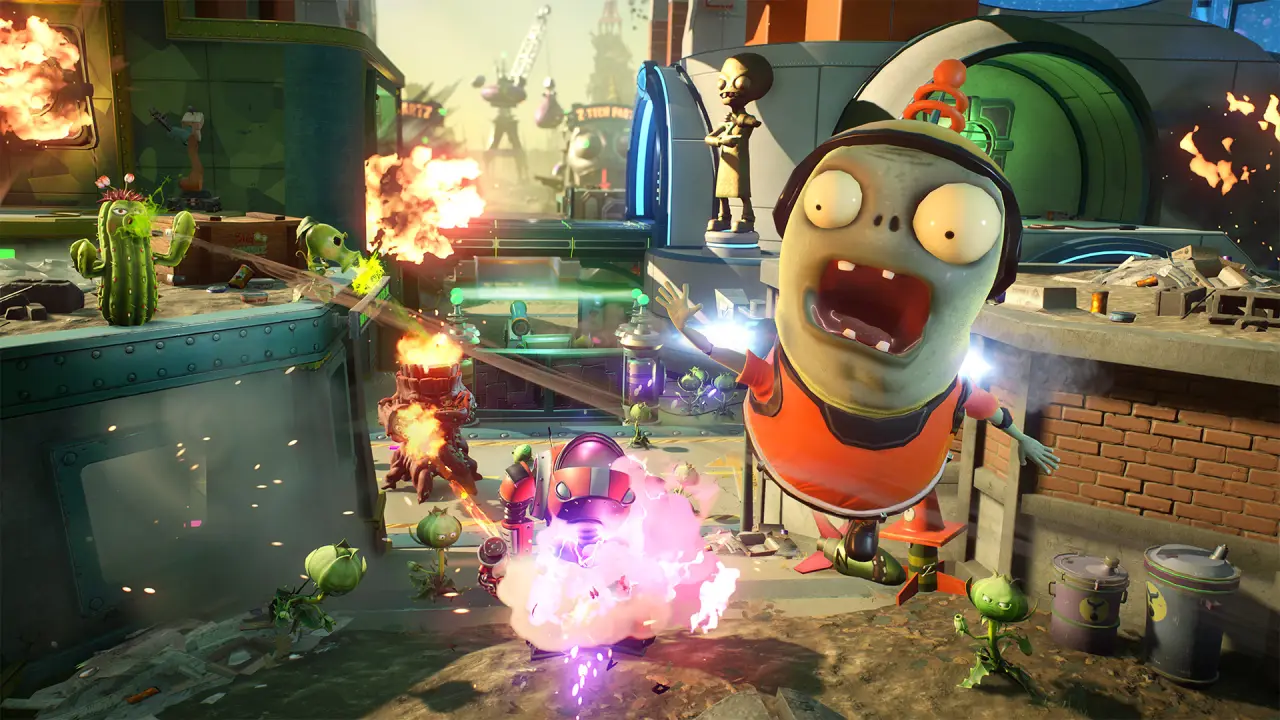
That contrast — top-tier engine, candy-colored visuals — is where the game gets its best visual value. You get the carefree, pressure-free joy of cartoons and the material detail and lighting depth only a triple-A engine delivers. The tracer flare as a peashooter fires, the bits that burst off a zombie launched into the air, the warm glow of a sunflower's healing beam — stacked together, those details make a battle that looks juvenile feel genuinely polished.
Among that 2016 crop of shooters it sits in the clean, charming, instantly readable tier, and it does not look threadbare years later either. A cartoon style ages better than realism by nature: it does not curdle as resolution and texture standards march on, which is exactly why it keeps looking good. Stylized art buys a game a kind of immortality that a photorealistic one never gets, and Garden Warfare 2 cashed that check fully. Boot it up in 2026 and nothing about it reads as dated — the colors still pop, the animations still sell every gag.
Desert, moon, pirate cove, medieval castle — every map is its own theme park
Garden Warfare 2's maps follow a theme-park logic, not a realistic-battlefield one. A desert oasis, a lunar base, a pirate cove, a medieval castle — every single map commits to one vivid theme and carries it through from level geometry down to the visual gags. The moon map hints at low gravity, the pirate map has wooden ships and cannons, the castle map has battlements and a trebuchet. Walk into any of them and you instantly know where you are. That commitment to a full theme makes each map feel like its own little world rather than the same lawn with new wallpaper. Play enough and you will even start remembering which corner of each map is good for sniping and which lane suits a chomper flanking — readability turning straight into tactical memory.
That strong-theme, high-recognition art direction, paired with a clean and snappy UI and crisp information readout, means the visuals serve more than just good looks — they serve "anyone can follow this." Colors are bright, contrasts are clear, and even a kid can tell friend from foe and parse a health bar and an ability at a glance. Add the bloodless rule — a vanquished character just becomes a pot or a gravestone, and the gunfire and blasts are all exaggerated cartoon effects, nothing to make a parent wince — and the art style itself becomes an all-ages gateway. That value gets underrated a lot: plenty of parents want a shooter they can hand a child and happily play alongside, and the market for that is genuinely thin. Garden Warfare 2's cute, gore-free look fills that gap precisely, and against the realistic military shooters of its era it drops the visual barrier to nearly everyone.
Combat | 8.5/10
Gameplay: 8.5/10Fourteen classes, a hundred-plus variants — every match throws you something new
Peel off the cute shell and Garden Warfare 2's core is a solid, properly built third-person team shooter. There are fourteen classes, seven per faction, and each one has its own primary-weapon feel, three abilities, and a distinct profile of health and mobility. The peashooter is intuitive and forgiving, can crouch into a Gatling-spray stance, and is the best stand-and-deliver pick for newcomers. The sunflower looks like a pure healer but its beam stings on offense too — a do-everything pick. The chomper plays the ambusher, burrowing underground, slipping behind an enemy, and swallowing them whole for an instant vanquish. On the zombie side, the all-star is a charging football tank, the scientist is vicious up close with a short-range blaster and can still mend teammates, and the engineer builds teleporters and turrets to fortify a point into a stronghold.
What pushes the mechanics into genuinely absurd richness is the variant system. Every class has dozens of variants that change elemental property — ice, fire, electric, poison — along with rate of fire and projectile behavior, and the whole game tops a hundred playable characters. That makes GameSpot's line — "you will encounter something new almost every round" — literally true. The ice peashooter you face this match and the fire peashooter you face next play completely differently: one slows and freezes targets to set up a finish, the other burns over time to suppress packs. The best part is that these variants are not lazy stat reskins — they genuinely reroute your approach. Same class, different variant, different playstyle and positioning, which means "mastering one character" carries real depth on its own.
The gap between spraying wildly and actually playing is learning the counters
Garden Warfare 2's depth does not come from any single thing maxed out. It comes from the rock-paper-scissors between classes. Knowing which class counters which, when to swap characters, where your particular variant is strong and where it is soft — that web of counters is the one step that takes you from "spraying at heads" to actually playing, and it is the root of why people keep coming back.
But that depth is also a wall. A hundred-plus characters and fourteen classes staring a newcomer in the face will tangle you up early — you will not know whether you got vanquished because of your aim or because you picked the wrong character. The saving grace is matchmaking that mixes skill levels together, and a family-friendly identity that means even a beginner who gets picked on rarely spirals into quitting.
That stands in sharp contrast to its rival Overwatch. Overwatch runs the hardcore esports lane — tight matchmaking, brutal balance, low margin for error, the kind of game where a single bad round spikes your blood pressure. Garden Warfare 2 takes the same class-based depth and, through forgiving matchmaking and a cute exterior, makes it something anyone can pick up.
The balance is genuinely flawed, but the family-friendly framing absorbs it
The shortcoming belongs on the table too: Garden Warfare 2's balance issues are widely acknowledged by critics. OpenCritic's summary line names it outright — "lack of balance is a thorn in its side" — and several variants are plainly overtuned, which stings when you run into them. It is one of the main reasons the game did not climb higher.
Inside its own framing, though, the sting is heavily diluted. This is not an esports title — there are no ranked ladders, no grim obsession with winning, and matchmaking shuffles all skill levels together, so getting cleaned up a few times by an overtuned variant flips over the moment the next match loads a new map and a new opponent. The stakes are simply lower here by design, and that is a feature, not a bug — a game built for families and friends to mess around in does not need surgical balance, it needs to stay fun even when things are lopsided, and this one does. The Backyard Battleground even lets you grind against AI solo until the counters click before you queue up. For the hardcore player chasing strict balance, the thorn draws blood; for the majority who just want to log on and mess around, it is a harmless little blemish at most.
Content | 8.5/10
Content: 8.5/10Twelve maps, a dozen-plus modes, and a hub you can explore — multiples of the original
If the original Garden Warfare's worst flaw was thin content and almost nothing to do solo, the sequel was built to bury that crater. Garden Warfare 2 packs in twelve multiplayer maps, more than a dozen modes, fourteen classes and over a hundred character variants, plus a freely explorable Backyard Battleground hub. The modes alone will keep you busy for a long time. Turf Takeover is the standout competitive mode, where attacking and defending sides fight over points on a 24-player battlefield, and the final showdown even shifts based on which side is ahead and which map you are on. Herbal Assault puts you on the plant side attacking; Graveyard Ops puts you on the zombie side against waves of AI, and the co-op survival plays from either faction.
The upside of that volume is how thoroughly it covers tempo. Want to compete? Load Turf Takeover. Want to relax? Run a co-op wave mode against AI. Want to take it slow alone? Sink into the Backyard and pick up quests.
The Backyard itself is more than a menu — you take jobs in it, grind coins, fight mini-bosses, and dig up hidden Easter-egg areas. It folds a practice range, a social lobby, and a collect-a-thon into one explorable space, which is the single smartest call in its experience design. You are not dumped into a cold menu the moment you boot up; you stand in a lively base with things to do, and everything you want to play or practice or party up for radiates out from there, which gives the whole game warmth and a sense of belonging.
Every post-launch update is free, and microtransactions only sell shortcuts, never power
Garden Warfare 2's long-tail support is the boost to its content score, and it pulls no punches: every post-launch update is free, with no traditional paid DLC. The free Zomboss Down update added over 200 customization items, new character variants, balance tuning, and more ways to earn coins. The Graveyard Variety Pack added the Aqua Center map. After that came the Trials of Gnomus, holiday events, and wave after wave of free content rotating in. Buy the base game and you never spend another cent on the updates.
The economy is built relatively clean, too. There is one currency, coins, earned from playing any mode, spent opening sticker packs for character variants and cosmetics. Microtransactions do exist — you can buy coins with real money, 56,000 for $2.49 up to 630,000 for $19.99 — but they only sell speed, never any exclusive power. Spending money just saves you a bit of grinding; it buys you no combat advantage whatsoever, so there is zero pay-to-win pressure on players who never open their wallet. That is why its economy design draws so little criticism, especially measured against the predatory monetization that became standard in multiplayer games over the years that followed. Garden Warfare 2 sells you convenience and nothing more, and the whole game remains fully unlockable through play alone.
Unlocking everything takes a real grind, yet the rating still sits at 90 percent years on
All that content has a cost. Collecting all hundred-plus character variants demands a meaningful coin grind — packs are random, and bad luck means grinding the same modes over and over. For an impatient player, that progression pace reads as a slog; "I have to grind another dozen matches just to unlock the variant I actually want" is a real lived experience, and it is the one thing worth flagging in the content column.
Then again, a game that can sustain a progression line this long is, by definition, content that holds up. The most persuasive evidence is the data: this many years after release, it still holds a 90 percent positive rating on Steam, with 43,371 reviews pinning the "Very Positive" tag firmly in place and people still in the queues to play with you. For a family-friendly shooter to pull off that kind of longevity, it leans exactly on this content foundation — plenty of modes, all-free updates, collecting worth chasing. It is not fast food you toss after a few hours; it is a staple you keep in the library and drop back into for a few rounds. For a multiplayer shooter, still having people to match with and a reputation this high long after launch is the hardest test to pass — too many multiplayer games turn into ghost towns, and this one has not.




Comments 0
Share your game review
Join the discussion and share your review of this game.
No comments yet. Share your thoughts on this review.