

















Opening
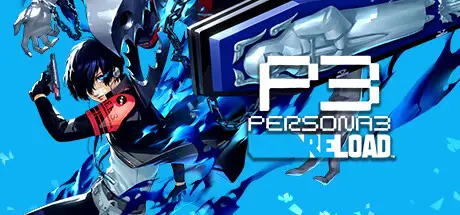
Some games you forget the moment the credits roll. Persona 3 Reload is the other kind — the kind where you can't shake a single line a character delivered under a green midnight sky, weeks after you've put the controller down. On the surface it's about a group of high schoolers who go to class by day and fight monsters by night. Underneath, it's a year-long course on death, on goodbyes, and on the strange art of living well when you already know where the road ends.
It arrived in early 2024 and immediately became the fastest-selling game Atlus had ever made — a million copies in week one, overwhelming praise, a 2006 title dragged back into the mainstream conversation. But the sales aren't what make it special. What makes it special is its nerve: it buries "memento mori," about as heavy a theme as games attempt, inside a deceptively cheerful school calendar, and lets you stumble into grief while you're busy making friends, going on dates, and grinding a tower. It hands you the lightest possible packaging for the heaviest possible idea, and trusts you to feel the weight on your own time rather than spelling it out.
A warning before we go further: this is not a game that grabs everyone in the first two hours. It's a slow burn, deliberately restrained, and the opening stretch will test anyone hungry for instant payoff. Stick with the setup, though, and the returns compound — this is a classic case of trading time for feeling, and the further in you get, the heavier the dividend it pays back. Below, I'll walk through story, sound, visuals, systems, content, and where it lands — what this remake actually rebuilt, what it left on the cutting-room floor, and whether the seventy-odd hours it asks for are yours to give.
Story | 9.5/10
Story: 9.5/10The walk home from school doubles as a class on dying
The smartest thing Persona 3 Reload does is refuse to hand you its grief all at once.

You play a member of SEES, a club of teenagers who can summon Personas — manifestations of the inner self — during the Dark Hour, a stretch of time that appears at midnight and is crawling with creatures called Shadows. Standard shonen scaffolding, on paper. But the tone sits low from the first hour: every member of the group is quietly carrying their own fear of death, of loss, of being alone. You're not here to save the world. You're here to learn how to say goodbye.
That weight never arrives as a cutscene lecture. It seeps in along an ordinary calendar, one afternoon at a time. A throwaway line on a nothing evening lands like a punch. A full-moon battle ends and you realize the roster is one person lighter. The game is in no hurry to make you cry; it spends a whole year thickening the bonds first, then tightens the net at the moment you've stopped bracing for it. By the time the ending comes around, veterans of the 2006 original keep saying the same thing: this version hits harder than the one they remember — not because the plot changed, but because the staging and the sheer accumulated time make an ending you saw coming land like one you didn't.
From PS2 sprites to something staged like a film
If the original told this story, Reload reshoots it.

The remake overhauls how the narrative is delivered. Camerawork, scoring, the density of fully staged scenes — all of it leaps past the static-portrait, text-box rhythm of the PS2 days. A beat that once played out as two headshots trading dialogue is now a proper sequence: blocked, scored, acted. The story didn't change; the production did, and that's most of what you're paying for.
Character work is where it pays off. Aigis, the combat android who slowly wakes up into something with a soul, gets a throughline here that's genuinely moving — a machine learning to grieve is a heavy idea to hand a teen RPG, and it's handled with more restraint than you'd expect. Junpei the class clown, the icy student-council president Mitsuru, the lone-wolf Shinjiro — each gets dedicated side episodes that flesh out the male cast the original left thin, turning what used to be sketch outlines into people with private wounds. The longer you spend with them, the more it costs you to lose them. Laying every member's fear, fixation, and regret out in the open so the ensemble has no filler is this series' oldest, surest skill, and Reload deploys it better than it ever has. That ache is the whole design.
Side stories written like short fiction
This series has a particular trick: it writes small talk with strangers as if each conversation were a publishable short story.

The system is the Social Link. On days you're not in the dungeon, you forge bonds with the people around town — a lonely old man, a bullied kid, a classmate with something on her mind. Each one is a complete character arc, no less considered than the main thread. A couple of them — an elderly bookshop pair, a small girl — can even go "missing" into the tower, and you have to rescue them or lose their stories for good. Tying a side character's fate directly to the central mechanic means you can't treat a single bond as filler. That's why people cry over these invented strangers.
A missing piece, and the rival worth measuring it against
In the interest of honesty: the story carries one obvious hole.

The original FES release included an epilogue, The Answer, that completed the emotional arc. The base game cuts it, restoring it later as paid DLC. For a lot of returning players, the story of goodbyes is simply incomplete without that coda — you accompany these people for a full year and get paused right where it should resolve. It's the narrative's biggest regret.
Set it beside Persona 5 Royal and the contrast sharpens. Royal is louder, flashier, a grand coming-of-age carnival. Reload walks the opposite road: heavy, inward, the camera fixed on mortality. Both are excellent. But when it comes to staring something this dark straight in the face, that's a register Royal never reaches for.
Audio | 9.0/10
Audio: 9/10An opening theme that sings the old one back to life
If a single thing had to prove this remake's sincerity, it's the opening track.

The song is "Full Moon Full Life," rearranged by Atsushi Kitajoh, written by Lotus Juice, and performed alongside newcomer vocalist Azumi Takahashi. Its cleverest move is threading the leitmotif of the original's signature theme, "Burn My Dread," quietly through the melody — a wink veterans catch instantly, a hook newcomers fall for on its own terms.
The track has cleared 37 million streams across platforms, and the full soundtrack shipped day one at a level that's high even by this series' standards. For plenty of people, looping that one song over a lunch break is enough to commit to the whole trip, and that's a rare thing for any piece of game music to pull off before you've even pressed start.
Urban melancholy: music as pacing, not wallpaper
In this series the music was never background you tune out — it drives the rhythm of how you play.

The palette is a blend of pop, hip-hop, and electronic acid jazz: a sound that's youthful, city-bound, and faintly melancholy all at once. Shoji Meguro's old classics return reworked, modernized in production without losing the nostalgia, and the new arrangements sit so naturally beside them that you rarely notice the seam. More important is how tightly the music locks to play — drums snap in the instant a battle starts, and screen and score detonate together when a finisher lands, so combat feels less like a system and more like a rhythm game you happen to win by thinking.
There's a craft, too, in knowing when to go quiet. At the story's peaks the soundtrack dares to leave silence, and a wordless goodbye carries more weight than any swell could. That sense of when to erupt and when to hush is the difference between a good game score and one people keep on a playlist years later.
Full voice work brings the cast to life
The remake also does something that matters enormously for an older JRPG: it fills in the voice acting.

It offers full English and Japanese voice tracks, with the main story, the linked side episodes, and key bond conversations almost entirely acted. The lift to characterization is transformational — emotions you once had to imagine from a text box now ride on real vocal performances, and the cast snaps into three dimensions. A line that used to be a flat string of characters now has a catch in the throat, a hesitation, a forced laugh, and suddenly these teenagers feel like people you'll miss.
It's a big part of how a 2006 title sells itself to a generation raised on fully voiced blockbusters. Against Atlus's own Metaphor: ReFantazio and Shin Megami Tensei V, this is the more pop, more adolescent register — and unmistakably its own.
Sound as identity, not just a feature checkbox
What ties all of this together is that the audio isn't a department here — it's part of the game's personality.

Plenty of RPGs have good music and competent voice work. Far fewer make their sound a load-bearing wall of the whole experience, where the track playing in a given month is as much a memory of that stretch as anything on screen. Years after a playthrough, people don't quote the menu layout — they hum the battle theme, they remember the exact song that was playing when a character left the party. That's the bar Persona sets and Reload clears: the soundtrack isn't accompaniment to the story, it's a second narrator running underneath it, and the remake gives that narrator a sharper, fuller voice than the original could ever afford. For a game built on a year of small moments, having a score that can dignify the quiet ones and electrify the loud ones is no small part of why it stays with you.
Visuals | 8.0/10
Graphics: 8/10A stylized rebirth under blue moonlight
From low-poly PS2 models to a fully stylized 3D look, the remake nails its visual identity.

There's no lazy hi-res-texture shortcut here. Instead the whole art package is rebuilt around one image: the moon. Where the later entry leaned on an aggressive red, this one picks a cool blue keyed to its lunar theme — quieter, more wistful, a perfect match for a story staring down death. Character design, environment palette, and cutscene framing all speak the same blue dialect; even the battle UI and menu backdrops sit bathed in that moonlight, so a glance tells you which game you're in. Setting an emotional key first and bending every visual element to serve it is a far classier move than chasing raw resolution, and it gives a near-twenty-year-old story a strong authorial signature today.
A menu interface you watch like a performance
If you had to name this remake's single strongest visual asset, it isn't the models or the lighting — it's the interface.

It inherits and extends the much-celebrated dynamic UI of the later entry, swapping red for blue. Every menu you open, every loadout you swap, every finisher you fire sends interface elements sliding, snapping, and recomposing with real design flair — nearly every input becomes a tiny set piece. This UI is widely held up as among the best in the series and the medium, and just watching it move is its own quiet pleasure, the kind of thing you'll catch yourself opening a menu just to see again. Paired with modern conveniences — quick saves, skips, a story recap — the moment-to-moment feel is several notches smoother than the original ever managed, and it papers over a lot of a two-decade-old design's rough edges.
The old problems linger: consistency and tower fatigue
To tell the whole truth: the visuals aren't flawless.

Critics broadly flag a consistency gap — some cutscenes and environments are noticeably rougher than others, and the fidelity doesn't hold an even line. The most direct eye strain comes from the nightly tower, the game's only dungeon and a procedurally generated one; push through enough floors and the visual repetition stacks up, a point the systems section will return to. On hardware, the PC build hits the highest ceiling for frame rate and fidelity; the 2025 Switch and Switch 2 releases added a key performance patch for the latter, clearing early handheld worries so a long-haul game can run steady on the go, whether you're docked on a TV or curled up on a commute. In sum it's a split report card: the interface and art direction are textbook strengths, the model fidelity and dungeon visuals the repeatedly cited weakness — and the gap between them sums up the whole project, dazzling where it chose to spend its effort, short where it quietly left old debts unpaid. You walk away impressed by the parts that got real care, and faintly wishing the rest had gotten the same.
Combat | 9.0/10
Gameplay: 9/10Shift turns a clunky turn-based engine into a relay of combos
The old Persona 3 had a combat reputation problem: it was stiff. Reload fixes that with a mechanic called Shift.

Shift unlocks once you reach the sixth floor of the nightly tower, and the rule is simple. Land a hit on an enemy weakness or score a critical, and you can immediately hand the turn to another party member, who acts next.
String enough weakness hits together and you pass the action around the whole squad like a ball, knocking everything down in a single round. It's essentially the later entry's One More / Baton Pass philosophy ported backward, and it gives a once-rigid turn order a flowing, chainable momentum — the difference between trudging through a fight and conducting one, where a clean round can wipe a room before anyone on the other side moves.
Theurgy: every character gets a personal burst button
If Shift makes combat flow, Theurgy makes it explode.

Theurgy is the remake's new ultimate system. Each character carries a personal gauge, and how you fill it is characterized — some charge by acting repeatedly, some by taking hits and trading pain for power, some only by issuing specific commands. Once it's full, you cut loose a devastating finisher dealing physical or elemental burst damage that ignores enemy resistance outright. It becomes the key to breaking a stalled fight and felling the tougher walls of HP, and it stamps each character with a tactical personality: you quickly learn whose ultimate opens a fight by cracking defenses and whose closes one by clearing the board. Because the fill conditions differ, the system also quietly nudges you to actually play each party member the way they're written, rather than rotating in whoever has the best stats. It isn't a flat "charge up, hit the big button" — it turns each character's combat temperament into a switch you have to earn.
Bond by day, grow strong by night: time management under the JRPG skin
Plenty of players assume Persona is a JRPG, and then discover it's a time-management game wearing one.

The core loop runs on a real calendar. Daytime is for socializing, raising your social stats, and grinding bonds; nighttime is for descending into the tower and getting stronger. Over a full year you constantly trade between who to spend time with, what to train, whether to climb, and how to prep for each month's forced battle. Every choice has an opportunity cost stamped on it, and that scarcity is what gives an otherwise cozy school sim its quiet tension.
Build depth comes from Fusion — combining Personas across Arcana to produce stronger ones with better skills, then leaning on bond ranks for experience bonuses, a tidy "bank affection by day, grow by night" loop. As for difficulty, the easier settings dull the original's "one big spell wipes your party, save points are scarce" sting, but the monthly bosses still demand tailored teams and adjusted resistances; charge in blind and you get deleted, then learn, then come back built for the fight.
Head to head with Royal: the single tower is the structural weak spot
Set its systems beside the rival that matters most and the trade-off is obvious.

Its most direct competitor is the later Persona 5 Royal. Royal's dungeons are bespoke, themed Palaces, each a hand-built space with its own gimmicks, puzzles, and dedicated storytelling, so exploration is a pleasure in itself. The nightly tower here is the only dungeon, and a procedural one — which means that however smoothly Shift and Theurgy buff the combat feel, seventy-odd hours of near-identical stacked floors breed real repetition fatigue. You feel it plainly: the combat is new and exciting, but the container holding it is old and monotonous. That's the widest structural gap between this and Royal's hand-crafted dungeons, the one old wound a sharper coat of paint never closed. If the combat is the part that got reborn, this tower is the scar that didn't.
Content | 6.5/10
Content: 6.5/10Seventy-plus hours, and not one of them padded
Start with scale: this is a game that genuinely keeps you, and keeps you well.
The main story alone runs 70 to 80 hours, and a 100% clear — maxing every bond, topping the tower, finishing every request from the Velvet Room attendants Elizabeth and Theodore — stretches it further still.
The rare part is that those hours aren't propped up by busywork. The "bond by day, fight by night" loop is the durable core: every single day asks for a meaningful trade-off — who to see, which stat to raise, whether to climb, how to ready yourself for the battle at month's end. The time is filled with substance, not grind for grind's sake, and the calendar pressure means you're always leaving something undone, always tempted toward one more in-game day. When the Chinese outlet Gamersky handed it 8.5, calling it a JRPG "new-year gift," it wasn't overstating things.
What it adds over the original, plus eight DLC items
As a remake, it makes real additions rather than just slapping on a hi-res coat.
Against the 2006 original it adds optional linked episodes for the male cast, fresh daily haunts and activities, the ultimate system, the hand-off mechanic, a fully rebuilt tower, full voice acting, and a stack of new arrangements. None of these are cosmetic; together they reshape how the year actually plays, giving the daytime half more to do and the nighttime half a faster, punchier feel.
On the paid side there are eight DLC items, the centerpiece being the Expansion Pass epilogue, released in September 2024 and reviewed by 34 outlets to a 76 average. Its strengths are a stronger ultimate playstyle and excellent dungeon art and music; its criticisms cluster hard, since the bulk of it is a dungeon called the Abyss of Time with no bond system, which exposes the combat loop's monotony more nakedly than ever — strip away the daytime half and what's left is hours of pure dungeon, the one part of Persona 3 that was always its weakest. The steep price turned off a chunk of players on top of that. In other words it suits the diehards who love the systems and want emotional closure, not a casual add-on buyer weighing it on value alone. The game also packs 56 achievements, leaving completionists a long-tail goal worth a couple hundred hours if you're the type to chase every last bond and trophy.
The ever-absent female lead, and the platforms it covers
You can't discuss the content without the remake's most contested omission.
It never restores the optional female protagonist route from the portable version, nor the male romances that came with it. That route was distinctive and well-loved in its day — some regard it as the series' most charming branch — and its absence left a slice of fans disappointed, a few loudly boycotting until it returns. It's an unsolved sticking point, and the reason the "completeness" column never scores full marks. The platform spread, at least, is broad: PC, Xbox, and PlayStation all play it, and the 2025 Switch and Switch 2 releases give this long-haul raising sim a couch-friendly, anywhere-anytime option. For a game that asks you to take it slow, parceled out a calendar day at a time, the handheld fit suits its rhythm rather well — this is exactly the sort of thing you chip away at across weeks of bus rides and quiet evenings.
What the second playthrough is really for
One more thing worth flagging for value-minded buyers: a lot of this game's content only reveals itself the second time around.
A single run, even a long one, can't max every bond — there are more relationships than there are days in the calendar, so you're always choosing some stories and leaving others closed. New Game Plus carries your progress forward and lets you finally chase the threads you missed, see the conversations you locked yourself out of, and tackle the optional superboss content with a properly built character. That structure is part of why the hour counts run so high: the game is quietly designed to be lived in twice, and the people who love it tend to be the ones who took it up on that offer. If you're the sort who clears a game once and shelves it, budget for the main run; if you're a completionist, know that the ceiling here is genuinely far away.




Comments 0
Share your game review
Join the discussion and share your review of this game.
No comments yet. Share your thoughts on this review.