




















Opening
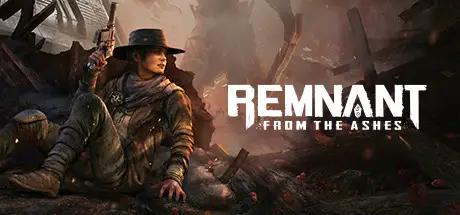
A shooter has no business playing this much like Dark Souls — and yet here we are. In the summer of 2019 a low-key co-op title slipped onto storefronts with almost no fanfare, sold a million copies inside a month, and blindsided an entire industry. That game was Remnant: From the Ashes, built by Gunfire Games, the studio with Darksiders in its blood.
On paper the pitch is a contradiction. One half is a third-person shooter, all dodge-rolls and trigger discipline. The other half is the punishing, learn-by-dying rhythm of a FromSoftware boss gauntlet. Those two ideas should grind against each other. They don't. You will stand on a dead desert world called Rhom, weapon raised, falling to the same boss for the tenth time, and then drop it — and the breath you let out is the exact breath you exhale after a Souls win.
It is not flawless. The loot rarely thrills, and the procedural maps start to repeat once you've rolled them enough. But on the ground it cares about most, it is rock solid. This review pulls the thing apart: where it shines, where it stumbles, and whether it is still worth diving into in 2026.
Story | 5.5/10
Story: 5.5/10The Root ate the world; you are what it missed

The premise is a familiar shape. An ancient evil from another dimension — the game calls it the Root — has strangled reality with creeping growth and twisted nearly everyone left standing. You are one of the last remnants of humanity, setting out from a fortified outpost named Ward 13 to claw back a foothold. End of the world, last survivors, fight your way back: we have heard this song before.
What is smart is the delivery. Remnant has no interest in pouring its lore into your ear through cutscenes. You learn this world with your feet.
On a ruined Earth choked with Root growth, vines push through cracked walls and former citizens lurch at you with weapons; you piece together what happened here from corpses, broken recordings, and the silence of the few survivors who will talk. It shifts the weight of the narrative from dialogue onto atmosphere and discovery — and for players who would rather imagine the gaps than be led by the nose, that restraint is a feature, not a gap.
Four worlds, four flavors of the end
The campaign threads you through four interconnected dimensions, and this is where the storytelling actually earns its keep. Earth is the fallen homeland, vines and rubble setting the opening tone. Rhom is a barren desert planet, its surface fully exposed, cold machine ruins scattered across an aching loneliness. Corsus is a dank swamp world of toxic mist, swarms, and ambushes that keep you wound tight — later expanded by its own DLC. Yaesha is a forest realm guarded by an indigenous people, the most vivid of the four, with a mythology all its own.
These are not reskins. Each world carries its own bestiary, its own roster of bosses, its own art language, and stitched together they form a tour through different faces of the apocalypse. From a lost home, to a dead star, to an alien bog and a sacred forest, you feel in your bones that the Root did not take a city — it swallowed a multiverse. That felt experience of walking through four ends of the world does more narrative work than any monologue could.
A thin skeleton — and the DLC that finally fills it
Here is the honest part: at launch the main story is the thinnest of the game's six pillars. The fragmented telling has mood, but at the key beats it turns vague. You punch through four worlds, you kill the thing behind it all, and you would struggle to say what you actually changed or how those bosses relate to the Root. Critics flagged this with one voice — strong foundation, sloppy top floor. It is a real reason the game sits at a 78 rather than climbing higher.
What genuinely fleshes the story out is the 2020 expansion Subject 2923, the largest of the two add-ons. It brings a full campaign, an expedition to a place called Ward Prime, and the first proper reveal of the Dreamers and how they tie back to the Root. Bolt it on, and the blanks the base game left vague finally get filled; the worldview closes its loop. In plain terms, Remnant's narrative is a skeleton-first, flesh-later affair — if you are here for story, go straight for the complete edition, not the bare base game.
Versus Destiny 2: it loses the talking, wins the walking
Drop it into the era's co-op-shooter lineup and the obvious yardstick is Destiny 2. On the industrial polish of storytelling, Remnant cannot compete — Destiny has its cutscene apparatus, its voice work, its lore tabs, treating narrative as a live-service content stream to be fed. Remnant has none of that. Its lines are sparse, its cutscenes rough, and on the pure act of telling a story, yes, it loses.
But because it never spoons the plot into your mouth, that walked-not-told apocalypse leaves a strange aftertaste that lingers. Destiny's world is narrated to you; Remnant's world is something you stumble into. Walking a long, unmarked stretch of that desert planet alone gives you a desolation no cutscene can manufacture. So its narrative ledger is clear: the spoken craft flunks, but the underfoot atmosphere is its own thing entirely — a world that never coddles you, and asks you to assemble it yourself.
Audio | 7.5/10
Audio: 7.5/10When the boss music hits, your shoulders tense before you do
Rob Westwood's score has one genuinely clever job, and it is not melody. It is a danger gauge. Out in the dungeons, the music sits low and restrained, almost forgettable, letting the dread breathe. Then you cross the threshold into a boss arena and the strings and percussion snap upward — and in that instant your body reacts before your eyes do. Here comes the hard fight.

That trick — music warning you before the enemy does — is lifted straight from the Souls playbook.
The soundtrack does not strut around on a showpiece theme; it welds itself to the combat rhythm. Aggressive stretches get dense percussion, breathing room drops to near silence, and the moment a boss flips into its second phase and changes its patterns, the score shifts key with it. You will not hum this OST on your commute, but you will feel it physically shoving you forward mid-fight. For a game whose heart is combat, that functional use of music serves the experience better than a pretty tune divorced from play.
The sound of the end is half the immersion
If the music carries the tension, the sound effects carry the world's credibility. Footsteps ringing off different surfaces, the heavy thud of weapon fire, the blunt crunch of a melee swing, a creature snarling out of the dark — layered together they build a soundscape that keeps you permanently on edge. Plenty of the time you hear a monster stir before you see its silhouette, and that ears-first early warning is a core piece of the game's Souls-grade pressure.

Each of the four worlds carries its own sonic palette, too. The desert star Rhom is hollow and wind-scoured loneliness; the swamp world Corsus is a wall of insect chitter and dripping water that makes you flinch at every patch of reeds. That sound-level differentiation works alongside the visuals to sell the idea that each world is a different kind of ending. In three-player co-op the audio earns its keep functionally as well: a teammate's gunfire, the snap of a mod going off, the directional cue of an enemy closing in — they help the squad sync fast over voice chat. Who is kiting, who should pop their ultimate, where the threat is coming from — your ears answer faster than your eyes. Set against its inspiration, the cold steel-on-steel soundscape of Dark Souls, Remnant's audio runs noticeably quicker and denser — weapon fire, reloads, and mod blasts firing in rapid overlap where a blade game would leave space. It is, after all, a hard fight fought at range, and the mix never lets you forget it.
Visuals | 7.5/10
Graphics: 7.5/10A beautifully deranged apocalypse: the more twisted the monster, the longer it sticks
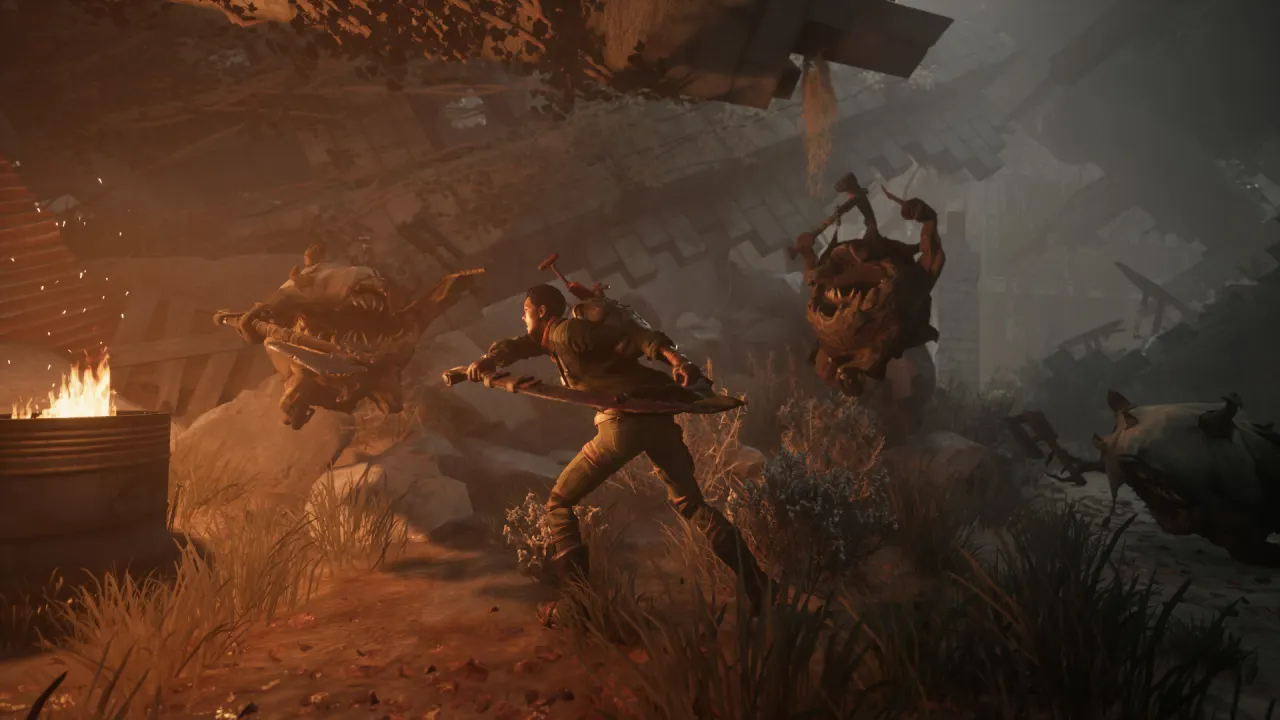
The game runs on Unreal Engine 4, but what gives its look an identity is not a spec sheet — it is the art direction. IGN's phrase for it, a beautifully deranged vision of the apocalypse, lands cleanly. There is no gray, generic wasteland palette here. Instead it makes the act of corruption itself both unsettling and gorgeous: Root-infected creatures with warped limbs and structures that should not exist, grotesque in a way that makes you want a second look.

That imaginative ugliness runs the whole way through.
The elites and bosses you meet are often colossal things that defy anatomy, and their silhouettes, movements, and attack patterns are themselves a visual language — telling you this world has been rewritten by something alien. More than resolution or frame counts, that strong artistic identity is where the visuals bank their value. Years on, when you picture this game, what surfaces first is the outline of those twisted monsters, not a technical buzzword.
It helps that the bosses are built as set-pieces, not stat sponges. Because the procedural system can roll a different boss into a given slot, the game needed a deep bench of them, and the standouts are genuinely memorable — a towering tree-construct trailing roots, a mounted desert warlord, a swarm-spawning horror in the bog. Each reads instantly at a glance, telegraphs its wind-ups through silhouette and animation, and feels like a deliberate piece of staging rather than a bullet-sponge wall. That readability is doing double duty: it is good art, and it is the visual language a Souls-style fight depends on to teach you its patterns.
Four landscapes, and the seams procedural generation leaves behind
The other visual high point is how far apart the four worlds are pulled. Earth is vine-strangled human ruin, somber and oppressive. The desert star Rhom is exposed terrain and cold metal wreckage, lonely and vast. The swamp world Corsus is green mist glowing with poison, viscous and dangerous. The forest realm Yaesha is vivid and laced with tribal mystery. Every new world greets you with a palette shift that lands fresh, and that effect plays right into the storytelling.
But the visuals carry a price they cannot dodge, and it comes straight from the core mechanic: procedural generation. Because maps are assembled from prefab room modules, run them enough times and you start recognizing the corridor you have already walked, the room layout coming around again. The first-pass wonder gets sanded down a little by repetition. Critics hit this note repeatedly — in a single screenshot it is beautiful, but re-roll the same world dozens of times for loot and the reused modules stop hiding. That is the other cut this double-edged sword of procedural generation leaves on the visuals.
The cross-platform ledger: from 81 down to 70
The game spread wide across platforms: a 2019 launch on PC, PS4, and Xbox One, then a 2023 Switch port that carried the look onto a handheld. The differences between versions actually leave a trail in the objective scores. On Metacritic, the Xbox One version landed at 81, the highest of the bunch; PC at 78 and PS4 at 77 follow close behind; and the latest, most performance-constrained Switch version sits at 70.
That spread says a lot. On stronger consoles and PC, its beautifully deranged apocalypse renders in full; ported to a handheld like the Switch, the visuals and frame rate have to compromise against the hardware, and the experience pays for it. If you want this game's most complete visual face, PC or the consoles of its era are the safer pick; the Switch version suits the player who just wants to lie back and play, unfussed about fidelity. Matching the platform to your needs is a minute well spent before you buy.
Combat | 8.5/10
Gameplay: 8.5/10Dark Souls with a trigger: aggression alone gets you schooled
The soul of this game is a Souls combat philosophy poured into a shooter. It sounds like a mismatch and plays like a marriage. You have a dodge-roll with stamina cost and a sliver of invincibility frames. You have to read each boss's attack cadence and hold your spacing before you fire. You will die, repeatedly, but every death tells you exactly where it went wrong — rolled too early, stood in the wrong spot. It teaches through failure rather than hand-feeding you a tutorial.
Which is precisely why it is unkind to the run-and-gun crowd.
Walk in with ordinary shooter muscle memory, hoping to strafe your way through, and the first difficulty spikes will slap you awake. A Chinese outlet headlined its review with a line that nails it: think you can just bull-rush this? Then you are truly finished. You have to drop the impatience and relearn how to read tells, manage stamina, and time your firing windows. Players who accept that curve find every kill lands earned and exhilarating; those who can't tend to set the controller down early. This is the core, and it is the highest-scoring pillar of the lot.
Weapon Mods turn swapping loadouts into a question worth thinking about
If the Souls feel is the bedrock, the Weapon Mods system is where Remnant grows its own personality. Every weapon can slot a mod that unlocks an active skill — one summons a pack of imps or a hulking add to fight for you, another grants sustained healing, another lets you see and tag enemies through walls, another is a flat area-of-effect nuke. The mod charge fills from your damage output, so mid-fight you are always weighing it: now that it's full, do I dump it to clear the room, or save it for the next boss?
That system turns swapping weapons from a stat shuffle into a build puzzle that demands thought. Layer on the three starting archetypes — the Scrapper plays melee with thick armor and high damage, the Hunter plays ranged with reach but fragility, and the Ex-Cultist comes with a healing aura and is a beloved support opener in a squad — and you are making build choices from minute one. None of those starts locks your future; as weapons and mods unlock, you grow the character into whatever you want. That stack of weapon, mod, archetype, and trait depth is what keeps the loot loop chewy.
Traits are the quiet glue holding all of this together. They are passive stat boosts — health, stamina, weight capacity, the various resistances — that you unlock and rank up through play, slowly hardening your character along whatever axis your build leans into. They will not flash the way a mod summon does, but they are the spine of the long-game progression, the reason a character forty hours deep simply weathers punishment a fresh one cannot. Pair that with the red-crystal checkpoints that double as fast-travel and you get the familiar Souls loop in miniature: venture out, take the tension on the chin, retreat to Ward 13 to level, restock, and re-tune the build, then warp back in. Tension at the nodes, relief between them — the structure itself is part of why the combat lands.
Three players is the full build; soloing is sharper and lonelier
Remnant supports up to three players in co-op, with difficulty that scales to the party size so a crowd can't simply steamroll. The near-universal verdict, from critics and community alike, is that three-handed co-op is its ideal form. Three players splitting fire, picking each other up, chaining mods — the joy and the margin for error both double. One charges a nuke to clear adds, one kites, one delivers the finisher, and the satisfaction of dropping a brutal boss together is something solo never reaches. It is widely cited as one of the era's best cooperative games for exactly this reason.
Soloing is entirely possible for the full campaign, but the experience runs noticeably sharper. The difficulty spikes get spikier, and some encounters that quietly assume bodies to share the load become brutally taxing for a lone wolf. Multiple outlets noted that a lot of the game's design is unfriendly to solo players, and that is its most-cited barrier. Hold it next to the era's other co-op shooters: Destiny 2 and Warframe lean on relentless live service and sheer content volume, while Remnant takes another road — procedural dungeons and Souls-grade difficulty to carve out its difference. It lacks the industrial scale of those two, but it makes the act of three people dying together and then beating the thing together into something singular. The flat loot drop system is a genuine sore spot, but I will save that for the content section — it is the one frustration sitting beneath all this excellent combat.
Content | 8.0/10
Content: 8/10Procedural generation: the reason to keep grinding, and the reason you tire of it
Almost all of Remnant's content rides on one system: procedural generation. The wrinkle that sets it apart is that the randomization covers not just dungeon layouts but the bosses you face. Each world holds enough variants that seeing every random event, rolling every different boss, and collecting the full spread of weapons and mods means re-rolling and re-running the same region many times over.
It is a textbook double-edged sword.
The upside is that early on, every entry carries genuine uncertainty — you never know which boss you'll draw or what will drop. And it builds a natural long tail of re-roll grinding: to complete the mod set and unlock every trait, you happily reopen the world again and again. The downside lives in the same place: because the randomness is assembled from prefab modules, run it enough and the repetition stops hiding. Several critics hit this point. It hands you a reason to keep grinding and plants the risk of grinding yourself bored, and that tension runs through the whole mid-to-late game.
Eighteen hours of story, but the dozens after are what hold you
The campaign alone runs somewhere around 18 hours — not long; but clearing every weapon, mod, and trait and seeing all the random bosses pushes that toward 45 hours or more. That gap is held up entirely by the loot tail. After launch, the developers added an Adventure Mode in a free update — you skip the main campaign and re-roll a single world at the outpost's World Stone purely to grind, keeping every item and trait your character earns.
That free update matters: it stretches the playtime further and gives grinding a stable entry point that doesn't force you to start over. For players who love progression, who love assembling builds, who love opening fresh maps with friends, this long-tail design is why it lasts. But the sore spot named earlier has to come clean here: the gear and loot system itself is mediocre — most weapons and armor you pull barely differ in numbers, with little of that drop-that-changes-everything jolt. Build depth comes more from mod combinations than from the gear itself, which dents the pull of grinding. You will re-run to see every boss and unlock every mod, but you will rarely chase a single god-roll obsessively. That outlet's verdict — the difficulty far outweighs the reward — has its root right here.
Two expansions: one adds play, one adds plot
Beyond the free update, the game shipped two paid expansions, each adding content from a different direction. The first, Swamps of Corsus (April 2020), goes the gameplay route: it adds a roguelike Survival Mode that throws you into an escalating-risk re-roll loop to scavenge for loot, while expanding the swamp world of Corsus with new bosses and weapons. For the core crowd, it is fuel to stretch the grind.
Survival Mode is worth dwelling on, because it reframes the whole loot loop. You start with nothing, scrape together gear and currency between escalating waves, and every re-roll ratchets the danger up another notch — die and you lose the run. It strips Remnant down to its purest tension: limited resources, mounting risk, no safety net. For players who found the campaign's grind a touch comfortable, it is the mode that finally makes the procedural engine bite, and it is the reason a chunk of the hardcore crowd kept the game installed long after the credits.
The second, Subject 2923 (August 2020, exactly a year after launch), is the largest and the closing piece, and it goes the story route. This one genuinely expands the main narrative with a full campaign, an expedition to Ward Prime, and the first proper reveal of the Dreamers' origins, filling the vague blanks the base game left. It does not even require the first expansion to play. Count both in and the complete edition finally feels full on content. Against Destiny 2's model of constant seasonal live service feeding new material, Remnant takes the other path — procedural long tail plus two one-and-done expansions. It does not expect you to log in daily; it just wants every session you choose to grind to roll up something new.




Comments 0
Share your game review
Join the discussion and share your review of this game.
No comments yet. Share your thoughts on this review.