























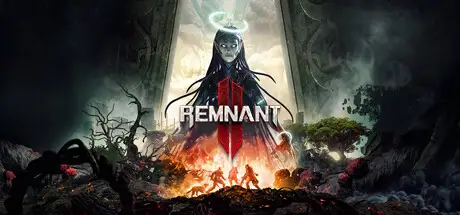
Opening
Picture the soulslike ritual you already know by heart. A boss has killed you nineteen times, and every attempt begins the same way: a sprint from the checkpoint, down the same corridor, past the same trash mobs, a full minute of nothing before you reach the fog gate and die again. That minute teaches you absolutely nothing. It is pure tax, a toll you pay over and over for the crime of having lost.

Remnant II's smartest decision is to delete that minute. Its checkpoints sit practically on the boss's doorstep — you die, you respawn, and two seconds later you are back in the fight with your full attention intact.
This is a soulslike you play with a gun, and the hook runs deeper than that one mercy. Three wildly different worlds reshuffle themselves every single run, a dozen classes pair off into combinations of your choosing, and before you know it you have queued up another playthrough without ever deciding to.
Only one thing here is genuinely bad, and it is bad in plain sight: the story. The strange part is that once you are in, you may not care at all.
Story | 6.0/10
Story: 6/10Let me lead with the bad news, because the scorecard does. Story is the lowest mark Remnant II earns from me — a 6 — and nearly every outlet pumped the brakes in the same column. But a low number is not the same as nothing. One of these worlds is told with real teeth. The problem is the delivery, not the raw material.
Three worlds, three stories, one very thin thread holding them together
Remnant II has no through-line escorting you from start to finish. Its narrative is scattered across three unrelated realms — N'Erud, a dying interstellar ark; Losomn, a gothic city of dread; and Yaesha, a realm of jungle temples — each waging its own private war against an invading force called the Root. What strings them together is a world-tree premise so faint you could miss it entirely.

That structure carries a cost. Because the three realms run in parallel and regenerate procedurally, you are rarely carried along by an emotional arc the way a linear story would carry you. One run you reach Yaesha first; the next, Losomn. The cause and effect arrive out of order by design. The upside is that each world's atmosphere is overpowering and entirely its own. The downside is that, added together, they never form a single story you walk away remembering.
It is worth being precise about what this trade actually buys. The fragmentation is not laziness; it is the price of admission for a game that wants every run to feel different. A tightly authored, linear campaign would anchor the story and kill the replay value stone dead — you cannot reshuffle a world and also hand-author its every beat. Gunfire chose replay, and the narrative paid the bill. Whether that was the right call depends entirely on what you came for, and Remnant II never pretends otherwise.
Losomn is a gothic horror film this game keeps trying to hide
If Remnant II's storytelling has a peak, it lives in Losomn. The city layers Victorian opulence over gothic horror, the tyranny of the One True King tangling with the fate of the fae Dran, and the staging hits harder than anything in the other two realms. Ask a player about the moment that stuck with them, and the answer almost always traces back here — and tellingly, it is usually a specific scene or reveal, not a character or a plot beat, which says everything about where this game's storytelling strength actually lives.

What Losomn proves is that Gunfire Games can absolutely tell a story — the procedural framework simply forces them to serve the good ones in fragments. The reason it lands is precisely that, in that moment, it is concentrated and cinematic. Step back out into the threadbare main thread, though, and that immersion dissolves on contact. The game's best writing is a hostage to its own structure.
Why six and not higher: a story drowned in text
The thing that truly drags the number down is how the game hands its story to you. The deeper you go, the more Remnant II leans on long, stiff slabs of dialogue to explain its lore and its causality. Chinese outlets flagged this directly as the game's demerit — "genuinely tedious to read." It does not tell you things through staging, through cutscenes, through moments you participate in. It dumps the information into walls of text and asks you to read.
Procedural generation then bites the narrative a second time. Because the worlds are assembled at random, characterization has almost nowhere to breathe; figures who first appear to matter get sidelined fast and never earn a real arc. Compare that to Elden Ring, the obvious peer — it buries its fragmented story in environments, item descriptions and boss design, trusting negative space to do the work. Remnant II takes the opposite road and writes the explanation onto your screen. The information lands; the immersion does not. So read that 6 correctly: the lore is not worthless. The game just chose the least flattering way imaginable to tell it.
Audio | 7.5/10
Audio: 7.5/10Audio earns a 7.5 — the score of something fully competent that never quite lodges in your memory for life. Its best trick is simple: the second a world opens up around you, your ears already know where you are standing.
Close your eyes and you still know which world you're in
The cleverest thing about Remnant II's sound design is that it treats hearing as part of a world's identity. On N'Erud, the dying interstellar ark, the backdrop is a cold metallic silence broken by low groans of failing structure; that sense of vast, oppressive emptiness stands up on audio alone, no visuals required. Step into the gothic city of Losomn and the ambience fills with wet drips, distant shrieks and voices drifting in from nowhere, cranking the horror-film dread to its limit. Out in the jungle temples of Yaesha, it shifts again — birdsong, wind, and the resonance of ancient percussion woven together.

For a game built on procedural replay, that "blindfolded, I still know where I am" design matters more than it sounds. The maps reshuffle every run, so your ears become the anchor that rebuilds a sense of place faster than your eyes can. By your fifth or sixth trip through a world, the layout may be unrecognizable, but the sonic signature is constant — and that constancy is quietly load-bearing. It is the thread of continuity that keeps a randomized game from feeling like a soup of disconnected rooms, and it is the kind of design work you only notice when you stop to ask why these worlds feel like places rather than level kits.
Guns that thump and bosses that warn you before they turn
As a soulslike you play with a gun, Remnant II nails its weapon audio and combat feedback. Each firearm carries its own weight — the muffled boom of a shotgun, the sharp crack of a rifle, the charging whine of a special weapon — enough that you can roughly tell what you're holding without glancing down.

Boss encounters are where the audio quietly earns its keep. Many bosses roar and shift their musical theme as they transition phases, handing you an audible heads-up that a new moveset is incoming — music and mechanics working as one, the kind of thing that saves your run on higher difficulties. On a blind first attempt, that audio tell is sometimes the only warning you get before a fight escalates, and learning to read it is part of how you learn the encounter at all. Where it stops short is the soundtrack itself: the score is a capable mood-setter, but no single melody ever breaks free of the game to become a signature the series carries around the way a great theme can. That ceiling is exactly why it sits at 7.5 rather than climbing higher — everything functional is here, but the spark that turns a competent score into a memorable one never quite catches.
Spatial audio and a buzzing controller, the last layer of immersion
On console, Remnant II supports spatial audio and haptic feedback, adding one more coat of immersion to combat and exploration. The kick of recoil, the jolt of taking a hit, the way ambient sound swings around you as you cross into a new region — all of it travels through the controller and the headset. For a game that leans on three-player co-op, that directional read carries real tactical value: you can place a teammate by sound, and you can hear an enemy closing in from outside your view, which on the harder difficulties is frequently the difference between living and dying. Stacked against its looter-shooter peers, Remnant II's audio package is solid and entirely sufficient, with no obvious weak link in its weapon feedback or its ambience — it just never quite becomes the reason you load the game in the first place.
Visuals | 8.0/10
Graphics: 8/10Visuals land an 8, but it is an 8 with a visible contradiction baked in. The art has more than enough identity to justify a high mark; the performance drags it back down, and does so completely unashamed.
Unreal Engine 5 in service of three distinct aesthetics
Remnant II runs on Unreal Engine 5, and the thing most worth praising is what it refuses to do with that horsepower: it does not blow it on another pile of interchangeable photorealism. Instead it builds three worlds with three sharply different, instantly readable visual languages.

N'Erud, the dying interstellar ark, is cold hard sci-fi — colossal metal architecture, ghostly blue light, an endless void, decay everywhere as a civilization counts down to its end. Losomn stacks Victorian opulence and horror into a doubled, folded labyrinth of a city, the visual landmark the whole game is best remembered for. Yaesha is the most vivid of the three, vines and idols and sunlight braided together. Set side by side, these palettes turn "switch worlds" into something that feels ceremonial just to look at.
That commitment to distinct identity is the thing carrying the visual score, and it matters precisely because so much of the modern blockbuster pipeline pushes the other way — toward a brown-and-grey realism that all looks interchangeable in screenshots. Remnant II refuses that. Even when the procedural generator is stitching a level together from modular pieces, the art direction is strong enough that you never mistake one world for another, and a fresh run still delivers the small thrill of recognizing where you've landed before the loading prompt even clears.
The upscaling controversy that defined its launch
Now the part that goes down less smoothly. Remnant II's biggest launch-window controversy came straight from the developers' own mouths: the game was designed around upscaling. In other words, it assumes you will switch on one of the reconstruction techniques — DLSS, FSR, XeSS — to claw back a playable frame rate, rather than being optimized to run at native resolution.

That admission set the community off, with plenty of players calling it a way to offload optimization onto hardware and algorithms. Testing backed the worry up: even with a mid-to-high-end GPU, holding a decent frame rate without upscaling is a genuine struggle, and some players reported that even balanced-mode upscaling wasn't enough to keep things stable.
Hardware outlets ran full DLSS-versus-FSR-versus-XeSS comparisons, and the verdict was the usual mix of trade-offs — but the controversy was never about which reconstruction looked best. It was about being told you had no choice but to use one at all.
Picking a platform: consoles lean on dynamic resolution
Down at the platform level, the PC, PS5 and Xbox versions diverge in image quality and frame rate. The console builds generally lean on dynamic resolution to defend their frame rate, trading sharpness for stability and usually landing on a steady, slightly soft picture. The PC version hands the decision to you, with a higher ceiling — provided you accept that upscaling is the default state of things and are willing to fiddle with resolution, quality presets and upscaler strength until you find your balance. If you are the kind of player chasing native 4K at a locked frame rate, this game will rub you the wrong way the entire time. But if you can make peace with upscaling as a fact of modern life, those three UE5 worlds genuinely earn their keep. That is the logic behind the 8: the art deserves more, and the optimization clawed some of it back.
Combat | 9.0/10
Gameplay: 9/10Gameplay is the beating heart of Remnant II and the highest mark on its report card — a 9. The story can be mediocre, but the moment you pick up a gun, lock in your classes and start a run, this game rarely lets you down. A handful of things push it to that 9, and they are worth walking through one at a time.
Dual archetypes: a dozen classes, paired off, bottomless builds
Remnant II's defining feature is the dual-archetype system. You equip a primary class and a secondary at the same time, and the roster runs deep: Medic, Challenger, Handler, Gunslinger and Hunter from the start, then unlockable hidden classes like the Alchemist, Engineer, Summoner and Archon waiting further in.

Pairing those classes off two at a time already yields dozens of wildly different playstyles — Gunslinger plus Hunter is pure ranged burst, Handler plus Summoner blankets the screen in pets, Challenger plus Engineer is a turret-hauling tank that just walks into the fight. Layer on traits, weapon mods, amulets and rings, and the build depth rockets past anything the original offered. This is the engine that keeps veterans queuing up run after run: every new archetype combination is worth a fresh sweep through all three worlds.
What sells the system is that the combinations are not just cosmetic reskins of the same damage output. A pet-heavy summoner plays nothing like a status-effect alchemist, which in turn plays nothing like a precision marksman built around a single perfectly-timed weak-spot shot. Each pairing changes what you pay attention to in a fight — your positioning, your cooldown rhythm, even which enemies you treat as priority targets. That genuine mechanical divergence is what separates Remnant II's build variety from games that offer twenty classes that all funnel into the same playstyle.
Killing the run-back: the checkpoint sits on the boss's door
If dual archetypes are the depth, then cutting the run-back is the single greatest kindness Remnant II does at the experience level. The traditional soulslike runs on a punishment-as-feature checkpoint logic: you die, you start from the bonfire, you re-clear a stretch of road you've already beaten just to reach the boss again. Remnant II all but deletes that road — the checkpoint usually sits right outside the boss arena, and death puts you back in the fight within seconds.

That tweak reads like a minor convenience and quietly rewires the whole pace of the game. Your full attention stays on the attack-and-counter chess of the fight itself, instead of leaking out onto a meaningless jog. Critics singled out the checkpointing as "tuned just right," and the knock-on effect is real: trash encounters feel snappy, and boss fights become purer.
Bosses with two kill methods, built to make you re-roll
Remnant II's boss design is the agreed-upon highlight, and its slyest move is handing certain bosses two entirely different ways to die, each dropping different rare loot. You can simply out-fight one to death — or you can trigger some specific interaction for an alternate outcome and a different reward.
That design feeds the replay loop directly. Stack it on top of the procedural generation — every run reshuffles each world's layout, boss roster and drops — and it means plenty of rare bosses and their exclusive loot might not surface across several runs in a row. You can chase a specific boss for hours and simply never roll into it, which sounds frustrating on paper and turns into an obsession in practice. That scarcity, married to the dual kill methods, welds the "just one more run" instinct firmly in place, and it is the single biggest reason the boss roster never stops feeling like a slot machine worth pulling.
Co-op isn't a numbers game: medic, marker and damage all earn their slot
Remnant II supports up to three players online, and crucially, enemy difficulty scales with party size, so grouping up is never about steamrolling with bodies. It demands genuine synergy instead: a Medic keeping the team alive, a Hunter marking targets to amplify everyone's damage, a Gunslinger or Challenger handling burst. That classic trinity turns co-op into something with actual texture, where a well-coordinated three-stack can shred an encounter that would grind a solo player into paste — and an uncoordinated one can faceplant against a fight that a careful soloist would have walked through, because the scaling gives the boss enough health to outlast a team that isn't pulling together. Set against its peers, the position sharpens further: it shares Elden Ring's appetite for high difficulty and build-driven boss fights but trades melee and the run-back for ranged gunplay, and it shares the looter-shooter DNA of Destiny 2 while leaning toward self-contained single-run PvE under soulslike pressure rather than an endless service-game grind for incremental gear. That stitch-up — soulslike bones, shooter hands, roguelike replay — leaves Remnant II standing somewhere genuinely its own.
Content | 8.5/10
Content: 8.5/10Content earns an 8.5. Judge it by the main campaign alone and it isn't an especially long game. Understand its replay logic, and it becomes an outright time-sink.
Eighteen hours is the entry ticket, not the finish line
Remnant II's campaign runs roughly 18 hours, a dozen or so on a casual difficulty, and around 45 if you chase completion. On that number alone it is merely above average for an action game.

But the number misleads. Beat a world's final boss and you unlock its Adventure Mode, which lets you replay a single world as a self-contained run, stripped of the campaign scaffolding around it. Bolt that onto procedural generation — every replay reshuffles the map, the bosses and the loot — and "finishing once" stops being an ending for Remnant II. It's the entry ticket. The real lifespan hides in the loop of re-running for gear, for builds, for the hidden bosses you keep missing, and dozens or even hundreds of hours quietly disappearing into it is no surprise at all once the system has its hooks in you.
A trilogy of expansions, two already out, new classes each time
Beyond the base game, Remnant II commits to a trilogy of expansions. The Awakened King arrived in November 2023 at $9.99, adding the Ritualist — a class built around buffs, debuffs and status effects — plus a new region and new bosses. The Forgotten Kingdom followed in April 2024, also $9.99, taking players deep into Yaesha, introducing the Invoker archetype, and fleshing out that realm's story with fresh weapons and armor.
Both expansions are priced with real restraint, and for anyone already invested and hungry for more classes and build space, they're an obvious extension rather than a hard sell. On top of the paid content, the studio has kept rolling out free updates since launch, folding in new archetypes and quality-of-life features at a steady clip, and the community has stayed broadly positive about that long-haul support — a rarer thing than it should be in this corner of the genre.
The split between paid and free content is the part worth respecting. The expansions add genuinely new worlds and classes, the kind of substantial chunk that justifies its price; the free updates handle the additions that keep the existing experience healthy, rather than dangling them behind a paywall. It is a model that treats the launch buyer and the latecomer fairly, and after a launch defined by the upscaling row, that goodwill did real work in steadying the game's reputation over its first year.
Builds drive the replay: three stacking layers, an endless stream of fresh styles
The root of Remnant II's longevity isn't how many levels it crams in — it's a build system with three stacking layers of depth. The first is the primary-plus-secondary class pairing, dozens of skeletons from combinations alone. The second is the trait trees and class-specific perks that reshape your core loop. The third is the external modifiers — weapon mods, amulets, rings — that specialize a build all the way into one direction: pure status-effect, pure summoner, or all-in burst gunplay.
Because those three layers stack freely, a new dominant style surfaces in the community every so often, and players will reopen a run purely to test one.
Add the difficulty ladder running from Survivor to Nightmare — enemy health, damage and aggression all climbing as you go — and plenty of players push into the harder tiers after their first clear, forcing themselves to engineer tighter builds. The higher tiers do not just inflate numbers; they punish sloppy builds and lazy positioning hard enough that they effectively function as a second, harder game layered on top of the first. That build-driven replay loop is the real reason Remnant II keeps the conversation alive and earns the "time-sink" label rather than the "weekend rental" one.



Comments 0
We'd love to hear from you
Welcome! Share your take on this game — being first might come with a surprise.
No comments yet — share your thoughts on this review!