



























Opening
Resident Evil 5 is Capcom taking survival horror into full-on buddy-action territory, and what it absolutely nails is two-player campaign chaos — if you’ve got a good co-op partner, yeah, it’s still worth playing.
Here’s the thing: this is not Resident Evil 4 again. RE4 made you feel isolated, hunted, and constantly one bad reload away from disaster. Resident Evil 5 says, “What if Chris and Sheva just tackled the whole nightmare together?” And when it works, it really works. You’re swapping ammo, saving each other at the last second, managing that real-time 9-slot inventory, and yelling because your partner is two seconds from getting flattened.
But the catch is huge. Play it solo, and the magic drops hard. AI Sheva can be slow, awkward, and occasionally just plain annoying.
And if you came here for quiet dread, forget it. This game is brighter, louder, stiffer, and way more interested in action than fear.
Still, there’s a reason it sits at 87% Very Positive on Steam and an 86 on Metacritic. The campaign is built for two from the ground up, The Mercenaries has real legs, and the Wesker arc gets its big volcanic comic-book finale. It’s messy. It’s controversial. It’s not the scariest Resident Evil. But with the right partner, it’s one of the most fun.
Story | 6.0/10
Story: 6/10Chris and Sheva make the plot feel like a buddy-action run, for better and worse

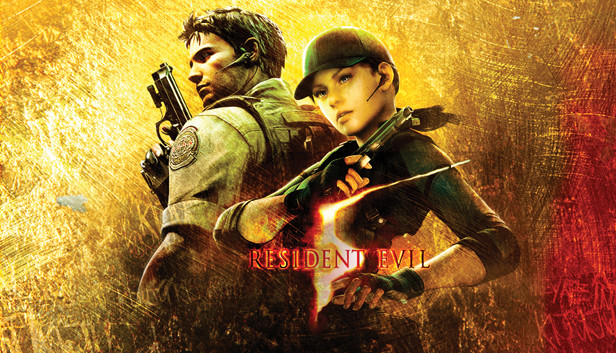
Resident Evil 5 is not shy about what it wants to be. Chris Redfield rolls into Kijuju as a BSAA agent, chasing a bioweapon deal in West Africa, and almost immediately the game locks him to Sheva Alomar. That’s the whole shape of the story. You’re not creeping through a mansion alone. You’re moving as a pair, covering angles, sharing supplies, kicking through the campaign like a two-person assault team.
And honestly, that setup does give the story a clear pulse. Chris is the old series muscle, weighed down by the past. Sheva is the local partner who keeps the mission moving and gives the campaign its actual human rhythm. Their back-and-forth is simple, but it works best when you’re playing with another real person, because the story and the level design are built around that partnership. Trading ammo, pulling each other out of danger, reviving at the last second — that stuff sells the relationship better than most of the dialogue does.
The catch is, the writing is pretty thin when it tries to be dramatic. There aren’t meaningful choices here. No branching path, no moral fork, no version of Chris who handles the mission differently. The campaign is a straight line from investigation to outbreak to conspiracy reveal. Side-story density is light inside the base campaign too. You get files, background details, and the Gold Edition material with Lost in Nightmares and Desperate Escape filling in more around Jill and Wesker, but the main story itself mostly wants to push you to the next set-piece.
That’s why I land on a 6 out of 10 for story. It’s functional, loud, and easy to follow. It gives co-op play a clean reason to exist. But it’s not elegant, and it’s not scary in the way Resident Evil used to be scary.
Wesker’s end is huge, but the lonely horror gets left behind

The big narrative hook here is Wesker. Resident Evil 5 is basically the closing act for a conspiracy thread that goes all the way back to the original games. The Uroboros plan comes into focus, the person pulling the strings is exposed, and the game makes a very clear promise: this is where the old Wesker business gets settled.
That part has weight, especially if you’ve followed the series for years. Jill Valentine being under Wesker’s control gives Chris a personal stake beyond “stop the bad guy,” and it lets the story hit one of its better emotional beats. Chris is not just fighting monsters. He’s trying to save someone who mattered to him before the BSAA, before Kijuju, before the whole thing became this global bioterror machine. Then the game goes full blockbuster and sends you into that volcano showdown with Wesker, because subtlety has completely left the building by then.
And look, the volcano fight is ridiculous. It’s also memorable. D.C. Douglas gives Wesker that smug supervillain energy, and Capcom knows exactly how far it wants to push him. This is not quiet horror. This is sunglasses-at-the-end-of-the-world horror. Depending on what you want from Resident Evil, that’s either the game finally paying off years of buildup, or the moment you realize the series has sprinted away from what made it unnerving in the first place.
That comparison with Resident Evil 4 matters. Resident Evil 4 nailed lonely exploration. You were isolated, pressured, and constantly unsure what the next village road or castle room was going to throw at you. Resident Evil 5 can’t really do that, because Sheva is always there. With a friend, that’s the magic. Alone, especially with AI Sheva slowing the rhythm down, the spell breaks fast.
Kijuju gives the game a harsh daylight identity, but the racial baggage is real

The West African setting gives Resident Evil 5 a look the series didn’t really have before. MT Framework pushes these sun-baked streets, mines, ruins, and industrial spaces, and the horror being dragged into broad daylight is a bold call. You’re not hiding in shadows as much as being exposed in heat, dust, and open space. Visually, that’s one of the game’s strongest choices.
But we have to talk about the other side of that choice, because the game has never shaken it. The Kijuju setting drew racial-portrayal criticism from the moment it showed up at E3 in 2007, and playing it now, that criticism doesn’t feel like some footnote you can just wave away. The story leans on images of infected Black villagers swarming the white hero early on, and even when the plot expands into corporate bioweapons and Wesker’s Uroboros scheme, that first impression hangs over the whole thing.
The game does have Sheva, and she matters. She’s not just tagging along silently. She is Chris’s partner, she knows the region, and the campaign is designed around her presence. Patricia Ja Lee’s performance gives her warmth and urgency, and the story is better because Sheva is there. But one good co-lead does not magically erase the uglier framing around the setting.
So the story is stuck in this weird place. It’s ambitious enough to move Resident Evil out of familiar gothic labs and European villages, and that gives it a distinct identity. But it’s also clumsy in ways that are hard to ignore. For players who mainly want a fast co-op zombie-action campaign, the plot does its job. For hardcore fans chasing that isolated, oppressive Resident Evil dread, this is where the trade-off becomes impossible to miss.
Audio | 7.5/10
Audio: 7.5/10The Boss Music Goes Big, Sometimes Bigger Than the Horror

Akihiko Narita’s score is doing a very specific job here: it’s not trying to make you hide under the blanket. It’s trying to make you push forward, reload fast, and yell at your co-op partner because Wesker just dodged your shot again.
And honestly, for the game Resident Evil 5 actually is, that works. The music leans hard into pressure, drums, orchestral stabs, and big dramatic boss energy. It’s not subtle, but Resident Evil 5 is not a subtle game.
The boss fights are where the soundtrack earns its keep. When the game wants scale, Narita gives it scale. The final stretch, especially the Wesker material and that volcano showdown, goes full operatic action-horror nonsense, and I mean that in a good way. This is the end of the Wesker arc that had been hanging over the original games, so the music treats it like a series-ending grudge match, not just another monster in a hallway.
The catch is, if you’re coming from Resident Evil 4 and you want that lonely, dirty, “what’s around the next corner” mood, Resident Evil 5’s music can feel too loud, too heroic, too much like it’s cheering you on. Compared with Dead Space from the same era, it’s way less interested in scraping metal, panic breathing, and pure dread. Dead Space wants to crawl into your ears. Resident Evil 5 wants to pump you up for the next set piece. That’s the difference.
The Soundscape Sells Kijuju Better Than The Story Always Does

Here’s where the audio gets sneakier. The environmental sound is better than people give it credit for. Kijuju’s sun-baked streets and West African wilderness don’t sound empty. You hear insects, wind, distant voices, little bits of life and danger bleeding into the background. Since this game moves horror into broad daylight using Capcom’s MT Framework, the sound has to do extra work. You can see too much, so the audio has to make the open air feel wrong.
That part works. The best ambient moments have this dry, exposed tension to them. You’re not trapped in a mansion. You’re out in the heat, hearing things before you fully understand where they are. It’s a different flavor of unease, and it gives Resident Evil 5 its own identity, even if the game’s Kijuju setting has carried racial-portrayal criticism since its 2007 E3 reveal that it never really shakes off.
The weapons also sound chunky in the right way. Heavy firepower hits with weight, lighter weapons punch cleanly, and enemy reactions are readable enough that the feedback helps the action flow. That matters because this is a stop-and-shoot game in 2009, and those controls already felt stiff next to other shooters. The audio has to make every hit feel worth planting your feet for. Most of the time, it does. It’s not scary in the Dead Space sense, but it is satisfying.
Wesker, Chris, And Sheva Make The Co-Op Noise Matter

The English voice cast is solid, and that matters more than usual because Resident Evil 5 is built around two people constantly depending on each other. Chris and Sheva swapping ammo, calling out danger, reviving each other, and keeping the run alive is the whole rhythm of the campaign. With a real partner, those little barks and reactions become part of the teamwork. With AI Sheva, yeah, you’ll hear the same stuff while she reacts late or gets stuck, and that’s when the magic starts leaking out.
Roger Craig Smith’s Chris has the right heavy action-hero bluntness, and Wesker’s performance is the one everyone remembers. D.C. Douglas gives him that smug, theatrical villain flavor that turns the final act into a comic-book grudge match. It’s not grounded, but it sticks. The broader cast, including names like T.J. Storm, Liam O’Brien, Patricia Ja Lee, and Nina Fehren, helps give the game that late-2000s Capcom action tone: serious faces, ridiculous stakes, zero shame.
So, audio-wise, I’d land Resident Evil 5 at a 7.5 out of 10. The music and combat feedback are strong, the ambient layer does more work than people remember, and the voice acting gives the Wesker finale some real flavor. But it’s also part of why this game feels less like survival horror and more like a co-op action blockbuster. If that’s what you want, it sounds great. If you came here for lonely dread, this is not the game whispering in your ear.
Visuals | 8.0/10
Graphics: 8/10Kijuju Looks Best When the Sun Is Out to Roast You

Resident Evil 5 still has one of the boldest visual pivots in the series, because Capcom took horror out of the rain, fog, and creaky hallways, and shoved it into brutal daylight. And yeah, that changes the whole mood. The MT Framework engine gives Kijuju this scorched, dusty, sun-blasted look where everything feels hot, dry, and hostile.
It’s not scary in the “I don’t want to open that door” way. It’s more like, “I’m exposed, I’m surrounded, and there’s nowhere to hide.” That’s a different flavor, and honestly, it works better than people sometimes give it credit for.
The art direction is doing a lot of heavy lifting here. You get villages, mines, swamps, oil facilities, labs, and that ridiculous volcano finale, and even when the campaign gets louder and dumber, the locations stay easy to read. The village has that baked-orange glare. The mines go claustrophobic and nasty. The swamp gives the game a wider, more dangerous shape. The oil field is pure action-movie grime. And the volcano? Look, subtlety has left the building by then, but visually, it’s absolutely committed.
The catch is, this also exposes the game’s biggest identity problem. Resident Evil 4 made loneliness look terrifying. Resident Evil 5 makes partnership look cool. That’s the trade. The graphics sell a co-op action-horror blockbuster more than a survival horror nightmare. For players who want the old lonely dread, that’s a loss. But as a visual identity? It’s strong. You remember this game. You remember the heat, the dust, the gold light, the sweat, the fire. That matters.
The MT Framework Flex Is Real, Even If the Shooting Feels Stuck in 2005

For 2009, Resident Evil 5 was a serious showpiece. Character models are sharp, faces hold up better than you’d expect, and the enemy crowds have this chunky physical presence that makes every close-range fight feel heavier. Chris and Sheva look fantastic for the era, and the game clearly wants you to notice the muscles, the gear, the sweat, the lighting on skin, all of it. It’s not shy. Capcom was flexing MT Framework here, and on a pure presentation level, I get it.
The explosions and fire effects are a big part of why the game still feels expensive. Barrels go off with real punch. Flamethrowers and burning enemies throw chaos across the screen. The action scenes are staged with the kind of glossy, high-contrast look that made late-2000s games feel “next gen” at the time. Put it next to Gears of War, and the comparison makes sense: both are muscular, over-the-shoulder, cover-era action games with thick characters, heavy weapons, and a lot of brown, gold, and gray. Gears is grimier and more industrial. Resident Evil 5 is brighter, cleaner, and more sun-baked. Different vibe, same visual arms race.
But no, this isn’t a modern tech showcase now. Don’t come in expecting ray tracing, DLSS, or some fancy current-gen rebuild. This is a 2009 PC release built from the Games for Windows - Live version, later living on Steam, and it looks like a polished late-2000s blockbuster because that’s exactly what it is. The upside is that higher resolution and smoother frame rates on PC make it one of the best ways to appreciate the art. The downside is that the stop-and-shoot controls still make the animation feel rigid, especially if you’ve played newer shooters. The image can look sharp. The body still moves like it has rules from another era.
The Grid UI Is Ugly-Useful, and That’s Kind of the Point

Resident Evil 5’s interface is not pretty in a modern minimalist way, but it is readable, fast, and built around the game’s real priority: two people trying not to die together. The real-time 9-slot inventory grid is right there in the action with you. You’re not pausing to lovingly rearrange a suitcase like in Resident Evil 4. You’re panicking, swapping ammo, yelling for help, healing your partner, and trying to make a decision before something grabs your face. Visually, the UI is blunt, but it fits the co-op rhythm.
That matters because the whole campaign is built around Chris and Sheva as a pair. The screen layout, item prompts, partner status, weapon slots, and revive feedback all support that constant back-and-forth. When you’re playing with a real person, it clicks. You see what they need, you toss ammo, they save you, you both keep moving. When you’re solo with AI Sheva, the same UI starts reminding you that this game really, really wanted a human partner. That’s not a graphics problem exactly, but it affects how clean the presentation feels in motion.
The Steam version is also important here because, visually, PC is one of the nicer places to play it today. Resolution and frame rate can do a lot for a game with strong base art, and Resident Evil 5 has that. It doesn’t magically become new, and it doesn’t erase the stiffness, but the sharper image helps the environments, character detail, and effects land better. So for graphics, I’m at an 8 out of 10. Not timeless. Not flawless. But distinctive, technically strong for its day, and still one of the clearest examples of Capcom turning Resident Evil into a sunlit co-op action spectacle.
Combat | 9.0/10
Gameplay: 9/10This Campaign Only Really Clicks When Chris and Sheva Are Both Human

Here’s the thing with Resident Evil 5: if you play it with a friend, the whole game suddenly makes sense. Not “oh, co-op is a nice bonus” sense. I mean the campaign feels like it was built from the floor up around two people constantly bailing each other out. Chris and Sheva aren’t just two fighters on screen. They’re two inventories, two sightlines, two panic buttons, and sometimes two goofballs yelling because one of you grabbed all the shared ammo again.
That’s the magic trick. Online co-op and local split screen aren’t side dishes here. They’re the meal. You’re passing ammo, reviving each other, splitting roles, covering reloads, and scrambling through arenas where the game clearly expects you to think as a pair. One player gets grabbed, the other has to react. One player’s low on healing, the other has to decide if now is the moment to share supplies or save them. It gives the action a constant back-and-forth rhythm that single-player Resident Evil usually doesn’t have.
And honestly, that’s why I’m way warmer on Resident Evil 5’s gameplay than a lot of people who only remember the discourse around it. As a horror game, yeah, it’s not scary in the way Resident Evil 4 was. Resident Evil 4 made isolation feel sharp. Leon was on his own, digging deeper into this awful place, and that loneliness was a huge part of the tension. Resident Evil 5 trades that away. But what it gets back is chemistry. Two people on the same screen, making bad calls, saving each other by inches, laughing when the plan falls apart. That’s its lane.
The catch is, if you don’t have that partner, the whole thing drops a notch fast. AI Sheva can help, sure, but she doesn’t think like your friend thinks. She reacts late, burns resources in ways you wouldn’t, and sometimes just stalls when you need her to be decisive. The systems still exist in solo play, but the spark is gone. You can feel the empty chair next to you.
The 3x3 Inventory Is Small, Mean, and Weirdly Perfect for Co-Op Panic

Resident Evil 5’s real-time inventory is one of those systems that sounds simple until you’re actually being swarmed. You’ve got a 9-slot grid, three by three, and opening it doesn’t pause the game. That one decision changes everything. You’re not calmly sorting herbs in a safe little menu. You’re doing triage while something is trying to cave your head in.
I love that. It makes the resource management feel physical. Do you keep a full spread of weapons and ammo, healing items, grenades, and armor? Good luck. There are only nine spaces. And because Chris and Sheva each have their own grid, co-op turns inventory into a constant conversation. “Do you have spare ammo?” “Can you hold this herb?” “Why are you carrying three flash grenades?” It’s messy, but it’s the right kind of messy. The kind that makes you talk.
Money is shared too, and between chapters you’re buying, selling, and upgrading weapons together. That gives the campaign a light economy layer without slowing the pace too much. You finish a chapter, check what you earned, argue over whether your main weapon needs more firepower or whether someone should finally upgrade capacity, then jump back in. It’s not deep RPG stuff, and it doesn’t need to be. It just gives every run a sense of forward motion.
The downside is that all this pressure is sitting on top of Resident Evil 5’s old-school stop-and-shoot controls. You still have to plant your feet to aim and fire. In Resident Evil 4, that worked because the whole combat model was built around distance, crowd control, and that deliberate over-the-shoulder rhythm. By 2009, though, shooters had moved on. So yeah, Resident Evil 5 can feel stiff. Not broken. Stiff. There’s a difference. The game wants you to commit to every shot, but against faster action expectations, that commitment sometimes feels like your boots are glued to the dirt.
It’s Less Scary Than Resident Evil 4, but It Hits Harder as an Action Machine

If you’re coming to Resident Evil 5 looking for lonely dread, I’ll be blunt: this probably isn’t your favorite stop in the series. The horror has been pushed way back. The sun-baked West African setting gives the game a very distinct look, thanks to Capcom’s MT Framework, but broad daylight changes the mood. You’re not creeping through shadows as much as you’re fighting through combat zones. The Kijuju setting has also carried racial-portrayal criticism since that 2007 E3 reveal, and the game never fully shakes that baggage.
But as an action co-op game? It rips. That’s why the gameplay lands for me at a 9 out of 10 in this lane. Not because every system is elegant. Not because the controls aged perfectly. They didn’t. It scores that high because the campaign commits. It knows it wants two players under pressure, juggling ammo, weapons, money, revives, and positioning, and it keeps feeding that loop all the way through.
The difficulty curve is pretty friendly at first, mostly because the game teaches you the co-op rhythm early: watch each other’s back, don’t hoard supplies, don’t panic when the inventory opens, and for the love of god, upgrade your weapons between chapters. Once bigger threats start showing up, sloppy teamwork gets punished. But it’s rarely confusing. You always understand why things went bad. Someone got greedy. Someone missed a shot. Someone brought the wrong tool.
And then there’s The Mercenaries, which is where the combat loop gets stripped down to its purest form. It returns here with 8 stages and 8 characters, and chasing combos can eat hours after the credits roll. The main campaign also closes out the Wesker arc from the original games, ending in that ridiculous volcano showdown, which is exactly the kind of operatic nonsense this series can somehow get away with.
So no, Resident Evil 5 doesn’t replace Resident Evil 4. It can’t. Resident Evil 4 is still the better lonely adventure. But Resident Evil 5 owns something Resident Evil 4 doesn’t have: that two-player disaster energy. If you’ve got a steady co-op partner and you want action first, horror second, this is still one of Capcom’s most fun campaigns to blast through.
Content | 8.5/10
Content: 8.5/10Ten hours, two bodies, zero wasted motion

My big take here is simple: this campaign moves. It’s not a long, sprawling drag, and that’s exactly why it works so well if you’ve got a partner. The main story lands in roughly 10 to 12 hours, so compared with Resident Evil 4 it’s shorter, but it’s also way more focused.
The whole thing is paced like a co-op action run first and a horror game second. You’re always doing something with someone else — passing ammo, topping each other up, reviving at the last second — and that rhythm keeps the campaign from feeling like dead air.
That same speed is also why the solo version takes a hit. When you’re stuck with AI Sheva, the whole thing slows down and gets messier than it should. She’s not terrible every second, but she’s slow to react and can absolutely stall the flow. That matters because this game is built around constant movement and quick trades between two players. If you’re the kind of person who wants that lonely, sinking dread the series is known for, this structure just isn’t chasing that. It’s much more about momentum, set pieces, and the chemistry of two people surviving together.
And honestly, that’s the point. This isn’t a game that wants to leave you stranded and miserable. It wants a steady partner, fast gunfights, and that little rush when both of you are barely hanging on.
The extras are where the replay loop starts

The campaign ends, but the game doesn’t really stop there. The best part of the long tail is how much it gives you to chase after the credits. The Mercenaries comes back bigger, and that matters more than it sounds like it should. You get 8 stages and 8 characters, which is plenty if you’re the type who likes shaving seconds off routes and stacking combo scores. It turns the game into this clean, repeatable score grind, and that’s a huge reason people keep coming back. The main story may be compact, but the post-game loop is built to pull you right back in.
Then you’ve got the unlocks, and those are the kind of rewards that make another run feel worth it instead of like homework. Finish the game and you can open up higher difficulties, infinite ammo weapons, and reward costumes. That’s not just fluff. It changes how you play. Suddenly you’re not just surviving the campaign; you’re experimenting with busted loadouts, trying harder modes, or just having fun tearing through the same fights with way more freedom. That’s the good kind of replay value — the kind that gives you a reason to re-enter, not just a checklist.
So even if the story is brief, the game does a smart thing here: it keeps handing you new reasons to stay. That’s a big deal for a game that lives or dies on repeat runs.
Gold Edition is the version that actually fills the gaps

If you want the full picture, Resident Evil 5 really makes sense in its Gold Edition form. The base game already has its hook, but the extra episodes give the package a lot more shape. Lost in Nightmares and Desperate Escape aren’t just throwaway add-ons — they fill in Jill and Wesker’s backstory and give the whole thing more weight than the main campaign alone. That matters because the core game is pretty brisk. It gets in, does its job, and moves on. These episodes help round out the ride instead of making it feel thin.
And the bundle value is real. Steam’s Untold Stories Bundle lines up with the Gold Edition, so you’re basically getting the expanded version without having to hunt pieces down. That’s the version that makes the most sense if you’re actually trying to live in this game for a while, especially since the whole ecosystem around it was built for replay and co-op from the start. The base campaign, The Mercenaries, the higher difficulties, the unlockable weapons, the costumes, the extra episodes — it all stacks into something that keeps paying off.
You can see that in how the game has aged commercially too. Resident Evil 5 has pushed about 16.5 million copies across platforms, and that doesn’t happen if a game only works once. It happens when people keep circling back for the co-op, the score chase, and the expanded editions. Even years later, this is still the Resident Evil for players who want a fixed partner and a lot of repeatable action.


Comments 0
We'd love to hear from you
Welcome! Share your take on this game — being first might come with a surprise.
No comments yet — share your thoughts on this review!