























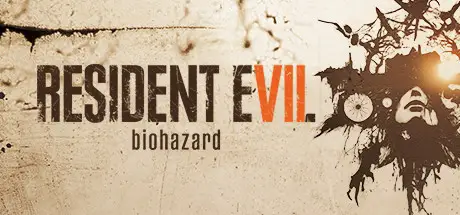
Opening
A horror series should not be able to reinvent itself this cleanly, and yet here we are.
Two decades after a mansion called Spencer first taught a generation what it feels like to count bullets in the dark, Capcom had run its flagship into a wall. The sequels had grown louder, glossier, more Hollywood — secret agents, rocket launchers, a planet's worth of bioterror. So the studio did something close to reckless: it threw away the over-the-shoulder camera, threw away the muscle, and dropped a single ordinary man into a rotting Louisiana farmhouse with a flashlight and almost nothing else.
The trick of Resident Evil 7 is not how bloody it is. It is how small it dares to be. You are Ethan Winters, a nobody chasing a wife who vanished three years ago, and you bleed the way nobodies bleed. That fragility is the whole point. This is the review of how a dying franchise crawled back to its own roots — and where, in the last stretch, its nerve gave out.
Story | 7.0/10
Story: 7/10Fragility as the foundation of fear

Resident Evil 7 opens on something almost cruel in its quiet. A wife missing for three years sends a single unsettling video, and Ethan Winters simply gets in his car and drives into a forgotten stretch of Louisiana swamp. What makes the setup land is everything it refuses to do. Ethan cannot roll, cannot melee, has no special-forces physique. He can raise a trembling flashlight and take one more step into the dark — and that is the entire arsenal of the man you inhabit.
That ordinariness is the bedrock the whole horror rests on. When you play Chris or Leon, a monster is a problem to be solved by someone competent. When you are a man who can be dropped by a single swing and who heals by rinsing his hand under a tap, every unseen corner turns lethal again. Vulnerability is the sharpest tool in the box, and the game knows it.
The emotional engine is plain: find Mia, get out alive. But a goal that simple is exactly the kind a mad house can twist until you stop being sure who you are saving. There is a quiet thesis buried in the casting of a nobody as your avatar — horror, the game argues, is not about the monster but about how little you are equipped to face it.
The Baker family — monstrous, pitiable, the real soul of the thing

If anything carves Resident Evil 7 a permanent place in the genre, it is the Bakers. Jack the father, Marguerite the mother, Lucas the son — these are not cardboard ghouls but a family hollowed out by fungal infection and the psychic grip of a bioweapon named Eveline. The most stomach-turning beat arrives early, at a dinner table you are forced to share with the lot of them. Jack, face slick with blood, spoons food onto your plate in the warm drawl of a doting patriarch; the tear between domestic affection and total derangement is still one of horror gaming's most unforgettable scenes.
Jack in particular is drawn in full. He plays like an unkillable roach, rising with a grin after you blow half his head off — yet scattered notes let you glimpse the decent, helpless man he was before the rot took hold. Marguerite's greenhouse pursuit is a different flavor of dread entirely; she commands swarms of insects, closing in through a cramped, dripping old house until the revulsion is purely physical.
These people work because they are both perpetrators and victims. You hate them, you fear them, and when the truth surfaces you struggle not to pity them. That complexity is something a cheap jump scare can never buy.
Lucas is the family's wild card, and the game uses him sparingly to good effect. Where Jack and Marguerite chase, Lucas schemes — his birthday-cake death trap is a sadist's game show, and the sense that a human intelligence is rigging the room is its own distinct unease. The Bakers are not one monster repeated three times; they are three failures of the same infection, each one frightening in a different key.
VHS tapes and a soft reboot that stitches past into present

The cleverest narrative device hides inside the VHS tapes scattered across the estate. Slot one into a player and you slip into the perspective of Mia, Clancy, someone other than Ethan, replaying an event that has already happened. The design pulls triple duty at once. It fills in how the Bakers fell; it tucks puzzle solutions — the infamous birthday-cake riddle among them — inside footage you have to play to solve; and it manufactures a fatalistic terror, the dread of knowing the ending while you are powerless to bend it.
As a soft reboot, the game makes a shrewd trade. It sheds nearly all the baggage of six convoluted predecessors, hands newcomers a fresh lead, a fresh house, a fresh threat, and lets anyone walk in cold. Yet it never fully severs the cord — the closing hours let series veteran Chris Redfield step quietly onstage and sew this standalone story back into the larger canon.
The cleverness simply runs out before the end. Once the action leaves the Baker house for a wrecked tanker and a salt mine, and Eveline takes the wheel, the memorable beats visibly slide. Her logic as a mold-based weapon holds together, but the moment she trades her eerie little-girl form for a head-on confrontation, the unease deflates. Six hours of brilliance never earn an ending to match — the most honest disappointment on the whole scorecard.
Audio | 8.5/10
Audio: 8.5/10Silence does the heavy lifting

Plenty of horror games scare you with music. Resident Evil 7 reaches for the opposite — its sharpest weapon is quiet. For long stretches inside that creaking Baker house there is no score at all, only your own footsteps, a far-off drip you cannot place, the groan of floorboards underfoot, and the occasional drag of something behind the wall that could be man or could be worse. That near-vacuum of ambient sound keeps you strung at a permanent high, certain that the next second is the one that breaks — and the real shock usually waits on the far side of that hush.
The wet, gurgling churn of a Molded closing in is the most skin-crawling audio signature in the whole game. You hear it before you see it, and that second or two of lag is the prime fermenting time for fear. Sound here is no backdrop; it is a narrator standing level with the picture, telling you where the danger sits, how far off it is, how fast it gains — forcing you to judge by ear, in the black, whether to hide or run.
Headphones turn this from a feature into the entire register of play. With the house piped directly into your skull, you stop watching the screen for threats and start listening past it; a footstep two rooms over becomes information you act on before anything is visible. Few games make the audio load-bearing in this way, and fewer still do it without a wall of music to lean on.
Voice work, spatial audio, and where it stands

The Bakers' voice performances are another peak, Jack above all. The actor catches the character's ricochet between tender father and shrieking lunatic with total conviction — one moment a gentle Southern lilt calling you to supper, the next a roar as he hefts a shovel and gives chase. That tension makes the villain breathe. You remember the cadence of his bellow, the indignant howl when a shot lands; those shards of sound pin the character into memory more firmly than any cutscene could. Voice is no garnish here but the main brushstroke shaping the cast.
The game judges its loud-and-quiet balance to the inch. As Ethan finally crowds a boss, a long-suppressed score finally surges up and detonates half a chapter's worth of tension in one go; in exploration it pulls back into silence and hands the stage entirely to ambience. That integration keeps the audio bent to the curve of dread rather than smearing noise across the floor. The later next-gen patch folds in 3D spatial sound, and in the VR build the sense of position widens further — a creature stalking up behind you raises hairs a flat screen struggles to match. Set it beside first-person horror benchmark Outlast, where the audio serves almost nothing but a fleeing heartbeat, and Resident Evil 7 asks its sound to carry dread, combat feedback and narrative all at once. The layering runs visibly thicker.
That breadth is the quiet reason the soundscape never tires across a full playthrough. A score that only pumped adrenaline would have numbed you by the third boss; a house that only whispered would have lulled you. By making silence the default and noise the exception, the game keeps every loud moment earning its keep — and keeps your ears working as hard as your eyes right up to the credits.
Visuals | 9.0/10
Graphics: 9/10The RE Engine debut: skip the vistas, pour everything into the meter in front of you

Resident Evil 7 is the opening act for Capcom's in-house RE Engine, and its visual thesis looked downright contrarian at the time. It does not chase open-world vistas or polygon counts; it pours almost the entire budget into the one meter in front of your nose. Mold blooming through peeling wallpaper, food on the table rotted to a weep, the wet shine on damp floorboards, candlelight and volumetric beams dragging long shadows down a narrow corridor — every surface looks grimy, soaked and real, real enough that you half expect to catch the smell.
That obsession with close detail is exactly what first-person horror needs. When the frame shrinks to whatever a flashlight can reach, the realism of texture becomes the concentration of fear. You are not watching a creature sprint in from a distance; you are getting that ulcerated face smeared across your entire field of view the instant it lunges. The collapse of distance is a gut-punch the over-the-shoulder camera could never deliver. A face is no longer a sprite across the room; it is a pore-by-pore inventory of decay pressed against the lens, and your body flinches before your brain finishes processing it.
The lighting is the masterstroke. The Baker estate barely owns a working bulb, and you spend most of it groping through black with one cone of torchlight, everything outside that cone pure unknown. Guttering candles, moonlight knifing through a broken window, mold glistening sick on every damp surface — the details weave a clammy, oppressive sense that something is always about to happen, until the image itself becomes a source of fear.
A deliberate trade, and what the engine came to mean
The approach carries an obvious cost, of course. The critical consensus at launch was clear: character animation, interiors and atmospheric lighting were first rate, while outdoor scenes and some textures came off comparatively rough. But this reads less as a technical stumble than a lucid choice. First-person horror feeds on claustrophobia and the unseen, and you spend nearly the whole game caged in the Bakers' cramped, lightless rooms — the vista was never the point. Concentrating resources where players actually press their faces is smart economy.
The Baker house itself is an unforgettable landmark, a claustrophobic upgrade of the original Spencer mansion, its main hall, old house, greenhouse and cellar tangled into a vertical maze you are equal parts scared to enter and desperate to map. Technically the PC version set the era's optimization bar, dense with options, playable at a steady framerate even on modest hardware and rock-solid at 60fps on recommended specs; the later next-gen patch added ray tracing and higher frame rates that pushed the clammy texture further still. Set against Alien: Isolation, both wisely build pressure from environmental detail rather than raw fidelity, proving that a horror game's visuals are never measured by a benchmark but by whether they raise the hair on your neck.
The art direction also resists the trap of gore-for-gore's-sake. The grime is purposeful, the decay legible — you can read a room's history in its stains, where the family ate, where something died, where the mold first took hold. That readability turns the house into a document you decode with your eyes, and it is a far smarter use of fidelity than a higher pile of severed limbs.
There is the engine's legacy too, easy to overlook and far from weightless. As the RE Engine's debut, Resident Evil 7 validated not just a look but the technical bedrock for a decade of Capcom — the Resident Evil 2 and 3 remakes, Devil May Cry 5, even Monster Hunter Wilds all run on it. From that vantage, the slick wet walls of the Baker house are the starting line of an entire technological era. Accessibility, meanwhile, is handled with subtitles and a generous spread of visual toggles, letting players across hardware and sensitivity find their own pitch of intensity — itself part of the experience for a game built on immersion. It is a small courtesy, but a telling one: a studio confident enough in its atmosphere to let you adjust the dial without breaking the spell.
Combat | 8.5/10
Gameplay: 8.5/10The first-person reset trades the swagger for arithmetic
The biggest piece of surgery in Resident Evil 7 is swapping the series' signature over-the-shoulder camera for a first-person Isolated View. That single cut takes the slick melee and the showy dodges with it, leaving Ethan one close-range option: a block button that, held, slashes the damage you take. On paper it reads as a nerf. In practice it is a reset — it drags every encounter out of mindless gunplay and back into the cold question of whether to fire at all.
Because you are so breakable. The Molded, those black fungal horrors, are tough and cunning; they sidestep your shots, throw up a guard, and haul themselves back upright after a spell on the floor. Standing your ground usually ends with an empty magazine and a half-dead Ethan, and across a string of beatings the game carves a plain lesson into your skull: if you cannot win, run. That flee-first philosophy keeps the horror riding permanently above the thrill of combat. A weapon in your hands is never reassurance; it is a budget you are terrified of overspending, and the loudest moment in any clash is the click of a chamber that turns up empty.
The block button is the masterstroke. It does not make you stronger; it only shaves half your health off the moment you are tackled and buys a fraction of a second to breathe and bolt. You hold not the power to fight back but the margin to barely survive. That restraint turns every face-off into a tightrope — too scared to commit, unable to walk away clean, scraping by on careful arithmetic in the dark.
Resource management and crafting — one material, two ways to live
If the camera is the skeleton, resource management is the meat. You open with a 3x4 satchel, and weapons, ammo, meds and key items all jostle inside those twelve squares, forcing a constant weigh-up between packing one more weapon and carrying two more first-aid sprays. That spatial anxiety is classic series tension handed down from the original mansion; the first-person view only blows it up larger and more pressing.
Crafting pushes the trade-off to its edge. The core material, chem fluid, mixes either into offensive supplies or into healing meds — so every fluid you scoop up is a tiny verdict: turn it into the medicine that keeps you breathing, or the means to fight your way clear? Each choice quietly shapes the predicament that follows, with no correct answer waiting. Add the keys, hidden doors and emblem puzzles threading the whole estate together, and the loop is essentially a precise first-person translation of the original mansion's exploration. Set beside first-person horror benchmark Outlast, which strips the player into pure fleeing prey, Resident Evil 7 braids running, resource management and puzzle-solving into a single cord, keeping a thread of "I can still fight back" alive inside the tension — and the dread runs that much deeper for it.
The loop has one soft spot, and it surfaces late again. Once the game pushes into the tanker and the salt mine, with enemies spawning in waves and supplies suddenly plentiful, the step-by-step calculus gives way to straight-ahead skirmishing, and the elegant early tension thins out. The difficulty design shows real craft, though: Normal coaxes you into rationing, while Madhouse strips the save points sparse and reshuffles every enemy placement, forcing veterans to count every last resource and every block to the limit. From a newcomer's timidity to a veteran's precision-run escapes, this system blooms into something completely different in different hands.
What ties it all together is intent. Nothing in the toolkit exists to make you feel powerful; every system — the cramped bag, the dual-use fluid, the blockable-but-never-winnable enemies — exists to keep you a half-step from disaster. It is a kit designed around scarcity rather than empowerment, and that is precisely why it works as horror first and action a distant second. Strip out the fear and the systems would read as thin; wrap them in the Baker house and that thinness becomes the point, because a survivor with too many tools is no longer a survivor at all.
Content | 6.0/10
Content: 6/10A nine-hour campaign — lean, if a touch wanting
The Resident Evil 7 campaign runs roughly nine hours, and for survival horror that is exactly the right weight. Long enough for the Baker house's clammy dread to ferment and stack layer on layer, short enough that high-strung tension never grinds into fatigue. The thing horror fears most is the moment you stop being scared, and nine hours pins the shelf life of terror almost perfectly. It does not chase the value-for-money bulk of a hundred-hour open world; it trusts the force of short and sharp, spending every minute on the cutting edge.
What is rarer is how densely packed those nine hours are. The estate has almost no busywork or filler — every leg of the journey advances exploration, a puzzle or the story, with keys, doors and collectibles woven cleanly into the flow, keeping you nudged forward by the urge to round one more corner. That tautness is precisely what lets the horror stay strung tight from start to finish. A bloated map would have given dread room to dissipate; the estate refuses it the space, herding you from one charged room to the next with the patience of a good ghost story.
The nine hours are not evenly weighted, though. The trouble pools in the final third. Once the story leaves the oppressive, magnetic Baker house for a wrecked ship and a salt mine, and Eveline formally takes over, the rhythm visibly slides from exploration toward straight gunfire, the Molded begin respawning in batches, and the carefully built suffocation thins into ordinary shooting. This is the back-loaded slump nearly every outlet pinned — six hours of genre-defining heights, three that drag the whole down a notch.
DLC and replay — a garnish, not a must
Around the main game Capcom shipped four DLC packs, and their reception map says it all. The base game took an 86 on OpenCritic, while Banned Footage Volumes 1 and 2, Not a Hero and End of Zoe all land in the merely-decent 68 to 75 band. End of Zoe — sending Jack's bare-knuckled brother Joe Baker to rescue Zoe through pure brawling — fares best; the free Not a Hero pulls series veteran Chris Redfield back to hunt Lucas and reads more as a nod to longtime fans, action-leaning and unremarkable on its own.
For replay drive, the Madhouse difficulty overhauls enemy placement and save rules, and paired with the collectibles it does hand hardcore players a reason for a second run, stretching the full slate to around thirteen hours. But in honesty the loopable content runs thin, and the core appeal leans hard on the unknown of a first time. Set against series elder Resident Evil 4, the predecessor wins on sheer scale, weapon variety and shifting pace, while Resident Evil 7 spends atmosphere density to buy depth — it is not long, but inside that short span it takes horror to the limit.
So the question of "how much game is here" splits two ways. On raw playtime and replay richness Resident Evil 7 is not generous, and the DLC mostly stops at worth-a-look. But on concentration of experience per minute, it is the class valedictorian. Frame it differently: it quietly swaps a metric usually weighed in sales and hours for the purity of the experience — you will not remember how many hours the credits took, but the Molded that burst from a door, the truth that froze your spine inside a tape. That memory-hooking density is the very thing bloated blockbusters lack most.
It is worth flagging the one caveat for value-minded players: if your yardstick is hours-per-dollar, the short campaign and so-so DLC will read as slim. That mismatch is real, and there is no patch for it. But measured by how long a single playthrough lingers in the back of your mind, this is a game that punches well above its runtime. A hundred forgettable hours are still forgettable; nine that you can replay in your head years later are a different kind of generous, and the rarer one by far. The Baker house does not ask for your weekend so much as it claims a permanent room in your memory, and on that quieter ledger it pays back every minute you give it.





Comments 0
Share your game review
Join the discussion and share your review of this game.
No comments yet. Share your thoughts on this review.