At GOG, Return of the Obra Dinn is priced at ≈ $11.37. It is a single-player mystery adventure about boarding a lost ship and reasoning through the fates of its crew, so it suits players who prefer observation and deduction over action. The Steam PC version lists full controller support, English full audio, and subtitles in multiple languages.
Steam player reviews show 96% positive from 32,634 reviews. If that style of quiet investigative play sounds appealing, the current offer is worth considering.The edition shown is Standard, and the listed interface languages include Simplified Chinese, Traditional Chinese, English, French, Italian, German, Spanish, Japanese, Polish, Portuguese-Brazil, Russian, Korean, Arabic, and Ukrainian.
Set a target to receive an email when an eligible offer in your selected region is at or below that amount.
Price History
Past 36 months · Updated daily
Historical Low~ $9.992023-10Current Low Across Stores~ $19.99Steamvs. Historical Low+100%
Prices cover Steam and 39 authorized stores; only legitimate offers are counted. The chart shows weekly market-wide lows and Steam's official price across the past 36 months.
Return of the Obra Dinn is a first-person mystery adventure built around exploration and logical deduction. As an East India Company insurance investigator, you board the abandoned merchant ship Obra Dinn in Falmouth and assess what happened to its crew. The presentation uses a minimal-color style.Steam PC players have rated it 96% positive from 32,634 reviews.The game released on October 18, 2018 and is listed as a single-player experience with full controller support.
$9.992023-10-17 · SSteamBase game · same records as the chart above; USD history, not a regional Steam low.
Language support
Language
Interface
Subtitles
Audio
Simplified Chinese
Yes
Yes
—
Traditional Chinese
Yes
Yes
—
English
Yes
Yes
Yes
Show 11 more languages
Language
Interface
Subtitles
Audio
French
Yes
Yes
—
Italian
Yes
Yes
—
German
Yes
Yes
—
Spanish
Yes
Yes
—
Japanese
Yes
Yes
—
Polish
Yes
Yes
—
Portuguese-Brazil
Yes
Yes
—
Russian
Yes
Yes
—
Korean
Yes
Yes
—
Arabic
Yes
Yes
—
Ukrainian
Yes
Yes
—
Steam PC edition data · 2026-10-19
02Before you buy
Language and audio
The Steam PC version lists full English audio and subtitles in multiple languages. Check the listed languages before buying if you need a specific subtitle option.
Play mode and controller
The Steam PC listing marks a single-player experience and full controller support. It also lists Steam Cloud and runs on Windows and Mac.
03Frequently asked questions
What is the investigation like?
You explore the Obra Dinn and use logical deduction to identify the fates of the people aboard, with the story presented through discovered scenes and clues.
Where does the story begin?
The Obra Dinn drifts into Falmouth in 1807 after being declared lost at sea in 1803, and you board it as an insurance investigator.
When did it come out?
It was released on {releaseDate}.
How have players rated it?
Steam player reviews currently show {rating} positive from {reviewCount} reviews.
Popular Steam reviews
Native-language selection · 10 reviews
Selected helpful reviews in this language show both recommendations and criticisms. This selection does not represent the overall positive rating; opinions reflect the version reviewed.
RecommendedSteam player
I am over 50.
I have played a lot of games.
The Return of the Obra Dinn is one of the best games I have ever played.
It is one of those rare cases (though certainly by design) where everything comes together. Story, game play, graphics, challenge level, feeling of accomplishment on advancement. Simply an outstanding piece of work that I enjoyed every moment (even when frustrated) and will remember fondly.Show moreShow less
18.9 hours at review444 people found this helpful
Not recommendedSteam player
Statistically speaking, if you're even looking at the store page for this game, you're probably going to love it. The experience was a mixed bag for me, I definitely had a different impression of this game then most people, and that may give you insight into whether you will like it. It does have a great premise, unique visuals, and unique gameplay, but it remains, irrevocably, a very detail oriented, memory intensive (human memory not computer memory), detective game, where you are pouring over still black and white scenes to try to figure out "if I know my 19th century maritime law, and I do, that kind of shirt is only worn by high ranking knotpicklers, so by a process of elimination, the murder must have been John, the first knotpickler of the main deck!" and in some cases the evidence for solving the death is even thinner.
If you are into this kind of game, the unique gameplay elements raise this to probably the best deduction game ever made, the visuals are icing on the cake, and the story is a brilliant twist on the murder mystery to say the least. However. If you are the kind of person who can't find your glasses on your face, after you've dragged through whatever small detail you needed to figure out the murder of the knotpickler's second mate's stewart's footbrusher, you've solved 30 murders and you realize you're only half way through, the game can drag, and if it gets boring, the positive elements of this game don't hold up well outside that detective game framework. For example, the story is great, for a detective game, but objectively, the answer to the question "What happened to the Obra Dinn?" is pretty bog standard for the genre. If you've got a ship in the 19th century, and something spooky happened to it, and I asked you to guess what, you'd probably get it right on the first time. If you find yourself really having to force yourself through the motions to see the end of the story, it's very unsatisfying when it ends in the way you guessed it would end since like hour two.
The game is also 10-15 hours of gameplay so consider whether that's worth the price point. Moral of the story, probably the best detective game ever made. That should tell you what you need to know. If you like the genre, no brainer. If $20 is a trivial amount of money for you, it's probably worth buying even if you hate the genre, just to see what the best in the genre looks like. If you're a history buff who wants to play a game where knowing what a Bosun's mate is will help you a lot, buy. If you're a goth child who will love a spooky ship story even if it's bog standard, think about buying, considering the context of my other comments. If you're an avid gamer and you spend a lot of time and money anyway, I'd buy. It's, at it's worst, a mixed bag, and there are worse things you could be doing with your time.Show moreShow less
22.2 hours at review199 people found this helpful
RecommendedSteam player
I bought this for full price and I still feel like I ripped Lucas Pope off.Show moreShow less
4.3 hours at review437 people found this helpful
Not recommendedSteam player
Obra Dinn has some great aspects, but having just finished it, I'm honestly pretty shocked that it's got an "Overwhelmingly Positive" review average. It's a novel idea, but I personally found a number of things lacking in the execution.
The pacing of the game feels very forced. The first time you enter each death-memory in the game, you are stuck there for some short fixed period of time until the music stops. This is incredibly frustrating. While you will certainly need to take 2nd, 3rd, ... Nth trips back to each death-memory, in many of the scenes there is just not that much of interest to look at your first time through. In the minority of cases in which there ARE plenty of things you want to look at - too bad, you get booted out anyway, forced to come back later when you actually want to peruse the scene closely.
There's almost no synchronization between puzzle progress and plot reveals. While you are *able* to explain a number of deaths/disappearances on your first pass through the death-memories, you are not required to. Since you have no way of knowing if the next memory will help inform previous ones, there's some incentive to just run through and see all the content before you even start working. If you do this, however, you then get no new content whatsoever until the very end of the game. It seems like it would help the pacing of the game *and* make the puzzles less frustrating if the player was required to explain some or all of the deaths that can be explained before being given new information.
The method of accessing past death-memories, while somewhat flavorful, is super tedious. If you want to work on solving the disappearance of a dude who was in 13 different scenes, you'll have to access each of those scenes manually by tracking down the 13 different bodies that serve as the gates to those memories, scattered potentially all over the ship, on all four decks. And while you can place "bookmarks" on the 13 relevant pages, you'll still find yourself losing your place, as you skip around in the book automatically when you happen to pull up the book while aiming at a body or when you need to ID someone within a memory.
Some of the puzzles are just... not fun, imo. There are a number of deaths/disappearances which you fundamentally solve by just combing through each of the many memories said character is in until you find them in a pose where there's some specific telltale sign visible. God forbid you overlook it, or you'll have to backtrack and run through all of them again. There's also one particular death-memory which is instrumental in identifying a half-dozen or more crewmembers, but it's just via a frustrating matching game. Examine a couple dozen character-affiliated sites very closely looking for indicators, then examine every other memory forever very closely to see if any of those indicators are present. I love puzzle games, but I can't imagine enjoying Obra Dinn without referring either to a friend who's already gone through it or a nudge/hint guide.
While I love the unique graphical style and the aesthetic of the game, it certainly makes some of the fine-grained matching stuff difficult. I mean, full disclosure, I have a hell of a time keeping 60 *real* names and faces associated in my mind. Grainy black-and-white faces which you can sometimes only see at weird angles but which it's important you be able to distinguish? Not a chance. There's one puzzle where you need to identify someone based on an article of clothing, and even having "solved" it, I felt so uncertain that the article of clothing I was seeing in the two memories was actually the same thing that it didn't feel any more satisfying than random guessing.
Without spoiling anything, the "big reveal" at the end felt... lackluster, to me. For the game to lock away a middle chapter made me expect some sort of Memento- or Analogue-A-Hate-Story-level "gasp" moment... and instead it was more of a "yeah, okay, that's about what I expected I guess". Gaining that knowledge didn't really recontextualize any of the other scenes or provide a deeper explanation for any of the mysterious occurrences of the game.
Obra Dinn is far from a bad game, but I didn't find it to be a great game. For me, it's a fantastic idea with frustrating execution.Show moreShow less
12.5 hours at review195 people found this helpful
RecommendedSteam player
"Why can't we have a normal, straightforward killing once in a while in this country!?" - Ema Skye
Return of the Obra Dinn is a detective game, in which you try to piece together the fates of sixty crew members aboard the titular ship. Using a morbid timepiece on a corpse, you can jump back to when the person was killed, and use the information present at the time of death to figure it out.
In order to piece together a death, you need to identify the deceased, figure out the cause of death, and, if applicable, the perpetrator. One of the easier deaths to solve is an execution. The victim's name is shouted out, he is executed by firing line, and obviously shot through the heart... only you have to figure out who shot him. And four rifles fired at him.
Such is the kind of detective game Return of the Obra Dinn is. Ruthlessly sparse in information, you can't rely on the stark obvious in order to deduce deaths. Verbal tics, background events, and crew relationships can lead to deduction to deduction, and sometimes you're simply left with process of elimination to figure out the rest of the identities. Not all information is present at the exact time of death as well. Cause of death and assailant tend to be easily found, but the actual identity of the victim could only be revealed in a completely unrelated flashback.
Fortunately, the difficulty is purely logical, as the game is generous in not the amount of information presented to you, but how. Transcripts of words spoken are included with each death and note whether it's the deceased speaking or not, portraits are unblurred once the game knows it's given you enough information to make a deduction, and the game confirms your deductions in order to assuage your fear of a wrong deduction, but only once you have three correct, in order to prevent wild guessing. It's also well made in telling which crewmembers are present at which scenes. Sure, it may not tell you who the lad with the cap is in one scene, but it will tell you which one among them is the lad with the cap, that he was present at the execution scene, and that he was the one who died being torn apart by the kraken (assuming, of course, that you did indeed note that down).
Because of this, Return of the Obra Dinn's difficulty is purely logical, and getting deaths confirmed is one of the most satisfying feelings in gaming. Despite the difficulty, though, I haven't once felt the need to reach for a walkthrough, due to how tidy the information presented to you is, as well as the game nudging me away if I don't have enough information to deduce, or if the deduction would be a particularly difficult one. Add to that the amazing one-bit aesthetic style, grand sound design, and a gripping story drip fed to you with each death you investigate, and you have one of the best games I've played.Show moreShow less
8 hours at review327 people found this helpful
Not recommendedSteam player
Let me start by saying, I love everything about the game, seen from a gameplay standpoint. Its challenging, I love the way deduction works, and how you piece together the story bit by bit after exploring for clues, using common sense, observing the scenes and using your brain.
But, I simply can not get myself to finish the game, and it is purely up to the way the "user-interface" / interaction with the game is done.
As most have probably seen, the game has a very minimalistic aesthetic (which I really like, it adds a lot to the experience), and following this, also a very minimal user interaction scheme (you use your mouse and a few keys), and I am all for keeping things simple and useable.
The problem arises when you have "unlocked" all scenes in the game (and i'll keep my critique for the overly long and unnecessary transitions between those out of this), and the real meat of the game is exposed, here you have to re-visit all the scenes you have previously unlocked, to further your investigation, take notes, find clues and whatnot.
All scenes are put in the book that acts as your primary UI, but, and thats the kicker, there are no way to fast-travel from scene to scene.
Every time you want to go to a new scene, you have to exit the one you are in, via a magical door, walk around the ship and locate the location that works as an entrypoint to the scene you want to visit, and take in mind that some scenes are not immediately accessible, you have to travel through multiple entrypoints to get there.
I found a forumpost that this is something the developer have taken an active decision about, and as such, its hard to critize (even though his reasoning is somewhat strange, your magical time-travelling clock can move you through time only, not space, and this is why you can't teleport to another scene)
But, having to do this completely pointless, mindless exercise every time you want to re-examine even a tiny detail in another scene, you have to spend up to a minute leaving a scene, moving to the new one, before you can continue, and it gets boring and annoying REALLY fast.
I would love to finish this game and get the story done, but I simply do not have the patience to perform this super-mindless and pointless walking around.
TLDR; Love everything about the gameplay, absolutely hate the "user interface"Show moreShow less
7.1 hours at review127 people found this helpful
RecommendedSteam player
Lucas Pope has a style, and that style is making you actually perform the challenges in the game instead of modelling them. In Papers, Please you had to actually find discrepancies in documents; likewise, in Obra Dinn, a mystery game that has you uncover the fates of many dead people aboard a tragedy-stricken ship, you don't get any sorts of "Compare Clues" button.
In this game, if you want to compare clues, you have to actually do it.
At the start of Obra Dinn, you are provided with the list of everyone who was aboard, a sketch of their faces, and a clock that lets you see the last memory of a corpse. Now it's up to you to cross-reference an incredible number of events, meticulously writing down everyone's cause of death while—and this is the game's main challenge—assigning identities.
Sure, some of them are relatively straightforward: there were two sets of siblings on the ship, and a couple of names are mentioned directly in the memories, and did you notice who was it that tasked you with unveiling the mystery in the first place? But straightforward identities are rare and far between, and in no time you'll find yourself having to distinguish between four rather identical Chinese seamen.
Most cases of death are, to the contrary, straightforward, but sometimes you'll have to actually think hard and model the whole situation, like when someone goes MIA or is wounded way before they bleed to death.
Does it all sound fun to you? Well, it bloody is. The game is brilliant at giving just enough clues to make you do educated guesses. You'll have to listen to accents, note the types of clothes, or who stands where on the sketches, or in which room a person is typically found. And I can't stress enough how awesome it is that there are no shortcuts, no gamisms, no buttons saying things like "Determine X's Origin." If you want to find a Polynesian of this ship, you'll have to actually turn your brain on and think which of them looks Polynesian, like you would do in real life.
No mystery game I've played has ever made me feel this close to being an actual detective. Even the good ones, like Ace Attorney, are mostly about guessing the creators' logic ("you won't leave this screen until you've clicked all the clues"). Obra Dinn, on the other hand, lets you loose—thus making all your findings feel yours, and yourself, smart.
The music is, as expected, stunning. The visuals are unusual, but not random: this game is, to a large extent, about the recognition of faces and other distinctive features, which the pixellated visuals make both easier and harder.
The only downside I can think of is that in the end, Obra Dinn is a bit too easy to brute force. Whenever you find a dead body and are sure about the nature of their death, you have zero reason not to try and assign an identity to it—any random one—because you might happen to guess right. (Each time you write down three fates correctly, the game confirms them; after that, you can change the names of all other victims, since this also confirms they were wrong, and try the guesswork cycle again...)
Then again, I guess it can't be helped, and it's up to the player not to detract from the fun by cheesing.
Obra Dinn is a brilliant game and a strong contender for my GOTY 2018.
P. S. And, unlike oh so many adventures, it takes some effort to make sure all ambiguous causes of death accept more than one answer, like when a person was thrown overboard by a beast, you can choose "fell overboard" or "crushed by a beast". So, no game logic stupidity here either.Show moreShow less
7.8 hours at review240 people found this helpful
Not recommendedSteam player
Games like this make me really wish that Steam's user review system offered the option for a "tentative" recommendation, not just a binary "yes" or "no". On one hand, Return of the Obra Dinn offers a unique, enthralling core gameplay system, presentation, and method of interactive storytelling. On the other, its quality as a puzzle game is frustratingly inconsistent. Although I was able to finish the game and feel mostly glad that I played it, reaching that point involved almost as much irritation as it did satisfaction.
At its core, Obra Dinn is a detective game in which the player is tasked with deducing the fates of the sixty documented crew members and passengers who were on board the titular merchant ship. The player's primary tool in this effort is a magic pocket watch that allows the user to observe the precise moment of a person's death. Upon activating it over a corpse, the player hears several seconds of sounds and dialogue with no visuals, followed by a frozen, diorama-like vignette of the victim's demise. In addition to the pocket watch, the player is armed with maps of the ship's travel route and deck layout, artist sketches of the crew and passengers, and a manifest listing the name, nationality, and role of every passenger and crew member. With all of these tools at hand, the player must use context clues, critical thinking, and educated guesswork in order to correctly pair every name with a face and what became of them.
When this system is at its best, the game is a fantastic experience of logical deduction, obtaining and cross-referencing information, and satisfying epiphanies. Unfortunately, these moments are spread thin by an overabundance of annoying design quirks, misleading clues, and an overreliance on assumptions by the player. Remember how I used the word "guesswork" in the previous paragraph? Finishing this game without looking at a guide is utterly impossible without frequently making a guess and hoping for the best. Sometimes, these guesses amount to what makes the most sense; other times, they are at odds with what one or more other clues implied. If, like me, you're the type of person who looks at a clue and immediately thinks of multiple possibilities, then this game is bound to aggravate you on multiple occasions.
To illustrate an example, let's consider the tattooed man. His sketch shows a shirtless, bearded, pale-skinned man with odd tattoos covering much of his upper body. His death scene depicts him being ripped in half by a Kraken. Chronologically earlier scenes show him working in the rigging as well as helping man the cannons, thus casting doubt over his position. In another scene, a German-speaking man asks, "Where is my Frenchman?" to which a crewmate explains that his mate was torn apart. The crew manifest shows no Germans, but two Austrians: the gunner and the bosun. Since the bosun's mate happens to be the only Frenchman in the manifest, the logical conclusion is that the aforementioned German-speaking man is Alfred Klestil, the bosun. When I first played the game, the explanation about the bosun's mate being torn apart immediately reminded me of the tattooed man. Naturally, I concluded that said tattooed man must be the bosun's mate. Makes sense, right? Wrong. It turns out that the tattooed man was Maba, the topman from New Guinea. Apparently, I was supposed to look at his tattoos and recognize them as tribal tattoos from New Guinea (which I didn't know about), ignoring the fact that his sketch and character model appeared unmistakably European. That's on top of seeing him help with the cannons and the dialogue from earlier.
Instances like this occur throughout the entire game. Not only are the clues rife with red herrings, essential clues are often obscured by the dense, busy scenery. In addition, activating a death scene locks the player into it for a fixed length of time. When it's not too short to notice all of the important details, it tends to be far longer than necessary. Furthermore, when most of these scenes end for the first time, they prompt the player to immediately move to the next one. Over time, this process gradually buries the player under a mountain of clues that is, nevertheless, about as unreliable as it is incomplete. Therefore, the player needs to painstakingly revisit scenes multiple times in order to correctly parse information that they might have otherwise obtained right away.
If all of this wasn't bad enough, completing the game is still heavily dependent on making assumptions. That's right, assumptions. If figuring out how all these vague (if not deceptive) puzzle pieces fit together wasn't bad enough, some of the pieces are missing. All too often, the only way to make any progress is to simply make a guess and hope for the best. One could certainly argue that the entire game is, in a sense, an exercise in guesswork, but that's no excuse when the player has too little information to reasonably narrow down the possibilities.
These problems are compounded by how interdependent the information is. Deducing a person's identity often requires using multiple clues from different scenes and cross-referencing them. Since the game only confirms correct answers in sets of three, the player will undoubtedly spend a lot of time relying on their own, potentially incorrect deductions and assumptions. One wrong conclusion can and will drag others down with it. The result of this situation tends to be yet more tedious scene-scanning and detail-combing.
I'm not saying that the player should be able to figure out these puzzles effortlessly. A puzzle isn't any good if it doesn't stump the player to some degree. That's also not to say that red herrings aren't a welcome puzzle component. The problem with Obra Dinn is that I almost never really knew if I correctly solved something until after it explicitly told me so. A good puzzle game shouldn't make me think, "I think I've figured this out, but I guess I'll try something and hope for the best." Instead, it should make me think, "Oh, THAT'S what I need to do!" The epiphany needs to happen right before solving the puzzle, not afterwards. Obra Dinn could have been much, much better if it wasn't almost entirely the former.Show moreShow less
10.3 hours at review92 people found this helpful
RecommendedSteam player
wish i could sustain a life altering brain injury so i can play this fresh againShow moreShow less
14.2 hours at review221 people found this helpful
Not recommendedSteam player
Buy this game and give it a shot. There are some great ideas at work here. A unique premise, brilliantly executed. Perfectly atmospheric and engaging. All and all, a great game. That said, I just couldn't stick with it. For me it was just a little too obtuse. I don't care to elaborate because I don't think doing so would be helpful. If you're scrolling through the reviews on the fence about buying, I strongly reccomend doing so. Either you'll love the game, or you might not. I'm just here to point out that this isn't for everyone. You might be too bothered by the game's misteps to continue, but alternatively you might fall in love with something that someone else considers deeply flawed. I didn't enjoy it much, but there was clearly a lot of thought and love put into this game, and for that it deserves only the most positive of negative reviews.Show moreShow less
1.8 hours at review66 people found this helpful
Source: original Steam user reviews. Helpful votes are an archived snapshot, not live data. Last collected: 08/15/2026.



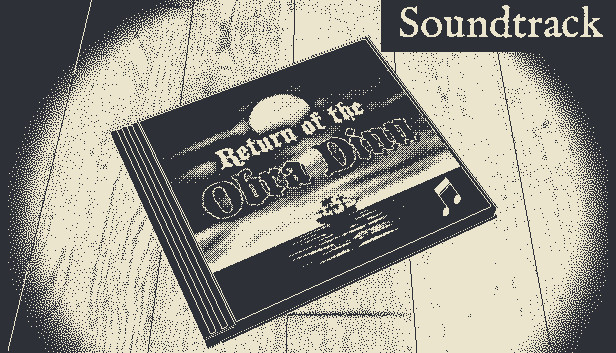

 GOG, Return of the Obra Dinn is priced at ≈ $11.37. It is a single-player mystery adventure about boarding a lost ship and reasoning through the fates of its crew, so it suits players who prefer observation and deduction over action. The Steam PC version lists full controller support, English full audio, and subtitles in multiple languages.
Steam player reviews show 96% positive from 32,634 reviews. If that style of quiet investigative play sounds appealing, the current offer is worth considering. The edition shown is Standard, and the listed interface languages include Simplified Chinese, Traditional Chinese, English, French, Italian, German, Spanish, Japanese, Polish, Portuguese-Brazil, Russian, Korean, Arabic, and Ukrainian.