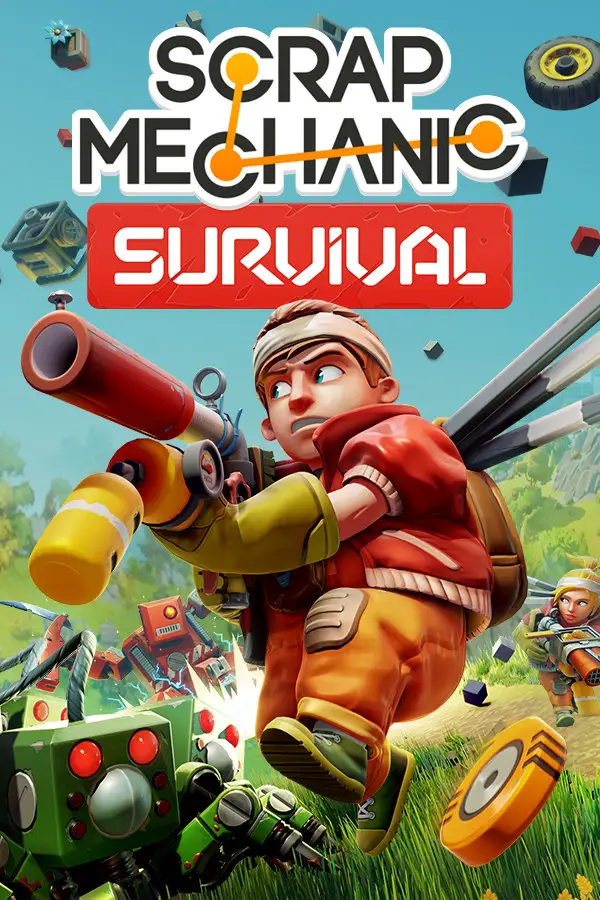
Scrap Mechanic
ReviewsPrice History
Past 36 months · Updated dailyPrices cover Steam and 39 authorized stores; only legitimate offers are counted. The chart shows weekly market-wide lows and Steam's official price across the past 36 months.
Credits
“Axolot's homegrown physics engine and a decade-long Workshop make this the Swedish-industrial home base for sandbox vehicle tinkerers”
Our Verdict
Ten Years on the Long Haul: An Industry Outlier
Scrap Mechanic occupies an unusual seat in the history of sandbox-construction games. It is not a mass-phenomenon like Minecraft, nor a hardcore engineer's cult standard like Besiege. It is a mid-sized indie sandbox that has held a ninety-percent approval rating for ten straight years. That figure is itself an industry marvel. Most Early Access titles watch their approval slide below sixty percent past the five-year mark. Most sandbox builders bleed their core players when no formal release ever arrives. Scrap Mechanic ran the play in reverse, holding a high rating across a full decade of Early Access.
The Axolot Games team has stayed small for the long haul, between five and ten people, a model of the Swedish boutique indie studio, with founders drawn from Mojang and DICE. When they set up in Stockholm in 2014, the mission was stated plainly: make a sandbox an engineer could play for a lifetime. The May 2020 Survival update surged to the third spot on Steam's best-seller chart in its launch week, the single largest milestone of the Early Access run. Weekly revenue spiked that week, but the team did not use it as a springboard to expand. They chose to hold under ten people and pour the funding back into Chapter 2. That "small team, slow cadence" instinct grows rarer in the 2026 indie landscape, and it is the root reason the game holds its craft.
Who It Is For, and Who Should Walk Away
The target profile is sharp: an engineer-minded player who wants to use circuit logic and physical parts to build things that drive and fly. If you have played a physics sandbox before, wired a redstone circuit in Minecraft, or taken an interest in Besiege's siege physics, this is nearly a lock. If you are a Minecraft player looking to migrate toward a deeper sandbox, this is a medium-difficulty next stop, friendlier than Besiege but far deeper than Minecraft.
The inverse profile is equally clear. A traditional campaign-first player who wants a tight story and a defined clear condition will bounce within five hours of survival; the game will never tell you what comes next, and every sense of progress comes from goals you set yourself. One group deserves a separate warning: anyone who has never touched a building sandbox should warm up on Minecraft or challenge mode first rather than leaping straight into survival, where the drop-off rate is steep.
The on-ramp recommendation is simple: clear challenge mode's forty levels first to learn the basic mechanics and circuit logic, then move into survival for the full fight to stay alive. Don't jump straight into survival or creative and lose the guidance of that learning curve. The replaceability verdict circles back to the angle's core. A homegrown Swedish physics engine, a library of more than a hundred industrial parts, and a Workshop alive for ten years are three things that, in 2026, still have no true replacement. For engineer-minded players, this remains the unavoidable Swedish-industrial first choice, even with Chapter 2 five years late.
Player Reviews 0
We'd love to hear from you
Welcome! Share your take on this game — being first might come with a surprise.
No player reviews yet — be the first!