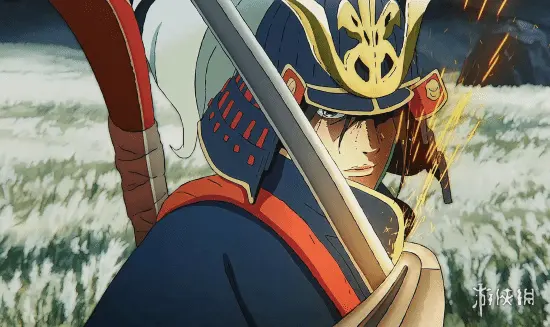
Sekiro™: Shadows Die Twice - GOTY Edition centers on precise direct combat, stealth, and vertical movement rather than multiplayer; on Steam PC it is a single-player game with full controller support. It costs ≈ $55.52 at Kinguin. Players seeking a focused shinobi action adventure also get boss challenges, Remnants, and three cosmetic skins.
The GOTY extras require a download, and the Steam PC version offers 13 interface languages. Weigh the displayed price against your interest in this distinctive combat style and a strictly solo journey.At Steam's $59.99, the Kinguin offer is ≈ $4.47 lower for the same Standard.
KinguinSekiro: Shadows Die Twice Steam Altergift·Platform:Steam·~ $67.39-18%from~ $55.52(~ €49.42)Save $4.47 vs SteamBuy now
GAMIVOSekiro: Shadows Die Twice EN/DE/FR/IT/PL/ES Global·Platform:Steam·-7%from~ $55.93(~ €49.79)Buy now
Steam·Platform:Steam·United States Steam official price~ $59.99Buy now
Unavailable in United States (1)▾
These offers are explicitly unavailable in United States — they cannot be purchased or activated there. You can still visit the store to review the restriction.
EnebaSekiro: Shadows Die Twice Steam Key EUROPE·Platform:Steam·~ $102.18View store
Set a target to receive an email when an eligible offer in your selected region is at or below that amount.
Price History
Past 36 months · Updated daily
Historical Low~ $22.582026-07Current Low Across Stores~ $22.58KinguinAt its historical low now
Prices cover Steam and 39 authorized stores; only legitimate offers are counted. The chart shows weekly market-wide lows and Steam's official price across the past 36 months.
01About Sekiro™: Shadows Die Twice - GOTY Edition
As a one-armed shinobi, fight across late Sengoku-era Japan to rescue a young lord and reclaim your honor. Stealth, vertical traversal, prosthetic tools, and direct combat shape this action adventure.Steam players rate it 95%% positive from 261,270 reviews.The Steam PC version supports single-player and full controller support.The GOTY edition includes boss challenge modes, Remnants, and three cosmetic skins; a download is required.
Credits
DIRECTOR
Hidetaka Miyazaki
Japanese video game designer and executive (born 1974)
$22.582026-07-30 · KKinguinBase game · same records as the chart above; USD history, not a regional Steam low.
Language support
Language
Interface
Subtitles
Audio
Simplified Chinese
Yes
Yes
—
Traditional Chinese
Yes
Yes
—
English
Yes
Yes
Yes
Show 10 more languages
Language
Interface
Subtitles
Audio
French
Yes
Yes
Yes
Italian
Yes
Yes
Yes
German
Yes
Yes
Yes
Spanish
Yes
Yes
Yes
Japanese
Yes
Yes
Yes
Korean
Yes
Yes
—
Polish
Yes
Yes
—
Russian
Yes
Yes
—
Thai
Yes
Yes
—
Portuguese-Brazil
Yes
Yes
—
Steam PC edition data · 2026-10-22
02Before you buy
Modes and controls
The Steam PC version supports single-player and full controller support.
Bonus content
The GOTY edition lists boss challenge modes, Remnants for sharing actions with other players, and three unlockable cosmetic skins. A download is required for this bonus content.
Languages
Steam PC supports 13 interface languages; ten have full audio, and all 13 have subtitles.
03Frequently asked questions
What is Sekiro about?
You play a one-armed shinobi seeking to rescue his young lord and restore his honor.
What kind of gameplay does it offer?
Set in late Sengoku-era Japan, it combines stealth, vertical traversal, prosthetic tools, and direct combat.
Are there extra boss challenges?
Yes. The GOTY edition includes Reflection and Gauntlet of Strength as boss challenge modes.
Latest news about Sekiro™: Shadows Die Twice - GOTY Edition
Selected helpful reviews in this language show both recommendations and criticisms. This selection does not represent the overall positive rating; opinions reflect the version reviewed.
RecommendedSteam player
Don't go in expecting a Soulsborne game.
You don't get to customize your character.
You don't get to just use any weapon.
That doesn't mean it is bad. In fact, I think it's a brilliant move. FromSoft has set a narrative with this that makes for a -real- story to be told with the player, rather than AT the player like in other FromSoft titles.
If you are worried about Activision's name being on the label? Don't be. There are no microtransactions. There is no hurdles to make you pay more. You get the game, you own everything currently available for it.
All Activision was in charge of was creating the tutorials, and doing some QA testing.
Optimization is great, as well.
You owe it to yourself to buy this game and support Fromsoft. Show Activision that singleplayer only games are alive and well. This is a gem.Show moreShow less
3.2 hours at review1,911 people found this helpful
Not recommendedSteam player
I wish there was a "It really is great, but not for me" button.
Being a fan of the Souls games as well as Bloodborne, I found myself in familiar territory with Sekiro, but something just wasn't quite clicking. All the new systems function well, and the setting is expertly crafted, but it's the stripped away RPG elements that leave me feeling empty with Sekiro. For me, so much of the enjoyment of the Soulsborne games came from exploring the intricately designed areas and finding strange little nooks and crannies containing unique weapons and/or armor. It felt like an interesting and satisfying reward for exploration. In Sekiro, every item you find in the world is more or less a consumable (with few exceptions), and that sense of wonderment feels lost. I feel no desire to explore secondary paths knowing that they all end in yet another pocketful of confetti. That sense that each pathway could potentially result in a weapon that changes your whole playstyle (if you want it to) is no longer present.
This drawback also bleeds into my second issue with Sekiro: Being locked into a singular playstyle. Again, to reference the Soulsborne franchise, FromSoft games have always come with a variety of ways to build your character. Do you want to be a heavily armored brute with a two handed axe? Have at it. Want to be a robe-wearing mage? Go nuts. How about a holy Paladin type that hurls lightning-spears from behind a shield? Whatever floats your boat. On the flip side, Sekiro takes the approach of "learn the new parry/block system or die." Without having the previous FromSoft titles as reference, this isn't a bad thing in and of itself. The system works well and has a good deal of polish; it's the fact that it represents yet another facet of RPG-oriented gameplay that has been stripped away from FromSoft's design philosophy.
The world itself also feels much more linear than that of the Soulsborne titles. To compare Sekiro to Bloodborne or Dark Souls, it's clear that FromSoft was less interested in the intricate world building they're so well known for. The levels are gorgeous and well crafted, but are much simpler and straight forward. The lore is not nearly as cryptic and expansive, and the host of characters are far less enigmatic. Again, not an objectively negative trait, just... Not what I admire about FromSoft titles.
In a vacuum, this game is fantastic on a technical level. In the scope of FromSoft's catalogue, it's a shift away from what I love most in their games.Show moreShow less
5.8 hours at review1,839 people found this helpful
RecommendedSteam player
you don't lose when you die, you lose when you quitShow moreShow less
65.6 hours at review1,877 people found this helpful
Not recommendedSteam player
DISCLAIMER
Personally, I do enjoy Sekiro: Shadows Die Twice. However, unlike with From Software’s previous titles, I would not recommend this to the average gamer looking for a tough-but-fair experience, which is why I opted to give it a “would not recommend” label instead. I wish there was a “mixed” option, or a way to simply write a review without being forced to labelling a game as positive or negative, but there isn’t.
That said, I would thoroughly recommend Sekiro to you if you enjoy sitting down and intently studying move sets of enemies and bosses, not minding repeated re-tries until you eventually figure out how to react to each of their attacks on an order of magnitude way above the Souls series; and if you liked the parry system in the Dark Souls series, because, at its core, Sekiro is largely a parry game.
These are my thoughts on the game so far, roughly 20 hours in. It is possible that some of the observations and assumptions in the following write-up will change, however, it is unlikely. I have meanwhile beaten the game (~30 hours) and my opinions remain largely unchanged! If anything, my issues with the game got exacerbated by the design of the last few areas and bosses.
Combat & Combat-related
Combat feels overly punishing at times, and requires persistent mastery over the game magnitudes higher than any previous From Software games did.
Minibosses, bosses and even most regular enemies push out intense damage, commonly being able to kill Wolf with 2-3 attacks. Most* bosses and minibosses can only feasibly be killed by building up their posture gauge, which is mostly done by deflecting their attacks; requiring near perfect moveset knowledge from the player before they have any real chance of defeating them.
Bosses tend to have checkpoints close to their boss arenas, however, minibosses do not. Additionally, miniboss arenas tend to have other enemies placed in them. Whenever you die to a miniboss, you are forced to clear out the entire arena of regular enemies before you can engage the miniboss again. In arenas with 7-10 other creatures on patrol paths that require you to sneak around and wait for them to patrol past you, this gets tedious quick.
Certain types of enemies can only be properly damaged by using certain items. Those items do not replenish upon resting at a shrine, and so, if you die a lot to bosses that require the use of said items, you will be forced to regularly leave the area and either farm up sen to buy more supplies, or to farm enemies and hope for the right items to drop.
*Certain enemies and bosses take little posture damage, forcing a type of fight more similar to From Software’s previous titles. However, the vast majority of boss fights are designed for deflection style of combat.
Death
Death seems to be the most punishing out of all of From Software’s previous titles.
You lose 50% of your carried sen and 50% of your progress towards your next skill point whenever you die. This is mostly par for the course considering their previous games.
However, dying has consequences to the NPCs around you. More and more NPCs will eventually become sick as you die more often, halting their questline progressions until you cure them. Curing an NPC can be done, however, the cure is only temporary (if you continue dying, NPCs will get sick again), and the items required to create the cure are extremely limited (the wiki currently lists their total number at 8, but as the game is new still, there might be undiscovered merchants). If you mismanage your cure timings, cure too liberally, or simply die too much, you will lock yourself out of NPC questlines.
Exploration
Moving through the world feels great, with many hidden nooks and crannies, side paths and optional areas.
The grappling hook adds fantastic verticality to nearly every place you visit, often allowing you to avoid a frontal approach and instead come in from behind or above and take out a bunch of enemies. The level design is top-notch.
However, the joy of exploration is greatly stifled by the absence of real new weapons and armour pieces. 95% of all the loot you will ever find are coin pouches and consumables, the other 5% are new prosthetic tools and the rare item that upgrades your stats. Finding yet another ceramic shard that you can throw at enemies doesn’t feel exciting. Finding the latter feels rewarding, since those types of items tend to be guarded by tough opponents. The worst part is that, sometimes, tough enemies and even mini-bosses guard dead-ends with no interesting loot whatsoever. All in all, not being able to find new weapons or armour pieces puts a big damper on the joy of exploration.
Skill System
The game features a skill tree to upgrade Wolf with. With only two types of skill upgrades available, passives and special moves (of which you can only have 1 active), the skill system feels rather bare-bones.
The prosthetic upgrading system has a lot of options, adding roughly 3 variations to each of Wolf’s prosthetic tools (of which you can only have 1 slotted per tool).
It is unlikely that you will be able to fully unlock all skills nor all prosthetics unless you intend to do a heavy amount of grinding, and some materials needed to upgrade the prosthetic might be limited per playthrough.
There is no real way to change up your playstyle. None of the passive or active skills or prosthetic upgrades alter the core playstyle in any meaningful way. Unlike their Demons’s/Dark Souls series, you won’t be able to customise your character to fit a certain playstyle.
Bugs & Glitches
I’ve run into these only rarely, but they do exist and most of them lead to the death of Wolf, resulting in you losing half of your sen and skill experience to no fault of your own.
The jumping system is a bit of a mess and finicky to control. At times, Wolf will slide off of platforms, that, moments earlier you were able to jump on perfectly fine.
When fighting enemies with big weapons on slopes, Wolf has been literally hammered “into the ground”, rendering him uncontrollable, stuck inside the level geometry and forcing a death or ALT+F4.
Occasionally, the grappling system (especially the grapple-from-point-to-point version) flings you into directions that get you killed: like literally away from the next grapple point.
Trying to jump onto certain objects can leave Wolf in an endless falling animation loop, with the only means of escape being ALT+F4, which could potentially lead to your save file becoming corrupted (the chance of actual save corruption should be highly unlikely, however).
Like I wrote above, overall I do enjoy Sekiro but many of the design decisions have moved the game into a spot where I don’t feel I can rightly recommend the title to the “average” gamer, unlike their Souls series. This is mainly due to the intense damage you take from nearly everything in the game, and the requirement to sit down and absolutely learn attack patterns. In Dark Souls you had a good chance of beating a boss, even if it was your first encounter with it. With Sekiro, for every boss and miniboss I have fought, I needed a couple attempts to study and learn how to react to their move sets. At times I walked away and came back later, due to how tedious it is to repeatedly and slowly clear out miniboss arenas. This requirement to borderline perfectly learn a move set for every miniboss and boss you encounter and the requirement of mastery over so many enemies, I feel, is something that might turn average, less dedicated, gamers away from the title.Show moreShow less
19.9 hours at review1,742 people found this helpful
RecommendedSteam player
Overall Score: 8.6 / 10
Quality
9.3/10
High quality; minor issues
Performance10/10No crashes; stable frame rate at 60 fps in
1080p with maxed settings and in 4k with
slightly customized settings (check out the
hardware section below for more details)
Utility 9/10No bugs / glitches experienced, except for
a weird 20 fps-lock using cloned screens;
plenty of gameplay & graphic options, but
no 21:9 support and it's locked at 60 fps*
Controls 9/10Highly responsive, intuitive controls; the
hitboxes sometimes feel a bit off; enemy
projectiles just fly through other enemies
Gameplay
7.8/10
Skill-based boss rush game
Challenge 7/10Its standard difficulty equals "Very Hard";
mastering parry and dodges is essential;
at times annoying checkpoint placement;
no option to reduce the difficulty, except
by grinding for new skills & consumables
Content 9/10At least ~30h for the first run; high replay
value since it has some very hard bosses,
alternative endings and NG+ modes with
increased difficulty; speedrun community
Diversity 7/10Slightly repetitive, yet satisfying enemy &
boss variety; no usable armor or weapon
besides the base sword + prosthetic tools
Immersion 8/10Intense, captivating exploration, whereas
it's interrupted by a boss every 5 minutes;
the combat system demands the player's
full attention and makes you feel involved
Design
8.6/10
Great overall; a tad too generic
Visuals 9/10Beautiful; reused models for some of the
mini-bosses and the inability to alter the
character's looks are my only complaints
Sound10/10Good sound effects, well matching score
and HQ voice-overs in several languages
Texts6/10Well written dialogues but a generic plot
and a hardly interactive dialogue system;
NPCs are meaningless for the adventure
and thus feel sort of random / tacked on
Mapping 9/10Top-notch level design; branching linear
levels that merge into bigger areas once
fully explored; many secrets to discover
Interface9/10Well designed, minimalistic menus & UI
with a little retro touch; the game can be
paused anytime; HUD may be turned off;
having no maps can be confusing, but it
is immersive and encourages exploration
* Mods to unlock fps & 21:9 support on Nexus Mods.
🎮 I strongly recommend the usage of a controller.
⚠️ Quitting with Alt+F4 can corrupt your savegame.
💀 Beware! This game can be very punishing.
My review is based on the vanilla version, but...
...there are already over 150 mods around:
⚙️ different skins for the protagonist
⚙️ change character / weapon model
⚙️ various Dark Souls & BB lore mods
Tested with:
1080p at 60 Hz single monitor
Setting: Low, Medium, High, Max
4k at 60 Hz single monitor (TV)
Setting: Low, Medium, High, Max
Shadows: Low; Anti-aliasing: Off
OS: Windows 10 Professional, 64-Bit
i7-7700K, 4 x 4.2 GHz; 16 GB DDR4
GTX 1080 (8GB GDDR5X); 840 EVO
Standard Xbox One & PS4 Controller
If you found this review helpful, feel free to check out my...
⭐ Curator page | 👪 Steam group | 👾 DiscordShow moreShow less
74.5 hours at review1,593 people found this helpful
Not recommendedSteam player
With the high difficulty and having only one way to play the game (stealth tactics and extremely precise timing), this game requires a specific type of person to enjoy. I am not that person.Show moreShow less
8.3 hours at review1,434 people found this helpful
RecommendedSteam player
In an era where full-priced games are filled to the brim with microtransactions, locked out content, or boring open worlds with equally boring cut-and-paste content, occasionally a gem like SEKIRO™: SHADOWS DIE TWICE comes along and reminds us why we play games in the first place.Show moreShow less
16.9 hours at review1,588 people found this helpful
Not recommendedSteam player
Now before I get started, I gotta make some things clear. I beat the game, I didn’t like it, yes I am a Soulsborne player, no that’s not why I didn’t like Sekiro.
Also before I get into the problems I have with Sekiro, I will list the things the game did well.
-Setting
-Story
-The way you can influence the story
-Lore
-Visuals
-Sound design
-Music
-Movement system
-Controls
Now I will talk about the things the game did badly, from bad to worse.
1. The Stealth System. It’s so shallow. We’ve seen great stealth systems in other games like the Batman Arkham games, where enemies would change how they act depending on the situation. If they knew you were in the area, enemies would be cautious and take offensive or defensive action, and they would even panic if you took out all their buddies, or they got separated from the group.
Sekiro enemies on the other hand have two states: default state, and attack state. Unless you are noticed, the enemies will remain in the default state. If you get noticed, all the enemies within earshot will come running at you in the attack state, but if you simply jump or grapple up to the rooftops and stay out of sight for a few seconds, the enemies will lose interest and go back to the default state, resuming their original positions. It doesn’t matter how much carnage you’ve unleashed, they’ll just forget about it and let you stealth kill them again.
2. The Camera. While some of the problems with the camera also apply to the Soulsborne games, it’s particularly vile in Sekiro. The camera snaps to the direction your character is facing, this is typical in these types of games, but it can cause an annoying issue, especially in boss fights. You’ll be trying to lock on to the enemy, but the camera keeps snapping away, and sometimes it feel like you have to be facing the enemy in order to efficiently lock onto it. This can get you killed. Another problem is the grappling depends on the camera angle, leading to some nonsense where you jump towards a grapple point, but no matter how much you mash the grapple button, you plummet to your death because you didn’t position the camera just right... Also if you are up against a wall or cornered in a fight, you can’t see anything.
3. The Replay Value. From Software is notorious for making games with astronomical replay value. Tons of different playstyles, weapons, magic, challenges, and multiplayer to boot. Sekiro has none of these things. There is only one playstyle, one weapon, no magic, no multiplayer, most of the skills are useless, and only a few of the prosthetic tools were worth using. This leaves the player without much of a choice in how they play through the game.
4. Dragonrot. The more you die, the more NPCs get afflicted with a disease that prevents you from continuing their quests, and they can only be cured by using a very rare and limited item. I shouldn’t have to explain why this was a terrible decision.
5. The Combat System. It’s clear that From Software wanted to have a different combat system for this game rather than recycling the Soulsborne combat formula yet again. There’s nothing wrong with that, however it had poor results. You see, the entire combat system revolves around building the enemy’s posture bar in order to deliver a death blow. How do you do this? You attack, and you deflect. That’s how you beat the overwhelming majority of the game’s bosses. In order to get players focusing on attacking posture rather than health, they gave all the bosses a ridiculous amount of health, cut the amount of dodge iframes in half compared to the other games, made the bosses track you like they’re standing on a record player while attacking, and take off half your health every time you get hit by most of the early bosses. But since the enemy posture bar depletes so fast when their health is high, their health bar is usually really low by the time you break their posture and deliver a death blow, defeating the point of the posture bar and the high health all together. But to make it so really good players couldn’t destroy the bosses in seconds, they made it so you had to kill the bosses twice in a row, three times in some cases.
All this creates a combat experience where you only need to press two buttons in order to win. Attack and deflect. You don’t even have to have great timing, either. So long as you tap the deflect button at least half a second before you get hit, you get a successful deflect. Mashing deflect is less effective, but you can still succeed with mashing if you REALLY mash it. This overly simple system is subverted by two things. Perilous attacks, and flat out bullsh** attack patterns (which I will get into later). The perilous attack are unblockable and mostly undeflectable. This mixes things up a bit, but there is a massive problem. You get a big bright red symbol to tell you that a perilous is coming, but it doesn’t indicate which type of perilous is coming, and the game is so fast paced already that by the time you see the indicator, you have almost no time to look at the enemy animation to tell what action you need to take, that you really can’t make effective counters or evasions unless you’ve already been victim to that enemy’s attacks many times.
TL;DR, the combat system railroads you into a repetitive and overly simple fighting style.
6. The Bosses. Fighting the bosses in Sekiro: Shadows Die Twice is uneventful at best, and a chore at worst. Fighting the regular enemies makes you seem like a highly trained shinobi, easily able to cut down any in your path, as most of the enemies in the game can be defeated by spamming the attack button, with few exceptions. But fighting the bosses is completely different. They have massive health pools, massive posture bars, do so much damage to you (especially in the early game), usually have to be killed twice in a row, and often have attack patterns that are genuinely unfair. The fact that bosses are copy-pasted repeatedly throughout the game doesn’t help Sekiro’s case.
Let me elaborate on the attack patterns being genuinely unfair. Many of the bosses have attacks that start and finish faster than a human being can reasonably react to without specifically watching for that specific attack. These attacks usually have such subtle tells, or even no tell at all, and it doesn’t help that these attacks often follow the Sekiro tradition of doing absurd amounts of damage. The average human reaction time is 250 milliseconds, that translates to 15 frames in a 60fps game, and any attack animation that starts and finishes in less than 15 frames is bordering on cheap. Granted, Dark Souls 3 and Bloodborne have that same attack problem, but at least Bloodborne gives you a way to deal with it that’s fun and makes it a fair challenge. This kind of nonsense in Sekiro turns many fights into sort of a Mexican standoff prediction and twitch reaction game, even if you know the boss in and out. The reward for beating these slog fests is being able to continue the game, and maybe a minor attack boost or 1/4th of a health and posture increase.
Personally I only like Guardian Ape and Divine Dragon, though the latter only for the spectacle and lore.
Conclusion: I tried really hard to like Sekiro, and there is a lot to like. But unfortunately it left me bored and unmotivated. It’s not often I find a game that I wouldn’t recommend to anyone, but Sekiro: Shadows Die Twice is one of them. It made me less interested in the upcoming Elden Ring. It’s unfortunate. If you like the game, more power to you, I’m glad you do. I just can’t bring myself to enjoy it. I finished it just so I could feel credible enough to write this review. Thumbs down.
... Also terror sucks.Show moreShow less
27.3 hours at review1,391 people found this helpful
RecommendedSteam player
Sekiro is not a Souls game. This can't be stressed enough. Attempt to i-frame dodge through the game and you will get your ass slapped all the way back to Lordran. While it borrows certain elements from Souls, like the checkpoint system or cryptic NPC questlines, it's pretty much its own beast. And what a beast it is.
It's one of those good news, bad news situations. Good news: the days when you needed to keep an eye on your stamina for every attack, block or dodge are over. Bad news: that doesn't mean the game is any less challenging. Quite the opposite, actually. Wolfie goes down in two hits tops, and at all times he's either heavily outnumbered or he gets crushed in the health bar measuring contest. And the absence of stats, gear and online co-op means there are no shortcuts. You won't be able to overlevel, no Solaire will come to your aid. It's either nut up or shut up.
Luckily, there are ways to put you at a lesser disadvantage. Sekiro features a rudimentary stealth system and enough freedom to thin out your enemies' ranks one by one. Most of the times you can clear entire areas just by being sneaky. Apparently, Sekiro started out as a Tenchu game and I totally believe it, considering how far stealth will get you. But eventually a direct confrontation will be unavoidable. And where Souls games required you to only land that one parry, Sekiro demands that you time your blocks near perfectly several times per exchange. Combat is fast, fluid and demanding enough to make you break a sweat.
While the areas are open and generally well-designed, they are not exactly eyecandy. Souls games are known for their sinister beauty, but that is largely absent in Sekiro. Some areas look flat-out rough. Only rarely will you get the urge to stop and soak in the atmosphere. A missed opportunity, really. And while the environments leave room for exploration, the absence of cool gear makes it feel strangely unrewarding. Also, due to the nature of combat you will see the same instakill moves and finishers quite often. A bit of variety would have been nice.
Like the player, Sekiro faces its own set of challenges. Developer From Software has been around for over three decades, but only since the release of Demon's Souls the studio has gained a larger recognition in the West. Ever since, most of their games have been Souls games either directly or in spirit. Being widely known as the developer of Souls games came with the issue that they were expected to make nothing but Souls games - a curse, if you will. Sekiro marks the first time in a while that a major From Software title branches out far enough to be called its own thing - and be accepted by a large audience. With that leap of faith out of the way, it'll be exciting to see what they will come up with next.Show moreShow less
49.9 hours at review1,506 people found this helpful
Not recommendedSteam player
It's not you Sekiro, it's me. You're a beautiful game, but thank feck I bought you on sale because I can't ever see myself having the time or zen patience to master and finish you. I hope you make someone else happy.Show moreShow less
3.9 hours at review1,233 people found this helpful
Source: original Steam user reviews. Helpful votes are an archived snapshot, not live data. Last collected: 08/14/2026.