

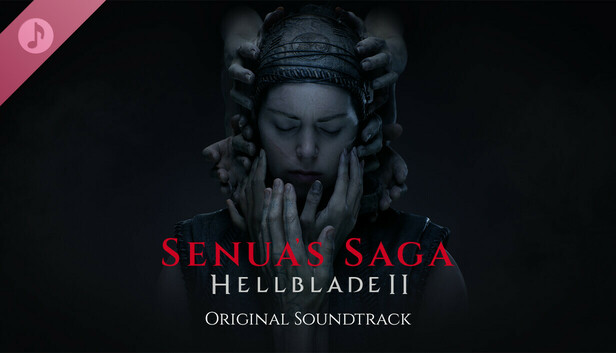

Hellblade II: Senua’s Saga
Price History
Past 36 months · Updated dailyPrices cover Steam and 39 authorized stores; only legitimate offers are counted. The chart shows weekly market-wide lows and Steam's official price across the past 36 months.

01About Hellblade II: Senua’s Saga
Senua returns in Hellblade II: Senua’s Saga, a brutal struggle for survival across the myths and hardships of Viking Iceland. Seen through the perspective of a Celtic warrior, the journey pits her against threats around her and darkness within. Cinematic presentation, enveloping sound, and intense combat shape the experience. Steam player rating: 86% from 9,550 reviews. Release date: May 20, 2024. Supported interface languages: Simplified Chinese, Traditional Chinese, English, French, Italian, German, Spanish, Arabic, Czech, Danish, Dutch, Finnish, Greek, Hungarian, Japanese, Korean, Norwegian, Polish, Portuguese-Brazil, Portuguese, Russian, Spanish-Latin America, Swedish, Turkish, and Ukrainian.
Credits
Lowest recorded in 36 months
$12.492025-12-11 · Microsoft StoreBase game · same records as the chart above; USD history, not a regional Steam low.Language support
| Language | Interface | Subtitles | Audio |
|---|---|---|---|
| Simplified Chinese | Yes | Yes | — |
| Traditional Chinese | Yes | Yes | — |
| English | Yes | Yes | Yes |
Show 22 more languages
| Language | Interface | Subtitles | Audio |
|---|---|---|---|
| French | Yes | Yes | — |
| Italian | Yes | Yes | — |
| German | Yes | Yes | — |
| Spanish | Yes | Yes | — |
| Arabic | Yes | Yes | — |
| Czech | Yes | Yes | — |
| Danish | Yes | Yes | — |
| Dutch | Yes | Yes | — |
| Finnish | Yes | Yes | — |
| Greek | Yes | Yes | — |
| Hungarian | Yes | Yes | — |
| Japanese | Yes | Yes | — |
| Korean | Yes | Yes | — |
| Norwegian | Yes | Yes | — |
| Polish | Yes | Yes | — |
| Portuguese-Brazil | Yes | Yes | — |
| Portuguese | Yes | Yes | — |
| Russian | Yes | Yes | — |
| Spanish-Latin America | Yes | Yes | — |
| Swedish | Yes | Yes | — |
| Turkish | Yes | Yes | — |
| Ukrainian | Yes | Yes | — |
Steam PC edition data · 2026-10-19
02Before you buy
Gameplay and controls
The Steam Windows version has full controller support. The story follows Senua through mythical Viking-age Iceland, with combat and cinematic presentation at its center.
Language
English full audio is listed. The Steam language list also includes German interface text and subtitles.
03Frequently asked questions
What is the story about?
Senua fights to survive and seeks to save people who have fallen victim to tyranny.
Where does the game take place?
The journey crosses 10th-century Iceland and combines combat with cinematic presentation.
What additional features are described?
The 2025 update description mentions a combat challenge mode, Photo Mode features, and developer commentary.
Popular Steam reviews
Native-language selection · 10 reviewsSelected helpful reviews in this language show both recommendations and criticisms. This selection does not represent the overall positive rating; opinions reflect the version reviewed.
Nobody will read my review so I Will Eat 1 Tablespoon of ketchup For Every Like this gets.Show moreShow less
Hellblade: Senua's Sacrifice is one of my favourite games of the last 10 years, and because of that I was looking forward to this sequel for a very long time. Unfortunately, I feel that the sequel failed to recapture what was so compelling about the first game. Personal taste is obviously a factor, but this game has some design decisions that I have to call into question. That is why I am leaving this review to provide some feedback to the dev team, which I hope they will find constructive and will take into account with their future projects (of which there are two in development, and I look forward to both of them). Let's start with the visual presentation, which is the main component of this game. There's no doubt that the visual and sound design are utterly brilliant, but the devs made some choices in service of the 'cinematic' goal that I feel had the opposite effect. The first was the decision to make the game run in 30fps as a standard- with 60fps as an optional extra for the PC version- because they claimed that it made the game more cinematic and more immersive. So I put this theory to the test. I began the game in 60fps (which could only be achieved via DLSS Ultra-Performance mode) and everything looked amazing, with realistic animations and immersive environments. Then I switched to 30fps to see how the game was 'meant to be played', and it made everything worse. I could see the missing frames in Senua's walking animation and I could see lag when switching between pause menus. How are missing animation frames and menu lag supposed to make a game more cinematic and immersive? I believe it has the opposite effect. But at least the PC version gives the option to choose, right? Well yeah, but there's another thing where you have no choice in the matter- the ultrawide resolution. If you don't have an ultrawide monitor then you have to play this game with huge black bars at the top and bottom of the screen. This was another choice designed to make the game 'cinematic' and 'immersive', but again I feel it has the opposite effect. It adds nothing to the visual presentation, and becomes more of a distraction and a restriction (because your field of view is smaller) than anything else. I've played other so-called 'cinematic games' (such as God Of War 2018) and I don't believe they lost anything in that regard by having fullscreen resolutions. Now let's talk about the gameplay, since this is a game after all. I LOVED the combat in the first game, which gave you a small selection of moves and let you use them in a freeform style that was deep, fun, and visually satisfying. In Hellblade 2, unless the combat changes later in the game, it has been fundamentally watered down from the first one. The melee attacks (which were block-breakers), dodge attacks and sprint attacks from the first game all appear to have been removed, making the game more reliant on parrying and dodging while also making the parry and dodge windows much smaller than before (which makes the combat less fun and less satisfying). The game gives you arena battles where you're railroaded into fighting a series of enemies in a specific order, unlike the previous game where you might face two or three enemies at once and have to choose what order to fight them in and how to manage them all at once. Again, the combat design in H2 focuses on being more cinematic and more visceral than the first game, but loses all of it's gameplay depth in return (and even feels less visceral in parts). This quest to be cinematic and immersive extends to the puzzles. I liked the puzzles in the first game, where you had to look for shapes and focus on them to unlock doors, and the fact that each shape had a watermark on the screen made it easier to figure out what you were looking for. In H2, the watermarks are removed (probably because they're not cinematic or immersive) and this makes it really easy to forget what you're actually looking for, which means you're stumbling around until you happen to come across the area where the shape might be (which is marked by a bunch of mini-shapes in mid-air like in the first game). The devs tried to offset this confusion by colour-coding the objects that form the shape (look for red stuff), but this simply dumbs down the puzzle-solving aspect without even offsetting the frustration caused by removing the watermarks. The first game was a really bold attempt to make a high-end production with relatively little (re: money and resources), and was built on clever ideas and strong gameplay design that complemented the excellent storytelling. With this big-budget sequel, I feel like the game has lost it's soul in a way. The combat and puzzle solving have both been watered down in the service of 'cinematic immersion', and the visual design choices make the game feel less cinematic and less immersive than what the first game achieved when running at a fullscreen resolution in 60fps. This is not a criticism of cinematic games as a concept, because they can be amazing when done right. But I wish more devs would realise that, for many people (most people?), a game will feel more cinematic, more immersive and more realistic with a fullscreen resolution and 60fps than with letterboxing and 30fps. I wish devs would accept that 30fps in gaming and 24fps in cinema is not a like-for-like comparison from a visual, immersion or realism standpoint. And I wish more devs would consider how their 'cinematic' ambitions can have a direct affect on the gameplay, and not let one overpower the other (and Hellblade 1 got the balance just right IMO). I feel like a lot of games strive to be cinematic without understanding what that concept actually means. Yes, Hellblade 2 understands how to be cinematic through pacing, visual design, camera angles, lighting, mise-en-scene and excellent acting/direction from everyone involved. But I don't believe that depriving a game of certain technical features and/or watering down the gameplay for the sake of visual design is a necessary part of that goal. I would argue that Hellblade 1, in some ways, is more cinematic and immersive than this game while also being a better game overall. So what was actually achieved with the letterboxing, the railroaded combat and so forth? As I said before, Ninja Theory have two games in development and I will continue to look forward to both of them. But personally, I hope they lean closer to Hellblade 1 than Hellblade 2 in regards to their core gameplay design and visual optimisation. Hellblade 1 was a masterpiece, but Hellblade 2 is not for me.Show moreShow less
Damnnnn this Graphics Studio 10/10 Game 10/10 Microsoft pls dont shut themShow moreShow less
I only aim write reviews on games I feel strongly about and this one is going to hurt to write. The original Hellblade is one of my favourite games because of how unique it was and I was just as excited as many others were when Hellblade II was announced. But what we were given after all this waiting is an experience that really makes me question what all that development time was for. Minor spoilers warning. There's no denying that Hellblade II's greatest strengths are visuals and audio, elevated to a standard that challenges the largest AAA-type games. The attention to detail in the environments, character modelling and animation, visual effects and lighting all rendered so fluidly with no obvious loading is an engineering marvel. The sound is equally as masterful, pushing the limits of binaural audio to not only represent the numerous voices that Senua hears but the chaotic nature of her visions and the sounds they create. The soundscape of Hellblade II expands on the original game very well and is some of my favourite bits of sound design in recent years. Heilung being part of the game's soundtrack speaks for itself as to how good their work is. However, as has been so often the case with recent titles, top tier presentation is simply not enough. As far as being an actual game is concerned, Hellblade II is a drastic step backwards from the original, limiting the input the player has even more than before while also not being any longer or expansive in terms of length The original Hellblade's combat was surprisingly robust despite the heavy narrative focus. A mixture of attacks that could be chained into specific moves with certain properties, with a slow-mo, directional dodge, and juggling multiple enemies at once. Senua's Furies even became a part of the fights, calling out suggestions to evade or strike back so they felt like part of the game experience. If anything, the only improvements the system needed was an expanded move set and more enemy variety. Instead, Hellblade II has drastically simplified the combat in both complexity and difficulty for reasons I cannot fathom. The same basic control scheme is still here, but the new animations make each input incredibly sluggish whether acting offensively or defensively. Each battle being restricted to one-on-one duels one after another also feels less impactful, being less like a traditional action game having to switch targets and more of an attempt to make the game "cinematic". All this ends up making the combat simultaneously less engaging and far too easy. You wait for an attack, block enough times to build up Focus, then engage said Focus to kill with a single string of heavy attacks. This worked on every single enemy in the game. The only time I actually had a "game over" was during the final (and only) boss, and any other fight gave me so many second chances to keep going when I messed up that I didn't even realise there could be a game over until then. The rest of the game, while also like the original mechanically, is incredibly limiting in regards to player engagement. Almost half of this game's runtime is literally holding W and pressing a button to climb a ledge, all on extremely linear paths with a very little amount of deviation. Even when you can spot other ledges and paths that Senua looks like she could traverse and explore, most are impassable or blocked by invisible walls, meaning the experience feels railroaded to a degree the original Hellblade never was. This is made worse by the puzzles. While visually engaging at manipulating the environment, they are just as simple to solve as the first game and never difficult to work out, yet are even fewer in number than before. This makes a game that, outside of combat, is a really slow slog to get through. This wouldn't be a problem if the story was just as memorable as the original. The first Hellblade being about Senua working through her psychosis on a personal quest, blurring the line between what was real and what was not, was engaging for that reason. Hellblade II's story is no longer about Senua's internal struggles, but more about how she interacts with the world. While a good idea to progress Senua's character following the conclusion of the first game, this change in emphasis is ultimately for the worse. The Furies were both a plot point and a part of the game experience in the original Hellblade. Senua's isolation with her voices made them the secondary characters, feeling more intimate since no-one else was physically around to be with her. As a result, the Furies and their whisperings were more haunting and disturbing, even when they were being "nice" to Senua, and their cries of what action to take during fights or puzzles made them feel like part of Senua herself in those situations. Both thematically and as a game function, they worked. In Hellblade II, the Furies now spend almost all of their dialogue literally explaining obvious things like exposition dumps. Nearly all of their dialogue is telling the player, not Senua, what a certain person is feeling or saying at any given moment in the story (including Senua herself), as if to make it absolutely crystal clear you understand what's going on. They don't feel like a part of Senua anymore and instead a way for the developers to smack all of the subtlety out of the narrative so you don't miss what they're trying to tell you. At the same time, they're less involved in the gameplay by speaking much more generic repeated lines in fights and puzzle solving rather than anything specific. This a symptom of the story lacking the emotional impact of the first game because it's no longer as personal. With Senua meeting a cast of real humans and taking on a journey that's not for her own sake, the personal aspect of inhabiting her mind becomes more of a backdrop that doesn't get the attention such a concept deserves (and indeed had in the first Hellblade). Said secondary characters, while acted and presented well, also seem to only be around to prop up how "special" Senua is, an aspect of the writing that grows razor thin by the game's end. The ending of the game itself is also a big cop out. It tries to pull the same "reveal" as the first by implying that some of the events weren't all real (despite being witnessed by other people), yet doesn't really offer an actual conclusion to say so either way. Even if dealing with blurred lines of reality and imagination, the original Hellblade had a definite ending. Hellblade II spends time building up to an ending and then ultimately doesn't give one. This might be better explained with other narrators post-completion or the secret lorestones, but the game was such a trudge that I have no incentive to go back and check, even with the short runtime of 6-7 hours. Hellblade II ultimately feels like a tech demo then a fully fledged game. Even if its visuals can dazzle and the sound design and music is worthy of awards from how well realised it is, it ends up being even less of an interactive experience than the original and makes me wonder if the long development time was purely spent on superficial aspects of making the game look pretty. There are some things to enjoy here, but Hellblade II is deeply disappointing as a follow up to one of gaming's most unique original experiences. Almost every place where this game could have improved on its predecessor as an actual game, it didn't. And in some cases, it did it worse. That's a real damn shame.Show moreShow less
---{ Graphics }--- ☑ You forget what reality is ☐ Beautiful ☐ Good ☐ Decent ☐ Bad ☐ Don‘t look too long at it ☐ MS-DOS ---{ Gameplay }--- ☐ Very good ☑ Good ☐ It's just gameplay ☐ Mehh ☐ Watch paint dry instead ☐ Just don't ---{ Audio }--- ☑ Eargasm ☐ Very good ☐ Good ☐ Not too bad ☐ Bad ☐ I'm now deaf ---{ Audience }--- ☐ Kids ☐ Teens ☑ Adults ☐ Grandma ---{ PC Requirements }--- ☐ Check if you can run paint ☐ Potato ☐ Decent ☐ Fast ☑ Rich boi ☐ Ask NASA if they have a spare computer ---{ Difficulty }--- ☐ Just press 'W' ☐ Easy ☑ Easy to learn / Hard to master ☐ Significant brain usage ☐ Difficult ☐ Dark Souls ---{ Grind }--- ☑ Nothing to grind ☐ Only if u care about leaderboards/ranks ☐ Isn't necessary to progress ☐ Average grind level ☐ Too much grind ☐ You'll need a second life for grinding ---{ Story }--- ☐ No Story ☐ Some lore ☐ Average ☐ Good ☑ Lovely ☐ It'll replace your life ---{ Game Time }--- ☐ Long enough for a cup of coffee ☐ Short ☑ Average ☐ Long ☐ Not quite infinite but thousands of hours ☐ To infinity and beyond ---{ Price }--- ☐ It's free! ☑ Worth the price ☐ If it's on sale ☐ If u have some spare money left ☐ Not recommended ☐ You could also just burn your money ---{ Bugs }--- ☑ Never heard of ☐ Minor bugs ☐ Not annoying but easily exploited ☐ Can get annoying ☐ ARK: Survival Evolved ☐ The game itself is a big terrarium for bugs ---{ ? / 10 }--- ☐ 1 ☐ 2 ☐ 3 ☐ 4 ☐ 5 ☐ 6 ☐ 7 ☐ 8 ☑ 9 ☐ 10Show moreShow less
Okay so this is painful to write... I love Ninja Theory and I loved the 1st Hellblade; but I must admit I had an initial worry going in which was that the 1st game was forged in the crucible of limitations. Its creativity and personality came from that, so much of its greatest moments and ideas were experimental in nature and, while not every puzzle or moment was perfect, it ultimately created something more than the sum of its parts. A beautiful meaningful game full of just great unique moments: Surtr, Valraven, The Beast, The blindness trial, The sea of corpses, running away from a burning light in a wood maze, Hela... all memorable and compelling moments wrapped with some neat visual puzzles and satisfying combat, although admittedly the combat and puzzles could sometimes outstay their welcome for a few people which some criticised the game for. Hellblade 2 took that, saw some of the criticisms at the gameplay of Hellblade 1 and the praise for its cinematics and decided to go all in on the cinematic stuff... and don't get me wrong, this game looks and sounds stunning, the performances are top-notch and the camerawork and choreographing of every scene, every fight, every view is just phenomenal... And that doesn't make for a great game. Hellblade 2 has more money than Hellblade 1 but it lost its soul in the process in pursuing being the most cinematic experience posssible. The puzzles are easier and ultimately really boring and uninspired, especially compared to the 1st game's occasional mind-bending trickery, the variety compared to the 1st game's is non-existent; it's a lot of holding forward and not much else for minutes on end. The combat in becoming focused on 1v1s looks spectacular and has incredible set pieces but, to play, it's simpler and far less expressive than the 1st game's, it devolved to be more cinematic rather than evolved to be more interesting... And it's a shame because the story, while initially interesting, honestly doesn't feel like it really needed to be told and its themes are far messier than the 1st game's for it. The 1st game's themes around its mental health are really solid and, while I find it admirable to go with the continuation of Senua's psychosis to spotlight how it's an ongoing mental health issue and not just solved after the 1st game's ending, it also ends up sort of confusing parts of the message for me. There's ideas about "how one interacts with other people" and "family trauma" and "leadership" and all that but it never feels strong like the 1st game did, it lacks focus which is really surprising coming from a game that is unapolagetically short... Look, i got no issue with the game length, I expected this, I bought it knowing and willing to pay for that because to me a great experience is worth it... and yet in this short length the plot manages to feel both rushed and a bit "filler" at the same time... And I honestly don't know what to say... I'll buy the soundtrack, it's very good, and if I ever make films I'll be stealing shots and transitions from this all the time; and I'm also looking forward to the digital photography from its excellent photo mode... But I can't recommend this as a fan of both Ninja Theory and as a sequel. It is Ninja Theory's most outstanding technical achievement of graphical fidelity and presentation... and it ends up as their most creatively dull game for it. I never thought a Ninja Theory game would bore me at all but... here we are. Unlike the 1st game, I will be forgetting many parts of it rather quickly. I hope their next project is better, I do still love them, I really do, but, while they've always been a studio pushing the boundaries of certain cinematic ideas this is the 1st time they've had the budget and time to let it completely take over their identity, and they are worse off for it.Show moreShow less
Senua’s Saga is not trying in any way whatsoever to be a better or different game from its predecessor. To be fair, the graphics have improved massively, but every bit of praise as well as criticism that Senua’s Sacrifice received still applies to Senua’s Saga. This is a very worthy successor to a game which I can only describe as a piece of art. But… If I’m being completely honest, I had higher hopes regarding gameplay. But if you - like me - enjoyed Senua's Sacrifice for what it was, then this is a must-play.Show moreShow less
I played Hellblade 1 in January for the first time. I liked it a lot. The gameplay itself was a bit repetitive, but I think it was very good all around: the puzzles were repetitive but had great ideas with the changing map designs and hidden areas, combat was fluid, fast and really fun, the three main bosses were badass in every way, and Senua's character was well-written and I wanted her to succeed. The music was also phenomenal and I loved hearing the chanting and drums in sync with the combat. Anyway, then I bought and 100% completed Hellblade 2 in less than 8 hours. Overall, I think it is a massive downgrade from Hellblade 1. It improved in terms of visuals and the "cinematic experience," but the overall gameplay and story really failed to deliver. Here's why I think this: 1) The Furies. The Furies' unique presence was greatly reduced in Hellblade 2. The first game had a great echoing and whispering effect on the voices of the Furies, adding a lot of depth and audio versatility to them, but Hellblade 2 has completely done away with this. Now, it just sounds like two women talking very loudly in your ear, overpowering all the rest of the dialogue. This change really diminishes the effect the Furies are supposed to have. They don't feel like actual voices inside your head, just two annoying ladies that won't let you listen to anything else. I don't understand why this aspect of the Furies was dumbed down like this, and I think it harmed the final product. 2) The combat is worse. It is more cinematic: it has great transitions from enemy to enemy. But for a game about fighting monsters and giants, I think Hellblade 2 fails to deliver an experience worth revisiting, especially for an interactive medium where the goal of combat is to actively engage the player. Hellblade 1 has legitimate combos: you can pair dodging with attacks, sprinting with attacks, cancel attacks with your parry, reflect projectiles back at opponents, chain light and heavy attacks with sprints and dodges, etc. There are dozens of really unique and cool animations and actions Senua can take with these combos, and it all smoothly works together. These combos are available at any time: all you have to do is work them together. Hellblade 2 took all of those cool combinations, and bound them to using Senua's mirror, which gains uses by fighting enemies. This limits the majority of all of your fights to basic parry, light attack, heavy attack, dodge, and sprint forward. That's it. While Hellblade 2 has awesome cinematic transitions between opponents to initiate the fight, once the fight actually begins, the gameplay does not hold up to its predecessor. Hellblade 2 should have delivered a combination of the first game's fluid combat system, combos, and speed, with the second game's new enemy animations and transitions between opponents. However, it did not do that, and I think that what we received was a major downgrade in terms of replayability and substance. 3) Hellblade 1 also had legit boss fights. Hellblade 2 just has two stop-and-go giant arenas that are once again VERY cinematic, but not engaging the way a boss battle should be. I think that the final boss fight is alright, because it was able to combine some aspects of the cinematic giant arenas with an actual fight, but it still isn't anywhere near what that final confrontation should have been like. I was very disappointed with how the game chose to portray what should have been genuinely terrifying and phenomenal set-pieces and action sequences with literal larger than life enemies. These three fights were much more underwhelming than they should have been, 4) What the hell was that story? There is zero continuity between the personal growth Senua achieved after the Hellblade 1 to where the story begins in Hellbalde 2. Despite her killing Vultir and Surtr, her past in the Wilds and her failure to save her village must be confronted again. Despite her killing Garnr, she still has to "beat" the Shadow of her father that still plagues her mind. And despite letting Dillion go and choosing to move forward with her life, the Narrator, the Shadow, and a lot of Senuas's own dialogue only reflects the person we met at the beginning of the series: an outcast paralyzed by grief and remorse, and not at all who she become by the end of Hellblade 1, a woman looking forward to her future. For all intents and purposes, these two games have two completely different protagonists. I don't see any continuity between these two Senuas. And now ther is a hidden society of mystical folk who can change reality and show Senua hisories of people she has never met? The writers also chose to turn Senua's psychosis into some sort of superpower. Why? Was there really nowhere else for the story to go? I don't understand. The story is badly written, and the characters are embarrassingly one-dimensional. Do not buy this game for the story, it will disappoint you. 5) Senua's own character and her movement is also dumbed down. In the first game, Senua was very active, interacting with the Furies and speaking with other characters and constantly being very present in the scene. There are plenty of cutscenes where she behaves more like a human being trapped in an awful place, and it makes the scenarios of the first game somehow feel more REAL. In Hellblade 2, Senua exists solely to ask questions and let other characters give exposition, or to cry out and scream at the Shadow. She's like a Jane Doe placeholder doll, and definitely not the same character who traveled to Hel, fought against her inner demons, and confronted Hella herself. Another small thing I noticed about Senua: her movement animations have been lessened as well. In Hellblade 1, when you held "Shift + direction" Senua would actually change her movement: she runs straight and right, but does a shuffle step going backwards and left. It's a very small detail, but it kept her movements feeling fluid and real, and gave some variety to controlling Senua that not many other games demonstrate. Why was this removed? Now she just trots in each direction. I don't know why, but it seems like a total oversight, or just lack of care from the developers. That's all. I think the game is very cinematic and pretty to look at, but with this story and simple combat mechanics It should have been a movie, not a game. And it is not worth its current price. Wait for a sale, don''t pay full price, I do not think you will not get your money's worth.Show moreShow less
runs at a solid 30fps at 4k on 7900xt gpu 5900x cpu 32gb of ddr4 ram. solid 60 if you drop to 1440p.... BUT HOLY HELL IS THIS ONE OF THE BEST LOOKING GAMES I'VE PLAYED.Show moreShow less
This is the most beautiful game I have played currently. And that's it. The game gives you demo aftertaste. Comparing to the original Hellblade: Senua's Sacrifice, Hellblade 2 looses points on everything but graphic. What was good: - Graphics. The world and environment is fantastically beautiful and real. - Character animation and acting. Melina Juergens did incredible job bringing Senua to live. Watching interaction between her and Aldís Amah Hamilton 's characters is like watching a real movie. - Atmosphere. Sometimes the atmosphere was almost as good as in the original game. What was not that good: Plot: The ideas covered in Hellblade 2 are pretty interesting, but the story does not feel complete. It feels like a drafts thrown all together. Unlike the first part, ending feels blurry in a bad way. The feeling was: "Um. So what?" Collectibles: Besides the lorestones you can gather hidden trees. Both lorestones and the trees provide some piece of lore; however they give quite little of it in unpretty boring manner. There is no bonus lore when you get all of them. Yes, you get new narrators, but Hellblade 2 does not feel as a game you want to go through again and again. Combat: Combat in Senua's Sacrifice was pretty simple: light attack, heavy attack, dodge, block, parry, kick. However, it was not annoying and was even engaging (thanks to atmosphere and music). In Hellblade 2 kick was removed, and the character does not feel very responsive. Often block or dodge does not hit or hit too early (that might be on me though). Fights are just annoying. Boss fights: there are no boss fights. There are a couple of interesting events with giants, but no interesting boss design. Music: Hellblade 2 does not have a single track that you would remember. Neither during the game not in the titles. Gameplay and Atmosphere: New puzzles are just boring. Atmosphere in Hellblade 2 sometimes is good, but it feels like it used all the same tricks as in part one but scaled down. Conclusion: I love Senua's Sacrifice. I played through it twice and will definitely play again later. Hellblade 2 was a bitter disappointment. I would not recommend you to buy this game for the full price. But I definitely recommend the first part!Show moreShow less
Source: original Steam user reviews. Helpful votes are an archived snapshot, not live data. Last collected: 08/15/2026.