

















Opening
> Editor's note: This review is based on a pre-release build played in June 2026; the game officially launched on July 22, 2026.
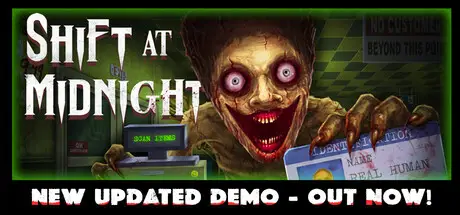
A convenience store at 3 a.m. is one of the loneliest places on earth, and Shift At Midnight knows it. The lights buzz too white, the register coughs once into the silence, and outside the glass there is nothing but the dark. Then the door chimes, and someone walks in who may not be a person at all.
On paper you are running a gas station: restock the shelves, ring up customers, take deliveries, mop the floor, hit the night's sales quota. The real job hides underneath that retail busywork. Every customer could be human, or a doppelganger wearing a human face. You get five questions, a counter terminal to cross-check their ID, and your own eyes to catch the small wrongness in how they move and speak. Read them right and the night goes on. Read them wrong and the thing comes back after dark as a monster, and you are boarding windows and laying bear traps until dawn.
That is the trick at the heart of it, and it is a clean one: the dread never comes from the creature. It grows out of the call you make yourself, customer after customer — let them through, or stop them. Built solo by Australian developer Bun Muen and published by Kwalee, it landed on PC and Game Pass on July 22, 2026, runs up to three players in co-op, and rode a wave to 99% positive on Steam across more than seven thousand reviews. Here is the full breakdown, dimension by dimension.
Story | 6.5/10
Story: 6.5/10There is no script — the only story is the one customer you waved through
Let me be straight with you up front. If you came for narrative, Shift At Midnight will leave you cold. There is no main story, no cutscenes, no written character arcs. The thirteen nights are procedurally generated, and no two play out the same. You will not walk away remembering an NPC's name, because there is no carefully authored cast to remember.
And yet the absence is where it finds a different kind of storytelling. The real story is the one you make behind that counter. A customer's ID lists a birthday that doesn't add up, you hesitate for three seconds, and you let them pass anyway — those three seconds, and what they cost you, are the plot of your night.
It hands the authorship back to the player, and that's a rarer thing than it sounds. What sticks isn't dialogue. It's the regret of I saw it and didn't act, the moment your teammate screamed "that one's wrong" over voice and you didn't listen in time, the specific shape of a mistake that was nobody's fault but yours. No two players walk away with the same memory, because no two players made the same calls.
An invasive species, and a mistake that compounds like debt
The game frames its horror with a lean but effective bit of worldbuilding: the doppelgangers aren't lone monsters, they're an invasive species, and they bring backup to any place they've successfully scoped out. The one you wave through tonight isn't just tonight's problem. It makes every night after it meaner.
That turns the fear from a single jolt into a tab that keeps running. In most horror games, getting spotted is the end state; here, letting an impostor slip is only the opening. A timer drops onto the screen, forcing a choice between restocking and barricading, and the more you panic the likelier you are to miss the next one in the next wave. Nobody wrote that descent. The mechanics narrate it for you.
Set it beside That's Not My Neighbor and you see two games that both hand storytelling to systems instead of scripts. The Neighbor runs on the urgency of fast doorway checks; Shift At Midnight makes the consequence of a bad check physical — a creature that reinforces and strikes back — so the tension runs longer and more continuous.
The 6.5 here is honest, and I want to be precise about why. This is emergent storytelling done genuinely well: the kind where the best moments belong to you, not to a writer. But written drama it simply does not offer. There is no payoff scene, no character you'll quote, no ending that resolves an arc you've been following. What you get instead is a private story stitched together, night after night, from your own judgement, your own hesitation, your own screw-ups. For the player it suits, that's singular and unrepeatable. For the player who wants a script to carry them, it will feel hollow. That's the trade, and it isn't right or wrong — but you should know which one you're buying before you do.
Audio | 8.5/10
Audio: 8.5/10Proximity voice is the real lead actor here
If Shift At Midnight has one non-negotiable reason to buy in, it's the proximity voice chat. Sound falls off with distance — a teammate drifts down an aisle and their words go thin and muddy. That single design choice carries the entire co-op experience almost by itself, and it is the thing screenshots and trailers can never quite sell you on.
Picture it. You're at the register, locked onto a customer who feels off. One friend is restocking down an aisle, another is in the back mopping up the last creature you put down. You drop your voice and say "this one's wrong," but he's too far to catch it, and by the time he wanders over the thing is already out the door.
A timer slams onto the screen and all three of you detonate into the mic at once. That scramble — the misreads, the arguments, the panic — is the part you'll retell for weeks, and text chat could never produce it. It shares its DNA with Lethal Company: the chaos of trying to communicate becomes the comedy and the scare in the same breath, and it's why the game is at its loudest and funniest and most frightening with a full squad rather than a quiet solo run.
A humming fluorescent tube is the scariest score in the building
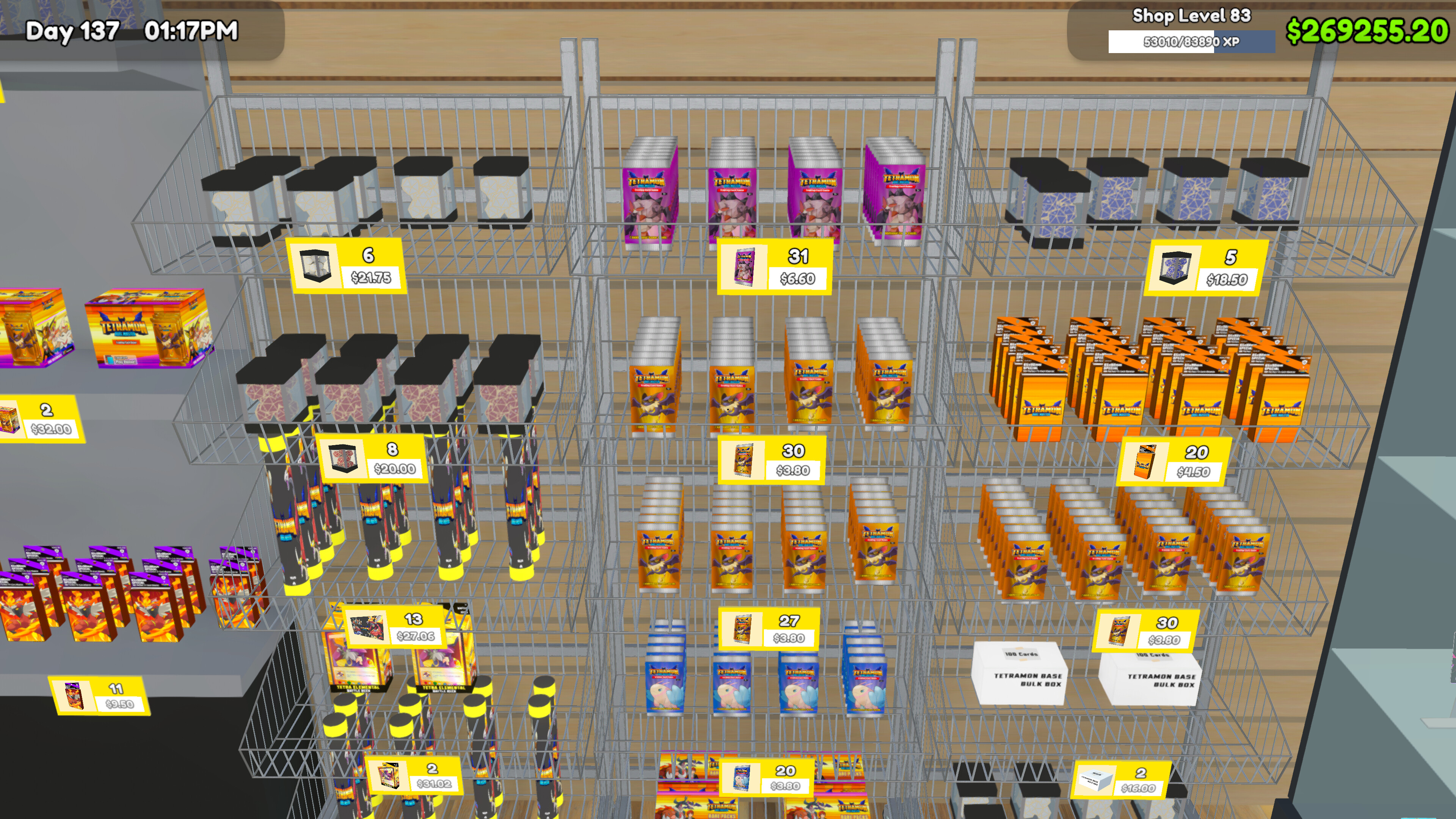
There's barely a traditional soundtrack, and it doesn't need one. The environmental audio is doing the heavy lifting. The unbroken hum of the strip lights, the electrical buzz of a sign, the low whine of an old CRT monitor — apart, each is mundane; stacked together, they build a silence that crawls up your spine. That's the auditory core of analog horror: it doesn't cue your emotions with music, it lets you hear a space that should have people in it and doesn't.
Better still, sound is one of your detection tools. Impostors will sometimes speak in broken half-sentences, their timing a touch off, and you have to listen for it — which means turning the music up isn't an option, because the music is the absence of safety. And once a siege begins, the approaching footsteps, the scratching at the boarded door, the tick of the countdown all layer up and pour the survival pressure straight into your ears, until you find yourself holding your breath just to hear which direction the next sound is coming from. Audio here isn't decoration. It is both the mood and the instrument you use to decide who lives, and it's the single clearest argument for playing this with a headset on and the lights off rather than on speakers in a bright room.
Visuals | 8.0/10
Graphics: 8/10Flickering neon and sick fluorescent light drop you into the '90s in under a minute
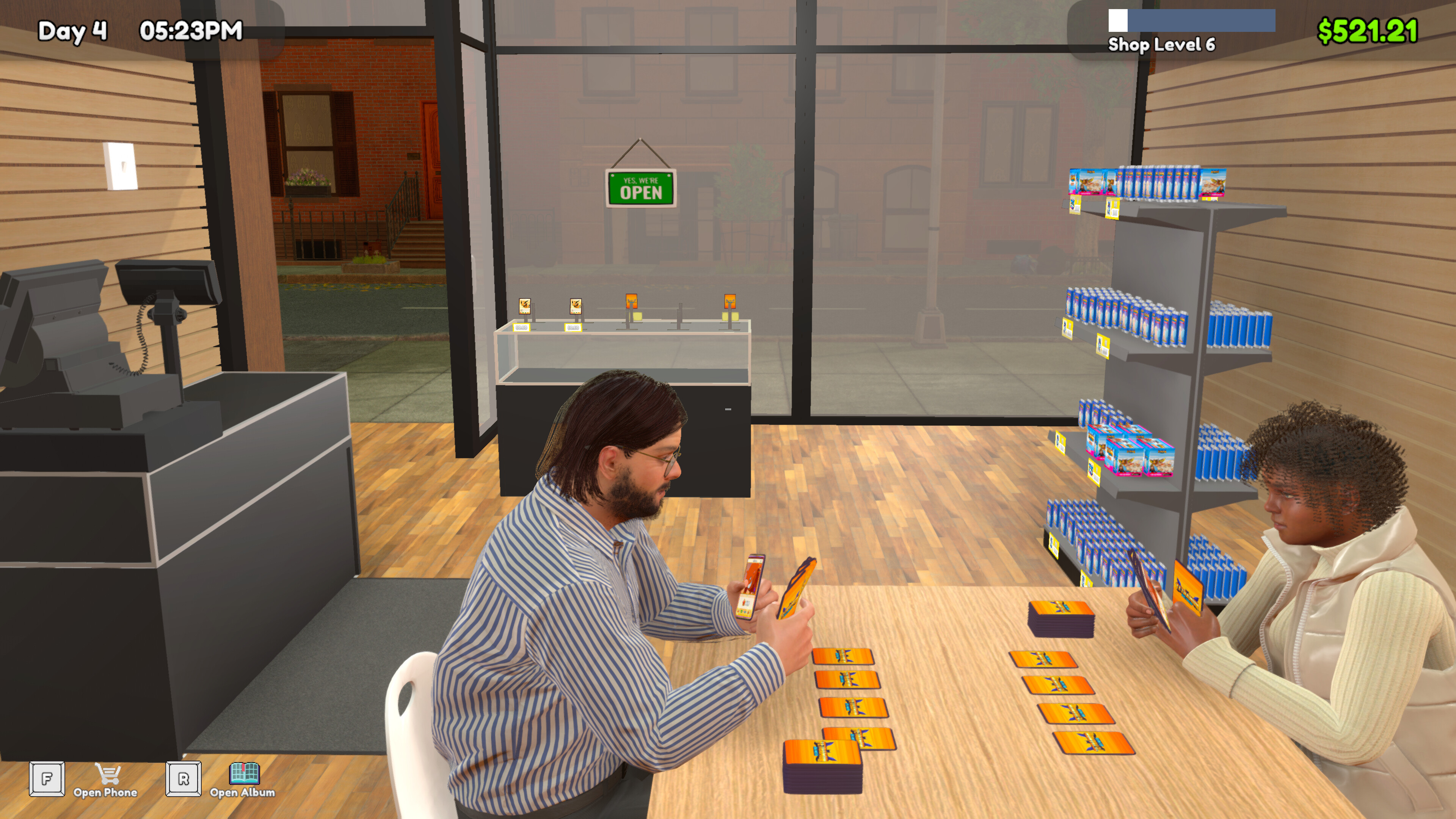
Shift At Midnight doesn't win on tech, but its art direction is frighteningly precise. Flickering neon, worn American road signage, the dead-white tube light behind the counter — inside a minute the game has set you down in a specific, almost smellable place: a backroad gas station off some rural '90s highway, the kind nobody much stops at. That sense of place is something far costlier productions routinely fail to nail. No ray tracing, no 4K texture work, yet every scrap of scenery serves one idea: something here is off. The aisles are too narrow, the stocked junk wears its decade, the CRT glows a sickly green. It takes the same road as Five Nights at Freddy's, where night-shift horror is built from atmosphere rather than fidelity.
The visuals never look pretty for its own sake — even the monsters serve the puzzle
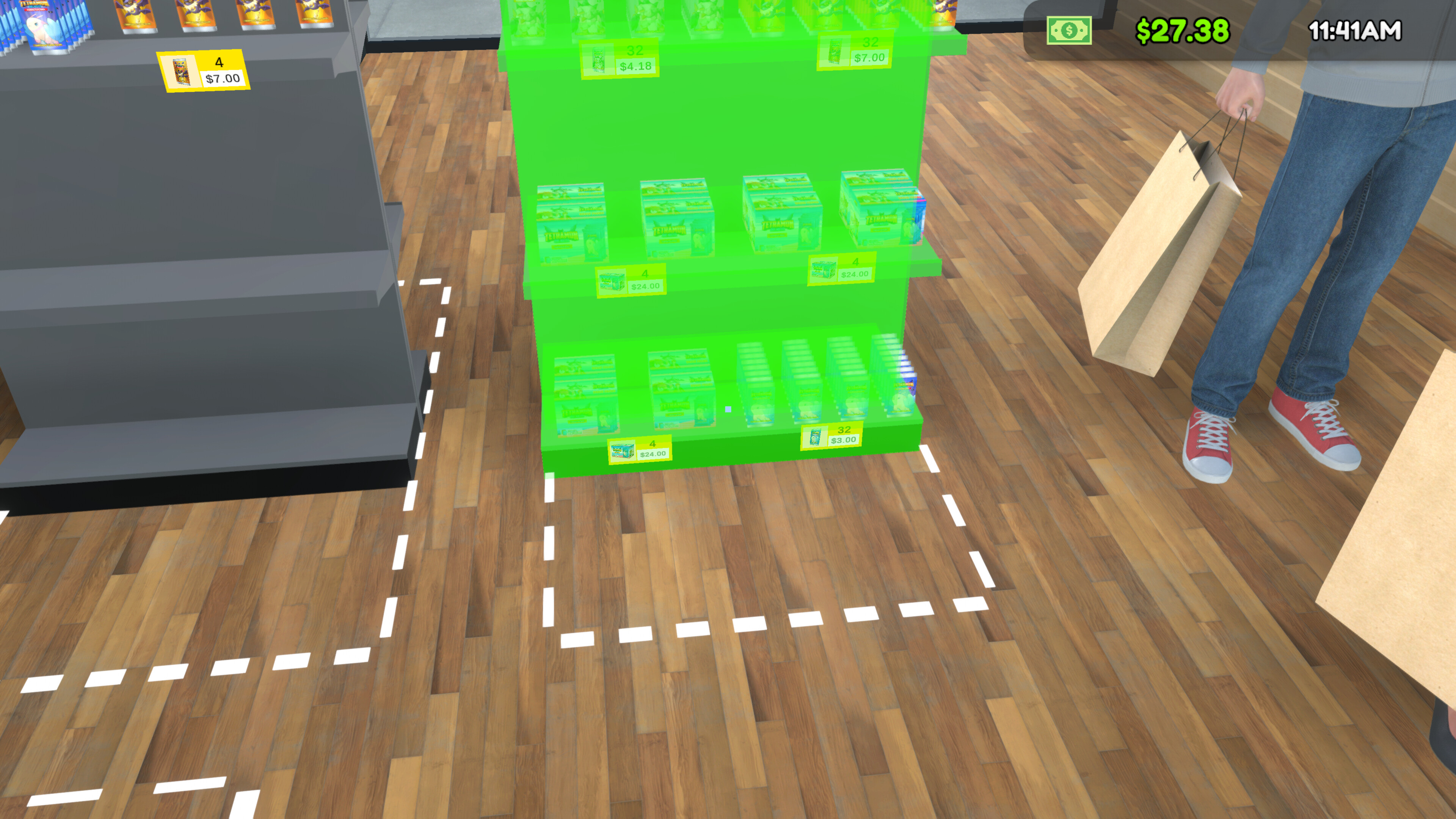
Two things earn this dimension its 8.0. The first is the absurdly low barrier: minimum spec is Windows 10, an i3-2100, 4GB of RAM and a GTX 750 Ti; recommended is an i5-6500, 8GB and a GTX 1050 Ti. That's a five-year-old budget laptop. For a co-op horror that lives or dies on getting friends in together, every notch the requirements climb is a notch of your friend group locked out, and the team clearly understood that.
The second is discipline. The creature design pulls double duty — the spider-like things, the extra limb that flickers out from under a doppelganger's skin — working as both a jump and a visual tell you use to read fake from real. Nothing here is pretty for the sake of pretty. From the colour temperature of the signage to the way the shelves are dressed to the silhouette of a monster, the whole visual language bends toward one goal: keep you sunk in the dread of that night while always leaving you a clue to read.
It's worth sitting with how rare that restraint is. Plenty of horror games chase fidelity and forget that a frightened player isn't admiring your texture work — they're scanning the frame for what's wrong. Shift At Midnight spends its limited art budget exactly where fear actually lives: in the staging of a too-quiet room, in a customer who holds your gaze a beat too long, in the wrongness you sense before you can name it. The result looks modest in a screenshot and feels enormous in motion, which is the only test a horror game's visuals really need to pass. And there's a knock-on benefit to keeping things low-fi: the aesthetic ages slowly. A game chasing photoreal lighting looks dated in three years; a game built on the timeless wrongness of a buzzing strip light and a dead-eyed customer will still hum in a decade. Shift At Midnight has quietly future-proofed its own look by refusing to compete on the axis everyone else burns out on, and that's a decision you can feel in every frame it puts in front of you.
Combat | 9.5/10
Gameplay: 9.5/10Three systems claw at the same pair of hands
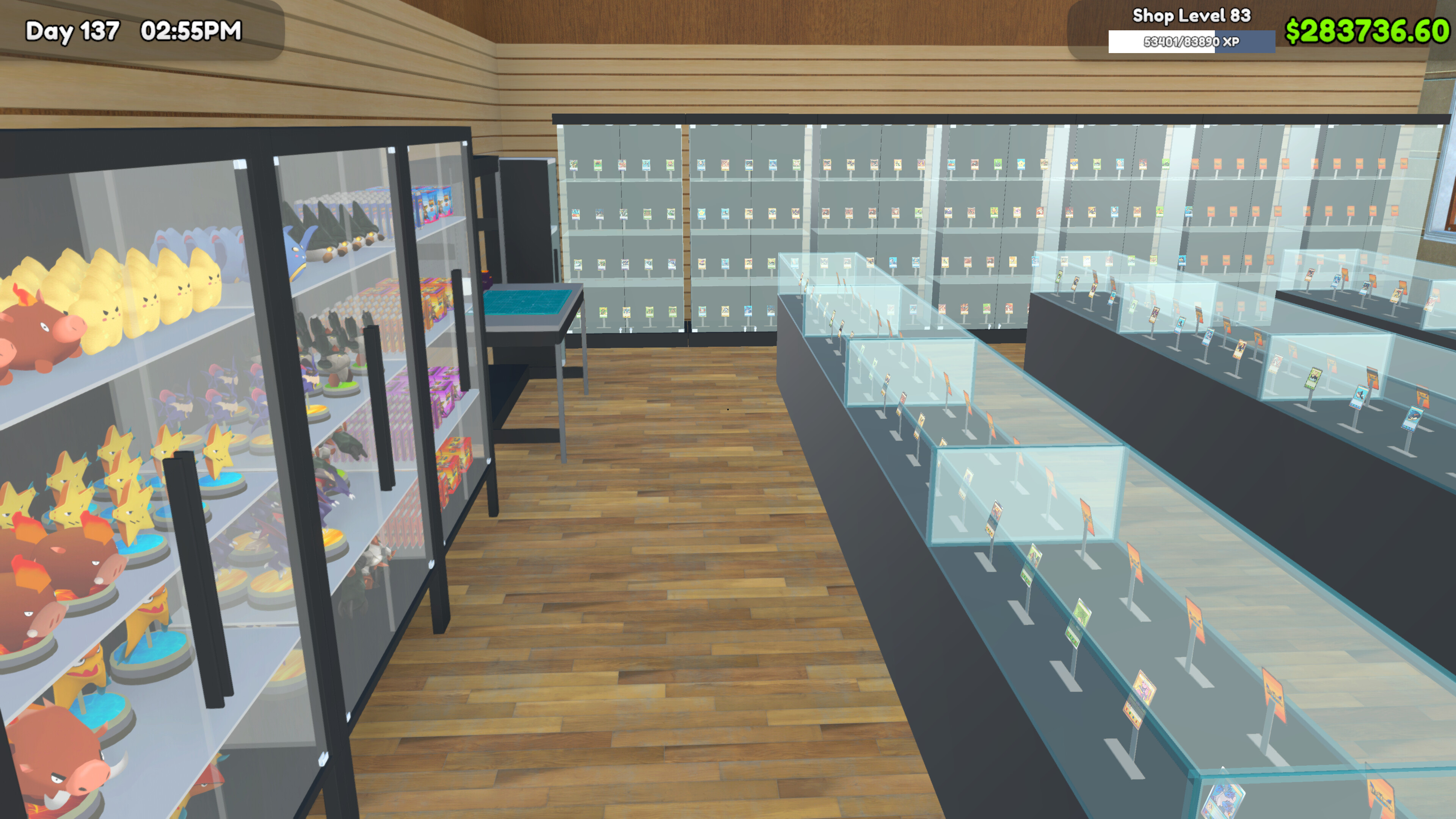
The 9.5 here comes down to one thing: it welds three systems that ought to live apart into a single grip. The first is the shop sim — restock, ring up, take deliveries, keep the place clean, hit the quota. The second is detection — up to five questions per customer, an ID to check, a terminal to cross-reference, and behaviour and appearance to read for tells. The third is the siege — wave an impostor through and you're boarding windows, blocking doors, and laying bear traps until sunrise.
The genius is that the three systems fight over your hands. The quota pushes you to ring people through fast; detection drags you to slow down and look hard. Those goals are natural enemies. The harder you chase the target, the likelier you are to pass someone you should have stopped. That tug turns a plain barcode scan into a pulse-spiking gamble every single time.
Detection has real texture — sometimes obvious, sometimes a liar good enough to make you doubt yourself
Reading customers carries genuine range. Sometimes the tell is blatant — an extra limb, a sentence that doesn't parse — and you clock it instantly. Sometimes you're checking an ID digit by digit, watching the rhythm of an answer, hunting that one thread out of place. That unevenness is the hook: you can never coast, because the next person through the door might be an obvious fake or a forger good enough to make you question your own read. Catch one and you can put it down on the spot — but don't forget to drag out the mop and clean the remains before the next wave arrives, because a filthy store drags your rating and your quota down with it. That kill-then-clean gallows humour, the swing from executioner to janitor in the space of a minute, is one of the bits that went viral, and it's also a quietly clever bit of design: it never lets you exhale after a kill, because the next customer is already at the door.
Where it stumbles, and what keeps you coming back
Held up against Papers, Please, both turn bureaucratic verification into a pressure valve, but Shift At Midnight makes the consequence physical: a wrong check isn't a docked point, it's a shape-shifting thing now loose in your store. Add one to three players and the call becomes a committee — three people arguing over whether that last sentence was normal — and the fear escalates from private nerves to shared paranoia.
The one honest knock is the solo experience. The night balance is tuned for two or three, and on your own you're juggling restocks and barricades at the same time with the math visibly straining against you. It's playable, but it's clearly not the shape the game was built to be. Stack the procedurally built nights on top of weapon and shop upgrades, though, and the long-haul replay value sits near the top of its class — there's always one more loadout, one more division of labour, one more night to try a different way.
Content | 8.0/10
Content: 8/10Thirteen randomized nights: about six hours on the line, but you'll likely run far longer
Story mode runs thirteen procedurally generated nights — roughly six hours to push through on a single line, stretching toward fifteen if you chase down every weapon, shop upgrade and unlock. That doesn't sound long, but the number lies, because each night's layout is randomized and you'll never replay the same one twice. The depth isn't in one-and-done run length; it's in the each-time-different replay. As the nights climb you unlock more weapons, upgrades, traps and enemy types, and that long-tail progression is what keeps one-more-night ticking. It runs on the same retention logic as Lethal Company: a short run, but randomness and a growth curve that make you start another. Because the nights are a roguelike build, the foot traffic, the layout, the thing that goes wrong all shift around — you can't beat it by memorizing a route, so those fifteen hours have something real to dig into rather than padding. That's the difference between a game that pads its runtime and one that earns it: here the hours aren't a longer corridor, they're a wider space of things to try. You'll start chasing better trap placements, tighter divisions of labour, sharper reads on the customers you keep getting wrong. For a modestly priced indie, the density on offer is genuinely sturdy, and it's the underlying reason the game has parked itself in streamers' rotations and keeps getting pulled back out for friend-group sessions long after the novelty should have worn off.
A free demo and a day-one Game Pass launch drop the cost of entry to basically nothing
It plays the access game well. Alongside the full release there's a free multiplayer demo with three scripted nights — a zero-cost door for anyone on the fence. Play a night for nothing, buy in if it clicks. More important, it launched onto Game Pass the same day. For a co-op horror built around dragging your friends in, that move is practically engineered for spread: one person in the group with a sub, two more on the full version, and the squad is instantly whole.
Set against TCG Card Shop Simulator's cozy retail loop, Shift At Midnight borrows that same addictive minding-the-store rhythm and twists it into a lethal hunt — same loop, completely different adrenaline. Ultimately the content isn't measured by how long the campaign is but by how many nights you'll happily repeat. For the right player, thirteen randomized nights plus a growth curve carry dozens of hours of friend-group sessions; for someone who just wants a one-pass ending, it might be set down at hour six. Which of those you are decides whether this looks generous or thin. The honest read is that this is a game priced and structured for the former — it assumes you'll keep coming back, and it rewards you for doing so rather than gating its best bits behind a one-time campaign. If that's how you play, the value here is hard to argue with; if it isn't, temper your expectations accordingly.




Comments 0
Share your game review
Join the discussion and share your review of this game.
No comments yet. Share your thoughts on this review.