























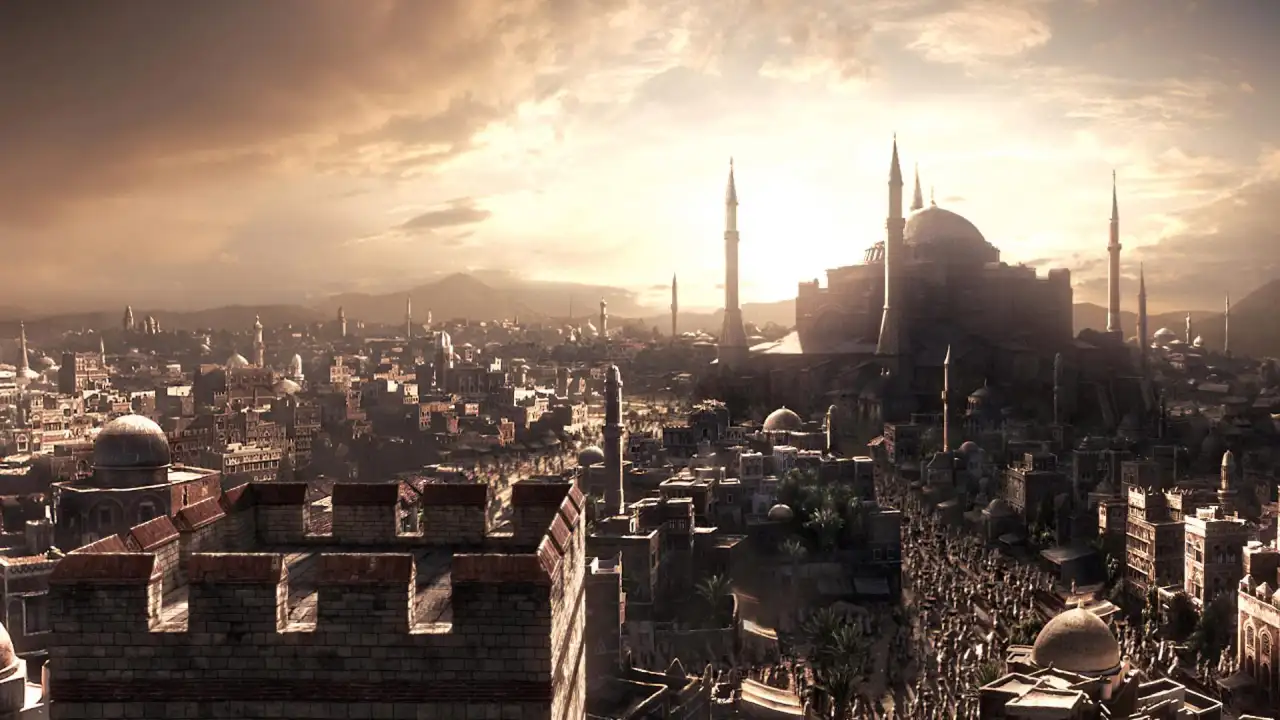

Opening
"Just one more turn." No phrase has cost more sleep, and no game embodies it more completely than Sid Meier's Civilization V. Firaxis took the long-running grand-strategy series and rebuilt its foundations on a single, transformative idea — hexagonal tiles and one military unit per tile — and in doing so reshaped what turn-based 4X strategy could be. Fifteen years later, it is still one of the most played and most beloved strategy games on PC.
The premise is the genre's grandest: take a single settler in 4000 BC and guide a civilization across the whole sweep of human history, founding cities, researching technologies, waging or avoiding war, and racing rivals toward one of five distinct victory conditions. What sets the fifth entry apart is how it turned combat from a matter of stacking numbers into something closer to chess. Because only one unit can occupy a tile, every battle becomes a question of positioning, terrain, and timing, and the strategic depth that unlocks is the beating heart of the game.
It is not without friction. The official AI is famously weak, single sessions can swallow six to twelve hours, and the base game launched having cut systems that expansions later restored. But with its two great expansions and the community's Vox Populi mod, Civilization V matured into something close to a strategy Bible, sustained by a multiplayer scene that has run for over a decade. This review breaks down where it earns its marks, and who should clear their evening before starting.
Story | 7.5/10
Story: 7.5/10Civilization V has no scripted narrative, and it does not need one. Its story is the one you write across six thousand years of human history every time you play — the rise of an empire, the wars it survived or started, the wonders it built, the path it took to greatness. The story score reflects a game whose drama is entirely emergent and player-authored, rich and personal but lacking any crafted tale to anchor it.

Five Victory Paths, Five Kinds of History
The deepest source of story here is the five victory conditions, because each represents a fundamentally different vision of what a civilization can become. Pursue a domination victory and your tale is one of conquest, armies marching across continents to topple every rival capital. Chase a science victory and it becomes a story of enlightenment, your people racing to the stars while the world looks on. A cultural victory writes a narrative of art and influence, a diplomatic victory one of coalition and persuasion at the world stage, and a score victory the quiet chronicle of a balanced empire that simply endured.
What makes this work as storytelling is that the path is never predetermined. You might begin intending a peaceful science game and find yourself dragged into a defensive war that reshapes your whole strategy, the narrative bending with each decision and each rival's aggression. Every campaign becomes a unique history, authored by the collision of your plans with a living, competitive world, and no two ever read quite the same.
Civilizations as Characters
The forty-two playable civilizations give that history a cast. Each is led by a distinct historical figure with their own personality, agenda, and unique abilities, so playing as Gandhi's India is a genuinely different story from playing as Caesar's Rome or Catherine's Russia. The leaders have memorable temperaments — some warmongers, some builders, some schemers — and their behavior in diplomacy gives each game a flavor of interpersonal drama, rivalries and alliances forming across the map. Your neighbors are characters, and their grudges and friendships become part of your story.
The civilizations' unique units, buildings, and bonuses also nudge each one toward a particular narrative arc, so the game subtly encourages you to play to a civilization's historical strengths. It is light characterization, conveyed through mechanics rather than dialogue, but it gives each empire a personality that makes your shared history feel specific rather than generic. Over many games you come to know these leaders the way you know recurring characters in a long-running series — you learn which neighbors will betray you, which will stand by an alliance, which covet your land — and that accumulated familiarity turns each new match into another chapter in an ongoing relationship with the cast of the world.
Wonders, the World Congress, and Community Retelling
The grand sweep of human achievement is dramatized through the world wonders and, in the expansions, the World Congress. Racing a rival to complete the Pyramids or the Statue of Liberty is a tense, story-generating moment, and each wonder you win becomes a landmark in your civilization's history. The World Congress, added in Brave New World, turns late-game diplomacy into a theater of voting blocs and global resolutions, a stage on which your empire's standing in the world plays out in real, consequential drama.
The longest-running narrative, though, belongs to the community. The Vox Populi mod functions as a spiritual expansion that rewrites the game's AI and balance so thoroughly that it amounts to a community retelling of Civilization V itself — a deeper, more challenging history than the official version offers, with smarter rivals whose decisions generate richer and more believable narratives across a game. Yet for all this richness, it must be said plainly that none of it is authored storytelling; there are no characters with arcs, no themes developed on purpose, no ending that means anything beyond your chosen victory. The drama is something you bring to the game, not something it tells you, and that deliberate trade of narrative for systemic depth is exactly what this score weighs. The compensation is that the stories you generate are uniquely yours — the last-ditch defense of a doomed capital, the centuries-long cold war with a hated rival, the cultural empire that conquered the world without firing a shot. Players trade these tales like war stories, and that they emerge from systems rather than scripts makes them feel earned in a way no cutscene could replicate.
Audio | 9.0/10
Audio: 9/10The audio of Civilization V is one of its quiet masterstrokes, a soundtrack so good that it has become beloved entirely on its own. Where the visuals show their age, the music does not — it remains some of the finest work in the strategy genre, and it is a huge part of why a session slips by so effortlessly. This is a near-top score, earned by a score of genuine ambition and craft.
A Theme for Every Civilization
The centerpiece of the audio is the enormous, meticulously crafted soundtrack led by composer Geoff Knorr, running to roughly two hundred tracks. The defining idea is that every one of the forty-two civilizations gets its own theme, rooted in the musical traditions of that culture — and not just one theme, but variations that evolve as your civilization advances through the eras. An early-game theme might be a sparse, folk arrangement that swells into a full orchestral version by the modern age, so the music charts your civilization's growth alongside the gameplay.
This cultural fidelity is the genre's high-water mark. The themes are not generic mood pieces but careful, respectful evocations of each civilization's heritage, so playing as a given nation comes with its own distinct sonic identity. The effect is subtle but powerful: the music constantly reinforces who you are leading and how far you have come, and many players can identify a civilization from its theme alone. It is world-building through sound, and it is executed with a precision few games attempt.
Narration, Atmosphere, and Platform Notes
Beyond the themes, the audio enriches the experience in smaller, well-judged ways. The technology quotes — famously narrated in measured, weighty tones, including the unmistakable voice of Leonard Nimoy in the base game — give each scientific advance a sense of gravity and occasion, a tiny ritual that rewards your progress with a thoughtful line about human achievement. These readings are a small thing, but they lend the game an air of intelligence and reflection that suits its sweeping subject matter.
The ambient and interface audio rounds out the package with restraint. The sounds of construction, combat, and the turn-by-turn rhythm of play are clear and unobtrusive, feeding back just enough information without intruding on the music. Across platforms the experience is consistent on PC, where the game lives, and the community has produced music mods that swap or expand the soundtrack for those who want even more. The soundtrack has had a life far beyond the game itself, performed in concert and streamed endlessly, which is the clearest testament to its quality. It is the rare game score that elevates the whole experience, and it is exactly what earns this dimension its high mark. There is also a clever emotional logic to how the music is deployed: the peace themes are calm and contemplative, perfect for the long, thoughtful turns of empire-building, while war shifts the tone to something tenser and more driving, so the soundtrack quietly tracks the state of your game and reinforces its mood without you ever consciously noticing. Over hundreds of hours, that constant, intelligent musical companionship becomes inseparable from the experience itself.
Visuals | 8.3/10
Graphics: 8.3/10The visuals of Civilization V have aged into a comfortable, readable handsomeness rather than dazzling anyone in 2024. This is a 2010 game, and it shows, but its art direction was always built around clarity and a grounded historical realism rather than spectacle, and that practical foundation has helped it age more gracefully than flashier contemporaries. The score reflects a presentation that is competent and clear rather than cutting-edge.

A Readable, Grounded Historical World
The art direction commits to a realistic, painterly historical style — earthy terrain, believable cities, and units modeled on their real historical counterparts. Crucially, the hex grid that underpins the strategy is also a visual asset: the map is clean and legible, with each tile's terrain, resources, and improvements clearly readable at a glance, which matters enormously in a game where information clarity is the difference between a good decision and a disaster. The world looks like a living map of human history, and it invites the long, contemplative gaze the gameplay demands.
That grounded realism is a pointed contrast to the brighter, more stylized cartoon look its own sequel later adopted, and it is one reason many fans still prefer the fifth game's appearance. It does not try to be exciting; it tries to be clear and dignified, and for a game about the sweep of civilization, that restraint suits the subject. The terrain and city art carry a quiet beauty that rewards the hours you spend staring at them. There is a particular satisfaction in watching a stretch of empty wilderness slowly fill with roads, farms, and growing cities over a long game, the map transforming under your stewardship into a visibly developed civilization. That gradual visual accretion of progress is its own subtle pleasure, and it ties the look of the game directly to the sense of accomplishment the strategy provides.
Leaders, Wonders, and the Texture of an Era
The most expressive visual element is the leader portraits. Each of the forty-two civilizations is fronted by a fully animated, characterful leader who addresses you directly in diplomacy, speaking in their own language with distinct mannerisms and moods. These animated figures are the face of the game's interpersonal drama, and their expressions and gestures do real work in conveying whether a rival is pleased, threatening, or scheming. They give the abstract diplomacy a human surface and remain one of the most memorable parts of the presentation.
The world wonders and units provide the texture of historical progression. Watching your cities sprout famous wonders, and your forces evolve from ancient warriors to modern divisions as the eras turn, gives a satisfying visual sense of advancement across the ages. The units are detailed enough to be identifiable and period-appropriate, and the slow visual transformation of your empire over a long game is a real, if understated, pleasure. Completing a wonder triggers a brief, evocative piece of art and a quotation, a small cinematic flourish that marks the achievement and lends weight to these milestones of human progress. These moments punctuate the long game with little rewards for the eye, and they reinforce the sense that you are not just playing a strategy game but presiding over the grand march of history itself.
Strategic Zoom, Overlays, and Platform Limits
A smart visual feature is the seamless strategic zoom. Pull the camera out and the detailed world resolves into a clean, stylized strategic view — an abstract map of icons and borders that makes the big-picture state of the game instantly readable. This dual-layer presentation lets you swing between admiring the detailed world and planning at the level of continents and empires, and the information overlays for resources, borders, and terrain translate the game's complexity into legible color and symbol. It is thoughtful design that keeps a dense strategy game navigable.
The honest limitations are age and platform. Up close, the textures and effects clearly belong to 2010, and players coming from modern titles will notice, while the game's PC-only nature — Windows, Mac, and Linux, with no console or mobile version — means there is no living-room or portable way to experience it. Within those bounds, the presentation does its real job well: it makes a vast, complex history clear, dignified, and easy to read across the hundreds of hours you will spend with it, which is exactly what this score recognizes.
Combat | 9.2/10
Gameplay: 9.2/10This is the heart of Civilization V and the reason it endures. The gameplay is a near-perfect 4X strategy engine built on one revolutionary idea, and across its expansions and the community's Vox Populi mod it became one of the deepest, most replayable strategy experiences ever made. It earns its towering score by transforming how an entire genre approaches combat, and surrounding that transformation with systems of remarkable depth.

Hexagons and the One-Unit-Per-Tile Revolution
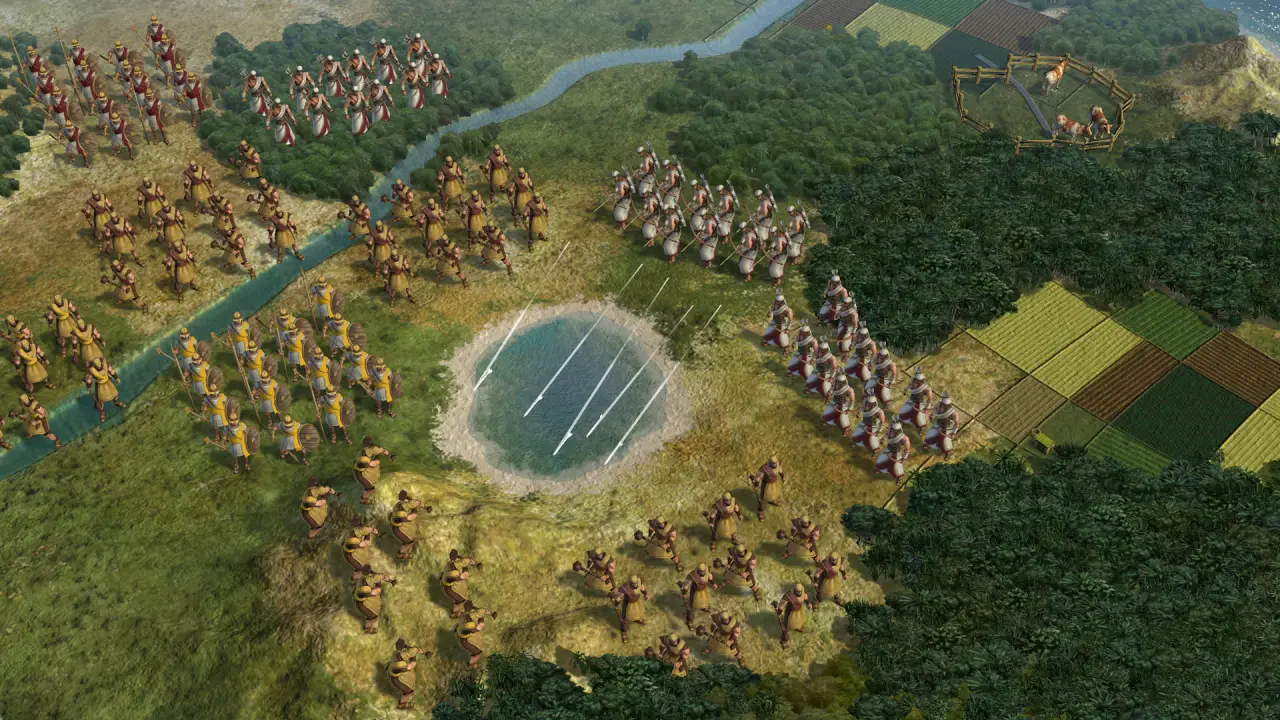
The defining innovation is the move to hexagonal tiles combined with the rule that only one military unit may occupy a tile at a time — the famous "1UPT" system. In earlier games, war was often a matter of piling a huge stack of units onto a single square and grinding it against the enemy's stack, a contest of raw numbers. Civilization V swept that away. With units forced to spread across the map, every battle becomes a question of positioning, terrain, flanking, and ranged support — combat that plays out like chess rather than arithmetic. This reshaped turn-based strategy combat for the entire genre, and it is widely hailed as an industry milestone for good reason: it made fighting a war a genuine tactical puzzle rather than a logistics exercise.
The depth this unlocks is enormous. Terrain matters, unit roles matter, and a smaller, well-positioned army can defeat a larger, clumsier one. Mastering the dance of melee, ranged, and siege units across hex terrain is a skill that takes hundreds of hours to truly refine, and it is endlessly satisfying to execute well.
Five Paths to Victory and the Expansions' Depth
Beneath the combat sits the grand 4X loop — explore, expand, exploit, exterminate — channeled toward five distinct victory conditions. Domination, science, culture, diplomacy, and score each demand a wholly different strategy, so the game supports radically varied playstyles, and the choice of how to win shapes every decision from your first city placement onward. This multiplicity of paths is the source of the game's staggering replayability; a peaceful cultural game and an aggressive conquest game feel like almost different titles. The social policy and, later, ideology systems deepen this further, letting you commit your civilization to a coherent philosophy — tradition or liberty, freedom or order — whose bonuses reward and reinforce your chosen path, so your strategy is expressed not just in what you build but in what kind of society you become.
The two expansions deepen this foundation enormously. Gods & Kings restored the religion system the base game had cut and added espionage, while Brave New World introduced trade routes, the ideology system, and a tourism-driven cultural victory, along with the World Congress for late-game diplomacy. Together they transformed a good game into a great one, layering in the systems that give the late game its richness and addressing the sense that the base release had been stripped too bare.
Vox Populi, the AI Problem, and the Addictive Loop
The community's answer to the game's one real weakness is Vox Populi, a sprawling overhaul mod that functions as a spiritual third expansion. Its most important achievement is rewriting the AI, which is the base game's genuine flaw: the official AI is weak, struggling to use the 1UPT system competently, to the point that one outlet bluntly described it as an AI that cannot play its own game. Vox Populi rebuilds that intelligence and rebalances the whole game, and it stands as one of the best examples in the industry of a community repairing an official design flaw — for many players it is the definitive way to experience Civilization V.
The other honest caveats are matters of fit rather than quality. A single session routinely runs six to twelve hours, fed by the infamous "one more turn" compulsion, which is glorious for some and a genuine time-sink hazard for others, and newcomers frequently hit repeated frustration in their first fifty hours as the dense systems and steep curve overwhelm them. But for the player who clicks with it, the gameplay is as deep, varied, and endlessly replayable as the strategy genre offers — which is exactly what this near-perfect score reflects. The defining quality is how every system feeds the next: your tactical victories win the wars that secure the territory that funds the science that unlocks the policies that drive your chosen victory. Nothing exists in isolation, and learning to orchestrate all of it toward a single goal is a mastery curve that genuinely never ends, which is why players are still discovering new strategies fifteen years on.
Content | 9.4/10
Content: 9.4/10Content is Civilization V's highest score, and it is thoroughly deserved. Between a generous base game, two major expansions, a transformative community overhaul, a vast workshop, and fifteen years of sustained play, the sheer volume on offer here is staggering — and because so much of it is replayable strategic depth rather than finite content to consume, the practical playtime approaches the limitless.

The Base Game and Two Transformative Expansions
The base game alone is substantial: eighteen civilizations, five victory paths, a full tech tree, social policies, city-states, and the entire arc of history from antiquity to the space age. That is hundreds of hours of strategy before a single addition, and with eighteen distinct civilizations each encouraging a different approach, even the base experience offers enormous variety in how a campaign can unfold. Multiple map types, difficulty levels, game speeds, and victory conditions multiply that further, so no two games start from the same conditions. But the two expansions are what elevate the content into a different league. Gods & Kings and Brave New World together add more than five times the base content — new civilizations, the religion and espionage systems, trade routes, the ideology system, tourism, the World Congress, and a wealth of new wonders, units, and scenarios.
The transformation is so complete that the expansions are not optional extras but essential parts of the experience; the consensus is that Civilization V is only truly complete with Brave New World installed. Bought together as the complete edition, the game offers a depth and breadth that few strategy titles can match, with each civilization and victory path opening a different hundred-hour campaign. The expansions also added a slate of focused scenarios — self-contained scenarios with their own rules and objectives, from medieval conquests to a steampunk alternate history — that provide structured, bite-sized alternatives to the open sandbox, broadening the package well beyond the standard game.
Vox Populi and a Massive Workshop
On top of the official content sits the third great layer: the community. The Vox Populi mod functions as a spiritual third expansion that roughly doubles the game's content again, overhauling systems, rebalancing everything, and rebuilding the AI into a genuinely challenging opponent. For a huge segment of the player base it is the definitive version of the game, and it is free — a staggering volume of additional, high-quality content contributed by the community over many years.
Beyond Vox Populi, the Steam Workshop hosts an enormous library — more than thirty-three thousand mods — spanning new civilizations, maps, scenarios, balance tweaks, interface improvements, and total conversions. Whatever you want from the game, someone has likely built it, and the toolchain for finding and installing it is mature. This combination of an essential overhaul mod and a colossal workshop means the content here is, for the engaged player, effectively without end. The modding ecosystem is mature enough that whole communities organize around particular overhauls, historical scenarios, and balance philosophies, so the game you play can be tailored precisely to your taste — a more historical experience, a more competitive one, a more relaxed one. Few games hand their players this much power to reshape the experience, and the result is that two people's Civilization V can be meaningfully different games built on the same foundation.
Fifteen Years of Life and a Lasting Legacy
What ties it all together is longevity. Fifteen years after release, Civilization V remains one of the most-played strategy games on Steam, sustained by its depth, its mod scene, and a dedicated multiplayer community — the NQ competitive scene has run organized multiplayer leagues for over a decade, turning the game into a genuine strategy esport. The cumulative sales of around fifteen million and a 96-percent-positive rating held across all those years testify to a game that simply refuses to fade.
Its standing is secured by more than numbers. Even with its acclaimed sequel available, a large and vocal portion of the community still considers the fifth entry — especially with Vox Populi — the better game, prizing its elegance, balance, and grounded presentation. That a title can remain the preferred choice over its own successor years later is the rarest kind of endorsement. Measured against any strategy game of its era or since, the content matrix here is among the deepest in the genre, and the score reflects a game that gives its audience more than a lifetime of play.




Comments 0
Share your game review
Join the discussion and share your review of this game.
No comments yet. Share your thoughts on this review.