
Slay the Spire 2
Price History
Past 36 months · Updated dailyPrices cover Steam and 39 authorized stores; only legitimate offers are counted. The chart shows weekly market-wide lows and Steam's official price across the past 36 months.
01About Slay the Spire 2
Slay the Spire 2 blends deckbuilding with roguelike climbs through a dangerous tower. Shape a strategy from cards, relics, and potions, then adapt to changing foes and challenges. You can play alone or team up with as many as four players. Steam players rate it 61%% positive across 187,071 reviews.
Credits
Lowest recorded in 36 months
$24.992026-03-05 · SteamBase game · same records as the chart above; USD history, not a regional Steam low.Language support
| Language | Interface | Subtitles | Audio |
|---|---|---|---|
| Simplified Chinese | Yes | — | — |
| English | Yes | — | — |
| French | Yes | — | — |
Show 11 more languages
| Language | Interface | Subtitles | Audio |
|---|---|---|---|
| Italian | Yes | — | — |
| German | Yes | — | — |
| Spanish | Yes | — | — |
| Japanese | Yes | — | — |
| Korean | Yes | — | — |
| Polish | Yes | — | — |
| Portuguese-Brazil | Yes | — | — |
| Russian | Yes | — | — |
| Spanish-Latin America | Yes | — | — |
| Thai | Yes | — | — |
| Turkish | Yes | — | — |
Steam PC edition data · 2026-10-19
02Before you buy
Roguelike deckbuilding
Build a distinct deck on each climb, adapting your strategy to shifting foes, relics, and potions.
Modes and controls
Play solo or cooperate with up to four players. The Steam PC version has full controller support.
03Frequently asked questions
Are climbs the same each time?
Each climb brings changing challenges, with cards, relics, and potions shaping different strategies.
Does it have co-op?
You can climb alone or cooperate with up to four players.
How many characters are playable?
There are five playable characters, including two new ones.
“Heads up if you've memorized the original: the sequel guts your favorite infinite combos and makes you relearn the climb. The HP-burning Necrobinder and four-player co-op are genuinely fun — but it's still Early Access with monthly balance swings, so anyone wanting a settled build can wait.”
Our Verdict
Put every fact on the table and the sequel is a tower still under construction whose frame already stands tall. The overall 7.8 holds both truths at once — the brilliance of the combat (9.2) and the turbulence of early access (a 63% reputation). It's an honest compromise.
A 574,000-concurrent phenomenon, and the two review-bomb waves it earned

Start with how big it is. 5.3 million copies in the first month, roughly $108 million in revenue for Mega Crit, and a launch peak of 574,638 concurrent players — almost matching Silksong's record, briefly outpacing Marathon, Arc Raiders, and Resident Evil Requiem, the largest Steam launch of 2026 and the highest-concurrent roguelike in history. For a minimalist indie with no major publisher and no marketing spend, those numbers were snowballed almost entirely by the goodwill the first game banked — and by a price of admission low enough that almost any PC could run it. In March 2026 it reportedly topped Steam's monthly best-seller chart outright, ahead of much larger releases like Crimson Desert.
But attention cuts both ways. Two review-bomb waves — the first over the infinite-combo cull, the second over Doormaker, an Act 3 boss that shut down too many archetypes at once — dragged the rating from Overwhelmingly Positive down to Mixed. Nearly 80,000 negative reviews have piled up, roughly fourteen times what the original drew across nine years. At its core this isn't a collapse in quality; it's a public tug-of-war between "the fun players want" and "the long-term health the developer wants."
Mega Crit's stance is refreshingly candid: "this progress will not be linear, and no change is necessarily permanent" — and it later rolled several contested nerfs back on beta. A Steam analyst put it well: judged by the raw numbers, "in any other case you would say this game is dead," yet the bombing barely dented sales at all.
Who should climb this tower now, and who should wait

The practical call: if you love the original's draw-and-trade tension and can live with a living build that re-tunes its balance monthly and lurches between versions, jumping in now pays off — wider builds than the original, two genuinely new classes, friends to climb with, and a front-row seat as the tower takes shape. But if you want a settled, finalized balance and would resent your favorite build getting axed by the next patch, the rational move is to wait for 1.0. And anyone simply testing whether they vibe with the genre at all can start with the original — finished, cheap, and rock-solid. In the end, much of that 63% is people rating "am I having fun in this exact patch," while the 9s from critics are rating "how good is this underlying design." They aren't grading the same thing — and your job is deciding which one you care about more.
There's a more grounded reference point, too. That Steam analyst noted that judged purely on the scale of the bombing, "in any other case you would say this game is dead," yet sales barely flinched — 5.3 million in a month, a steady 100,000 to 300,000 concurrents long after launch. That's a rare and telling signal: the overwhelming majority of people actually playing voted with their feet, and the negative reviews stem more from the emotional whiplash of each balance change than from any verdict on the game itself. So if you're on the fence, drop that glaring 63% back into this context and read it again. It isn't a quality alarm. It's the sound of a tower popular enough that every controversy gets amplified, taking shape in full public view. All you have to decide is whether you want to be on the scaffolding now, while the design is still being argued into shape, or show up once the dust settles and climb a tower someone else helped finish.
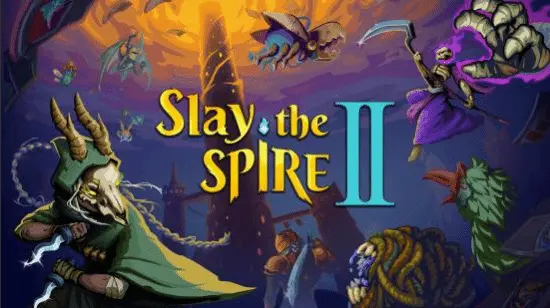
Latest news about Slay the Spire 2
Slay the Spire 2 Cut Its Rainbow Easter Egg, but Players Are Still Arguing
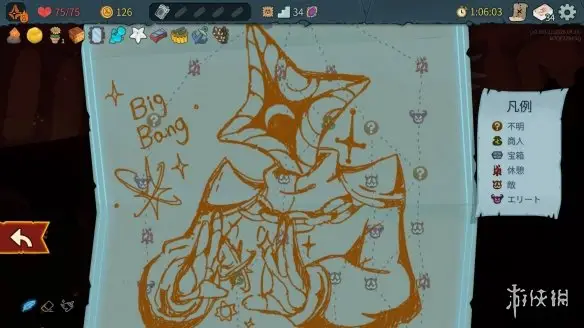
Does Slay the Spire 2's 25% win rate show it understands players better?
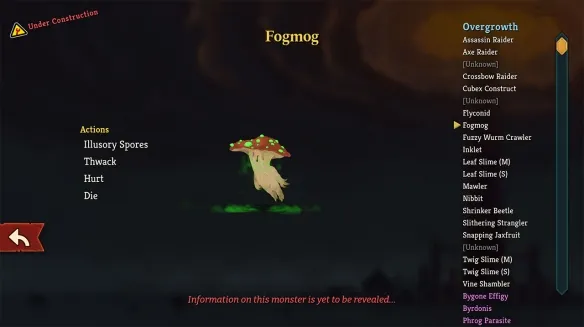
Slay the Spire 2 Patch 0.105 Replaces Door Creator With Eternal Hourglass
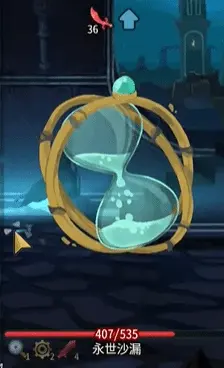
Slay the Spire 2 Swaps Its Act 3 Boss as The Chronomancer Replaces The Door MakerPopular Steam reviews
Native-language selection · 10 reviewsSelected helpful reviews in this language show both recommendations and criticisms. This selection does not represent the overall positive rating; opinions reflect the version reviewed.
Anita Sarkeesian is a consultant for Slay the Spire 2, grossShow moreShow less
Why are we review bombing the game???? The balance patch is not that bad, the game is still fun, the game is in early access and you should expect many balance changes, and THE PATCH ISN'T EVEN ON THE MAIN BRANCH ITS ON THE BETA FOR TESTING. You should ignore all the recent negative reviews complaining about the balance patch. Edit: I did not expect this to become the top review on steam. When I wrote this, I was annoyed at the fact that many people were using what I thought was the wrong way to give feedback, and made an attempt to counteract that without very eloquent writing. I still think that using steam reviews are the wrong way to go, as it may permanently damage the game's reputation, and therefore the developer's will to work on it as I love this game. However, I can understand the frustration when the developers make a bad change. I think this situation is happening because a large portion of the player base has a different vision of what the game should be than the developers, primarily over decks that consistently go infinite. There will be times where the developers make bad balance changes, and there will be times where the balance changes feel bad to how we were playing the game, but make it a better product in the end. As a reminder, STS1 was in early access for two years before its official release, and STS2 has been in early access for not even three weeks now. Let's be patient and give the developers the time they need to make a sequel that lives up to player expectations.Show moreShow less
I love this game but it has a lot of flaws that need to be sorted out. The main problem is just in some of the fight designs. Too many fights are just immediate number checks (block for 27 NOW), especially in elite fights where the design often seems to just be, have a bag of hit points come out swinging every turn forever, and also buff strength every few turns (normal->multi->buff->repeat) with little differentiation. The fights have lost a lot of their identity compared to the 1st game. I don't feel like I'm building to solve particular problems or having to change how i play for many fights. the card game core is solid, but it feels like raw number vs number in more fights than not with little differentiation on how you're getting to that point. sometimes you get something interesting, but usually you don't. Some design highlights right now are: Ancient Bonuses every act, Act 2 Bosses (all are differentiated and interesting), having 2 versions of Act 1 (helps keep early game from becoming completely mundane). If they would fix up a few of the worst fights by lowering their numbers but giving them more particular obstacles to overcome, this game has the potential to easily surpass the original. I hope this review ages horribly, because I really love this game for what it could becomeShow moreShow less
Imagine if Slay The Spire had better art, more animations, and more content. Now add new systems to make each run different and unlocking things more fun. In some ways, it feels more polished than the first Slay The Spire, even if this is in early access.Show moreShow less
A Gap in Perception — and Why Some Players Are Frustrated If you mainly read Reddit or English Steam reviews, it might seem like Slay the Spire 2 is doing very well, and that most criticism comes from players who are overreacting or don’t understand the game. However, the overall Steam rating is mixed, and Simplified Chinese reviews are significantly more negative. Simplified Chinese players also represent a large portion of the player base. This gap is not just about “who is right or wrong.” It is also about differences in access, communication, and player habits. 1. Why many Chinese players leave feedback on Steam Some players ask: why not use Discord or Reddit? For many players in mainland China, those platforms are not easily accessible. Because of this, Steam reviews become one of the few public and visible channels to communicate with developers. When feedback is repeatedly expressed but players feel it is not reflected in updates, negative reviews become a way to make that feedback visible. 2. Paid Early Access is still a product Even in Early Access, the game is a paid product. Players spend real money and naturally evaluate the experience they receive. Leaving a negative review is not about “punishing the game,” but about reflecting the current experience and expectations. 3. Why negative reviews can appear suddenly Review behavior differs across communities. Among many Simplified Chinese players, there is a tendency not to actively leave reviews when a game is simply “fine.” But when frustration crosses a certain threshold, feedback appears quickly and in large numbers. Because of this, what looks like “review bombing” can actually be a form of delayed collective expression — many players reaching the same conclusion at roughly the same time. From that perspective, it can feel similar to a kind of online “protest”: not organized in a strict sense, but driven by shared experience. 4. Who is actually affected by these changes? Another common claim is that negative reviews come from inexperienced or low-skill players. However, many of the strongest criticisms come from players with high playtime and experience, especially those playing at higher Ascension levels. Changes at lower difficulty levels often have limited impact, so newer or low-difficulty players are less likely to feel strongly enough to leave negative reviews. The fact that feedback is appearing now suggests that players who engage deeply with the game are reacting to changes that affect its consistency and depth. This is less about “not understanding the game,” and more about expectations formed through long-term play. 5. Specific gameplay concerns Act 3 double boss design When encountering both Doormaker and Experimenter in Act 3, they push players toward opposite deck-building strategies: Doormaker favors larger decks and long fights Experimenter discourages large decks and rewards smaller ones This creates a situation where players are asked to prepare for two conflicting conditions at once. It feels less like a meaningful challenge and more like internally conflicting design. Balance changes to Silent Hunter Before the April 18 update, Silent Hunter was widely considered too strong. A nerf was expected. However, after the April 24 update, many previously viable builds became significantly weaker or no longer function as before. Instead of gradual adjustment, the changes feel abrupt and extreme. Large swings like this can be frustrating, especially for players who spent time learning those builds. 6. About the term “kneejerk reactions” The April 24 patch notes included the phrase “kneejerk reactions.” This term usually refers to impulsive or purely emotional responses. When used to describe large-scale player feedback, it can feel dismissive. From a player’s perspective, many of these reactions are based on real gameplay experience, not just momentary emotion. When a large number of players independently express the same concern, it is worth treating that feedback as a signal rather than reducing it to “overreaction.” Clear communication matters. Even when developers choose not to follow feedback, acknowledging its reasoning helps build trust. 7. Final thoughts I still believe Slay the Spire 2 can improve over time. Buying into Early Access is itself an act of trust. But feedback from a large portion of the player base should not be dismissed as noise or simply emotional reaction. Most players leaving negative reviews are not trying to harm the game. They are expressing frustration because they care about its direction. And ultimately, both players and developers share the same goal: to make the game better.Show moreShow less
Start run. Get good cards. Feel unstoppable. Die to something stupid. Sit there for 10 seconds. Start another run. One run. One more. One more. One more. Love this game. Works good on steam deck. Even played it while work, whoopsie.Show moreShow less
Anita sarkeesian? Really? In 2026?Show moreShow less
Review bombing a roguelike for being challenging is incredibly dumb and there is no universe in which a game this good deserves "Mixed" reviews.Show moreShow less
Note: The following content is also posted in discussion section of STS 2, just to increase the chances that the developers will see this feedback. I have just 500 hours in STS 1 and only about 50 hours in STS 2, so the views expressed here are based solely on my current limited understanding of the games. A failed attempt at balancing. It seems the development team has noticed the issue where "infinite loops" are becoming too common and gameplay is homogenizing in high-difficulty environments. However, the problem lies in the fact that they haven't addressed the root cause: players don't necessarily "prefer" infinites; rather, under current environmental pressures, they are forced into cycling and infinite-based builds. In STS 1, building a high-stat scaling deck that didn't rely on infinites had a relatively clear and stable trajectory. Players would typically prioritize picking up high-value attack cards in Act 1, manage their potions wisely, and defeat elites with minimal HP loss to snowball via relics. Subsequently, at the beginning of Act 2, they would strive to obtain key energy boss relics, using the extra energy and the raw stats provided by relics to establish foundational offensive and defensive capabilities. By thinning the deck to reduce the density of Strikes and Defends, improving draw quality, and using power cards to scale key card effects, a successful stat-based deck prototype would be established. In STS 2, however, this construction logic has almost entirely collapsed. First is the significant increase in elite intensity. Compared to STS 1, the HP and damage output of elites in the sequel have seen a marked increase, yet the player's starting deck has received no corresponding buffs. This leads to a direct consequence: players taking massive damage during Act 1 (commonly as well as Act 2) elite fights, forcing them to choose "Heal" at rest sites instead of "Upgrade" (a trade-off that is particularly lethal at high difficulties where campfire resources are already scarce). Meanwhile, the average utility of the core reward—relics—has relatively declined. Many relics remain at the power levels of STS 1, meaning their marginal utility is significantly diluted in an environment of overall stat inflation. The result is a severe imbalance between risk and reward regarding elite hunting. A failed elite encounter often signifies the collapse of the entire development chain (In high-difficulty environments, even regular enemies become significantly more lethal, further increasing the risk of taking heavy damage when engaging elites), leading to a rapid downward spiral. This negative feedback is so intense that after a few experiences, players instinctively avoid elite paths and seek ways to win that do not depend on relic scaling—such as winning through high-frequency cycling and repetitive card play. Secondly, the most critical resource for non-cycling builds—energy relics—is lacking. In STS 1, the probability of obtaining energy boss relics was notably higher; in the sequel, energy relics have lower appearance rates, but their downsides are harder to stomach, and they even must compete with a wider range of superior alternatives. This has turned energy into a rare commodity. However, in both STS 1 and 2, trying to play power cards to scale a deck while simultaneously handling offense or defense on a mere 3 energy is extremely difficult. Consequently, players naturally lean toward picking low-cost, 0-cost, and energy-generating cards. By pairing these with drawing cards, they increase their actions per turn to repeatedly generate low-cost stats and compensate for the lack of base energy. Finally, there are design issues with the stat-heavy cards themselves. Some core scaling cards (e.g., Forge or Doom) struggle to keep up with the power creep of the current environment, whether in terms of base numbers or scaling mechanisms. This means that even when players attempt a traditional scaling route, they often fail to establish an adequate power curve. Therefore, while "weak scaling cards" are indeed an issue in the current EA stage, simply making minor numerical tweaks to a few cards is still far from solving the problem. Players attempting stat-based builds are actually facing triple pressure: high early-game environmental stress, insufficient relic returns, and scarce base energy. Until these core pain points are addressed, prioritizing nerfs to the cycling system will only further worsen the player experience—it is akin to just putting a band-aid on a broken leg and then taking away the crutch. More importantly, this approach to adjustment violates player psychological expectations. From the perspective of player experience, the acceptance of balancing depends not just on whether the "change is logical," but whether the "order of changes is logical." When players are suppressed for a long time and forced to choose a specific dominant solution, they view that solution as a "tool to combat an unfair environment." If that tool is nerfed before the environmental pressure is relieved, players do not feel the game is "more balanced"; they feel their "reliable path has been stripped away." Conversely, if the design first addresses the negative experiences—reducing early-game pressure, boosting relic utility, and increasing the stability of energy acquisition—stat-based scaling will once again become viable with a reasonable margin for error. Players will then naturally begin to diversify into more varied build paths. Under such a premise, nerfing overly dominant cycling or infinite systems would be understood by players as "reasonable convergence" rather than "forced suppression." Here is another illustrative example: in this beta adjustments, the developers nerfed Vakku’s Preserved Fog. From a purely numerical perspective, this relic—effectively equivalent to an “instant remove 4”—does appear slightly overpowered, so its inclusion in the nerf list is not entirely unreasonable. However, if one actually considers player experience, it becomes clear that this is not where the core issue lies. Players are widely complaining that Vakku’s event pool is filled with “disaster options,” sometimes even forcing them to choose between three unacceptable negative outcomes. Under such consistently negative experiences, players naturally develop a form of compensatory psychology: they begin to view strong options (Preserved Fog or Distinguished Cape) as a form of “payback” for the otherwise poor event quality. Subconsciously, these strong options are perceived as balancing out the bad ones. As a result, their value is no longer purely numerical—they also serve an important emotional function by alleviating frustration. In this context, if the overall structure of options remains unaddressed, but these “lifeline” choices are nerfed first, players will not perceive this as a balance adjustment. Instead, it feels like the removal of their only source of positive feedback. The resulting frustration (or even anger) is both natural and unavoidable. A more effective approach to balance would be to first improve the overall experience—by adjusting the mechanics or frequency of these disaster options, making the choice space healthier as a whole. Only then should outlier strong options be brought back in line. In this way, players are more likely to interpret the changes as “the environment becoming better,” rather than “the only good things being taken away.” A good balance design should strive to minimize this sense of deprivation. In other words, players can accept "nerfing the strong," but only if they already have "usable alternatives." When the environment itself moves toward health, balancing adjustments are seen as optimizations; when the environment remains imbalanced, any nerf to the mainstream solution is magnified as further damage to the player experience.Show moreShow less
Source: original Steam user reviews. Helpful votes are an archived snapshot, not live data. Last collected: 08/14/2026.
