




















Opening
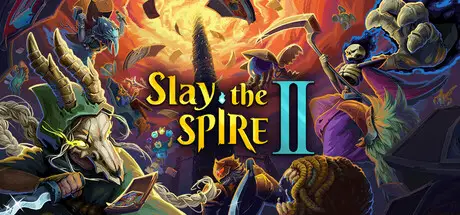
Here is a contradiction worth sitting with. Slay the Spire 2 currently wears a 63% "Mixed" badge on Steam, yet it is also one of the best-selling, most-played games of 2026 — 5.3 million copies in its first month and a launch peak of 574,638 concurrent players, a hair under Silksong's record. How does a minimalist indie deckbuilder with no major publisher behind it carry "phenomenon" and "review-bombed" in the same breath?
The answer is a genuinely brave decision. Mega Crit took the optimal lines it had spent eight years polishing — the ones every veteran had memorized — and tore them down on purpose. The original Spire didn't just join the roguelike-deckbuilder genre; it more or less wrote the rulebook everyone else now follows. The safe sequel adds a few cards and ships. This one guts your favorite infinite combos, hands you a class that pays for cards in blood, and bolts on four-player co-op for the first time, forcing every returning player to relearn the climb from the ground up.
Some loved that — for them, this is exactly what a sequel ought to do. Some torched it with a negative review the moment their pet build got nerfed. Both reactions are honest, and both are in this review, because the gap between them is the whole story of why this game looks the way it does on a Steam page right now. A 9 from critics and a 63% from players aren't a contradiction; they're two different questions being answered at once. The question I want to answer is simple: this tower is still under construction, but the frame is already standing tall — is it worth climbing right now, and if so, by whom? Because the honest answer isn't a flat yes or no. It depends entirely on what kind of player you are, how much patch-to-patch turbulence you can stomach, and whether you'd rather help shape a game as it grows or wait for the finished thing. That's the conversation the rest of this review is here to have with you.
Story | 6.0/10
Story: 6/10Let me put it bluntly up front: story is the lowest score in this review, a 6.0. If narrative is what you're here for, temper your expectations. But to be fair, storytelling was never the Spire series' center of gravity, and the sequel doesn't overturn that — it simply gives you a little more than the first game did. Holding it up against script-driven games isn't a fair fight; you wouldn't dock a sudoku book for lacking a plot, and a roguelike asks to be judged on a different axis entirely. I'm leading with this section purely so nobody buys for the wrong reason — the parts that actually carry this game come later, and they carry it a long way.
Forget a main plot — a roguelike's "story" grows out of your restarts

In the roguelike-deckbuilder genre, "story" was never the same animal as it is in a traditional RPG. There's no through-line tugging you forward; the narrative is something you assemble run by run. The sequel makes a real, if modest, effort here, introducing a Timeline-style cross-run meta-progression that drips out fragments of lore and backstory each time you finish a lap, giving "climb again" a reason beyond the mechanical itch. The first game had essentially no narrative to speak of; Game8's verdict is that the series' worldbuilding "finally found footing in its sequel." Note the phrasing — footing, not depth. Picture it as being handed the corner of a map: it tells you this world has a past, but there's no main quest dragging you along and no character arc that haunts you after you log off. You will never start another run because you need to know "what happens next"; you start another run because you want to finish that build. That's the nature of the genre, not a failing unique to the sequel — it just didn't walk many extra steps down this road, and frankly it didn't need to in order to be great at the thing it actually is.
Characters tell their stories through mechanics, not cutscenes

The smartest thing the sequel does with story is let characters speak through their mechanics rather than long cutscenes. Each of the five classes carries its own background and hidden lore, but the way you come to understand them is by playing them. The Necrobinder is a vengeful Spireborn lich — players even theorize she's a resurrected Watcher — and you truly "read" her not in a cutscene but in the moment you trade away your own health to summon back a key card and execute an enemy with Doom. That gambler's, debt-paying temperament is her characterization. You aren't told the Necrobinder is obsessive; you feel her obsession in the act of spending life for one more card. The Regent's hunger for control, forging a Sovereign Blade in the middle of a fight, works the same way — personality written into the inputs rather than the dialogue box. Pair that with Alternate Acts reshaping the structure of each run, and the narrative mood shifts along with it.
As "mechanics-as-narrative" goes, it's done well within its lane, and it's a smarter use of a deckbuilder's limited story budget than tacking on cutscenes nobody asked for. But however clever the trick, it still can't carry a player who actually wants a story to follow. The takeaway is simple: don't buy this game for its plot. Its strengths lie elsewhere — and they run deep. What the Timeline and the class lore do accomplish is give the climb a faint sense of place, a reason this tower exists beyond "here is a structure to ascend," and for a series that previously offered nothing on that front, even a faint sense of place is a step forward. Just don't mistake a step for a journey.
Audio | 7.5/10
Audio: 7.5/10Sound here is a capable supporting act. I'm scoring it 7.5 — it's solid work, just not the kind of soundtrack you'll hunt down to listen to on its own. For a roguelike deckbuilder, that's the right trade.
A score that knows when to hush and when to roar

The music has a good sense of proportion. While you're climbing and drafting, it lays a quiet bed underneath without grabbing your attention; the instant a boss fight begins, it swells and pushes that "miscount this volley and you restart" pressure up where it belongs. The quieter the climbing music stays, the more weight that boss-fight roar carries — you can feel, in an instant, that this fight is different. That sense of timing serves the core of the game: it understands that what you care about is how the cards in your hand play, not how flashy the background track is. Music was never this genre's calling card, the sequel never pretended otherwise, and keeping it in the supporting seat — propping things up without hogging the spotlight — is a smart, restrained call. Your attention belongs on the board, on the cards in your hand and the intents above the enemies, and a score that fought for that attention would actively get in the way. Restraint here isn't a lack of ambition; it's the soundtrack understanding its own job and quietly doing it without ever asking for any credit.
Card flips, plays, and hits: an audio stamp on every decision

The real care went into the sound effects. Flipping a card, playing it, connecting with an enemy — each one is crisp and immediate. Turn-based strategy lives on feedback; you play a card and need an instant audio confirmation that it landed, and that confirmation makes the decision feel tactile. Co-op raises the bar: four players firing off plays at once, with triggers, Poison, and Doom effects layering together, and the audio has to keep its tiers clear instead of collapsing into mush so you can still pick out which feedback is yours. The sequel handles this gracefully, sidestepping the "everything blares, nobody can tell what's happening" trap that sinks so many multiplayer games.
The sound never dazzles, but every piece of it is honestly working for the gameplay — no immersion-breaking weak spots, no standout you'd seek out an OST for. 7.5 fits: it's the invisible craft you won't notice while playing, and would instantly resent if it were done badly.
Visuals | 8.0/10
Graphics: 8/10On visuals, the sequel evolves steadily and refuses to overreach. I'm giving it 8.0. It chases no ray tracing, no 4K trophy numbers — a side-on turn-based card game doesn't need them — but everywhere it actually cares, it's sharper than the original.
The hand-painted fantasy survives, while the art and animation quietly level up

Rebuilt on a new technical foundation, the sequel keeps the clean hand-painted fantasy look of the first game while visibly upgrading resolution, character portraits, and the density of combat animation. Card effects land with more weight, enemy attack animations have more theater, and boss entrances carry real cinematic punch. Gamersky's review singled out the "refined art assets and evolved animation." What's rare is the discipline: none of these upgrades trample the original's focus-on-the-decision, never-steal-the-show visual character. It looks better without getting busy. That restraint matters more than it sounds — plenty of games, handed a bigger budget, can't resist drowning the screen in particles until you can no longer read the board. The bigger animations land on the moments that deserve them, a boss reveal or a run-defining relic, while the routine business of drafting and blocking stays calm and clean. That selectivity is the whole trick: spectacle costs attention, and the sequel spends that currency only where a flourish actually earns its keep, never on the dozens of small decisions you make every single turn. The sequel knows it's a thinking game first, and even as the art evolves, legibility always sits ahead of spectacle. And since the combat itself is more complex now — new debuffs, relic durability, more variables to track — a cluttered interface would have sunk casual players outright. It never let "prettier" become "harder to parse," and that sense of proportion is worth more than the prettiness itself.
One screen, all the information: the most underrated job a strategy game's art can do

For a strategy game, the visuals' top job isn't to look good — it's to let you read the situation at a glance. The sequel is rock-solid at this invisible craft: enemy intents, your block value, the cards in hand, the statuses on the field, all readable in a single screen without menu-diving. That clean legibility is the bedrock under all that high-density decision-making; you do the math fast because the information is laid out plainly. And remember the sequel's combat is genuinely more complex than the original's — extra debuffs, relic durability, more moving parts to track — so a cluttered interface would have buried casual players outright. The art evolved without ever turning into "I can't tell what's happening," and that discipline is worth more than any single prettier asset. The monsters, relics, and random events inside the tower are also more bizarre and varied than before, with something fresh to look at on every floor up. Status icons, energy counters, and the new durability meters on relics all sit where your eye expects them, so the extra mechanical load the sequel piles on never translates into visual noise. You spend your attention on the decision, not on decoding the screen.
And one last point worth flagging: the minimalist style is a feature, not a compromise. Because it asks almost nothing of your hardware, old machines run it smoothly, and that's quietly part of how a no-marketing-budget indie snowballed past five million sales — "nearly everyone can run it" is an enormous tailwind. The 8.0 isn't for fireworks; it's for a game that knows exactly who it is, where to spend its art budget, and just as importantly, where to hold back.
Combat | 9.2/10
Gameplay: 9.2/10If you only read one section, read this one. The combat didn't break in the move to a sequel — it got tighter, harder, and more worth chewing on. I'm scoring it 9.2, the highest mark in this review. The catch is that the same decisions earning that score are exactly the ones that triggered two review-bomb waves. It touched the thing you assumed was sacred.
The infinite-combo cull: a bet that "finding the answer" is more fun than knowing it
Deep into the original, every veteran knew the secret: a handful of builds, once they got rolling, could play infinite cards and stack infinite damage until the run became a solved equation. That rush of "I broke the system" is precisely why a lot of people sank a thousand hours into the first game. The very first big swing the sequel made was the March 20 v0.100 patch, which systematically nerfed and capped the infinite engines across all five classes.
The day that patch landed, the approval rating cratered to 16%, with players spitting that this was "preventing players from deckbuilding in a deckbuilder." But from a design seat, Mega Crit's logic is clean. The moment one build reliably loops, you stop making choices — every run sprints toward the same solved answer, and the genre's beating heart, the demand that you re-solve the puzzle every time, quietly dies. Killing the infinite hands the puzzle back to you. It is a gamble, and the wager is whether veterans can let go of an answer they've leaned on for eight years. The bet isn't crazy, either — the players most furious about losing their infinites are, almost by definition, the ones who'd already exhausted the original's puzzle and were coasting on a solved solution. Hand them a fresh puzzle and the loudest critics may end up the longest-term players.
Defense stops being filler: now every turn is a ledger you have to balance
The original leaned aggressive; plenty of the time, if your damage was high enough, blocking barely mattered. The sequel re-weighs that scale and shoves defense to the center. New debuffs and smarter enemy intents force a real calculation each turn — is this card a shield or a sword, and how much block do I actually need to survive this volley? The new Durability system on relics pushes the math further still: where the first game's best relics were "grab it and it works forever," some now burn out after a few activations mid-fight, so even "which turn do I spend this trigger on" becomes a question. Per-turn decision density climbs noticeably above the original, and mindless snowballing gets a lot harder. That's exactly why it plays more tiring and, for the right player, more addictive — you're never coasting, you're always doing arithmetic.
The Necrobinder and the Regent: two classes that make "all-new mechanics" mean something
Plenty of sequels reskin a class and tweak some numbers. These two are the real thing. The Necrobinder is a vengeful Spireborn lich built around the Graveyard: cards you exhaust or discard don't vanish, they wait in the graveyard to be summoned back, like a second hand operating outside your deck. Layer on Doom — stack it past a threshold and the enemy is simply executed — and you get a gambler's playstyle no class in the first game offered. She even fields a skeletal hand minion, Osty, with its own health bar that soaks hits for her. The Regent runs a different engine entirely, forging cards mid-combat through Stars, Forge, and the Sovereign Blade, dragging deckbuilding from the meta-layer down into the fight itself. These two are why the game can call itself a sequel rather than a remaster — it genuinely hands you ways to solve the climb that the original never had. Stack them against Monster Train, which carved its identity from two-lane defense, and on the pure axis of "every run forces a fresh answer," this is still the front of the pack.
The Doormaker saga: how one boss lit up a community, then got deleted outright
If the infinite-combo cull was the first storm, Doormaker was the second. After its rework, this Act 3 boss cycled through three debuffs: it could stop you drawing, remove a card the moment you played it, or drain your energy. All three landed squarely on the thing Spire players prize most — getting an engine rolling. Objectively, its kill rate and damage were actually a touch lower than the other Act 3 bosses, so the fury was never about difficulty. It was about "you won't let me play the cards I built." In a deckbuilder, being systematically barred from building is a deeper kind of frustration than simply dying, and players let Mega Crit hear it.
The response was drastic. Rather than nudge the numbers, the studio removed the boss entirely and dropped in a new one called Aeonglass. The twist is that plenty of players then admitted Doormaker had actually been one of the easier Act 3 encounters, and that yanking it felt "like a bit of an overreaction." That whole episode captures the sequel's current development philosophy better than any patch note: move fast, swing big, and when a swing misses, overhaul or even reverse it. For a prospective buyer, the takeaway is concrete — what you purchase today is a build still in violent motion, and whether you can stomach that public, lurching tug-of-war between studio and players largely decides whether now is your moment to jump in.
Content | 8.5/10
Content: 8.5/10The easy stick to beat an early-access game with is "not enough content." Slay the Spire 2 flips that on its head: what's already here outweighs the first game's full 1.0 release. My 8.5 docks points for "not finished yet," not for "not enough to play right now."
An unfinished build that already out-measures the finished predecessor
Lay the numbers out and it lands fast. The current early-access build already carries over 250 relics, on top of a deep pool of cards, enemies, random events, and rooms. Of the five playable classes, the Ironclad, Silent, and Defect each bring mature, well-understood archetypes, while the Necrobinder and Regent open brand-new playstyles — the only no-show is the Watcher, with the experimental Necrobinder currently holding her slot. The relic, potion, and power pools are all wider, and a single run branches in more directions than the original ever allowed. Better still, this isn't padding: a large share of those 250-plus relics carry distinct mechanical effects rather than flat stat bumps, so every "take it or leave it" is a real decision. What you're buying now is not a demo — it's a tower you can climb for dozens, even hundreds, of hours.
Four-player co-op: a series first that still plays like "everyone climbs their own tower"
The headline addition is the series' first online co-op for up to four players, and the design is admirably restrained. Each player keeps their own deck, gold, energy, and relics, but the whole party shares one map path and faces the same enemies, whose health scales up with the headcount. Every class has a suite of cards that only appear in co-op and synergize in simple, satisfying ways — the Silent's Poison feeding the Necrobinder's Doom, or Vulnerable becoming far more valuable when several characters queue attacks on the same target. Honest assessment, though: co-op right now feels like the solo game ported to multiplayer rather than a system rebuilt around collaboration. GamesRadar nailed it — co-op "dramatically ramps up enemies but doesn't do all that much for your cards." Set beside Across the Obelisk, which genuinely braids four decks into one cooperative system, the Spire's version is closer to four people climbing the same tower side by side, lending the occasional hand. That said, the "everyone runs their own resources, but shares one path" structure is also what separates it from a lot of multiplayer card games — nobody sits idle waiting on a teammate's turn, since each player's energy and hand are their own, while the shared enemies and map nodes mean roles like "who clears first, who tanks, who stacks debuffs for someone else to cash in" emerge naturally. The direction is right; the depth has obvious room to grow, and you can already feel the outline of something special in a four-stack that actually coordinates.
Runs of forty to ninety minutes, but the real hook is the replay machine
A single run runs roughly forty to ninety minutes, but a roguelike's lifeblood was never run length — it's how many times you'll hit restart. The sequel stacks that motivation high. Five independently built classes, the Ascension ladder cranking the pressure one notch at a time, Alternate Acts that can route the same run through differently structured floors, and a Timeline-style cross-run meta-progression that hangs fragments of story and unlocks on long-term goals. Together they form a machine engineered to make you say "one more run." Players attempted roughly 25 million runs in the first week alone, which tells you how hard that machine pulls. For anyone who loves the genre, the content here already clears the price of admission by a wide margin, and the early-access roadmap promises the Watcher and more on top of it, rolled out as free updates over the next year or two. Put differently: you aren't only buying the tower as it stands today, you're buying its growth. That's a big part of why a turbulent reputation barely dented sales — the people buying in understand they're backing a long-term project, not a one-and-done purchase, and a long-term project that has already shipped more than the original's finished release is an easy bet to make.



Comments 0
Share your game review
Join the discussion and share your review of this game.
No comments yet. Share your thoughts on this review.