























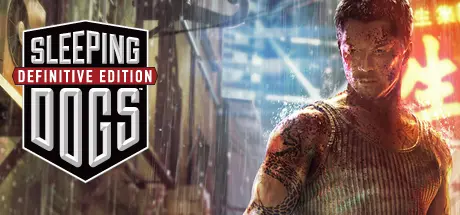



Opening
Here is the short version: if you have ever wanted a Hong Kong you can actually walk into, and a brawl that hits like a kung-fu picture, Sleeping Dogs: Definitive Edition is a stop you can't really skip. It is not a graphical showcase, and it never pretends to be — under the new coat of paint it is still the 2012 game. But more than a decade on, very few games tell the story of a cop sinking into a triad this convincingly, or pack the streets along Victoria Harbour with this much grimy, neon-soaked life.

You play Wei Shen, an American-raised cop sent home to go undercover inside a fictional triad, the Sun On Yee. The deeper he sinks, the more his badge and the gang's code blur together into one tangled, inseparable knot. What follows is a look at where this game shines, what holds it back, and whether the Definitive Edition is the version worth buying today. Spoiler: for the right player, the answer leans yes — but it comes with a couple of honest asterisks worth knowing before you commit, and we'll get into every one of them in due course.
Story | 9.5/10
Story: 9.5/10Wei's badge and the gang's code keep trading places until he forgets which is real
The sharpest thing this game does is give the word "undercover" real weight. Wei starts at the bottom — running errands, collecting debts, hauling crates for the Sun On Yee — and claws his way up on nothing but his fists and a stubborn sense of loyalty. The cruel part is the math: the more his crew treats him as one of their own, the harder it gets to put those same men behind bars. The game never looks away from that tension. It makes it the engine of the whole story, so the further you push, the less sure you are which side Wei is even on.

Anyone raised on Hong Kong cinema will recognise the Infernal Affairs ache — a man living by two sets of rules until he can no longer remember why he started. But this is no flat tribute. The strain is handed to you, mission by mission, in choices you make yourself rather than watch a cutscene make for you. Turning that cinematic core into something genuinely playable is rare in an open world. And Wei is no cardboard tough guy: he wavers after a job goes wrong, falls silent when his own past choices catch up with the men who trusted him, and those small fractures make him a far rounder lead than the mission-running automatons that headline so many of these games. You end up genuinely caring what happens to him, rather than treating him as a cursor for advancing the plot.
The supporting cast aren't set dressing, and their fates land hard
Holding the spine of the story together is a cast that earns its screen time. The gang's brass, the bosses jockeying above Wei, his contacts back on the force — each carries an agenda, and the web tightens as the plot moves. By the back half, several power struggles end in genuinely brutal places, with none of that cheap "protagonist plot armour" softening the blow. That refusal to flinch is what gives an old theme — loyalty and the cost of crossing the wrong people — actual stakes. You aren't simply watching bad things happen to strangers; by the time the knives come out, you've eaten and bled and risen through the ranks alongside these men, which is exactly what makes their downfall land.

Because the characters land, the writing sits in the top tier of open-world storytelling. Stack it against Grand Theft Auto V, the genre's crime-sandbox benchmark, and the difference is clear: that game is bigger, busier, sharper in its satire, but it is a three-hander comedy of rotating leads. Sleeping Dogs goes the other way — it pins every ounce of feeling on one man's split identity. Focused, single-threaded, and self-contained, it leaves you with a knot in your chest at the credits. Both approaches work, but if you want an undercover story that stays with you, this one plays it purer. It wins not through wild twists or a sprawling mythology, but by telling the oldest question in the book — can a man stay in the dark this long and walk out whole — in a way that feels grounded, credible and slow to fade. Plenty of players who finished it years ago can't recall a single fight, yet still picture Wei on that rooftop, caught between two lives. That is what good writing does.
Three story expansions push Hong Kong somewhere weirder
The Definitive Edition folds in three story expansions that branch the city off in very different directions. Nightmare in North Point swerves straight into the supernatural, pitting Wei against hopping vampires and vengeful ghosts in a haunted North Point — a one-second cut from crime thriller to Hong Kong horror flick, absurd and perfectly in tune. Year of the Snake casts a demoted, beat-cop Wei against a doomsday cult bent on dragging the whole city into chaos, serving as an epilogue to the main tale. None run long, but watching Hong Kong hop between genres adds far more than the main line alone, and it is a real boost to the Definitive Edition's narrative bulk. Better still, these episodes never abandon Wei himself; they grow out of him — one moment a weary patrolman cleaning up the city he once worked from the inside, the next an unlucky soul dragged into a ghost story.
That willingness to bend genre without losing the man at its centre is unusual for tacked-on expansions, which so often read as filler. Here, the contrast thickens the character rather than diluting him, and for anyone who wants to spend a little longer in Wei's company, it is a genuine bonus rather than a box to tick.
Audio | 8.5/10
Audio: 8.5/10The radio that kicks in the moment you start the car is the city's best score
The most charming piece of the sound design is the in-car radio. As Wei threads through Hong Kong, the stations shuffle through a deep bench of licensed tracks — Cantopop one minute, electronica and rock the next — and on a rain-slicked night drive, with neon streaming past the windscreen, that loose feeling of drifting through a city snaps right into place. Players still bring up that playlist years later. It is not filler under the engine noise; it genuinely helps shape the temper and pace of the place.

That "music as civic atmosphere" trick rhymes with what Yakuza 0 does for Kamurocho, drowning its nights in song and ambient chatter. Both games understand the same thing: a city has to be heard as well as seen before you'll believe in it. And the tracks aren't dropped in at random — they strike a quiet chemistry with the car you're in, the road you're on, the district around you. The same old Cantopop number hits one way on an empty elevated road at midnight and another way crawling through gridlock at noon. That "music keyed to the moment" finesse is something plenty of games, content to treat a soundtrack as wallpaper, never manage.
The Cantonese-tinged voice work makes the undercover strain audible
The voice acting matters even more. The dialogue carries a heavy Cantonese-inflected English, and Wei and the surrounding cast all deliver, voicing the bottled pressure that an undercover story lives or dies on. You can hear him forcing calm at a triad banquet, hear the fatigue and wobble when he reports back to the force — small things that nudge the whole narrative up a notch in believability. For Cantonese-speaking players, that familiar cadence is an instant on-ramp into the world, the kind of authentic detail that money alone can't buy.

The combat and ambient layers hold up just as well. The dull thud of a fist landing, the crack of bone, the short, clean punch of an environmental takedown — they amplify that Hong Kong-cinema rush exactly as intended. Layer on the streets stuffed with chatter, traffic, sidewalk TVs and radio bleed, and the whole city sounds full and alive.
Ambient sound is the easiest pillar to overlook and the hardest to do without. Strip it out and the prettiest neon street goes hollow; leave it in, mixed this carefully, and you stop noticing the seams between scripted scene and open road. That seamlessness is half the reason the place feels inhabited rather than staged, and it is a craft these older open worlds often nailed better than their flashier successors. It is a soundstage built with intent, not a playlist bolted onto a map, and the difference shows in every quiet block you drive through alone. Stand still on a corner and you can hear the clatter of bowls in the cha chaan teng behind you, a hawker's call drifting in from somewhere down the road, footsteps layering down off the footbridge overhead. It's those sounds, fine enough that you barely register them, that quietly nail the fact you really are standing on some street in Hong Kong. Against the dated visuals, the audio design is the part that has aged best of all.
Visuals | 6.5/10
Graphics: 6.5/10Hong Kong after dark is where this art direction earns its keep
Set the spec sheet aside and the art comes down to one image: Hong Kong at night. Wet asphalt smears the overhead neon into pooling streaks of light, puddles linger after a downpour, warm glow spills from a late-night dai pai dong, and in Kowloon's cramped alleys the signage hangs in tangled heaps over knotted wiring. The city's texture is thick, dense, full of flavour. The Definitive Edition pushes the resolution to 1080p and sweetens the lighting, weather and crowd density, and that rainy night drive in particular looks terrific — letting the streetscape slide past is its own reward. The handling of nighttime neon and water reflections in particular makes the team's intent plain: they were chasing the damp, ambiguous, danger-soaked look of a Hong Kong crime flick, and they caught it. Plenty of players, the first time they roll past a street drowning in signage, instinctively ease off the gas just to drink in a little more of this light-soaked city.

The districts are drawn with care, too: North Point, Central and West Kowloon each wear a distinct face, running from a glass-tower financial core to weathered, lived-in old streets. The vertical layering and street-level grit are all there. You can pick out the crush of a crowd at the racecourse, almost smell the smoke off a Temple Street stall, look down from a rooftop onto a wall of packed apartment blocks. None of it leans on raw horsepower; it leans on understanding the city, and plenty of these compositions still hold your eye more than a decade later. That sense of place is exactly what far more powerful open worlds tend to lack — their cities run big and empty, gorgeous but characterless, whereas this Hong Kong, modest in size, feels like every street was genuinely lived on. The signage, the litter, the washing lines, the cat at the mouth of an alley: stack those details up and you get what a city's soul actually is.
A locked 30fps on last-gen bones is the fair thing to knock
That said, the visuals are also the main reason the score takes a hit. The Definitive Edition is, at heart, the 2012 original in fresh clothing — the resolution and lighting are up, but the AI, the physics and the underlying systems are last-gen, and the models and textures were no showpiece even by 2014. The real sore spot is the frame rate, locked at 30 and most obvious on consoles, with PC players often reaching for a community patch to unlock it.

That is why the original scored 83 on PS3 while the remaster lands at 77 on PS4 and 75 on Xbox One — viewed in 2014, this open world was no longer fresh, and the package reads more as a content top-up with a polish pass than a ground-up remake. Next to Grand Theft Auto V, the genre's crime-sandbox benchmark, Sleeping Dogs gives up clear ground on scale and tech. Yet its unity of style and that precise sense of place claw a lot back. In other words, it wins on taste rather than raw power: it knows exactly which city it wants to render and spends its limited budget where it counts. Against open worlds drowning in effects but short on soul, a look with this much conviction ages better than you'd guess.
If you can live with the dated tech, the Hong Kong it hands you may stick with you longer than many newer games. Art direction is the part of a game that doesn't depreciate, and this one banked everything there. The weather rolls in, the signage flickers, the harbour glints — and none of it needs a teraflop budget to land. That, more than any benchmark, is what keeps people reinstalling it a decade out. A locked frame rate is a real flaw, but a city you actually want to look at is a rarer thing, and this one has it in abundance.
Combat | 8.5/10
Gameplay: 8.5/10The bare-knuckle brawling is the real soul of this thing
What keeps you hooked is the melee. The whole system rests on light and heavy strikes, grabs and counters — an enemy flashes red just before he swings, and a well-timed press parries and turns it back on him. Get fluent and you flow through a crowd, chaining strikes, throws and redirected blows in one unbroken line. The lineage is obvious: it's the same "fighting ballet against many" school as Batman: Arkham City, but Sleeping Dogs wraps it in kung-fu-movie skin so every hit lands crisp and mean.

What pushes the identity over the top are the environmental takedowns. Nearly every hazard in a scene becomes a weapon: phone booths, fish tanks, AC units, dumpster compactors, even a roadside meat grinder, each with its own savage little animation that pulls a wince the first time. These aren't garnish — they're part of the rhythm of a fight, and they stay satisfying long after the novelty wears off. It is the single most memorable hook the game has. Better still, the transitions between an environmental finisher and an ordinary combo are seamless — you can be mid-flurry, grab a thug on the upswing and boot him into a nearby fish tank, all in one unbroken motion, with none of that "cut to a canned animation for the spectacle" lurch. It makes every brawl feel like choreographing an action scene on the fly, with the reins firmly in your hands.
Shootouts drag, driving soars
Not every system got the same polish, sadly. The shooting is thin — cover plus stylised slow-mo theatrics (vaulting cover to trigger slow-motion and clean takedowns) has the shape of a John Woo standoff, and those slowed takedowns do look great, but the depth and feedback sit a tier below the melee, and it starts to feel perfunctory after a while. That's the agreed weak spot. Driving wins the room back, though: it's solid and pleasantly arcadey, drifts and impacts read intuitively, and the high-speed "action hijack" lets Wei leap from his own car onto a target ahead, which makes chases a genuine highlight.

Progression hides a clever idea: experience splits into two parallel tracks, Cop XP and Triad XP. The first you bank by playing clean and keeping collateral down on missions; the second you bank by fighting dirty and mean. Each unlocks a different set of skills, and the system isn't just numbers — it echoes Wei's double life as cop and gangster. How you fight is, quietly, a vote on which way he slides. Set beside Yakuza 0, the two share a kinship — one city, one underworld, melee, and a glut of street-level minigames — but Sleeping Dogs plays its action and driving louder and more cinematic, where Yakuza piles on theatre and side-story density. For anyone who loves Yakuza but wants a Hong Kong backdrop, this is a stop you can't skip. And on pure impact and the inventiveness of its environmental interactions, the melee still goes toe to toe with those younger rivals — the feel holds up remarkably well even now. Worth flagging too: jade statues unlocked through the story teach Wei new moves, slowly turning a street scrapper into a real martial artist, and that "growing stronger" arc paces out smoothly. The difficulty never bites hard; it leans toward release and spectacle rather than a punishing endurance test.
That tonal choice is deliberate, and it suits players who want to hit things without being ground down. This is a power fantasy with a sense of humour about itself, not a soulslike asking for your blood. You will not bounce off a boss for an hour here; you will, instead, feel steadily more dangerous as the moves stack up — and for a game about a man pretending to belong, that creeping competence does quiet narrative work too. There's craft behind that "fun," too: as skills unlock, Wei pulls off flashier and flashier moves, and paired with the environmental finishers a late-game brawl flows like silk, with a real movie-star swagger to it. It never demands hardcore execution; instead it lets you genuinely feel stronger and slicker once you've found your rhythm — for most players looking to unwind after work, that loop of reward is pitched just right.
Content | 8.0/10
Content: 8/10Sixteen hours of story, but the city earns more of your time
The main story runs about sixteen hours — tight, propulsive, rarely sagging, the kind of campaign you sit down to and keep pulling on. Fold in the side content, the collectibles and the street-level minigames, though, and the clock climbs past thirty-five hours with ease. The city is stuffed: street races, cage fights, bodyguard escorts, wanted-suspect takedowns, security cameras to hack, jade statues to find, plus karaoke, dating, horse betting and cockfights filling out the daily-life layer. Roaming it feels less like clearing a checklist and more like living in the place. That daily-life design is one of the game's smartest moves: rather than just piling on quest count, it lets you, between the fights, grab a plate of char siu rice to heal up, take a girl on a date, or simply cruise the rain-slicked streets for the sake of it. Those seemingly trivial little errands are exactly what bring Hong Kong to life, and they give Wei a civilian, human pulse beyond the undercover badge.

The side content isn't evenly good, mind you. A chunk of the collecting and repeated job types is padded and grindy — the citywide camera hunt especially, where a handful is plenty and a completionist sweep just wears thin. My advice is to cherry-pick by interest and save your energy for the side stories with actual writing and staging; the experience is far smoother for it. There's also a "Face" system: side jobs, sharp cars and good clothes raise Wei's standing, which in turn unlocks shop discounts and exclusive rewards — a neat way to make "being a player in the gang" tangible. It never forces a grind, but it adds a layer of payoff to things you already wanted to do, giving the open-world routine a little stickiness. The clever part is how it ties outward appearance to inner standing: you don't buy that suit or that sports car for a stat bump, you buy it so you look like somebody in this city. That role-play-flavoured vanity is, oddly, far more motivating than a plain pile of attributes ever is.
One purchase, twenty-four DLC items — the painless way in
The Definitive Edition's biggest content win is that it folds in all twenty-four DLC items the original sold piecemeal. Three of those are story packs worth singling out: Nightmare in North Point, a supernatural-horror side tale; Year of the Snake, a doomsday-cult epilogue; and Zodiac Tournament, an island martial-arts showdown in the Enter the Dragon mould. Add a pile of outfit, vehicle and gameplay packs on top, and the whole thing is meaningfully fuller than the base release was.

For anyone coming in fresh today, that means a single purchase hands you everything that once shipped scattered, with no agonising over which DLC is worth a separate buy — the most complete and least fussy way to experience the game. It's also why, whenever someone asks which version to get, the answer is nearly always just the Definitive Edition.
One caveat is worth flagging on the expansions. They swing wildly in tone, from horror to martial arts to story epilogue, so it pays to clear the main campaign first — to know the city and know Wei — before diving in. The contrast and the aftertaste land harder that way, whereas leading with a ghost-story side tale tends to fracture the pull of the main thread. Played in the right order, though, they are exactly the kind of generous, all-in-one bonus that makes a definitive release feel definitive. Taken together, the campaign, the side activities and the bundled packs add up to a package that comfortably justifies its asking, and rarely leaves you feeling the city has run dry of things to do. For a game built on a single, tightly told story, that breadth of optional texture is what keeps Hong Kong worth coming back to long after the credits have rolled.





Comments 0
Share your game review
Join the discussion and share your review of this game.
No comments yet. Share your thoughts on this review.