





















Opening
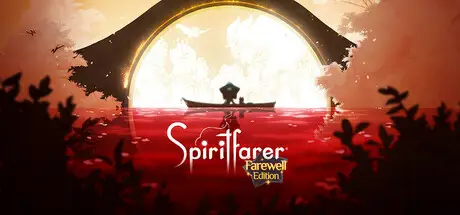
Most games are about winning. Spiritfarer: Farewell Edition is about learning to let go. You play Stella, the new ferrymaster for the dead, drifting across an open sea on a boat you keep nailing new rooms onto. You take spirits aboard, cook for them, build them a home, listen to them, hug them — and one quiet morning you sail them through a glowing door called the Everdoor and say goodbye for good.
It should be unbearably heavy. It isn't. The game never frightens you and never lectures you; it just asks you to keep house, build relationships, and then, when the time comes, hurt — properly, the way real goodbyes hurt.
This cozy management game about dying took home Games for Impact at The Game Awards 2020, sold over a million copies across platforms, and sits at a 94% positive rating on Steam. Those are not the numbers of a tear-jerker that coasts on a gimmick; they're the numbers of a game that earns its reputation slowly, one spirit and one goodbye at a time, over dozens of hours most cozy sims would never dare ask for.
The Farewell Edition we are talking about today bundles in every post-launch update for free, making it the most complete cut of the game — and, frankly, the only version a newcomer should ever touch. What follows starts with the writing that wrecks people, walks through music, art, and a loop that's equal parts tender and tedious, and stays honest about the late-game chores that wear them down.
Story | 9.5/10
Story: 9.5/10The writing here lands not because the plot twists, but because the game refuses to dramatize death — and then makes you do the ferrying yourself, over and over.
A premise you can say in one breath, and a grief you can't shake
The setup fits in a sentence: the old ferrymaster hands Stella the job, and she carries on taking spirits to the afterlife. No villain, no conspiracy, no world to save. You sail, you find people, you care for them, you let them go. It is precisely that absence of conflict that lets the feeling accumulate without anyone forcing it.

You aren't advancing a plotline so much as living a life. Every spirit who comes aboard arrives with a whole biography — who they were, what they did, what took them, what they never resolved. You don't read any of this; you assemble it in the gaps of cohabitation. Today someone craves a particular dish, tomorrow they ramble on the deck about their youth, until one day they tell you, calmly, that they're ready. That habit of folding a vast subject into small daily business is exactly where the emotional recoil comes from.
Gwen dies of lung cancer, and the first lesson is that no one stays
The first complete arc belongs to Gwen, a poised, graceful deer and a childhood friend of Stella's, dead in her forties of lung cancer after a lifetime of smoking. The game names the cause plainly and never milks it for tears; it simply walks the last stretch of road with her.

Gwen is the opening lesson, and the lesson is blunt: everyone here leaves, and they leave in ways you recognize — not a boss you defeat, not an NPC who despawns, but a person with a body and a name and an illness you've heard of. Putting that up front is a kind of inoculation. It doesn't help. When the actual goodbye arrives, it still hits, because by then you've cooked for her, ferried her around, learned the shape of her days. The game spends Gwen teaching you its grammar of loss so that every later farewell can speak it fluently.
Atul leaves without warning, and that's the whole point
If Gwen is the trailer, uncle Atul is the gut-punch the whole community agrees on. He's there from the start — an accordion-playing, water-loving old clown who's always game for a joke. You settle into treating him as the one fixed, dependable presence on the voyage.
Then, one day, he's gone. No build-up, no formal farewell, no cutscene to brace you — the way people actually lose family. Players who've buried someone keep saying this is the part that broke them, precisely because death doesn't announce itself. It's where Spiritfarer outclasses a hundred deliberately weepy games: it understands that the goodbyes that hurt most are the ones you never got to say properly, the empty chair you only notice the morning after. By handing you that loss without ceremony, the game trusts you to feel the absence on your own terms — and you do.
Summer, Gustav, and lives that ran out of time
Character density is the other quiet flex. Summer, a snake raised on a strict Midwestern farm, worked as an agronomic engineer and developed breast cancer from years of chemical exposure; the illness sent her away to heal, and on that road she met Rose, the love of her life and Stella's aunt. Gustav, a German art-museum curator Stella met as an adult in Japan, mentored and inspired her before a degenerative disease wore him down. The Farewell Edition extends this further — Lily the butterfly spirit is Stella's sister, filling in the protagonist's own buried history, while Jackie and Daria, the caretaker and patient of a derelict hospital island, push the tone into mental illness and the ethics of care, the darkest and most discussion-worthy thread in the game.

None of them are filler. Each carries a full past, people they loved, things they regret; the longer you care for them, the more you know, and the heavier that "I knew this person" feeling sits when you ferry them off. A dozen characters, a dozen lives, a dozen deaths — that is top-shelf character work by any narrative game's standard.
The Everdoor, and why Stardew Valley sits on the other side of the line
Every arc ends at the Everdoor. When a spirit is ready, you carry them toward that glowing threshold and say your last goodbye — and they always leave at peace, content. The game's message was never "death is terrifying." It's "say goodbye well, then keep living." The ritual welds story to mechanic: letting go isn't something you watch a character do. You do it, with your own hands.
Set it beside Stardew Valley and the difference snaps into focus. In Stardew you also bond with the townsfolk, but that warmth is a byproduct of running the farm; the core pleasure is making the days better. Spiritfarer inverts the whole thing — management is the vehicle, and a string of stories about loss is the cargo. If Stardew is about how to live well, this is about how to say goodbye well. That's what sets it apart from every other cozy sim on the shelf.
Audio | 9.5/10
Audio: 9.5/10If the writing introduces these people, the music is what finishes you off when you sail them away.
A piano line that doubles as the game's grief switch
The score is the work of indie composer Max LL, built around the piano. The team committed early to that choice — in a Western ear, piano carries a familiar, cozy warmth, the perfect soft shell to wrap a subject as hard as death. The main theme isn't complicated; it's simple enough that players hum it years after finishing, and it has that rare knack of moving in on first listen and never leaving. It earned its own vinyl release, which tells you how much weight it carries.

What matters more is when it plays. The moment a spirit walks toward the Everdoor for their final farewell, that cue becomes the game's emotional switch — every hour you spent with that character comes flooding back on the first few notes, and then it flattens you. Music here isn't wallpaper; it's part of the storytelling, timed so precisely that the melody alone can undo you before a single word of goodbye is spoken.
The hum of an ordinary day, and the silence that follows
Set the big farewells aside and Spiritfarer is, most of the time, quiet and domestic. The ambient design carries that "keeping house" reassurance: waves against the hull, the rhythm of chopping and smelting and weaving on deck, the crackle of catching lightning, the soft splash of scooping jellyfish. Every sound reminds you this boat is a lived-in home, and none of it grabs the spotlight — which is exactly the point.

Because your ears spend most of the journey soaked in that gentle background, the game can treat quiet as a deliberate instrument. The sound team builds you a comfortable acoustic routine, then strips it back at the threshold — letting the absence of the daily hum register as its own kind of weight. That restraint is harder to pull off than a swelling orchestra, and it's why the most devastating beats are also the most hushed.
A long score, not a two-hour poem
Stack it against peers and Spiritfarer gets compared to Gris and Journey — kindred spirits in that "sound and image as one" register. But there's a structural gap worth naming. Gris and Journey are two- or three-hour poems, their music a single tidy emotional arc you experience once and remember.
Spiritfarer is a thirty-plus-hour journey, and its score has to sustain that length while landing a clean hit across a dozen separate goodbyes without ever going numb on you, without the repetition dulling the edge. A composer can wreck you once with a swell; doing it twelve times, on a melody you've already heard for hours, demands restraint and variation most soundtracks never need. Keeping the emotion that sharp at that scale, over that many farewells, is the real achievement — and it's why so many players reach for the soundtrack long after the credits roll, half to remember the spirits and half to feel the ache on purpose.
Visuals | 9.0/10
Graphics: 9/10This is the kind of game where any screenshot you post gets the same reply: which animated film is that from?
A storybook that happens to move
Spiritfarer is drawn by hand in 2D and lit with soft 3D lighting. It skips the usual realistic and cel-shaded routes entirely in favor of a moving picture-book — every expression, every gesture hand-animated, the linework and color carrying a thick illustrative charm, the frame-by-frame care visible from the first minute to the last. The style and the subject are a perfect match: render death realistically and you slide toward grim or ghoulish; the softness of a storybook pulls it back toward warmth and approachability instead. Watching a deer, a frog, a snake say goodbye in cuddly anthropomorphic form keeps a layer of tenderness wrapped around the sorrow. That's the art quietly covering for the narrative, softening blows the writing has no intention of pulling. You spend the whole game watching cartoon animals you adore walk toward their own deaths, and the gentleness of the line is the only thing that makes it survivable.

A boat that grows into a home
The central visual stage is your ever-expanding ferry. You snap structures onto the deck in a Tetris-like grid — kitchen, garden, sawmill, foundry, loom — each with its own hand-drawn detail and animation. Over the journey the boat grows from a bare plank into a glowing, crowded floating home full of rooms and residents. That "bigger and fuller" arc is a piece of scenery in motion, and the satisfaction isn't only numerical; it's visual and emotional, since every extension answers to a friend you took in and a chore you ran. When a spirit later leaves and their house empties out, the blank space on screen says more than any line of dialogue — a hole in a place you built with your own hands, impossible to look past. The boat becomes a visual ledger of everyone you've taken in and everyone you've lost, and by the end its crowded, lamp-lit deck reads less like a vehicle and more like a memory you live inside.

The send-off cutscenes, where the art earns its tears
If you had to name the most moving stretch of the art, it's the bespoke cutscene each spirit gets walking toward the Everdoor. They're stylized differently every time — dreamlike here, hushed there, radiant elsewhere — tailored to each character's personality and life, the tightest fusion of art and story in the game. Those scenes promote "goodbye" from a line of text to a visual ritual, and paired with Max LL's piano, the image becomes an amplifier for feeling. From sea-light to starfields to island silhouettes, the art holds steady across every platform — Switch, PlayStation, Xbox, PC. Its beauty rides on design and craft, not polygon counts or ray tracing, which is exactly why it reads well on any machine and ages so gracefully. That sensibility runs straight back to Thunder Lotus's earlier Jotun and its hand-drawn mythological art; it's the studio's signature DNA, and Spiritfarer is its warmest expression.
Combat | 6.5/10
Gameplay: 6.5/10Gameplay is the most divisive part of the package — its charm and its fatigue are two faces of one system. That's why our gameplay mark lands at 6.5.
Hugging is a real mechanic, and it carries the whole thesis
Start with the standout design: the hug. In Spiritfarer, a hug isn't a line of dialogue or a cutscene; it's a genuine interaction you can trigger anytime, by holding a button. Walk up to any spirit, hold the key, and Stella opens her arms.
The action is small enough to barely touch any stat, yet it carries everything the game wants to say — presence, comfort, simply being there. When a spirit is low, you go hug them; when you can't bear to lose someone, you catch yourself hugging them an extra time before the Everdoor. Building "hug" into a core, interactive mechanic, letting muscle memory do the emotional work instead of a dialogue prompt, is something almost no peer attempts seriously. It isn't complex, and it spends no resources. It's precise — a single button press that means more than most games manage with a cutscene.
Keeping house while the boat keeps growing
The spine of play is management. You snap buildings onto the deck in a Tetris grid and run a full resource chain: the garden grows crops, the kitchen cooks meals to each spirit's taste and lifts their happiness; out exploring you fell trees for logs, crack rocks for ore, salvage wrecks for cargo, then run the sawmill into planks, the foundry into ingots, the loom into cloth. The loop isn't hard. The challenge is rhythm — splitting your attention across several spirits' needs and several production lines at once. Water and harvest at dawn, cook a dish and carry it over, fill every workshop's queue between sailing legs, stop at resource nodes as they pass. That fiddly domesticity is exactly what bonds you to the boat and its people: you're not grinding quests, you're keeping a home and caring for family.
Catch lightning, scoop jellyfish, climb higher
Scattered across the sea are rhythm and timing minigames to break things up — fishing, catching lightning streaking across the night sky, scooping drifting jellyfish, collecting rainbow shards. None demand much skill; they're cozy by design, keeping the act of sailing from going stale, and they slip little easy, even healing, beats between two heavy farewells. You won't get much of a skill rush from catching lightning or scooping jellyfish, but they fill the dead air of a sea crossing so drifting never collapses into waiting. Spiritfarer also wears a light Metroidvania layer: Stella gradually learns the double jump, the glide, the dash, and those movement abilities let her reach high ledges and islands she couldn't before, opening new resources and zones. Next to Hollow Knight's combat-driven, hardcore take on the genre, this exploration is gentler and friendlier — there's no fighting, and the unlocks mostly serve gathering and reaching, not testing your hands.
The late game wears you down, and that's the honest weakness
With the praise out of the way, the fatigue deserves the truth. Late on, the management bloats — garden, kitchen, sawmill, foundry, loom all need tending at once, with so many resource types it's easy to lose track, and the busywork starts crowding out the feeling. Worse is the signposting: the game leans on vague triggers and poorly communicated goals, so you end up backtracking constantly, re-checking whether a resource is gathered or a line is done. The community consensus is to treat it as a narrative game that uses management as its vehicle, and the tedium softens; chase numerical efficiency and a tight pace, though, and the late-game drag becomes genuinely hard to stomach. A clearer objective log and a few quality-of-life nudges would have gone a long way here, and their absence is felt most in the final stretch, right when you'd rather be savoring the last few goodbyes than hunting for which workshop is idle. That's why we can't score the gameplay highly — the management is tender but never crisp, the farewells carry the whole game, and the daily chores end up the thing holding it back.
Content | 8.0/10
Content: 8/10On sheer size, Spiritfarer is generous — generous enough that you should be sure you actually have the time.
A thirty-hour-plus voyage, not a short story
This is no two-hour vignette. The main story alone runs north of 31 hours; clear every spirit's arc and the assorted collectibles and you're looking at forty-something. For a game trading on feeling and atmosphere, that length is double-edged. It buys each character the room to be set up and paid off, every relationship given time to grow — but for a player who only wants the story and doesn't love management, the barrier is real.
Put bluntly, it asks you to live alongside it. The longer and more granular the early cohabitation, the more the late goodbyes sting — that's its time-for-feeling bargain, and it's not one you can shortcut. The grief is load-bearing on the hours you put in; rush it and the farewells land softer, because you simply haven't lived with these people long enough to miss them. But if you just want to watch a story unfold with no patience for tending production lines, thirty-odd hours of management becomes a burden rather than a pleasure. Do that math honestly before you buy, because the game's greatest strength and its biggest ask are the exact same thing: time.
The Farewell Edition's three updates: free, and all substance
The reason this edition is worth singling out is that it folds in three post-launch updates — Lily, Beverly, and Jackie & Daria — for roughly nine extra hours, entirely free. And they aren't padding. Lily completes Stella's own backstory; the derelict-hospital thread of Jackie and Daria widens the emotional spectrum from "gentle parting" to "facing mental illness and the weight of care," widely regarded as the darkest, most discussion-worthy stretch in the game. The studio spent over a year layering these characters, islands and storylines in to forge this final, complete cut. As content goes, that's real expansion, not a reskin. The last update in particular adds a whole new derelict hospital island, a fresh platforming sequence, and new ferry upgrades — so the Farewell Edition isn't just two more characters, it's a wider map and more to do.
A million sold, 94% positive — the content cleared the market
Big doesn't mean good, but Spiritfarer is both. It has sold over a million copies across platforms and holds a 94% positive rating on Steam, tens of thousands of reviews ranking it near the top of its niche. Those numbers reflect content that held up under real players: not one or two highlights propping up the rest, but a dozen characters and dozens of hours that all stand on their own. Crucially, the praise survives the long tail — players who push past the late-game chores still come out calling it one of the most moving things they've played, which is the surest sign the substance is real rather than front-loaded. Add up the runtime, the free updates and the reception, and the Farewell Edition's value is high — one purchase buys a complete, closed-loop work polished over a year, with no season pass dangling behind it and nothing meaningful left to bolt on later. The only catch is that you have to genuinely have the time, and genuinely want to live at this pace.




Comments 0
Share your game review
Join the discussion and share your review of this game.
No comments yet. Share your thoughts on this review.