

























Opening
## Opening
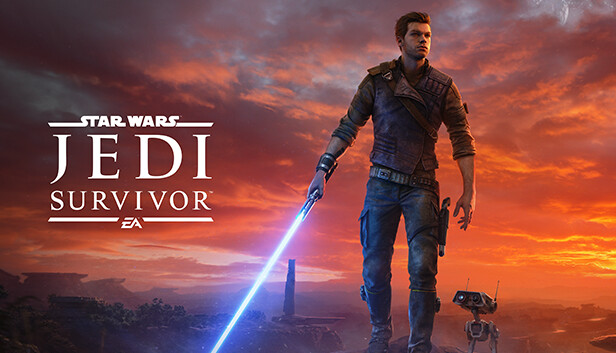
Star Wars Jedi: Survivor is Respawn Entertainment's matured-period Cal Kestis project, arriving four years after Jedi: Fallen Order. The title shipped on April 28, 2023 across PC, PlayStation 5, and Xbox Series X/S, with subsequent ports to PlayStation 4 and Xbox One. Electronic Arts has confirmed across multiple earnings calls that the title exceeded internal sales targets across 2023 and 2024 — first-week sales passed 600,000 units, and the Jedi sub-series across three titles has now passed 20 million cumulative units, putting Survivor among the 2020s' representative Western AAA single-player premium projects. Metacritic 88 on PS5, 86 on Xbox Series, 80 on PC (held down by launch performance issues); OpenCritic 86% critic recommendation; IGN 9/10.
The core appeal is the five-stance lightsaber combat system — single blade, double-bladed, dual-wield, blaster-and-saber hybrid, and Kylo Ren-inspired crossguard — each with its own optimal use cases. The "stance as strategy" design is among 2023's most creative action combat systems. Combined with Pyloon's Saloon hub-base (story characters move in, dialogue evolves, decor progresses), Koboh semi-open-world exploration, and Cal Kestis's growth arc from Jedi apprentice into a battle-tested adult fugitive Jedi, Survivor occupies the top of the "AAA action-adventure mid-scale sequel" lane. The Chinese community frames the title as "Respawn's matured Cal Kestis project, with both gameplay and narrative improvements over Fallen Order." What follows is a six-axis breakdown of how Survivor's industrial-ceiling position in the Star Wars AAA action-adventure sequel category got established, and how PC launch performance affected the overall verdict.
Story | 8.0/10
Story: 8/10## Story
Main Plot and Cal's Character Arc
Survivor's main plot picks up roughly five years after Fallen Order. Cal Kestis has grown from Jedi apprentice into a battle-tested adult Jedi Knight, fleeing Imperial pursuit alongside a network of allies while racing to find the fabled Tanalorr — a shrouded planet that could serve as sanctuary for those oppressed by the Empire. The narrative is set in the post-Order 66 era roughly fourteen years into Imperial rule, the bleakest stretch of Imperial dominance, when the Jedi are functionally extinct and Cal is one of the few survivors of his order.
The main plot's design philosophy is "the matured Jedi's flight and resistance" — not the simpler "apprentice rediscovering himself" arc of Fallen Order, but a deeper exploration of "the matured Jedi facing isolation, responsibility, and moral compromise." Cal makes multiple substantial choices across the runtime: whether to continue fleeing, whether to join the resistance, whether to trust new allies, whether to confront the temptation of his darker impulses. Each decision deepens his character arc. The Gcores long-form essay observes: "Cal Kestis served as a Jedi apprentice during the Republic era, and was on assignment with his master Jaro Tapal when Order 66 was executed. The arc from Jedi apprentice in Fallen Order to matured Jedi Knight in Survivor — fleeing and resisting — is among 2023's deepest character developments."
Bode Akuna's Reveal and the Supporting Cast
Bode Akuna is the most impactful character in Survivor's plot. He arrives as Cal's ally, builds genuine friendship and trust, but the player gradually discovers he isn't who he appears to be — that reveal is among 2023's most impactful narrative moments. The Chinese community has placed Bode's arc alongside Joel's death in The Last of Us Part II and the volunteer sacrifices in Mass Effect 2 as one of "2023's most impactful narrative reversals." That "Jedi-versus-Jedi human-failing struggle" framing pulls Survivor's plot away from the conventional "good versus evil" Star Wars register into something closer to "the grey moral territory inside the Jedi order itself." The supporting cast is equally well-developed. The Fallen Order companions — Greez Dritus (the ship's captain), Cere Junda (the former Jedi mentor), Merrin (the Nightsister witch) — each carry continued arcs in Survivor. BD-1, Cal's astromech companion, remains one of the most beloved Star Wars droids, and the design quality of their interactions continues at industrial standard. New additions — Kata (a young Star Wars refugee), Rayvis (an Imperial adversary), Dagan Gera (a corrupted High Republic-era Jedi) — each carry independent narrative arcs. That "lead-plus-supporting cast both well-realised" pattern is what gives Survivor's narrative its real depth above conventional Star Wars sequels, and the supporting cast also gives the home-base sequences their emotional anchor and the boss-fight beats their human weight.
Pyloon's Saloon and the Home-Base Narrative Layer
Pyloon's Saloon is Survivor's hidden narrative-dimension strength. The bar on Koboh functions as Cal and his allies' temporary home — story characters gradually move in, their dialogue evolves with the plot, the décor itself transforms as the story progresses. Gcores' long-form essay "How Should Narrative Games Handle Home Base Systems? Analysing the Successful Design of Star Wars Jedi: Survivor" specifically breaks down Pyloon's design philosophy — it elevates the bar from "just a save point" into "the emotional anchor of the player-and-cast relationship."
The "home is the people you carry with you" thematic statement is Survivor's hidden narrative strength. Cal loses his mentor, loses his fellow Jedi, loses his original home — but he gradually constructs a "found family" inside Pyloon's. Greez becomes a father figure. Cere is a mentor figure. Merrin is partner and combat ally. Bode is a newfound brother. BD-1 is the perpetual companion. Kata is the daughter figure to be protected. That "found family" emotional thread gives Survivor an emotional depth that conventional Star Wars sequels rarely match in the franchise's gaming history.
Genre Comparison and the 8.0 Justification
Compared with contemporary AAA narrative standouts, Survivor's story dimension lands at "excellent but not the ceiling." God of War Ragnarök sets the narrative-depth bar (Norse mythology plus father-son dual-track). Mass Effect Legendary Edition sets the narrative-RPG bar (player choice driving branching). Survivor's plot runs shorter and shallower than either, but for a major IP sequel it's competent. Polygon's review captured the conservative-structure concern directly: "Jedi: Survivor's plot itself is not going to wow you with unexpected twists and turns."
The Chinese community on Survivor's narrative is split. Supporters cite Cal's complete arc, Bode's impactful reveal, Pyloon's warm home-base system, and the well-realised supporting cast. Critics cite the conservative plot structure, the limited depth of Star Wars lore exploration, the unmemorable boss-fight moments, and the modest overall narrative ambition. Both camps reflect different "sequel narrative ambition" expectations from Chinese Star Wars fans, and the 8.0 story score reflects the main-plot spine, Cal's arc, Bode's narrative reversal, Pyloon's home-base narrative value, the horizontal AAA comparison, and the divided Chinese-community reception — six dimensions converging on an "excellent for an AAA action-adventure" story rating that nonetheless trails the genre's true narrative ceiling represented by God of War Ragnarök.


Audio | 8.5/10
Audio: 8.5/10## Audio
OST and Cinematic Orchestral Scoring
Survivor's original score was composed by Stephen Barton and Gordy Haab, and it stands in the cinematic orchestral tradition John Williams established for Star Wars. The OST runs to about sixty tracks across Cal's personal theme (heavy, grounded strings), Pyloon's Saloon's warm folk register (deliberately contrasted with the colder Star Wars galactic palette), Koboh exploration's mid-tempo ambient cues, boss fights' full-orchestra epic statements (orchestra plus choir), and Bode's reveal moment's mournful low-string-and-piano theme. The Chinese community's response to the OST has been broadly positive — Gamersky's player verdict notes the cinematic-grade score elevates Survivor's Star Wars atmosphere above Fallen Order's. Chinese Bilibili "Survivor OST track-by-track appreciation" video series reflect the audience's recognition of the score's quality, and the music-and-narrative-emotion synchronisation pushes Survivor's emotional experience well above most AAA sequels — every emotional pressure point, from Cal confronting Bode, to Cal's flashback with his mentor, to the quiet Saloon evenings, has corresponding musical design, and the cumulative emotional landing across the runtime is among the things players remember most months after completing the playthrough.
Voice Acting and the Cast's Maturation
Cal Kestis's voice actor Cameron Monaghan delivered his series-best performance in Survivor. In Fallen Order, Cal is the relatively young, relatively naive apprentice — Monaghan's voice work skewed toward exploration and curiosity. In Survivor, Cal is the matured Jedi Knight — the voice work shifts toward steadiness, restraint, weight of responsibility. Monaghan's performance precisely matches Cal's growth arc, letting players hear that "this is the same person, but he's grown up." That kind of vocal continuity across a sequel is itself a craft achievement few AAA franchises maintain across a four-year gap. The supporting cast is similarly accomplished. Greez Dritus's comedic timing (the relief valve in the heavy plot), Cere Junda's mature register (the former Jedi mentor's restraint), Merrin's exotic mystery (the Nightsister witch's outsider perspective), Bode Akuna's reveal performance (the subtle vocal shift before and after the narrative turn is among 2023's most demanding voice work), all hit AAA-standard quality. Bode Akuna's voice actor's micro-modulation of tone before and after the reveal lets players hear the character's internal conflict through audio alone — that "voice work as storytelling" design is one of Survivor's hidden audio-dimension strengths.
Lightsaber and Force Audio Design
Lightsaber audio is the Star Wars IP's industrial standard — ignition's "shwoom," deactivation's "tap," swing's "whip," parry's "spark cascade," strike's "hiss" all carry complete sound design. Survivor builds on Fallen Order's lightsaber audio by adding stance-specific timbres — single blade's crisp register, double-bladed's doubled resonance, dual-wield's rapid cadence, blaster-saber's mixed-mode response, crossguard's heavy low-frequency growl — each stance audibly identifiable. Force-power audio is similarly precise. Push carries low-frequency vibration. Pull produces a high-frequency tug. Slow generates an eerie time-distortion tone. Confuse layers reverb in disorienting ways. Each Force technique has independent audio feedback, letting players judge the active power and effect by ear. The "audio as visual complement" approach reflects the Star Wars IP's industrial-grade precision, and Survivor advances the inherited audio design from Fallen Order another step — players can lean on audio cadence to chain skills and combos in combat, which the Chinese Star Wars community has widely identified as a thoughtful design choice and one of the structural reasons the title rewards repeated playthroughs at higher difficulty tiers across multiple seasons of player engagement.
Pyloon's Saloon Ambience and Chinese Localisation
Pyloon's Saloon is the audio dimension's hidden treasure. The bar's ambient music takes a folk-style country-tavern direction — warm acoustic guitar and harmonica leading the arrangement, deliberately contrasted with the colder Star Wars galactic palette of the main plot. The moment the player enters the Saloon, they feel "home" — that "scene-driven music" choice is Respawn's audio team's precise call in narrative-game audio design. Gcores' long-form essay specifically calls out the Saloon's music design: "The key thing that lets the player shift from combat tension into Saloon calm isn't the visuals — it's the music."
Chinese localisation quality is excellent. Survivor's day-one release shipped with complete official Simplified Chinese menus, subtitles, and UI. 3DM and Gamersky maintain comprehensive Chinese localisation resources for the title. The Chinese Star Wars community rates the translation as "accurate to the Star Wars IP's worldbuilding atmosphere" — lightsaber, Force, Jedi, Sith, Clone, Empire and other proper nouns follow Chinese Star Wars community traditional naming conventions. There's no official Chinese dub (the English original is retained), but the subtitle synchronisation quality is enough for Chinese players to experience the plot without friction. The 8.5 audio score reflects the cinematic OST, mature voice performances, lightsaber audio at Star Wars industrial standard, Force audio precision, Pyloon's warm ambient contrast, and Chinese localisation quality — six dimensions adding up to an audio layer at the AAA action-adventure category's top tier, reflecting Respawn's careful audio investment.


Visuals | 6.0/10
Graphics: 6/10## Graphics
Unreal Engine 4 Customised Build and Visual Scale
Survivor runs on a heavily customised Unreal Engine 4 build. Respawn Entertainment extended UE4 substantially for Star Wars IP visual demands — complex lightsaber lighting and spark particle systems, Force-power visualisation (air distortion during Push/Pull, time-freeze effects during Slow), Koboh's large-scale terrain rendering, multi-planet weather and lighting. The "UE4 customisation for the Star Wars IP" engineering work demonstrates Respawn's industrial capacity directly.
Visual scale lands at competent AAA action-adventure level. Koboh's semi-open world (approximately ten square kilometres) carries multiple ecological regions — grassland, caves, desert, hidden ruins; Coruscant's city night opening; Jedha's ruin archaeological exploration; Nova Garon's Imperial industrial-style base — each planet with its own terrain, vegetation, weather, and lighting design. The Chinese community's Bilibili "Survivor all-planet tours" videos reflect player recognition of the visual scale, and the scale-versus-detail balance is more polished than Fallen Order's tighter authored corridor design, marking a clear technical step up in the franchise across one console generation. The visual scope also helps the game feel like a substantive sequel rather than a same-engine reskin, which is a meaningful achievement for a four-year iteration window.
Art Direction Continuing the Star Wars Visual Identity
Survivor's art direction continues the Star Wars IP's signature visual elements — lightsaber lighting (different colours mapping to different Jedi affiliations), droid design (BD-1's cute geometry alongside the D-series combat droids' industrial register), alien biology (multiple Koboh native species), Jedi gear (capes, sashes, gloves continuing tradition). Survivor also introduces "matured Cal" darker tones — Cal's cape is darker than Fallen Order's, his accessories more restrained, reflecting the "matured Jedi Knight's weight" theme, and the visual tonal shift quietly signals the character growth that the script and performance carry more explicitly. The art direction's restraint here is one of the design's more subtle achievements.
Chinese Star Wars fans have responded warmly to the art direction. Every new character, weapon, droid, and alien species has independent visual design, letting fans read IP continuity-and-novelty from the visuals alone. Pyloon's Saloon's interior decor evolves with the plot — story characters bring their own items when they move in, wall decorations accumulate with collection progress, table and chair arrangements shift with the bar's prosperity — that "visual as narrative" detail design is Survivor's art-direction precision proof and one of the title's quietly impressive design achievements.
PC Launch Performance Issues
PC launch performance is Survivor's graphics dimension's real weakness. The April 2023 PC release shipped with severe performance optimisation gaps — Koboh hub-area frame rates dropped below 30 FPS, GPU utilisation hovered around 50%, load times were excessive, and ray-tracing-on tanked frame rate catastrophically. Metacritic PC scored 80 (eight points below PS5's 88), Steam reviews crossed 73,000 but positive rate stayed long-term low (around 68% recommended) — both real reflections of the PC performance situation.
3DM published "Crashed Again! Star Wars Jedi: Survivor PC Performance Analysis" as a standalone piece, detailing the PC version's stutter, frame-rate instability, and Koboh hub-area performance degradation. The Chinese PC community's reception of the launch-period Survivor PC build was harsh — many players refunded or left negative Steam reviews over the performance issues. The "PC version optimisation trailing console" reality is Respawn's real industrial-capability weakness here, and it's the core reason Chinese PC players' reception of Survivor split along platform lines, with PS5 owners delivering near-uniform praise while PC players spent the entire launch window debating whether the technical problems disqualified the design accomplishments behind them.
Patches 1-5 and Character Detail Investment
Respawn delivered Patches 1 through 5 from April through July 2023 to progressively address PC performance. Patch 5 in July 2023 brought the experience to widely-acceptable performance levels — GPU utilisation up to 90%, frame rates from 55-60 FPS up to 80-90 FPS, Koboh hub-area stutter substantially eased. But the launch-period performance experience permanently impacted Steam scoring (around 68% positive even by 2025). The Chinese community's "2024 games worth re-evaluating" forum threads on NGA and SteamCN include Survivor on recommended lists, reflecting the post-Patch-5 reputation recovery, with multiple PC players returning in 2024 and rating the game far higher than at launch.
Cal and BD-1's detail design is the graphics dimension's precision proof. Cal's facial expression animation (subtle emotional shifts), BD-1's droid animation (each beep paired with independent body language), cloth physics (cape motion in combat), lightsaber piece physics (weight feel and spark response) all carry AAA-grade detail investment. The "detail as immersion" design reflects Respawn's industrial-grade precision in the graphics dimension. The 6.0 graphics score reflects the customised UE4 engine technical work, the visual scale (Koboh semi-open world), the art direction continuing the Star Wars IP, the PC launch performance issues, the Patch 1-5 progressive repair, and Cal-and-BD-1's detail investment — six dimensions converging on a graphics layer where the visual quality itself is excellent at AAA standard, but the PC launch performance dragged player experience down enough to make this the lowest dimension on the rating sheet. The post-Patch-5 PC build and the console versions all reach the visual spec a AAA release should hit.


Combat | 9.0/10
Gameplay: 9/10## Gameplay
Five-Stance Lightsaber Combat System
The gameplay heart of Survivor is the five-stance lightsaber combat system — a substantial step up from Fallen Order's two-stance baseline. Cal now wields single blade, double-bladed, dual-wield, blaster-and-saber hybrid, and crossguard stances, each with its own optimal combat scenarios and player preferences. The "stance as strategy" design depth makes Survivor's combat system one of 2023's most creative action combat designs. Chinese PC action community discussions break down the five stances' optimal scenarios in detail. Single blade fits 1v1 high-parry-rhythm standard Souls combat — the standard attack-parry-counter cycle, the most newcomer-friendly stance. Double-bladed fits medium-distance crowd combat — high output but elevated risk. Dual-wield is Survivor's added burst-damage style — left-and-right blades producing doubled attack frequency. Blaster-saber hybrid is the new mixed-range option, letting players move between melee and ranged seamlessly. Crossguard is the boss-fight stance — Kylo Ren-inspired design, heavy damage but demanding precise parry timing, and players who master it find that late-game encounters bend significantly in their favour. The Chinese community's tournaments around speed-killing late-game bosses overwhelmingly use crossguard as their primary stance for exactly this reason.
Souls-Like Precision Parry Combat Rhythm
Survivor's combat rhythm continues Fallen Order's Souls-like design philosophy — precision parry, counter, and stamina management following the standard Souls rhythm. Players observe enemy attack tells, judge parry timing, execute precise blocks, and exploit counter windows. The "precise timing plus risk-and-reward" combat rhythm shares design DNA with FromSoftware's lineage (Souls series, Sekiro, Elden Ring) but uses lightsaber combat visuals to give the rhythm a Star Wars-flavoured expression.
The Chinese PC action community compares Survivor's combat directly with Sekiro's parry ceiling. The conclusion: Sekiro's parry windows are tighter, more hardcore, less forgiving; Survivor's parry windows are more relaxed, more forgiving, friendlier to newcomers; but both share the same design philosophy ("precision timing equals victory"). The "Souls precision parry plus Star Wars lightsaber visuals" fusion is Respawn's mature exploration in action design, and the resulting combat rhythm produces a Star Wars action experience that earlier titles in the franchise never managed to deliver. Players who first encountered the lightsaber duel through the Star Wars films find Survivor's combat hits the cinematic register more convincingly than any previous game in the IP.
Force Powers and Three-Dimensional Platforming
The Force power system is gameplay's other major pillar. Cal can use Push (knocking enemies back or pushing objects), Pull (pulling enemies in or activating mechanisms), Slow (decelerating enemies into time stasis), Confuse (turning enemies on their own faction), and other Force techniques. Each power carries its own visual treatment (Push's air distortion, Pull's tug-line, Slow's time freeze, Confuse's multi-layer reverb), letting players judge the active technique through sight and sound. The "Force as gameplay" design is one of the Star Wars IP's core appeals, and Survivor expands the technique roster meaningfully past Fallen Order.
Three-dimensional platforming is the exploration backbone. Wall Run, Dash (short-distance dash), Glide (newly added), and Force Pull (pulling Cal to a target point) combine to give Cal free three-dimensional movement. The "spatial exploration" design gives Survivor's exploration levels complexity well past Fallen Order — hidden entrances, hidden rooms, and hidden paths require players to combine multiple movement techniques to reach. The Chinese community's "Koboh complete hidden-entrance exploration guide" long-form posts reflect deep player engagement with three-dimensional exploration, and the size of the guide community is itself an indicator of how much hidden content the level design actually rewards.
RPG Skill Trees and Character Growth
The RPG-style skill tree is the character growth core. Each lightsaber stance has its own skill branch (passive plus active plus new-move unlocks). Single-blade's tree biases toward "parry precision and counter sharpening." Double-bladed's tree biases toward "crowd output and control." Dual-wield's tree biases toward "burst damage and combo extension." Blaster-saber's tree biases toward "mixed combat and ranged precision." Crossguard's tree biases toward "heavy damage and defence penetration." Each stance carries dozens of skill nodes to unlock.
The "stance plus skill tree" dual-axis growth system gives Survivor character growth real RPG depth. The Chinese PC community rates this system as "substantially more mature than Fallen Order's simplified skill tree" — the predecessor's tree ran shallow, while Survivor's skill-tree depth lets players reinforce their preferred combat style with real specialisation. NGA and SteamCN long-form posts on "optimal skill-tree unlock order," "complete-stance growth curves," and "boss-fight skill loadouts" reflect deep player engagement with the skill system, and several Chinese-language guides have become essential reference material that most newcomers consult before committing to a build path.
Pyloon's Saloon Home-Base as Gameplay Mechanism
Pyloon's Saloon's home-base system isn't just a narrative strength — it's a core gameplay mechanism. The Saloon serves as Cal's save point (meditation point), gear upgrade hub (lightsaber customisation, Cal cosmetic customisation), skill upgrade hub (skill tree management), plot-progression point (NPC dialogue advancing the story), and collection display venue (decor evolving with collection progress). After every expedition the player returns to the Saloon to regroup, and the "home plus function" composite design makes the bar the entire game's tempo anchor. Each return to the Saloon shows visible change — new crew members in residence, new trophies on the walls, updated collection cabinets, NPC-and-Cal dialogue progressing in subtle increments — these details build a real "coming home" emotional feel, the kind AAA sequels rarely manage to deliver. The Chinese community's "Pyloon Saloon daily changes compilation" videos on Bilibili reflect deep player engagement and emotional attachment to the home-base system, and the level of investment they show is uncommon for a feature that on paper is just a save-and-upgrade hub but in execution feels like a living space.
Horizontal Comparison and the 9.0 Justification
Compared with contemporary AAA benchmarks, Survivor's combat system occupies the "five-stance switching plus precision parry" lane uniquely at the category top. God of War Ragnarök's combat-depth ceiling (Thor's hammer plus axe plus bare hands three-stance switching plus precision parry). Sekiro's precision-parry ceiling (single sword plus prosthetic precision parry plus sword-form combos). Survivor's five-stance switching exceeds Ragnarök's three stances by two and Sekiro's one by four — depth at the category ceiling.
But honest disclosure: Survivor's "patchwork" quality means the title isn't optimal in any single category — Souls combat trails FromSoftware, Metroidvania exploration trails Hollow Knight, platforming trails Crash Bandicoot, narrative drive trails Mass Effect. Its advantage lies in "AAA industrial capability fusing multiple genres inside a major IP sequel," not "achieving the ceiling in any single category." The 9.0 gameplay score reflects the five-stance lightsaber combat creativity, the Souls-like precision parry rhythm, the Force power system, three-dimensional platforming, the RPG skill tree, the Pyloon home-base system, and the horizontal AAA comparison — seven dimensions converging on the title's highest dimension, reflecting Respawn's mature exploration in combat design.


Content | 8.5/10
Content: 8.5/10## Content
25-Hour Main and 50-Hour Completionist
Survivor's content footprint starts with the time budget. Main run sits around 25 hours (straight-through main plot). Full completion sits around 50 hours (all side quests, all collectibles, all bosses, all hidden content). That time structure lands at competent AAA action-adventure sequel level — slightly shorter than God of War Ragnarök (about 30 hours main) and Horizon Forbidden West (about 40 hours main), but a substantial step up from Fallen Order (about 20 hours main). Chinese PC players' reception of this time budget is positive. Gamersky's PC review affirms "all the things a AAA-grade adventure should have," and "everything" here includes the 25/50-hour main/full content depth. Chinese community long-form posts on speedrun guides, complete-achievement walkthroughs, and hidden-collectible atlases reflect deep engagement with the content. The time structure works for both casual players completing the main run in 25 hours and hardcore players investing 50-plus hours on full collection, which is a meaningful flexibility advantage over more rigid AAA sequels that demand either a brief run or a permanent commitment without scaling smoothly in between, and the dual-tier engagement model has clearly resonated with the audience.
Multi-Planet Semi-Open-World Exploration
Multi-planet semi-open-world exploration is Survivor's level architecture core. The main planets include Koboh (semi-open-world exploration's centre, including Pyloon's Saloon home base, multiple ecological regions, substantial side quests, hidden content); Coruscant (opening mission's city night, main-plot starting point); Jedha (ruin archaeological exploration, important plot moments); Nova Garon (Imperial base's industrial-style setting, key boss fight). Each planet has its own terrain, vegetation, enemies, and plot beats.
Koboh is the largest and most exploration-rich planet — semi-open-world design with multiple ecological regions (grassland, caves, desert, hidden ruins), Force Tear hidden challenges, meditation points (save plus regroup), and various Koboh native species as enemies. The Chinese community's Bilibili "Koboh complete-region exploration guide" videos document every hidden entrance, every Force Tear challenge, and every collectible's location, reflecting deep player engagement with Koboh exploration. The other planets (Coruscant, Jedha, Nova Garon) are smaller in scale but each carries independent narrative weight and gameplay experience, and the rotation between them keeps the title's level architecture feeling varied across the long main run rather than collapsing into a single repeated environment type.
Collectibles and Customisation Systems
Survivor's collectibles system is the Star Wars IP sequel's industrial standard. In-game collectibles include but aren't limited to stat upgrades (health, Force, stamina basic-stat reinforcement), special challenges (Force Tear hidden challenges), character cosmetics (Cal's hairstyle, clothing, accessory customisation), lightsaber appearance (saber pieces, hilts, colours fully customisable), BD-1 cosmetic (droid skin), and boss-fight rewards (special skills or cosmetics).
Lightsaber and Cal cosmetic customisation is Survivor's customisation strength. Lightsaber piece (5-plus types), hilt (10-plus types), and colour (10-plus types) combinations let players craft hundreds of unique lightsaber appearances. Cal's hairstyle (5-plus), clothing (10-plus), and accessory (multiple) combinations let players define their own Cal look. Chinese Star Wars fans on Xiaohongshu and Bilibili produce "my Cal cosmetic customisation diary" and "complete lightsaber appearance collection" content reflecting cosmetic-system player engagement, and the size of the customisation community is itself an indicator of how seriously players treat their personal Cal as an avatar rather than a fixed character. The lightsaber-design system in particular has become a meaningful pillar of the title's player community identity beyond the main storyline.
Mod Limitations and Sustained Official Operations
The honest content weakness: Survivor has no official Steam Workshop support. It's an EA-published AAA major-IP sequel, not an indie modding platform like Ravenfield or Supermarket Simulator. Mod players have to use Nexus Mods and other third-party platforms for extended content — performance optimisation patches, lightsaber colour replacements, character appearance replacements, UI optimisations mostly live on Nexus Mods. The "no official mod support" design choice limits Survivor's content long-tail extensibility below the indie scene's benchmark titles.
Respawn Entertainment's sustained-operations strategy was "Patches 1-5 performance repair plus PS4-and-Xbox-One port." From April 2023 release to July's Patch 5, five major patches progressively addressed PC performance. September 2023 brought PS4 and Xbox One ports, broadening the player base. The "sustained repair plus console expansion" operations strategy let Survivor recover its reputation in 2024 and let PC players gradually experience the title at its intended quality. But compared with indie scene benchmark cases of "sustained multi-year iteration" (Ravenfield's nine-year cycle), Survivor's AAA operations cycle ran shorter, which is the expected industrial reality for a publisher-led franchise rather than a community-supported indie project.
Horizontal Comparison and Chinese-Community Verdict
Compared with contemporary AAA sequels, Survivor's content depth sits at competent level — 25-hour main and 50-hour full slightly trails God of War Ragnarök and Horizon Forbidden West, but as a Jedi sequel it's a substantial step up. Steam Workshop absence puts Survivor's content long-tail below indie scene benchmarks, but as a major IP sequel it meets the competent bar without quite reaching the category top set by the Sony first-party titles of the same era. The honest read is "well-judged for the AAA-sequel framing, modest against the absolute best-in-class."
The Chinese community's overall content verdict is "competent AAA sequel content." Bilibili's "2023 most worth-buying AAA sequels" videos frequently include Survivor on recommended lists. SteamCN's 2024 "AAA titles worth re-evaluating" forum threads frequently mention Survivor. The 8.5 content score reflects the 25-plus-50 hour time budget, multi-planet semi-open-world exploration, collectibles and customisation systems, modding limitations balanced by Nexus Mods, Respawn's sustained-repair operations, and the horizontal AAA sequel comparison — six dimensions converging on a content layer at competent AAA action-adventure level, reflecting Respawn's mature exploration in AAA sequel content design, with the position cemented further as PC performance kept improving and player community expectations shifted upward.




Comments 0
We'd love to hear from you
Welcome! Share your take on this game — being first might come with a surprise.
No comments yet — share your thoughts on this review!